Digoxin in Heart Failure with Reduced Ejection Fraction: A Proposal for a Practical Precision Medicine-Based Guide
Introduction: the paradox of digitalis therapy
Digoxin holds a unique position in the history of cardiovascular medicine. Although it is the oldest drug in continuous use for heart failure (HF) treatment, there has been a sharp decline in prescriptions over the past two decades. Overshadowed by the advent of disease-modifying therapies and stigmatized due to concerns regarding toxicity, digoxin was relegated to a Class IIa recommendation in the Brazilian guideline and a third-line recommendation (Class IIb) in the major international guidelines.,
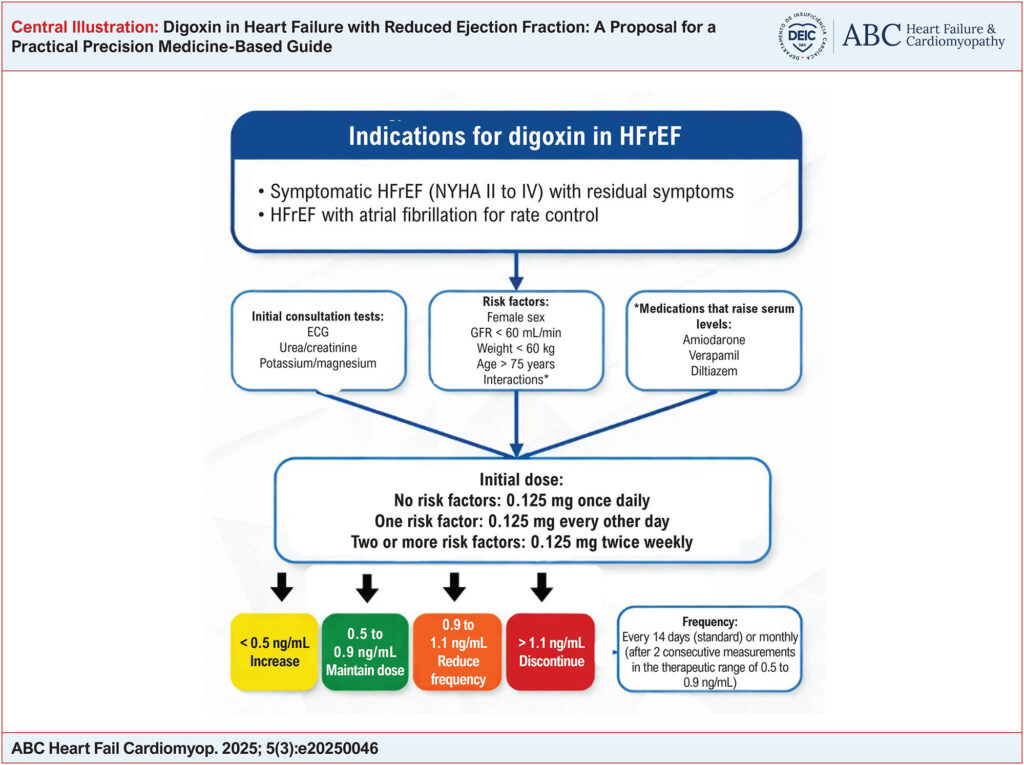
Nonetheless, the systematic exclusion of digoxin may represent a historical error based on incomplete interpretations of old data. In a scenario where heart failure with reduced ejection fraction (HFrEF) still imposes high morbidity, mortality, and residual symptoms despite optimized therapy, the premise of this viewpoint is unequivocal: digoxin is not obsolete; what has become obsolete is the empirical fixed-dose prescription model. In light of contemporary evidence, we propose a revival of digitalis therapy guided by precision medicine.
[…]
Images
Image gallery fullscreen viewer
Comments are moderated by the editorial team before publication. Discussions should be evidence-based and use scientific language. Conflicts of interest should be declared.