ABC Family Arquivos Brasileiros de Cardiologia International Journal of Cardiovascular Sciences ABC Heart Failure & Cardiomyopathy ABC Imagem Cardiovascular
Português English
ABC Family
Português English
  • About
    • About ABC Family
    • Internal Regulation
    • Editorial Board
    • Brazilian Society of Cardiology (SBC)
  • Issues
  • SBC Guidelines
  • Content
    • Videos
    • Podcasts
    • News
  • About
    • About ABC Family
    • Internal Regulation
    • Editorial Board
    • Brazilian Society of Cardiology (SBC)
  • Issues
  • SBC Guidelines
  • Content
    • Videos
    • Podcasts
    • News

ABC Family

  • ABC Family
  • Arquivos Brasileiros de Cardiologia
  • International Journal of Cardiovascular Sciences
  • ABC Heart Failure & Cardiomyopathy
  • ABC Imagem Cardiovascular
Search in

No content found.

Journals
Ordering
Article types
Others

  1. Home
  2. Keyword: Digoxin
Central Illustration
ABCHF
Viewpoint

The Use of Digitalis: A Reflection of Medicine as the Science of Provisional Truths

Plinio J. Wolf et al. Carolina Casadei dos Santos João Rossi Marco Aurelio A. Finger … Victor B. M. Mattos Raphael Rossi Edileide Barros Correia Marco Vasconcellos Larissa Bruscky Bruno Valdigem Haissa Assad Fernanda Fortuna

Introduction

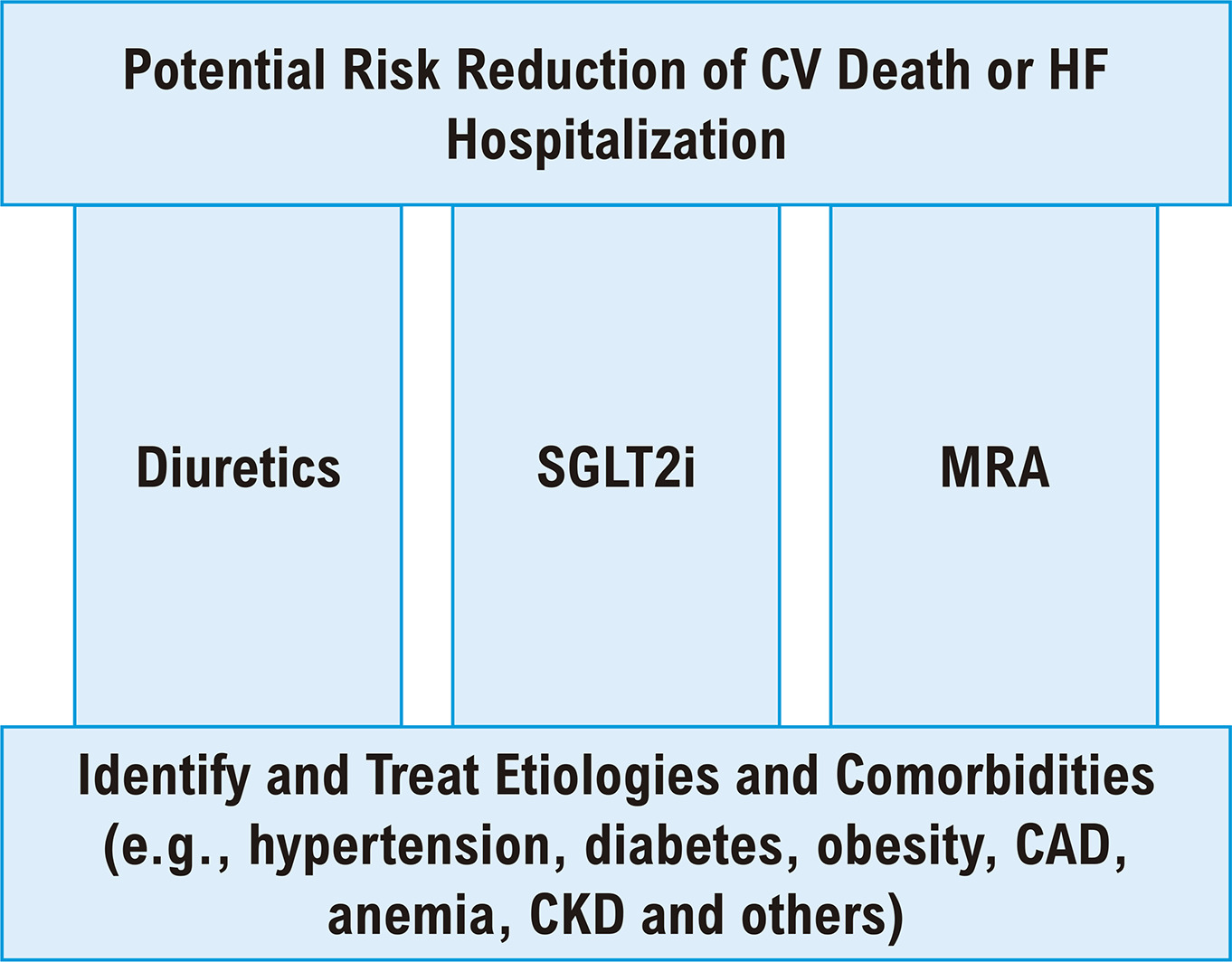
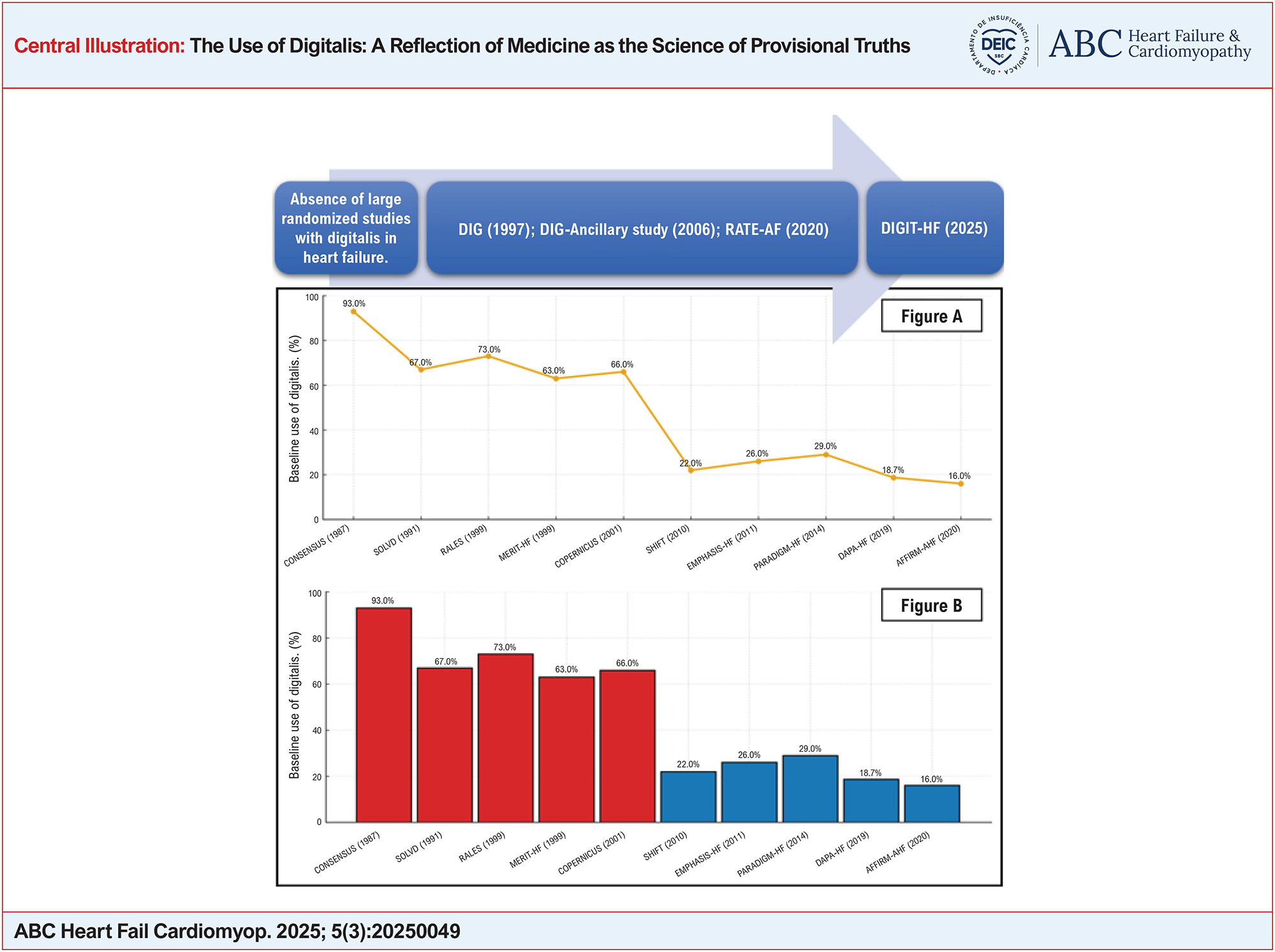
According to current guidelines (class I recommendation), the treatment of heart failure with reduced ejection fraction (HFrEF) – defined as left ventricular ejection fraction (LVEF) ≤40% – should be based on the quadruple therapy scheme aimed at reducing cardiovascular outcomes. This regimen consists of beta-blockers (BB), mineralocorticoid receptor antagonists (MRA), renin–angiotensin–aldosterone system blockers (including angiotensin-converting enzyme inhibitors [ACEIs], Angiotensin II Receptor Blockers [ARBs], or Angiotensin Receptor–Neprilysin Inhibitors [ARNIs]), and Sodium–Glucose Cotransporter-2 Inhibitors (SGLT2i).,

In recent decades, with the therapeutic evolution of HFrEF, some medications such as digitalis,¹ once widely recommended, have been relegated to the role of adjuvants for refractory patients. These drugs lost prominence due to their adverse effects and the unequivocal benefits of the “Fantastic Four,” especially from the late 1990s onward (). However, in light of recent evidence,³ digitalis appear to be regaining relevance as an additional treatment option for Heart Failure (HF), reflecting that, given the constant nuances in the use of digitalis over the years, medicine is indeed the science of provisional truths.

[…]
  • Digitoxin
  • Digoxin
  • Heart Failure
Read Full Article
Creative Commons Attribution (CC BY) Creative Commons license
31/12/2025 DOI: 10.36660/abchf.20250049i
Central Illustration
ABCHF
Viewpoint

Digoxin in Heart Failure with Reduced Ejection Fraction: A Proposal for a Practical Precision Medicine-Based Guide

Germano Emílio Conceição-Souza

Introduction: the paradox of digitalis therapy

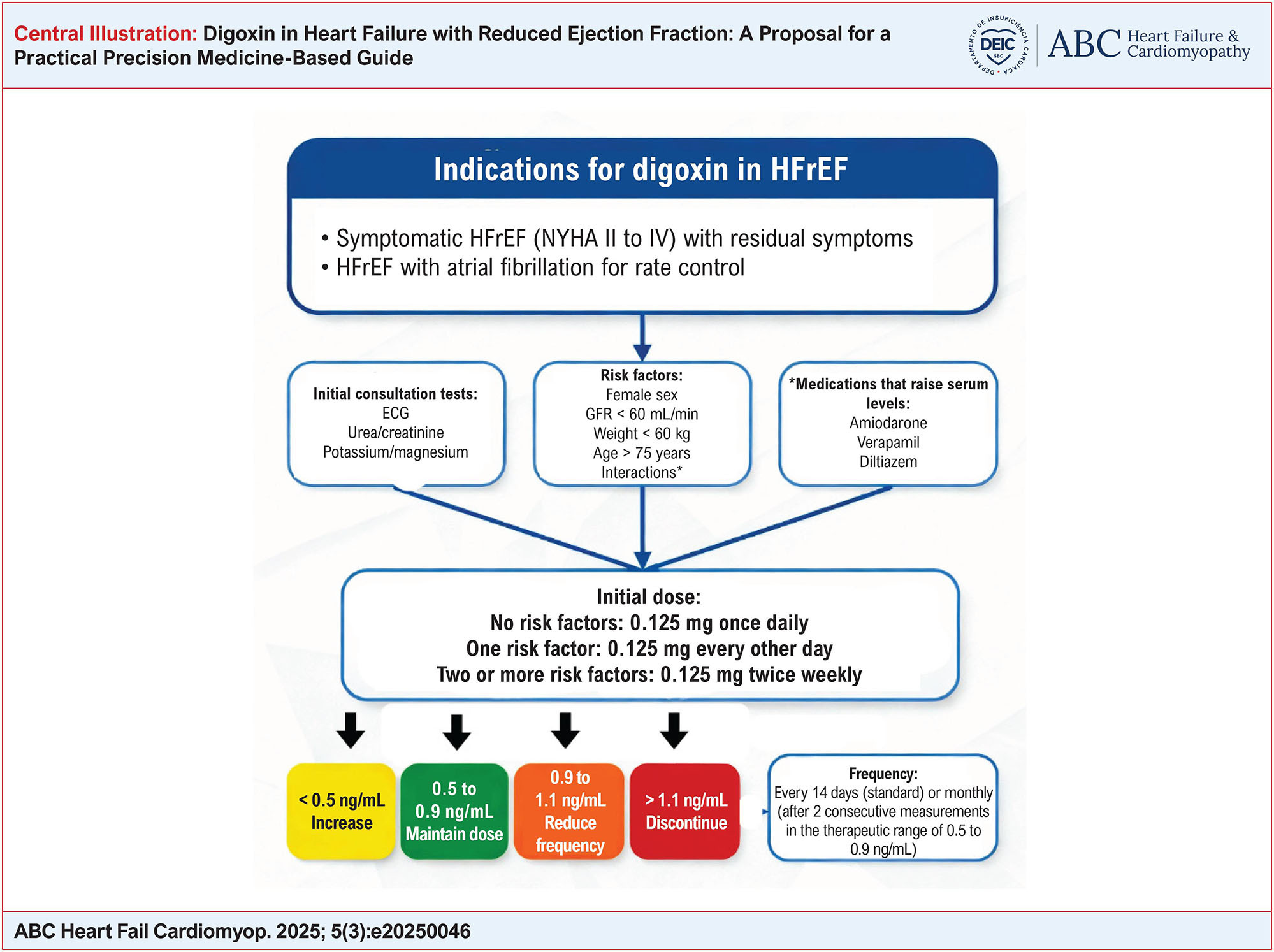
Digoxin holds a unique position in the history of cardiovascular medicine. Although it is the oldest drug in continuous use for heart failure (HF) treatment, there has been a sharp decline in prescriptions over the past two decades. Overshadowed by the advent of disease-modifying therapies and stigmatized due to concerns regarding toxicity, digoxin was relegated to a Class IIa recommendation in the Brazilian guideline and a third-line recommendation (Class IIb) in the major international guidelines.,

Nonetheless, the systematic exclusion of digoxin may represent a historical error based on incomplete interpretations of old data. In a scenario where heart failure with reduced ejection fraction (HFrEF) still imposes high morbidity, mortality, and residual symptoms despite optimized therapy, the premise of this viewpoint is unequivocal: digoxin is not obsolete; what has become obsolete is the empirical fixed-dose prescription model. In light of contemporary evidence, we propose a revival of digitalis therapy guided by precision medicine.

[…]

  • Cardiac glycosides
  • Digoxin
  • Heart Failure
  • pharmacokinetics
  • Precision Medicine
Read Full Article
Creative Commons Attribution (CC BY) Creative Commons license
31/12/2025 DOI: 10.36660/abchf.20250046i Views 1
New Insights into Medical Therapy for Heart Failure with Preserved Ejection Fraction
ABC
Research Letter

New Insights into Medical Therapy for Heart Failure with Preserved Ejection Fraction

Eduardo Thadeu de Oliveira Correia et al. Evandro Tinoco Mesquita

Introduction

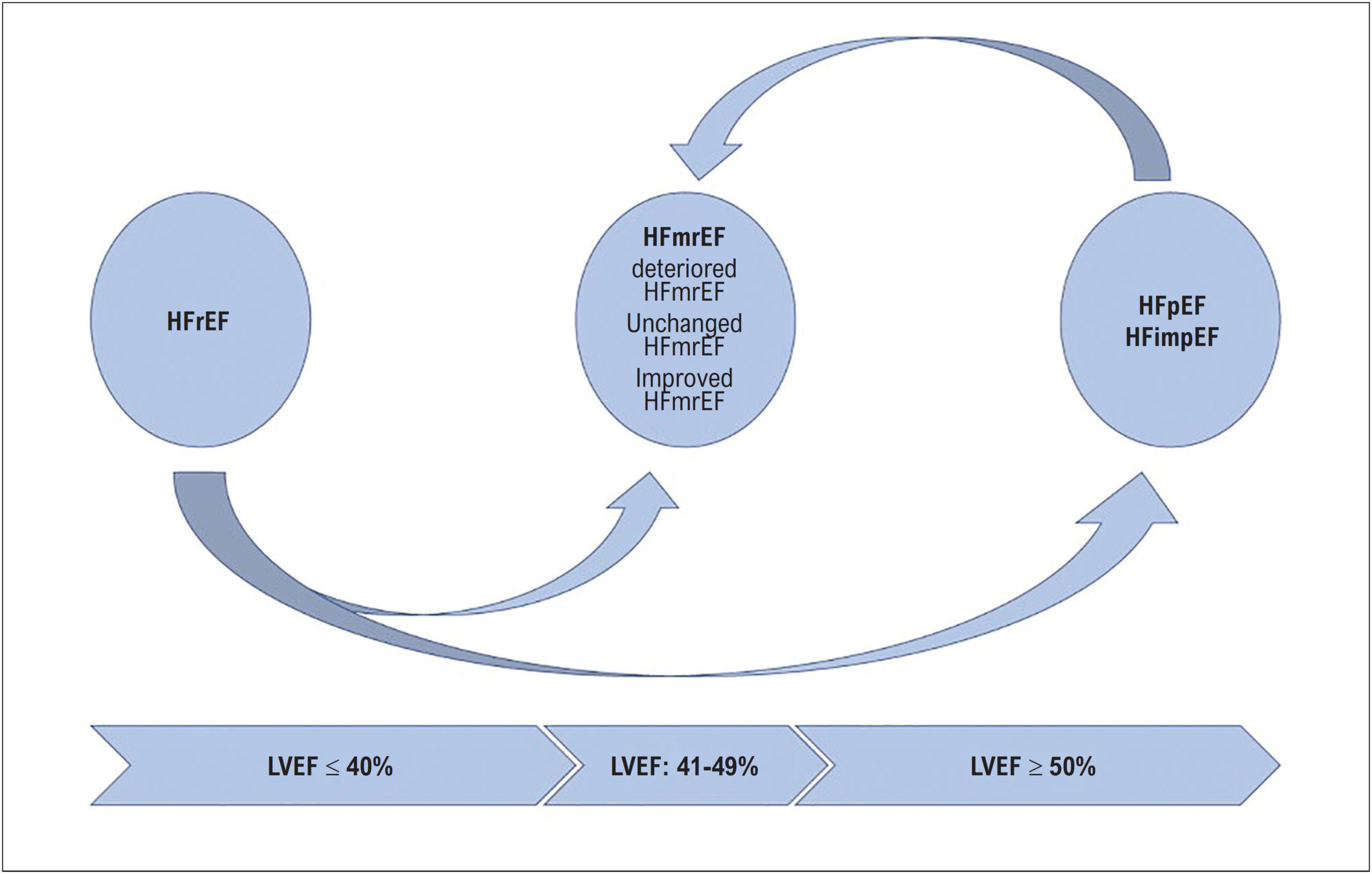
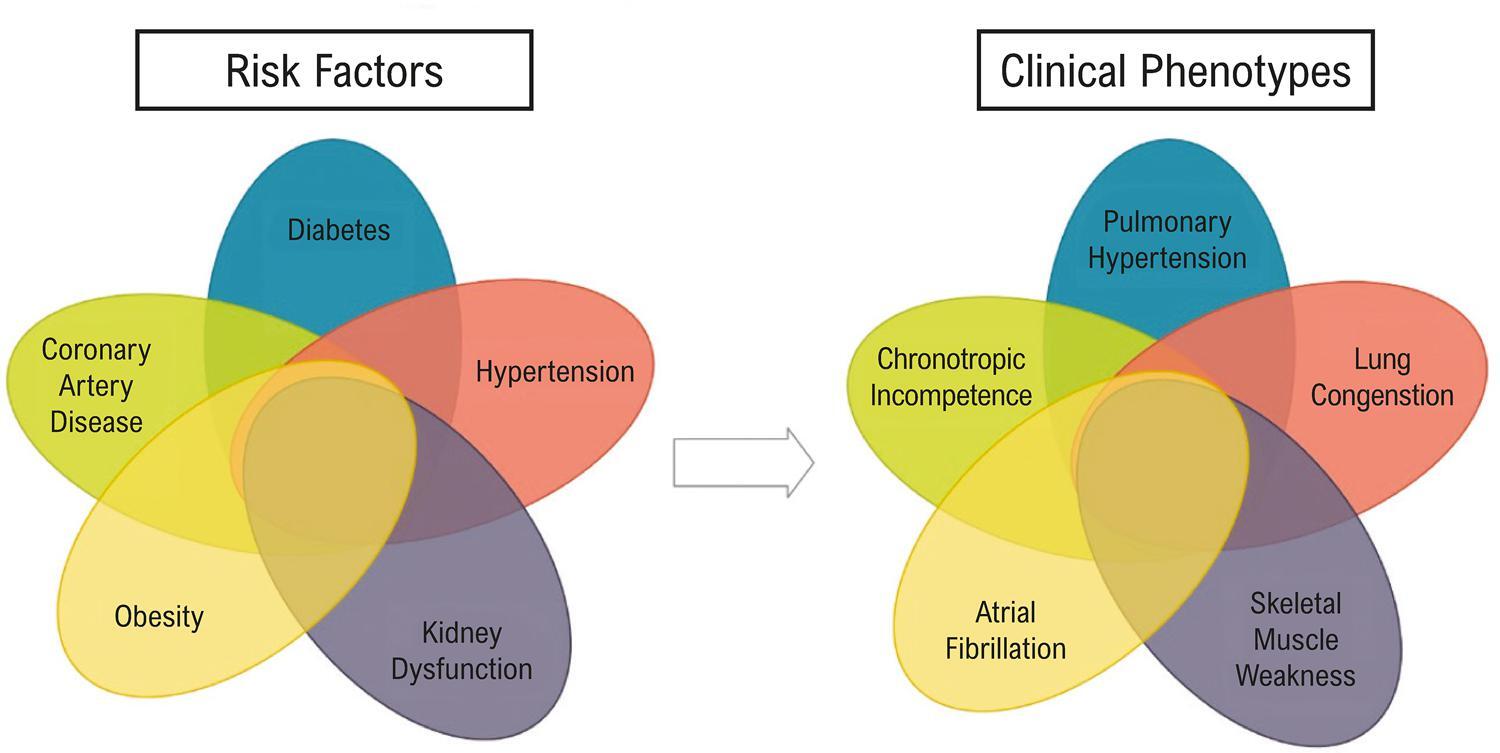
Heart failure (HF) phenotypes can be divided into categories according to the left ventricular ejection fraction (EF) – HF with preserved EF (HFpEF; EF ≥ 50%); HF with mildly reduced EF (HFmrEF; EF 41-49%) and HF with reduced EF (HFrEF; EF ≤ 40%). However, HF phenotypes differ beyond just a different EF. While HFpEF develops from an interplay of comorbidities that lead to structural heart disease and HF symptoms, HFrEF usually develops due to a cardiac insult that reduces cardiac output. , Moreover, while multiple therapies can improve the prognosis of HFrEF, only sodium-glucose cotransporter 2 inhibitors (SGLT2i) improved outcomes in HFpEF in a randomized controlled trial (RCT). In this letter, we explore evidence for medical therapies that could benefit HFpEF patients.

[…]

  • Angiotensin-Converting Enzyme Inhibitors
  • Digoxin
  • Heart Failure
  • Mineralocoirticoids
  • Receptor Antagonists
  • Stroke Volume/drug effects
Read Full Article
Creative Commons Attribution (CC BY) Creative Commons license
12/09/2022 DOI: 10.36660/abc.20210753
Figure 1
ABC
Research Letter

Heart Failure with Mildly Reduced Ejection Fraction: Therapeutical Considerations and Reasons for This Renaming

Eduardo Thadeu de Oliveira Correia et al. Evandro Tinoco Mesquita

Introduction

Heart failure (HF) has been classically divided into HF with reduced ejection fraction (HFrEF) and HF with preserved ejection fraction (HFpEF). However, to better classify HF patients with a left ventricular ejection fraction (LVEF) between 41 and 49%, previous guidelines have introduced the term HF with mid-range ejection fraction. Nonetheless, shortly after its formal introduction, HF with mid-range ejection fraction is now called HF with mildly reduced ejection fraction (HFmrEF). In this letter, we explore the reasons behind this renaming and why this change is more important than it may seem.

[…]

  • Angiotensin-Converting Enzyme Inhibitors
  • Cardiovascular Diseases
  • Digoxin
  • Heart Failure
  • Mineralocortical Receptor Antagonists
  • Prognosis
  • Stroke Volume
Read Full Article
Creative Commons Attribution (CC BY) Creative Commons license
11/07/2022 DOI: 10.36660/abc.20210752 Views 3
Figure 1
ABCHF
Viewpoint

Clinical Profile-Based Pharmacological Sequencing for Heart Failure with Preserved Ejection Fraction

Evandro Tinoco Mesquita et al. Eduardo Thadeu de Oliveira Correia Letícia Mara dos Santos Barbetta

Introduction

Heart failure (HF) is classically categorized into phenotypes according to left ventricular ejection fraction (EF), one of them being HF with preserved EF (HFpEF; EF ≥ 50%). In the past decades, a myriad of drug therapies that reduce mortality and hospitalization rates for HF with reduced EF have emerged. However, although HFpEF accounts for about 50% of HF cases, to this date, only empagliflozin was shown to reduce HF hospitalization, and no drug reduced the risk for cardiovascular death in randomized clinical trials (RCTs). One hypothesis that may explain the lack of therapies that reduce hard outcomes in HFpEF is the variety of phenotypes that constitute HFpEF as a syndrome. Thus, in this paper, we discuss evidence from RCTs and post-hoc analyses of RCTs that may help improve HFpEF outcomes, aid clinicians, and pave the way for future RCTs.

[…]

  • Adrenergic beta-Antagonists
  • Angiotensin-Converting Enzyme Inhibitors
  • Digoxin
  • Heart Failure
  • Mineralocorticoid Receptor Antagonists
Read Full Article
Creative Commons Attribution (CC BY) Creative Commons license
12/04/2022 DOI: 10.36660/abchf.20220014 Views 1
Figure 1
ABCHF
Research Letter

Personalized Treatment of Heart Failure with Reduced Ejection Fraction: Ivabradine, Nitrate/Hydralazine, and Digoxin – A Systematic Review and Meta-Analysis

Ivna Girard Cunha Vieira Lima et al. Edimar Alcides Bocchi

Introduction

In the last 30 years, treatment of chronic heart failure with reduced ejection fraction (HFrEF) has evolved considerably, and a significant reduction was achieved in mortality over time and hospitalization rates for chronic heart failure (CHF).

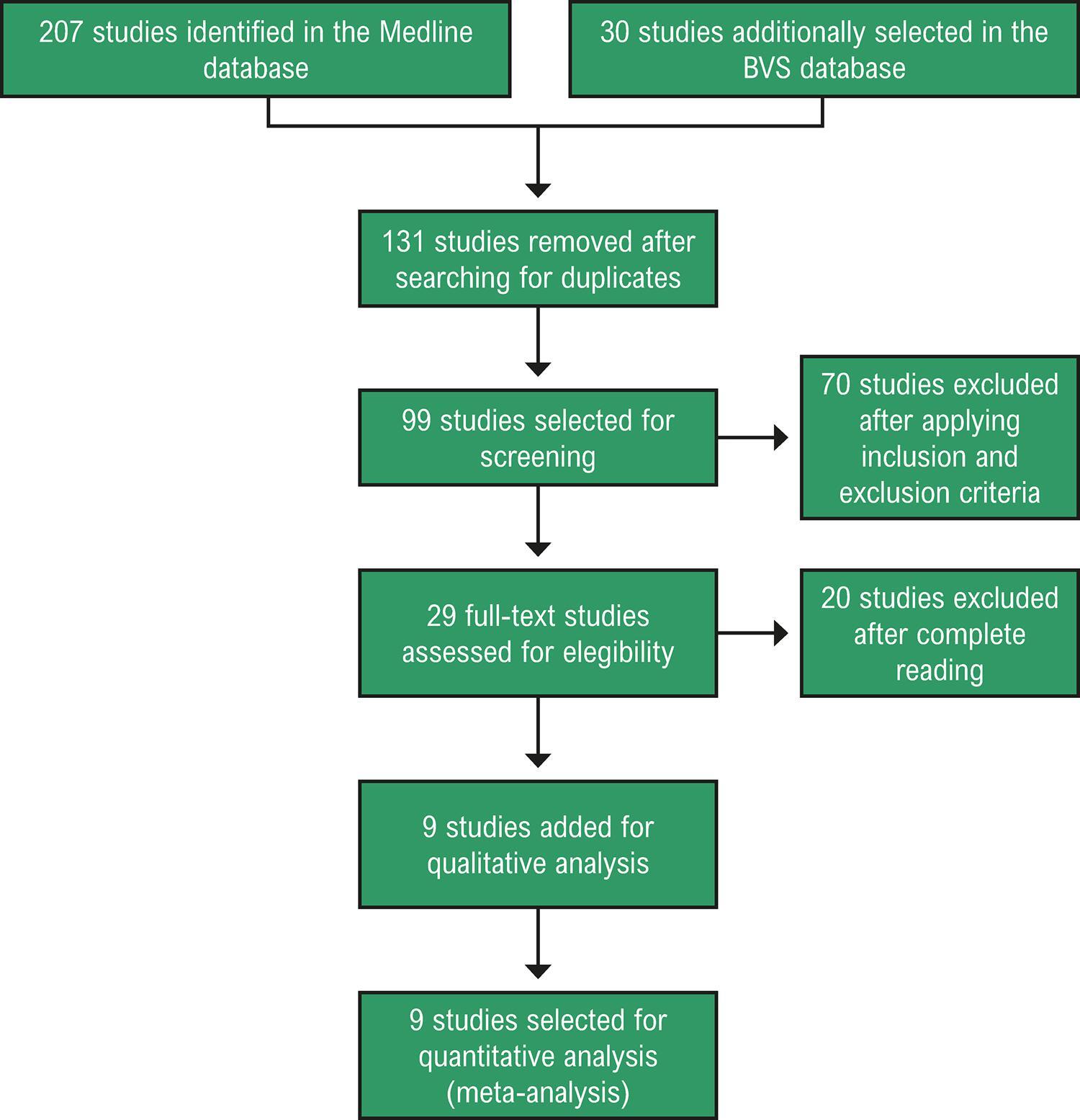
Neurohormonal blockade has become key in the treatment of CHF, but with the discovery of new therapies such as sodium-glucose cotransporter-2 inhibitors (SGLT2i), neprilysin inhibitors, resynchronization therapies, and new procedures, the number of treatment options in addition to standard therapy has increased considerably. However, it is known that the start of medications that reduce outcomes in CHF has historically been recommended following the order of publication of efficacy trials. Considering the many treatment options available today, a clinical question arises: is it possible to personalize additional treatments according to the patient’s clinical characteristics? This meta-analysis aims to look for populations of interest where ivabradine, hydralazine and nitrate, and digoxin could have incremental beneficial effects.

[…]

  • Digoxin
  • Heart Failure
  • Hydralazine
  • Nitrates
Read Full Article
Creative Commons Attribution (CC BY) Creative Commons license
12/04/2022 DOI: 10.36660/abchf.20220008
Optimized treatment and heart rate reduction in chronic heart failure
ABC
Artigo Original

Optimized treatment and heart rate reduction in chronic heart failure

Irineu Blanco Moreno et al. Carlos Henrique Del Carlo Antônio Carlos Pereira-Barretto

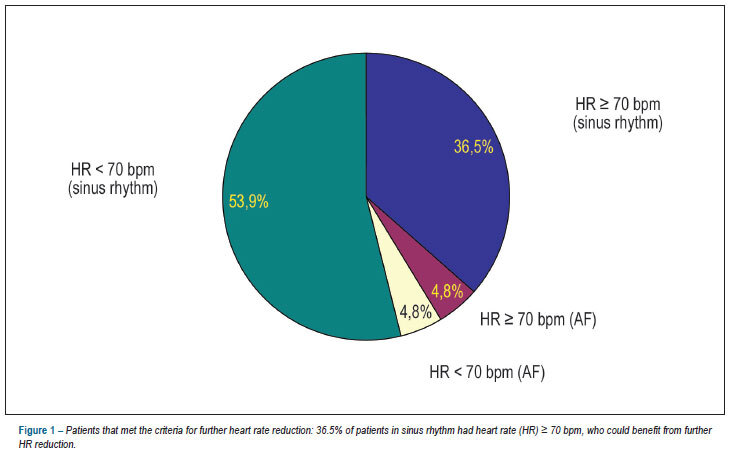
BACKGROUND: Heart failure (HF) is a syndrome that leads to poor outcome in advanced forms. The neurohormonal blockade modifies this natural history; however, it is often suboptimal. OBJECTIVE: The aim of this study is to assess at what percentage cardiologists used to treating HF can prescribe target doses of drugs of proven efficacy. METHODS: A total of 104 outpatients with systolic dysfunction were consecutively enrolled, all under stabilized treatment. Demographic and treatment data were evaluated and the doses achieved were verified. The findings are shown as percentages and correlations are made between different variables. RESULTS: The mean age of patients was 64.1 ± 14.2 years, with SBP =115.4 ± 15.3, HR = 67.8 ± 9.4 bpm, weight = 76.0 ± 17.0 kg and sinus rhythm (90.4%). As for treatment, 93.3% received a RAS blocker (ACEI 52.9%), all received beta-blockers (BB), the most often prescribed being carvedilol (92.3%). As for the doses: 97.1% of those receiving an ARB were below the optimal dose and of those who received ACEI, 52.7% received an optimized dose. As for the BB, target doses were prescribed to 76.0% of them. In this group of patients, most with BB target dose, it can be seen that 36.5% had HR > 70 bpm in sinus rhythm. CONCLUSION: Cardiologists used to treating HF can prescribe target doses of ACEI and BB to most patients. Even though they receive the recommended doses, about one third of patients persists with HR > 70 bpm and should have their treatment optimized.

  • Digoxin
  • Heart Failure
  • Heart Rate
  • Ventricular Dysfunction, Left
Read Full Article
Creative Commons Attribution (CC BY) Creative Commons license
08/10/2013 DOI: 10.5935/abc.20130201
ABC
Atualização

Digoxin: the results of the DIG study in the XXI century

Izo Helber et al. Paulo J. F. Tucci

After the report that there was no statistical significance in the general mortality of the DIG study, the indication of digoxin in the treatment regimens for congestive heart failure (CHF) drastically decreased. Post hoc studies that reassessed the DIG study data, indicated that an aspect that was not considered in this multicenter study has a critical influence on the prognosis of patients: the serum levels of digoxin. Regarding those that received a placebo, the general mortality and hospitalization were decreased in patients with a digoxin level < 0.9 ng/ml. At the first study that assessed the influence of digitalis in an experimental model of CHF, we verified in our lab that female rats with congestive syndrome secondary to myocardial infarction have a prolonged survival when undergoing treatment with digitoxin. The current information recommends that the merits of digoxin continue to be analyzed in order to adequately establish its importance in the treatment of CHF.

  • Cardiac glycosides
  • Cardiotonic Agents
  • Digoxin
  • Heart Failure
Read Full Article
Creative Commons Attribution (CC BY) Creative Commons license
26/01/2011 DOI: 10.1590/S0066-782X2010001400028 Views 1
ABC
Artigo Original

Use of digoxin in elderly patients admitted to a geriatric unit of a general hospital

Ulisses Gabriel de Vasconcelos Cunha et al. Maira Tonidandel Barbosa Emylucy Martins Paiva Paradela Flávio Gomes Carvalho

PURPOSE: To determine the prevalence of digoxin use as well as its indications in elderly patients at the time of admission to a geriatric unit of a general hospital. METHODS: One hundred and thirty elderly patients aged 65 and over (mean age = 80±9 years), 100 women and 30 men were consecutively investigated. Each patient was submitted to a thorough clinical investigation, laboratory work-up, chest X-ray, electrocardiogram and doppler echocardiogram. The use of digoxin was considered appropriate, questionable or inappropriate. RESULTS: At the time of admission to the geriatric unit 27.6% of the patients were receiving digoxin. The indication was considered appropriate in 36.1%, questionable in 11,1% and inappropriate in 52.7%. CONCLUSION: We found a high prevalence of digoxin use in elderly patients admitted to a geriatric unit of a general hospital. In most cases its indications were considered inappropriate or questionable. Due to the increased risk of digitalis intoxication in this age group the drug should be prescribed under more strict indications.

  • Digoxin
  • Elderly
  • hospital
Read Full Article
Creative Commons Attribution (CC BY) Creative Commons license
31/01/2007 DOI: 10.1590/S0066-782X1998001100009

How to cite this article

EndNote RIS

Electronic Document Format (Vancouver)

Wolf PJ, Santos CC, Rossi J, Finger MAA, Mattos VBM, Rossi R, Correia EB, et al. The Use of Digitalis: A Reflection of Medicine as the Science of Provisional Truths. ABC Heart Fail Cardiomyop 2025;5(3):20250049.

Electronic Document Format (ABNT)

Wolf, Plinio J.; Santos, Carolina Casadei dos; Rossi, João; Finger, Marco Aurelio A.; Mattos, Victor B. M.; Rossi, Raphael; Correia, Edileide Barros; Vasconcellos, Marco; Bruscky, Larissa; Valdigem, Bruno; Assad, Haissa; Fortuna, Fernanda. The Use of Digitalis: A Reflection of Medicine as the Science of Provisional Truths. ABC Heart Fail Cardiomyop, v. 5, n. 3, 20250049, Dec. 2025.

Electronic Document Format (APA)

Wolf, P. J., Santos, C. C. , Rossi, J., Finger, M. A. A., Mattos, V. B. M., Rossi, R., Correia, E. B., Vasconcellos, M., Bruscky, L., Valdigem, B., Assad, H., & Fortuna, F. (2025). The Use of Digitalis: A Reflection of Medicine as the Science of Provisional Truths. ABC Heart Fail Cardiomyop, 5(3), 20250049.

Electronic Document Format (ISO)

Wolf, Plinio J. and Santos, Carolina Casadei dos and Rossi, João and Finger, Marco Aurelio A. and Mattos, Victor B. M. and Rossi, Raphael and Correia, Edileide Barros and Vasconcellos, Marco and Bruscky, Larissa and Valdigem, Bruno and Assad, Haissa and Fortuna, Fernanda. The Use of Digitalis: A Reflection of Medicine as the Science of Provisional Truths. ABC Heart Fail Cardiomyop [online]. 2025, vol. 5, n. 3, [cited 2026-10-14], 20250049. Available from: <https://journals.cardiol.br/en/article/the-use-of-digitalis-a-reflection-of-medicine-as-the-science-of-provisional-truths/>

EndNote RIS

Electronic Document Format (Vancouver)

Conceição-Souza GE. Digoxin in Heart Failure with Reduced Ejection Fraction: A Proposal for a Practical Precision Medicine-Based Guide. ABC Heart Fail Cardiomyop 2025;5(3):e20250046.

Electronic Document Format (ABNT)

Conceição-Souza, Germano Emílio. Digoxin in Heart Failure with Reduced Ejection Fraction: A Proposal for a Practical Precision Medicine-Based Guide. ABC Heart Fail Cardiomyop, v. 5, n. 3, e20250046, Dec. 2025.

Electronic Document Format (APA)

Conceição-Souza, G. E. (2025). Digoxin in Heart Failure with Reduced Ejection Fraction: A Proposal for a Practical Precision Medicine-Based Guide. ABC Heart Fail Cardiomyop, 5(3), e20250046.

Electronic Document Format (ISO)

Conceição-Souza, Germano Emílio. Digoxin in Heart Failure with Reduced Ejection Fraction: A Proposal for a Practical Precision Medicine-Based Guide. ABC Heart Fail Cardiomyop [online]. 2025, vol. 5, n. 3, [cited 2026-10-14], e20250046. Available from: <https://journals.cardiol.br/en/article/digoxin-in-heart-failure-with-reduced-ejection-fraction-a-proposal-for-a-practical-precision-medicine-based-guide/>

EndNote RIS

Electronic Document Format (Vancouver)

Correia ETO, Mesquita ET. New Insights into Medical Therapy for Heart Failure with Preserved Ejection Fraction. Arquivos Brasileiros de Cardiologia 2022;119(4):627-30.

Electronic Document Format (ABNT)

Correia, Eduardo Thadeu de Oliveira; Mesquita, Evandro Tinoco. New Insights into Medical Therapy for Heart Failure with Preserved Ejection Fraction. Arquivos Brasileiros de Cardiologia, v. 119, n. 4, p. 627-630, Sep. 2022.

Electronic Document Format (APA)

Correia, E. T. O., & Mesquita, E. T. (2022). New Insights into Medical Therapy for Heart Failure with Preserved Ejection Fraction. Arquivos Brasileiros de Cardiologia, 119(4), 627-630.

Electronic Document Format (ISO)

Correia, Eduardo Thadeu de Oliveira and Mesquita, Evandro Tinoco. New Insights into Medical Therapy for Heart Failure with Preserved Ejection Fraction. Arquivos Brasileiros de Cardiologia [online]. 2022, vol. 119, n. 4, [cited 2026-10-14], pp. 627-630. Available from: <https://journals.cardiol.br/en/article/new-insights-into-medical-therapy-for-heart-failure-with-preserved-ejection-fraction/>. ISSN 0066-782X

EndNote RIS

Electronic Document Format (Vancouver)

Correia ETO, Mesquita ET. Heart Failure with Mildly Reduced Ejection Fraction: Therapeutical Considerations and Reasons for This Renaming. Arquivos Brasileiros de Cardiologia 2022;119(1):124-7.

Electronic Document Format (ABNT)

Correia, Eduardo Thadeu de Oliveira; Mesquita, Evandro Tinoco. Heart Failure with Mildly Reduced Ejection Fraction: Therapeutical Considerations and Reasons for This Renaming. Arquivos Brasileiros de Cardiologia, v. 119, n. 1, p. 124-127, Jul. 2022.

Electronic Document Format (APA)

Correia, E. T. O., & Mesquita, E. T. (2022). Heart Failure with Mildly Reduced Ejection Fraction: Therapeutical Considerations and Reasons for This Renaming. Arquivos Brasileiros de Cardiologia, 119(1), 124-127.

Electronic Document Format (ISO)

Correia, Eduardo Thadeu de Oliveira and Mesquita, Evandro Tinoco. Heart Failure with Mildly Reduced Ejection Fraction: Therapeutical Considerations and Reasons for This Renaming. Arquivos Brasileiros de Cardiologia [online]. 2022, vol. 119, n. 1, [cited 2026-10-14], pp. 124-127. Available from: <https://journals.cardiol.br/en/article/heart-failure-with-mildly-reduced-ejection-fraction-therapeutical-considerations-and-reasons-for-this-renaming/>. ISSN 0066-782X

EndNote RIS

Electronic Document Format (Vancouver)

Mesquita ET, Correia ETO, Barbetta LMS. Clinical Profile-Based Pharmacological Sequencing for Heart Failure with Preserved Ejection Fraction. ABC Heart Fail Cardiomyop 2022;2(1):72-5.

Electronic Document Format (ABNT)

Mesquita, Evandro Tinoco; Correia, Eduardo Thadeu de Oliveira; Barbetta, Letícia Mara dos Santos. Clinical Profile-Based Pharmacological Sequencing for Heart Failure with Preserved Ejection Fraction. ABC Heart Fail Cardiomyop, v. 2, n. 1, p. 72-75, Apr. 2022.

Electronic Document Format (APA)

Mesquita, E. T., Correia, E. T. O., & Barbetta, L. M. S. (2022). Clinical Profile-Based Pharmacological Sequencing for Heart Failure with Preserved Ejection Fraction. ABC Heart Fail Cardiomyop, 2(1), 72-75.

Electronic Document Format (ISO)

Mesquita, Evandro Tinoco and Correia, Eduardo Thadeu de Oliveira and Barbetta, Letícia Mara dos Santos. Clinical Profile-Based Pharmacological Sequencing for Heart Failure with Preserved Ejection Fraction. ABC Heart Fail Cardiomyop [online]. 2022, vol. 2, n. 1, [cited 2026-10-14], pp. 72-75. Available from: <https://journals.cardiol.br/en/article/clinical-profile-based-pharmacological-sequencing-for-heart-failure-with-preserved-ejection-fraction/>

EndNote RIS

Electronic Document Format (Vancouver)

Lima IGCV, Bocchi EA. Personalized Treatment of Heart Failure with Reduced Ejection Fraction: Ivabradine, Nitrate/Hydralazine, and Digoxin – A Systematic Review and Meta-Analysis. ABC Heart Fail Cardiomyop 2022;2(1):41-9.

Electronic Document Format (ABNT)

Lima, Ivna Girard Cunha Vieira; Bocchi, Edimar Alcides. Personalized Treatment of Heart Failure with Reduced Ejection Fraction: Ivabradine, Nitrate/Hydralazine, and Digoxin – A Systematic Review and Meta-Analysis. ABC Heart Fail Cardiomyop, v. 2, n. 1, p. 41-49, Apr. 2022.

Electronic Document Format (APA)

Lima, I. G. C. V., & Bocchi, E. A. (2022). Personalized Treatment of Heart Failure with Reduced Ejection Fraction: Ivabradine, Nitrate/Hydralazine, and Digoxin – A Systematic Review and Meta-Analysis. ABC Heart Fail Cardiomyop, 2(1), 41-49.

Electronic Document Format (ISO)

Lima, Ivna Girard Cunha Vieira and Bocchi, Edimar Alcides. Personalized Treatment of Heart Failure with Reduced Ejection Fraction: Ivabradine, Nitrate/Hydralazine, and Digoxin – A Systematic Review and Meta-Analysis. ABC Heart Fail Cardiomyop [online]. 2022, vol. 2, n. 1, [cited 2026-10-14], pp. 41-49. Available from: <https://journals.cardiol.br/en/article/personalized-treatment-of-heart-failure-with-reduced-ejection-fraction-ivabradine-nitrate-hydralazine-and-digoxin-a-systematic-review-and-meta-analysis/>

EndNote RIS

Electronic Document Format (Vancouver)

Moreno IB, Carlo HD, Pereira-Barretto AC. Optimized treatment and heart rate reduction in chronic heart failure. Arquivos Brasileiros de Cardiologia 2013;101(5):442-8.

Electronic Document Format (ABNT)

Moreno, Irineu Blanco; Carlo, s Henrique Del; Pereira-Barretto, Antônio Carlos. Optimized treatment and heart rate reduction in chronic heart failure. Arquivos Brasileiros de Cardiologia, v. 101, n. 5, p. 442-448, Oct. 2013.

Electronic Document Format (APA)

Moreno, I. B., Carlo, H. D., & Pereira-Barretto, A. C. (2013). Optimized treatment and heart rate reduction in chronic heart failure. Arquivos Brasileiros de Cardiologia, 101(5), 442-448.

Electronic Document Format (ISO)

Moreno, Irineu Blanco and Carlo, s Henrique Del and Pereira-Barretto, Antônio Carlos. Optimized treatment and heart rate reduction in chronic heart failure. Arquivos Brasileiros de Cardiologia [online]. 2013, vol. 101, n. 5, [cited 2026-10-14], pp. 442-448. Available from: <https://journals.cardiol.br/en/article/optimized-treatment-and-heart-rate-reduction-in-chronic-heart-failure/>. ISSN 0066-782X

EndNote RIS

Electronic Document Format (Vancouver)

Helber I, Tucci PJF. Digoxin: the results of the DIG study in the XXI century. Arquivos Brasileiros de Cardiologia 2011;95(4):e108-11.

Electronic Document Format (ABNT)

Helber, Izo; Tucci, Paulo J. F.. Digoxin: the results of the DIG study in the XXI century. Arquivos Brasileiros de Cardiologia, v. 95, n. 4, p. e108-e111, Jan. 2011.

Electronic Document Format (APA)

Helber, I., & Tucci, P. J. F. (2011). Digoxin: the results of the DIG study in the XXI century. Arquivos Brasileiros de Cardiologia, 95(4), e108-e111.

Electronic Document Format (ISO)

Helber, Izo and Tucci, Paulo J. F.. Digoxin: the results of the DIG study in the XXI century. Arquivos Brasileiros de Cardiologia [online]. 2011, vol. 95, n. 4, [cited 2026-10-14], pp. e108-e111. Available from: <https://journals.cardiol.br/en/article/digoxin-the-results-of-the-dig-study-in-the-xxi-century/>. ISSN 0066-782X

EndNote RIS

Electronic Document Format (Vancouver)

Cunha UGV, Barbosa MT, Paradela EMP, Carvalho FG. Use of digoxin in elderly patients admitted to a geriatric unit of a general hospital. Arquivos Brasileiros de Cardiologia 2007;71(5):695-8.

Electronic Document Format (ABNT)

Cunha, Ulisses Gabriel de Vasconcelos; Barbosa, Maira Tonidandel; Paradela, Emylucy Martins Paiva; Carvalho, Flávio Gomes. Use of digoxin in elderly patients admitted to a geriatric unit of a general hospital. Arquivos Brasileiros de Cardiologia, v. 71, n. 5, p. 695-698, Jan. 2007.

Electronic Document Format (APA)

Cunha, U. G. V., Barbosa, M. T., Paradela, E. M. P., & Carvalho, F. G. (2007). Use of digoxin in elderly patients admitted to a geriatric unit of a general hospital. Arquivos Brasileiros de Cardiologia, 71(5), 695-698.

Electronic Document Format (ISO)

Cunha, Ulisses Gabriel de Vasconcelos and Barbosa, Maira Tonidandel and Paradela, Emylucy Martins Paiva and Carvalho, Flávio Gomes. Use of digoxin in elderly patients admitted to a geriatric unit of a general hospital. Arquivos Brasileiros de Cardiologia [online]. 2007, vol. 71, n. 5, [cited 2026-10-14], pp. 695-698. Available from: <https://journals.cardiol.br/en/article/use-of-digoxin-in-elderly-patients-admitted-to-a-geriatric-unit-of-a-general-hospital/>. ISSN 0066-782X

  • About ABC Family
  • Internal Regulation
  • Editorial Board
  • Brazilian Society of Cardiology (SBC)

Issues

SBC Guidelines

  • Videos
  • Podcasts
  • News