The Use of Digitalis: A Reflection of Medicine as the Science of Provisional Truths
Introduction
According to current guidelines (class I recommendation), the treatment of heart failure with reduced ejection fraction (HFrEF) – defined as left ventricular ejection fraction (LVEF) ≤40% – should be based on the quadruple therapy scheme aimed at reducing cardiovascular outcomes. This regimen consists of beta-blockers (BB), mineralocorticoid receptor antagonists (MRA), renin–angiotensin–aldosterone system blockers (including angiotensin-converting enzyme inhibitors [ACEIs], Angiotensin II Receptor Blockers [ARBs], or Angiotensin Receptor–Neprilysin Inhibitors [ARNIs]), and Sodium–Glucose Cotransporter-2 Inhibitors (SGLT2i).,
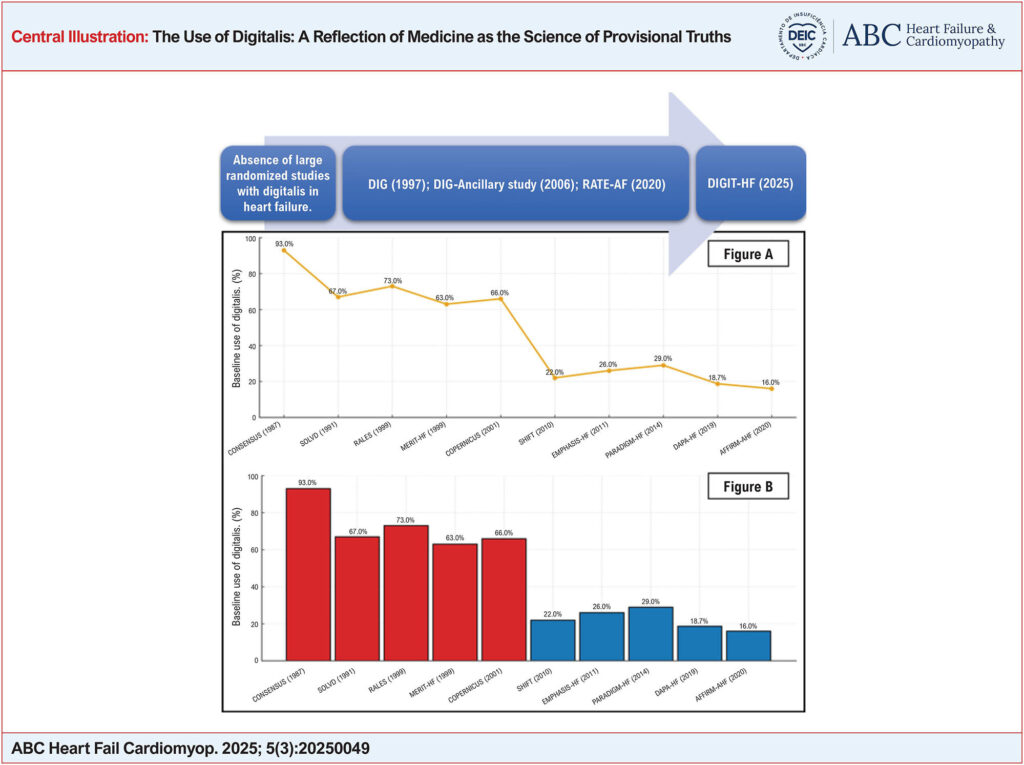
In recent decades, with the therapeutic evolution of HFrEF, some medications such as digitalis,¹ once widely recommended, have been relegated to the role of adjuvants for refractory patients. These drugs lost prominence due to their adverse effects and the unequivocal benefits of the “Fantastic Four,” especially from the late 1990s onward (). However, in light of recent evidence,³ digitalis appear to be regaining relevance as an additional treatment option for Heart Failure (HF), reflecting that, given the constant nuances in the use of digitalis over the years, medicine is indeed the science of provisional truths.
[…]
Images
Image gallery fullscreen viewer
Comments are moderated by the editorial team before publication. Discussions should be evidence-based and use scientific language. Conflicts of interest should be declared.