Prevalence and Clinical Determinants of Optimized Pharmacological Therapy in Heart Failure with Reduced Ejection Fraction
Abstract
Background
In heart failure with reduced ejection fraction (HFrEF), optimized medical therapy (OMT) with beta-blockers, angiotensin-converting enzyme inhibitors (ACEIs), angiotensin II receptor blockers (ARBs) (or sacubitril/valsartan), spironolactone, and sodium-glucose cotransporter-2 inhibitors (SGLT2i), at target or maximally tolerated doses, reduces morbidity and mortality. However, real-world data show its underuse.
Objective
To estimate the prevalence and clinical associations that influence the use of OMT in clinical practice.
Methods
Cross-sectional observational study including outpatients with HFrEF treated at a tertiary hospital. Clinical factors associated with therapy were assessed using binary logistic regression (95% confidence interval).
Results
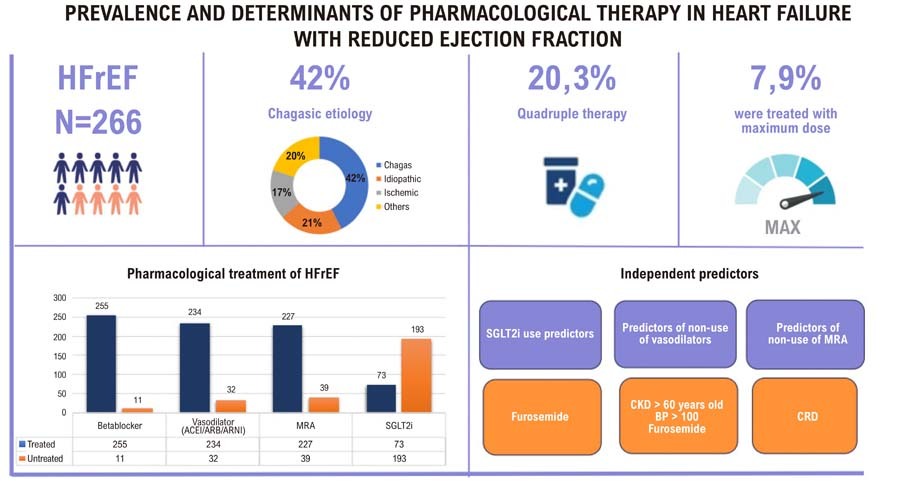
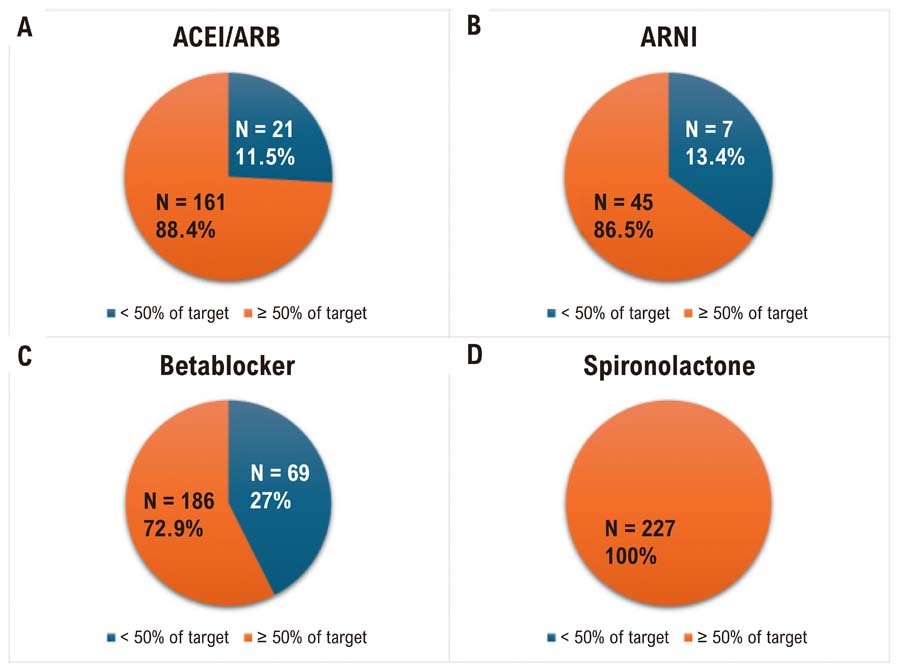
A total of 266 patients were analyzed (mean age 61 years; 62.4% male), 113 (42.5%) with Chagas disease etiology. Mean ejection fraction was 34.2%. Vasodilators, beta-blockers, spironolactone, and SGLT2i were prescribed in 88%, 95.9%, 85.3%, and 27.4% of patients, respectively. The prevalence of OMT was 7.9% (21 patients). Diabetes was associated with a higher likelihood of OMT use (p = 0.034). Chagas disease was associated with lower probability of receiving vasodilators (p = 0.015) and greater use of furosemide, amiodarone, and digoxin (p 60 years, systolic blood pressure < 100 mmHg, and use of furosemide were associated with lower use of vasodilators (p = 0.003; 0.025; 0.010; and 0.046). CKD was associated with lower use of spironolactone (p = 0.002). Diabetes (p = 0.002) and use of furosemide (p = 0.005) were associated with SGLT2i use.
Conclusion
Despite the high prevalence of prescription of disease-modifying drugs, the use of OMT was significantly lower than expected. CKD, advanced age, arterial hypotension, and concomitant use of furosemide were associated with a reduced likelihood of receiving these agents, whereas diabetes was associated with a higher probability of OMT use.
Images
Image gallery fullscreen viewer
Comments are moderated by the editorial team before publication. Discussions should be evidence-based and use scientific language. Conflicts of interest should be declared.