Guideline-Directed Medical Therapy, Clinical Outcomes, and Quality of Life in Heart Failure: Insights from a Multicenter International Consortium for Health Outcomes Measurement-Based Brazilian Cohort
Abstract
Background
Real-world evidence integrating clinical outcomes and patient-reported measures in heart failure with reduced ejection fraction (HFrEF) remains scarce in middle-income countries. Standardized outcome measurement frameworks may enable more consistent evaluation of care quality and treatment effectiveness.
Objective
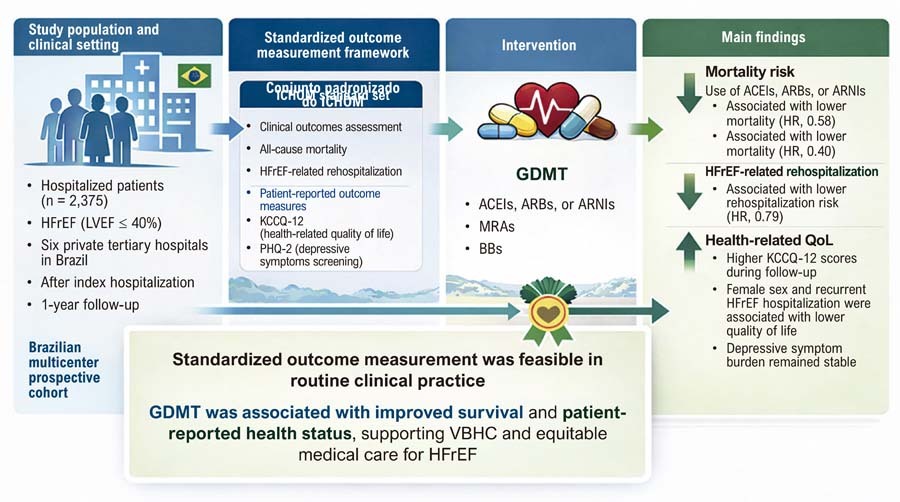
To assess the association of guideline-directed medical therapy (GDMT) with clinical outcomes and patient-reported quality of life (QoL) in patients with HFrEF within 1 year after index hospitalization, using the International Consortium for Health Outcomes Measurement standard set in a multicenter Brazilian cohort.
Methods
This prospective cohort study included adults hospitalized for decompensated HFrEF (ejection fraction ≤ 40%) across six private tertiary hospitals in Brazil. Clinical and patient-reported outcomes were collected using standardized instruments, including the Kansas City Cardiomyopathy Questionnaire-12 (KCCQ-12) and the Patient Health Questionnaire-2 (PHQ-2).
Results
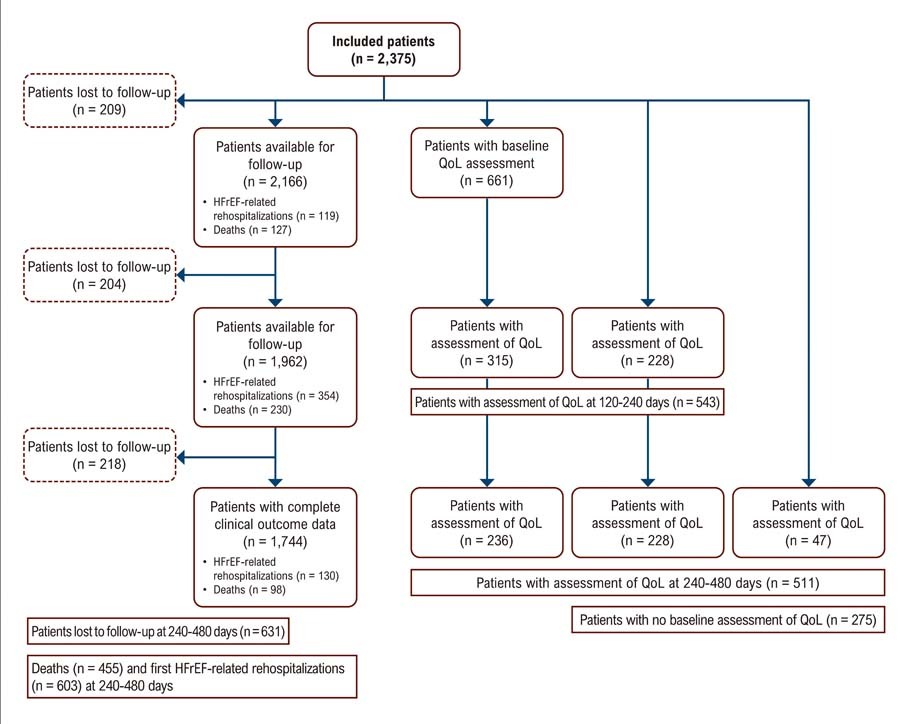
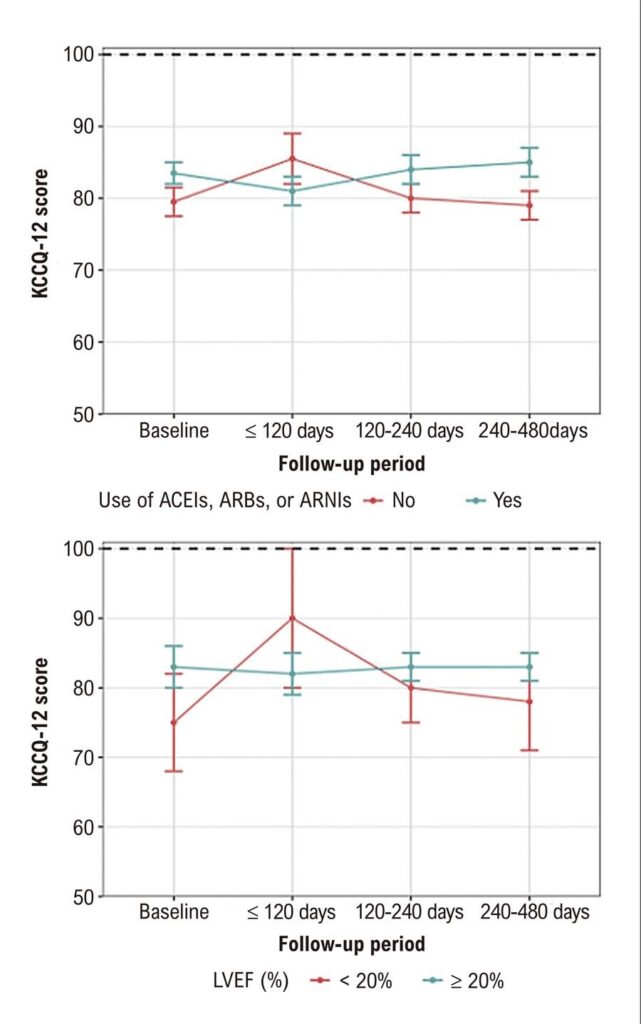
A total of 2,375 patients were included (mean age, 75.9 ± 13.6 years; 69% male). During a median follow-up of 369 days, 26.1% died and 34.6% experienced heart failure-related rehospitalization. Older age was associated with higher risks of mortality and rehospitalization (p ≤ 0.003). Use of angiotensin-converting enzyme inhibitors, angiotensin receptor blockers, or angiotensin receptor-neprilysin inhibitors was associated with lower mortality (hazard ratio [HR], 0.58; p = 0.001), whereas beta-blockers showed a strong protective effect (HR, 0.40; p < 0.001). Mineralocorticoid receptor antagonists were associated with lower rehospitalization rates (HR, 0.79; p = 0.032). GDMT was associated with higher KCCQ-12 scores throughout follow-up (p < 0.05). Women and patients with recurrent rehospitalizations reported lower QoL (p < 0.02). PHQ-2 scores remained low and stable over time.
Conclusion
Standardized outcome measurement is feasible in real-world HFrEF care. GDMT was associated with improved survival and QoL, supporting more equitable and value-based management of HFrEF.
Images
Image gallery fullscreen viewer
Comments are moderated by the editorial team before publication. Discussions should be evidence-based and use scientific language. Conflicts of interest should be declared.