ABC Family Arquivos Brasileiros de Cardiologia International Journal of Cardiovascular Sciences ABC Heart Failure & Cardiomyopathy ABC Imagem Cardiovascular
Português English
ABC Family
Português English
  • About
    • About ABC Family
    • Internal Regulation
    • Editorial Board
    • Brazilian Society of Cardiology (SBC)
  • Issues
  • SBC Guidelines
  • Content
    • Videos
    • Podcasts
    • News
  • About
    • About ABC Family
    • Internal Regulation
    • Editorial Board
    • Brazilian Society of Cardiology (SBC)
  • Issues
  • SBC Guidelines
  • Content
    • Videos
    • Podcasts
    • News

ABC Family

  • ABC Family
  • Arquivos Brasileiros de Cardiologia
  • International Journal of Cardiovascular Sciences
  • ABC Heart Failure & Cardiomyopathy
  • ABC Imagem Cardiovascular
Search in

No content found.

Journals
Ordering
Article types
Others

  1. Home
  2. Keyword: Drug Utilization
Figure 1
ABCHF
Viewpoint

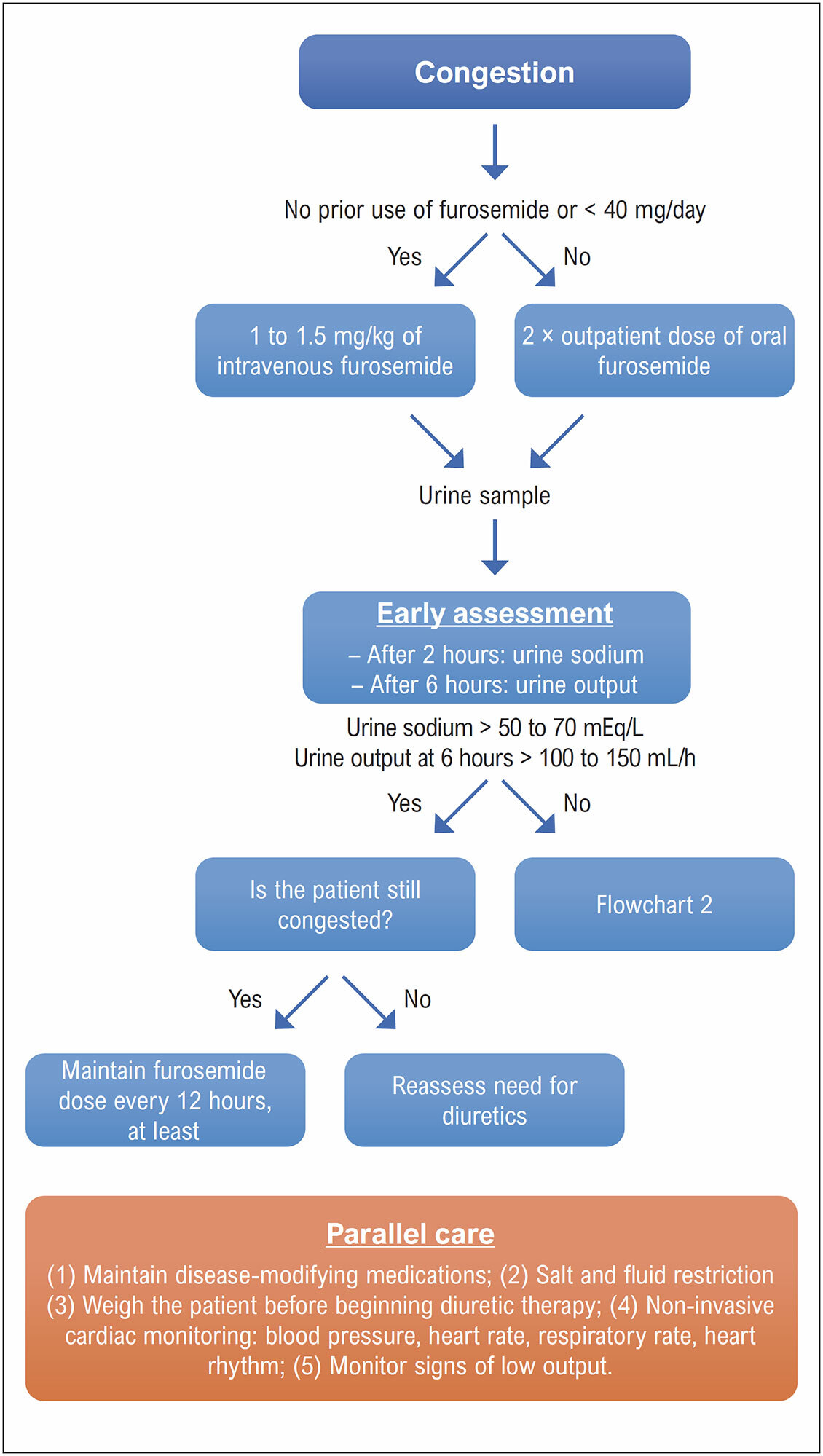
Should Combination of Diuretics Always Be Early after the ADVOR and CLOROTIC Trials?

Nara Kobbaz et al. Luana Monferdini Fernanda Almeida Andrade Aguinaldo F. Freitas Jr.

There has been remarkable progress in the treatment of heart failure (HF) over the past years. Medications such as angiotensin receptor-neprilysin inhibitors, beta blockers, mineralocorticoid receptor antagonists, and sodium-glucose cotransporter 2 inhibitors (SGLT2i), often referred to as the “fantastic four,” have been shown to reduce mortality and hospitalization, in addition to improving patients’ quality of life.

The natural history of the disease is characterized by recurrent episodes of decompensation and hospital admission linked to pulmonary and/or systemic congestion. Although diuretics doesn’t reduce mortality, they are universally recommended for congestive symptoms relief in all phenotypes of the disease.,

[…]

  • Diuretics
  • Drug Utilization
  • Heart Failure
Read Full Article
Creative Commons Attribution (CC BY) Creative Commons license
31/12/2023 DOI: 10.36660/abchf.20230070 Views 1
ABCIC
Original Article

Transthoracic Echocardiographic Assessment of Thoracic Aorta: Correlation with Cardiovascular Risk Factors

Alexandre Sartori Barbosa et al. Ana Cristina Camarozano Daniela de Castro Carmo Daniane Rafael … Jerônimo Antonio Fortunato Rubens Zenóbio Darwich Liz Andréa Villela Baroncini

Abstract

Background

Thoracic aorta dimensions have been poorly correlated with cardiovascular risk factors such as systemic arterial hypertension (SAH), diabetes mellitus (DM) and coronary artery disease (CAD).

Objectives

To correlate the thoracic aorta diameter assessed by transthoracic echocardiography (TTE) with SAH, DM, dyslipidemia, CAD, smoking, age, gender, weight, height, body mass index (BMI) and body surface area (BSA) and continuous use of drugs with cardiovascular protective action.

Methods

Observational, cross-sectional and retrospective study. The study included 203 individuals (62.1 ± 15.3 years of age; 57.1% female) who underwent TTE with thoracic aorta evaluation at 6 sites: (1) aortic valve annulus; (2) sinus of Valsalva; (3) sinotubular junction; (4) ascending proximal aorta; (5) aortic arch and (6) descending aorta.

Results

Age (p < 0.05), male gender (p < 0.001), weight (p < 0.001), height (p < 0.05), and BSA (p < 0.001) were associated with greater thoracic aorta diameters at all sites evaluated. Multivariate analysis identified that age, male gender and BSA, together, explain the variation of aortic annulus diameters in 17.3%, in the sinus of Valsalva in 30.7%, in the sinotubular junction in 17.7%, in the proximal ascending aorta in 21.9%, in the aortic arch in 19.8% and in the descending aorta in 21.4%. There was no association between aortic diameters and the risk factors assessed and continuous use of beta-blockers, angiotensin-converting enzyme inhibitors or angiotensin receptor blockers.

Conclusions

Age, male gender and body surface area correlated positively and significantly with the thoracic aorta diameters. (Arq Bras Cardiol: Imagem cardiovasc. 2018;31(3):191-197)

  • Aorta,Thoracic
  • Dilatation,Pathologic
  • Drug Utilization
  • Echocardiography
  • Risk Factor
Read Full Article
Creative Commons Attribution (CC BY) Creative Commons license
20/01/2022 DOI: 10.5935/2318-8219.20180028
Figure 1
ABC
Original Article

Increased, Decreased, or Stable Left Ventricle Ejection Fraction over Time in a Series of 626 Heart Failure Patients Receiving Medical Treatment

Meng-Meng Han et al. Wen-Shu Zhao Xiao-Rong Xu Xin Wang … Kui-Bao Li Cai-Jing Dang Juan Zhang Jia-Mei Liu Mu-Lei Chen Xin-Chun Yang Lin Xu Hua Wang

Abstract

Background:

Ejection fraction (EF) has been used in phenotype analyses and to make treatment decisions regarding heart failure (HF). Thus, EF has become a fundamental part of daily clinical practice.

Objective:

This study aims to investigate the characteristics, predictors, and outcomes associated with EF changes in patients with different types of severe HF.

Methods:

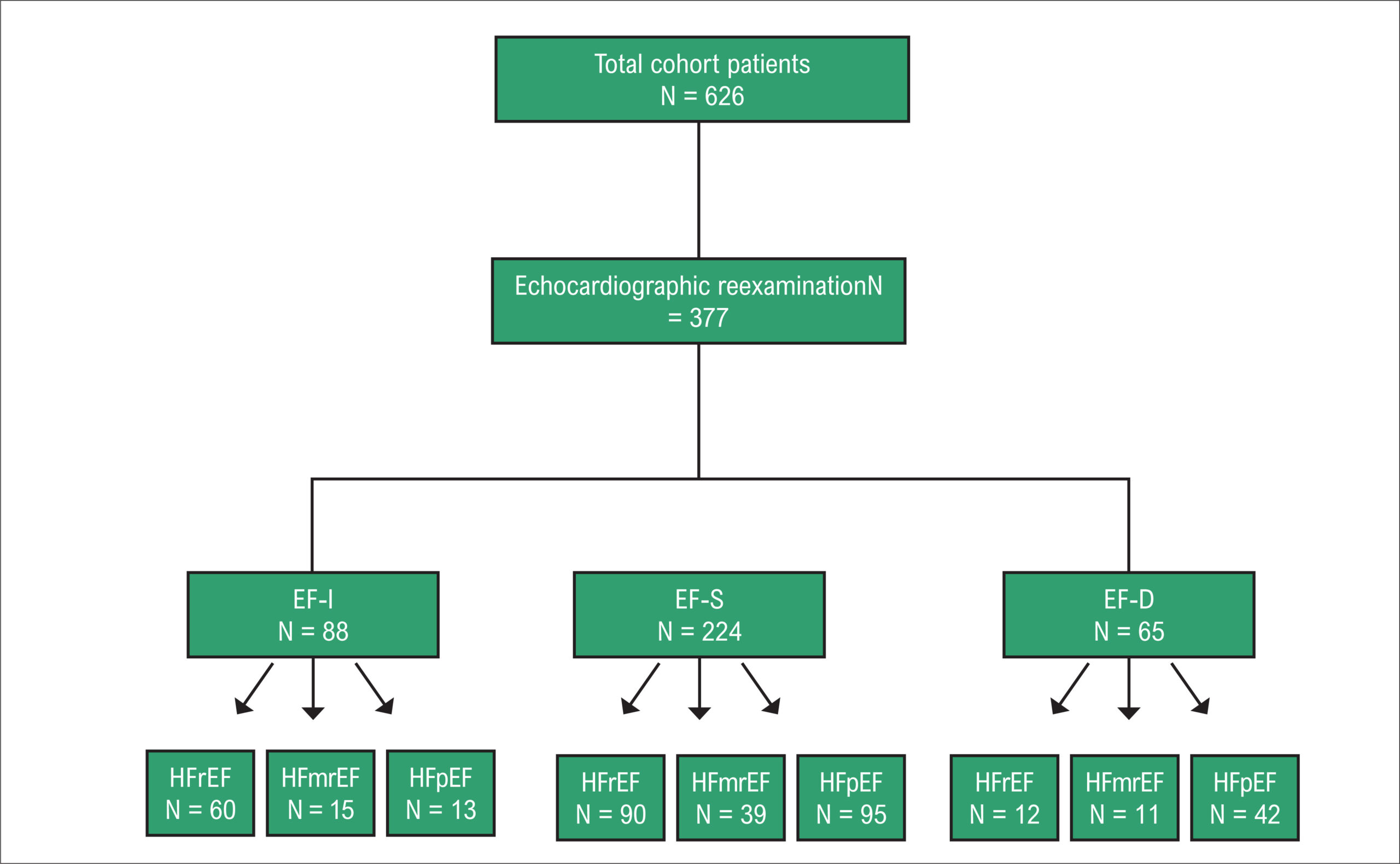
A total of 626 severe HF patients with New York Heart Association (NYHA) class III–IV were enrolled in this study. The patients were classified into three groups according to EF changes, namely, increased EF (EF-I), defined as an EF increase ≥10%, decreased EF (EF-D), defined as an EF decrease ≥10%, and stable EF (EF-S), defined as an EF change <10%. A p-value lower than 0.05 was considered significant.

Results:

Out of 377 severe HF patients, 23.3% presented EF-I, 59.5% presented EF-S, and 17.2% presented EF-D. The results further showed 68.2% of heart failure with reduced ejection fraction (HFrEF) in the EF-I group and 64.6% of heart failure with preserved ejection fraction (HFpEF) in the EF-D group. The predictors of EF-I included younger age, absence of diabetes, and lower left ventricular ejection fraction (LVEF). The predictors of EF-D were absence of atrial fibrillation, lower uric acid level, and higher LVEF. Within a median follow-up of 40 months, 44.8% of patients suffered from all-cause death.

Conclusion:

In severe HF, HFrEF presented the highest percentage in the EF-I group, and HFpEF was most common in the EF-D group.

  • Drug Utilization
  • Heart Failure / mortality
  • Prognosis
  • Stroke Volume
  • Ventricular Dysfunction, Left
Read Full Article
Creative Commons Attribution (CC BY) Creative Commons license
30/07/2021 DOI: 10.36660/abc.20200250
ABC
Artigo Original

Constant use of oral anticoagulants: implications in the control of their adequate levels

Francieli Giachini Esmerio et al. Emiliane Nogueira Souza Tiago Luz Leiria Rosana Lunelli Maria Antonieta Moraes

BACKGROUND: Inappropriate and subtherapeutic anticoagulants dosages may result in severe thromboembolic and bleeding complications. The use of this treatment requires special attention and strict clinical and laboratory follow-up. OBJECTIVE: To identify factors associated with appropriate control of the oral anticoagulant use, assessing the patients’ knowledge and perception of the treatment. METHODS: A cross-sectional study which included 140 patients followed in the oral anticoagulation outpatient clinic from November 2005 to June 2006. A structured questionnaire was drafted and applied to obtain the clinical characteristics of the patients and their knowledge about the treatment, their compliance with the treatment (Morisky´s test) and their perception of the treatment. RESULTS: The main indications for the use of oral anticoagulation therapy were atrial fibrillation (61.4%) and a prosthetic heart valve (55%). The duration of anticoagulation ranged from 24 to 72 months, and phenprocoumon (58%) was the most commonly used anticoagulant. As to the perception of the treatment, 95% of the patients mentioned concern about daily use of this medication. Periodic blood tests (21.4%) and the strict intake of oral anticoagulant (12.8%) were considered limiting factors. Adequate knowledge was outstanding in patients with an international normalized ratio (INR) outside the therapeutic range (64%), compared to patients with an INR within the therapeutic range (62%), as well as compliance with treatment in patients with an INR within the therapeutic range (54%), but with no statistical significance. CONCLUSION: The results of this study show a prevalence of patients using oral anticoagulant with an INR within optimal values, although a high percentage of patients do not comply with the treatment. In this population it is clearly seen that they do not fully understand the treatment.

  • Anticoagulants
  • drug control
  • Drug Utilization
Read Full Article
Creative Commons Attribution (CC BY) Creative Commons license
11/01/2010 DOI: 10.1590/S0066-782X2009001100017

How to cite this article

EndNote RIS

Electronic Document Format (Vancouver)

Kobbaz N, Monferdini L, Andrade FA, Freitas Jr. AF. Should Combination of Diuretics Always Be Early after the ADVOR and CLOROTIC Trials?. ABC: Heart Failure & Cardiomyopathy 2023;3(2):e20230070.

Electronic Document Format (ABNT)

Kobbaz, Nara; Monferdini, Luana; Andrade, Fernanda Almeida; Freitas Jr., Aguinaldo F.. Should Combination of Diuretics Always Be Early after the ADVOR and CLOROTIC Trials?. ABC: Heart Failure & Cardiomyopathy, v. 3, n. 2, e20230070, Dec. 2023.

Electronic Document Format (APA)

Kobbaz, N., Monferdini, L., Andrade, F. A., & Freitas Jr., A. F. (2023). Should Combination of Diuretics Always Be Early after the ADVOR and CLOROTIC Trials?. ABC: Heart Failure & Cardiomyopathy, 3(2), e20230070.

Electronic Document Format (ISO)

Kobbaz, Nara and Monferdini, Luana and Andrade, Fernanda Almeida and Freitas Jr., Aguinaldo F.. Should Combination of Diuretics Always Be Early after the ADVOR and CLOROTIC Trials?. ABC: Heart Failure & Cardiomyopathy [online]. 2023, vol. 3, n. 2, [cited 2026-10-14], e20230070. Available from: <https://journals.cardiol.br/en/article/should-combination-of-diuretics-always-be-early-after-the-advor-and-clorotic-trials/>

EndNote RIS

Electronic Document Format (Vancouver)

Barbosa AS, Camarozano AC, Carmo DC, Rafael D, Fortunato JA, Darwich RZ, Baroncini LAV, et al. Transthoracic Echocardiographic Assessment of Thoracic Aorta: Correlation with Cardiovascular Risk Factors. Arquivos Brasileiros de Cardiologia Imagem cardiovascular 2022;31(3):191-7.

Electronic Document Format (ABNT)

Barbosa, Alexandre Sartori; Camarozano, Ana Cristina; Carmo, Daniela de Castro; Rafael, Daniane; Fortunato, Jerônimo Antonio; Darwich, Rubens Zenóbio; Baroncini, Liz Andréa Villela. Transthoracic Echocardiographic Assessment of Thoracic Aorta: Correlation with Cardiovascular Risk Factors. Arquivos Brasileiros de Cardiologia Imagem cardiovascular, v. 31, n. 3, p. 191-197, Jan. 2022.

Electronic Document Format (APA)

Barbosa, A. S., Camarozano, A. C., Carmo, D. C., Rafael, D., Fortunato, J. A., Darwich, R. Z., & Baroncini, L. A. V. (2022). Transthoracic Echocardiographic Assessment of Thoracic Aorta: Correlation with Cardiovascular Risk Factors. Arquivos Brasileiros de Cardiologia Imagem cardiovascular, 31(3), 191-197.

Electronic Document Format (ISO)

Barbosa, Alexandre Sartori and Camarozano, Ana Cristina and Carmo, Daniela de Castro and Rafael, Daniane and Fortunato, Jerônimo Antonio and Darwich, Rubens Zenóbio and Baroncini, Liz Andréa Villela. Transthoracic Echocardiographic Assessment of Thoracic Aorta: Correlation with Cardiovascular Risk Factors. Arquivos Brasileiros de Cardiologia Imagem cardiovascular [online]. 2022, vol. 31, n. 3, [cited 2026-10-14], pp. 191-197. Available from: <https://journals.cardiol.br/en/article/transthoracic-echocardiographic-assessment-of-thoracic-aorta-correlation-with-cardiovascular-risk-factors/>. ISSN 2318-8219

EndNote RIS

Electronic Document Format (Vancouver)

Han M, Zhao W, Xu X, Wang X, Li K, Dang C, Zhang J, et al. Increased, Decreased, or Stable Left Ventricle Ejection Fraction over Time in a Series of 626 Heart Failure Patients Receiving Medical Treatment. Arquivos Brasileiros de Cardiologia 2021;117(4):639-47.

Electronic Document Format (ABNT)

Han, Meng-Meng; Zhao, Wen-Shu; Xu, Xiao-Rong; Wang, Xin; Li, Kui-Bao; Dang, Cai-Jing; Zhang, Juan; Liu, Jia-Mei; Chen, Mu-Lei; Yang, Xin-Chun; Xu, Lin; Wang, Hua. Increased, Decreased, or Stable Left Ventricle Ejection Fraction over Time in a Series of 626 Heart Failure Patients Receiving Medical Treatment. Arquivos Brasileiros de Cardiologia, v. 117, n. 4, p. 639-647, Jul. 2021.

Electronic Document Format (APA)

Han, M., Zhao, W., Xu, X., Wang, X., Li, K., Dang, C., Zhang, J., Liu, J., Chen, M., Yang, X., Xu, L., & Wang, H. (2021). Increased, Decreased, or Stable Left Ventricle Ejection Fraction over Time in a Series of 626 Heart Failure Patients Receiving Medical Treatment. Arquivos Brasileiros de Cardiologia, 117(4), 639-647.

Electronic Document Format (ISO)

Han, Meng-Meng and Zhao, Wen-Shu and Xu, Xiao-Rong and Wang, Xin and Li, Kui-Bao and Dang, Cai-Jing and Zhang, Juan and Liu, Jia-Mei and Chen, Mu-Lei and Yang, Xin-Chun and Xu, Lin and Wang, Hua. Increased, Decreased, or Stable Left Ventricle Ejection Fraction over Time in a Series of 626 Heart Failure Patients Receiving Medical Treatment. Arquivos Brasileiros de Cardiologia [online]. 2021, vol. 117, n. 4, [cited 2026-10-14], pp. 639-647. Available from: <https://journals.cardiol.br/en/article/increased-decreased-or-stable-left-ventricle-ejection-fraction-over-time-in-a-series-of-626-heart-failure-patients-receiving-medical-treatment/>. ISSN 0066-782X

EndNote RIS

Electronic Document Format (Vancouver)

Esmerio FG, Souza EN, Leiria TL, Lunelli R, Moraes MA. Constant use of oral anticoagulants: implications in the control of their adequate levels. Arquivos Brasileiros de Cardiologia 2010;93(5):549-54.

Electronic Document Format (ABNT)

Esmerio, Francieli Giachini; Souza, Emiliane Nogueira; Leiria, Tiago Luz; Lunelli, Rosana; Moraes, Maria Antonieta. Constant use of oral anticoagulants: implications in the control of their adequate levels. Arquivos Brasileiros de Cardiologia, v. 93, n. 5, p. 549-554, Jan. 2010.

Electronic Document Format (APA)

Esmerio, F. G., Souza, E. N., Leiria, T. L., Lunelli, R., & Moraes, M. A. (2010). Constant use of oral anticoagulants: implications in the control of their adequate levels. Arquivos Brasileiros de Cardiologia, 93(5), 549-554.

Electronic Document Format (ISO)

Esmerio, Francieli Giachini and Souza, Emiliane Nogueira and Leiria, Tiago Luz and Lunelli, Rosana and Moraes, Maria Antonieta. Constant use of oral anticoagulants: implications in the control of their adequate levels. Arquivos Brasileiros de Cardiologia [online]. 2010, vol. 93, n. 5, [cited 2026-10-14], pp. 549-554. Available from: <https://journals.cardiol.br/en/article/constant-use-of-oral-anticoagulants-implications-in-the-control-of-their-adequate-levels/>. ISSN 0066-782X

  • About ABC Family
  • Internal Regulation
  • Editorial Board
  • Brazilian Society of Cardiology (SBC)

Issues

SBC Guidelines

  • Videos
  • Podcasts
  • News