ABC Family Arquivos Brasileiros de Cardiologia International Journal of Cardiovascular Sciences ABC Heart Failure & Cardiomyopathy ABC Imagem Cardiovascular
Português English
ABC Family
Português English
  • About
    • About ABC Family
    • Internal Regulation
    • Editorial Board
    • Brazilian Society of Cardiology (SBC)
  • Issues
  • SBC Guidelines
  • Content
    • Videos
    • Podcasts
    • News
  • About
    • About ABC Family
    • Internal Regulation
    • Editorial Board
    • Brazilian Society of Cardiology (SBC)
  • Issues
  • SBC Guidelines
  • Content
    • Videos
    • Podcasts
    • News

ABC Family

  • ABC Family
  • Arquivos Brasileiros de Cardiologia
  • International Journal of Cardiovascular Sciences
  • ABC Heart Failure & Cardiomyopathy
  • ABC Imagem Cardiovascular
Search in

No content found.

Journals
Ordering
Article types
Others

  1. Home
  2. Keyword: coronary atherosclerosis
Figure 1A
IJCS
Editorial

Risk Prediction Systems: One for all or all for Some

Jorge Paiter et al. Gláucia Maria Moraes de Oliveira

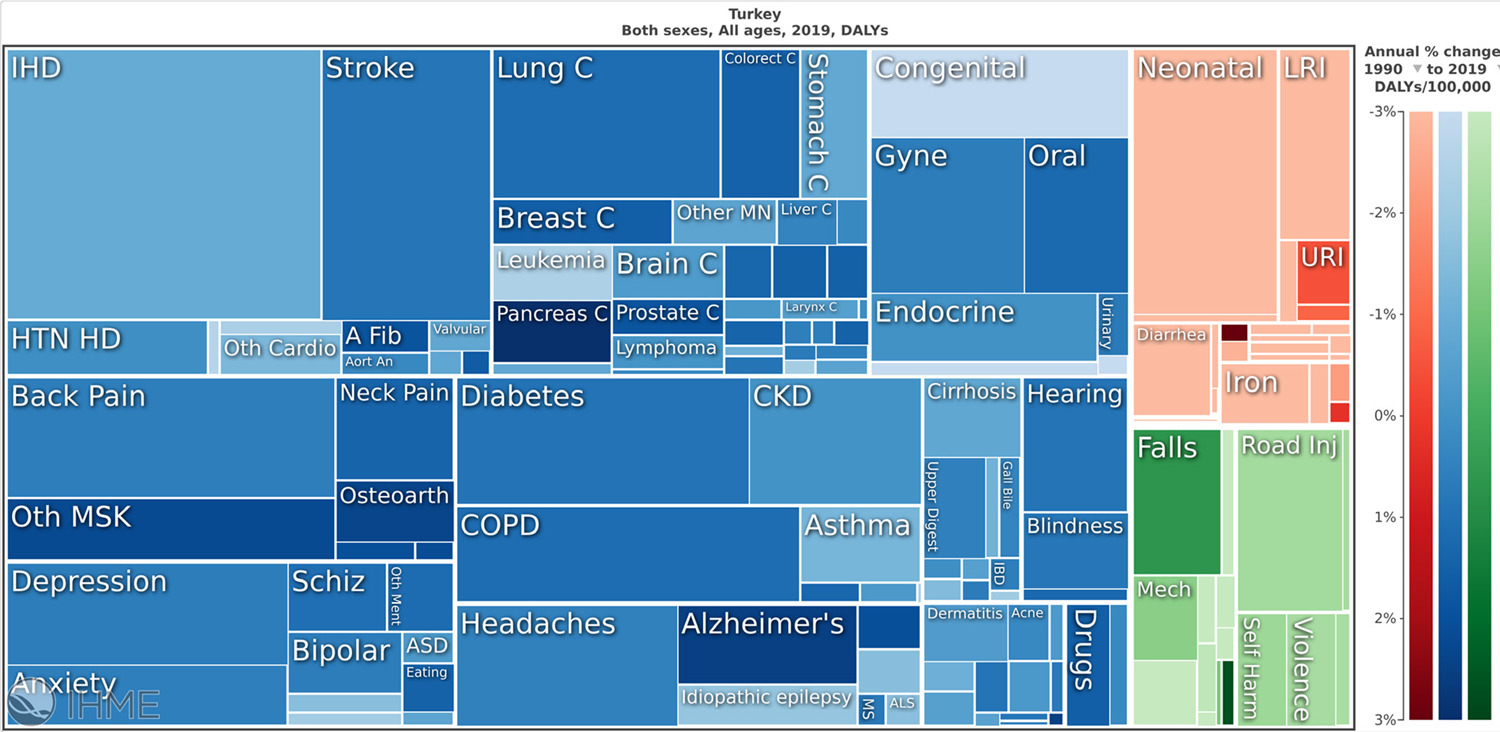
Cardiovascular diseases (CVD) are the main cause of death in Brazil and worldwide, determining an increase in morbidity and disability-adjusted life years (DALYs). The prevalence of CVD increased from 271 million (95% uncertainty interval [UI]: 257–285) in 1990 to 523 million (95% UI: 497–550) in 2019, and the number of deaths steadily grew from 12.1 million (95% UI: 11.4–12.6) in 1990 to 18.6 million (95% UI: 17.1–19.7) in 2019 in the 21 world regions analyzed by the Global Burden of Disease (GBD) 2019 study. The prevalence of CVD is likely to increase in Northern Africa and Western Asia, Central and Southern Asia, Eastern and Southeastern Asia, and Latin America and the Caribbean due to population growth and aging.

Ischemic heart disease (IHD) is part of this heterogeneous group of disorders, in which an acute coronary event is the first manifestation in approximately half of the cases., The total number of DALYs due to IHD has risen steadily since 1990, reaching 182 million (95% UI: 170-194) DALYs and 9.14 million (95% UI: 8.40-9.74) deaths in 2019. The GBD 2019 study has estimated 197 million (95% UI: 178-220) prevalent cases of IHD in 2019.

[…]

  • Cardiovascular Diseases
  • Coronary Artery Disease
  • coronary atherosclerosis
  • Morbidity
  • Risk Factors
Read Full Article
Creative Commons Attribution (CC BY) Creative Commons license
01/02/2021 DOI: 10.36660/ijcs.20200372
Viable myocardium scintigraphy with intravenous nitroglycerine by computed tomography with Tc-99m (MIBI)
ABC
Artigo Original

Viable myocardium scintigraphy with intravenous nitroglycerine by computed tomography with Tc-99m (MIBI)

José Ramos Filho et al. Marcos Welber Nascimento Rafael Mariano Gislon da Silva Thiago Negrini de Camargo … Roberto Simões de Almeida Eloá Jacinto Lima

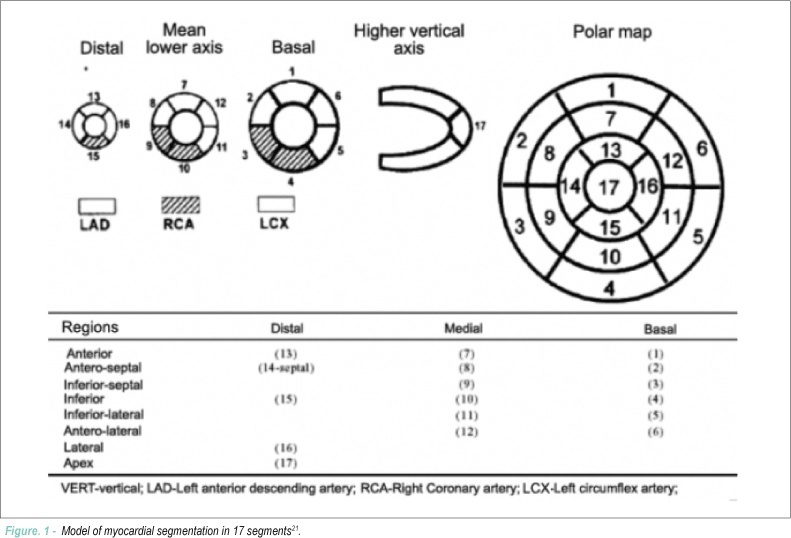
BACKGROUND: The selection of patients with chronic coronary disease for recanalization is based on the detection of the affected myocardium that is potentially viable. OBJECTIVE: To evaluate the potentially viable ischemic myocardium through single photon emission computed tomography (SPECT) with MIBI after a maximum tolerated dose of I.V. nitroglycerin. METHODS: We prospectively investigated by SPECT with Tc-99m (MIBI), from April 2004 to November 2005, 40 patients (mean age: 62 ± 8.9 yrs, 30 men) with coronary obstruction demonstrated angiographically; the myocardium scintigraphy was carried out at rest and after intravenous (I.V.) nitroglycerin, which was started at a dose of 1 µg/kg/min and increased every minute until the systolic blood pressure decreased by 20 mmHg. The decrease in the perfusion of the segments was classified as moderate or severe and compared after the nitroglycerin. The angiographic, hemodynamic and myocardial perfusion variables were analyzed. RESULTS: We analyzed 680 myocardial segments at rest: 538 with a homogenous distribution and 142 with hypoperfusion (54 with moderate and 88 with severe decrease). After the nitroglycerin, there was an increase in the perfusion in 19 (47.5%) of 40 patients and 55 of 142 segments became viable: 33 (61.1%) with moderate and 22 (25%) with severe decrease; both presented a significant increase in the radiotracer distribution (p < 0.001, Chi-square). CONCLUSION: One of the components with Tc-99m is Tc-99m 2-methoxy-isobutyl-isonitrile (MIBI), which, when used with an optimized dose of I.V. nitroglycerin, can increase the radiotracer uptake in areas with moderate and severe hypoperfusion. The results of the present study suggest the increase in the Tc-99m (MIBI) sensitivity by nitroglycerin for the detection of viable myocardium.

  • coronary atherosclerosis
  • Myocardial Reperfusion
  • Myocardial Stunning
  • nitroglycerin
Read Full Article
Creative Commons Attribution (CC BY) Creative Commons license
01/10/2008 DOI: 10.1590/S0066-782X2008001500003 Views 1
ABC
Artigo Original

Lipid profile and intensity of atherosclerosis disease in acute coronary syndrome

Rafaela Andrade Penalva et al. Marçal de Oliveira Huoya Luis Cláudio Lemos Correia Gilson Soares Feitosa Ana Marice Teixeira Ladeia

BACKGROUND: The relationship between coronary artery disease (CAD) and dyslipidemia in acute coronary syndromes has been rarely demonstrated in clinical and epidemiological studies. OBJECTIVE: To evaluate the association between lipid profile and severity of CAD in patients with acute coronary syndrome without ST-segment elevation. METHODS: In this retrospective study, the authors reviewed medical records of 107 consecutive patients diagnosed with acute coronary syndrome (ACS) without ST-segment elevation admitted within a one-year period and who had undergone coronary angiography during hospitalization. Laboratory evaluation included serum levels of lipid fractions. Severity of CAD was determined by evaluating the number, degree, and score of coronary artery obstructions. For statistical analysis, the Student’s t test, chi-square test and ANOVA with statistical significance set at p<0.05, as well as multivariate analysis were performed. RESULTS: A total of 107 patients were included; 94(88%) had CAD, of which 50 (53.2%) were males with predominance of multivessel disease. As regards the lipid profile, 64(59.8%) patients were observed to have TC<200mg/dl, 33(30.8%) had HDL<40mg/dl, and 38(35.5%) had LDL 70% stenosis. In the association between lipid profile and CAD, we observed a higher TC/HDL ratio in the multivessel and two-vessel groups in comparison with the one-vessel group (4.3±2, 4.0±1.7, 2.9±1.6, respectively) with ANOVA p=0.049. In the multivariate analysis, the TC/HDL ratio remained a significant predictor (p = 0.016). CONCLUSION: The TC/HDL ratio was a marker of severity of CAD in relation to the number of vessels affected, thus demonstrating that the lipid profile can be a determinant of severity in patients with ACS without ST-segment elevation.

  • Atherosclerosis
  • coronary atherosclerosis
  • Dyslipidemias
Read Full Article
Creative Commons Attribution (CC BY) Creative Commons license
22/02/2008 DOI: 10.1590/S0066-782X2008000100005
ABC
Artigo Original

Association between risk factors for coronary artery disease and coronary disease in patients undergoing myocardial perfusion scintigraphy

Paulo Schiavom Duarte et al. Luiz Eduardo Mastrocolla Gilberto Alonso Eduardo Vilaça Lima … Paola Emanuela Smanio Marco Antonio Conde de Oliveira Luiz Roberto Fernandes Martins Júlio César Rodrigues Pereira

OBJECTIVES: To establish the degree of association between cardiovascular risk factors and the presence of coronary artery disease (CAD) in a group of patients undergoing myocardial perfusion scintigraphy (MPS). METHODS: The study included 7183 patients who had undergone MPS. Using logistic regression analysis the odds ratios for the following risk factors were evaluated: age, gender, family history, body mass index, smoking, dyslipidemia, diabetes mellitus (DM) and systemic hypertension. Indicators for the presence of CAD were defined as: myocardial infarction, revascularization, angioplasty or an altered MPS. Analysis was based on the whole the group as well as on male and female subgroups. The impact of the risk factors in relation to age was also analyzed. RESULTS: A statistically significant association was observed between patient age and gender and the presence of CAD. For females, it was demonstrated that DM is the main modifiable risk factor for CAD. For males various modifiable risk factors were associated with the presence of CAD, particularly DM and dyslipidemia. In the analysis by age groups some risk factors showed a more expressive association. CONCLUSION: The main risk factors for CAD were aging and male gender. In relation to modifiable risk factors and the presence of CAD, the greatest associations for males were DM and dyslipidemia and for females DM. The most relevant factors for specific age groups were smoking for young men and DM and smoking for women between the ages of 40 and 50.

  • coronary atherosclerosis
  • Myocardial Reperfusion
  • Radionuclide Imaging
  • Risk Factors
Read Full Article
Creative Commons Attribution (CC BY) Creative Commons license
21/05/2007 DOI: 10.1590/S0066-782X2007000300009 Views 2
ABC
Artigo Original

Periodontal disease as a potential risk factor for acute coronary syndromes

Renata Accarini et al. Moacir Fernandes de Godoy

OBJECTIVE: To investigate whether there is a relationship between active periodontal disease (PD) and acute coronary syndromes (ACS). METHODS: Three hundred and sixty-one patients (57,3% male), ages ranging from 27 to 89 (mean ± DP = 60.5 ± 12.2), were admitted to the Intensive Care Unit of a Teaching Hospital with symptoms and complementary examinations consistent with acute coronary syndrome. All the patients had a complete periodontal examination in the ICU setting, and 325 (90.9%) underwent coronary angiography for diagnostic confirmation and/or treatment planning. Periodontal examination included evaluation of all the teeth in the oral cavity and the following parameters: probing depth, clinical attachment level, plaque index, and gingival index. RESULTS: Of the 325 patients, 91 (28%) had coronary arteries free of obstruction or with mild obstructions (< 50% diameter stenosis), and the remaining 72% had severe obstructions. Fisher's exact text yielded a p value of 0.0245 with an odds ratio of 2.571 (95% CI 1.192 to 5.547), meaning that the group with ACS and significant obstructive coronary artery disease was 2.5-fold more likely to have active PD. CONCLUSION: A significant association was found between active periodontal disease and severe obstructive coronary artery in patients with acute coronary syndrome, underscoring the importance of prevention and adequate treatment of periodontal disease, which should be considered as a potential risk factor in the etiology and instability of the atherosclerotic plaque.

  • Acute coronary syndrome
  • coronary atherosclerosis
  • Inflammation
  • obstructive coronary artery disease
  • Periodontal disease
  • Risk Factor
Read Full Article
Creative Commons Attribution (CC BY) Creative Commons license
06/03/2007 DOI: 10.1590/S0066-782X2006001800007
ABC
Artigo Original

Dyslipidemia among adolescents and children from Pernambuco – Brazil

Everaldo de Franca et al. João Guilherme Bezerra Alves

OBJECTIVE: To describe the prevalence of dyslipidemia and overweight among children and adolescents in the state of Pernambuco, Brazil. METHODS: During clinical evaluation, a questionnaire was completed through interviews with parents and included personal details of the children and adolescents. An exclusion criterion was personal or parental history of diabetes or coronary artery disease (CAD). Blood samples were collected from subjects who had been fasting for 12 hours, and the following evaluations were performed using enzymatic methods: serum Total Cholesterol, LDL-Cholesterol, HDL-Cholesterol and Triglycerides. Data were analyzed using the SPSS 11.5 statistical package including Student’s t test and Fisher’s exact test. RESULTS: Of the 414 children and adolescents analyzed in the present study, about 30% presented an atherogenic lipid profile, characterized by higher levels of Triglyceride, Total and LDL- Cholesterol. The prevalence of overweight in this sample from Pernambuco was 4%. Girls had higher levels of Triglycerides and Total Cholesterol than boys. Children and adolescents presented the same values of lipid on blood that is not expected for children in this phase of development. CONCLUSION: In the present population, an unfavorable lipid profile among children and adolescents from Pernambuco suggests that programs targeting the prevention of cardiovascular disease and obesity must begin early in life.

  • Adolescents
  • Children
  • coronary atherosclerosis
  • dyslipidemia
  • Overweight
Read Full Article
Creative Commons Attribution (CC BY) Creative Commons license
18/01/2007 DOI: 10.1590/S0066-782X2006001900007
Angiographic geometric predictors of myocardial infarction are not associated with ultrasonographic markers of plaque vulnerability
ABC
Artigo Original

Angiographic geometric predictors of myocardial infarction are not associated with ultrasonographic markers of plaque vulnerability

Celso Kiyochi Takimura et al. Pedro Alves Lemos Marco Antonio Perin Expedito Eustáquio Ribeiro da Silva … John Ambrose José Antonio Franchini Ramires Eulógio Emílio Martinez Filho

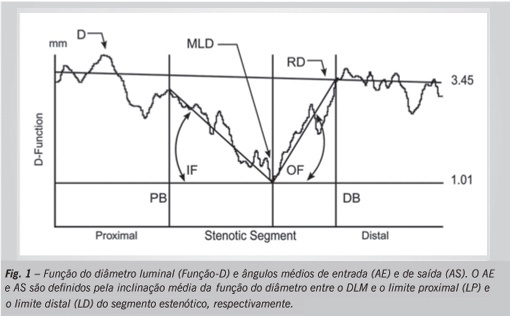
OBJECTIVE: Some angiographic geometric features of coronary lesions have recently been described as independent predictors of myocardial infarction. The purpose of this study was to correlate these geometric markers with intravascular ultrasound findings known to be associated with greater vulnerability to plaque rupture. METHODS: A total of 30 patients with stable coronary syndromes and de novo lesions (31 lesions) underwent coronary angiography and intravascular ultrasound (IVUS). For each lesion, angiographic geometric features (degree of symmetry, degree of stenosis, lesion length, and outflow angle) were correlated with the following ultrasound variables: type of plaque (soft, fibrous, mixed, or calcified), plaque burden and remodeling index. RESULTS: Mean lesion length was 9.2 ± 4.4 mm, percent stenosis was 50.0% to 89.0% (mean 67.7 ± 12.1%), inflow angles ranged from 8.48º to 48.78º (mean 24.0 ± 11.4º), outflow angles ranged from 8.30º to 53.03º (mean 23.8 ± 11.7º), and the symmetry index ranged from 0 to 1 (mean 0.56 ± 0.32). On ultrasound evaluation, frequency of soft or calcified plaques, positive remodeling, and magnitude of plaque burden were not associated with any angiographic geometric feature (p > 0.05 for all analysis). CONCLUSION: Angiographic geometric features that predispose to acute occlusion do not correlate with IVUS morphologic and quantitative findings associated with plaque vulnerability.

  • Coronary Angiography
  • coronary atherosclerosis
  • intravascular ultrasonography
Read Full Article
Creative Commons Attribution (CC BY) Creative Commons license
28/09/2006 DOI: 10.1590/S0066-782X2006001500006
Influence of Diabetes Mellitus on immediate results of coronary stent: National Center for Cardiovascular Interventions (CENIC) data analysis
ABC
Artigo Original

Influence of Diabetes Mellitus on immediate results of coronary stent: National Center for Cardiovascular Interventions (CENIC) data analysis

Isaac Moscoso et al. Lázaro Claudiovino Garcia Gilvan Oliveira Dourado Maria Fernanda Z. Mauro … Paulo Caramori Wilson Coelho Valter Lima Ronaldo Bueno José A. Mangione

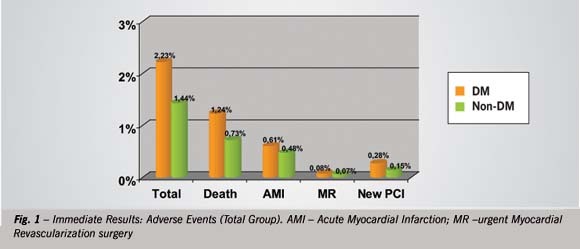
OBJECTIVE: This study sought to investigate the influence of Diabetes Mellitus (DM) on immediate results after coronary stenting implantation (CSI) according to clinical presentation. METHODS: Between January, 1997 and December, 2003, 11,874 diabetic patients underwent CSI, as recorded by CENIC database: 7,386 (62.3%) had chronic coronary disease (CCD); 3,142 (26.4%) acute coronary syndrome with non-ST segment elevation (ACSNST); and 1,346 (11.3%), reported acute myocardial infarction (AMI), with ST Segment elevation. Those groups were compared with 48,103 non-diabetics: 30,980 (64.5%) with CCD; 10,938 (22.7%), with non-elevated ST segments and unstable angina; and 6,185 (12.8%), with AMI. RESULTS: Diabetic patients presented worse clinical and angiographic characteristics. Diabetics with CCD showed similar incidence of MACE as compared to non-diabetics (0.98% x 0.91%, p=0.5971); however, diabetics with ACSNST and AMI reported higher incidence of events: 2.76% x 1.46% (p<0.0001) and 7.87% x 4.1% (p<0.0001), respectively. Multivariate analysis showed DM to act as independent risk predictor for larger adverse events under non-elevated ST segment and unstable angina (ACSNST) (OR: 1.92 CI: 1.46-2.52 p<0.0001) and with AMI (OR: 2.0 CI: 1.57-2.54 p<=0.0001) and no influence for CCD (OR: 1.08 CI: 0.83-1.42 p=0.5470 CONCLUSION: Diabetic patients with CCD reported similar outcome as compared to the non-diabetics; however, those with ACSNST and AMI presented higher incidence of major adverse cardiac events during hospital stay.

  • coronary atherosclerosis
  • Diabetes Mellitus
  • stenting
Read Full Article
Creative Commons Attribution (CC BY) Creative Commons license
30/03/2006 DOI: 10.1590/S0066-782X2006000300005
Myocardial revascularization in renal transplant patients
ABC
Original Article

Myocardial revascularization in renal transplant patients

Daniel de Souza Delgado et al. Luís Roberto Gerola Nelson Américo Hossne Jr. João Nelson R. Branco Enio Buffolo

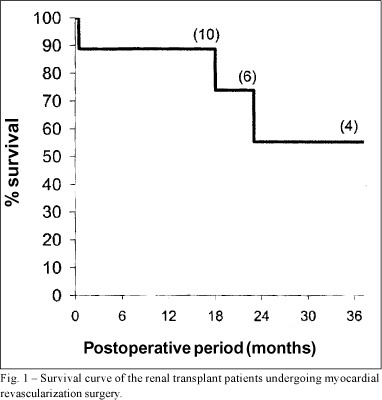
OBJECTIVE: To assess the results of surgical myocardial revascularization in renal transplant patients. METHODS: From 1991 to 2000, 11 renal transplant patients, whose ages ranged from 36 to 59 (47.5±8) years, 8 males and 3 females, underwent myocardial revascularization. The time interval between renal transplantation and myocardial revascularization ranged from 25 to 120 (mean of 63.8±32.7) months. RESULTS: The in-hospital mortality rate was 9%. One patient died on the 4th postoperative day from septicemia and respiratory failure. The mean graft/patient ratio was 2.7±0.8. Only 1 patient required slow hemodialysis during 24 hours in the postoperative period, and no patient had a definitive renal lesion or lost the transplanted kidney. The actuarial survival curves after 1, 2, and 3 years were, respectively, 90.9%, 56.8%, and 56.8%. CONCLUSION: Renal transplant patients may undergo myocardial revascularization with no lesion in or loss of the transplanted kidney.

  • coronary atherosclerosis
  • Myocardial Revascularization
  • renal transplantation
Read Full Article
Creative Commons Attribution (CC BY) Creative Commons license
17/12/2002 DOI: 10.1590/S0066-782X2002001400005 Views 2
Comparison between Adventitial and Intimal Inflammation of Ruptured and Nonruptured Atherosclerotic Plaques in Human Coronary Arteries
ABC
Original Article

Comparison between Adventitial and Intimal Inflammation of Ruptured and Nonruptured Atherosclerotic Plaques in Human Coronary Arteries

Maria L. Higuchi et al. Paulo S. Gutierrez Hiram G. Bezerra Suely A. Palomino … Vera D. Aiello Júlia M. L. Silvestre Peter Libby José A. F. Ramires

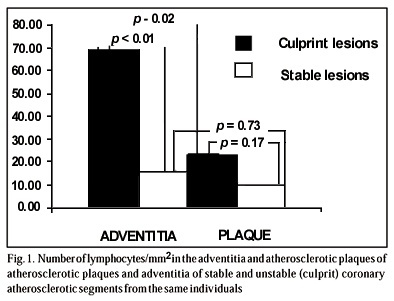
OBJECTIVE: To verify the possible role of adventitial inflammation in atherosclerotic plaque vulnerability and coronary artery remodelling. METHODS: We compared the mean numbers of lymphocytes in the adventitia and in the plaque of ruptured thrombosed and stable equi-stenotic coronary segments of 34 patients who died due to acute myocardial infarction. We also analysed adventitial microvessels, adventitial fibrosis and the external elastic membrane. RESULTS: In the adventitia, the numbers of lymphocytes and microvessels/mm² were 69.5±88.3 and 60.9± 32.1 in culprit lesions and 16.4 ± 21.1 and 44.3±16.1 in stable lesions (p<0.05); within the plaques, the mean number of lymphocytes was 24±40.8 in culprit lesions and 10.9±13.2 in stable ones (p=0.17). The mean percent area of adventitial fibrosis/cross-sectional area of the vessel was significantly lower in unstable plaques (p<0.001). The confocal images showed holes in the external elastic membrane. CONCLUSION: Unstable plaques exhibit chronic pan-arteritis, accompanied by enlargement, medial thinning, and less fibrosis than in stable lesions, which is compatible with vessel aneurysm. Adventitial inflammation may contribute significantly to atheroma instability.

  • adventitial inflammation
  • Aneurysm
  • arteritis
  • coronary atherosclerosis
  • unstable plaques
Read Full Article
Creative Commons Attribution (CC BY) Creative Commons license
01/08/2002 DOI: 10.1590/S0066-782X2002001000003
ABC
Artigo Original

Clinical therapeutics for stable coronary artery disease. Differences between primary and tertiary medical care centers

Antônio P. Mansur et al. Everli P. S. Gonçalves Gomes Desidério Favarato Angela Raineri … José Renato M. Martins José A. F. Ramires

PURPOSE: To observe the distribution of the main drugs used in patients with stable coronary heart disease, in primary and tertiary medical care centers (MCC). METHODS: We studied 300 consecutive out patients at the Hetat Institute with the diagnosis of stable coronary artery disease, 205 (68%) males and 95 (32%) female, aged from 31 to 80 (mean 58±8.0) years old. Drug intake was evaluated. RESULTS: We observed that the use of nitrates (48% vs 55%; p=NS) and calcium antagonists (46% vs 37%; p=NS), respectively in both primary and tertiary MCC was similar. The beta blockers were used more often in the primary MCC (50% vs 35%; p= 0,02). Angiotensin coverting enzyme inhibitors (11% vs 42%; p< 0.001), diuretics (30% vs 49%; p= 0.002) and aspirin (44% vs 76%; p= 0.0001) were more frequently used in the tertiary MCC. CONCLUSION: We observed similar frequency of use of nitrates and calcium antagonists in both centers. There was a higher use of beta blockers in primary MCC. The angiotensin coverting enzyme inhibitors and antiplatelet agents were more used in the tertiary MCC. In relation to the updated literature, the best pharmacotherapy to coronary artery disease should be optimized in both centers.

  • community and reference medical centers
  • coronary atherosclerosis
  • medical therapeutics
Read Full Article
Creative Commons Attribution (CC BY) Creative Commons license
09/02/2001 DOI: 10.1590/S0066-782X1997000900004

How to cite this article

EndNote RIS

Electronic Document Format (Vancouver)

Paiter J, Oliveira GMM. Risk Prediction Systems: One for all or all for Some. International Journal of Cardiovascular Sciences 2021;34(1):39-43.

Electronic Document Format (ABNT)

Paiter, Jorge; Oliveira, Gláucia Maria Moraes de. Risk Prediction Systems: One for all or all for Some. International Journal of Cardiovascular Sciences, v. 34, n. 1, p. 39-43, Jan. 2021.

Electronic Document Format (APA)

Paiter, J., & Oliveira, G. M. M. (2021). Risk Prediction Systems: One for all or all for Some. International Journal of Cardiovascular Sciences, 34(1), 39-43.

Electronic Document Format (ISO)

Paiter, Jorge and Oliveira, Gláucia Maria Moraes de. Risk Prediction Systems: One for all or all for Some. International Journal of Cardiovascular Sciences [online]. 2021, vol. 34, n. 1, [cited 2026-10-14], pp. 39-43. Available from: <https://journals.cardiol.br/en/article/risk-prediction-systems-one-for-all-or-all-for-some/>. ISSN 2359-4802

EndNote RIS

Electronic Document Format (Vancouver)

Ramos Filho J, Nascimento MW, Silva RMG, Camargo TN, Almeida RS, Lima EJ. Viable myocardium scintigraphy with intravenous nitroglycerine by computed tomography with Tc-99m (MIBI). Arquivos Brasileiros de Cardiologia 2008;91(3):148-55.

Electronic Document Format (ABNT)

Ramos Filho, José; Nascimento, Marcos Welber; Silva, Rafael Mariano Gislon da; Camargo, Thiago Negrini de; Almeida, Roberto Simões de; Lima, Eloá Jacinto. Viable myocardium scintigraphy with intravenous nitroglycerine by computed tomography with Tc-99m (MIBI). Arquivos Brasileiros de Cardiologia, v. 91, n. 3, p. 148-155, Sep. 2008.

Electronic Document Format (APA)

Ramos Filho, J., Nascimento, M. W., Silva, R. M. G. , Camargo, T. N. , Almeida, R. S. , & Lima, E. J. (2008). Viable myocardium scintigraphy with intravenous nitroglycerine by computed tomography with Tc-99m (MIBI). Arquivos Brasileiros de Cardiologia, 91(3), 148-155.

Electronic Document Format (ISO)

Ramos Filho, José and Nascimento, Marcos Welber and Silva, Rafael Mariano Gislon da and Camargo, Thiago Negrini de and Almeida, Roberto Simões de and Lima, Eloá Jacinto. Viable myocardium scintigraphy with intravenous nitroglycerine by computed tomography with Tc-99m (MIBI). Arquivos Brasileiros de Cardiologia [online]. 2008, vol. 91, n. 3, [cited 2026-10-14], pp. 148-155. Available from: <https://journals.cardiol.br/en/article/viable-myocardium-scintigraphy-with-intravenous-nitroglycerine-by-computed-tomography-with-tc-99m-mibi/>. ISSN 0066-782X

EndNote RIS

Electronic Document Format (Vancouver)

Penalva RA, Huoya MO, Correia LCL, Feitosa GS, Ladeia AMT. Lipid profile and intensity of atherosclerosis disease in acute coronary syndrome. Arquivos Brasileiros de Cardiologia 2008;90(1):24-30.

Electronic Document Format (ABNT)

Penalva, Rafaela Andrade; Huoya, Marçal de Oliveira; Correia, Luis Cláudio Lemos; Feitosa, Gilson Soares; Ladeia, Ana Marice Teixeira. Lipid profile and intensity of atherosclerosis disease in acute coronary syndrome. Arquivos Brasileiros de Cardiologia, v. 90, n. 1, p. 24-30, Feb. 2008.

Electronic Document Format (APA)

Penalva, R. A., Huoya, M. O., Correia, L. C. L., Feitosa, G. S., & Ladeia, A. M. T. (2008). Lipid profile and intensity of atherosclerosis disease in acute coronary syndrome. Arquivos Brasileiros de Cardiologia, 90(1), 24-30.

Electronic Document Format (ISO)

Penalva, Rafaela Andrade and Huoya, Marçal de Oliveira and Correia, Luis Cláudio Lemos and Feitosa, Gilson Soares and Ladeia, Ana Marice Teixeira. Lipid profile and intensity of atherosclerosis disease in acute coronary syndrome. Arquivos Brasileiros de Cardiologia [online]. 2008, vol. 90, n. 1, [cited 2026-10-14], pp. 24-30. Available from: <https://journals.cardiol.br/en/article/lipid-profile-and-intensity-of-atherosclerosis-disease-in-acute-coronary-syndrome/>. ISSN 0066-782X

EndNote RIS

Electronic Document Format (Vancouver)

Duarte PS, Mastrocolla LE, Alonso G, Lima EV, Smanio PE, Oliveira MAC, Martins LRF, et al. Association between risk factors for coronary artery disease and coronary disease in patients undergoing myocardial perfusion scintigraphy. Arquivos Brasileiros de Cardiologia 2007;88(3):304-13.

Electronic Document Format (ABNT)

Duarte, Paulo Schiavom; Mastrocolla, Luiz Eduardo; Alonso, Gilberto; Lima, Eduardo Vilaça; Smanio, Paola Emanuela; Oliveira, Marco Antonio Conde de; Martins, Luiz Roberto Fernandes; Pereira, Júlio César Rodrigues. Association between risk factors for coronary artery disease and coronary disease in patients undergoing myocardial perfusion scintigraphy. Arquivos Brasileiros de Cardiologia, v. 88, n. 3, p. 304-313, May. 2007.

Electronic Document Format (APA)

Duarte, P. S., Mastrocolla, L. E., Alonso, G., Lima, E. V., Smanio, P. E., Oliveira, M. A. C. , Martins, L. R. F., & Pereira, J. C. R. (2007). Association between risk factors for coronary artery disease and coronary disease in patients undergoing myocardial perfusion scintigraphy. Arquivos Brasileiros de Cardiologia, 88(3), 304-313.

Electronic Document Format (ISO)

Duarte, Paulo Schiavom and Mastrocolla, Luiz Eduardo and Alonso, Gilberto and Lima, Eduardo Vilaça and Smanio, Paola Emanuela and Oliveira, Marco Antonio Conde de and Martins, Luiz Roberto Fernandes and Pereira, Júlio César Rodrigues. Association between risk factors for coronary artery disease and coronary disease in patients undergoing myocardial perfusion scintigraphy. Arquivos Brasileiros de Cardiologia [online]. 2007, vol. 88, n. 3, [cited 2026-10-14], pp. 304-313. Available from: <https://journals.cardiol.br/en/article/association-between-risk-factors-for-coronary-artery-disease-and-coronary-disease-in-patients-undergoing-myocardial-perfusion-scintigraphy/>. ISSN 0066-782X

EndNote RIS

Electronic Document Format (Vancouver)

Accarini R, Godoy MF. Periodontal disease as a potential risk factor for acute coronary syndromes. Arquivos Brasileiros de Cardiologia 2007;87(5):592-6.

Electronic Document Format (ABNT)

Accarini, Renata; Godoy, Moacir Fernandes de. Periodontal disease as a potential risk factor for acute coronary syndromes. Arquivos Brasileiros de Cardiologia, v. 87, n. 5, p. 592-596, Mar. 2007.

Electronic Document Format (APA)

Accarini, R., & Godoy, M. F. (2007). Periodontal disease as a potential risk factor for acute coronary syndromes. Arquivos Brasileiros de Cardiologia, 87(5), 592-596.

Electronic Document Format (ISO)

Accarini, Renata and Godoy, Moacir Fernandes de. Periodontal disease as a potential risk factor for acute coronary syndromes. Arquivos Brasileiros de Cardiologia [online]. 2007, vol. 87, n. 5, [cited 2026-10-14], pp. 592-596. Available from: <https://journals.cardiol.br/en/article/periodontal-disease-as-a-potential-risk-factor-for-acute-coronary-syndromes-2/>. ISSN 0066-782X

EndNote RIS

Electronic Document Format (Vancouver)

Franca E, Alves JGB. Dyslipidemia among adolescents and children from Pernambuco – Brazil. Arquivos Brasileiros de Cardiologia 2007;87(6):722-7.

Electronic Document Format (ABNT)

Franca, Everaldo de; Alves, João Guilherme Bezerra. Dyslipidemia among adolescents and children from Pernambuco – Brazil. Arquivos Brasileiros de Cardiologia, v. 87, n. 6, p. 722-727, Jan. 2007.

Electronic Document Format (APA)

Franca, E. , & Alves, J. G. B. (2007). Dyslipidemia among adolescents and children from Pernambuco – Brazil. Arquivos Brasileiros de Cardiologia, 87(6), 722-727.

Electronic Document Format (ISO)

Franca, Everaldo de and Alves, João Guilherme Bezerra. Dyslipidemia among adolescents and children from Pernambuco – Brazil. Arquivos Brasileiros de Cardiologia [online]. 2007, vol. 87, n. 6, [cited 2026-10-14], pp. 722-727. Available from: <https://journals.cardiol.br/en/article/dyslipidemia-among-adolescents-and-children-from-pernambuco-brazil/>. ISSN 0066-782X

EndNote RIS

Electronic Document Format (Vancouver)

Takimura CK, Lemos PA, Perin MA, Silva EER, Ambrose J, Ramires JAF, Martinez Filho EE, et al. Angiographic geometric predictors of myocardial infarction are not associated with ultrasonographic markers of plaque vulnerability. Arquivos Brasileiros de Cardiologia 2006;87(2):99-105.

Electronic Document Format (ABNT)

Takimura, Celso Kiyochi; Lemos, Pedro Alves; Perin, Marco Antonio; Silva, Expedito Eustáquio Ribeiro da; Ambrose, John; Ramires, José Antonio Franchini; Martinez Filho, Eulógio Emílio. Angiographic geometric predictors of myocardial infarction are not associated with ultrasonographic markers of plaque vulnerability. Arquivos Brasileiros de Cardiologia, v. 87, n. 2, p. 99-105, Sep. 2006.

Electronic Document Format (APA)

Takimura, C. K., Lemos, P. A., Perin, M. A., Silva, E. E. R. , Ambrose, J., Ramires, J. A. F., & Martinez Filho, E. E. (2006). Angiographic geometric predictors of myocardial infarction are not associated with ultrasonographic markers of plaque vulnerability. Arquivos Brasileiros de Cardiologia, 87(2), 99-105.

Electronic Document Format (ISO)

Takimura, Celso Kiyochi and Lemos, Pedro Alves and Perin, Marco Antonio and Silva, Expedito Eustáquio Ribeiro da and Ambrose, John and Ramires, José Antonio Franchini and Martinez Filho, Eulógio Emílio. Angiographic geometric predictors of myocardial infarction are not associated with ultrasonographic markers of plaque vulnerability. Arquivos Brasileiros de Cardiologia [online]. 2006, vol. 87, n. 2, [cited 2026-10-14], pp. 99-105. Available from: <https://journals.cardiol.br/en/article/angiographic-geometric-predictors-of-myocardial-infarction-are-not-associated-with-ultrasonographic-markers-of-plaque-vulnerability/>. ISSN 0066-782X

EndNote RIS

Electronic Document Format (Vancouver)

Moscoso I, Garcia LC, Dourado GO, Mauro MFZ, Caramori P, Coelho W, Lima V, et al. Influence of Diabetes Mellitus on immediate results of coronary stent: National Center for Cardiovascular Interventions (CENIC) data analysis. Arquivos Brasileiros de Cardiologia 2006;86(3):181-90.

Electronic Document Format (ABNT)

Moscoso, Isaac; Garcia, Lázaro Claudiovino; Dourado, Gilvan Oliveira; Mauro, Maria Fernanda Z.; Caramori, Paulo; Coelho, Wilson; Lima, Valter; Bueno, Ronaldo; Mangione, José A.. Influence of Diabetes Mellitus on immediate results of coronary stent: National Center for Cardiovascular Interventions (CENIC) data analysis. Arquivos Brasileiros de Cardiologia, v. 86, n. 3, p. 181-190, Mar. 2006.

Electronic Document Format (APA)

Moscoso, I., Garcia, L. C., Dourado, G. O., Mauro, M. F. Z., Caramori, P., Coelho, W., Lima, V., Bueno, R., & Mangione, J. A. (2006). Influence of Diabetes Mellitus on immediate results of coronary stent: National Center for Cardiovascular Interventions (CENIC) data analysis. Arquivos Brasileiros de Cardiologia, 86(3), 181-190.

Electronic Document Format (ISO)

Moscoso, Isaac and Garcia, Lázaro Claudiovino and Dourado, Gilvan Oliveira and Mauro, Maria Fernanda Z. and Caramori, Paulo and Coelho, Wilson and Lima, Valter and Bueno, Ronaldo and Mangione, José A.. Influence of Diabetes Mellitus on immediate results of coronary stent: National Center for Cardiovascular Interventions (CENIC) data analysis. Arquivos Brasileiros de Cardiologia [online]. 2006, vol. 86, n. 3, [cited 2026-10-14], pp. 181-190. Available from: <https://journals.cardiol.br/en/article/influence-of-diabetes-mellitus-on-immediate-results-of-coronary-stent-national-center-for-cardiovascular-interventions-cenic-data-analysis/>. ISSN 0066-782X

EndNote RIS

Electronic Document Format (Vancouver)

Delgado DS, Gerola LR, Hossne Jr. NA, Branco JNR, Buffolo E. Myocardial revascularization in renal transplant patients. Arquivos Brasileiros de Cardiologia 2002;79(5):480-3.

Electronic Document Format (ABNT)

Delgado, Daniel de Souza; Gerola, Luís Roberto; Hossne Jr., Nelson Américo; Branco, João Nelson R.; Buffolo, Enio. Myocardial revascularization in renal transplant patients. Arquivos Brasileiros de Cardiologia, v. 79, n. 5, p. 480-483, Dec. 2002.

Electronic Document Format (APA)

Delgado, D. S., Gerola, L. R., Hossne Jr., N. A., Branco, J. N. R., & Buffolo, E. (2002). Myocardial revascularization in renal transplant patients. Arquivos Brasileiros de Cardiologia, 79(5), 480-483.

Electronic Document Format (ISO)

Delgado, Daniel de Souza and Gerola, Luís Roberto and Hossne Jr., Nelson Américo and Branco, João Nelson R. and Buffolo, Enio. Myocardial revascularization in renal transplant patients. Arquivos Brasileiros de Cardiologia [online]. 2002, vol. 79, n. 5, [cited 2026-10-14], pp. 480-483. Available from: <https://journals.cardiol.br/en/article/myocardial-revascularization-in-renal-transplant-patients/>. ISSN 0066-782X

EndNote RIS

Electronic Document Format (Vancouver)

Higuchi ML, Gutierrez PS, Bezerra HG, Palomino SA, Aiello VD, Silvestre JML, Libby P, et al. Comparison between Adventitial and Intimal Inflammation of Ruptured and Nonruptured Atherosclerotic Plaques in Human Coronary Arteries. Arquivos Brasileiros de Cardiologia 2002;79(1):20-4.

Electronic Document Format (ABNT)

Higuchi, Maria L.; Gutierrez, Paulo S.; Bezerra, Hiram G.; Palomino, Suely A.; Aiello, Vera D.; Silvestre, Júlia M. L.; Libby, Peter; Ramires, José A. F.. Comparison between Adventitial and Intimal Inflammation of Ruptured and Nonruptured Atherosclerotic Plaques in Human Coronary Arteries. Arquivos Brasileiros de Cardiologia, v. 79, n. 1, p. 20-24, Jul. 2002.

Electronic Document Format (APA)

Higuchi, M. L., Gutierrez, P. S., Bezerra, H. G., Palomino, S. A., Aiello, V. D., Silvestre, J. M. L., Libby, P., & Ramires, J. A. F. (2002). Comparison between Adventitial and Intimal Inflammation of Ruptured and Nonruptured Atherosclerotic Plaques in Human Coronary Arteries. Arquivos Brasileiros de Cardiologia, 79(1), 20-24.

Electronic Document Format (ISO)

Higuchi, Maria L. and Gutierrez, Paulo S. and Bezerra, Hiram G. and Palomino, Suely A. and Aiello, Vera D. and Silvestre, Júlia M. L. and Libby, Peter and Ramires, José A. F.. Comparison between Adventitial and Intimal Inflammation of Ruptured and Nonruptured Atherosclerotic Plaques in Human Coronary Arteries. Arquivos Brasileiros de Cardiologia [online]. 2002, vol. 79, n. 1, [cited 2026-10-14], pp. 20-24. Available from: <https://journals.cardiol.br/en/article/comparison-between-adventitial-and-intimal-inflammation-of-ruptured-and-nonruptured-atherosclerotic-plaques-in-human-coronary-arteries/>. ISSN 0066-782X

EndNote RIS

Electronic Document Format (Vancouver)

Mansur AP, Gomes EPSG, Favarato D, Raineri A, Martins JRM, Ramires JAF. Clinical therapeutics for stable coronary artery disease. Differences between primary and tertiary medical care centers. Arquivos Brasileiros de Cardiologia 2001;69(3):165-8.

Electronic Document Format (ABNT)

Mansur, Antônio P.; Gomes, Everli P. S. Gonçalves; Favarato, Desidério; Raineri, Angela; Martins, José Renato M.; Ramires, José A. F.. Clinical therapeutics for stable coronary artery disease. Differences between primary and tertiary medical care centers. Arquivos Brasileiros de Cardiologia, v. 69, n. 3, p. 165-168, Feb. 2001.

Electronic Document Format (APA)

Mansur, A. P., Gomes, E. P. S. G., Favarato, D., Raineri, A., Martins, J. R. M., & Ramires, J. A. F. (2001). Clinical therapeutics for stable coronary artery disease. Differences between primary and tertiary medical care centers. Arquivos Brasileiros de Cardiologia, 69(3), 165-168.

Electronic Document Format (ISO)

Mansur, Antônio P. and Gomes, Everli P. S. Gonçalves and Favarato, Desidério and Raineri, Angela and Martins, José Renato M. and Ramires, José A. F.. Clinical therapeutics for stable coronary artery disease. Differences between primary and tertiary medical care centers. Arquivos Brasileiros de Cardiologia [online]. 2001, vol. 69, n. 3, [cited 2026-10-14], pp. 165-168. Available from: <https://journals.cardiol.br/en/article/clinical-therapeutics-for-stable-coronary-artery-disease-differences-between-primary-and-tertiary-medical-care-centers/>. ISSN 0066-782X

  • About ABC Family
  • Internal Regulation
  • Editorial Board
  • Brazilian Society of Cardiology (SBC)

Issues

SBC Guidelines

  • Videos
  • Podcasts
  • News