ABC Family Arquivos Brasileiros de Cardiologia International Journal of Cardiovascular Sciences ABC Heart Failure & Cardiomyopathy ABC Imagem Cardiovascular
Português English
ABC Family
Português English
  • About
    • About ABC Family
    • Internal Regulation
    • Editorial Board
    • Brazilian Society of Cardiology (SBC)
  • Issues
  • SBC Guidelines
  • Content
    • Videos
    • Podcasts
    • News
  • About
    • About ABC Family
    • Internal Regulation
    • Editorial Board
    • Brazilian Society of Cardiology (SBC)
  • Issues
  • SBC Guidelines
  • Content
    • Videos
    • Podcasts
    • News

ABC Family

  • ABC Family
  • Arquivos Brasileiros de Cardiologia
  • International Journal of Cardiovascular Sciences
  • ABC Heart Failure & Cardiomyopathy
  • ABC Imagem Cardiovascular
Search in

No content found.

Journals
Ordering
Article types
Others

  1. Home
  2. Keyword: Sarcopenia
Figure 1
ABC
Editorial

Heart Failure and Sarcopenia: What is in between?

Humberto Villacorta

Heart failure (HF) is a progressive and lethal disease if not treated correctly.Patients with severe HF often progress to a state of cachexia and loss of muscle strength called sarcopenia. – Sarcopenia and cachexia are not exactly the same thing. According to the European Consensus, cachexia is characterized as severe body weight, fat, muscle loss, and increased protein catabolism.On the other hand, the term sarcopenia is defined as age-related loss of skeletal muscle and a decline in muscle strength and/or physical performance, not necessarily associated with weight loss.

Although widely overlapping and sometimes difficult to recognize, these two conditions are highly prevalent in patients with severe HF. In the Studies Investigating Comorbidities Aggravating Heart Failure (SICA-HF), which analyzed 200 patients with either reduced (69% of the cases) or preserved ejection fraction, 32% had muscle wasting. Of these, 30 (14.4%) presented with sarcopenia alone, 25 (12%) with cachexia alone, and 14 (6.7%) with sarcopenia and cachexia together.

[…]

  • Heart Failure
  • Prognosis
  • Sarcopenia
Read Full Article
Creative Commons Attribution (CC BY) Creative Commons license
24/11/2023 DOI: 10.36660/abc.20230689
Bioinformatics and Systems Biology Approach to Identify the Pathogenetic Link between Heart Failure and Sarcopenia
ABC
Original Article

Bioinformatics and Systems Biology Approach to Identify the Pathogenetic Link between Heart Failure and Sarcopenia

Rui Xu et al. Ling-ling Ma Shuai Cui Ling Chen Hong Xu

Abstract

Background

Despite increasing evidence that patients with heart failure (HF) are susceptible to sarcopenia, the reason for the association is not well understood.

Objective

The purpose of this study is to explore further the molecular mechanism of the occurrence of this complication.

Methods

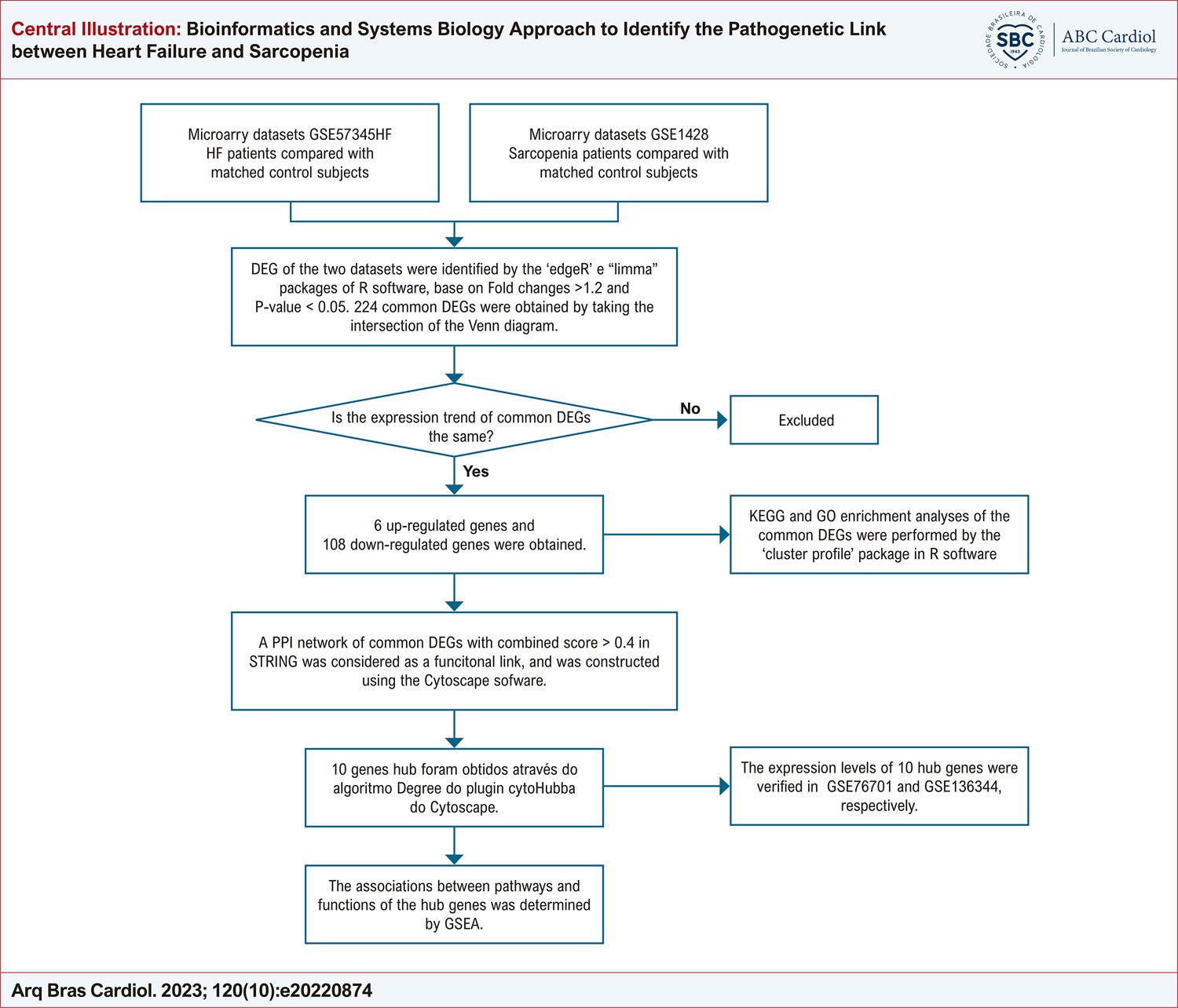
Gene expression datasets for HF (GSE57345) and Sarcopenia (GSE1428) were obtained from the Gene Expression Omnibus (GEO) database. Differentially expressed genes (DEGs) were identified using ‘edgeR’ and “limma” packages of R, and their functions were analyzed using Gene Ontology (GO) and the Kyoto Encyclopedia of Genes and Genomes (KEGG). Protein-protein interaction (PPI) networks were constructed and visualized using Search Tool for the Retrieval of Interacting Genes (STRING) and Cytoscape. Hub genes were selected using the plugin cytoHubba and validation with GSE76701 for HF and GSE136344 for Sarcopenia. The related pathways and molecular mechanisms of the hub genes were performed by Gene set enrichment analysis (GSEA). The statistical analyses were performed using R software. P < 0.05 was considered statistically significant.

Results

A total of 114 common DEGs were found. Pathways related to growth factor, Insulin secretion and cGMP-PKG were enriched in both HF and Sarcopenia. CYP27A1, KCNJ8, PIK3R5, TIMP2, CXCL12, KIT, and VCAM1 were found to be significant hub genes after validation, with GSEA emphasizing the importance of the hub genes in the regulation of the inflammatory response.

Conclusion

Our study reveals that HF and Sarcopenia share common pathways and pathogenic mechanisms. These findings may suggest new directions for future research into the underlying pathogenesis.

  • Computational Biology
  • Genes
  • Heart Failure
  • Sarcopenia
Read Full Article
Creative Commons Attribution (CC BY) Creative Commons license
27/10/2023 DOI: 10.36660/abc.20220874
Figure 1
ABC
Original Article

Sarcopenia: Inflammatory and Humoral Markers in Older Heart Failure Patients

Tamirys Delazeri Sangali et al. Gabriela Corrêa Souza Édina Caroline Ternus Ribeiro Ingrid Dalira Schweigert Perry

Abstract

Background

Sarcopenia is highly prevalent in heart failure (HF) patients, and the involvement of biomarkers in its pathophysiology is suggested, but little has been studied concerning HF sarcopenic patients.

Objectives

To evaluate the association between inflammatory and humoral markers with sarcopenia, as well as the impact of sarcopenia on quality of life and functional capacity in older HF patients.

Methods

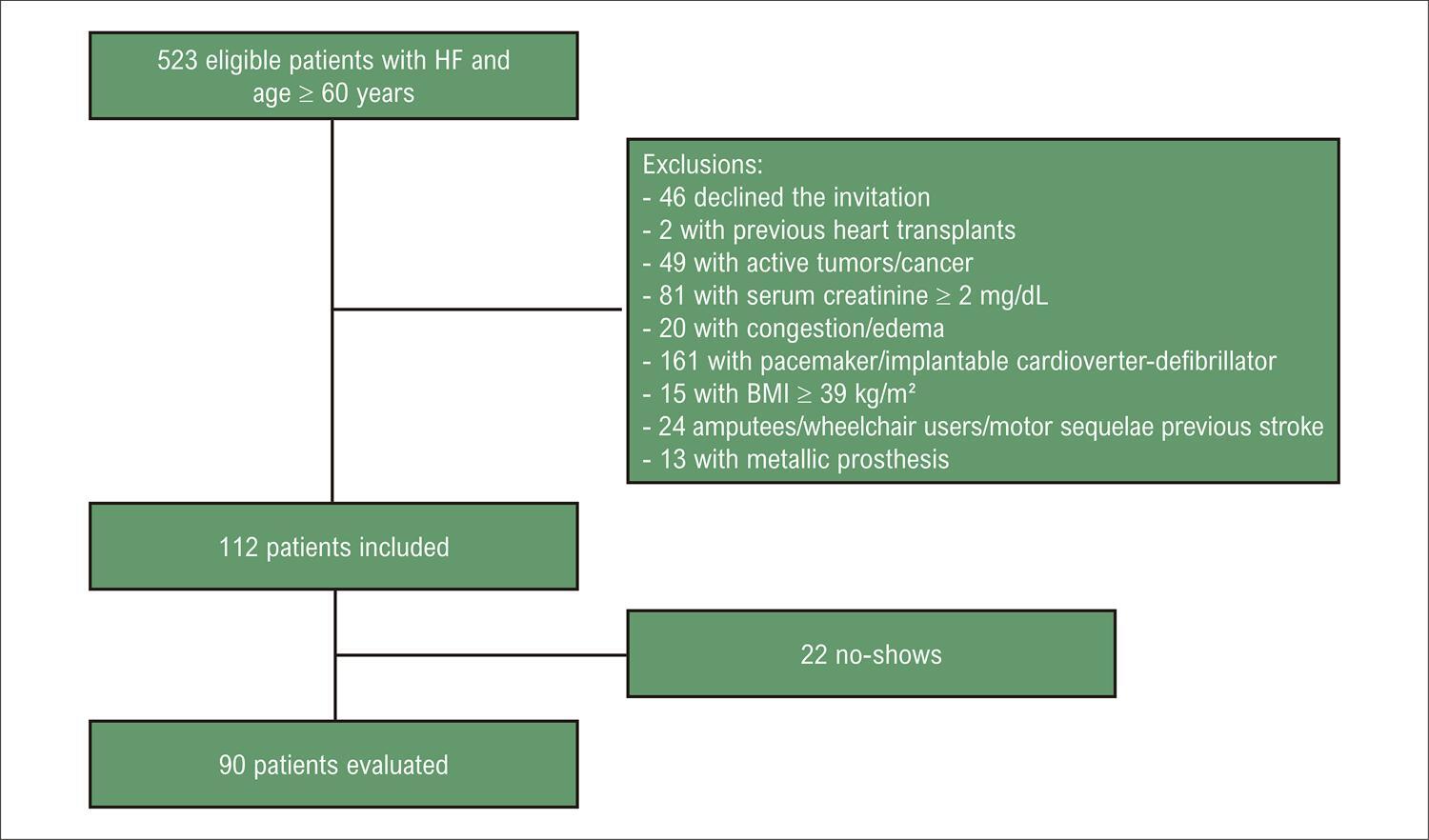
In this cross-sectional study, 90 outpatient HF patients, aged ≥ 60 years, were evaluated for sarcopenia (EWGSOP2 diagnostic criteria), inflammation (high-sensitive C-reactive protein [hs-CRP], Interleukin-6 [IL-6], tumor necrosis factor alpha [TNF-α]) and humoral markers (total testosterone and insulin-like growth factor-1 [IGF-1]), physical activity (International Physical Activity Questionnaire), quality of life (Minnesota Living with Heart Failure Questionnaire), and functional capacity (6-minute walk test). The adopted level of significance was p<0.05.

Results

Patients had a mean age of 69.4 ± 7.2 years, 67.8% were male, with left ventricular ejection fraction (LVEF) of 35.9 ± 11.9% and 22 (24.4%) were sarcopenic. Age (73.1 ± 8.1 and 68.3 ± 6.5 years; p= 0.006), body mass index (BMI) (23.1 ± 2.8 and 28.2 ± 4.2 kg/m2; p <0.001), and LVEF (29.9 ± 8.8 and 37.9 ± 12.1%; p= 0.005) were different between groups with and without sarcopenia, respectively. After adjusting for age, ethnicity, BMI, LVEF, and the use of angiotensin converting enzyme inhibitors/angiotensin receptor blockers, sarcopenia was associated with higher serum levels of IL-6 and worse functional capacity.

Conclusion

In HF patients, sarcopenia was associated with IL-6 levels and functional capacity.

  • Biomarkers
  • Heart Failure
  • Inflammation
  • Sarcopenia
Read Full Article
Creative Commons Attribution (CC BY) Creative Commons license
07/08/2023 DOI: 10.36660/abc.20220369
ABC
Editorial

Sarcopenia: An Important Entity Still Underinvestigated in Heart Failure

Roberto Magalhães Saraiva et al. Andréa Rodrigues da Costa

Sarcopenia is considered an age-dependent syndrome characterized by a gradual decline in skeletal muscle mass, strength, and physical performance that was recognized as a specific clinical entity by the World Health Organization only in 2016. The diagnostic criteria have been a matter of debate. However, the European Working Group on Sarcopenia in Older People (EWGSOP), in their revised consensus, defined that sarcopenia diagnosis must start with low muscle strength as the first criterion to identify patients with probable sarcopenia, which added to low muscle quantity/quality criterion would confirm the diagnosis of sarcopenia, and added to low physical performance would confirm severe sarcopenia. The different methods and their cut-offs to evaluate muscle mass, force, and exercise capacity for men and women were recently reviewed elsewhere.

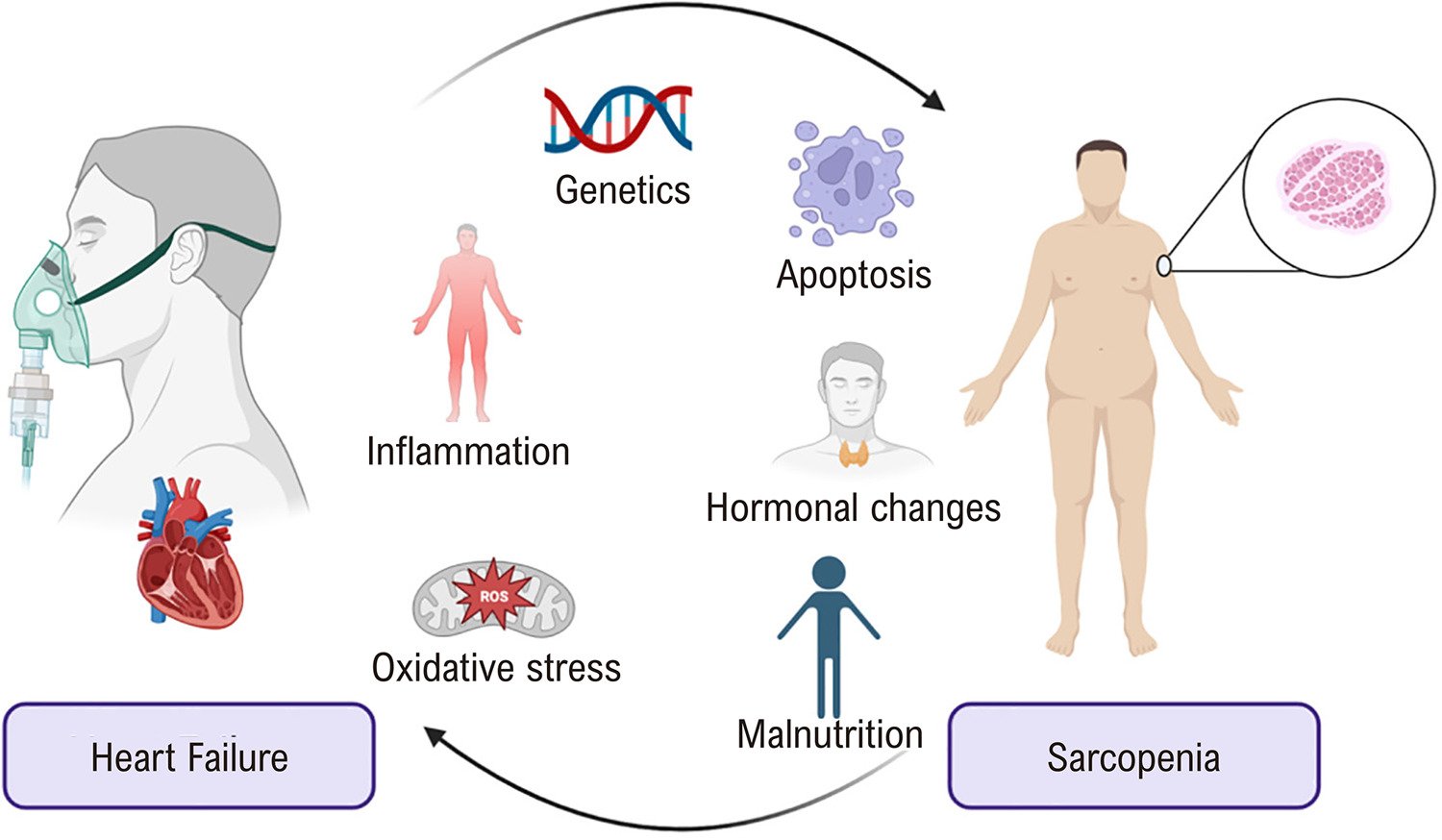
Sarcopenia worsens with age; an annual loss of 1-2% in muscle mass is expected after 50 years old, and an annual 3% increase in sarcopenia prevalence occurs after 60 years old. However, patients with heart failure (HF) present a higher prevalence of sarcopenia than their counter mates with similar age but no HF. A recent meta-analysis described that the prevalence of sarcopenia in HF patients was 31%. In fact, the pathophysiology pathways of sarcopenia and HF share important components, such as hormonal changes, inflammation, oxidative stress, apoptosis, and overactivation of the ubiquitin-proteasome system, and some aspects of HF, such as low muscle blood flow, may favor sarcopenia, which may explain the higher prevalence of sarcopenia in HF patients and their poorer prognosis. , However, there is little evidence on therapeutical interventions to address sarcopenia in HF patients. Pharmacological, nutritional, hormonal, and exercise-based approaches have been postulated to be beneficial. Angiotensin-converting enzyme (ACE) inhibitors and angiotensin receptor blockers (ARBs) have been shown to have muscle-protective properties in pre-clinical studies, but clinical studies failed to prove that these drugs can improve walk distance or muscle strength and function in the elderly. Spironolactone may delay sarcopenia progress. Vitamin D supplementation increases skeletal muscle strength in elderly subjects and may help sarcopenic HF patients. Another potential therapy could be testosterone supplementation therapy to reach the physiological range, but its safety in HF patients is yet to be tested. A therapy combining nutritional supplementation and cardiac rehabilitation, including exercise, is the best approach to treat sarcopenia. ,

[…]

  • aging
  • Heart Failure
  • Sarcopenia
Read Full Article
Creative Commons Attribution (CC BY) Creative Commons license
07/08/2023 DOI: 10.36660/abc.20230387 Views 1
IJCS
Editorial

Correlation of Diuretic use and Sarcopenia in Elderly Patients with Hypertension

Lídia Zytynski Moura et al. Camila Hartmann

Hypertension is a chronic disease with high prevalence in Brazil and worldwide. It is estimated that approximately 31% of the world population has blood pressure levels ≥ 140/90 mmHg or uses antihypertensive medication. Hypertension is also the main risk factor with an independent, linear, and continuous association for cardiovascular diseases. Cardiovascular diseases, in turn, are the leading cause of death, hospitalizations, and outpatient care worldwide, including in developing countries such as Brazil.

With aging, hypertension becomes an even more significant health problem. Around 61% of individuals over 60 years old have hypertension. In Brazil, the epidemiological transition with the increase in the number of elderly people (≥ 60 years) in the next decades will lead to a substantial increase in the prevalence of hypertension and its complications. Aging is still associated with other health disorders, including sarcopenia. As with hypertension, the prevalence of sarcopenia is higher in the elderly. It varies from 5% to 13% in people between 60 and 70 years of age, and from 11% to 50% in people ≥ 80 years of age.

[…]

  • Aged
  • Diuretics
  • Hypertension
  • Sarcopenia
Read Full Article
Creative Commons Attribution (CC BY) Creative Commons license
13/07/2022 DOI: 10.36660/ijcs.20220072 Views 2
ABC
Editorial

Heart and Skeletal Muscles: Linked by Autonomic Nervous System

Claudio Gil Araujo et al. Jari Antero Laukkanen

The autonomic nervous system (ANS) plays a fundamental role in maintaining cell homeostasis and human life. The functionality of the heart and skeletal muscles is partially modulated by sympathetic and parasympathetic branches of the ANS both in resting and exercising conditions.

Substantial literature attests to the fact that objective indices of muscle strength reflect health status. It is well-established that heart failure is typically accompanied by skeletal muscle abnormalities that contributed to the exercise intolerance and poor health-related quality of life usually seen in these patients., Indeed, while a decrease in muscle mass and strength is naturally seen with ageing, especially after the fifth decade of life, this is especially more relevant in middle-aged and older patients with heart failure.

[…]

  • Autonomic Nervous System
  • Heart Failure
  • Homeostasis
  • Muscle,Skeletal
  • Myocardium
  • Sarcopenia
  • Sympathetica Nervous System
Read Full Article
Creative Commons Attribution (CC BY) Creative Commons license
15/07/2019 DOI: 10.5935/abc.20190097
Figure 1
IJCS
Case Report

Physical Exercise for Active Skin Ulceration Secondary to Peripheral Arterial Occlusive Disease

Jefferson Petto et al. Marvyn de Santana do Sacramento Fernanda Oliveira Baptista de Almeida Jorge Bomfim Frós de Farias Euvaldo de Almeida Rosa

Introduction

Peripheral arterial occlusive disease (PAOD) is a chronic, initially subclinical, and characteristically inflammatory disease that mainly affects the carotid arteries and lower limbs.,

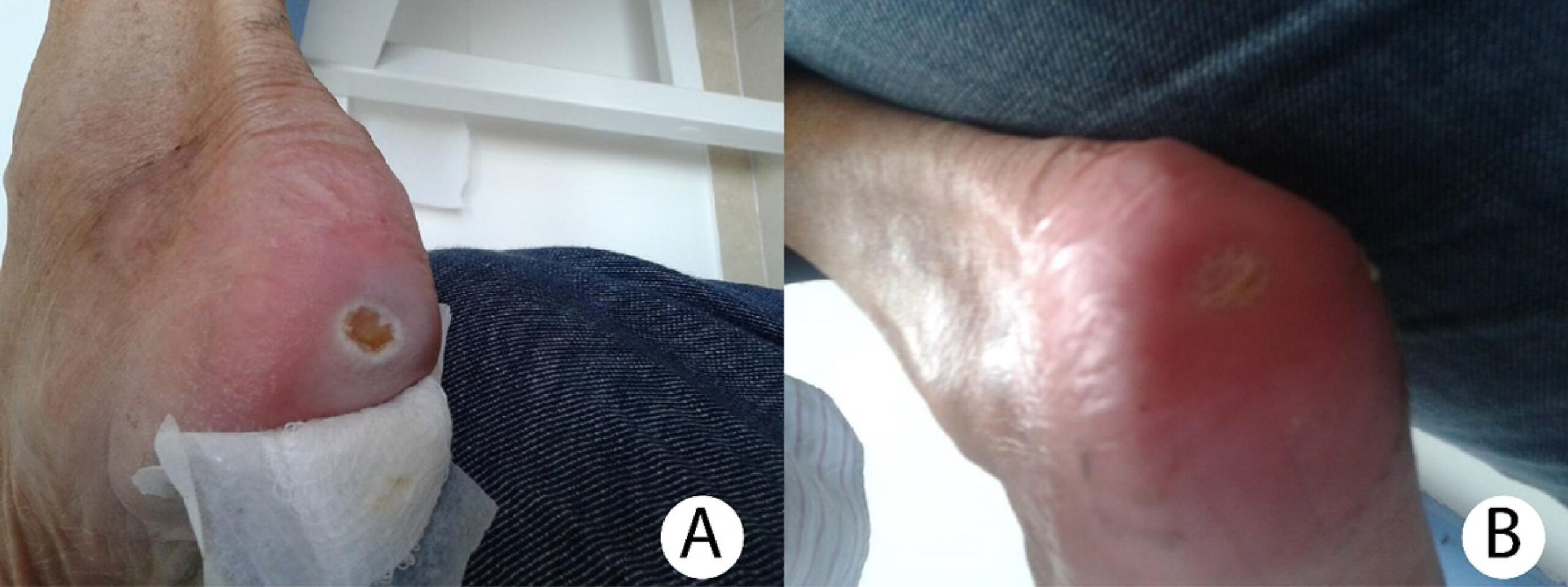
When in the lower limbs, it causes intermittent claudication, associated with a shortened leg gait, cyanotic extremities and decreased muscular force associated with sarcopenia below the obstruction site. At more advanced stages, it can cause ulcerations that are difficult to heal, due to the decrease in blood flow. The final stage of pathophysiology is completed with a trophic lesion and consequent amputation of the affected limb, leading to a decrease in the quality of life and to functional limitations in activities of daily living. This results in increased costs generated by the treatment and impaired productive capacity of these patients.,

[…]

  • Exercise
  • Intermittent Claudication
  • Peripheral Arterial Disease/complications
  • Risk Factors
  • Sarcopenia
  • Skin Ulcer/complications
Read Full Article
Creative Commons Attribution (CC BY) Creative Commons license
15/04/2019 DOI: 10.5935/2359-4802.20190021 Views 1
Figure 1
ABC
Original Article

Sympatho-Vagal Imbalance is Associated with Sarcopenia in Male Patients with Heart Failure

Guilherme Wesley Peixoto da Fonseca et al. Marcelo Rodrigues dos Santos Francis Ribeiro de Souza Marcel Jose A. da Costa … Stephan von Haehling Liliam Takayama Rosa Maria R. Pereira Carlos Eduardo Negrão Stefan D. Anker Maria Janieire de Nazaré Nunes Alves

Abstract

Background:

Resting sympathetic hyperactivity and impaired parasympathetic reactivation after exercise have been described in patients with heart failure (HF). However, the association of these autonomic changes in patients with HF and sarcopenia is unknown.

Objective:

The aim of this study was to evaluate the impact of autonomic modulation on sarcopenia in male patients with HF.

Methods:

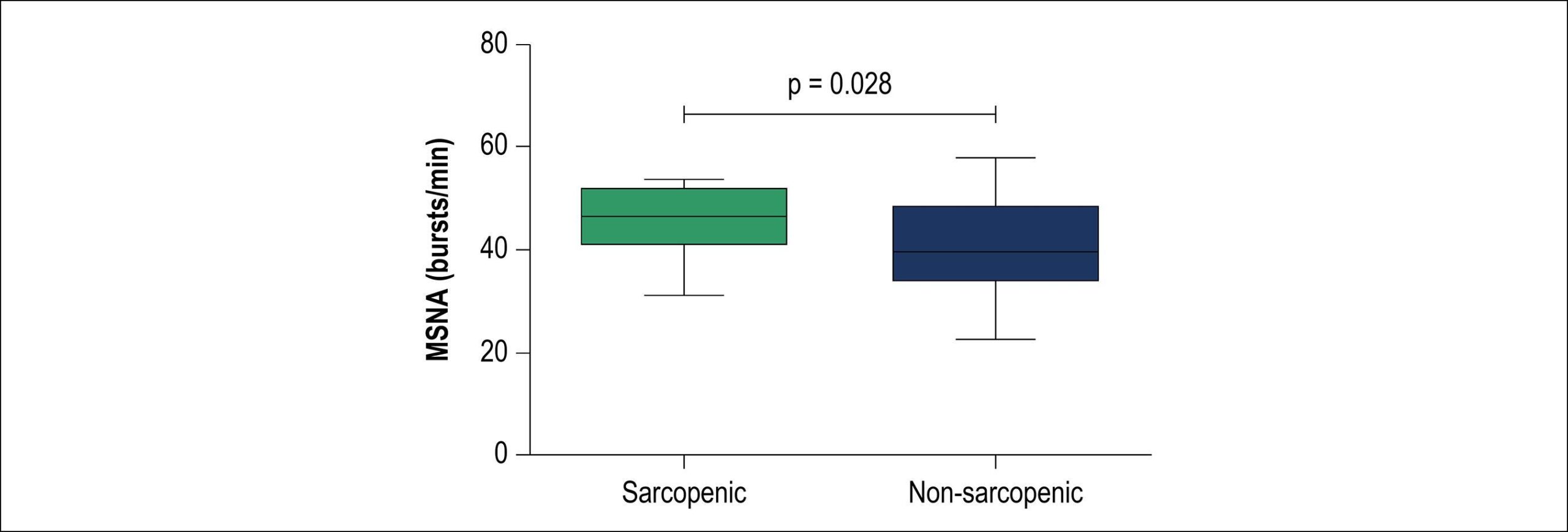
We enrolled 116 male patients with HF and left ventricular ejection fraction < 40%. All patients underwent a maximal cardiopulmonary exercise testing. Maximal heart rate was recorded and delta heart rate recovery (∆HRR) was assessed at 1st and 2nd minutes after exercise. Muscle sympathetic nerve activity (MSNA) was recorded by microneurography. Dual-energy X-ray absorptiometry was used to measure body composition and sarcopenia was defined by the sum of appendicular lean muscle mass (ALM) divided by height in meters squared and handgrip strength.

Results:

Sarcopenia was identified in 33 patients (28%). Patients with sarcopenia had higher MSNA than those without (47 [41-52] vs. 40 [34-48] bursts/min, p = 0.028). Sarcopenic patients showed lower ∆HRR at 1st (15 [10-21] vs. 22 [16-30] beats/min, p < 0.001) and 2nd min (25 [19-39] vs. 35 [24-48] beats/min, p = 0.017) than non-sarcopenic. There was a positive correlation between ALM and ∆HRR at 1st (r = 0.26, p = 0.008) and 2nd min (r = 0.25, p = 0.012). We observed a negative correlation between ALM and MSNA (r = -0.29, p = 0.003).

Conclusion:

Sympatho-vagal imbalance seems to be associated with sarcopenia in male patients with HF. These results highlight the importance of a therapeutic approach in patients with muscle wasting and increased peripheral sympathetic outflow.

  • Blunted Vagal Reactivation
  • Heart Failure
  • Sarcopenia
  • Sympathetic Hyperactivity
Read Full Article
Creative Commons Attribution (CC BY) Creative Commons license
08/04/2019 DOI: 10.5935/abc.20190061 Views 1

How to cite this article

EndNote RIS

Electronic Document Format (Vancouver)

Villacorta H. Heart Failure and Sarcopenia: What is in between?. Arquivos Brasileiros de Cardiologia 2023;120(10):e20230689.

Electronic Document Format (ABNT)

Villacorta, Humberto. Heart Failure and Sarcopenia: What is in between?. Arquivos Brasileiros de Cardiologia, v. 120, n. 10, e20230689, Nov. 2023.

Electronic Document Format (APA)

Villacorta, H. (2023). Heart Failure and Sarcopenia: What is in between?. Arquivos Brasileiros de Cardiologia, 120(10), e20230689.

Electronic Document Format (ISO)

Villacorta, Humberto. Heart Failure and Sarcopenia: What is in between?. Arquivos Brasileiros de Cardiologia [online]. 2023, vol. 120, n. 10, [cited 2026-10-14], e20230689. Available from: <https://journals.cardiol.br/en/article/heart-failure-and-sarcopenia-what-is-in-between/>. ISSN 0066-782X

EndNote RIS

Electronic Document Format (Vancouver)

Xu R, Ma L, Cui S, Chen L, Xu H. Bioinformatics and Systems Biology Approach to Identify the Pathogenetic Link between Heart Failure and Sarcopenia. Arquivos Brasileiros de Cardiologia 2023;120(10):e20220874.

Electronic Document Format (ABNT)

Xu, Rui; Ma, Ling-ling; Cui, Shuai; Chen, Ling; Xu, Hong. Bioinformatics and Systems Biology Approach to Identify the Pathogenetic Link between Heart Failure and Sarcopenia. Arquivos Brasileiros de Cardiologia, v. 120, n. 10, e20220874, Oct. 2023.

Electronic Document Format (APA)

Xu, R., Ma, L., Cui, S., Chen, L., & Xu, H. (2023). Bioinformatics and Systems Biology Approach to Identify the Pathogenetic Link between Heart Failure and Sarcopenia. Arquivos Brasileiros de Cardiologia, 120(10), e20220874.

Electronic Document Format (ISO)

Xu, Rui and Ma, Ling-ling and Cui, Shuai and Chen, Ling and Xu, Hong. Bioinformatics and Systems Biology Approach to Identify the Pathogenetic Link between Heart Failure and Sarcopenia. Arquivos Brasileiros de Cardiologia [online]. 2023, vol. 120, n. 10, [cited 2026-10-14], e20220874. Available from: <https://journals.cardiol.br/en/article/bioinformatics-and-systems-biology-approach-to-identify-the-pathogenetic-link-between-heart-failure-and-sarcopenia/>. ISSN 0066-782X

EndNote RIS

Electronic Document Format (Vancouver)

Sangali TD, Souza GC, Ribeiro CT, Perry IDS. Sarcopenia: Inflammatory and Humoral Markers in Older Heart Failure Patients. Arquivos Brasileiros de Cardiologia 2023;120(7):e20220369.

Electronic Document Format (ABNT)

Sangali, Tamirys Delazeri; Souza, Gabriela Corrêa; Ribeiro, Édina Caroline Ternus; Perry, Ingrid Dalira Schweigert. Sarcopenia: Inflammatory and Humoral Markers in Older Heart Failure Patients. Arquivos Brasileiros de Cardiologia, v. 120, n. 7, e20220369, Aug. 2023.

Electronic Document Format (APA)

Sangali, T. D., Souza, G. C., Ribeiro, C. T., & Perry, I. D. S. (2023). Sarcopenia: Inflammatory and Humoral Markers in Older Heart Failure Patients. Arquivos Brasileiros de Cardiologia, 120(7), e20220369.

Electronic Document Format (ISO)

Sangali, Tamirys Delazeri and Souza, Gabriela Corrêa and Ribeiro, Édina Caroline Ternus and Perry, Ingrid Dalira Schweigert. Sarcopenia: Inflammatory and Humoral Markers in Older Heart Failure Patients. Arquivos Brasileiros de Cardiologia [online]. 2023, vol. 120, n. 7, [cited 2026-10-14], e20220369. Available from: <https://journals.cardiol.br/en/article/sarcopenia-inflammatory-and-humoral-markers-in-older-heart-failure-patients/>. ISSN 0066-782X

EndNote RIS

Electronic Document Format (Vancouver)

Saraiva RM, Costa AR. Sarcopenia: An Important Entity Still Underinvestigated in Heart Failure. Arquivos Brasileiros de Cardiologia 2023;120(7):e20230387.

Electronic Document Format (ABNT)

Saraiva, Roberto Magalhães; Costa, Andréa Rodrigues da. Sarcopenia: An Important Entity Still Underinvestigated in Heart Failure. Arquivos Brasileiros de Cardiologia, v. 120, n. 7, e20230387, Aug. 2023.

Electronic Document Format (APA)

Saraiva, R. M., & Costa, A. R. (2023). Sarcopenia: An Important Entity Still Underinvestigated in Heart Failure. Arquivos Brasileiros de Cardiologia, 120(7), e20230387.

Electronic Document Format (ISO)

Saraiva, Roberto Magalhães and Costa, Andréa Rodrigues da. Sarcopenia: An Important Entity Still Underinvestigated in Heart Failure. Arquivos Brasileiros de Cardiologia [online]. 2023, vol. 120, n. 7, [cited 2026-10-14], e20230387. Available from: <https://journals.cardiol.br/en/article/sarcopenia-an-important-entity-still-underinvestigated-in-heart-failure/>. ISSN 0066-782X

EndNote RIS

Electronic Document Format (Vancouver)

Moura LZ, Hartmann C. Correlation of Diuretic use and Sarcopenia in Elderly Patients with Hypertension. International Journal of Cardiovascular Sciences 2022;35(4):486-7.

Electronic Document Format (ABNT)

Moura, Lídia Zytynski; Hartmann, Camila. Correlation of Diuretic use and Sarcopenia in Elderly Patients with Hypertension. International Journal of Cardiovascular Sciences, v. 35, n. 4, p. 486-487, Jul. 2022.

Electronic Document Format (APA)

Moura, L. Z., & Hartmann, C. (2022). Correlation of Diuretic use and Sarcopenia in Elderly Patients with Hypertension. International Journal of Cardiovascular Sciences, 35(4), 486-487.

Electronic Document Format (ISO)

Moura, Lídia Zytynski and Hartmann, Camila. Correlation of Diuretic use and Sarcopenia in Elderly Patients with Hypertension. International Journal of Cardiovascular Sciences [online]. 2022, vol. 35, n. 4, [cited 2026-10-14], pp. 486-487. Available from: <https://journals.cardiol.br/en/article/correlation-of-diuretic-use-and-sarcopenia-in-elderly-patients-with-hypertension/>. ISSN 2359-4802

EndNote RIS

Electronic Document Format (Vancouver)

Araujo CG, Laukkanen JA. Heart and Skeletal Muscles: Linked by Autonomic Nervous System. Arquivos Brasileiros de Cardiologia 2019;112(6):747-8.

Electronic Document Format (ABNT)

Araujo, Claudio Gil; Laukkanen, Jari Antero. Heart and Skeletal Muscles: Linked by Autonomic Nervous System. Arquivos Brasileiros de Cardiologia, v. 112, n. 6, p. 747-748, Jul. 2019.

Electronic Document Format (APA)

Araujo, C. G., & Laukkanen, J. A. (2019). Heart and Skeletal Muscles: Linked by Autonomic Nervous System. Arquivos Brasileiros de Cardiologia, 112(6), 747-748.

Electronic Document Format (ISO)

Araujo, Claudio Gil and Laukkanen, Jari Antero. Heart and Skeletal Muscles: Linked by Autonomic Nervous System. Arquivos Brasileiros de Cardiologia [online]. 2019, vol. 112, n. 6, [cited 2026-10-14], pp. 747-748. Available from: <https://journals.cardiol.br/en/article/heart-and-skeletal-muscles-linked-by-autonomic-nervous-system/>. ISSN 0066-782X

EndNote RIS

Electronic Document Format (Vancouver)

Petto J, Sacramento MS, Almeida FOB, Farias JBF, Rosa EA. Physical Exercise for Active Skin Ulceration Secondary to Peripheral Arterial Occlusive Disease. International Journal of Cardiovascular Sciences 2019;32(6):645-9.

Electronic Document Format (ABNT)

Petto, Jefferson; Sacramento, Marvyn de Santana do; Almeida, Fernanda Oliveira Baptista de; Farias, Jorge Bomfim Frós de; Rosa, Euvaldo de Almeida. Physical Exercise for Active Skin Ulceration Secondary to Peripheral Arterial Occlusive Disease. International Journal of Cardiovascular Sciences, v. 32, n. 6, p. 645-649, Apr. 2019.

Electronic Document Format (APA)

Petto, J., Sacramento, M. S. , Almeida, F. O. B. , Farias, J. B. F. , & Rosa, E. A. (2019). Physical Exercise for Active Skin Ulceration Secondary to Peripheral Arterial Occlusive Disease. International Journal of Cardiovascular Sciences, 32(6), 645-649.

Electronic Document Format (ISO)

Petto, Jefferson and Sacramento, Marvyn de Santana do and Almeida, Fernanda Oliveira Baptista de and Farias, Jorge Bomfim Frós de and Rosa, Euvaldo de Almeida. Physical Exercise for Active Skin Ulceration Secondary to Peripheral Arterial Occlusive Disease. International Journal of Cardiovascular Sciences [online]. 2019, vol. 32, n. 6, [cited 2026-10-14], pp. 645-649. Available from: <https://journals.cardiol.br/en/article/physical-exercise-for-active-skin-ulceration-secondary-to-peripheral-arterial-occlusive-disease/>. ISSN 2359-4802

EndNote RIS

Electronic Document Format (Vancouver)

Fonseca GWP, Santos MR, Souza FR, Costa MJA, Haehling S, Takayama L, Pereira RMR, et al. Sympatho-Vagal Imbalance is Associated with Sarcopenia in Male Patients with Heart Failure. Arquivos Brasileiros de Cardiologia 2019;112(6):739-46.

Electronic Document Format (ABNT)

Fonseca, Guilherme Wesley Peixoto da; Santos, Marcelo Rodrigues dos; Souza, Francis Ribeiro de; Costa, Marcel Jose A. da; Haehling, Stephan von; Takayama, Liliam; Pereira, Rosa Maria R.; Negrão, Carlos Eduardo; Anker, Stefan D.; Alves, Maria Janieire de Nazaré Nunes. Sympatho-Vagal Imbalance is Associated with Sarcopenia in Male Patients with Heart Failure. Arquivos Brasileiros de Cardiologia, v. 112, n. 6, p. 739-746, Apr. 2019.

Electronic Document Format (APA)

Fonseca, G. W. P. , Santos, M. R. , Souza, F. R. , Costa, M. J. A. , Haehling, S. , Takayama, L., Pereira, R. M. R., Negrão, C. E., Anker, S. D., & Alves, M. J. N. N. (2019). Sympatho-Vagal Imbalance is Associated with Sarcopenia in Male Patients with Heart Failure. Arquivos Brasileiros de Cardiologia, 112(6), 739-746.

Electronic Document Format (ISO)

Fonseca, Guilherme Wesley Peixoto da and Santos, Marcelo Rodrigues dos and Souza, Francis Ribeiro de and Costa, Marcel Jose A. da and Haehling, Stephan von and Takayama, Liliam and Pereira, Rosa Maria R. and Negrão, Carlos Eduardo and Anker, Stefan D. and Alves, Maria Janieire de Nazaré Nunes. Sympatho-Vagal Imbalance is Associated with Sarcopenia in Male Patients with Heart Failure. Arquivos Brasileiros de Cardiologia [online]. 2019, vol. 112, n. 6, [cited 2026-10-14], pp. 739-746. Available from: <https://journals.cardiol.br/en/article/sympatho-vagal-imbalance-is-associated-with-sarcopenia-in-male-patients-with-heart-failure/>. ISSN 0066-782X

  • About ABC Family
  • Internal Regulation
  • Editorial Board
  • Brazilian Society of Cardiology (SBC)

Issues

SBC Guidelines

  • Videos
  • Podcasts
  • News