ABC Family Arquivos Brasileiros de Cardiologia International Journal of Cardiovascular Sciences ABC Heart Failure & Cardiomyopathy ABC Imagem Cardiovascular
Português English
ABC Family
Português English
  • About
    • About ABC Family
    • Internal Regulation
    • Editorial Board
    • Brazilian Society of Cardiology (SBC)
  • Issues
  • SBC Guidelines
  • Content
    • Videos
    • Podcasts
    • News
  • About
    • About ABC Family
    • Internal Regulation
    • Editorial Board
    • Brazilian Society of Cardiology (SBC)
  • Issues
  • SBC Guidelines
  • Content
    • Videos
    • Podcasts
    • News

ABC Family

  • ABC Family
  • Arquivos Brasileiros de Cardiologia
  • International Journal of Cardiovascular Sciences
  • ABC Heart Failure & Cardiomyopathy
  • ABC Imagem Cardiovascular
Search in

No content found.

Journals
Ordering
Article types
Others

  1. Home
  2. Keyword: Risk reduction Behavior
ABC
Editorial

Why We Build Models – From Clinical Cardiology Practice to Infectious Disease Epidemics

Marcio Sommer Bittencourt

Francisco, 64 years old, comes to your office for a preventive health evaluation. He has a history of well-controlled hypertension and is otherwise well. His past medical history is unremarkable. No family history of cardiovascular disease or smoking and LDL-cholesterol (LDL-C) of 90 mg/dL. After discussing with the patient, you are unsure if this patient’s risk benefit profile would favor the use of statins. Instead of trusting your personal feelings, you decide to use the Framingham risk score (FRS) to decide if statins would be recommended. The calculated Framingham score is 8.1% and you decide not to initiate statins at this point.

One month later, Francisco returns to your office with typical angina on major exertion but has no signs of unstable disease. Once again, to avoid overconfidence on your initial impression, you decide to use the Diamond and Forrester (DF) chest pain prediction rule, which estimates the pretest probability of obstructive coronary artery disease (CAD). For a male at his age, the rule suggests a pretest probability of 94% (high probability), so you decide to request an invasive angiography in the outpatient setting.

[…]

  • Biomarkers
  • Cardiovascular Diseases
  • Coronavirus
  • COVID-19
  • Pandemics
  • Prevention and Control
  • Risk Assessment
  • Risk Factors
  • Risk reduction Behavior
Read Full Article
Creative Commons Attribution (CC BY) Creative Commons license
03/07/2020 DOI: 10.36660/abc.20200527 Views 1
Figure 1
ABC
Original Article

Co-occurrence of Smoking and Unhealthy Diet in the Brazilian Adult Population

Priscila Maria Stolses Bergamo Francisco et al. Daniela de Assumpção Deborah Carvalho Malta

Abstract

Background:

Smoking and an inadequate diet are behavioral risk factors that contribute to the majority of deaths and disabilities caused by noncommunicable diseases.

Objectives:

To estimate the prevalence of the co-occurrence of smoking and inadequate diet and identify associated factors in adults.

Methods:

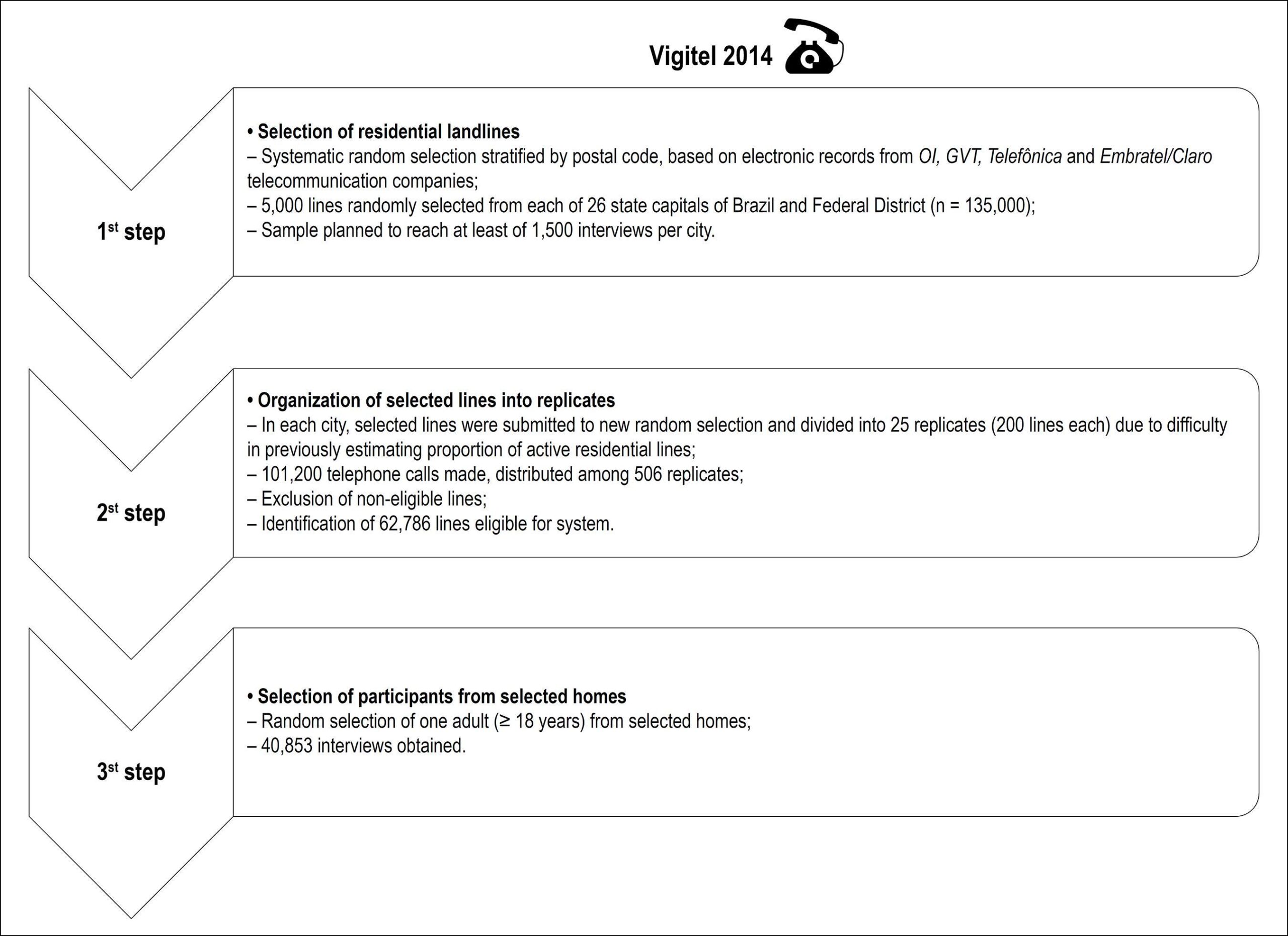
A cross-sectional population-based study was conducted with a sample of 28,950 Brazilian adults (18 to 59 years old). Data were obtained from Sistema de Vigilância por Inquérito Telefônico (Vigitel [Brazilian Health Surveillance Telephone Survey]) in 2014. Independent associations were investigated using Poisson hierarchical regression analysis with 5% significance level.

Results:

The prevalence of the co-occurrence of smoking and unhealthy eating was 8.6% (95% CI: 7.9-9.3) and was higher among individuals residing in the southern region of the country than in those living in the central western region (PR = 1.50; 95% CI: 1.18-1.89), those with no private health insurance (PR = 1.14; 95% CI: 1.03-1.25), those who drank alcohol abusively (binge drinkers) (PR = 3.22; 95% CI: 2.70-3.85) and those who self-rated their health as fair (PR = 1.65; 95% CI: 1.36-1.99) or poor/very poor (PR = 1.70; 95% CI: 1.18-2.44). The prevalence of both factors was lower among individuals residing in the northeastern region of the country, women, individuals with brown skin color, those with a spouse, the more educated ones and those with overweight or obesity.

Conclusion:

The more vulnerable segments to the co-occurrence of the risk factors studied were men residing in the southern region of the country, individuals with a lower socioeconomic status and those who reported binge drinking. Interventions addressing multiple behavioral risk factors adapted to specific contexts could have a greater impact on the Brazilian population.

  • Adult Health
  • Chronic Disease
  • Feeding
  • Health Status Disparities
  • Risk Factors
  • Risk reduction Behavior
  • Tobacco Use Disorders
Read Full Article
Creative Commons Attribution (CC BY) Creative Commons license
04/11/2019 DOI: 10.5935/abc.20190222 Views 1
ABC
Editorial

The Lack of Nutritional Counseling during Hospitalization

Luiza Antoniazzi

During the nutritional follow-up of hospitalized individuals, the nutritionist has as activities to perform the diagnosis, dietary prescription, supervise the distribution of the diets and evaluate their acceptance, and also perform nutritional counseling so that these individuals understand how a standard specific diet may be more appropriate taking into account their diagnoses and nutritional status. The number of nutritionists issued by Resolution 600 of 2018 of the Federal Council of Nutritionists is 1 professional every 15 beds of high complexity and every 30 beds of medium complexity.

Lima et al. evaluated in an article published in this edition whether nutritional counseling was performed in the hospital environment for patients with Acute Myocardial Infarction (AMI) and the quality of this orientation. The authors found that 57.6% of the individuals hospitalized in the public network and 70.3% private hospitals, both in Sergipe, Brazil, had received in-hospital nutritional counseling.

[…]

  • Dietetics
  • Healthy Diet
  • Hospitalization
  • Inpatients
  • Risk reduction Behavior
Read Full Article
Creative Commons Attribution (CC BY) Creative Commons license
02/09/2019 DOI: 10.5935/abc.20190172 Views 1
Figure 1
ABC
Original Article

Quality of Intra-Hospital Nutritional Counseling in Patients with STEMI in the Public and Private Health Networks of Sergipe: The VICTIM Register

Ticiane Clair Remacre Munareto Lima et al. Danielle Góes da Silva Ikaro Daniel de Carvalho Barreto Jussiely Cunha Oliveira … Laís Costa Souza Oliveira Larissa Andreline Maia Arcelino Jeferson Cunha Oliveira Antônio Carlos Sobral Sousa José Augusto Soares Barreto Filho

Abstract

Background:

Having appropriate dietary habits is part of the recommendations after ST-Elevation Myocardial Infarction (STEMI), however, the quality of intra-hospital nutritional counselling in the different health services has been minimally explored.

Objective:

To evaluate the quality of intra-hospital nutritional counselling among patients with STEMI in the public and private health systems in Sergipe.

Methods:

A cross-sectional, with data from the Via Crucis for the Treatment of Myocardial Infarction (VICTIM) Register, conducted from April to November of 2017, with individuals aged ≥ 18 years diagnosed with STEMI, in one public health service hospital and three private hospitals. The occurrence and quality of nutritional counselling were analyzed based on current guidelines and the administration of questionnaires. A significance level of 0.05 was adopted.

Results:

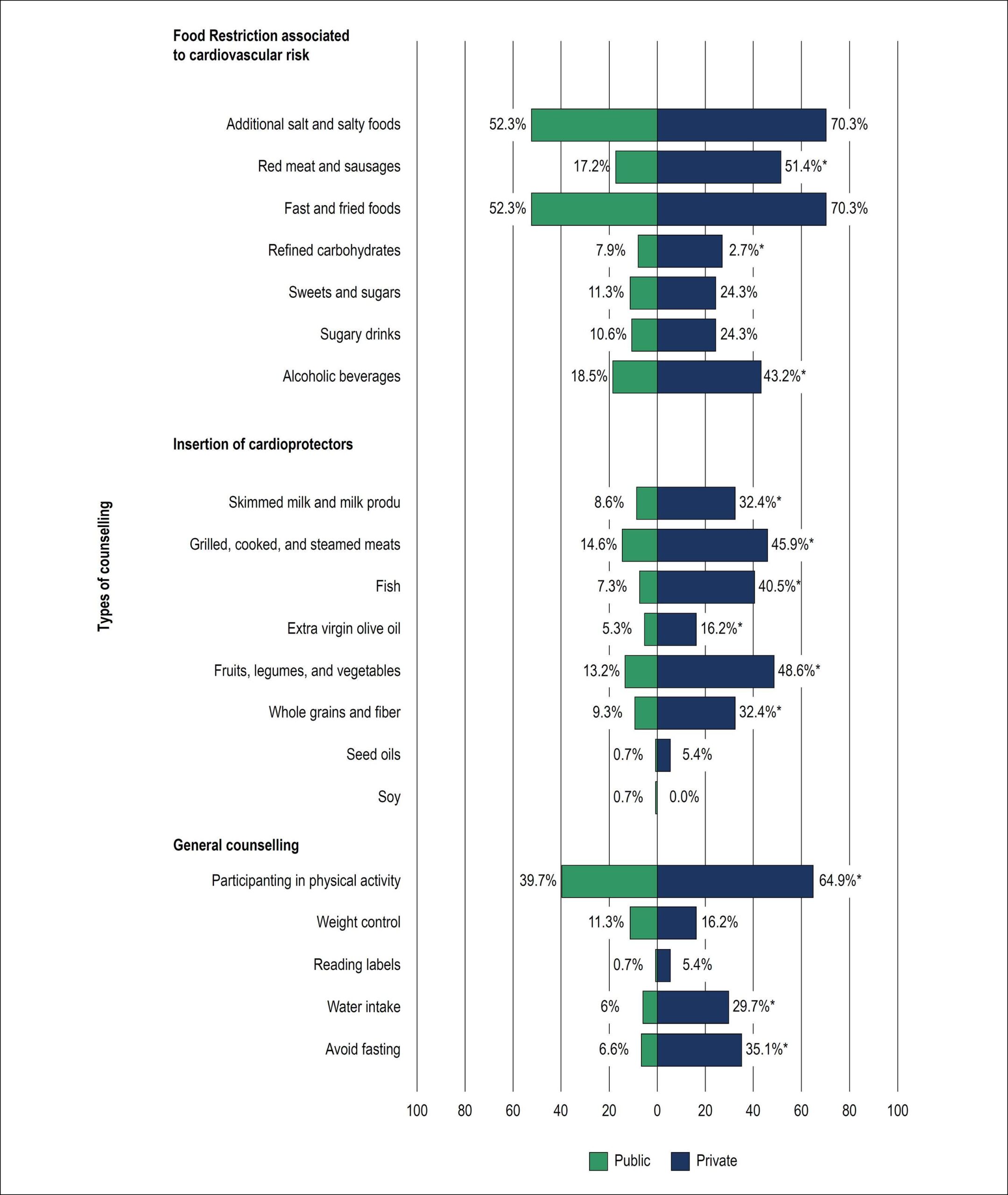
A total of 188 patients were analyzed; 80.3% were from the public health service facility. Among the interviewees, 57.6% of the public health service, and 70.3% of the private hospital patients received intra-hospital nutritional counselling (p = 0.191). The documentation of this practice, in medical records, was lower in the public service (2.6% vs. 37.8%, p < 0.001). A predominance of restrictive orientations was found in the public and private sectors, mainly regarding salt and fat, 52.3% and 70.3% respectively (p = 0.064). Patients from the private service were more counselling to introduce of cardioprotective foods, mainly fruit, vegetable/legume consumption (48.6% vs. 13.2%, p < 0.001). Among those who received counselling, nutritional knowledge was higher in the private sector (68.2% vs. 26.3%, p < 0.001).

Conclusion:

The intra-hospital nutritional counselling provided to patients with STEMI, in Sergipe, still presents poor quality in both services, especially in the public health system.

  • Health Education/methods
  • Healthcare Disparities
  • Healthy Diet
  • Hospitals, Private
  • Hospitals,Public
  • Nutritional Support
  • Risk reduction Behavior
  • ST Elevation Myocardial Infarction
Read Full Article
Creative Commons Attribution (CC BY) Creative Commons license
18/07/2019 DOI: 10.5935/abc.20190124 Views 1
IJCS
Editorial

Consumption of Brazil Nuts Provides Cardiovascular Health Benefits

Mariana Sarto Figueiredo

Indroduction

The prevalence of chronic diseases, such as metabolic syndrome, obesity, dyslipidemia, type 2 diabetes mellitus (DM2), cancer, and neurodegenerative and cardiovascular disorders have been increasing in the world population. However, cardiovascular diseases remain the leading cause of mortality and morbidity worldwide. According to the Barker’s Theory (1993), hormonal, nutritional or environmental changes during critical periods of development such as gestation, lactation or adolescence may result in changes to the basic functions of the human body in childhood and “program” the progeny for the emergence of chronic diseases in the adult life, like DM2, obesity, cardiovascular diseases, intestinal dysbiosis, and hormonal and metabolic dysregulation. This phenomenon is known as “metabolic programming” or “developmental plasticity”.,

In the same direction, many authors have demonstrated the impact of an unhealthy diet on the development of chronic diseases such as metabolic syndrome, obesity, dyslipidemia, type 2 diabetes mellitus, cancer, neurodegenerative diseases and increased cardiovascular disorders., On the other hand, we know that the regular consumption of plant-based foods (cereals, fruits, vegetables, legumes, tree nuts and seeds), moderate consumption of seafood, fish and dairy and reduced consumption of alcohol, red meat and meat products may prevent and/or protect against diseases and provide health benefits, which is now widely recognized by health professionals.,

[…]

  • Anti-Inflammatory Agents
  • Brazil Nuts
  • Cardiovascular Diseases
  • Healthy Diet
  • Nuts
  • Risk reduction Behavior
Read Full Article
Creative Commons Attribution (CC BY) Creative Commons license
20/05/2019 DOI: 10.5935/2359-4802.20190037

How to cite this article

EndNote RIS

Electronic Document Format (Vancouver)

Bittencourt MS. Why We Build Models – From Clinical Cardiology Practice to Infectious Disease Epidemics. Arquivos Brasileiros de Cardiologia 2020;114(6):992-4.

Electronic Document Format (ABNT)

Bittencourt, Marcio Sommer. Why We Build Models – From Clinical Cardiology Practice to Infectious Disease Epidemics. Arquivos Brasileiros de Cardiologia, v. 114, n. 6, p. 992-994, Jul. 2020.

Electronic Document Format (APA)

Bittencourt, M. S. (2020). Why We Build Models – From Clinical Cardiology Practice to Infectious Disease Epidemics. Arquivos Brasileiros de Cardiologia, 114(6), 992-994.

Electronic Document Format (ISO)

Bittencourt, Marcio Sommer. Why We Build Models – From Clinical Cardiology Practice to Infectious Disease Epidemics. Arquivos Brasileiros de Cardiologia [online]. 2020, vol. 114, n. 6, [cited 2026-10-14], pp. 992-994. Available from: <https://journals.cardiol.br/en/article/why-we-build-models-from-clinical-cardiology-practice-to-infectious-disease-epidemics/>. ISSN 0066-782X

EndNote RIS

Electronic Document Format (Vancouver)

Francisco PMSB, Assumpção D, Malta DC. Co-occurrence of Smoking and Unhealthy Diet in the Brazilian Adult Population. Arquivos Brasileiros de Cardiologia 2019;113(4):699-70.

Electronic Document Format (ABNT)

Francisco, Priscila Maria Stolses Bergamo; Assumpção, Daniela de; Malta, Deborah Carvalho. Co-occurrence of Smoking and Unhealthy Diet in the Brazilian Adult Population. Arquivos Brasileiros de Cardiologia, v. 113, n. 4, p. 699-709, Nov. 2019.

Electronic Document Format (APA)

Francisco, P. M. S. B., Assumpção, D. , & Malta, D. C. (2019). Co-occurrence of Smoking and Unhealthy Diet in the Brazilian Adult Population. Arquivos Brasileiros de Cardiologia, 113(4), 699-709.

Electronic Document Format (ISO)

Francisco, Priscila Maria Stolses Bergamo and Assumpção, Daniela de and Malta, Deborah Carvalho. Co-occurrence of Smoking and Unhealthy Diet in the Brazilian Adult Population. Arquivos Brasileiros de Cardiologia [online]. 2019, vol. 113, n. 4, [cited 2026-10-14], pp. 699-709. Available from: <https://journals.cardiol.br/en/article/co-occurrence-of-smoking-and-unhealthy-diet-in-the-brazilian-adult-population/>. ISSN 0066-782X

EndNote RIS

Electronic Document Format (Vancouver)

Antoniazzi L. The Lack of Nutritional Counseling during Hospitalization. Arquivos Brasileiros de Cardiologia 2019;113(2):270-1.

Electronic Document Format (ABNT)

Antoniazzi, Luiza. The Lack of Nutritional Counseling during Hospitalization. Arquivos Brasileiros de Cardiologia, v. 113, n. 2, p. 270-271, Sep. 2019.

Electronic Document Format (APA)

Antoniazzi, L. (2019). The Lack of Nutritional Counseling during Hospitalization. Arquivos Brasileiros de Cardiologia, 113(2), 270-271.

Electronic Document Format (ISO)

Antoniazzi, Luiza. The Lack of Nutritional Counseling during Hospitalization. Arquivos Brasileiros de Cardiologia [online]. 2019, vol. 113, n. 2, [cited 2026-10-14], pp. 270-271. Available from: <https://journals.cardiol.br/en/article/the-lack-of-nutritional-counseling-during-hospitalization/>. ISSN 0066-782X

EndNote RIS

Electronic Document Format (Vancouver)

Lima TCRM, Silva DG, Barreto IDC, Oliveira JC, Oliveira LCS, Arcelino LAM, Oliveira JC, et al. Quality of Intra-Hospital Nutritional Counseling in Patients with STEMI in the Public and Private Health Networks of Sergipe: The VICTIM Register. Arquivos Brasileiros de Cardiologia 2019;113(2):260-9.

Electronic Document Format (ABNT)

Lima, Ticiane Clair Remacre Munareto; Silva, Danielle Góes da; Barreto, Ikaro Daniel de Carvalho; Oliveira, Jussiely Cunha; Oliveira, Laís Costa Souza; Arcelino, Larissa Andreline Maia; Oliveira, Jeferson Cunha; Sousa, Antônio Carlos Sobral; Barreto Filho, José Augusto Soares. Quality of Intra-Hospital Nutritional Counseling in Patients with STEMI in the Public and Private Health Networks of Sergipe: The VICTIM Register. Arquivos Brasileiros de Cardiologia, v. 113, n. 2, p. 260-269, Jul. 2019.

Electronic Document Format (APA)

Lima, T. C. R. M., Silva, D. G. , Barreto, I. D. C., Oliveira, J. C., Oliveira, L. C. S., Arcelino, L. A. M., Oliveira, J. C., Sousa, A. C. S., & Barreto Filho, J. A. S. (2019). Quality of Intra-Hospital Nutritional Counseling in Patients with STEMI in the Public and Private Health Networks of Sergipe: The VICTIM Register. Arquivos Brasileiros de Cardiologia, 113(2), 260-269.

Electronic Document Format (ISO)

Lima, Ticiane Clair Remacre Munareto and Silva, Danielle Góes da and Barreto, Ikaro Daniel de Carvalho and Oliveira, Jussiely Cunha and Oliveira, Laís Costa Souza and Arcelino, Larissa Andreline Maia and Oliveira, Jeferson Cunha and Sousa, Antônio Carlos Sobral and Barreto Filho, José Augusto Soares. Quality of Intra-Hospital Nutritional Counseling in Patients with STEMI in the Public and Private Health Networks of Sergipe: The VICTIM Register. Arquivos Brasileiros de Cardiologia [online]. 2019, vol. 113, n. 2, [cited 2026-10-14], pp. 260-269. Available from: <https://journals.cardiol.br/en/article/quality-of-intra-hospital-nutritional-counseling-in-patients-with-stemi-in-the-public-and-private-health-networks-of-sergipe-the-victim-register/>. ISSN 0066-782X

EndNote RIS

Electronic Document Format (Vancouver)

Figueiredo MS. Consumption of Brazil Nuts Provides Cardiovascular Health Benefits. International Journal of Cardiovascular Sciences 2019;32(3):205-6.

Electronic Document Format (ABNT)

Figueiredo, Mariana Sarto. Consumption of Brazil Nuts Provides Cardiovascular Health Benefits. International Journal of Cardiovascular Sciences, v. 32, n. 3, p. 205-206, May. 2019.

Electronic Document Format (APA)

Figueiredo, M. S. (2019). Consumption of Brazil Nuts Provides Cardiovascular Health Benefits. International Journal of Cardiovascular Sciences, 32(3), 205-206.

Electronic Document Format (ISO)

Figueiredo, Mariana Sarto. Consumption of Brazil Nuts Provides Cardiovascular Health Benefits. International Journal of Cardiovascular Sciences [online]. 2019, vol. 32, n. 3, [cited 2026-10-14], pp. 205-206. Available from: <https://journals.cardiol.br/en/article/consumption-of-brazil-nuts-provides-cardiovascular-health-benefits/>. ISSN 2359-4802

  • About ABC Family
  • Internal Regulation
  • Editorial Board
  • Brazilian Society of Cardiology (SBC)

Issues

SBC Guidelines

  • Videos
  • Podcasts
  • News