ABC Family Arquivos Brasileiros de Cardiologia International Journal of Cardiovascular Sciences ABC Heart Failure & Cardiomyopathy ABC Imagem Cardiovascular
Português English
ABC Family
Português English
  • About
    • About ABC Family
    • Internal Regulation
    • Editorial Board
    • Brazilian Society of Cardiology (SBC)
  • Issues
  • SBC Guidelines
  • Content
    • Videos
    • Podcasts
    • News
  • About
    • About ABC Family
    • Internal Regulation
    • Editorial Board
    • Brazilian Society of Cardiology (SBC)
  • Issues
  • SBC Guidelines
  • Content
    • Videos
    • Podcasts
    • News

ABC Family

  • ABC Family
  • Arquivos Brasileiros de Cardiologia
  • International Journal of Cardiovascular Sciences
  • ABC Heart Failure & Cardiomyopathy
  • ABC Imagem Cardiovascular
Search in

No content found.

Journals
Ordering
Article types
Others

  1. Home
  2. Keyword: Infections
Figure 1
ABC
Image

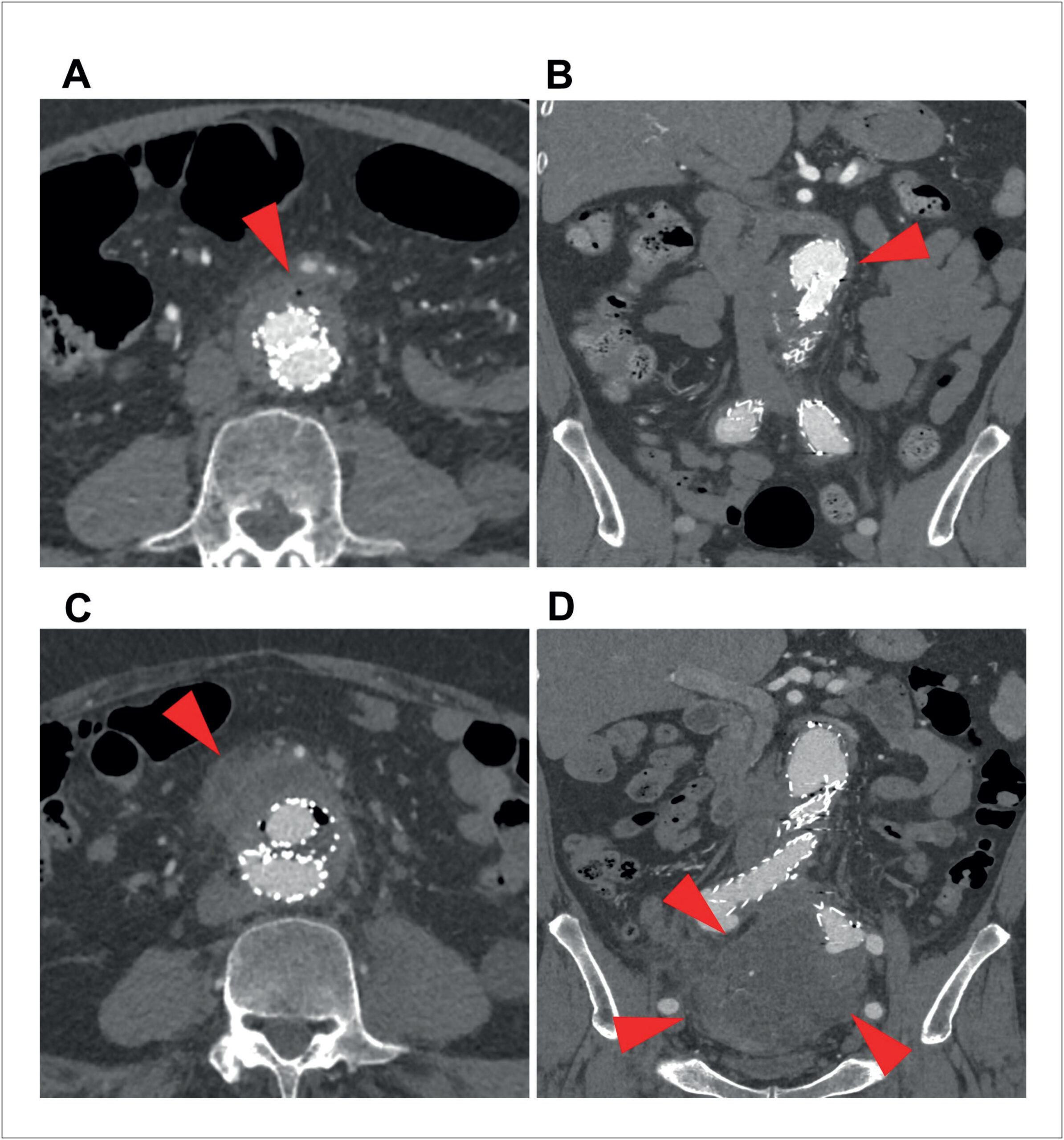
Ectopic Gas: A Sign for Potential Aortic Endoprosthesis Infection before Symptoms

Hongliang Li et al. Ying Zhao Qingyu Ji

Introduction

Abdominal aortic endoprosthesis (AAE) infection is the most dreaded complication of endovascular aortic repair (EVAR) for abdominal aortic aneurysm (AAA), with mortality rates reported as high as 51.8%. Recent meta-analyses emphasize that despite advances in surgical technique, the prognosis of AAE infection remains poor due to delayed diagnosis and the complexity of endoprosthesis explantation., The management of AAE infection is significantly hindered by diagnostic latency. Currently, computed tomography angiography (CTA) is typically reserved for evaluation only after the onset of infectious symptoms. Although periprosthetic exudation and ectopic gas are considered hallmark radiographic features, these signs are often subtle and minute during the early, pre-symptomatic stages of infection, rendering them easily overlooked. We present a case in which a radiologist detected minute periprosthetic ectopic gas via thin-section CT during a routine CTA follow-up, five days before the onset of infectious symptoms, thereby alerting clinicians to the possibility of AAE infection. Based on this case, we underscore the critical value of thin-section CT in the early identification of ectopic gas. Furthermore, we aim to demonstrate how advanced post-processing—specifically volume rendering (VR) and hyper-realistic rendering (HRR)—enhances the visualization of AAE infection, thereby enabling longitudinal monitoring of infection progression.

[…]

  • Computed Tomography Angiography
  • Endovascular Aneurysm Repair
  • Endovascular Procedures
  • Infections
Read Full Article
Creative Commons Attribution (CC BY) Creative Commons license
20/07/2026 DOI: 10.36660/abc.20250591i
Figure 1
IJCS
Editorial

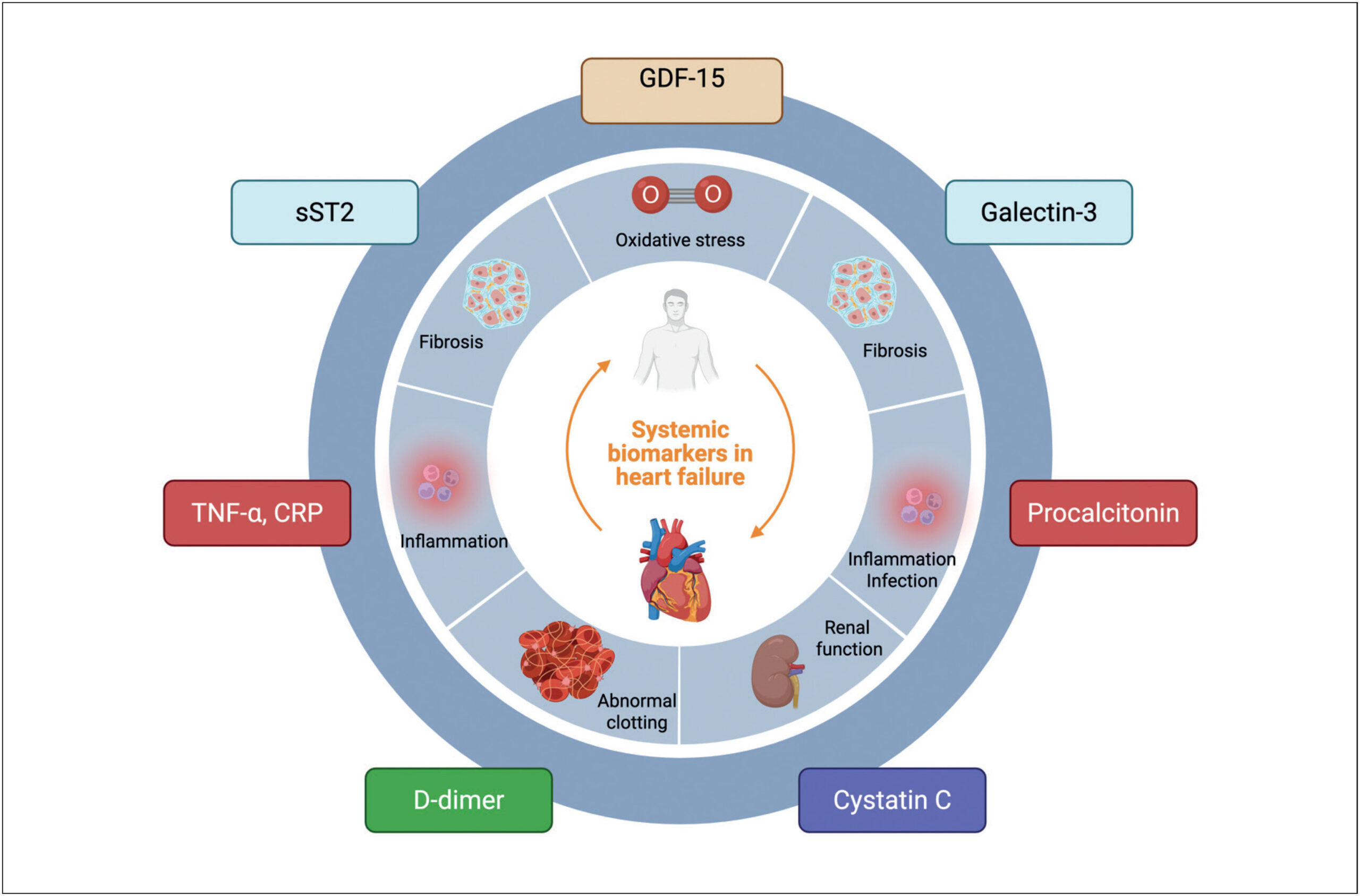
Systemic Biomarkers in Heart Failure: To Measure or Not to Measure?

Humberto Villacorta

Heart failure (HF) is an aggressive disease with unfavorable prognosis if not treated properly. Even after optimal medical treatment, some patients may remain at high risk for clinical events. As such, it is important to identify patients at risk of death or hospitalization. Biomarkers have been used to establish prognosis in HF, and natriuretic peptides (NP) are considered the gold standard biomarker in HF, not only for diagnosis but also for prognosis.

NP are cardiac biomarkers, produced by the heart ventricles in response to wall stretch. However, several systemic biomarkers, reflecting different pathways, have been shown to be elevated in HF with the potential to add information on top of NP ().– Nevertheless, these biomarkers have not been strongly recommended in HF guidelines because their utility in aiding decision-making is unclear.

[…]

  • Biomarkers
  • Heart Failure
  • Infections
  • Prognosis
  • Thrombosis
Read Full Article
Creative Commons Attribution (CC BY) Creative Commons license
27/06/2025 DOI: 10.36660/ijcs.20250084
ABC
Research Letter

Actions Against Covid-19 in the Down Syndrome Population

Giorgia Castilho Russo et al. Nathalia Bernardes Natália Rezende Baraldi Denise Jeanine Berlinger Saraiva … Kátia De Angelis Carla Janice Baister Lantieri José Francisco Saraiva

The World Health Organization (WHO) declared, on January 30, 2020, that the outbreak of the new coronavirus disease (COVID-19) constituted a Public Health Emergency of International Importance — the organization’s highest alert level as per its International Health Regulations. On March 11, 2020, COVID-19 was declared a pandemic. The fact that the lethality of COVID-19 is associated with common comorbidities has caused great concern among professionals who work with people with Down Syndrome (DS). The prevalence of cardiovascular diseases in people with DS is 40-50%,, and they are also more prone to overweight and obesity; moreover, patients with DS present changes in airways that facilitate infection by the virus, which can worsen the effects of COVID-19. In addition, children with DS are more susceptible to infections due to changes in cytokines regulation, while adults frequently display increased proinflammatory biomarkers. These changes can impact the patients’ anatomical disorders and increase the incidence of chronic inflammatory conditions and mortality by sepsis.

Currently, the only recognized strategy to prevent infection by the severe acute respiratory syndrome coronavirus 2 (SARS-CoV-2) is avoiding exposure to the virus. Social isolation was advised by several Brazilian states with the aim of separating healthy people from those with suspected COVID-19, or who had contact with suspected or confirmed COVID-19 cases. It is worth noting that socialization is a very important aspect of the treatment of people with DS that contributes to a better quality of life and autonomy; therefore, social isolation represents a major challenge for this population.

[…]

  • Cardiovascular Diseases
  • Coronavirus
  • COVID-19
  • Cytokines
  • Diet, Healthy
  • Down Syndrome
  • Infections
  • Pandemics
  • Personal Autonomy
  • Public Health/organization and administration
  • Quality of life
Read Full Article
Creative Commons Attribution (CC BY) Creative Commons license
07/12/2020 DOI: 10.36660/abc.20200685 Views 2
IJCS
Original Article

Association between Insulin use and Infective Endocarditis: An Observational Study

Renato Lott Bezerra et al. Thales Figueiredo de Carvalho Ricardo dos Santos Batista Yago Machado da Silva … Bruno Fiuza Campos João Henrique Máximo de Castro Matheus de Carvalho Alves Pedro Ivo Palhares Monteiro Raimundo Matos Bezerra Filho Eduardo Luis Guimarães Machado

Abstract

Background:

The association between Diabetes Mellitus (DM) and Infective Endocarditis (IE) is controversial in the literature, since many controversial results have been published. However, when evaluating specifically the evidence on IE and individuals with DM using insulin, we found only two observational studies that considered this variable, with discordant results regarding the prognosis and prevalence of Staphylococcus sp in insulin users compared to non-users. Despite the lack of evidence, in clinical practice the insulin use could be interpreted as minor criteria “injection drug use”, using the modified Duke criteria for IE diagnosis.

Objectives:

To compare the microbiological and valvar profile, as well as the outcome of non-diabetic and diabetic patients with IE who were insulin users or not.

Methods:

This was an observational, analytical and retrospective study of patients diagnosed with IE between 2003 and 2015 in three tertiary care centers. A total of 211 patients were included, of which 17 were diabetics and 9 were insulin users. Patients were compared using the Shapiro-Wilk normality test and Fisher’s exact test, with a significance level of 5%.

Results:

The mortality from IE in diabetic individuals was higher than that of non-diabetic patients, but with no statistical significance (35.29% vs. 21.1%; p = 0.221), even when the groups were divided into insulin-user diabetic, non-insulin user diabetic and non-diabetic patients (33.3% vs. 37.5% vs. 21.1%, p = 0.229). There was a difference regarding the prevalence of IE caused by S. aureus (57.1% vs. 14.3% vs. 17.4%, p = 0.029) and the involvement of the tricuspid valve (33.3% vs. 0.00% vs. 10.0%, p = 0.034) among insulin users.

Conclusion:

In our sample, insulin use or the presence of DM did not mean higher in-hospital mortality from IE. It is not possible to generalize the microbiological and valvar findings due to the lack of studies evaluating insulin users in IE; however, particularities have been previously reported and may indicate a different behavior of IE in these patients. New studies considering the insulin use variable are required to elucidate the association between DM and IE.

  • Diabetes Mellitus
  • Endocarditis, bacterial
  • Heart Valve Diseases
  • Infections
  • Insulin
  • Inyeccion
Read Full Article
Creative Commons Attribution (CC BY) Creative Commons license
08/08/2019 DOI: 10.5935/2359-4802.20190049 Views 1
ABC
Editorial

Infections in Heart Failure – Impact on Mortality

Evandro Tinoco Mesquita

Infections represent an important emerging clinical problem that cause decompensation of heart failure (HF), and in many cases, life-threatening acute systemic disorder (sepsis) and septic shock. Cardiovascular system plays an important role in the development of multiorgan dysfunction in sepsis and refractory septic shock. Although intra-hospital death for sepsis decreased from 35% in 2000 to 18% in 2002, one third of patients die within one year after a septic event. Cardiovascular dysfunction significantly increases mortality rates in sepsis as compared with sepsis without cardiac dysfunction. Infection, per se, precipitates the occurrence of cardiac decompensation and is a direct marker of mortality in HF patients.

The study by Cardoso et al. report a high hospital infection rate (45.8%) and relevant mortality (21,5%) among patients with decompensated HF. Interestingly, during the first year after hospital discharge, mortality rate was lower in patients with infection as compared with those without infection (11.5%vs. 22.2%; p = 0.04).

[…]

  • Heart Failure / mortality
  • Hospitalization
  • Infection Control
  • Infections
  • Sepsis
  • Shock,Septic
Read Full Article
Creative Commons Attribution (CC BY) Creative Commons license
01/04/2018 DOI: 10.5935/abc.20180067 Views 1

How to cite this article

EndNote RIS

Electronic Document Format (Vancouver)

Li H, Zhao Y, Ji Q. Ectopic Gas: A Sign for Potential Aortic Endoprosthesis Infection before Symptoms. Arquivos Brasileiros de Cardiologia 2026;123(5):e20250591.

Electronic Document Format (ABNT)

Li, Hongliang; Zhao, Ying; Ji, Qingyu. Ectopic Gas: A Sign for Potential Aortic Endoprosthesis Infection before Symptoms. Arquivos Brasileiros de Cardiologia, v. 123, n. 5, e20250591, Jul. 2026.

Electronic Document Format (APA)

Li, H., Zhao, Y., & Ji, Q. (2026). Ectopic Gas: A Sign for Potential Aortic Endoprosthesis Infection before Symptoms. Arquivos Brasileiros de Cardiologia, 123(5), e20250591.

Electronic Document Format (ISO)

Li, Hongliang and Zhao, Ying and Ji, Qingyu. Ectopic Gas: A Sign for Potential Aortic Endoprosthesis Infection before Symptoms. Arquivos Brasileiros de Cardiologia [online]. 2026, vol. 123, n. 5, [cited 2026-10-14], e20250591. Available from: <https://journals.cardiol.br/en/article/ectopic-gas-a-sign-for-potential-aortic-endoprosthesis-infection-before-symptoms/>. ISSN 0066-782X

EndNote RIS

Electronic Document Format (Vancouver)

Villacorta H. Systemic Biomarkers in Heart Failure: To Measure or Not to Measure?. International Journal of Cardiovascular Sciences 2025;38:e20250084.

Electronic Document Format (ABNT)

Villacorta, Humberto. Systemic Biomarkers in Heart Failure: To Measure or Not to Measure?. International Journal of Cardiovascular Sciences, v. 38, e20250084, Jun. 2025.

Electronic Document Format (APA)

Villacorta, H. (2025). Systemic Biomarkers in Heart Failure: To Measure or Not to Measure?. International Journal of Cardiovascular Sciences, 38, e20250084.

Electronic Document Format (ISO)

Villacorta, Humberto. Systemic Biomarkers in Heart Failure: To Measure or Not to Measure?. International Journal of Cardiovascular Sciences [online]. 2025, vol. 38, [cited 2026-10-14], e20250084. Available from: <https://journals.cardiol.br/en/article/systemic-biomarkers-in-heart-failure-to-measure-or-not-to-measure/>. ISSN 2359-4802

EndNote RIS

Electronic Document Format (Vancouver)

Russo GC, Bernardes N, Baraldi NR, Saraiva DJB, Angelis KD, Lantieri CJB, Saraiva JF, et al. Actions Against Covid-19 in the Down Syndrome Population. Arquivos Brasileiros de Cardiologia 2020;115(5):939-41.

Electronic Document Format (ABNT)

Russo, Giorgia Castilho; Bernardes, Nathalia; Baraldi, Natália Rezende; Saraiva, Denise Jeanine Berlinger; Angelis, Kátia De; Lantieri, Carla Janice Baister; Saraiva, José Francisco. Actions Against Covid-19 in the Down Syndrome Population. Arquivos Brasileiros de Cardiologia, v. 115, n. 5, p. 939-941, Dec. 2020.

Electronic Document Format (APA)

Russo, G. C., Bernardes, N., Baraldi, N. R., Saraiva, D. J. B., Angelis, K. D., Lantieri, C. J. B., & Saraiva, J. F. (2020). Actions Against Covid-19 in the Down Syndrome Population. Arquivos Brasileiros de Cardiologia, 115(5), 939-941.

Electronic Document Format (ISO)

Russo, Giorgia Castilho and Bernardes, Nathalia and Baraldi, Natália Rezende and Saraiva, Denise Jeanine Berlinger and Angelis, Kátia De and Lantieri, Carla Janice Baister and Saraiva, José Francisco. Actions Against Covid-19 in the Down Syndrome Population. Arquivos Brasileiros de Cardiologia [online]. 2020, vol. 115, n. 5, [cited 2026-10-14], pp. 939-941. Available from: <https://journals.cardiol.br/en/article/actions-against-covid-19-in-the-down-syndrome-population/>. ISSN 0066-782X

EndNote RIS

Electronic Document Format (Vancouver)

Bezerra RL, Carvalho TF, Batista RS, Silva YM, Campos BF, Castro JHM, Alves MC, et al. Association between Insulin use and Infective Endocarditis: An Observational Study. International Journal of Cardiovascular Sciences 2019;33(1):14-21.

Electronic Document Format (ABNT)

Bezerra, Renato Lott; Carvalho, Thales Figueiredo de; Batista, Ricardo dos Santos; Silva, Yago Machado da; Campos, Bruno Fiuza; Castro, João Henrique Máximo de; Alves, Matheus de Carvalho; Monteiro, Pedro Ivo Palhares; Bezerra Filho, Raimundo Matos; Machado, Eduardo Luis Guimarães. Association between Insulin use and Infective Endocarditis: An Observational Study. International Journal of Cardiovascular Sciences, v. 33, n. 1, p. 14-21, Aug. 2019.

Electronic Document Format (APA)

Bezerra, R. L., Carvalho, T. F. , Batista, R. S., Silva, Y. M. , Campos, B. F., Castro, J. H. M. , Alves, M. C., Monteiro, P. I. P., Bezerra Filho, R. M., & Machado, E. L. G. (2019). Association between Insulin use and Infective Endocarditis: An Observational Study. International Journal of Cardiovascular Sciences, 33(1), 14-21.

Electronic Document Format (ISO)

Bezerra, Renato Lott and Carvalho, Thales Figueiredo de and Batista, Ricardo dos Santos and Silva, Yago Machado da and Campos, Bruno Fiuza and Castro, João Henrique Máximo de and Alves, Matheus de Carvalho and Monteiro, Pedro Ivo Palhares and Bezerra Filho, Raimundo Matos and Machado, Eduardo Luis Guimarães. Association between Insulin use and Infective Endocarditis: An Observational Study. International Journal of Cardiovascular Sciences [online]. 2019, vol. 33, n. 1, [cited 2026-10-14], pp. 14-21. Available from: <https://journals.cardiol.br/en/article/association-between-insulin-use-and-infective-endocarditis-an-observational-study/>. ISSN 2359-4802

EndNote RIS

Electronic Document Format (Vancouver)

Mesquita ET. Infections in Heart Failure – Impact on Mortality. Arquivos Brasileiros de Cardiologia 2018;110(4):371-2.

Electronic Document Format (ABNT)

Mesquita, Evandro Tinoco. Infections in Heart Failure – Impact on Mortality. Arquivos Brasileiros de Cardiologia, v. 110, n. 4, p. 371-372, Mar. 2018.

Electronic Document Format (APA)

Mesquita, E. T. (2018). Infections in Heart Failure – Impact on Mortality. Arquivos Brasileiros de Cardiologia, 110(4), 371-372.

Electronic Document Format (ISO)

Mesquita, Evandro Tinoco. Infections in Heart Failure – Impact on Mortality. Arquivos Brasileiros de Cardiologia [online]. 2018, vol. 110, n. 4, [cited 2026-10-14], pp. 371-372. Available from: <https://journals.cardiol.br/en/article/infections-in-heart-failure-impact-on-mortality/>. ISSN 0066-782X

  • About ABC Family
  • Internal Regulation
  • Editorial Board
  • Brazilian Society of Cardiology (SBC)

Issues

SBC Guidelines

  • Videos
  • Podcasts
  • News