ABC Family Arquivos Brasileiros de Cardiologia International Journal of Cardiovascular Sciences ABC Heart Failure & Cardiomyopathy ABC Imagem Cardiovascular
Português English
ABC Family
Português English
  • About
    • About ABC Family
    • Internal Regulation
    • Editorial Board
    • Brazilian Society of Cardiology (SBC)
  • Issues
  • SBC Guidelines
  • Content
    • Videos
    • Podcasts
    • News
  • About
    • About ABC Family
    • Internal Regulation
    • Editorial Board
    • Brazilian Society of Cardiology (SBC)
  • Issues
  • SBC Guidelines
  • Content
    • Videos
    • Podcasts
    • News

ABC Family

  • ABC Family
  • Arquivos Brasileiros de Cardiologia
  • International Journal of Cardiovascular Sciences
  • ABC Heart Failure & Cardiomyopathy
  • ABC Imagem Cardiovascular
Search in

No content found.

Journals
Ordering
Article types
Others

  1. Home
  2. Keyword: Heart Septal Defects, Atrial
My Approach to Transcatheter Closure of Atrial Septal Defect: Step-by-Step and Current Contraindications
ABCIC
Review Article

My Approach to Transcatheter Closure of Atrial Septal Defect: Step-by-Step and Current Contraindications

Angele Azevedo Alves Mattoso et al. Joberto Pinheiro Sena Gilson Soares Feitosa Filho Maria Lúcia Duarte

Abstract

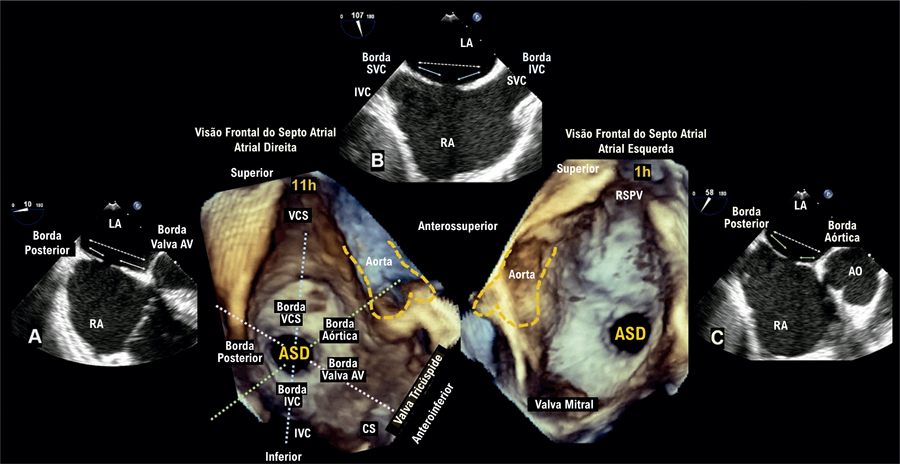
All patients who are candidates for transcatheter closure of an ostium secundum atrial septal defect (ASD) should undergo a detailed echocardiographic assessment using 2D transesophageal echocardiography (TEE) prior to the procedure. It is essential for a comprehensive analysis of interatrial septal anatomy and for determining defect eligibility for the procedure. The type, number, size, location and morphology of the ASD, as well as the quality of the surrounding septal tissue and its relationship with adjacent cardiac structures, should be carefully assessed. 3D TEE may complement this assessment by providing additional relevant anatomical information. During the procedure, TEE plays a fundamental role in real-time guidance, allowing proper deployment of the septal occluder device as well as immediate assessment of the result and early detection of potential complications. This article presents a practical approach to transcatheter closure of ostium secundum ASD, with emphasis on echocardiographic aspects in the pre-procedural, intraprocedural, and post-procedural phases.
  • Catheterization
  • Echocardiography
  • Heart Septal Defects, Atrial
Read Full Article
Creative Commons Attribution (CC BY) Creative Commons license
17/07/2026 DOI: 10.36660/abcimg.20260020i Views 1
Figure 1
ABCIC
Case Report

Percutaneous Closure of Multiple Atrial Septal Defects with Hemodynamic Repercussions: Report of Two Cases in First-Degree Related Adult Patients

Débora Freire Ribeiro Rocha et al. Henrique Lima Guimarães Maurício Prudente Lopes João Batista Masson Silva Giulliano Gardenghi

Introduction

Atrial septal defects (ASD) account for 7–10% of congenital heart anomalies., ASD are classified as three anatomical types: ostium secundum (OS) (70% of cases), ostium primum (15–20% of cases), and sinus venosus (5–10% of cases) defects. OS involves the fossa ovalis region and results from poor embryological development of septum secundum or excessive absorption of septum primum resulting in the lack of a septum in the fossa ovalis.

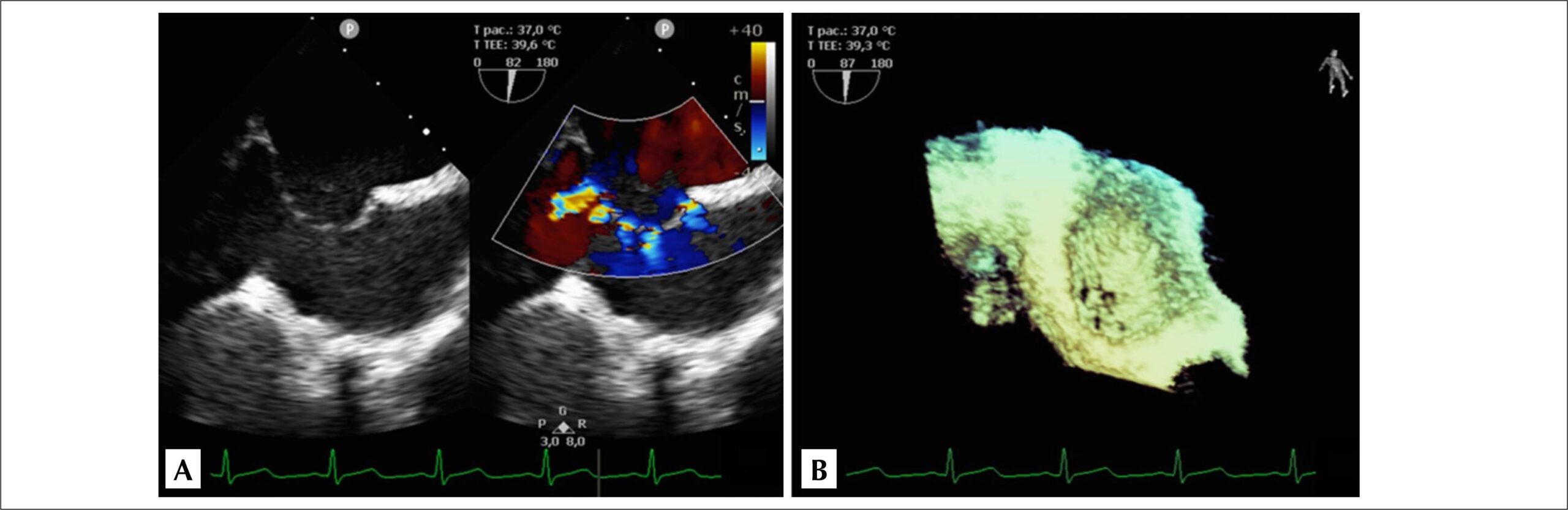
Affected patients are usually asymptomatic. Exercise intolerance in the form of dyspnea or fatigue is the most common initial presentation. Echocardiography is a fundamental tool in the diagnosis and management of patients with ASD. Transthoracic echocardiography (TTE) identifies ASD type and size, shunt direction, and the presence of anomalous sinus venous drainage. Three-dimensional transesophageal echocardiography (3DTEE) details the morphology and anatomical relationships of the atrial septum, providing fundamental information for choosing treatment.,

[…]

  • Echocardiography
  • Heart Septal Defects, Atrial
  • Hemodynamics
Read Full Article
Creative Commons Attribution (CC BY) Creative Commons license
01/12/2022 DOI: 10.47593/2675-312X/20223504eabc345i
ABCIC
Case Report

Lutembacher Syndrome: Case Report and Literature Review

Susan Caroline Azevedo Aredes et al. Gabriela da Silva Scopel Stella de Souza Carneiro Josana Azevedo Aredes … Aline Valério de Lima Patrick Ventorim Costa

[…]

  • Echocardiography/diagnostic Imaging
  • Heart Septal Defects, Atrial
  • Hypertension Pulmonary
  • Lutembacher Syndrome/physiopathology
  • Mitral Valve Stenosis
  • Stroke Volume
Read Full Article
Creative Commons Attribution (CC BY) Creative Commons license
20/01/2022 DOI: 10.5935/2318-8219.20180016
ABCIC
Case Report

Cor Triatriatum Sinistrum in Symptomatic Adult: Case Report

Francilayne Moretto dos Santos et al. Laura Gomes Flores Felipe Rodrigues Dias Leandro Shigueru Ikuta Ueda Eduardo Frederico Philippi

[…]

  • Adult
  • Cardiac Catheterization
  • Cor Triatriatum/physiopathology
  • Diagnostic Imaging
  • Echocardiography/methods
  • Heart Defects, Congenital
  • Heart Septal Defects, Atrial
Read Full Article
Creative Commons Attribution (CC BY) Creative Commons license
20/01/2022 DOI: 10.5935/2318-8219.20180044
Figure 1
ABCHF
Case Report

Heart Failure Due to Anomalous Pulmonary Vein Connection Associated with Atrial Septal Defect

Marcely Gimenes Bonatto et al. Ana Karyn Ehrenfried de Freitas Letícia dos Santos de Oliveira Rocha Claudinei Collatusso … Rafael de Almeida Torres Gustavo Gavazzoni Blume Lídia Zytynski Moura

Introduction

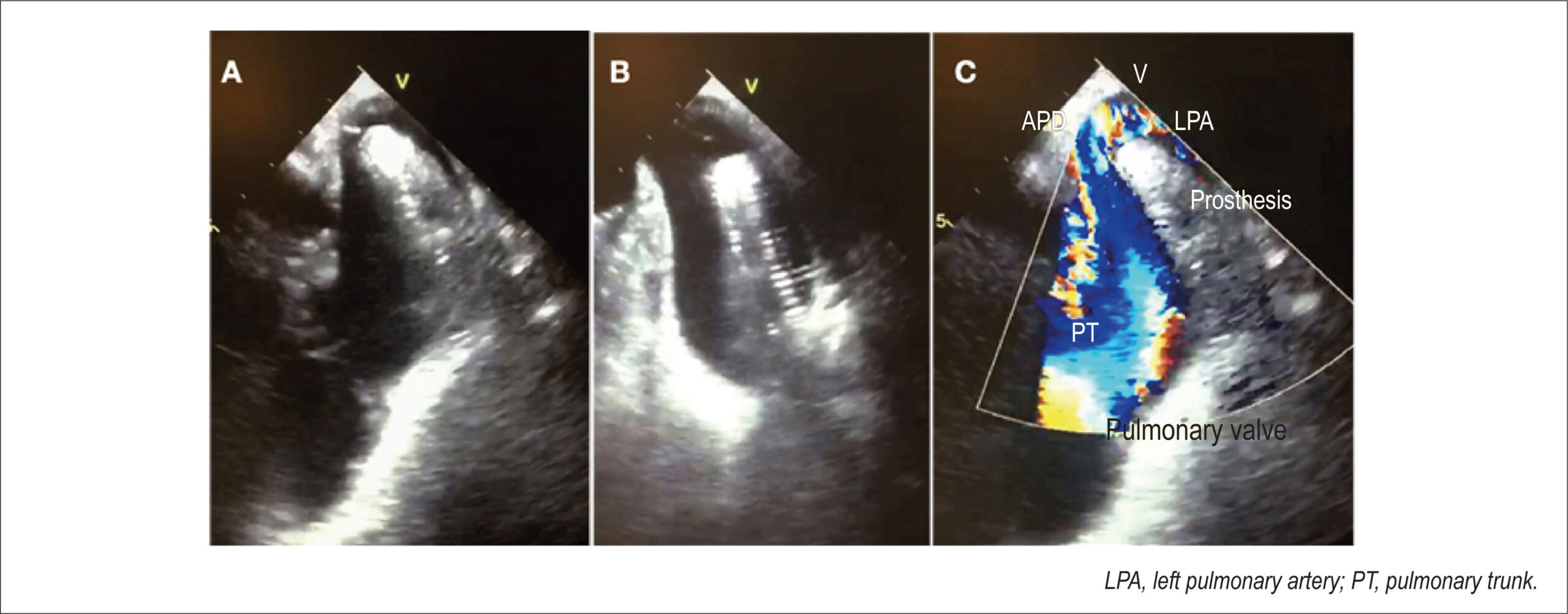
Anomalous pulmonary vein dreinage (APVD) is a rare disease, accounting for nearly 1 to 3% of congenital heart diseases. It may be total, when all PVs are involved, or partial, when only some PVs drain anomalously into one or more systemic veins or directly into the right atrium (RA)., This condition occurs alone or in association with an interatrial septal defect, more often sinus venosus interatrial communication (IAC) (which accounts for nearly 5% of all IAC cases).

Patients with this condition may remain asymptomatic until adulthood. However, overload of right chambers may trigger symptoms, especially reduced functional capacity and progressive dyspnea, in addition to the development of pulmonary hypertension (PH) and ventricular dysfunction, which is the most severe disease scenario. Recognizing these symptoms and establishing early diagnosis and treatment is crucial to avoid disease progression and its prognostic implications.

[…]

  • Cardiomegaly
  • Darinage
  • Echocardiography/methods
  • Heart Defects,Congenital
  • Heart Failure/physiopathologyu
  • Heart Septal Defects, Atrial
  • Pulmonary Veins
Read Full Article
Creative Commons Attribution (CC BY) Creative Commons license
06/07/2021 DOI: 10.36660/abchf.20210004 Views 1
Figure 1
ABCIC
Case Report

Amplatzer™ Prosthesis Embolization After Percutaneous Atrial Septal Defect Closure: A Case Report

Raul Serra Valério et al. Alfredo Augusto Eyer Rodrigues Artur José da Silva Raoul Marly Maria Uellendahl … Carlos Eduardo Suaide Silva Luciana Braz Peixoto

Introduction

Atrial septal defect (ASD) is the most common congenital heart disease in adults; in specific cases, it has indications for treatment. The percutaneous approach has been highlighted as a less invasive method to close this defect, specifically in cases of ostium secundum ASD; however, it can have complications as described in the following report.

[…]

  • Heart Septal Defects, Atrial
  • Septal occluder device
Read Full Article
Creative Commons Attribution (CC BY) Creative Commons license
11/06/2021 DOI: 10.47593/2675-312X/20213402eabc135 Views 1
Figure 1
ABC
Review Article

Genetic Syndromes Associated with Congenital Cardiac Defects and Ophthalmologic Changes – Systematization for Diagnosis in the Clinical Practice

Priscila H. A. Oliveira et al. Beatriz S. Souza Eimi N. Pacheco Michele S. Menegazzo … Ivan S. Corrêa Paulo R. G. Zen Rafael F. M. Rosa Claudia C. Cesa Lucia C. Pellanda Manuel A. P. Vilela

Abstract

Background:

Numerous genetic syndromes associated with heart disease and ocular manifestations have been described. However, a compilation and a summarization of these syndromes for better consultation and comparison have not been performed yet.

Objective:

The objective of this work is to systematize available evidence in the literature on different syndromes that may cause congenital heart diseases associated with ocular changes, focusing on the types of anatomical and functional changes.

Method:

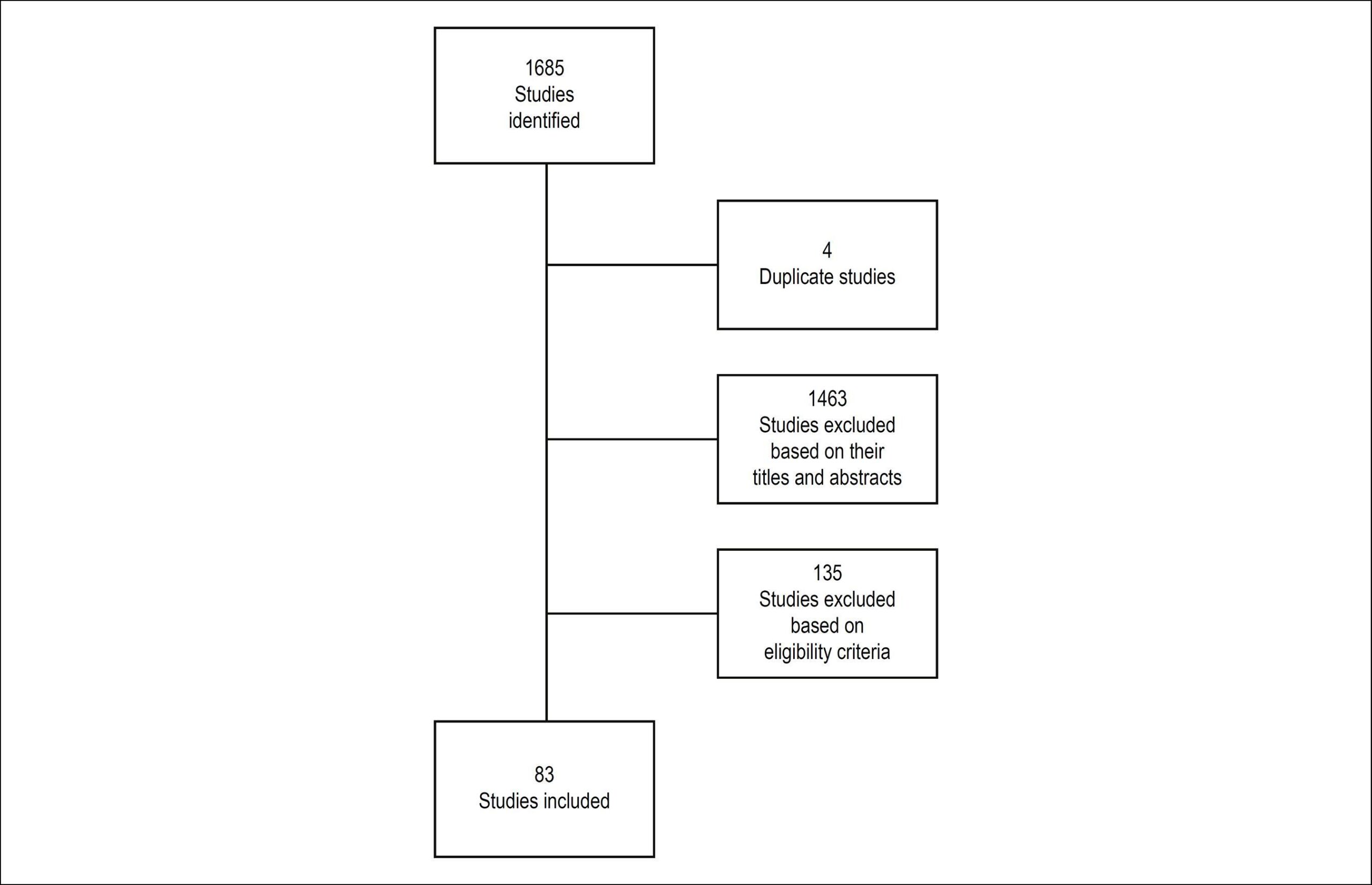
A systematic search was performed on Medline electronic databases (PubMed, Embase, Cochrane, Lilacs) of articles published until January 2016. Eligibility criteria were case reports or review articles that evaluated the association of ophthalmic and cardiac abnormalities in genetic syndrome patients younger than 18 years.

Results:

The most frequent genetic syndromes were: Down Syndrome, Velo-cardio-facial / DiGeorge Syndrome, Charge Syndrome and Noonan Syndrome. The most associated cardiac malformations with ocular findings were interatrial communication (77.4%), interventricular communication (51.6%), patent ductus arteriosus (35.4%), pulmonary artery stenosis (25.8%) and tetralogy of Fallot (22.5%).

Conclusion:

Due to their clinical variability, congenital cardiac malformations may progress asymptomatically to heart defects associated with high morbidity and mortality. For this reason, the identification of extra-cardiac characteristics that may somehow contribute to the diagnosis of the disease or reveal its severity is of great relevance.

  • Diagnostic Tevhniques, Ophtalmologic
  • Eye Diseases
  • Heart Defects, Congenital/genetic
  • Heart Septal Defects, Atrial
  • Tetralogy of Fallot
Read Full Article
Creative Commons Attribution (CC BY) Creative Commons license
01/01/2018 DOI: 10.5935/abc.20180013 Views 1
Figure 1
ABC
Clinicoradiological Session

Case 5 / 2017 – Scimitar Syndrome and Pulmonary Sequestration in Natural Progression in a 68-Year-Old Woman

Edmar Atik et al. Álvaro Francisco Gudiño Marcelo Lopes Montemor

Clinical data

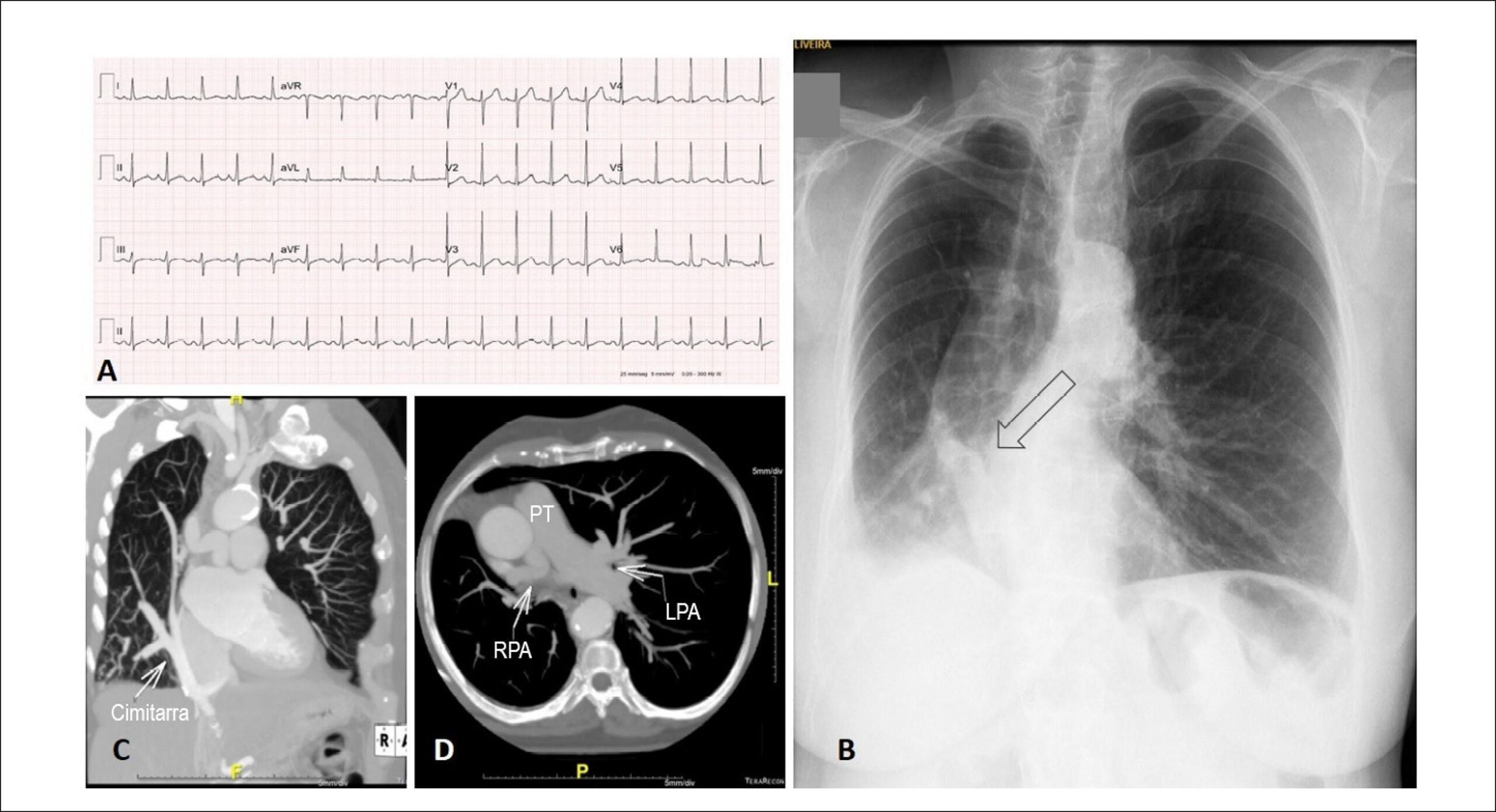
Tiredness and palpitations during physical work for approximately 20 years, without progression. Some episodes of small-volume hemoptysis during this period. Taking enalapril for hypertension and metformin for diabetes.

Physical examination: good general condition, eupneic, acyanotic. Weight: 56 Kg, Height: 160 cm, blood pressure (right arm): 140/90 mm Hg, HR: 95 bpm, oxygen saturation = 99%.

[…]

  • Heart Defects, Congenital
  • Heart Septal Defects, Atrial
  • Pulmonary Sequestration
  • Scimitar Syndrome
Read Full Article
Creative Commons Attribution (CC BY) Creative Commons license
01/09/2017 DOI: 10.5935/abc.20170128
Figure 1
ABC
Anatomopathological Session

Case 1/2016 – 56-Year-Old Male with Atrial Septal Defect, Pulmonary Arterial Hypertension, Hospitalized Due to Eisenmenger Syndrome

Carolina Santana et al. Antonio Augusto B. Lopes Antonio Fernando Lins de Paiva Luiz Alberto Benvenuti

Postmortem examination

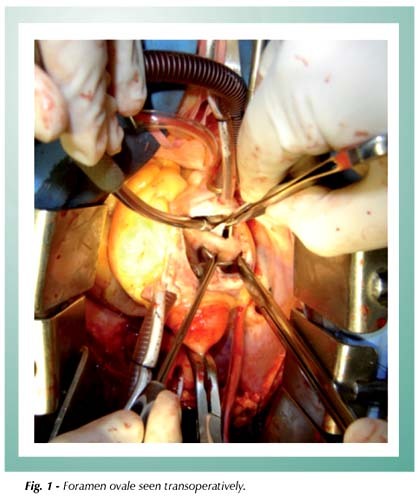
The heart was enlarged and globoid, weighing 832 g. On gross examination, the RV was prominent. The opening of the cavities evidenced eccentric hypertrophy of the four chambers, mainly the right ones, which showed marked dilation. A large ASD was identified in the fossa ovalis (ostium secundum type), measuring 3.5 x 3.0 cm (). The ventricular septum was intact, no other heart malformation being identified. The microscopic examination revealed hypertrophy of the cardiomyocytes and myocardial interstitial fibrosis in both ventricles, with no evidence of ischemic lesions (infarction). The pulmonary trunk was dilated (diameter of 4.0 cm) and showed complicated atherosclerosis, with calcified areas. The right pulmonary artery showed calcified atherosclerosis, organized partial thrombosis, and markedly dilation of its parenchymatous branches. The process was similar in the left lung, but the thrombosis was more extensive, affecting numerous arterial branches, in an occlusive way, including the pulmonary hilum (). The microscopic examination of the lungs confirmed the extensive organizing arterial thrombosis detected on gross examination, in addition to revealing: organized and rechanneled arteriolar thrombosis (); recent focal thrombosis of a small artery and small hemorrhagic infarction in the lower lobe of the right lung (); areas of alveolar hemorrhage; anthracosis; microscopic evidence of chronic bronchitis; and diffuse pulmonary emphysema. In addition, a small in situ adenocarcinoma was found in the right lung, measuring 9 mm. Moderate aorta atherosclerosis was identified, with calcified plaques. Neither pneumothorax nor bronchopneumonia were evidenced.

[…]

  • Eisenmenger Complex
  • Heart Defects, Congenital
  • Heart Septal Defects, Atrial
  • Hypertension Pulmonary
  • Lung Diseases, Obstructive
  • Pulmonary embolism
Read Full Article
Creative Commons Attribution (CC BY) Creative Commons license
01/03/2016 DOI: 10.5935/abc.20160035 Views 2
Figure 1
ABC
Clinicoradiological Session

Case 1/2016 – Aortic Coarctation and Atrial Septal Defect submitted to Percutaneous Repair in Adult Patient

Edmar Atik et al. Raul Arrieta Roberto Kalil Filho

Complementary Examinations

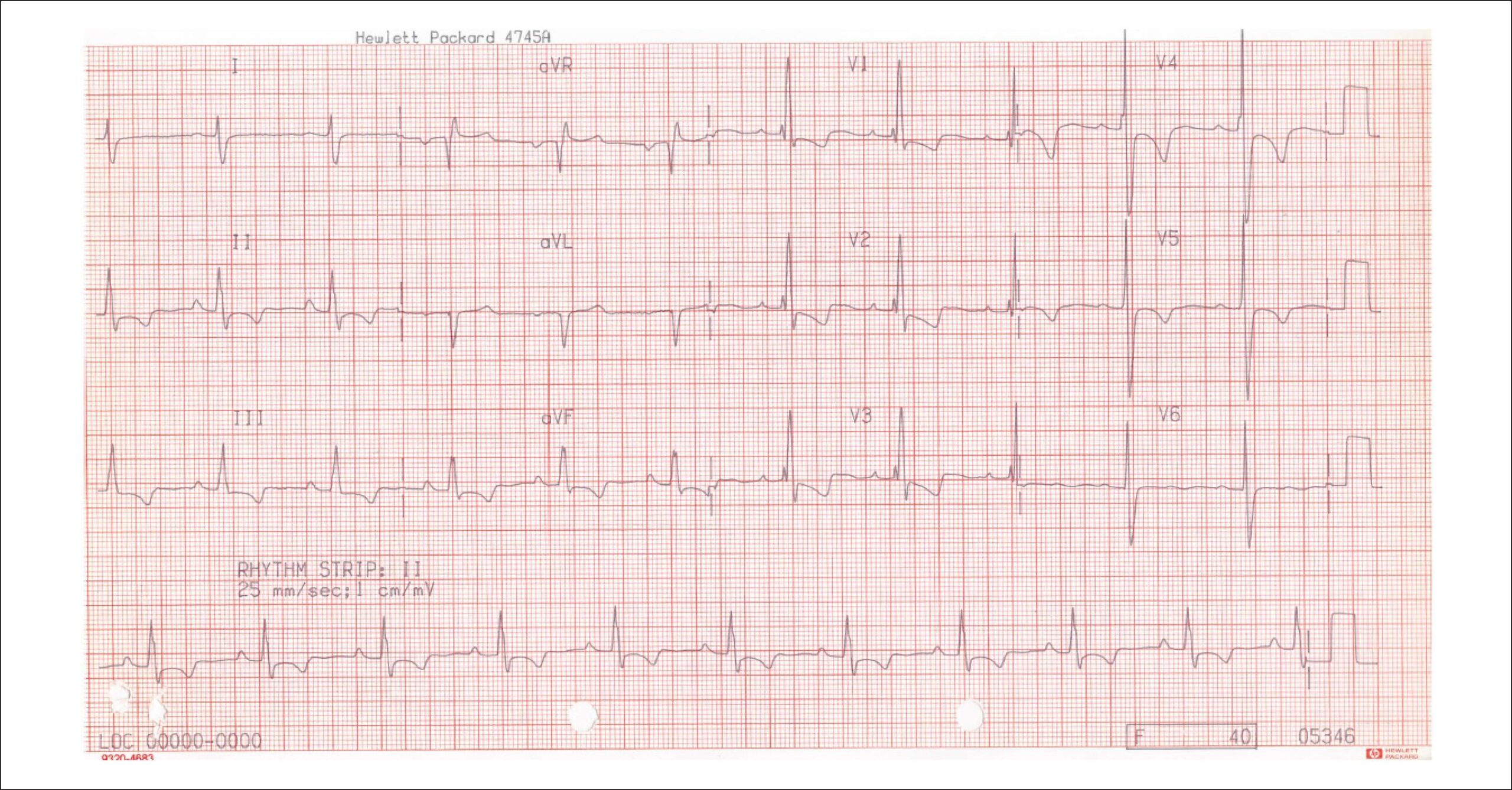
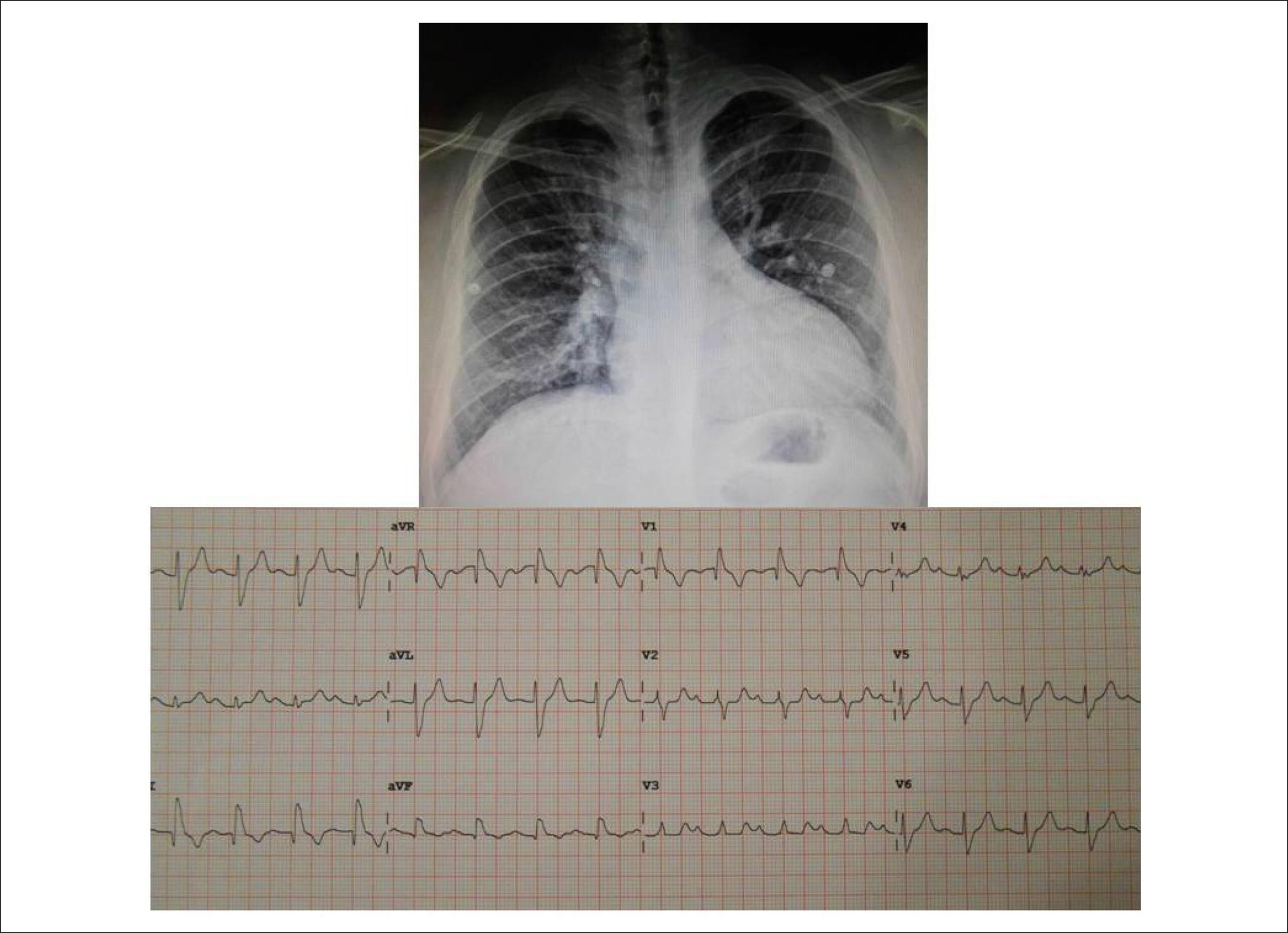
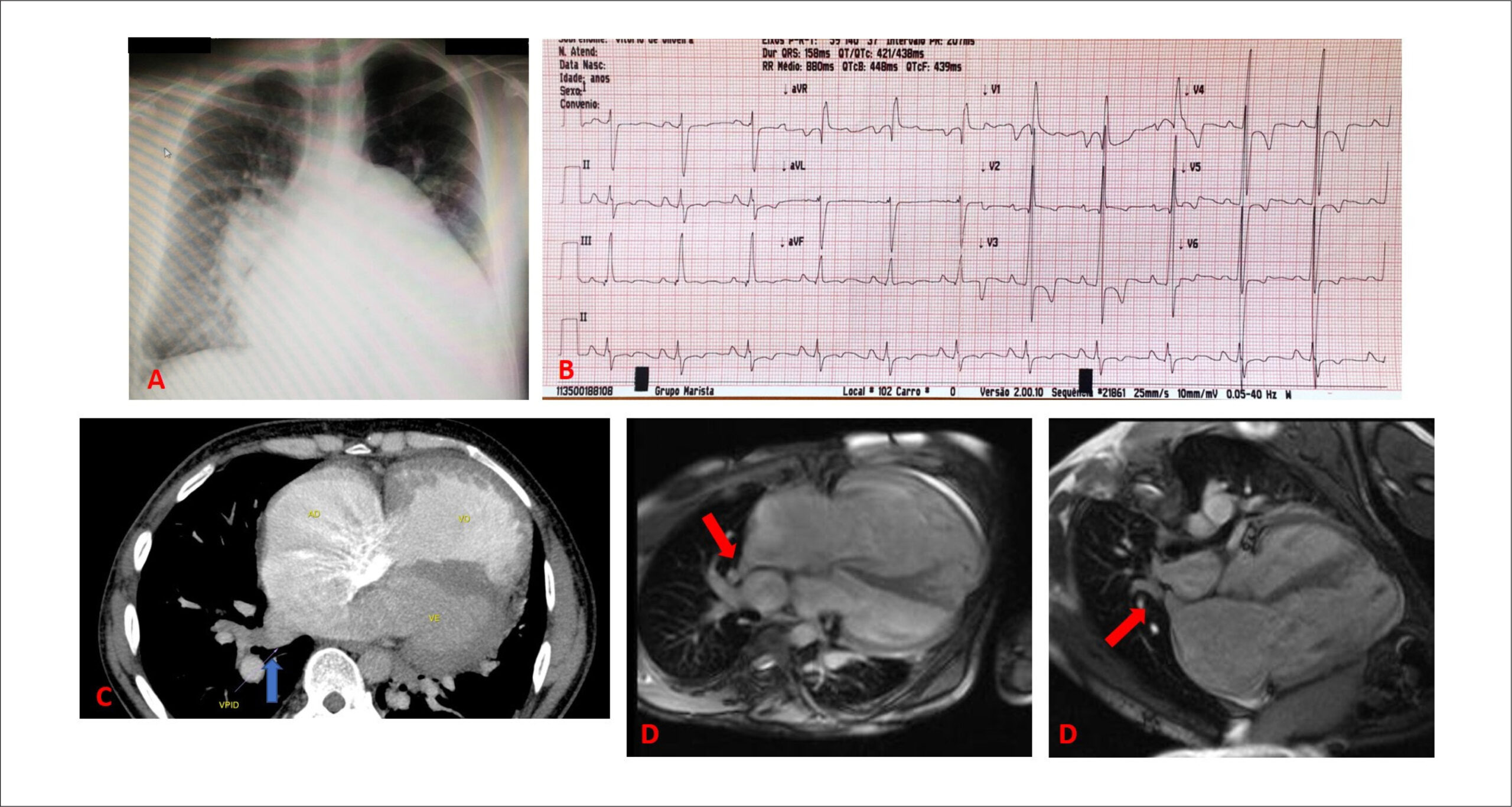
The Electrocardiogram showed sinus rhythm, first-degree atrioventricular block and complete right bundle-branch block. A P: +50º, AQRS: +115º, AT: 0º. QRS Duration: 0.14″, PR 0.21 ms ().

[…]

  • Aortic Coarctation
  • Cardiac Catheterization
  • eart Defects, Congenital
  • Heart Septal Defects, Atrial
Read Full Article
Creative Commons Attribution (CC BY) Creative Commons license
01/01/2016 DOI: 10.5935/abc.20160008 Views 1
ABC
Artigo Original

Results of simplified single-patch repair for complete atrioventricular septal defect

Ana Paula Tagliari et al. Daniel Augusto Schröder Guaracy Teixeira Filho Paulo Roberto Prates … João Ricardo M. Sant'Anna Ivo A. Nesralla Renato A. K. Kalil

BACKGROUND: Since Wilcox’s description of the simplified single-patch technique for atrioventricular septal defect (AVSD) repair in 1997, several studies have compared that technique with the two-patch technique. OBJECTIVE: To report the mid- and long-term results of the simplified single-patch technique for complete AVSD repair. METHODS: Retrospective study of 16 consecutive cases between January 2001 and December 2011. The patients’ mean age was 18.31 ± 34.19 months (2 months – 11 years), and their mean weight, 7.80 ± 6.12 kg (3.77 – 25.0 kg). Six patients were males and 14 had Down syndrome. Mean follow-up duration was 54.97 ± 47.79 months. RESULTS: Mean cardiopulmonary bypass time was 74.63 ± 18.48 min (49 – 112 min), and mean aortic cross-clamp time, 46.44 ± 11.89 min (34 – 67 min). Two patients died during hospitalization (12.5%), both of cardiovascular causes. Three patients underwent reoperation due to left atrioventricular (AV) valve regurgitation, and two had third-degree VA block, requiring permanent pacemaker implantation. No patient had left ventricular outflow tract obstruction. The 14 surviving patients remain asymptomatic, ten of whom with mild left VA valve regurgitation (71.42%). CONCLUSION: The simplified single-patch technique for complete AVSD repair proved to be feasible, providing adequate correction of the defects and favorable clinical and echocardiographic outcome in the mean 57.97-month follow-up.

  • Heart Septal Defects, Atrial
  • Thoracotomy
Read Full Article
Creative Commons Attribution (CC BY) Creative Commons license
16/04/2013 DOI: 10.5935/abc.20130067 Views 1
ABC
Artigo Original

Percutaneous versus surgical closure of atrial septal defects in children and adolescents

Rodrigo Nieckel da Costa et al. Marcelo Silva Ribeiro Fabricio Leite Pereira Simone Rolim Fontes Pedra … Marcelo Biscegli Jatene Ieda Biscegli Jatene Carlos R. Ferreiro Maria Virginia Tavares Santana Valmir Fernandes Fontes Carlos Augusto Cardoso Pedra

BACKGROUND: There is a scarcity of data comparing percutaneous and surgical closure of the secundum atrial septal defect (ASD). OBJECTIVES: Assessment of safety and efficacy of both methods of treatment in a referral center affiliated with the Ministry of Health. METHODS: Observational, prospective, non-randomized study of two cohorts of children and adolescents younger than 14 years, treated by catheterization or surgery. Data was collected prospectively in the percutaneous group (A) and retrospectively in the surgical group (B). RESULTS: A total of 75 patients (pts) were enrolled in group A from April 2009 to October 2011 and 105 pts were treated in group B from January 2006 to January 2011. Age was older and weight was higher in group B and the ASD diameter was similar in both groups. Technical success was achieved in all procedures and there were no deaths. Complications (most minor) occurred in 68% of group B and 4% of A (p < 0.001). Rates of total occlusion or non-significant residual shunts were similar in both groups. Median hospitalization time was 1.2 days in group A and 8.4 days in group B (p < 0.001). CONCLUSION: Both treatment modalities are safe and effective, showing excellent outcomes. However, the percutaneous treatment has lower morbidity and shorter in-hospital stay length. These observations support the concept that percutaneous treatment of atrial septal defects should be regarded as the method of choice to manage selected patients with this condition.

  • Catheterization
  • Heart Defects, Congenital
  • Heart Septal Defects, Atrial
Read Full Article
Creative Commons Attribution (CC BY) Creative Commons license
09/04/2013 DOI: 10.5935/abc.20130059 Views 1
Mitral valve and atrial septal defect surgery: minimally invasive or sternotomy approach
ABC
Artigo Original

Mitral valve and atrial septal defect surgery: minimally invasive or sternotomy approach

Josué V. Castro Neto et al. Emanuel Melo Juliana Fernandes Regina Gomes … Caroline Freitas João Machado Francisco Martins Aloísio Barbosa Bernardo Oliveira Cesar Gondim

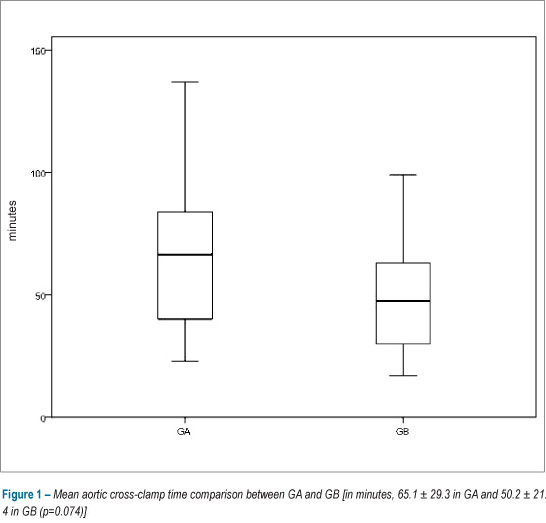
BACKGROUND: To decrease the surgical trauma in heart procedures, minimally invasive (MI) techniques were alternatively introduced. OBJECTIVE: To compare MI surgical access with median sternotomy (MS) for the treatment of mitral valve (MV) disease and atrial septal defect (ASD). METHODS: Forty patients underwent surgery for correction of MV disease or ASD. Patients were divided into group A (GA) (n=20), access by right minithoracotomy and video-assistance; and group B (GB) (n=20), access by full MS. Aortic cross-clamp and cardiopulmonary bypass time, intensive care unit (ICU) time, hospital stay and morbidity were compared in this prospective study . RESULTS: Fifteen patients were submitted to MV procedures and five to ASD corrections in each group. There were 9 mitral replacements (7 bioprostetic and 2 mechanical) and 6 repairs in GA, and 10 (all bioprostetic) and five in GB. The mean aortic cross-clamp and cardiopulmonary bypass time, in minutes, were 65.1 ± 29.3 in GA and 50.2 ± 21.4 in GB (p=0.074); and 91.8±35 in GA and 63.7±27.3 in GB ( p=0.008). The mean ICU time, in hours, were 51.7 ± 16.3 in GA and 55.8±17.5 in GB (p=0.45). The in hospital stay, in days, were 5.2 ± 1 in GA and 6.4±1.5 in GB (p=0.009). CONCLUSION: MI access for correction of the MV disease and ASD implicated in a longer cardiopulmonary bypass time for finalization of the main procedure, nevertheless it didn´t affect patient’s recuperation. MI treated patients were discharged earlier than sternotomy treated patients.

  • Heart Septal Defects, Atrial
  • Mitral Valve
  • Sternotomy
  • Surgical procedures, minimally invasive
Read Full Article
Creative Commons Attribution (CC BY) Creative Commons license
05/07/2012 DOI: 10.1590/S0066-782X2012005000064 Views 1
ABC
Case Report

Atrial septal defect and pulmonary hypertension in professional soccer player

Fernando Bianchini Cardoso et al. Marcos Bianchini Cardoso Roberto Itiro Nishimura Georgiane Crespi Ponta … Gustavo Calado de Aguiar Ribeiro Cledcyson Eloy Costa

This study reports a rare case of late diagnosis of atrial septal defect (ASD) with pulmonary hypertension (PH) through two-dimensional echocardiography (ECHO) in a professional soccer player who resumed high-performance sports activity after surgery.

  • Echocardiography, Doppler
  • Heart Defects, Congenital
  • Heart Septal Defects, Atrial
  • Hypertension Pulmonary
  • Soccer
Read Full Article
Creative Commons Attribution (CC BY) Creative Commons license
10/09/2010 DOI: 10.1590/S0066-782X2010001200024 Views 1
Congenital heart disease in adults: outpatient clinic profile at the Hospital das Clínicas of Ribeirão Preto
ABC
Artigo Original

Congenital heart disease in adults: outpatient clinic profile at the Hospital das Clínicas of Ribeirão Preto

Fernando Amaral et al. Paulo Henrique Manso João Antonio Granzotti Walter Villela de Andrade Vicente Andre Schmidt

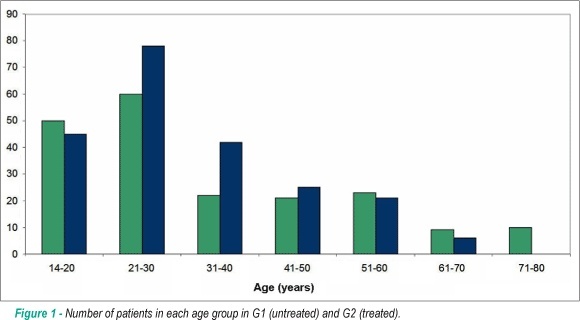
BACKGROUND: Service experiences for adults with congenital heart disease have not been reported in our country. OBJECTIVE: To describe the basic clinical profile of adults with congenital heart disease in an outpatient tertiary care center. METHODS: We compiled data on age, gender, place of residence, primary diagnosis, and secondary diagnoses of 413 patients treated for seven years. RESULTS: G1 (untreated): 195 patients, 51% women, 57% between 14 and 30 years, 80% living in the region. The most frequent heart diseases were ventricular septal defect (VSD) (31%), atrial septal defect (ASD) (29%), and pulmonary stenosis (7%). The predominant secondary diagnoses were hypertension (9%) and arrhythmias (5%). G2 (treated): 218 patients, 56% women, 57% between 14 and 30 years, 81% living in the region. The most frequently treated heart diseases were: ASD (36%), tetralogy of Fallot (14%), coarctation of the aorta (12%), and VSD (11%). Sixty-nine (32%) patients were operated on for congenital heart diseases in adulthood. Sixteen (7%) underwent an interventional catheterization. The predominant secondary diagnoses were hypertension (18%) and arrhythmias (8%). CONCLUSION: In the study, most patients were treated invasively, all of them were residents in the region, and most of them were under 40 years of age. Defects such as ASD, VSD, and pulmonary stenosis predominated in the untreated group, whereas in the treated group, most patients had undergone surgical correction of ASD, tetralogy of Fallot, aortic coarctation, and VSD. Hypertension and arrhythmias were relevant in both groups, and a large variety of other comorbidities were also observed.

  • Brazil
  • Health Profile
  • Heart Defects, Congenital
  • Heart Septal Defects, Atrial
  • Heart Septal Defects, Ventricular
  • outpatients
  • Ribeirão Preto (SP)
  • Tetralogy of Fallot
Read Full Article
Creative Commons Attribution (CC BY) Creative Commons license
21/05/2010 DOI: 10.1590/S0066-782X2010005000053 Views 1
Morphological basis for the study of the interatrial septum in the human fetus
ABC
Artigo Original

Morphological basis for the study of the interatrial septum in the human fetus

Hugo Becker Amaral et al. Paulo Zielinsky Aron Ferreira da Silveira Ijoni Costabeber … Luiz Henrique Nicoloso Olmiro Cezimbra de Souza Filho Marcelo Salum João Luiz Manica Juliana Silveira Zanettini Ane Micheli Costabeber

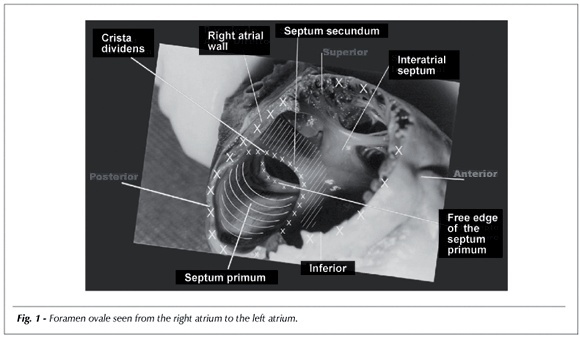
OBJECTIVE: To describe morphological features of the interatrial septum in normal fetuses, especially foramen ovale (FO) and septum primum (SP), in order to compare septum primum excursion with foramen ovale diameter. METHODS: Septum primum excursion (SPE) toward the left atrium (LA) and foramen ovale diameter (FOD) were measured in the hearts of ten formaldehyde-fixed human fetuses ranging from 28 to 36 weeks of gestation. Histological sections were obtained from the foramen ovale (FO), septum primum (SP), septum secundum (SS), left atrium (LA), and right atrium (RA). RESULTS: FOD and SPE measurements were the following: FOD 3.1-3.5 mm and SPE 2.8-3.1 mm in three fetuses with presumed gestational age (GA) of 28 weeks; FOD 3.3-3.5 mm, and SP excursion 4.0-5.0 mm in four fetuses with presumed GA of 34 weeks, plus FOD 3.3-4.5 mm and SPE 6.0-9.0 in three fetuses with presumed GA of 36 weeks. Cardiac muscular fibers were identified in both the septum primum and secundum. CONCLUSION: Based on its muscular components, it may be suggested that SP is active in character, influencing blood flow through the FO, SP mobility, and its excursion into the LA.

  • fetal heart
  • Heart Septal Defects, Atrial
  • Heart Septum
Read Full Article
Creative Commons Attribution (CC BY) Creative Commons license
15/06/2007 DOI: 10.1590/S0066-782X2007000500010 Views 2
Right to left shunt through a patent foramen ovale without pulmonary hypertension
ABC
Case Report

Right to left shunt through a patent foramen ovale without pulmonary hypertension

Thiago Costa Lisboa et al. Clarice Daniele Oliveira Costa Thiago Quedi Furian Silvia Regina Rios Vieira

This article describes a patient presenting with dyspnea and platypnea and whose only clinical finding was presence of patent foramen ovale with a right to left shunt, without pulmonary hypertension, characteristic of the rare Platypnea-Orthodeoxya Syndrome, with very interesting pathophysiological findings and with therapeutic alternatives not yet defined.

  • anoxemia
  • Dyspnea
  • Heart Septal Defects, Atrial
Read Full Article
Creative Commons Attribution (CC BY) Creative Commons license
15/03/2007 DOI: 10.1590/S0066-782X2007000100024

How to cite this article

EndNote RIS

Electronic Document Format (Vancouver)

Mattoso AAA, Sena JP, Feitosa Filho GS, Duarte ML. My Approach to Transcatheter Closure of Atrial Septal Defect: Step-by-Step and Current Contraindications. ABC Imagem Cardiovascular 2026;39(2):e20260020.

Electronic Document Format (ABNT)

Mattoso, Angele Azevedo Alves; Sena, Joberto Pinheiro; Feitosa Filho, Gilson Soares; Duarte, Maria Lúcia. My Approach to Transcatheter Closure of Atrial Septal Defect: Step-by-Step and Current Contraindications. ABC Imagem Cardiovascular, v. 39, n. 2, e20260020, Jul. 2026.

Electronic Document Format (APA)

Mattoso, A. A. A., Sena, J. P., Feitosa Filho, G. S., & Duarte, M. L. (2026). My Approach to Transcatheter Closure of Atrial Septal Defect: Step-by-Step and Current Contraindications. ABC Imagem Cardiovascular, 39(2), e20260020.

Electronic Document Format (ISO)

Mattoso, Angele Azevedo Alves and Sena, Joberto Pinheiro and Feitosa Filho, Gilson Soares and Duarte, Maria Lúcia. My Approach to Transcatheter Closure of Atrial Septal Defect: Step-by-Step and Current Contraindications. ABC Imagem Cardiovascular [online]. 2026, vol. 39, n. 2, [cited 2026-10-14], e20260020. Available from: <https://journals.cardiol.br/en/article/my-approach-to-transcatheter-closure-of-atrial-septal-defect-step-by-step-and-current-contraindications/>. ISSN 2318-8219

EndNote RIS

Electronic Document Format (Vancouver)

Rocha DFR, Guimarães HL, Lopes MP, Silva JBM, Gardenghi G. Percutaneous Closure of Multiple Atrial Septal Defects with Hemodynamic Repercussions: Report of Two Cases in First-Degree Related Adult Patients. ABC Imagem Cardiovascular 2022;35(4):eabc345.

Electronic Document Format (ABNT)

Rocha, Débora Freire Ribeiro; Guimarães, Henrique Lima; Lopes, Maurício Prudente; Silva, João Batista Masson; Gardenghi, Giulliano. Percutaneous Closure of Multiple Atrial Septal Defects with Hemodynamic Repercussions: Report of Two Cases in First-Degree Related Adult Patients. ABC Imagem Cardiovascular, v. 35, n. 4, eabc345, Nov. 2022.

Electronic Document Format (APA)

Rocha, D. F. R., Guimarães, H. L., Lopes, M. P., Silva, J. B. M., & Gardenghi, G. (2022). Percutaneous Closure of Multiple Atrial Septal Defects with Hemodynamic Repercussions: Report of Two Cases in First-Degree Related Adult Patients. ABC Imagem Cardiovascular, 35(4), eabc345.

Electronic Document Format (ISO)

Rocha, Débora Freire Ribeiro and Guimarães, Henrique Lima and Lopes, Maurício Prudente and Silva, João Batista Masson and Gardenghi, Giulliano. Percutaneous Closure of Multiple Atrial Septal Defects with Hemodynamic Repercussions: Report of Two Cases in First-Degree Related Adult Patients. ABC Imagem Cardiovascular [online]. 2022, vol. 35, n. 4, [cited 2026-10-14], eabc345. Available from: <https://journals.cardiol.br/en/article/percutaneous-closure-of-multiple-atrial-septal-defects-with-hemodynamic-repercussions-report-of-two-cases-in-first-degree-related-adult-patients/>. ISSN 2318-8219

EndNote RIS

Electronic Document Format (Vancouver)

Aredes SCA, Scopel GS, Carneiro SS, Aredes JA, Lima AV, Costa PV. Lutembacher Syndrome: Case Report and Literature Review. Arquivos Brasileiros de Cardiologia Imagem cardiovascular 2022;31(2):107-9.

Electronic Document Format (ABNT)

Aredes, Susan Caroline Azevedo; Scopel, Gabriela da Silva; Carneiro, Stella de Souza; Aredes, Josana Azevedo; Lima, Aline Valério de; Costa, Patrick Ventorim. Lutembacher Syndrome: Case Report and Literature Review. Arquivos Brasileiros de Cardiologia Imagem cardiovascular, v. 31, n. 2, p. 107-109, Jan. 2022.

Electronic Document Format (APA)

Aredes, S. C. A., Scopel, G. S., Carneiro, S. S., Aredes, J. A., Lima, A. V. , & Costa, P. V. (2022). Lutembacher Syndrome: Case Report and Literature Review. Arquivos Brasileiros de Cardiologia Imagem cardiovascular, 31(2), 107-109.

Electronic Document Format (ISO)

Aredes, Susan Caroline Azevedo and Scopel, Gabriela da Silva and Carneiro, Stella de Souza and Aredes, Josana Azevedo and Lima, Aline Valério de and Costa, Patrick Ventorim. Lutembacher Syndrome: Case Report and Literature Review. Arquivos Brasileiros de Cardiologia Imagem cardiovascular [online]. 2022, vol. 31, n. 2, [cited 2026-10-14], pp. 107-109. Available from: <https://journals.cardiol.br/en/article/lutembacher-syndrome-case-report-and-literature-review/>. ISSN 2318-8219

EndNote RIS

Electronic Document Format (Vancouver)

Santos FM, Flores LG, Dias FR, Ueda LSI, Philippi EF. Cor Triatriatum Sinistrum in Symptomatic Adult: Case Report. Arquivos Brasileiros de Cardiologia Imagem cardiovascular 2022;32(1):43-6.

Electronic Document Format (ABNT)

Santos, Francilayne Moretto dos; Flores, Laura Gomes; Dias, Felipe Rodrigues; Ueda, Leandro Shigueru Ikuta; Philippi, Eduardo Frederico. Cor Triatriatum Sinistrum in Symptomatic Adult: Case Report. Arquivos Brasileiros de Cardiologia Imagem cardiovascular, v. 32, n. 1, p. 43-46, Jan. 2022.

Electronic Document Format (APA)

Santos, F. M. , Flores, L. G., Dias, F. R., Ueda, L. S. I., & Philippi, E. F. (2022). Cor Triatriatum Sinistrum in Symptomatic Adult: Case Report. Arquivos Brasileiros de Cardiologia Imagem cardiovascular, 32(1), 43-46.

Electronic Document Format (ISO)

Santos, Francilayne Moretto dos and Flores, Laura Gomes and Dias, Felipe Rodrigues and Ueda, Leandro Shigueru Ikuta and Philippi, Eduardo Frederico. Cor Triatriatum Sinistrum in Symptomatic Adult: Case Report. Arquivos Brasileiros de Cardiologia Imagem cardiovascular [online]. 2022, vol. 32, n. 1, [cited 2026-10-14], pp. 43-46. Available from: <https://journals.cardiol.br/en/article/cor-triatriatum-sinistrum-in-symptomatic-adult-case-report/>. ISSN 2318-8219

EndNote RIS

Electronic Document Format (Vancouver)

Bonatto MG, Freitas AKE, Rocha LSO, Collatusso C, Torres RA, Blume GG, Moura LZ, et al. Heart Failure Due to Anomalous Pulmonary Vein Connection Associated with Atrial Septal Defect. ABC: Heart Failure & Cardiomyopathy 2021;1(1):70-3.

Electronic Document Format (ABNT)

Bonatto, Marcely Gimenes; Freitas, Ana Karyn Ehrenfried de; Rocha, Letícia dos Santos de Oliveira; Collatusso, Claudinei; Torres, Rafael de Almeida; Blume, Gustavo Gavazzoni; Moura, Lídia Zytynski. Heart Failure Due to Anomalous Pulmonary Vein Connection Associated with Atrial Septal Defect. ABC: Heart Failure & Cardiomyopathy, v. 1, n. 1, p. 70-73, Jul. 2021.

Electronic Document Format (APA)

Bonatto, M. G., Freitas, A. K. E. , Rocha, L. S. O., Collatusso, C., Torres, R. A., Blume, G. G., & Moura, L. Z. (2021). Heart Failure Due to Anomalous Pulmonary Vein Connection Associated with Atrial Septal Defect. ABC: Heart Failure & Cardiomyopathy, 1(1), 70-73.

Electronic Document Format (ISO)

Bonatto, Marcely Gimenes and Freitas, Ana Karyn Ehrenfried de and Rocha, Letícia dos Santos de Oliveira and Collatusso, Claudinei and Torres, Rafael de Almeida and Blume, Gustavo Gavazzoni and Moura, Lídia Zytynski. Heart Failure Due to Anomalous Pulmonary Vein Connection Associated with Atrial Septal Defect. ABC: Heart Failure & Cardiomyopathy [online]. 2021, vol. 1, n. 1, [cited 2026-10-14], pp. 70-73. Available from: <https://journals.cardiol.br/en/article/heart-failure-due-to-anomalous-pulmonary-vein-connection-associated-with-atrial-septal-defect/>

EndNote RIS

Electronic Document Format (Vancouver)

Valério RS, Rodrigues AAE, Raoul AJS, Uellendahl MM, Silva CES, Peixoto LB. Amplatzer™ Prosthesis Embolization After Percutaneous Atrial Septal Defect Closure: A Case Report. ABC Imagem Cardiovascular 2021;34(2):eabc135.

Electronic Document Format (ABNT)

Valério, Raul Serra; Rodrigues, Alfredo Augusto Eyer; Raoul, Artur José da Silva; Uellendahl, Marly Maria; Silva, Carlos Eduardo Suaide; Peixoto, Luciana Braz. Amplatzer™ Prosthesis Embolization After Percutaneous Atrial Septal Defect Closure: A Case Report. ABC Imagem Cardiovascular, v. 34, n. 2, eabc135, Jun. 2021.

Electronic Document Format (APA)

Valério, R. S., Rodrigues, A. A. E., Raoul, A. J. S., Uellendahl, M. M., Silva, C. E. S., & Peixoto, L. B. (2021). Amplatzer™ Prosthesis Embolization After Percutaneous Atrial Septal Defect Closure: A Case Report. ABC Imagem Cardiovascular, 34(2), eabc135.

Electronic Document Format (ISO)

Valério, Raul Serra and Rodrigues, Alfredo Augusto Eyer and Raoul, Artur José da Silva and Uellendahl, Marly Maria and Silva, Carlos Eduardo Suaide and Peixoto, Luciana Braz. Amplatzer™ Prosthesis Embolization After Percutaneous Atrial Septal Defect Closure: A Case Report. ABC Imagem Cardiovascular [online]. 2021, vol. 34, n. 2, [cited 2026-10-14], eabc135. Available from: <https://journals.cardiol.br/en/article/amplatzer-prosthesis-embolization-after-percutaneous-atrial-septal-defect-closure-a-case-report/>. ISSN 2318-8219

EndNote RIS

Electronic Document Format (Vancouver)

Oliveira PHA, Souza BS, Pacheco EN, Menegazzo MS, Corrêa IS, Zen PRG, Rosa RFM, et al. Genetic Syndromes Associated with Congenital Cardiac Defects and Ophthalmologic Changes – Systematization for Diagnosis in the Clinical Practice. Arquivos Brasileiros de Cardiologia 2018;110(1):84-90.

Electronic Document Format (ABNT)

Oliveira, Priscila H. A.; Souza, Beatriz S.; Pacheco, Eimi N.; Menegazzo, Michele S.; Corrêa, Ivan S.; Zen, Paulo R. G.; Rosa, Rafael F. M.; Cesa, Claudia C.; Pellanda, Lucia C.; Vilela, Manuel A. P.. Genetic Syndromes Associated with Congenital Cardiac Defects and Ophthalmologic Changes – Systematization for Diagnosis in the Clinical Practice. Arquivos Brasileiros de Cardiologia, v. 110, n. 1, p. 84-90, Dec. 2017.

Electronic Document Format (APA)

Oliveira, P. H. A., Souza, B. S., Pacheco, E. N., Menegazzo, M. S., Corrêa, I. S., Zen, P. R. G., Rosa, R. F. M., Cesa, C. C., Pellanda, L. C., & Vilela, M. A. P. (2018). Genetic Syndromes Associated with Congenital Cardiac Defects and Ophthalmologic Changes – Systematization for Diagnosis in the Clinical Practice. Arquivos Brasileiros de Cardiologia, 110(1), 84-90.

Electronic Document Format (ISO)

Oliveira, Priscila H. A. and Souza, Beatriz S. and Pacheco, Eimi N. and Menegazzo, Michele S. and Corrêa, Ivan S. and Zen, Paulo R. G. and Rosa, Rafael F. M. and Cesa, Claudia C. and Pellanda, Lucia C. and Vilela, Manuel A. P.. Genetic Syndromes Associated with Congenital Cardiac Defects and Ophthalmologic Changes – Systematization for Diagnosis in the Clinical Practice. Arquivos Brasileiros de Cardiologia [online]. 2018, vol. 110, n. 1, [cited 2026-10-14], pp. 84-90. Available from: <https://journals.cardiol.br/en/article/genetic-syndromes-associated-with-congenital-cardiac-defects-and-ophthalmologic-changes-systematization-for-diagnosis-in-the-clinical-practice/>. ISSN 0066-782X

EndNote RIS

Electronic Document Format (Vancouver)

Atik E, Gudiño F, Montemor ML. Case 5 / 2017 – Scimitar Syndrome and Pulmonary Sequestration in Natural Progression in a 68-Year-Old Woman. Arquivos Brasileiros de Cardiologia 2017;109(3):264-5.

Electronic Document Format (ABNT)

Atik, Edmar; Gudiño, Álvaro Francisco; Montemor, Marcelo Lopes. Case 5 / 2017 – Scimitar Syndrome and Pulmonary Sequestration in Natural Progression in a 68-Year-Old Woman. Arquivos Brasileiros de Cardiologia, v. 109, n. 3, p. 264-265, Aug. 2017.

Electronic Document Format (APA)

Atik, E., Gudiño, F., & Montemor, M. L. (2017). Case 5 / 2017 – Scimitar Syndrome and Pulmonary Sequestration in Natural Progression in a 68-Year-Old Woman. Arquivos Brasileiros de Cardiologia, 109(3), 264-265.

Electronic Document Format (ISO)

Atik, Edmar and Gudiño, Álvaro Francisco and Montemor, Marcelo Lopes. Case 5 / 2017 – Scimitar Syndrome and Pulmonary Sequestration in Natural Progression in a 68-Year-Old Woman. Arquivos Brasileiros de Cardiologia [online]. 2017, vol. 109, n. 3, [cited 2026-10-14], pp. 264-265. Available from: <https://journals.cardiol.br/en/article/case-5-2017-scimitar-syndrome-and-pulmonary-sequestration-in-natural-progression-in-a-68-year-old-woman/>. ISSN 0066-782X

EndNote RIS

Electronic Document Format (Vancouver)

Santana C, Lopes AAB, Paiva AFL, Benvenuti LA. Case 1/2016 – 56-Year-Old Male with Atrial Septal Defect, Pulmonary Arterial Hypertension, Hospitalized Due to Eisenmenger Syndrome. Arquivos Brasileiros de Cardiologia 2016;106(3):250-8.

Electronic Document Format (ABNT)

Santana, Carolina; Lopes, Antonio Augusto B.; Paiva, Antonio Fernando Lins de; Benvenuti, Luiz Alberto. Case 1/2016 – 56-Year-Old Male with Atrial Septal Defect, Pulmonary Arterial Hypertension, Hospitalized Due to Eisenmenger Syndrome. Arquivos Brasileiros de Cardiologia, v. 106, n. 3, p. 250-258, Feb. 2016.

Electronic Document Format (APA)

Santana, C., Lopes, A. A. B., Paiva, A. F. L. , & Benvenuti, L. A. (2016). Case 1/2016 – 56-Year-Old Male with Atrial Septal Defect, Pulmonary Arterial Hypertension, Hospitalized Due to Eisenmenger Syndrome. Arquivos Brasileiros de Cardiologia, 106(3), 250-258.

Electronic Document Format (ISO)

Santana, Carolina and Lopes, Antonio Augusto B. and Paiva, Antonio Fernando Lins de and Benvenuti, Luiz Alberto. Case 1/2016 – 56-Year-Old Male with Atrial Septal Defect, Pulmonary Arterial Hypertension, Hospitalized Due to Eisenmenger Syndrome. Arquivos Brasileiros de Cardiologia [online]. 2016, vol. 106, n. 3, [cited 2026-10-14], pp. 250-258. Available from: <https://journals.cardiol.br/en/article/case-1-2016-56-year-old-male-with-atrial-septal-defect-pulmonary-arterial-hypertension-hospitalized-due-to-eisenmenger-syndrome/>. ISSN 0066-782X

EndNote RIS

Electronic Document Format (Vancouver)

Atik E, Arrieta R, Kalil Filho R. Case 1/2016 – Aortic Coarctation and Atrial Septal Defect submitted to Percutaneous Repair in Adult Patient. Arquivos Brasileiros de Cardiologia 2016;106(1):70-2.

Electronic Document Format (ABNT)

Atik, Edmar; Arrieta, Raul; Kalil Filho, Roberto. Case 1/2016 – Aortic Coarctation and Atrial Septal Defect submitted to Percutaneous Repair in Adult Patient. Arquivos Brasileiros de Cardiologia, v. 106, n. 1, p. 70-72, Dec. 2015.

Electronic Document Format (APA)

Atik, E., Arrieta, R., & Kalil Filho, R. (2016). Case 1/2016 – Aortic Coarctation and Atrial Septal Defect submitted to Percutaneous Repair in Adult Patient. Arquivos Brasileiros de Cardiologia, 106(1), 70-72.

Electronic Document Format (ISO)

Atik, Edmar and Arrieta, Raul and Kalil Filho, Roberto. Case 1/2016 – Aortic Coarctation and Atrial Septal Defect submitted to Percutaneous Repair in Adult Patient. Arquivos Brasileiros de Cardiologia [online]. 2016, vol. 106, n. 1, [cited 2026-10-14], pp. 70-72. Available from: <https://journals.cardiol.br/en/article/case-1-2016-aortic-coarctation-and-atrial-septal-defect-submitted-to-percutaneous-repair-in-adult-patient/>. ISSN 0066-782X

EndNote RIS

Electronic Document Format (Vancouver)

Tagliari AP, Schröder DA, Teixeira Filho G, Prates PR, Sant’Anna JRM, Nesralla IA, Kalil RAK, et al. Results of simplified single-patch repair for complete atrioventricular septal defect. Arquivos Brasileiros de Cardiologia 2013;100(3):288-93.

Electronic Document Format (ABNT)

Tagliari, Ana Paula; Schröder, Daniel Augusto; Teixeira Filho, Guaracy; Prates, Paulo Roberto; Sant’Anna, João Ricardo M.; Nesralla, Ivo A.; Kalil, Renato A. K.. Results of simplified single-patch repair for complete atrioventricular septal defect. Arquivos Brasileiros de Cardiologia, v. 100, n. 3, p. 288-293, Apr. 2013.

Electronic Document Format (APA)

Tagliari, A. P., Schröder, D. A., Teixeira Filho, G., Prates, P. R., Sant’Anna, J. R. M., Nesralla, I. A., & Kalil, R. A. K. (2013). Results of simplified single-patch repair for complete atrioventricular septal defect. Arquivos Brasileiros de Cardiologia, 100(3), 288-293.

Electronic Document Format (ISO)

Tagliari, Ana Paula and Schröder, Daniel Augusto and Teixeira Filho, Guaracy and Prates, Paulo Roberto and Sant’Anna, João Ricardo M. and Nesralla, Ivo A. and Kalil, Renato A. K.. Results of simplified single-patch repair for complete atrioventricular septal defect. Arquivos Brasileiros de Cardiologia [online]. 2013, vol. 100, n. 3, [cited 2026-10-14], pp. 288-293. Available from: <https://journals.cardiol.br/en/article/results-of-simplified-single-patch-repair-for-complete-atrioventricular-septal-defect/>. ISSN 0066-782X

EndNote RIS

Electronic Document Format (Vancouver)

Costa RN, Ribeiro MS, Pereira FL, Pedra SRF, Jatene MB, Jatene IB, Ferreiro CR, et al. Percutaneous versus surgical closure of atrial septal defects in children and adolescents. Arquivos Brasileiros de Cardiologia 2013;100(4):347-54.

Electronic Document Format (ABNT)

Costa, Rodrigo Nieckel da; Ribeiro, Marcelo Silva; Pereira, Fabricio Leite; Pedra, Simone Rolim Fontes; Jatene, Marcelo Biscegli; Jatene, Ieda Biscegli; Ferreiro, Carlos R.; Santana, Maria Virginia Tavares; Fontes, Valmir Fernandes; Pedra, Carlos Augusto Cardoso. Percutaneous versus surgical closure of atrial septal defects in children and adolescents. Arquivos Brasileiros de Cardiologia, v. 100, n. 4, p. 347-354, Apr. 2013.

Electronic Document Format (APA)

Costa, R. N. , Ribeiro, M. S., Pereira, F. L., Pedra, S. R. F., Jatene, M. B., Jatene, I. B., Ferreiro, C. R., Santana, M. V. T., Fontes, V. F., & Pedra, C. A. C. (2013). Percutaneous versus surgical closure of atrial septal defects in children and adolescents. Arquivos Brasileiros de Cardiologia, 100(4), 347-354.

Electronic Document Format (ISO)

Costa, Rodrigo Nieckel da and Ribeiro, Marcelo Silva and Pereira, Fabricio Leite and Pedra, Simone Rolim Fontes and Jatene, Marcelo Biscegli and Jatene, Ieda Biscegli and Ferreiro, Carlos R. and Santana, Maria Virginia Tavares and Fontes, Valmir Fernandes and Pedra, Carlos Augusto Cardoso. Percutaneous versus surgical closure of atrial septal defects in children and adolescents. Arquivos Brasileiros de Cardiologia [online]. 2013, vol. 100, n. 4, [cited 2026-10-14], pp. 347-354. Available from: <https://journals.cardiol.br/en/article/percutaneous-versus-surgical-closure-of-atrial-septal-defects-in-children-and-adolescents/>. ISSN 0066-782X

EndNote RIS

Electronic Document Format (Vancouver)

Castro Neto JV, Melo E, Fernandes J, Gomes R, Freitas C, Machado J, Martins F, et al. Mitral valve and atrial septal defect surgery: minimally invasive or sternotomy approach. Arquivos Brasileiros de Cardiologia 2012;99(2):681-7.

Electronic Document Format (ABNT)

Castro Neto, Josué V.; Melo, Emanuel; Fernandes, Juliana; Gomes, Regina; Freitas, Caroline; Machado, João; Martins, Francisco; Barbosa, Aloísio; Oliveira, Bernardo; Gondim, Cesar. Mitral valve and atrial septal defect surgery: minimally invasive or sternotomy approach. Arquivos Brasileiros de Cardiologia, v. 99, n. 2, p. 681-687, Jul. 2012.

Electronic Document Format (APA)

Castro Neto, J. V., Melo, E., Fernandes, J., Gomes, R., Freitas, C., Machado, J., Martins, F., Barbosa, A., Oliveira, B., & Gondim, C. (2012). Mitral valve and atrial septal defect surgery: minimally invasive or sternotomy approach. Arquivos Brasileiros de Cardiologia, 99(2), 681-687.

Electronic Document Format (ISO)

Castro Neto, Josué V. and Melo, Emanuel and Fernandes, Juliana and Gomes, Regina and Freitas, Caroline and Machado, João and Martins, Francisco and Barbosa, Aloísio and Oliveira, Bernardo and Gondim, Cesar. Mitral valve and atrial septal defect surgery: minimally invasive or sternotomy approach. Arquivos Brasileiros de Cardiologia [online]. 2012, vol. 99, n. 2, [cited 2026-10-14], pp. 681-687. Available from: <https://journals.cardiol.br/en/article/mitral-valve-and-atrial-septal-defect-surgery-minimally-invasive-or-sternotomy-approach/>. ISSN 0066-782X

EndNote RIS

Electronic Document Format (Vancouver)

Cardoso FB, Cardoso MB, Nishimura RI, Ponta GC, Ribeiro GCA, Costa CE. Atrial septal defect and pulmonary hypertension in professional soccer player. Arquivos Brasileiros de Cardiologia 2010;95(2):38-9.

Electronic Document Format (ABNT)

Cardoso, Fernando Bianchini; Cardoso, Marcos Bianchini; Nishimura, Roberto Itiro; Ponta, Georgiane Crespi; Ribeiro, Gustavo Calado de Aguiar; Costa, Cledcyson Eloy. Atrial septal defect and pulmonary hypertension in professional soccer player. Arquivos Brasileiros de Cardiologia, v. 95, n. 2, p. 38-39, Sep. 2010.

Electronic Document Format (APA)

Cardoso, F. B., Cardoso, M. B., Nishimura, R. I., Ponta, G. C., Ribeiro, G. C. A., & Costa, C. E. (2010). Atrial septal defect and pulmonary hypertension in professional soccer player. Arquivos Brasileiros de Cardiologia, 95(2), 38-39.

Electronic Document Format (ISO)

Cardoso, Fernando Bianchini and Cardoso, Marcos Bianchini and Nishimura, Roberto Itiro and Ponta, Georgiane Crespi and Ribeiro, Gustavo Calado de Aguiar and Costa, Cledcyson Eloy. Atrial septal defect and pulmonary hypertension in professional soccer player. Arquivos Brasileiros de Cardiologia [online]. 2010, vol. 95, n. 2, [cited 2026-10-14], pp. 38-39. Available from: <https://journals.cardiol.br/en/article/atrial-septal-defect-and-pulmonary-hypertension-in-professional-soccer-player/>. ISSN 0066-782X

EndNote RIS

Electronic Document Format (Vancouver)

Amaral F, Manso PH, Granzotti JA, Vicente WVA, Schmidt A. Congenital heart disease in adults: outpatient clinic profile at the Hospital das Clínicas of Ribeirão Preto. Arquivos Brasileiros de Cardiologia 2010;94(6):707-13.

Electronic Document Format (ABNT)

Amaral, Fernando; Manso, Paulo Henrique; Granzotti, João Antonio; Vicente, Walter Villela de Andrade; Schmidt, Andre. Congenital heart disease in adults: outpatient clinic profile at the Hospital das Clínicas of Ribeirão Preto. Arquivos Brasileiros de Cardiologia, v. 94, n. 6, p. 707-713, May. 2010.

Electronic Document Format (APA)

Amaral, F., Manso, P. H., Granzotti, J. A., Vicente, W. V. A., & Schmidt, A. (2010). Congenital heart disease in adults: outpatient clinic profile at the Hospital das Clínicas of Ribeirão Preto. Arquivos Brasileiros de Cardiologia, 94(6), 707-713.

Electronic Document Format (ISO)

Amaral, Fernando and Manso, Paulo Henrique and Granzotti, João Antonio and Vicente, Walter Villela de Andrade and Schmidt, Andre. Congenital heart disease in adults: outpatient clinic profile at the Hospital das Clínicas of Ribeirão Preto. Arquivos Brasileiros de Cardiologia [online]. 2010, vol. 94, n. 6, [cited 2026-10-14], pp. 707-713. Available from: <https://journals.cardiol.br/en/article/congenital-heart-disease-in-adults-outpatient-clinic-profile-at-the-hospital-das-clinicas-of-ribeirao-preto/>. ISSN 0066-782X

EndNote RIS

Electronic Document Format (Vancouver)

Amaral HB, Zielinsky P, Silveira AF, Costabeber I, Nicoloso LH, Souza Filho OC, Salum M, et al. Morphological basis for the study of the interatrial septum in the human fetus. Arquivos Brasileiros de Cardiologia 2007;88(5):559-64.

Electronic Document Format (ABNT)

Amaral, Hugo Becker; Zielinsky, Paulo; Silveira, Aron Ferreira da; Costabeber, Ijoni; Nicoloso, Luiz Henrique; Souza Filho, Olmiro Cezimbra de; Salum, Marcelo; Manica, João Luiz; Zanettini, Juliana Silveira; Costabeber, Ane Micheli. Morphological basis for the study of the interatrial septum in the human fetus. Arquivos Brasileiros de Cardiologia, v. 88, n. 5, p. 559-564, Jun. 2007.

Electronic Document Format (APA)

Amaral, H. B., Zielinsky, P., Silveira, A. F. , Costabeber, I., Nicoloso, L. H., Souza Filho, O. C. , Salum, M., Manica, J. L., Zanettini, J. S., & Costabeber, A. M. (2007). Morphological basis for the study of the interatrial septum in the human fetus. Arquivos Brasileiros de Cardiologia, 88(5), 559-564.

Electronic Document Format (ISO)

Amaral, Hugo Becker and Zielinsky, Paulo and Silveira, Aron Ferreira da and Costabeber, Ijoni and Nicoloso, Luiz Henrique and Souza Filho, Olmiro Cezimbra de and Salum, Marcelo and Manica, João Luiz and Zanettini, Juliana Silveira and Costabeber, Ane Micheli. Morphological basis for the study of the interatrial septum in the human fetus. Arquivos Brasileiros de Cardiologia [online]. 2007, vol. 88, n. 5, [cited 2026-10-14], pp. 559-564. Available from: <https://journals.cardiol.br/en/article/morphological-basis-for-the-study-of-the-interatrial-septum-in-the-human-fetus/>. ISSN 0066-782X

EndNote RIS

Electronic Document Format (Vancouver)

Lisboa TC, Costa CDO, Furian TQ, Vieira SRR. Right to left shunt through a patent foramen ovale without pulmonary hypertension. Arquivos Brasileiros de Cardiologia 2007;88(1):e10-2.

Electronic Document Format (ABNT)

Lisboa, Thiago Costa; Costa, Clarice Daniele Oliveira; Furian, Thiago Quedi; Vieira, Silvia Regina Rios. Right to left shunt through a patent foramen ovale without pulmonary hypertension. Arquivos Brasileiros de Cardiologia, v. 88, n. 1, p. e10-e12, Mar. 2007.

Electronic Document Format (APA)

Lisboa, T. C., Costa, C. D. O., Furian, T. Q., & Vieira, S. R. R. (2007). Right to left shunt through a patent foramen ovale without pulmonary hypertension. Arquivos Brasileiros de Cardiologia, 88(1), e10-e12.

Electronic Document Format (ISO)

Lisboa, Thiago Costa and Costa, Clarice Daniele Oliveira and Furian, Thiago Quedi and Vieira, Silvia Regina Rios. Right to left shunt through a patent foramen ovale without pulmonary hypertension. Arquivos Brasileiros de Cardiologia [online]. 2007, vol. 88, n. 1, [cited 2026-10-14], pp. e10-e12. Available from: <https://journals.cardiol.br/en/article/right-to-left-shunt-through-a-patent-foramen-ovale-without-pulmonary-hypertension/>. ISSN 0066-782X

  • About ABC Family
  • Internal Regulation
  • Editorial Board
  • Brazilian Society of Cardiology (SBC)

Issues

SBC Guidelines

  • Videos
  • Podcasts
  • News