Percutaneous Closure of Multiple Atrial Septal Defects with Hemodynamic Repercussions: Report of Two Cases in First-Degree Related Adult Patients
Introduction
Atrial septal defects (ASD) account for 7–10% of congenital heart anomalies., ASD are classified as three anatomical types: ostium secundum (OS) (70% of cases), ostium primum (15–20% of cases), and sinus venosus (5–10% of cases) defects. OS involves the fossa ovalis region and results from poor embryological development of septum secundum or excessive absorption of septum primum resulting in the lack of a septum in the fossa ovalis.
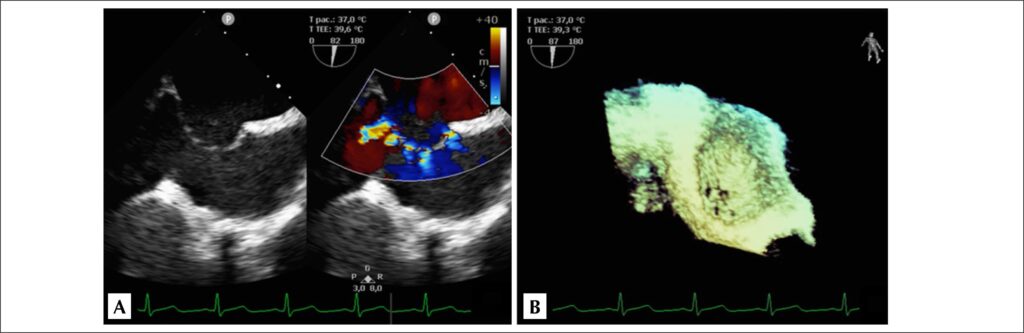
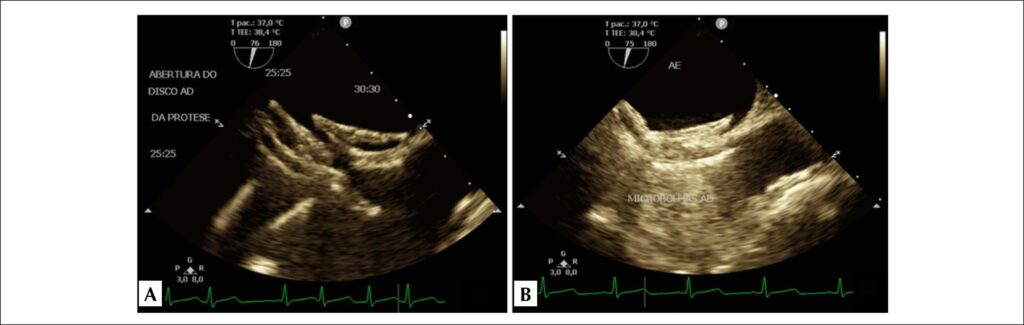
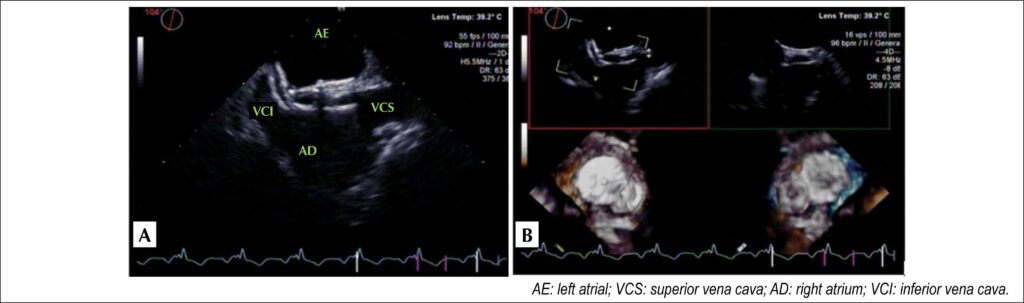
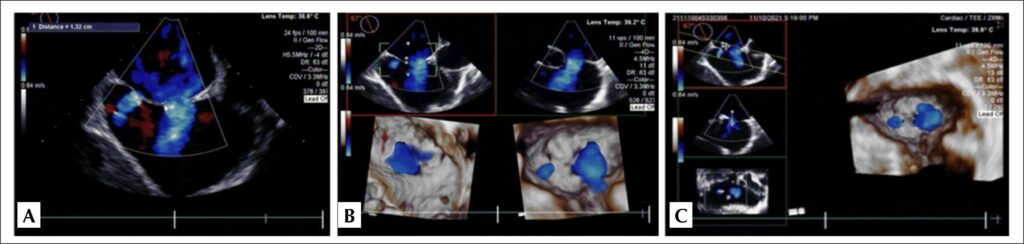
Affected patients are usually asymptomatic. Exercise intolerance in the form of dyspnea or fatigue is the most common initial presentation. Echocardiography is a fundamental tool in the diagnosis and management of patients with ASD. Transthoracic echocardiography (TTE) identifies ASD type and size, shunt direction, and the presence of anomalous sinus venous drainage. Three-dimensional transesophageal echocardiography (3DTEE) details the morphology and anatomical relationships of the atrial septum, providing fundamental information for choosing treatment.,
[…]
Images
Image gallery fullscreen viewer
Comments are moderated by the editorial team before publication. Discussions should be evidence-based and use scientific language. Conflicts of interest should be declared.