ABC Family Arquivos Brasileiros de Cardiologia International Journal of Cardiovascular Sciences ABC Heart Failure & Cardiomyopathy ABC Imagem Cardiovascular
Português English
ABC Family
Português English
  • About
    • About ABC Family
    • Internal Regulation
    • Editorial Board
    • Brazilian Society of Cardiology (SBC)
  • Issues
  • SBC Guidelines
  • Content
    • Videos
    • Podcasts
    • News
  • About
    • About ABC Family
    • Internal Regulation
    • Editorial Board
    • Brazilian Society of Cardiology (SBC)
  • Issues
  • SBC Guidelines
  • Content
    • Videos
    • Podcasts
    • News

ABC Family

  • ABC Family
  • Arquivos Brasileiros de Cardiologia
  • International Journal of Cardiovascular Sciences
  • ABC Heart Failure & Cardiomyopathy
  • ABC Imagem Cardiovascular
Search in

No content found.

Journals
Ordering
Article types
Others

  1. Home
  2. Keyword: drug resistance
ABC
Original Article

Kawasaki Disease: Predictors of Resistance to Intravenous Immunoglobulin and Cardiac Complications

Diogo Faim et al. Cláudio Henriques Ana Brett Andreia Francisco … Fernanda Rodrigues António Pires

Abstract

Background:

Kawasaki disease (KD) is the leading cause of acquired cardiac disease in children, in developed countries.

Objectives:

To identify predictive factors for resistance to intravenous immunoglobulin (IVIG), calculate the effectiveness of Japanese predictive models and characterize cardiac complications.

Methods:

Retrospective analysis of KD cases admitted in a Portuguese paediatric hospital between january 2006 and july 2018. ROC curves were used to determine predictive factors for resistance and the multivariate logistic regression analysis was used to develop the predictive model. A significance level of 5% was used.

Results:

48 patients with a median age of 36 months were included. The IVIG resistance was 21%. Echocardiographic anomalies were noted in 46%, with coronary involvement in 25% of the sample population. As predictive variable of resistance, the C-reactive protein (CRP) presented an AUC ROC = 0.789, optimal cut-off value 15.1 mg/dL, sensitivity (Sn) 77.8% and specificity (Sp) 78.9%. The erythrocyte sedimentation rate (ESR) presented an AUC ROC = 0.781, optimal cut-off value 90.5 mm/h, Sn 66.7% and Sp 85.7%. The model with the two variables showed p = 0.042 and AUC ROC = 0.790. Predictive strength of Japanese models were: Kobayashi (Sn 63.6%, Sp 77.3%), Egami (Sn 66.7%, Sp 73.1%), Sano (Sn 28.6%, Sp 94.1%).

Conclusion:

CRP and ESR are independent variables that were related to IVIG resistance, with optimal cut-off points of 15.1 mg/dL and 90.5 mm/h, respectively. About half of the patients had some form of cardiac involvement. The Japanese models appeared to be inadequate in our population. (Arq Bras Cardiol. 2021; 116(3):485-491)
  • Child
  • Coronary Artery Disease
  • drug resistance
  • Immunoglobulin
  • Kawasaki Disease/complications
  • Mucocutaneous Lymph Node Syndrome/complications
Read Full Article
Creative Commons Attribution (CC BY) Creative Commons license
23/04/2021 DOI: 10.36660/abc.20190758
ABC
Editorial

Kawasaki Disease: Predictors of Intravenous Immunoglobulin Resistance and Cardiac Complications: New Perspectives?

Isabel Cristina Britto Guimarães

Kawasaki disease (KD) is an acute inflammatory disease of unknown origin and associated with vasculitis. It affects medium-sized vessels. Coronary artery abnormalities (CAA) — aneurysms or dilations — are the main complications of KD, and are currently the most common cause of heart disease acquired in children in developed countries. In the acute phase, the initial standard treatment recommended is intravenous immunoglobulin (IVIG) and aspirin, to reduce the risk of damage to the coronary arteries. However, 10 to 20% of children with KD do not respond to the initial standard treatment, with recurrent fever within 36 to 48 hours after IVIG infusion. Studies show that the likelihood of KD patients resistant to IVIG to have coronary artery lesions is nine times greater than those sensitive to IVIG. This suggests that there is a critical window to block the inflammatory process and prevent CAA in the long term.

The study by Faim et al. aimed to identify predictive factors for resistance to intravenous immunoglobulin (IVIG), calculate the effectiveness of Japanese predictive models and characterize the cardiac complications of patients followed up at a single institution.

[…]

  • Children
  • Coronary Artery/abnormalities
  • drug resistance
  • Immunoglobulins, Intravenous
  • Kawasaki disease
  • Mucocutaneous Lymph Node Syndrome/trends
  • vasculitis
Read Full Article
Creative Commons Attribution (CC BY) Creative Commons license
23/04/2021 DOI: 10.36660/abc.20201353
Figure 1
IJCS
Original Article

Drug Profile and Therapeutic Adherence of African-Brazilians with Apparent Resistant Hypertension

Pedro Henrique Andrade Araújo Salvatore Barletta et al. Júlia Lasserre Moreira Vitor Fernandes de Almeida Mateus Andrade Bomfim Machado … Breno Lima de Almeida Tayla Samanta Silva dos Santos Yana Mendonça Nascimento Thaise Almeida Silva Roque Aras Cristiano Macedo

Abstract

Background

Resistant hypertension (RH) is manifested by the presence of blood pressure values resistant to antihypertensive therapy. RH is highly prevalent among black individuals, increasing cardiovascular risk in this population and requiring effective control of this comorbidity.

Objectives

To investigate the medication profile and therapeutic adherence in black people with apparent RH.

Methods

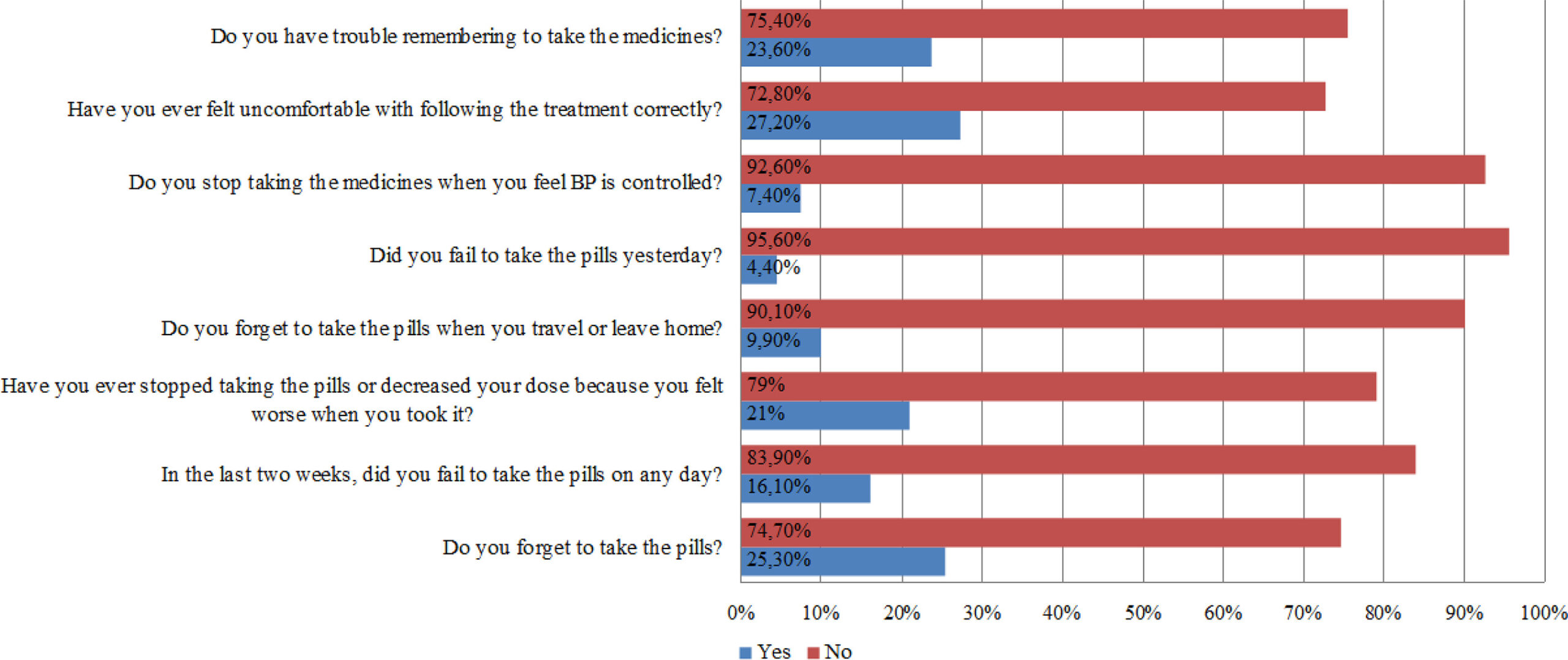
This is a cross-sectional study, with a convenience sample of individuals with apparent RH. Data were obtained from medical records. Therapeutic adherence was assessed using the Morisky Therapeutic Adherence Scale of 8 items (MMAS-8) and statistical analysis was performed using the SPSS, version 23. Significance was set at p <0.05.

Results

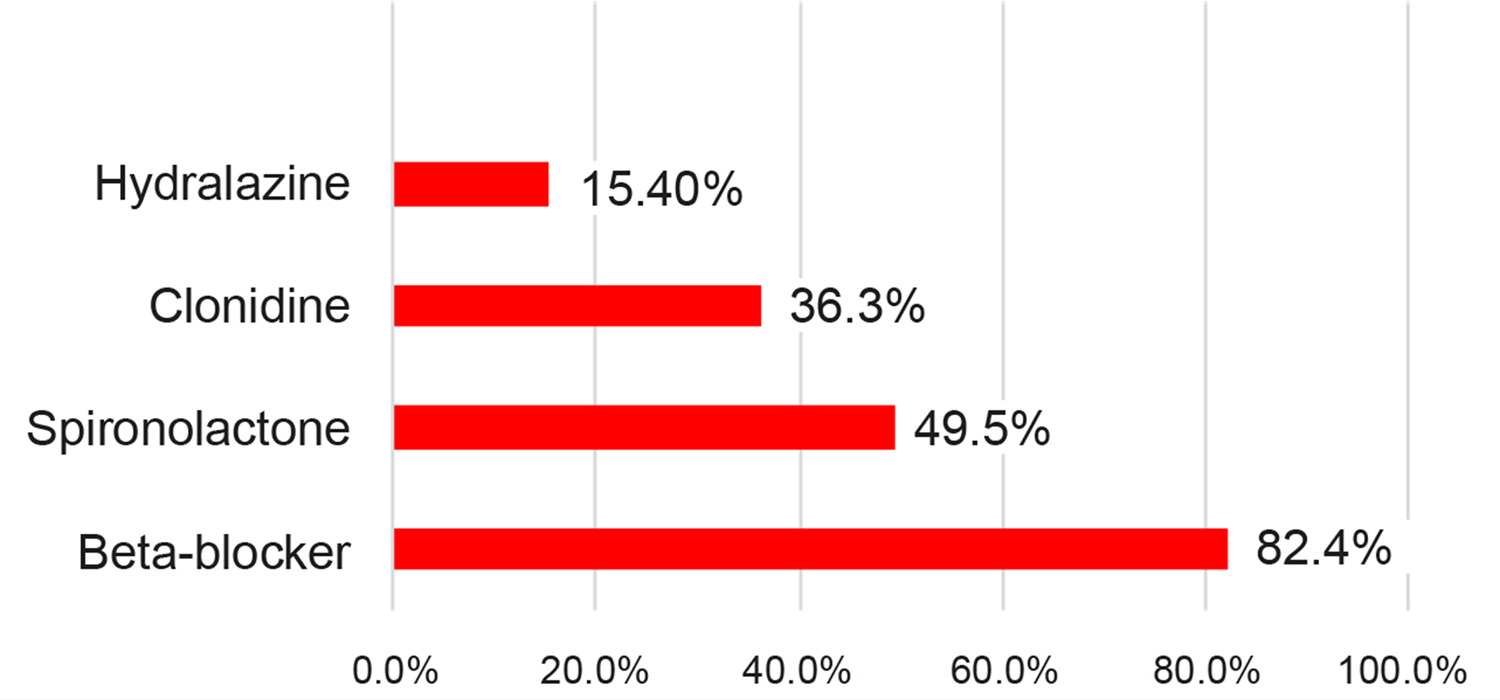
Of the 120 individuals, 90 (75%) were women and 72 (60%) were black. Mean SBP was 153.09 (SD 25.59) mm Hg and mean DBP, 90.82 (SD 16.91) mm Hg, with a statistical difference in relation to the target pressure for SBP. Regarding the medication profile, 79.2% of the individuals used the recommended regimen for RH (ACEI / ARB + Diuretic + CCB), with the fourth most used drug being beta-blockers. The average score in MMAS-8 was 6.62 (SD 1.38) points, with 19.2%, 50.0%, and 30.8% showing low, medium, and high adherence, respectively.

Conclusions

It was evidenced that two-thirds of the individuals did not have high therapeutic adherence and not all used the ideal regimen for the management of RH, nor full doses. Thus, most individuals were probably affected by pseudoresistance, which was initially diagnosed as apparent RH. (Int J Cardiovasc Sci. 2021; [online].ahead print, PP.0-0)

  • African Continental Ancestry Group
  • Antihipertensive Agents
  • Blood Pressure
  • drug resistance
  • Hypertension
  • medication adherence
Read Full Article
Creative Commons Attribution (CC BY) Creative Commons license
22/02/2021 DOI: 10.36660/ijcs.20200117
IJCS
Editorial

The Challenge of Controlling Resistant Hypertension

Marcus Vinicius Bolivar Malachias

Hypertension is the main risk factor for cardiovascular disease, stroke, disability and death. Despite the accumulated knowledge about hypertension and many treatment options, some hypertensive patients do not achieve the recommended blood pressure goals even receiving non-pharmacological treatment and three antihypertensive drugs. These individuals have the so-called “resistant hypertension” and are at increased risk of involvement of target organs, higher morbidity and mortality.

Several international scientific societies, including the Brazilian Society of Cardiology, have dedicated to publishing evidence-based guidelines for the management of arterial hypertension,, and specific position statements on resistant hypertension have also been produced., The Department of Hypertension of the Brazilian Society of Cardiology is about to issue an updated statement on the subject.

[…]

  • Blood Pressure
  • drug resistance
  • Hypertension/prevention and control
  • medication adherence
  • Morbidity
Read Full Article
Creative Commons Attribution (CC BY) Creative Commons license
03/04/2020 DOI: 10.36660/ijcs.20200009 Views 1
Figure 1
IJCS
Original Article

Association between Therapeutic Adherence and the Profile of Patients with Resistant Hypertension

Luciana Baltazar da Silveira de Araújo et al. Roque Aras Junior

Abstract

Background:

Resistant hypertension (RH) consists of increased blood pressure (BP) despite the use of 3 or more antihypertensives or BP control only when is use of 4 or more antihypertensives. It is fundamental to exclude pseudoresistance, which can be attributed to poor therapeutic adherence. Adherence evaluation, generally by the Morisky-Grenn test, is important because, when appropriate, it is associated with fewer cardiovascular complications and better BP control.

Objectives:

To evaluate the adherence of patients with RH and to investigate its relation with epidemiological, anthropometric and clinical characteristics, as well as to estimate the prevalence of pseudoresistance and to outline strategies to improve adherence.

Methods:

Retrospective observational cohort from an interview with patients followed at an outpatient clinic for RH. Therapeutic adherence, demographic, anthropometric data, cardiovascular risk factors, comorbidities, complementary exams and BP level were collected. One-way ANOVA and Student’s t-tests were used for normal variables, and the Kruskal-Wallis and Mann-Whitney tests were used for non-normal tests. Categorical variables were compared using the Chi-Square test. We considered a 5% significance level in all tests.

Results:

217 individuals were included. Of these, 17% had poor adherence. Epidemiological and clinical characteristics, complications, comorbidities, BP level or drugs used were statistically insignificant between groups. The poor adherence group used significantly more drugs (p = 0.0313) and 28% of pseudoresistance was estimated.

Conclusions:

Most of the individuals presented good therapeutic adherence by the Morisky test. Only the number of antihypertensive drugs had a statistically significant influence on adherence, while the epidemiological, anthropometric and clinical characteristics were statistically insignificant.

  • Antihypertensive Agents / pharmacology
  • Antihypertensive Agents/therapeutic use
  • blood pressure determination
  • drug resistance
  • Hypertension
  • Life Style
  • Prognosis
Read Full Article
Creative Commons Attribution (CC BY) Creative Commons license
24/10/2019 DOI: 10.5935/2359-4802.20190077 Views 1
Resistance to clopidogrel: prevalence and associate variables
ABC
Artigo Original

Resistance to clopidogrel: prevalence and associate variables

Fabrício Braga da Silva et al. Gustavo Luiz Gouvêa de Almeida Junior Augusto Neno José Kezen … Milena Spelta Alessandra Godomiczer Renato Villela Bruno Hellmuth Sergio Salles Xavier Roberto Hugo da Costa Lins

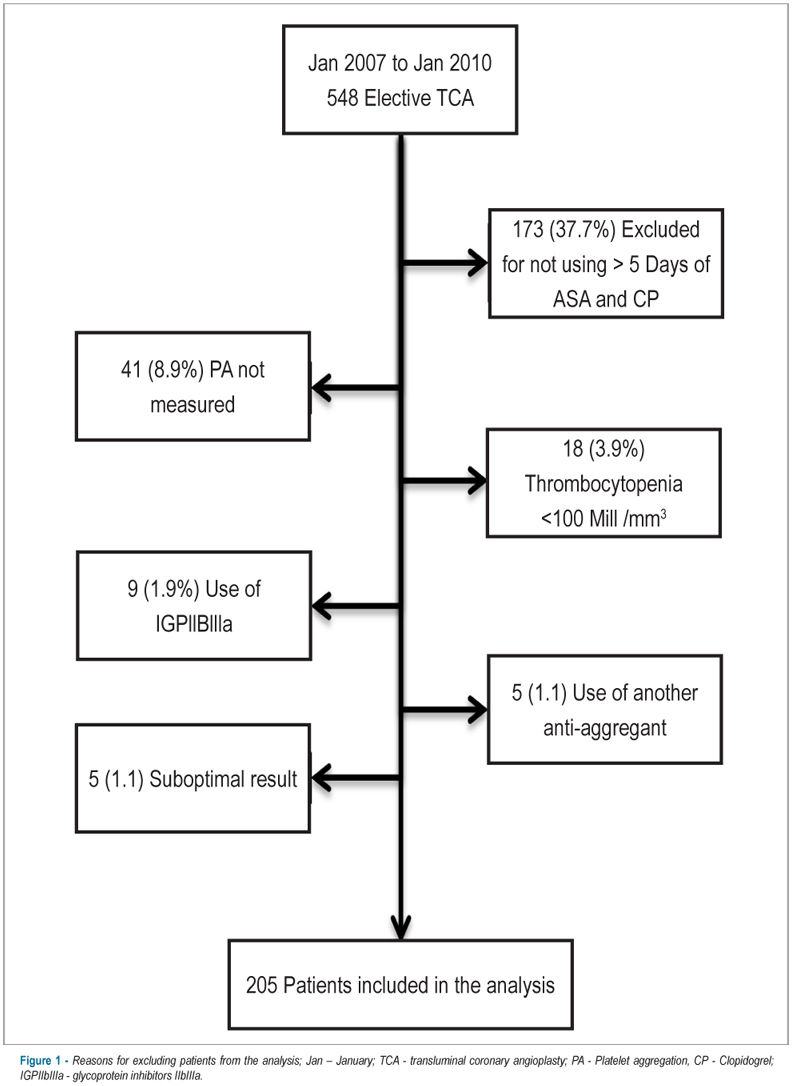
BACKGROUND: The dual antiplatelet therapy with acetylsalicylic acid (ASA) and clopidogrel is the cornerstone of treatment for patients undergoing angioplasty with coronary stent implantation. However, some of these patients, despite the use of aspirin and clopidogrel, are not effectively anti-aggregated, a phenomenon known as resistance to antiplatelet agents. Its prevalence, as well as the conditions associated with it, is unknown in our country. OBJECTIVE: To determine the prevalence of clopidogrel resistance, as well as variables associated with it. METHODS: Patients admitted for elective angioplasty in chronic use of ASA and clopidogrel between January 2007 and January 2010 were studied. One hour after the procedure, platelet aggregation was measured using optical aggregometry with adenosine diphosphate 5 mmoles / l as agonist. At that moment, in a cross-sectional cohort, we determined the prevalence of clopidogrel resistance, defined as the value of platelet aggregation > 43% and a logistic regression model to the variables associated with it. RESULTS: A total of 205 patients were analyzed (66.4 ± 11 years, 61.5% males). The prevalence of clopidogrel resistance was 38.5% (95% CI: 31.9 – 45.2%). Blood glucose (OR = 1.014; 95%CI: 1.004 – 1.023), previous myocardial infarction (OR = 2.320; 95%CI: 1.1103 – 4.892) and therapeutic response to ASA (OR = 1.057; 95%CI: 1.017 – 1.099) were the variables independently associated with clopidogrel resistance. CONCLUSION: The prevalence of clopidogrel resistance was high. Glycemia, acute myocardial infarction and response to ASA were variables associated with it. A better understanding of this phenomenon is necessary considering the new antiplatelet aggregant agents.

  • Angioplasty
  • balloon
  • coronary
  • Coronary Disease
  • drug resistance
  • Platelet Aggregation Inhibitors
  • Stents
Read Full Article
Creative Commons Attribution (CC BY) Creative Commons license
27/11/2012 DOI: 10.1590/S0066-782X2012005000107 Views 1
ABC
Clinical Update

Aspirin resistance: fact or fiction?

Dinaldo Cavalcanti de Oliveira et al. Rogerio Ferreira Silva Diego Jantsk Silva Valter Correia de Lima

A meta-analysis of clinical studies of patients with cardiovascular disease demonstrated that the use of aspirin was associated with a 22% decrease in death rates and relevant ischemic vascular events. However, clinical studies demonstrated that patients that regularly took aspirin presented recurrence of cardiovascular events. Such observation led to the question whether, in some patients, the aspirin was not effective in blocking platelet aggregation and these patients were called unresponsive to aspirin or aspirin-resistant. The clinical aspirin resistance is characterized as the occurrence of cardiovascular events in patients during treatment with aspirin, whereas the laboratory resistance is defined as the persistence of platelet aggregation, documented by laboratory test, in patients regularly taking aspirin. Patients that are aspirin-resistant presented, according to laboratory tests, on average 3.8 times more cardiovascular events when compared to non-resistant ones.

  • Aspirin
  • drug resistance
  • laboratory test
  • Platelet Aggregation
Read Full Article
Creative Commons Attribution (CC BY) Creative Commons license
13/10/2010 DOI: 10.1590/S0066-782X2010001300024

How to cite this article

EndNote RIS

Electronic Document Format (Vancouver)

Faim D, Henriques C, Brett A, Francisco A, Rodrigues F, Pires A. Kawasaki Disease: Predictors of Resistance to Intravenous Immunoglobulin and Cardiac Complications. Arquivos Brasileiros de Cardiologia 2021;116(3):485-91.

Electronic Document Format (ABNT)

Faim, Diogo; Henriques, Cláudio; Brett, Ana; Francisco, Andreia; Rodrigues, Fernanda; Pires, António. Kawasaki Disease: Predictors of Resistance to Intravenous Immunoglobulin and Cardiac Complications. Arquivos Brasileiros de Cardiologia, v. 116, n. 3, p. 485-491, Apr. 2021.

Electronic Document Format (APA)

Faim, D., Henriques, C., Brett, A., Francisco, A., Rodrigues, F., & Pires, A. (2021). Kawasaki Disease: Predictors of Resistance to Intravenous Immunoglobulin and Cardiac Complications. Arquivos Brasileiros de Cardiologia, 116(3), 485-491.

Electronic Document Format (ISO)

Faim, Diogo and Henriques, Cláudio and Brett, Ana and Francisco, Andreia and Rodrigues, Fernanda and Pires, António. Kawasaki Disease: Predictors of Resistance to Intravenous Immunoglobulin and Cardiac Complications. Arquivos Brasileiros de Cardiologia [online]. 2021, vol. 116, n. 3, [cited 2026-10-14], pp. 485-491. Available from: <https://journals.cardiol.br/en/article/kawasaki-disease-predictors-of-resistance-to-intravenous-immunoglobulin-and-cardiac-complications/>. ISSN 0066-782X

EndNote RIS

Electronic Document Format (Vancouver)

Guimarães ICB. Kawasaki Disease: Predictors of Intravenous Immunoglobulin Resistance and Cardiac Complications: New Perspectives?. Arquivos Brasileiros de Cardiologia 2021;116(3):492-3.

Electronic Document Format (ABNT)

Guimarães, Isabel Cristina Britto. Kawasaki Disease: Predictors of Intravenous Immunoglobulin Resistance and Cardiac Complications: New Perspectives?. Arquivos Brasileiros de Cardiologia, v. 116, n. 3, p. 492-493, Apr. 2021.

Electronic Document Format (APA)

Guimarães, I. C. B. (2021). Kawasaki Disease: Predictors of Intravenous Immunoglobulin Resistance and Cardiac Complications: New Perspectives?. Arquivos Brasileiros de Cardiologia, 116(3), 492-493.

Electronic Document Format (ISO)

Guimarães, Isabel Cristina Britto. Kawasaki Disease: Predictors of Intravenous Immunoglobulin Resistance and Cardiac Complications: New Perspectives?. Arquivos Brasileiros de Cardiologia [online]. 2021, vol. 116, n. 3, [cited 2026-10-14], pp. 492-493. Available from: <https://journals.cardiol.br/en/article/kawasaki-disease-predictors-of-intravenous-immunoglobulin-resistance-and-cardiac-complications-new-perspectives/>. ISSN 0066-782X

EndNote RIS

Electronic Document Format (Vancouver)

Barletta PHAAS, Moreira JL, Almeida VF, Machado MAB, Almeida BL, Santos TSS, Nascimento YM, et al. Drug Profile and Therapeutic Adherence of African-Brazilians with Apparent Resistant Hypertension. International Journal of Cardiovascular Sciences 2021;34(3):300-6.

Electronic Document Format (ABNT)

Barletta, Pedro Henrique Andrade Araújo Salvatore; Moreira, Júlia Lasserre; Almeida, Vitor Fernandes de; Machado, Mateus Andrade Bomfim; Almeida, Breno Lima de; Santos, Tayla Samanta Silva dos; Nascimento, Yana Mendonça; Silva, Thaise Almeida; Aras, Roque; Macedo, Cristiano. Drug Profile and Therapeutic Adherence of African-Brazilians with Apparent Resistant Hypertension. International Journal of Cardiovascular Sciences, v. 34, n. 3, p. 300-306, Feb. 2021.

Electronic Document Format (APA)

Barletta, P. H. A. A. S., Moreira, J. L., Almeida, V. F. , Machado, M. A. B., Almeida, B. L. , Santos, T. S. S. , Nascimento, Y. M., Silva, T. A., Aras, R., & Macedo, C. (2021). Drug Profile and Therapeutic Adherence of African-Brazilians with Apparent Resistant Hypertension. International Journal of Cardiovascular Sciences, 34(3), 300-306.

Electronic Document Format (ISO)

Barletta, Pedro Henrique Andrade Araújo Salvatore and Moreira, Júlia Lasserre and Almeida, Vitor Fernandes de and Machado, Mateus Andrade Bomfim and Almeida, Breno Lima de and Santos, Tayla Samanta Silva dos and Nascimento, Yana Mendonça and Silva, Thaise Almeida and Aras, Roque and Macedo, Cristiano. Drug Profile and Therapeutic Adherence of African-Brazilians with Apparent Resistant Hypertension. International Journal of Cardiovascular Sciences [online]. 2021, vol. 34, n. 3, [cited 2026-10-14], pp. 300-306. Available from: <https://journals.cardiol.br/en/article/drug-profile-and-therapeutic-adherence-of-african-brazilians-with-apparent-resistant-hypertension/>. ISSN 2359-4802

EndNote RIS

Electronic Document Format (Vancouver)

Malachias MVB. The Challenge of Controlling Resistant Hypertension. International Journal of Cardiovascular Sciences 2020;33(2):119-20.

Electronic Document Format (ABNT)

Malachias, Marcus Vinicius Bolivar. The Challenge of Controlling Resistant Hypertension. International Journal of Cardiovascular Sciences, v. 33, n. 2, p. 119-120, Apr. 2020.

Electronic Document Format (APA)

Malachias, M. V. B. (2020). The Challenge of Controlling Resistant Hypertension. International Journal of Cardiovascular Sciences, 33(2), 119-120.

Electronic Document Format (ISO)

Malachias, Marcus Vinicius Bolivar. The Challenge of Controlling Resistant Hypertension. International Journal of Cardiovascular Sciences [online]. 2020, vol. 33, n. 2, [cited 2026-10-14], pp. 119-120. Available from: <https://journals.cardiol.br/en/article/the-challenge-of-controlling-resistant-hypertension/>. ISSN 2359-4802

EndNote RIS

Electronic Document Format (Vancouver)

Araújo LBS, Aras Junior R. Association between Therapeutic Adherence and the Profile of Patients with Resistant Hypertension. International Journal of Cardiovascular Sciences 2019;33(2):121-30.

Electronic Document Format (ABNT)

Araújo, Luciana Baltazar da Silveira de; Aras Junior, Roque. Association between Therapeutic Adherence and the Profile of Patients with Resistant Hypertension. International Journal of Cardiovascular Sciences, v. 33, n. 2, p. 121-130, Oct. 2019.

Electronic Document Format (APA)

Araújo, L. B. S. , & Aras Junior, R. (2019). Association between Therapeutic Adherence and the Profile of Patients with Resistant Hypertension. International Journal of Cardiovascular Sciences, 33(2), 121-130.

Electronic Document Format (ISO)

Araújo, Luciana Baltazar da Silveira de and Aras Junior, Roque. Association between Therapeutic Adherence and the Profile of Patients with Resistant Hypertension. International Journal of Cardiovascular Sciences [online]. 2019, vol. 33, n. 2, [cited 2026-10-14], pp. 121-130. Available from: <https://journals.cardiol.br/en/article/association-between-therapeutic-adherence-and-the-profile-of-patients-with-resistant-hypertension/>. ISSN 2359-4802

EndNote RIS

Electronic Document Format (Vancouver)

Silva FB, Almeida Junior GLG, Neno A, Kezen J, Spelta M, Godomiczer A, Villela R, et al. Resistance to clopidogrel: prevalence and associate variables. Arquivos Brasileiros de Cardiologia 2012;99(6):1135-41.

Electronic Document Format (ABNT)

Silva, Fabrício Braga da; Almeida Junior, Gustavo Luiz Gouvêa de; Neno, Augusto; Kezen, José; Spelta, Milena; Godomiczer, Alessandra; Villela, Renato; Hellmuth, Bruno; Xavier, Sergio Salles; Lins, Roberto Hugo da Costa. Resistance to clopidogrel: prevalence and associate variables. Arquivos Brasileiros de Cardiologia, v. 99, n. 6, p. 1135-1141, Nov. 2012.

Electronic Document Format (APA)

Silva, F. B. , Almeida Junior, G. L. G. , Neno, A., Kezen, J., Spelta, M., Godomiczer, A., Villela, R., Hellmuth, B., Xavier, S. S., & Lins, R. H. C. (2012). Resistance to clopidogrel: prevalence and associate variables. Arquivos Brasileiros de Cardiologia, 99(6), 1135-1141.

Electronic Document Format (ISO)

Silva, Fabrício Braga da and Almeida Junior, Gustavo Luiz Gouvêa de and Neno, Augusto and Kezen, José and Spelta, Milena and Godomiczer, Alessandra and Villela, Renato and Hellmuth, Bruno and Xavier, Sergio Salles and Lins, Roberto Hugo da Costa. Resistance to clopidogrel: prevalence and associate variables. Arquivos Brasileiros de Cardiologia [online]. 2012, vol. 99, n. 6, [cited 2026-10-14], pp. 1135-1141. Available from: <https://journals.cardiol.br/en/article/resistance-to-clopidogrel-prevalence-and-associate-variables/>. ISSN 0066-782X

EndNote RIS

Electronic Document Format (Vancouver)

Oliveira DC, Silva RF, Silva DJ, Lima VC. Aspirin resistance: fact or fiction?. Arquivos Brasileiros de Cardiologia 2010;95(3):e91-4.

Electronic Document Format (ABNT)

Oliveira, Dinaldo Cavalcanti de; Silva, Rogerio Ferreira; Silva, Diego Jantsk; Lima, Valter Correia de. Aspirin resistance: fact or fiction?. Arquivos Brasileiros de Cardiologia, v. 95, n. 3, p. e91-e94, Oct. 2010.

Electronic Document Format (APA)

Oliveira, D. C. , Silva, R. F., Silva, D. J., & Lima, V. C. (2010). Aspirin resistance: fact or fiction?. Arquivos Brasileiros de Cardiologia, 95(3), e91-e94.

Electronic Document Format (ISO)

Oliveira, Dinaldo Cavalcanti de and Silva, Rogerio Ferreira and Silva, Diego Jantsk and Lima, Valter Correia de. Aspirin resistance: fact or fiction?. Arquivos Brasileiros de Cardiologia [online]. 2010, vol. 95, n. 3, [cited 2026-10-14], pp. e91-e94. Available from: <https://journals.cardiol.br/en/article/aspirin-resistance-fact-or-fiction/>. ISSN 0066-782X

  • About ABC Family
  • Internal Regulation
  • Editorial Board
  • Brazilian Society of Cardiology (SBC)

Issues

SBC Guidelines

  • Videos
  • Podcasts
  • News