ABC Family Arquivos Brasileiros de Cardiologia International Journal of Cardiovascular Sciences ABC Heart Failure & Cardiomyopathy ABC Imagem Cardiovascular
Português English
ABC Family
Português English
  • About
    • About ABC Family
    • Internal Regulation
    • Editorial Board
    • Brazilian Society of Cardiology (SBC)
  • Issues
  • SBC Guidelines
  • Content
    • Videos
    • Podcasts
    • News
  • About
    • About ABC Family
    • Internal Regulation
    • Editorial Board
    • Brazilian Society of Cardiology (SBC)
  • Issues
  • SBC Guidelines
  • Content
    • Videos
    • Podcasts
    • News

ABC Family

  • ABC Family
  • Arquivos Brasileiros de Cardiologia
  • International Journal of Cardiovascular Sciences
  • ABC Heart Failure & Cardiomyopathy
  • ABC Imagem Cardiovascular
Search in

No content found.

Journals
Ordering
Article types
Others

  1. Home
  2. Keyword: Data Accuracy
Agreement Between a Portable Cholesterol Device and Laboratory-Based Testing in Older Adults
IJCS
Original Article

Agreement Between a Portable Cholesterol Device and Laboratory-Based Testing in Older Adults

Odilon Abrahin et al. Naicha Stefanie Félix Souza Rejane P. Abrahin Alex Harley Crisp

Abstract

Background:

It is crucial to monitor blood lipid levels accurately in older adults to assess cardiovascular risk. Although several portable strip-based devices are commercially available, their accuracy has not been well established.

Objective:

To evaluate the agreement of the Mission Cholesterol device and standard laboratory method results, using samples from older adults.

Methods:

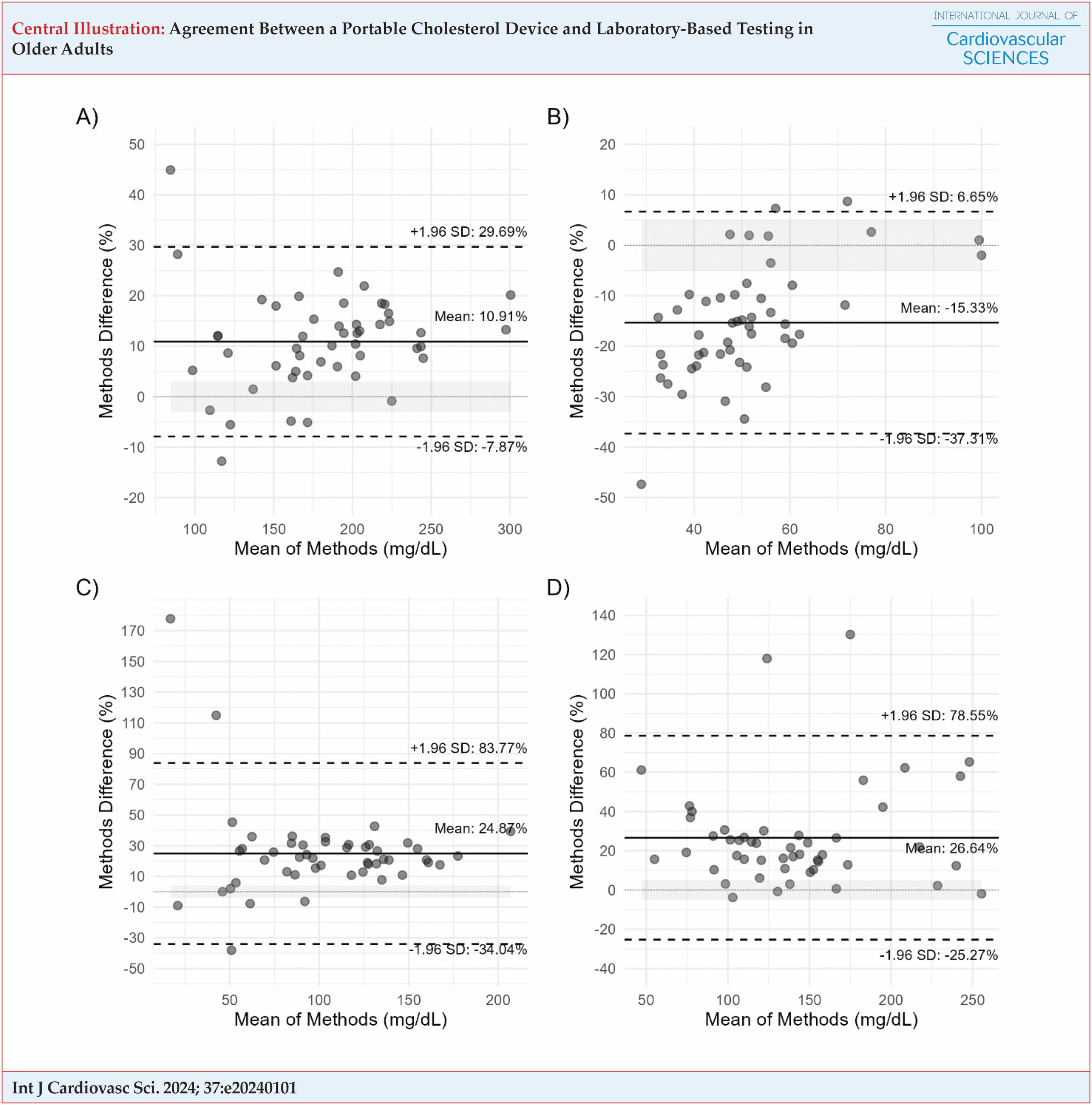
Forty-nine patients (42 females) with an average age of 70 ± 8 years were included. The participants were instructed to fast for 12 hours before undergoing venous and capillary blood sampling for lipid analysis (total cholesterol [TC], high-density lipoprotein cholesterol [HDL-C], low-density lipoprotein cholesterol [LDL-C], and triglyceride [TG] levels). The agreement between the Mission Cholesterol device and laboratory test results was assessed using the concordance correlation coefficient (CCC) and Bland–Altman plots. The accuracy levels were assessed based on the percentage bias recommended by the National Cholesterol Education Program (NCEP).

Results:

The TC measurement had a better accuracy level (bias = 10.91%; CCC = 0.89) than other lipid measurements. However, none of them met the NCEP’s acceptable standards for bias and concordance (CCC ≥ 0.90). Furthermore, the device demonstrated modest overall agreement in classifying lipid risk according to clinical reference values (agreement rates: TC, 67.3%; HDL-C, 65.3%; LDL-C, 49.0%; and TG, 61.2%).

Conclusion:

The Mission Cholesterol device exhibited insufficient agreement levels for effective lipid profile monitoring and screening in older adults.
  • Aged
  • Data Accuracy
  • Hyperlipidemias
  • Lipids
Read Full Article
Creative Commons Attribution (CC BY) Creative Commons license
22/11/2024 DOI: 10.36660/ijcs.20240101 Views 3
Figure 1
ABC
Original Article

Accuracy of Transthoracic Echocardiogram as a Screening Method in the Clinical Practice of Pulmonary Hypertension Investigation

Camila Farnese Rezende et al. Eliane Viana Mancuzo Maria do Carmo Pereira Nunes Ricardo Amorim Corrêa

Abstract

Background

The transthoracic echocardiogram (TTE) plays a screening role in the diagnostic algorithm of pulmonary hypertension (PH). Studies have shown a significant disagreement between TTE measurements of the systolic pulmonary artery pressure (sPAP) and right atrial pressure (RAP) and those obtained by right heart catheterization (RHC).

Objective

To compare TTE measurements of sPAP and RAP with those obtained by RHC in patients being investigated for PH.

Methods

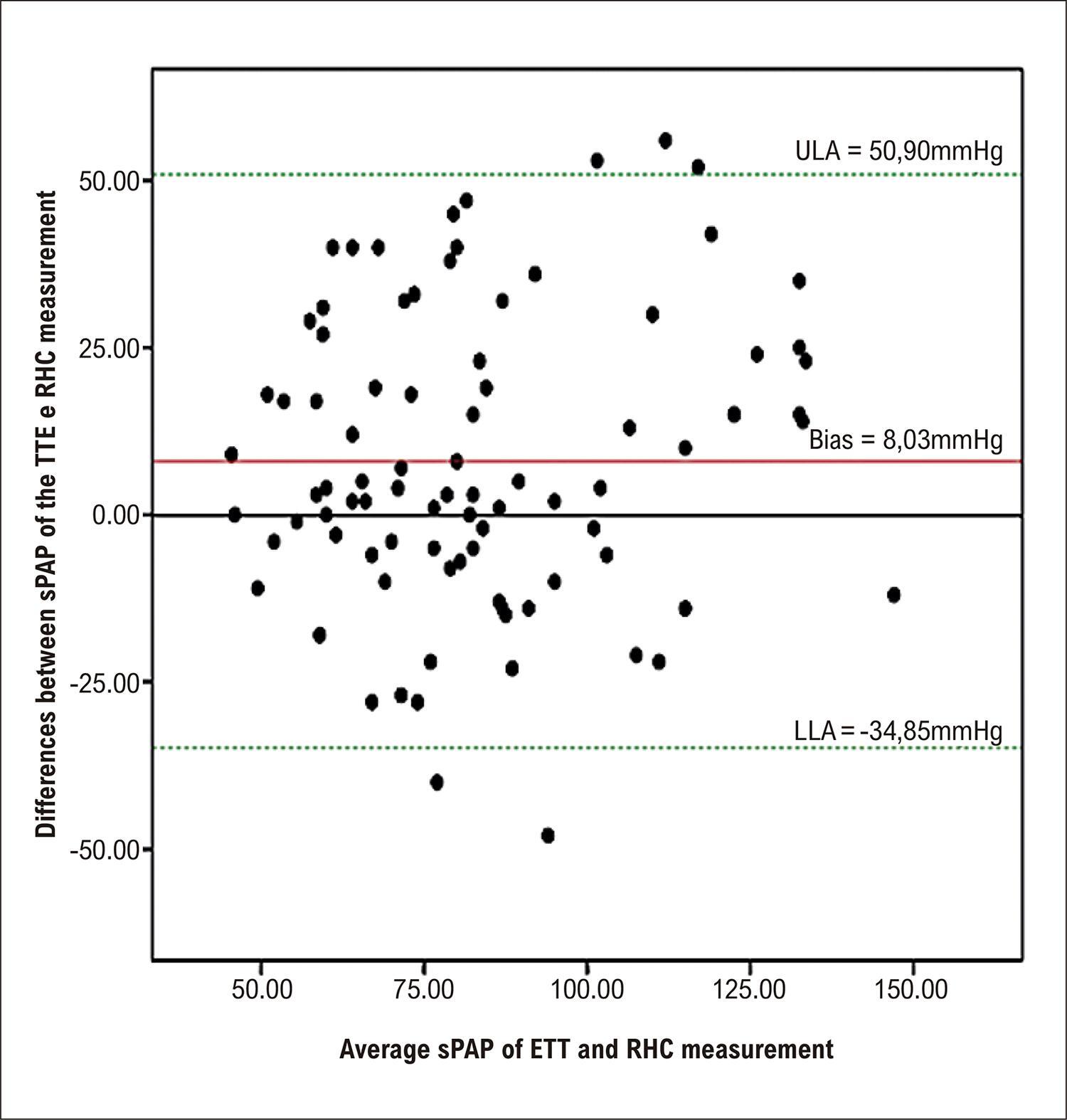
Patients referred to a PH reference center with a high or intermediate TTE probability of PH upon admission were submitted to RHC. The agreement between sPAP and RAP from both procedures was assessed through the Bland-Altman test. Differences of up to 10 mmHg for sPAP and 5 mmHg for RAP were considered within the variability of the test. Receiver Operating Characteristic (ROC) curve was constructed to determine the most accurate sPAP and Tricuspid regurgitation maximal velocity (TRV)values associated with the diagnosis of PH by RHC. The adopted level of statistical significance was 5%.

Results

Ninety-five patients were included. The Bland-Altman analysis showed a bias of 8.03 mmHg (95% CI:-34.9-50.9) for sPAP and -3.30 mmHg (95% CI:-15.9-9.3) for RAP. AUC for sPAP and TRV measured by TTE for discrimination of probable PH were 0.936 (95% CI: 0.836-1.0) and 0.919 (95% CI: 0.837-1.0), respectively. However, only 33.4% of the echocardiographic estimate of sPAP and 55.1% of RAP were accurate, as compared to the measurements obtained by RHC.

Conclusion

TTE has a high discriminatory power as a screening diagnostic method for PH despite presenting disagreements between sPAP and RAP absolute values when compared to RHC measurements.

  • Data Accuracy
  • Echocardiography
  • Hypertension Pulmonary
Read Full Article
Creative Commons Attribution (CC BY) Creative Commons license
07/08/2023 DOI: 10.36660/abc.20220461 Views 1
Chart 1
IJCS
Review Article

Accuracy of Impedance Cardiography in Acute Myocardial Infarction: A Literature Review

Lucelia dos Santos Silva et al. Fernanda Faria Reis Monyque Evelyn Santos Silva Dalmo Valerio Machado de Lima

Introduction

Hemodynamic monitoring of individuals with acute myocardial infarction, for evaluation of progression and prognosis of the patient’s clinical picture, has been studied for years.

The Swan-Ganz catheter is an invasive hemodynamic monitoring measurement, indicated for clinical situations, such as acute heart failure (e.g. acute myocardial infarction, complicated by progressive hypotension or cardiogenic shock); mechanical complications of acute myocardial infarction; right ventricular infarction; refractory congestive heart failure; pulmonary hypertension.

[…]

  • cardiography, impedance
  • Data Accuracy
  • Electric Impedance
  • Hemodynamics
  • Myocardial Infarction/physiopathology
Read Full Article
Creative Commons Attribution (CC BY) Creative Commons license
01/01/2018 DOI: 10.5935/2359-4802.20180008 Views 1
IJCS
Editorial

The Accuracy of Blood Pressure Measurement

Claudio Tinoco Mesquita

The act of measuring a patient’s blood pressure with a stethoscope and a sphygmomanometer is among the most important because of the various clinical implications that may occur. Failure to detect elevated blood pressure levels may expose a patient to the risk of various complications such as stroke, heart failure, kidney failure, and premature atherosclerosis. Conversely, obtaining falsely elevated measures may lead to diagnostic investigations and use of costly and life-threatening drugs. The concern with the proper calibration and validation of blood pressure measurement devices is constant and fundamental for clinical practice. Turner et al., in a detailed computational study, demonstrated that the error resulting from the decalibrated sphygmomanometer accounts for 20% to 28% of cases of undetected systolic and diastolic hypertension and 15% and 31% of cases of falsely diagnosed systolic and diastolic hypertension, respectively.

[…]

  • blood pressure determination
  • Data Accuracy
  • Hypertension/complications
  • measurement equipment
  • Sphygmomanometers
Read Full Article
Creative Commons Attribution (CC BY) Creative Commons license
01/01/2017 DOI: 10.5935/2359-4802.20170041
Figure 1
ABC
Original Article

Accuracy of the Electrocardiogram in Localizing the Accessory Pathway in Patients with Wolff-Parkinson-White Pattern

Carlos Manuel Teixeira et al. Telmo António Pereira Ana Margarida Lebreiro Sérgio Alexandre Carvalho

Abstract

Background:

There are currently several electrocardiographic algorithms to locate the accessory pathway (AP) in patients with Wolff-Parkinson-White (WPW) syndrome.

Objective:

To compare the ability of electrocardiographic algorithms in identifying the location of the AP in patients with WPW pattern referred for ablation.

Methods:

Observational, cross-sectional, retrospective study with 111 patients with WPW syndrome referred for AP ablation. The electrocardiogram (ECG) obtained prior to the ablation was analyzed by an experienced observer who consecutively applied seven algorithms to identify non-invasively the AP. We then compared the location estimated with this assessment with that obtained in the electrophysiological study and calculated the agreement rates.

Results:

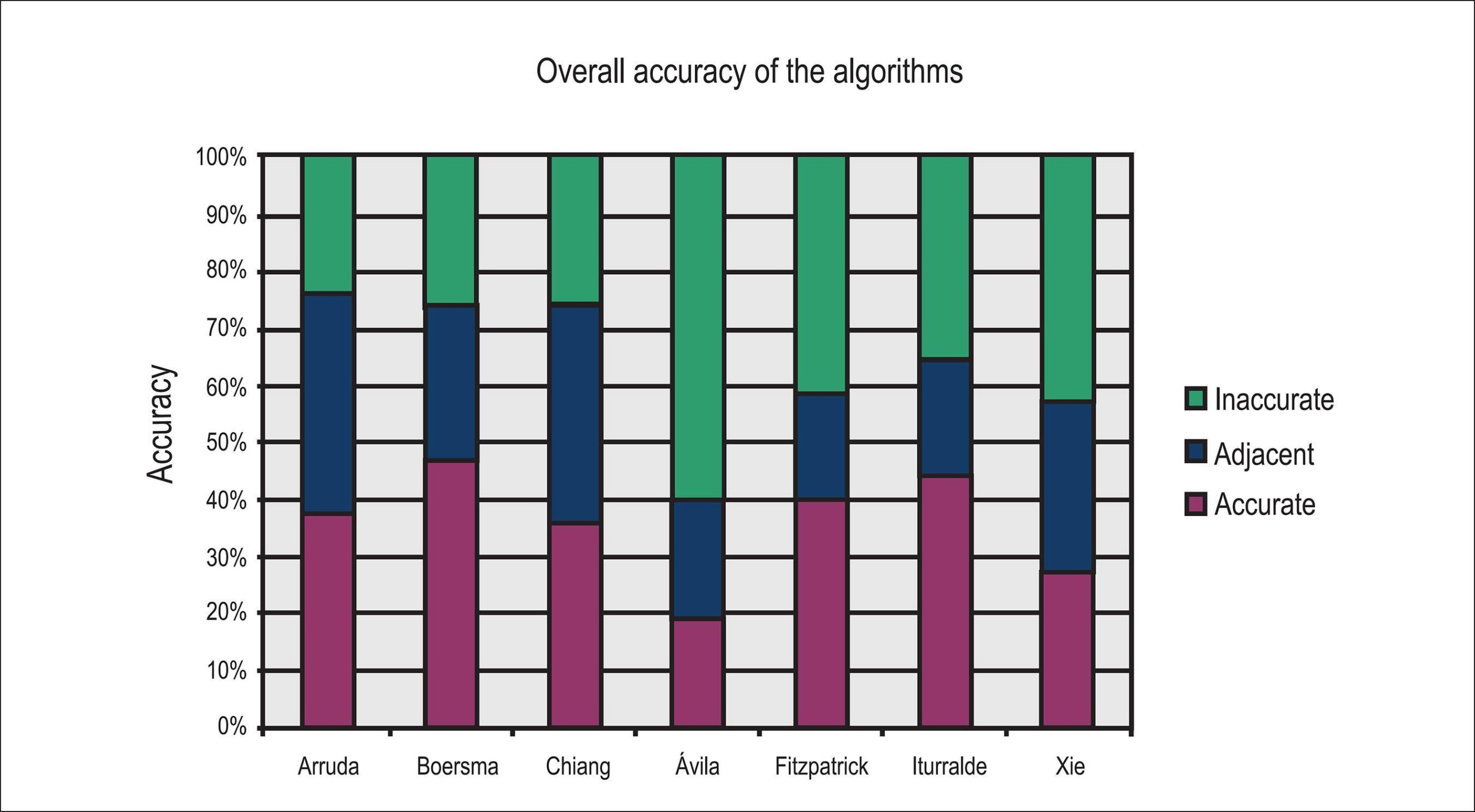
Among the APs, 59 (53.15%) were distributed around the mitral annulus and the remaining 52 (46.85%) were located around the tricuspid annulus. The overall absolute accuracy of the algorithms evaluated varied between 27% and 47%, increasing to between 40% and 76% when we included adjacent locations. The absolute agreement rate by AP location was 2.00-52.20% for septal APs (n = 51), increasing to 5.90-90.20% when considering adjacent locations; 7.70-69.20% for right APs (n = 13), increasing to 42.90-100% when considering adjacent locations; and 21.70-54.50% for left APs (n = 47), increasing to 50-87% when considering adjacent locations.

Conclusion:

The agreement rates observed for the analyzed scores indicated a low discriminative ability of the ECG in locating the AP in patients with WPW.

  • Accessory Atrioventricular Bundle
  • Catheter Ablation
  • Data Accuracy
  • Electrocardiography
  • Wolff-Parkinson White Syndrome
Read Full Article
Creative Commons Attribution (CC BY) Creative Commons license
12/09/2016 DOI: 10.5935/abc.20160132 Views 1

How to cite this article

EndNote RIS

Electronic Document Format (Vancouver)

Abrahin O, Souza NSF, Abrahin RP, Crisp AH. Agreement Between a Portable Cholesterol Device and Laboratory-Based Testing in Older Adults. International Journal of Cardiovascular Sciences 2024;37:e20240101.

Electronic Document Format (ABNT)

Abrahin, Odilon; Souza, Naicha Stefanie Félix; Abrahin, Rejane P.; Crisp, Alex Harley. Agreement Between a Portable Cholesterol Device and Laboratory-Based Testing in Older Adults. International Journal of Cardiovascular Sciences, v. 37, e20240101, Nov. 2024.

Electronic Document Format (APA)

Abrahin, O., Souza, N. S. F., Abrahin, R. P., & Crisp, A. H. (2024). Agreement Between a Portable Cholesterol Device and Laboratory-Based Testing in Older Adults. International Journal of Cardiovascular Sciences, 37, e20240101.

Electronic Document Format (ISO)

Abrahin, Odilon and Souza, Naicha Stefanie Félix and Abrahin, Rejane P. and Crisp, Alex Harley. Agreement Between a Portable Cholesterol Device and Laboratory-Based Testing in Older Adults. International Journal of Cardiovascular Sciences [online]. 2024, vol. 37, [cited 2026-10-14], e20240101. Available from: <https://journals.cardiol.br/en/article/agreement-between-a-portable-cholesterol-device-and-laboratory-based-testing-in-older-adults/>. ISSN 2359-4802

EndNote RIS

Electronic Document Format (Vancouver)

Rezende CF, Mancuzo EV, Nunes MCP, Corrêa RA. Accuracy of Transthoracic Echocardiogram as a Screening Method in the Clinical Practice of Pulmonary Hypertension Investigation. Arquivos Brasileiros de Cardiologia 2023;120(7):e20220461.

Electronic Document Format (ABNT)

Rezende, Camila Farnese; Mancuzo, Eliane Viana; Nunes, Maria do Carmo Pereira; Corrêa, Ricardo Amorim. Accuracy of Transthoracic Echocardiogram as a Screening Method in the Clinical Practice of Pulmonary Hypertension Investigation. Arquivos Brasileiros de Cardiologia, v. 120, n. 7, e20220461, Aug. 2023.

Electronic Document Format (APA)

Rezende, C. F., Mancuzo, E. V., Nunes, M. C. P., & Corrêa, R. A. (2023). Accuracy of Transthoracic Echocardiogram as a Screening Method in the Clinical Practice of Pulmonary Hypertension Investigation. Arquivos Brasileiros de Cardiologia, 120(7), e20220461.

Electronic Document Format (ISO)

Rezende, Camila Farnese and Mancuzo, Eliane Viana and Nunes, Maria do Carmo Pereira and Corrêa, Ricardo Amorim. Accuracy of Transthoracic Echocardiogram as a Screening Method in the Clinical Practice of Pulmonary Hypertension Investigation. Arquivos Brasileiros de Cardiologia [online]. 2023, vol. 120, n. 7, [cited 2026-10-14], e20220461. Available from: <https://journals.cardiol.br/en/article/accuracy-of-transthoracic-echocardiogram-as-a-screening-method-in-the-clinical-practice-of-pulmonary-hypertension-investigation/>. ISSN 0066-782X

EndNote RIS

Electronic Document Format (Vancouver)

Silva LS, Reis FF, Silva MES, Lima DVM. Accuracy of Impedance Cardiography in Acute Myocardial Infarction: A Literature Review. International Journal of Cardiovascular Sciences 2018;31(3):282-9.

Electronic Document Format (ABNT)

Silva, Lucelia dos Santos; Reis, Fernanda Faria; Silva, Monyque Evelyn Santos; Lima, Dalmo Valerio Machado de. Accuracy of Impedance Cardiography in Acute Myocardial Infarction: A Literature Review. International Journal of Cardiovascular Sciences, v. 31, n. 3, p. 282-289, Dec. 2017.

Electronic Document Format (APA)

Silva, L. S., Reis, F. F., Silva, M. E. S., & Lima, D. V. M. (2018). Accuracy of Impedance Cardiography in Acute Myocardial Infarction: A Literature Review. International Journal of Cardiovascular Sciences, 31(3), 282-289.

Electronic Document Format (ISO)

Silva, Lucelia dos Santos and Reis, Fernanda Faria and Silva, Monyque Evelyn Santos and Lima, Dalmo Valerio Machado de. Accuracy of Impedance Cardiography in Acute Myocardial Infarction: A Literature Review. International Journal of Cardiovascular Sciences [online]. 2018, vol. 31, n. 3, [cited 2026-10-14], pp. 282-289. Available from: <https://journals.cardiol.br/en/article/accuracy-of-impedance-cardiography-in-acute-myocardial-infarction-a-literature-review/>. ISSN 2359-4802

EndNote RIS

Electronic Document Format (Vancouver)

Mesquita CT. The Accuracy of Blood Pressure Measurement. International Journal of Cardiovascular Sciences 2017;30(2):98-9.

Electronic Document Format (ABNT)

Mesquita, Claudio Tinoco. The Accuracy of Blood Pressure Measurement. International Journal of Cardiovascular Sciences, v. 30, n. 2, p. 98-99, Dec. 2016.

Electronic Document Format (APA)

Mesquita, C. T. (2017). The Accuracy of Blood Pressure Measurement. International Journal of Cardiovascular Sciences, 30(2), 98-99.

Electronic Document Format (ISO)

Mesquita, Claudio Tinoco. The Accuracy of Blood Pressure Measurement. International Journal of Cardiovascular Sciences [online]. 2017, vol. 30, n. 2, [cited 2026-10-14], pp. 98-99. Available from: <https://journals.cardiol.br/en/article/the-accuracy-of-blood-pressure-measurement/>. ISSN 2359-4802

EndNote RIS

Electronic Document Format (Vancouver)

Teixeira CM, Pereira TA, Lebreiro AM, Carvalho SA. Accuracy of the Electrocardiogram in Localizing the Accessory Pathway in Patients with Wolff-Parkinson-White Pattern. Arquivos Brasileiros de Cardiologia 2016;107(4):331-8.

Electronic Document Format (ABNT)

Teixeira, Carlos Manuel; Pereira, Telmo António; Lebreiro, Ana Margarida; Carvalho, Sérgio Alexandre. Accuracy of the Electrocardiogram in Localizing the Accessory Pathway in Patients with Wolff-Parkinson-White Pattern. Arquivos Brasileiros de Cardiologia, v. 107, n. 4, p. 331-338, Sep. 2016.

Electronic Document Format (APA)

Teixeira, C. M., Pereira, T. A., Lebreiro, A. M., & Carvalho, S. A. (2016). Accuracy of the Electrocardiogram in Localizing the Accessory Pathway in Patients with Wolff-Parkinson-White Pattern. Arquivos Brasileiros de Cardiologia, 107(4), 331-338.

Electronic Document Format (ISO)

Teixeira, Carlos Manuel and Pereira, Telmo António and Lebreiro, Ana Margarida and Carvalho, Sérgio Alexandre. Accuracy of the Electrocardiogram in Localizing the Accessory Pathway in Patients with Wolff-Parkinson-White Pattern. Arquivos Brasileiros de Cardiologia [online]. 2016, vol. 107, n. 4, [cited 2026-10-14], pp. 331-338. Available from: <https://journals.cardiol.br/en/article/accuracy-of-the-electrocardiogram-in-localizing-the-accessory-pathway-in-patients-with-wolff-parkinson-white-pattern/>. ISSN 0066-782X

  • About ABC Family
  • Internal Regulation
  • Editorial Board
  • Brazilian Society of Cardiology (SBC)

Issues

SBC Guidelines

  • Videos
  • Podcasts
  • News