ABC Family Arquivos Brasileiros de Cardiologia International Journal of Cardiovascular Sciences ABC Heart Failure & Cardiomyopathy ABC Imagem Cardiovascular
Português English
ABC Family
Português English
  • About
    • About ABC Family
    • Internal Regulation
    • Editorial Board
    • Brazilian Society of Cardiology (SBC)
  • Issues
  • SBC Guidelines
  • Content
    • Videos
    • Podcasts
    • News
  • About
    • About ABC Family
    • Internal Regulation
    • Editorial Board
    • Brazilian Society of Cardiology (SBC)
  • Issues
  • SBC Guidelines
  • Content
    • Videos
    • Podcasts
    • News

ABC Family

  • ABC Family
  • Arquivos Brasileiros de Cardiologia
  • International Journal of Cardiovascular Sciences
  • ABC Heart Failure & Cardiomyopathy
  • ABC Imagem Cardiovascular
Search in

No content found.

Journals
Ordering
Article types
Others

  1. Home
  2. Keyword: Cost-Effectiveness-Evaluation
Figure 1
IJCS
Original Article

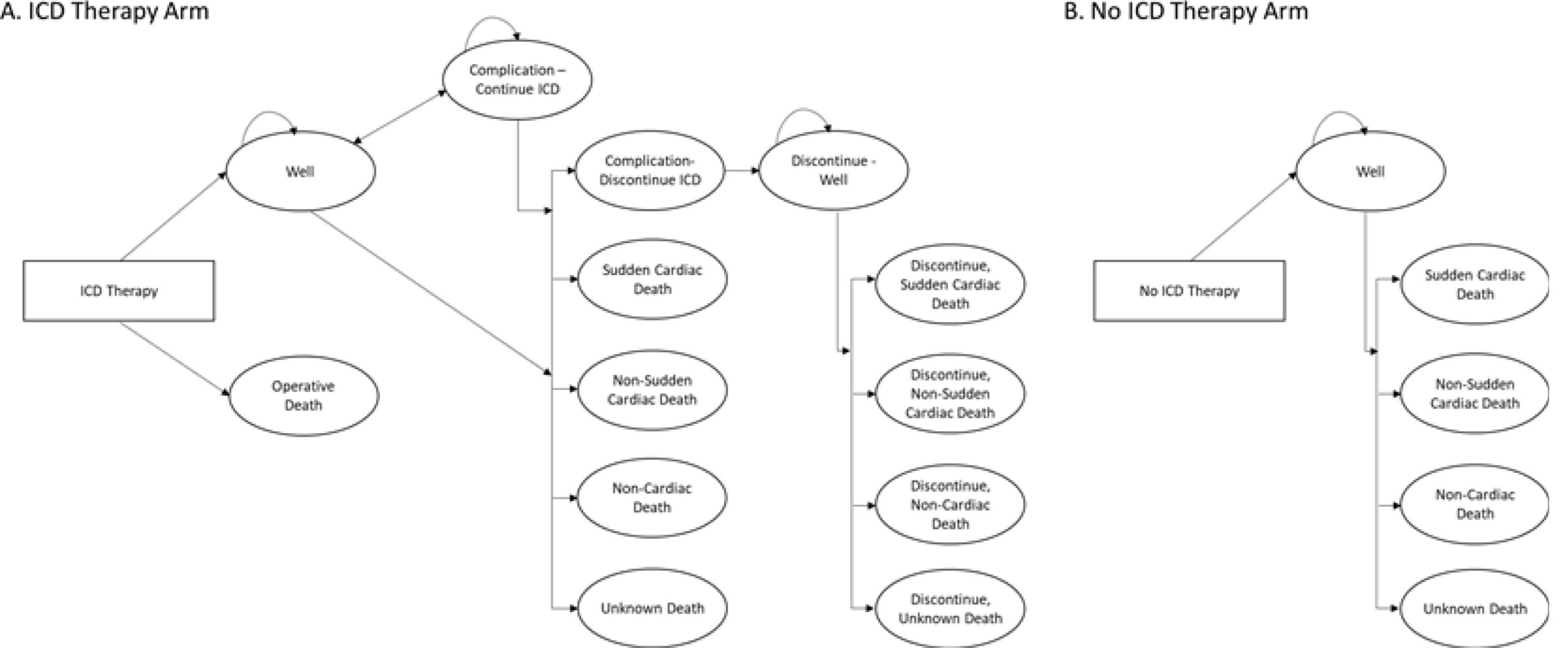
Cost-Effectiveness Analysis of Implantable Cardioverter Defibrillator Therapy for Primary Prevention Patients with Additional Risk Factors in Brazil

Kael Wherry et al. Reece Holbrook Lucas Higuera Francis Fujii Diego A. Rodriguez

Abstract

Background:

Implantable cardiac defibrillators (ICDs) therapy for primary prevention (PP) of sudden cardiac arrest (SCA) is well-established but underutilized globally. The Improve SCA study has identified a cohort of patients called 1.5 primary prevention (1.5PP), based on PP patients with the presence of documented risk factors: non-sustained ventricular tachycardia, frequent premature ventricular contractions, left ventricular ejection fraction < 25%, and pre-syncope or syncope.

Objective:

This study evaluated the cost-effectiveness of ICD therapy compared to no ICD among 1.5PP patients in the Brazilian public healthcare system.

Methods:

Modified inputs to a published Markov model were applied to compare costs and outcomes of ICD therapy to no ICD therapy from the Brazilian payer’s perspective. Mortality and utility estimates were obtained from the IMPROVE SCA trial. Additional effectiveness inputs were sourced from the literature. Cost inputs were obtained from the Brazilian Unified Health System and the Ministry of Health. Costs were discounted at 4.7%; quality-adjusted life years (QALYs) were discounted at 1.45%. This study applied a willingness-to-pay (WTP) value of three times Brazil’s gross domestic product (GDP) in 2017, R$105,723 (Brazilian Real).

Results:

The total discounted lifetime costs for ICD therapy were R$100,920 compared to R$43,866 for no ICD therapy. Total discounted QALYs for ICD therapy and no ICD therapy were 9.85 and 7.15, respectively. The incremental cost effectiveness ratio was R$21,156 per QALY and less than the R$105,723 WTP threshold. Results from sensitivity analyses were consistent with base case results.

Conclusions:

ICD therapy compared to no ICD therapy is cost-effective in the 1.5PP population in Brazil. (Int J Cardiovasc Sci. 2021; [online].ahead print, PP.0-0)
  • Biomedical
  • Cardiovascular Diseases/prevention andcontrol
  • Cost-Effectiveness-Evaluation
  • Death, Sudden, Cardiac
  • Defibrillators, Implantable/economy
  • health evaluation
  • Technology Assessment
Read Full Article
Creative Commons Attribution (CC BY) Creative Commons license
12/05/2021 DOI: 10.36660/ijcs.20200016 Views 1
ABC
Editorial

Economic Burden of Cardiovascular Diseases in Brazil: Are Telemedicine and Structured Telephone Support the Solution?

Suzana Alves da Silva et al. Pedro Paulo Magalhães Chrispim Yang Ting Ju Ary Ribeiro

The study by Stevens et al. results from a project of Delloite Consulting, financed by Novartis and aimed at estimating the economic burden that heart failure, acute myocardial infarction, atrial fibrillation and systemic arterial hypertension (SAH) impose on Latin American countries, and at assessing the cost-effectiveness of telemedicine and structured telephone support as interventions that can relieve it. The publication in this issue of the Arquivos Brasileiros de Cardiologia focused on presenting the results of the assessment in the Brazilian scenario.

This study provided us with the opportunity to reflect on important questions related to quality, interpretation and applicability of economic studies. Such studies have gained increasing relevance in the incorporation/disincorporation of technologies and the development of health policies and programs to improve healthcare quality. In addition, they are often used in other countries to support decision-making processes, although that is not a routine in Brazil.

[…]

  • Cardiovascular Diseases
  • Cost-Effectiveness-Evaluation
  • Health Policy
  • Quality Management
  • Telemedicine/trends
  • Telephone/trends
Read Full Article
Creative Commons Attribution (CC BY) Creative Commons license
01/07/2018 DOI: 10.5935/abc.20180136
Cost-effectiveness of prehospital versus inhospital thrombolysis in acute myocardial infarction
ABC
Artigo Original

Cost-effectiveness of prehospital versus inhospital thrombolysis in acute myocardial infarction

Denizar Vianna Araújo et al. Bernardo Rangel Tura Antonio Luiz Brasileiro Heitor Luz Neto … Ana Luiza Braz Pavão Vanessa Teich

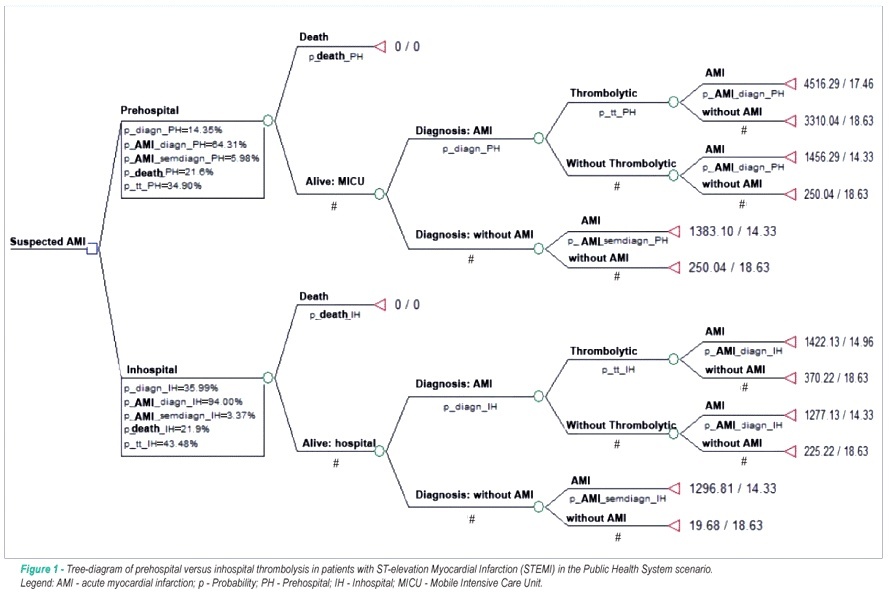
BACKGROUND: There is evidence that prehospital thrombolysis improves the outcome in ST-elevation myocardial infarction (STEMI). OBJECTIVE: This study aimed at comparing the cost-effectiveness of prehospital compared to inhospital thrombolysis for STEMI from the National Health System perspective. METHODS: A decision-analytic model was used to compare these two strategies. The study endpoint was life-years gained. Resource use and costs were estimated from the National Health System perspective. The Decision tree and Markov Model were constructed using the results of published clinical trials. Costs were expressed in Reais (R$), for the year 2005. RESULTS: For a time horizon of 20 years, prehospital thrombolysis had an average life expectancy of 11.48 years and inhospital thrombolysis had an average life expectancy of 11.32 years. Costs were R$ 5,640 for prehospital thrombolysis and R$ 5,816 for inhospital thrombolysis. Inhospital thrombolysis led to an additional cost of R$ 176 per patient. Pre-hospital thrombolysis led to additional 0.15 years of life-expectancy gain compared with inhospital thrombolysis. CONCLUSION: This model suggests that, from the National Health System perspective, implementing prehospital thrombolysis for ST-elevation myocardial infarction (STEMI) may lead to extra survival and fewer costs when compared to inhospital thrombolysis.

  • Cost-Effectiveness-Evaluation
  • Myocardial Infarction
  • Thrombolytic Therapy
Read Full Article
Creative Commons Attribution (CC BY) Creative Commons license
28/04/2008 DOI: 10.1590/S0066-782X2008000200005 Views 1

How to cite this article

EndNote RIS

Electronic Document Format (Vancouver)

Wherry K, Holbrook R, Higuera L, Fujii F, Rodriguez DA. Cost-Effectiveness Analysis of Implantable Cardioverter Defibrillator Therapy for Primary Prevention Patients with Additional Risk Factors in Brazil. International Journal of Cardiovascular Sciences 2021;34(6):692-701.

Electronic Document Format (ABNT)

Wherry, Kael; Holbrook, Reece; Higuera, Lucas; Fujii, Francis; Rodriguez, Diego A.. Cost-Effectiveness Analysis of Implantable Cardioverter Defibrillator Therapy for Primary Prevention Patients with Additional Risk Factors in Brazil. International Journal of Cardiovascular Sciences, v. 34, n. 6, p. 692-701, May. 2021.

Electronic Document Format (APA)

Wherry, K., Holbrook, R., Higuera, L., Fujii, F., & Rodriguez, D. A. (2021). Cost-Effectiveness Analysis of Implantable Cardioverter Defibrillator Therapy for Primary Prevention Patients with Additional Risk Factors in Brazil. International Journal of Cardiovascular Sciences, 34(6), 692-701.

Electronic Document Format (ISO)

Wherry, Kael and Holbrook, Reece and Higuera, Lucas and Fujii, Francis and Rodriguez, Diego A.. Cost-Effectiveness Analysis of Implantable Cardioverter Defibrillator Therapy for Primary Prevention Patients with Additional Risk Factors in Brazil. International Journal of Cardiovascular Sciences [online]. 2021, vol. 34, n. 6, [cited 2026-10-14], pp. 692-701. Available from: <https://journals.cardiol.br/en/article/cost-effectiveness-analysis-of-implantable-cardioverter-defibrillator-therapy-for-primary-prevention-patients-with-additional-risk-factors-in-brazil/>. ISSN 2359-4802

EndNote RIS

Electronic Document Format (Vancouver)

Silva SA, Chrispim PPM, Ju YT, Ribeiro A. Economic Burden of Cardiovascular Diseases in Brazil: Are Telemedicine and Structured Telephone Support the Solution?. Arquivos Brasileiros de Cardiologia 2018;111(1):37-8.

Electronic Document Format (ABNT)

Silva, Suzana Alves da; Chrispim, Pedro Paulo Magalhães; Ju, Yang Ting; Ribeiro, Ary. Economic Burden of Cardiovascular Diseases in Brazil: Are Telemedicine and Structured Telephone Support the Solution?. Arquivos Brasileiros de Cardiologia, v. 111, n. 1, p. 37-38, Jun. 2018.

Electronic Document Format (APA)

Silva, S. A. , Chrispim, P. P. M., Ju, Y. T., & Ribeiro, A. (2018). Economic Burden of Cardiovascular Diseases in Brazil: Are Telemedicine and Structured Telephone Support the Solution?. Arquivos Brasileiros de Cardiologia, 111(1), 37-38.

Electronic Document Format (ISO)

Silva, Suzana Alves da and Chrispim, Pedro Paulo Magalhães and Ju, Yang Ting and Ribeiro, Ary. Economic Burden of Cardiovascular Diseases in Brazil: Are Telemedicine and Structured Telephone Support the Solution?. Arquivos Brasileiros de Cardiologia [online]. 2018, vol. 111, n. 1, [cited 2026-10-14], pp. 37-38. Available from: <https://journals.cardiol.br/en/article/economic-burden-of-cardiovascular-diseases-in-brazil-are-telemedicine-and-structured-telephone-support-the-solution/>. ISSN 0066-782X

EndNote RIS

Electronic Document Format (Vancouver)

Araújo DV, Tura BR, Brasileiro AL, Luz Neto H, Pavão ALB, Teich V. Cost-effectiveness of prehospital versus inhospital thrombolysis in acute myocardial infarction. Arquivos Brasileiros de Cardiologia 2008;90(2):100-7.

Electronic Document Format (ABNT)

Araújo, Denizar Vianna; Tura, Bernardo Rangel; Brasileiro, Antonio Luiz; Luz Neto, Heitor; Pavão, Ana Luiza Braz; Teich, Vanessa. Cost-effectiveness of prehospital versus inhospital thrombolysis in acute myocardial infarction. Arquivos Brasileiros de Cardiologia, v. 90, n. 2, p. 100-107, Apr. 2008.

Electronic Document Format (APA)

Araújo, D. V., Tura, B. R., Brasileiro, A. L., Luz Neto, H., Pavão, A. L. B., & Teich, V. (2008). Cost-effectiveness of prehospital versus inhospital thrombolysis in acute myocardial infarction. Arquivos Brasileiros de Cardiologia, 90(2), 100-107.

Electronic Document Format (ISO)

Araújo, Denizar Vianna and Tura, Bernardo Rangel and Brasileiro, Antonio Luiz and Luz Neto, Heitor and Pavão, Ana Luiza Braz and Teich, Vanessa. Cost-effectiveness of prehospital versus inhospital thrombolysis in acute myocardial infarction. Arquivos Brasileiros de Cardiologia [online]. 2008, vol. 90, n. 2, [cited 2026-10-14], pp. 100-107. Available from: <https://journals.cardiol.br/en/article/cost-effectiveness-of-prehospital-versus-inhospital-thrombolysis-in-acute-myocardial-infarction/>. ISSN 0066-782X

  • About ABC Family
  • Internal Regulation
  • Editorial Board
  • Brazilian Society of Cardiology (SBC)

Issues

SBC Guidelines

  • Videos
  • Podcasts
  • News