ABC Family Arquivos Brasileiros de Cardiologia International Journal of Cardiovascular Sciences ABC Heart Failure & Cardiomyopathy ABC Imagem Cardiovascular
Português English
ABC Family
Português English
  • About
    • About ABC Family
    • Internal Regulation
    • Editorial Board
    • Brazilian Society of Cardiology (SBC)
  • Issues
  • SBC Guidelines
  • Content
    • Videos
    • Podcasts
    • News
  • About
    • About ABC Family
    • Internal Regulation
    • Editorial Board
    • Brazilian Society of Cardiology (SBC)
  • Issues
  • SBC Guidelines
  • Content
    • Videos
    • Podcasts
    • News

ABC Family

  • ABC Family
  • Arquivos Brasileiros de Cardiologia
  • International Journal of Cardiovascular Sciences
  • ABC Heart Failure & Cardiomyopathy
  • ABC Imagem Cardiovascular
Search in

No content found.

Journals
Ordering
Article types
Others

  1. Home
  2. Keyword: Training
Figure 1
ABC
Original Article

Training Non-Cardiologists Could Improve the Treatment Results of ST Elevation Myocardial Infarction

Luiz Antonio Machado Cesar et al. Antonio Padua Mansur Rui Fernando Ramos Carlos Magalhães … João Fernando Monteiro Ferreira Bruno Mahler Mioto Naide Aparecida de Oliveira Pedro Silvio Farsky Amaury Zatorre Amaral Antonio Célio Camargo Moreno

Abstract

Background

According to the World Health Organization, emerging countries will have an enormous growth in the number of heart attacks and related deaths. The main medical issue in Brazil is mortality caused by acute ST elevation myocardial infarction (STEMI). The Society of Cardiology in the State of São Paulo has never trained non-cardiologists as emergency personnel. Patients usually seek help from emergency departments instead of calling for an ambulance.

Objectives

We aimed at reducing in-hospital death rates from acute myocardial infarction by training emergency personnel in the city of Sao Paulo.

Methods

We used a training program for the personnel of five hospitals with >100 patients admitted with STEMI per year, and at least 15% in-hospital STEMI-associated mortality rate. We performed internet training, biannual-quarterly symposia for up to 400 participants, informative folders and handouts. Statistical analysis used the two proportion comparison test with p <0.05.

Results

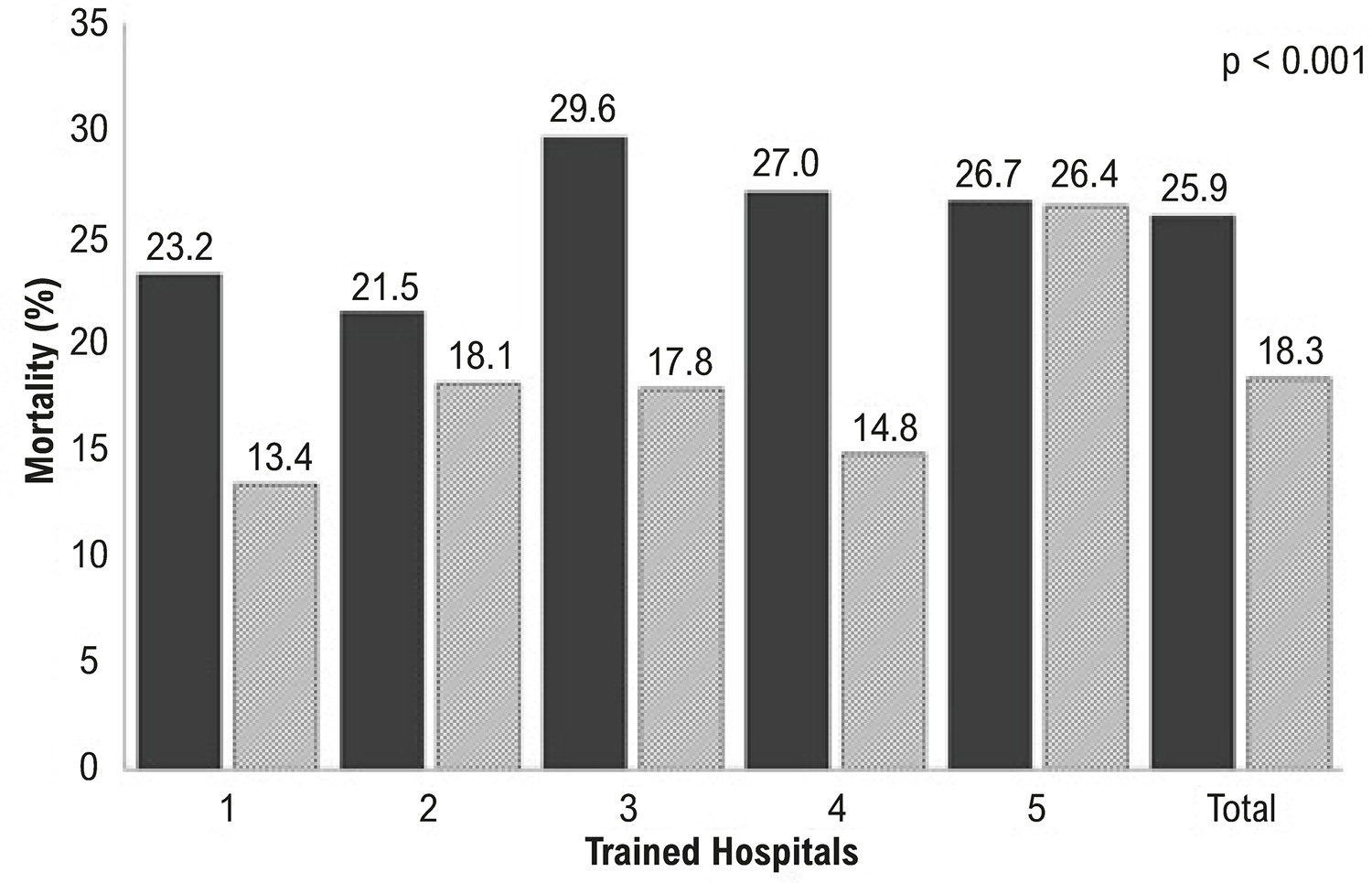
Nearly 200 physicians and 350 nurses attended at least one training from May 2010 to December 2013. Initially, many emergency physicians could not recognize an acute myocardial infarction on the electrocardiogram, but tele-electrocardiography is used in some emergency departments to determine the diagnosis. The death rate in the five hospitals decreased from 25.6%, in 2009, to 18.2%, in 2010 (p=0.005). After the entire period of training, the STEMI-associated death rate in all public hospitals of São Paulo decreased from 14.31%, in 2009, to 11.25%, in 2014 (p<0.0001).

Conclusion

Even simple training programs for emergency personnel can greatly reduce acute myocardial infarction death rates in undeveloped countries.
  • Acute Coronary,Syndrome
  • Emergency Services
  • Epidemiology
  • Mortality
  • Myocardial Infarction/drug therapy
  • Training
Read Full Article
Creative Commons Attribution (CC BY) Creative Commons license
13/08/2021 DOI: 10.36660/abc.20200180 Views 2
ABC
Viewpoint

Echoes of Telecardiology Guideline

Silvio Henrique Barberato et al. Marcelo Antônio Cartaxo Queiroga Lopes

Echocardiography has an established role in the diagnosis, prognostic evaluation and therapeutic orientation in several cardiovascular diseases. The great technological development in the last decades has allowed the digitization and standardization of medical images (DICOM), miniaturization of echocardiography equipment (portable cardiac ultrasound) and the transfer of images over the internet. In this scenario, strategies for the use of telemedicine-associated echocardiography, called tele-echocardiography, have been employed in the context of clinical research with the support of teleconsultation for remote expert review, in real time or after image storage and submission. In recognition of the demands generated by the ongoing digital transformation in health, the Brazilian Society of Cardiology recently published the Telemedicine Guideline in Cardiology. The document recognizes tele-echocardiography as a strategy for early detection of congenital heart disease in newborns and screening for early detection of subclinical cases of rheumatic heart disease in children and adolescents (both recommended as indication class IIa, level of evidence B). In addition, it evokes potential application in primary health care in remote locations, where it could enable early detection of cases of heart disease and assist in prioritizing referrals to specialized care (indication class IIb, level of evidence C). It should be emphasized that such recommendations are made within the conditions of regular use of the method in Brazil, which would include the need for doctors at both ends, i.e., the execution and interpretation of the exam. The text of the Guideline explicitly states the need for regulation and legal provision for the participation of other professionals in performing diagnostic procedures (in this case, obtaining echocardiographic images by non-doctors), currently not allowed by the country’s legislation.

In recent years, tele-echocardiography has extended the application of the method to individuals in geographically distant locations, such as remote rural communities or even space. A rural area is classified as remote when 50% of the local population needs at least 45 to 60 minutes of travel by motor vehicle to reach a population center of at least 50,000 inhabitants. Several situations have been experimentally tested, with a study on focused echocardiographic by non-cardiologist physicians,, non-physicians,, or remote-operated robotic devices, combined with remote interpretation by echocardiography cardiologists.

[…]

  • Cardiovascular Diseases
  • Diagnosis Imaging
  • Echocardiography/methods
  • Image Interpretation, Computer-Assisted
  • Robotics/trends
  • Telemedicine/methods
  • Telemedicine/trends
  • Telemonitoring
  • Training
Read Full Article
Creative Commons Attribution (CC BY) Creative Commons license
10/02/2020 DOI: 10.36660/abc.20190720 Views 1
Chart 1
ABC
Review Article

Acute Effects of Exercise on Blood Pressure: A Meta-Analytic Investigation

Elizabeth Carpio-Rivera et al. José Moncada-Jiménez Walter Salazar-Rojas Andrea Solera-Herrera

Abstract

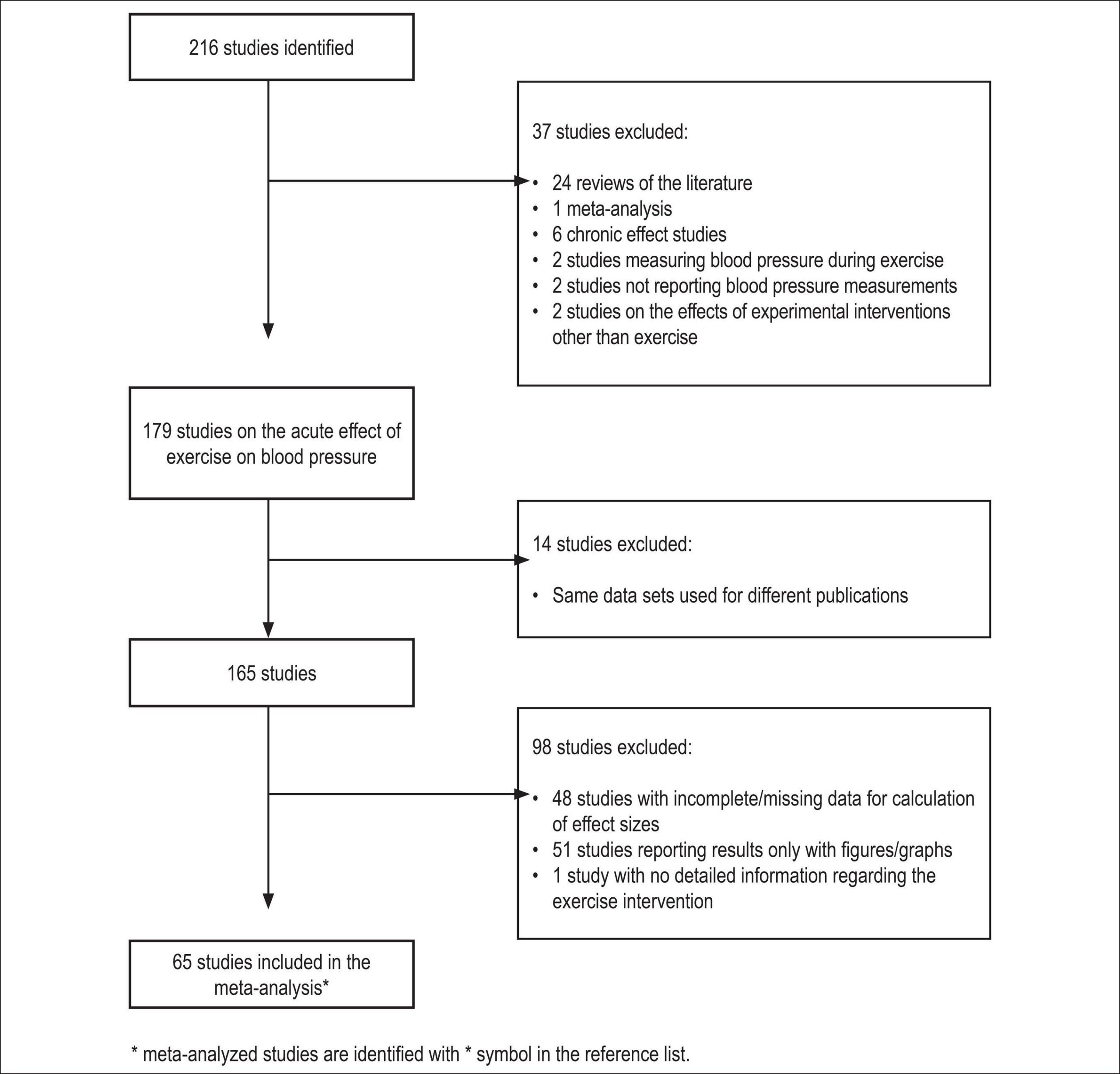
Hypertension affects 25% of the world’s population and is considered a risk factor for cardiovascular disorders and other diseases. The aim of this study was to examine the evidence regarding the acute effect of exercise on blood pressure (BP) using meta-analytic measures. Sixty-five studies were compared using effect sizes (ES), and heterogeneity and Z tests to determine whether the ES were different from zero. The mean corrected global ES for exercise conditions were -0.56 (-4.80 mmHg) for systolic BP (sBP) and -0.44 (-3.19 mmHg) for diastolic BP (dBP; z ≠ 0 for all; p < 0.05). The reduction in BP was significant regardless of the participant’s initial BP level, gender, physical activity level, antihypertensive drug intake, type of BP measurement, time of day in which the BP was measured, type of exercise performed, and exercise training program (p < 0.05 for all). ANOVA tests revealed that BP reductions were greater if participants were males, not receiving antihypertensive medication, physically active, and if the exercise performed was jogging. A significant inverse correlation was found between age and BP ES, body mass index (BMI) and sBP ES, duration of the exercise’s session and sBP ES, and between the number of sets performed in the resistance exercise program and sBP ES (p < 0.05). Regardless of the characteristics of the participants and exercise, there was a reduction in BP in the hours following an exercise session. However, the hypotensive effect was greater when the exercise was performed as a preventive strategy in those physically active and without antihypertensive medication.

  • Acute effect
  • Blood Pressure
  • Meta-Analysis
  • Physical activity
  • Post-Exercise Hypotension
  • Training
Read Full Article
Creative Commons Attribution (CC BY) Creative Commons license
06/05/2016 DOI: 10.5935/abc.20160064 Views 1
Research training program: Duke University and Brazilian Society of Cardiology
ABC
Special Article

Research training program: Duke University and Brazilian Society of Cardiology

Lucia Campos Pellanda et al. Claudia Ciceri Cesa Karlyse Claudino Belli Vinicius Frayze David … Clarissa Garcia Rodrigues João Ricardo Nickenig Vissoci Fernando Bacal Renato A. K. Kalil Ricardo Pietrobon

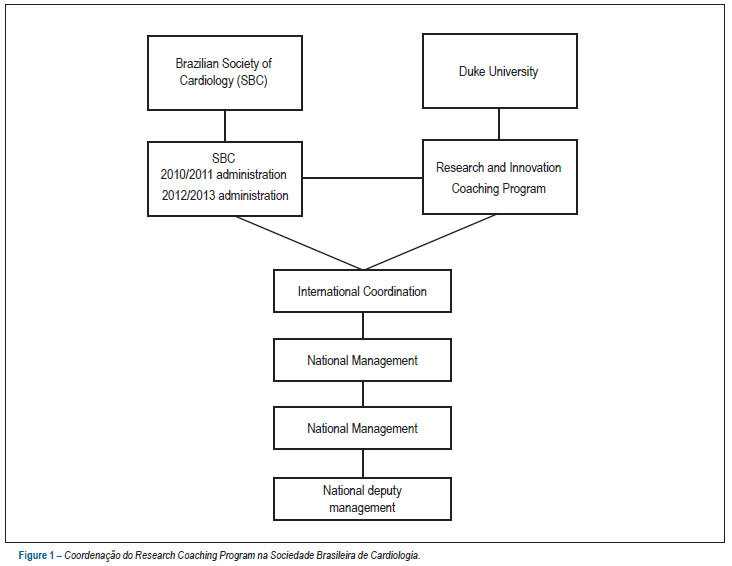
BACKGROUND: Research coaching program focuses on the development of abilities and scientific reasoning. For health professionals, it may be useful to increase both the number and quality of projects and manuscripts. OBJECTIVE: To evaluate the initial results and implementation methodology of the Research and Innovation Coaching Program of the Research on Research group of Duke University in the Brazilian Society of Cardiology. METHODS: The program works on two bases: training and coaching. Training is done online and addresses contents on research ideas, literature search, scientific writing and statistics. After training, coaching favors the establishment of a collaboration between researchers and centers by means of a network of contacts. The present study describes the implementation and initial results in reference to the years 2011-2012. RESULTS: In 2011, 24 centers received training, which consisted of online meetings, study and practice of the contents addressed. In January 2012, a new format was implemented with the objective of reaching more researchers. In six months, 52 researchers were allocated. In all, 20 manuscripts were published and 49 more were written and await submission and/or publication. Additionally, five research funding proposals have been elaborated. CONCLUSION: The number of manuscripts and funding proposals achieved the objectives initially proposed. However, the main results of this type of initiative should be measured in the long term, because the consolidation of the national production of high-quality research is a virtuous cycle that feeds itself back and expands over time. (Arq Bras Cardiol 2012;99(6):1075-1081)

  • Research Groups
  • Study Programs
  • Training
Read Full Article
Creative Commons Attribution (CC BY) Creative Commons license
11/03/2013 DOI: 10.1590/S0066-782X2012001500002 Views 1
Distance from home to exercise site did not influence the adherence of 796 participants
ABC
Artigo Original

Distance from home to exercise site did not influence the adherence of 796 participants

Antonio Cesar Cabral-de-Oliveira et al. Plínio Santos Ramos Claudio Gil Soares de Araújo

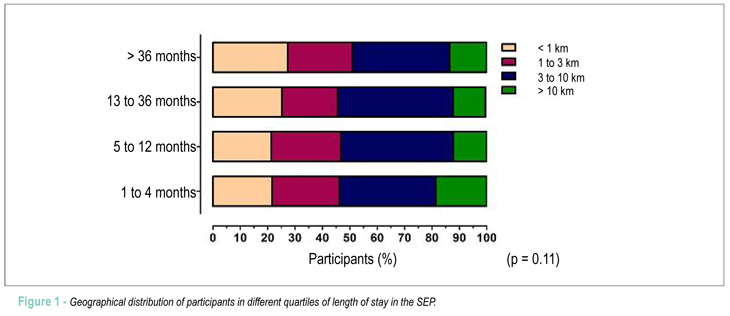
BACKGROUND: One of the difficulties in maintaining long-term adherence to exercise is the distance from home to the place of exercise. OBJECTIVE: To determine, for a private supervised exercise program (PSEP), the influence of the home-PSEP distance on adherence. METHODS: We identified 976 individuals and selected 796 who met the inclusion criteria. The home-PSEP distance was obtained by the Google Maps. Adherence was determined by quartiles (months): 1-4, 5-12, 13-36 and more than 36. The clinical conditions were stratified as healthy, obese and/or hypertensive and/or dyslipidemic and/or diabetic patients without coronary disease; coronary artery disease patients and other health problems like cancer, respiratory disease and panic. The home-PSEP distance was divided into (km): up to 1, 1 to 3, 3 to 10 and more than 10. For the statistical analysis, we used the Kruskal-Wallis ANOVA and the chi-square test. RESULTS: Of respondents, 46% lived up to 3 km, 39% lived between 3 and 10 km and about 15% lived more than 10 kilometers from the place of the PSEP. No differences were found between the medians of the months of participation in the PSEP as a function of home-PSEP distance (p = 0.11). CONCLUSION: For a given PSEP in the city of Rio de Janeiro, open from Monday through Saturday with free choice of time, the home-PSEP distance did not influence the adherence of participants. This was probably due to the quality of the service and/or lack of places closer to the participants’ home. (Arq Bras Cardiol. 2012; [online].ahead print, PP.0-0)

  • Coronary Artery Disease
  • Exercise
  • Rehabilitation
  • Training
Read Full Article
Creative Commons Attribution (CC BY) Creative Commons license
19/04/2012 DOI: 10.1590/S0066-782X2012005000039 Views 1
Association of physical training with beta-blockers in heart failure in mice
ABC
Artigo Original

Association of physical training with beta-blockers in heart failure in mice

Andréa Somolanji Vanzelli et al. Alessandra Medeiros Raquel de Assis Sirvente Vera Maria Cury Salemi … Charles Mady Patricia Chakur Brum

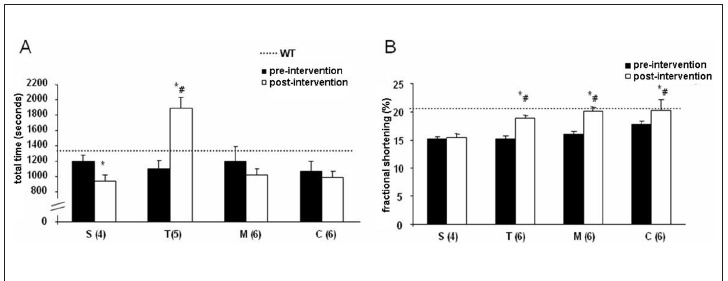
BACKGROUND: Currently there are several types of interventions for the treatment of heart failure (HF). Among these are beta-blocker therapy (BB) and physical training (PT). However, the effects of the combination of these therapies are poorly studied. OBJECTIVE: To investigate the effects of BB treatment with metoprolol (M) and carvedilol (C) associated with PT in mice with HF. METHODS: We used a genetic model of sympathetic hyperactivity-induced heart failure in mice. Initially, we divided the HF animals into three groups: sedentary (S); trained (T); treated with M (138 mg/kg) (M); or C (65 mg/kg) (C). In the second part, we divided the groups into three subgroups: sedentary (S); trained and treated with M (TM); and trained and treated with C (CT). The PT consisted of aerobic training on a treadmill for 8 weeks. Exercise tolerance was assessed by maximal graded test, and fractional shortening (FS) was assessed by echocardiography. Cardiomyocyte diameter and collagen volume fraction were evaluated by histological analysis. Data were compared by one way ANOVA and post hoc Duncan test. The significance level was set at p < 0.05. RESULTS: As to FS and cardiac remodeling, we found that, in isolation, T, M, and C showed an improvement of the variables analyzed. As to therapy combination, after the intervention period, we observed an increase in exercise tolerance in MT and CT (43.0% and 33.0% respectively). There was also a reduction in cardiomyocyte diameter (10.0% and 9.0% respectively) and in collagen volume fraction (52.0% and 63.0%) after the intervention. However, only CT significantly improved FS. CONCLUSION: The association of PT with M or C therapies provided benefits on cardiac function and remodeling in HF mice.

  • b-blockers
  • Exercise
  • Heart Failure
  • Mice
  • Sympathetic Nervous System
  • Training
Read Full Article
Creative Commons Attribution (CC BY) Creative Commons license
30/07/2010 DOI: 10.1590/S0066-782X2010005000098 Views 1

How to cite this article

EndNote RIS

Electronic Document Format (Vancouver)

Cesar LAM, Mansur AP, Ramos RF, Magalhães C, Ferreira JFM, Mioto BM, Oliveira NA, et al. Training Non-Cardiologists Could Improve the Treatment Results of ST Elevation Myocardial Infarction. Arquivos Brasileiros de Cardiologia 2021;117(6):1073-8.

Electronic Document Format (ABNT)

Cesar, Luiz Antonio Machado; Mansur, Antonio Padua; Ramos, Rui Fernando; Magalhães, Carlos; Ferreira, João Fernando Monteiro; Mioto, Bruno Mahler; Oliveira, Naide Aparecida de; Farsky, Pedro Silvio; Amaral, Amaury Zatorre; Moreno, Antonio Célio Camargo. Training Non-Cardiologists Could Improve the Treatment Results of ST Elevation Myocardial Infarction. Arquivos Brasileiros de Cardiologia, v. 117, n. 6, p. 1073-1078, Aug. 2021.

Electronic Document Format (APA)

Cesar, L. A. M., Mansur, A. P., Ramos, R. F., Magalhães, C., Ferreira, J. F. M., Mioto, B. M., Oliveira, N. A. , Farsky, P. S., Amaral, A. Z., & Moreno, A. C. C. (2021). Training Non-Cardiologists Could Improve the Treatment Results of ST Elevation Myocardial Infarction. Arquivos Brasileiros de Cardiologia, 117(6), 1073-1078.

Electronic Document Format (ISO)

Cesar, Luiz Antonio Machado and Mansur, Antonio Padua and Ramos, Rui Fernando and Magalhães, Carlos and Ferreira, João Fernando Monteiro and Mioto, Bruno Mahler and Oliveira, Naide Aparecida de and Farsky, Pedro Silvio and Amaral, Amaury Zatorre and Moreno, Antonio Célio Camargo. Training Non-Cardiologists Could Improve the Treatment Results of ST Elevation Myocardial Infarction. Arquivos Brasileiros de Cardiologia [online]. 2021, vol. 117, n. 6, [cited 2026-10-14], pp. 1073-1078. Available from: <https://journals.cardiol.br/en/article/training-non-cardiologists-could-improve-the-treatment-results-of-st-elevation-myocardial-infarction/>. ISSN 0066-782X

EndNote RIS

Electronic Document Format (Vancouver)

Barberato SH, Lopes MACQ. Echoes of Telecardiology Guideline. Arquivos Brasileiros de Cardiologia 2020;114(1):130-2.

Electronic Document Format (ABNT)

Barberato, Silvio Henrique; Lopes, Marcelo Antônio Cartaxo Queiroga. Echoes of Telecardiology Guideline. Arquivos Brasileiros de Cardiologia, v. 114, n. 1, p. 130-132, Feb. 2020.

Electronic Document Format (APA)

Barberato, S. H., & Lopes, M. A. C. Q. (2020). Echoes of Telecardiology Guideline. Arquivos Brasileiros de Cardiologia, 114(1), 130-132.

Electronic Document Format (ISO)

Barberato, Silvio Henrique and Lopes, Marcelo Antônio Cartaxo Queiroga. Echoes of Telecardiology Guideline. Arquivos Brasileiros de Cardiologia [online]. 2020, vol. 114, n. 1, [cited 2026-10-14], pp. 130-132. Available from: <https://journals.cardiol.br/en/article/echoes-of-telecardiology-guideline/>. ISSN 0066-782X

EndNote RIS

Electronic Document Format (Vancouver)

Carpio-Rivera E, Moncada-Jiménez J, Salazar-Rojas W, Solera-Herrera A. Acute Effects of Exercise on Blood Pressure: A Meta-Analytic Investigation. Arquivos Brasileiros de Cardiologia 2016;106(5):422-33.

Electronic Document Format (ABNT)

Carpio-Rivera, Elizabeth; Moncada-Jiménez, José; Salazar-Rojas, Walter; Solera-Herrera, Andrea. Acute Effects of Exercise on Blood Pressure: A Meta-Analytic Investigation. Arquivos Brasileiros de Cardiologia, v. 106, n. 5, p. 422-433, May. 2016.

Electronic Document Format (APA)

Carpio-Rivera, E., Moncada-Jiménez, J., Salazar-Rojas, W., & Solera-Herrera, A. (2016). Acute Effects of Exercise on Blood Pressure: A Meta-Analytic Investigation. Arquivos Brasileiros de Cardiologia, 106(5), 422-433.

Electronic Document Format (ISO)

Carpio-Rivera, Elizabeth and Moncada-Jiménez, José and Salazar-Rojas, Walter and Solera-Herrera, Andrea. Acute Effects of Exercise on Blood Pressure: A Meta-Analytic Investigation. Arquivos Brasileiros de Cardiologia [online]. 2016, vol. 106, n. 5, [cited 2026-10-14], pp. 422-433. Available from: <https://journals.cardiol.br/en/article/acute-effects-of-exercise-on-blood-pressure-a-meta-analytic-investigation/>. ISSN 0066-782X

EndNote RIS

Electronic Document Format (Vancouver)

Pellanda LC, Cesa CC, Belli KC, David VF, Rodrigues CG, Vissoci JRN, Bacal F, et al. Research training program: Duke University and Brazilian Society of Cardiology. Arquivos Brasileiros de Cardiologia 2013;99(6):1075-81.

Electronic Document Format (ABNT)

Pellanda, Lucia Campos; Cesa, Claudia Ciceri; Belli, Karlyse Claudino; David, Vinicius Frayze; Rodrigues, Clarissa Garcia; Vissoci, João Ricardo Nickenig; Bacal, Fernando; Kalil, Renato A. K.; Pietrobon, Ricardo. Research training program: Duke University and Brazilian Society of Cardiology. Arquivos Brasileiros de Cardiologia, v. 99, n. 6, p. 1075-1081, Mar. 2013.

Electronic Document Format (APA)

Pellanda, L. C., Cesa, C. C., Belli, K. C., David, V. F., Rodrigues, C. G., Vissoci, J. R. N., Bacal, F., Kalil, R. A. K., & Pietrobon, R. (2013). Research training program: Duke University and Brazilian Society of Cardiology. Arquivos Brasileiros de Cardiologia, 99(6), 1075-1081.

Electronic Document Format (ISO)

Pellanda, Lucia Campos and Cesa, Claudia Ciceri and Belli, Karlyse Claudino and David, Vinicius Frayze and Rodrigues, Clarissa Garcia and Vissoci, João Ricardo Nickenig and Bacal, Fernando and Kalil, Renato A. K. and Pietrobon, Ricardo. Research training program: Duke University and Brazilian Society of Cardiology. Arquivos Brasileiros de Cardiologia [online]. 2013, vol. 99, n. 6, [cited 2026-10-14], pp. 1075-1081. Available from: <https://journals.cardiol.br/en/article/research-training-program-duke-university-and-brazilian-society-of-cardiology/>. ISSN 0066-782X

EndNote RIS

Electronic Document Format (Vancouver)

Cabral-de-Oliveira AC, Ramos PS, Araújo CGS. Distance from home to exercise site did not influence the adherence of 796 participants. Arquivos Brasileiros de Cardiologia 2012;98(6):553-8.

Electronic Document Format (ABNT)

Cabral-de-Oliveira, Antonio Cesar; Ramos, Plínio Santos; Araújo, Claudio Gil Soares de. Distance from home to exercise site did not influence the adherence of 796 participants. Arquivos Brasileiros de Cardiologia, v. 98, n. 6, p. 553-558, Apr. 2012.

Electronic Document Format (APA)

Cabral-de-Oliveira, A. C., Ramos, P. S., & Araújo, C. G. S. (2012). Distance from home to exercise site did not influence the adherence of 796 participants. Arquivos Brasileiros de Cardiologia, 98(6), 553-558.

Electronic Document Format (ISO)

Cabral-de-Oliveira, Antonio Cesar and Ramos, Plínio Santos and Araújo, Claudio Gil Soares de. Distance from home to exercise site did not influence the adherence of 796 participants. Arquivos Brasileiros de Cardiologia [online]. 2012, vol. 98, n. 6, [cited 2026-10-14], pp. 553-558. Available from: <https://journals.cardiol.br/en/article/distance-from-home-to-exercise-site-did-not-influence-the-adherence-of-796-participants/>. ISSN 0066-782X

EndNote RIS

Electronic Document Format (Vancouver)

Vanzelli AS, Medeiros A, Sirvente RA, Salemi VMC, Mady C, Brum PC. Association of physical training with beta-blockers in heart failure in mice. Arquivos Brasileiros de Cardiologia 2010;95(3):373-80.

Electronic Document Format (ABNT)

Vanzelli, Andréa Somolanji; Medeiros, Alessandra; Sirvente, Raquel de Assis; Salemi, Vera Maria Cury; Mady, Charles; Brum, Patricia Chakur. Association of physical training with beta-blockers in heart failure in mice. Arquivos Brasileiros de Cardiologia, v. 95, n. 3, p. 373-380, Jul. 2010.

Electronic Document Format (APA)

Vanzelli, A. S., Medeiros, A., Sirvente, R. A., Salemi, V. M. C., Mady, C., & Brum, P. C. (2010). Association of physical training with beta-blockers in heart failure in mice. Arquivos Brasileiros de Cardiologia, 95(3), 373-380.

Electronic Document Format (ISO)

Vanzelli, Andréa Somolanji and Medeiros, Alessandra and Sirvente, Raquel de Assis and Salemi, Vera Maria Cury and Mady, Charles and Brum, Patricia Chakur. Association of physical training with beta-blockers in heart failure in mice. Arquivos Brasileiros de Cardiologia [online]. 2010, vol. 95, n. 3, [cited 2026-10-14], pp. 373-380. Available from: <https://journals.cardiol.br/en/article/association-of-physical-training-with-beta-blockers-in-heart-failure-in-mice/>. ISSN 0066-782X

  • About ABC Family
  • Internal Regulation
  • Editorial Board
  • Brazilian Society of Cardiology (SBC)

Issues

SBC Guidelines

  • Videos
  • Podcasts
  • News