The effect of siesta in parameters of cardiac structure and in interpretation of ambulatory arterial blood pressure monitoring
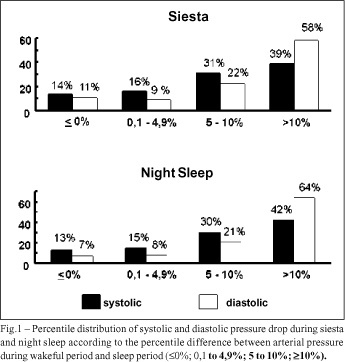
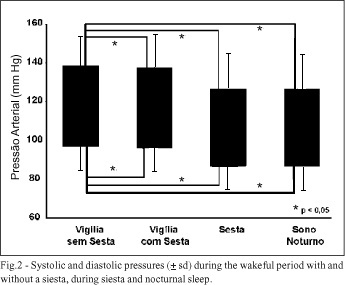
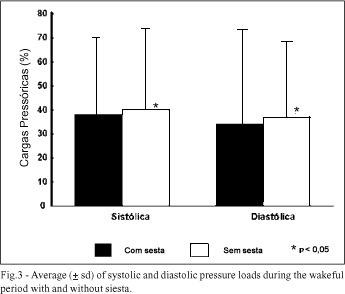
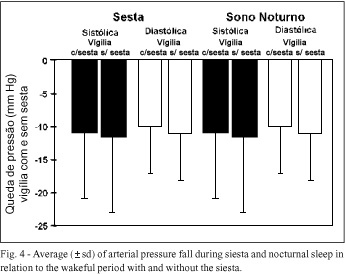
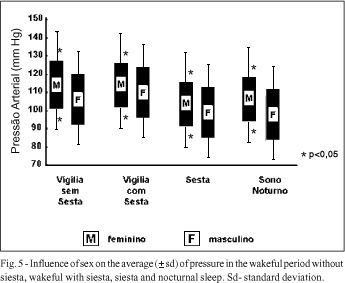
OBJECTIVE: To evaluate the influence of the siesta in ambulatory blood pressure (BP) monitoring and in cardiac structure parameters. METHODS: 1940 ambulatory arterial blood pressure monitoring tests were analyzed (Spacelabs 90207, 15/15 minutes from 7:00 to 22:00 hours and 20/20 minutes from 22:01 to 6.59hours) and 21% of the records indicated that the person had taken a siesta (263 woman, 52±14 years). The average duration of the siesta was 118±58 minutes. RESULTS: (average ± standard deviation) The average of systolic/diastolic pressures during wakefulness, including the napping period, was less than the average for the period not including the siesta (138±16/85±11 vs 139±16/86±11 mmHg, p<0.05); 2) pressure loads during wakefulness including the siesta, were less than those observed without the siesta); 3) the averages of nocturnal sleep blood pressures were similar to those of the siesta, 4) nocturnal sleep pressure drops were similar to those in the siesta including wakefulness with and without the siesta; 5) the averages of BP in men were higher (p5%. CONCLUSION: The siesta influenced the heart structure parameters and from a statistical point of view the average of systolic and diastolic pressures and the respective pressure loads of the wakeful period.
Images
Image gallery fullscreen viewer
Comments are moderated by the editorial team before publication. Discussions should be evidence-based and use scientific language. Conflicts of interest should be declared.