ABC Family Arquivos Brasileiros de Cardiologia International Journal of Cardiovascular Sciences ABC Heart Failure & Cardiomyopathy ABC Imagem Cardiovascular
Português English
ABC Family
Português English
  • About
    • About ABC Family
    • Internal Regulation
    • Editorial Board
    • Brazilian Society of Cardiology (SBC)
  • Issues
  • SBC Guidelines
  • Content
    • Videos
    • Podcasts
    • News
  • About
    • About ABC Family
    • Internal Regulation
    • Editorial Board
    • Brazilian Society of Cardiology (SBC)
  • Issues
  • SBC Guidelines
  • Content
    • Videos
    • Podcasts
    • News

ABC Family

  • ABC Family
  • Arquivos Brasileiros de Cardiologia
  • International Journal of Cardiovascular Sciences
  • ABC Heart Failure & Cardiomyopathy
  • ABC Imagem Cardiovascular
Search in

No content found.

Journals
Ordering
Article types
Others

  1. Home
  2. Keyword: blood pressure monitoring
Figure 1
ABC
Review Article

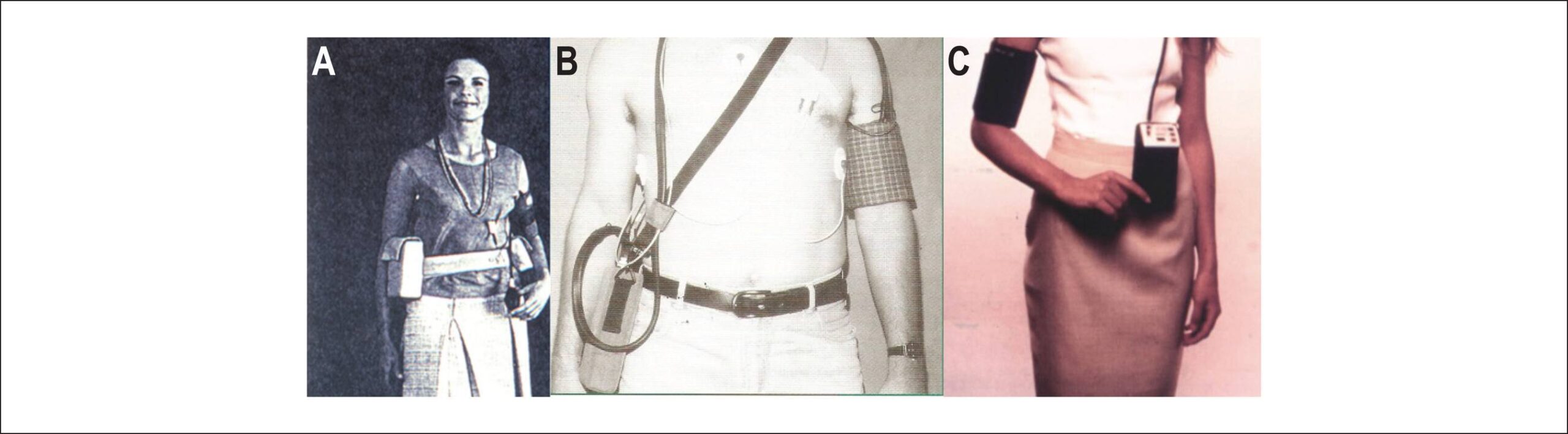
Ambulatory Blood Pressure Monitoring: Five Decades of More Light and Less Shadows

Fernando Nobre et al. Décio Mion Junior

Abstract

Casual blood pressure measurements have been extensively questioned over the last five decades. A significant percentage of patients have different blood pressure readings when examined in the office or outside it. For this reason, a change in the paradigm of the best manner to assess blood pressure has been observed. The method that has been most widely used is the Ambulatory Blood Pressure Monitoring – ABPM. The method allows recording blood pressure measures in 24 hours and evaluating various parameters such as mean BP, pressure loads, areas under the curve, variations between daytime and nighttime, pulse pressure variability etc. Blood pressure measurements obtained by ABPM are better correlated, for example, with the risks of hypertension. The main indications for ABPM are: suspected white coat hypertension and masked hypertension, evaluation of the efficacy of the antihypertensive therapy in 24 hours, and evaluation of symptoms. There is increasing evidence that the use of ABPM has contributed to the assessment of blood pressure behaviors, establishment of diagnoses, prognosis and the efficacy of antihypertensive therapy. There is no doubt that the study of 24-hour blood pressure behavior and its variations by ABPM has brought more light and less darkness to the field, which justifies the title of this review.

  • Ambulatory / trends
  • blood pressure monitoring
  • Hypertension
  • Medication Therapy Management
  • White Coat Hypertension
Read Full Article
Creative Commons Attribution (CC BY) Creative Commons license
06/05/2016 DOI: 10.5935/abc.20160065 Views 1
ABC
Original Article

Hypotensive Response Magnitude and Duration in Hypertensives: Continuous and Interval Exercise

Raphael Santos Teodoro de Carvalho et al. Cássio Mascarenhas Robert Pires Gustavo Cardoso Junqueira Dayana Freitas Leila Maria Marchi-Alves

Background:

Although exercise training is known to promote post-exercise hypotension, there is currently no consistent argument about the effects of manipulating its various components (intensity, duration, rest periods, types of exercise, training methods) on the magnitude and duration of hypotensive response.

Objective:

To compare the effect of continuous and interval exercises on hypotensive response magnitude and duration in hypertensive patients by using ambulatory blood pressure monitoring (ABPM).

Methods:

The sample consisted of 20 elderly hypertensives. Each participant underwent three ABPM sessions: one control ABPM, without exercise; one ABPM after continuous exercise; and one ABPM after interval exercise. Systolic blood pressure (SBP), diastolic blood pressure (DBP), mean arterial pressure (MAP), heart rate (HR) and double product (DP) were monitored to check post-exercise hypotension and for comparison between each ABPM.

Results:

ABPM after continuous exercise and after interval exercise showed post-exercise hypotension and a significant reduction (p < 0.05) in SBP, DBP, MAP and DP for 20 hours as compared with control ABPM. Comparing ABPM after continuous and ABPM after interval exercise, a significant reduction (p < 0.05) in SBP, DBP, MAP and DP was observed in the latter.

Conclusion:

Continuous and interval exercise trainings promote post-exercise hypotension with reduction in SBP, DBP, MAP and DP in the 20 hours following exercise. Interval exercise training causes greater post-exercise hypotension and lower cardiovascular overload as compared with continuous exercise.

  • Ambulatory
  • Blood Pressure
  • blood pressure monitoring
  • Exercise
  • Hypertension
  • Post-Exercise Hypotension
Read Full Article
Creative Commons Attribution (CC BY) Creative Commons license
16/12/2014 DOI: 10.5935/abc.20140193 Views 1
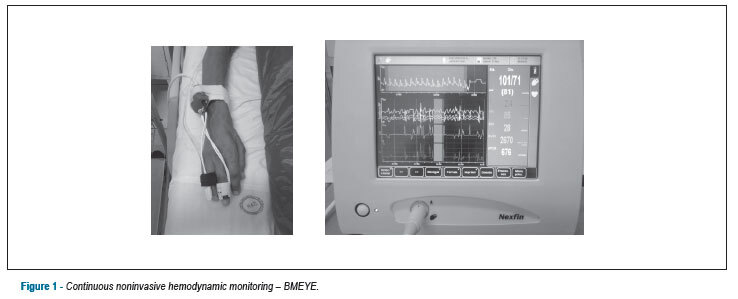
Continuous noninvasive hemodynamic monitoring in decompensated heart failure
ABC
Artigo Original

Continuous noninvasive hemodynamic monitoring in decompensated heart failure

Marcelo Villaça Lima et al. Marcelo Eidi Ochiai Kelly Novaes Vieira Juliano Novaes Cardoso … Euler Cristovan Brancalhão Raphael Puig Antônio Carlos Pereira Barretto

BACKGROUND: The clinical and hemodynamic assessment at the bedside and the use of pulmonary artery catheter for the estimation of hemodynamic data have been used in decompensated heart failure. However, there are no data on the use of continuous noninvasive hemodynamic monitoring. OBJECTIVE: To compare the data obtained through noninvasive hemodynamic monitoring with invasive ones in patients with decompensated heart failure and refractory to treatment. METHODS: The non-invasive hemodynamic measurements were obtained through continuous monitoring of systemic blood pressure by the pulse wave model (Modelflow) and compared with measurements obtained by the passage of a pulmonary artery catheter, simultaneously. RESULTS: A total of 56 measurements were performed in 14 patients studied on different days and time periods. The correlation index between systolic blood pressure measurements was r = 0.26 (95% CI = 0.00 to 0.49, p = 0.0492) and diastolic ones, r = 0.50 (95% CI = 0.27 to 0.67, p <0.0001). The correlation was r = 0.55 (95% CI = 0.34 to 0.71, p <0.0001) for cardiac index and r = 0.32 (95% CI = 0.06 to 0 53, p = 0.0178) for systemic vascular resistance. CONCLUSION: There was a correlation between the hemodynamic measurements when compared to noninvasive pulmonary artery catheter measurements. The continuous noninvasive hemodynamic monitoring may be useful for hospitalized patients with decompensated heart failure.

  • blood pressure monitoring
  • Heart Failure
  • Swan-Ganz catheter
Read Full Article
Creative Commons Attribution (CC BY) Creative Commons license
26/07/2012 DOI: 10.1590/S0066-782X2012005000070 Views 2
ABC
Artigo Original

Absence of nocturnal dipping is associated with stroke and myocardium infarction

Renan Oliveira Vaz-de-Melo et al. Juan Carlos Yugar Toledo Afonso Augusto Carvalho Loureiro José Paulo Cipullo … Heitor Moreno Júnior José Fernando Vilela Martin

BACKGROUND: The arterial hypertension varies in according to the circadian cycle, presenting physiologic fall of blood pressure (BP) during sleep (dipping). The absence of this fall or its increase associates to higher incidence of target-organ damages. OBJECTIVE: To analyze the prevalence of dipping in hypertensive individuals, to correlate dipping to the blood pressure levels, clinic, and socio-demographic factors, and biochemical characteristics and to associate it cardiovascular events (stroke and myocardial infarction). METHODS: Hypertensive individuals were submitted to the ambulatory blood pressure monitoring. Presence of dipper was defined as fall >10% of the systolic BP of the day for sleep. RESULTS: 163 evaluated patients were divided in dippers (D, n=53) and nondippers (ND, n=110). Between the groups there was not significant difference to the age, sex, race, time of hypertension, glycemia, LDL-cholesterol, total cholesterol, triglycerides, schooling, smoking, and history of diabetes. D presented BP higher than the ND during the day and lower during sleep. ND had higher body mass index (BMI) (p=0.0377), lower level of HDL-cholesterol (p=0.0189), and higher pulse pressure during sleep (p=0.0025). History of stroke alone (p=0,046) and combined with myocardial infarction (p=0.032) were more frequent in nondippers individuals. In the logistic regression, only ND was associated independently with stroke or myocardial infarction. CONCLUSION: ND was associated in an independent way with the target-organ damages analyzed, what demonstrates its importance and strengthens the necessity of more aggressive treatment with objective to reach BP goals e, consequently, to prevent the development of new cardiologic and cerebrovascular events.

  • Ambulatory
  • blood pressure monitoring
  • Hypertension
  • Myocardial Infarction
  • Stroke
Read Full Article
Creative Commons Attribution (CC BY) Creative Commons license
22/09/2010 DOI: 10.1590/S0066-782X2010000100013 Views 1
ABPM in COPD patients with sleep desaturation
ABC
Artigo Original

ABPM in COPD patients with sleep desaturation

Neila Anders Aidar et al. Márcio Alberto Carvalho da Silva César Augusto Melo e Silva Pedro Nery Ferreira Júnior Paulo Tavares

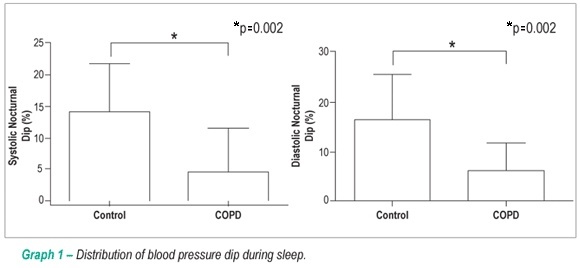
BACKGROUND: Sleep hypoxemia may change blood pressure by sympathetic activation. Few studies have analyzed blood pressure parameters in COPD patients who do not present sleep apnea, but do present sleep desaturation. OBJECTIVES: To analyze blood pressure parameters in COPD patients with sleep desaturation not caused by apnea. METHODS: Thirteen patients with COPD underwent spirometry, blood gas, polysomnography and ABPM for blood pressure evaluation. Fourteen patients without COPD underwent spirometry, oximetry and ABPM. Blood pressure analyses were carried out both during wakefulness and sleep. Both groups were comprised of patients with no history of hypertension. RESULTS: The two groups were similar as regards age, height, weight, and body mass index. A significant difference (p<0.05) was found between blood pressure levels during the wakefulness, sleep, 24-hour and sleep dip periods. Higher blood pressure levels were observed in patients with COPD, except for diastolic levels during wakefulness and maximum values during sleep and in the 24 hours. Sleep dip in the COPD group was attenuated, whereas physiological dip was observed in the control group, with lower blood pressure levels. CONCLUSIONS: Systolic and diastolic blood pressure levels in the COPD group were higher than those of the control group, with a significant difference found for all periods studied, except for diastolic levels during wakefulness and in the 24 hours. We can conclude that the group of COPD patients with sleep desaturation has significantly higher blood pressure levels than the control group.

  • Ambulatory
  • blood pressure monitoring
  • Chronic Obstructive
  • Polysomnography
  • Pulmonary Disease
  • Sleep
Read Full Article
Creative Commons Attribution (CC BY) Creative Commons license
22/10/2009 DOI: 10.1590/S0066-782X2009000900012 Views 2
Slow breathing test increases the suspicion of white-coat hypertension in the office
ABC
Artigo Original

Slow breathing test increases the suspicion of white-coat hypertension in the office

José Marcos Thalenberg et al. Rui Manoel dos Santos Póvoa Maria Teresa Nogueira Bombig Gustavo André Costa de Sá … Álvaro Nagib Atallah Bráulio Luna Filho

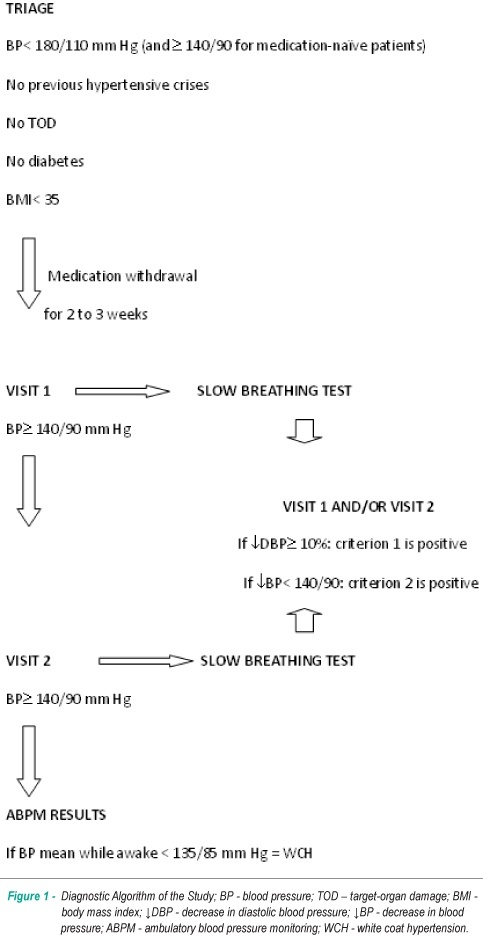
BACKGROUND: It would be useful to have a clinical test that increases the suspicion of white coat hypertension (WCH) during the medical consultation. OBJECTIVE: To evaluate the Slow Breathing Test (SBT) when differentiating hypertension from WCH. METHODS: 101 hypertensive patients selected at triage had their medication withdrawn for 2-3 weeks. The blood pressure (BP) was measured before and after the SBT at two consultations at the office. The test consisted in breathing for 1 minute at the frequency of one respiratory cycle every 10 seconds. Two diagnostic criteria were compared: 1 – decrease in diastolic BP >10% in at least one visit or 2- decrease in BP to normal levels (<140/90 mm Hg) in at least one visit. The ambulatory blood pressure monitoring (ABPM) was performed while blinded to the clinical measurements. RESULTS: 71 women and 30 men, with a mean age of 51+10 years, with mean pre and post-test BP of 152+17/ 99+11 and 140+18/ 91+11 mm Hg were assessed. Nine patients had normal clinical and ambulatory measurements. Of the 92 patients, 28 (30%) were classified as having WCH; 15 had a positive test for Criterion 1 and 21 for the Criterion 2. Among 64 (70%) hypertensive individuals, 14 tested positive for Criterion 1 and 12 for Criterion 2. Sensitivity and specificity (95% CI): 0.54 (0.36-0.71) and 0.78 (0.67-0.87) for Criterion 1; 0.75 (0.57-0.87) and 0.81 (0.70-0.89) for Criterion 2. CONCLUSION: The SBT showed an increase in the clinical suspicion of WCH in two visits when using the BP normalization criterion. This finding suggests that the test can help in the optimization of ABPM requests for suspected cases.

  • Ambulatory
  • blood pressure monitoring
  • Hypertension
  • Respiratory Function Tests
Read Full Article
Creative Commons Attribution (CC BY) Creative Commons license
11/11/2008 DOI: 10.1590/S0066-782X2008001600010 Views 1
Reproducibility of ambulatory blood pressure monitoring in hypertensive patients with type 2 diabetes mellitus
ABC
Artigo Original

Reproducibility of ambulatory blood pressure monitoring in hypertensive patients with type 2 diabetes mellitus

João Soares Felício et al. Juliana Torres Pacheco Sandra Roberta Ferreira Frida Plavnik … Oswaldo Kohlmann Artur Beltrame Ribeiro Maria Tereza Zanella

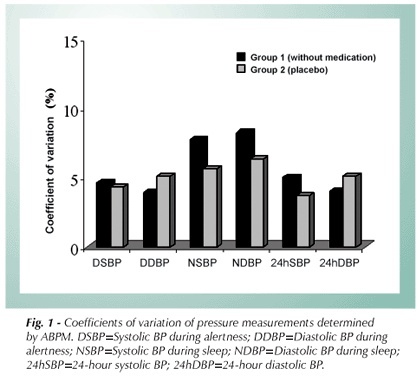
OBJECTIVE: To evaluate the reproducibility of ambulatory blood pressure monitoring (ABPM) (SpaceLabs-90207) and placebo effect on ABPM. METHODS: Blood pressure was measured in the office and over two ABPM periods with an interval from one to ten months (mean 4.9 months), in 26 patients with type 2 diabetes mellitus and hypertension. Eleven patients (G1) had two ABPMs without taking antihypertensive drugs for 15 days, whereas G2 (N=15) had the second ABPM after administration of a placebo for 15 days. RESULTS: In the evaluation of the coefficient of variation (CV) of diurnal (awake) systolic BP (DSBP), of diurnal (awake) diastolic BP (DDBP), of 24-hour systolic BP (24hSBP) and of 24-hour diastolic BP (24hDBP), the values found were 4.6%, 3.9%, 5.0%, 4.0% for G1 and 4.3%, 5.1%, 3.7%, 5.1% for G2 respectively. We also determined the CV of nocturnal (sleep) systolic and diastolic BP (NSBP and NDBP) for G1 (7.7%; 8.2%) and G2 (5.6%; 6.3%). Heart rate CV during alertness and sleep were: G1=5.9% and 9.0%; G2=6.9% and 5.8% respectively. When the total number of ‘patients was analyzed, all variables showed a strong correlation between the first and second ABPM measurements (DSBP, r = 0.76; P < 0.001; DDBP, r = 0.65; p < 0.001; 24hSBP, r = 0.77; p < 0.001; 24hDBP, r = 0.70; p < 0.001; NSBP, r = 0.62; p < 0.001; NDBP, r = 0.52; p < 0.01). Office systolic and diastolic BP and 24hSBP and 24hDBP also showed correlation (r = 0.65; p < 0.001; r = 0.57; p < 0.01). CONCLUSION: Mean of pressure levels measured by ABPM presented good reproducibility and were not affected by placebo.

  • Ambulatory
  • blood pressure monitoring
  • Diabetes Mellitus
  • Hypertension
  • type 2
Read Full Article
Creative Commons Attribution (CC BY) Creative Commons license
20/03/2007 DOI: 10.1590/S0066-782X2007000200012 Views 1
Twenty-four hour blood pressure record for smokers and nonsmokers
ABC
Artigo Original

Twenty-four hour blood pressure record for smokers and nonsmokers

Marcos Galan Morillo et al. Marisa Campos Moraes Amato Sonia Perez Cendon Filha

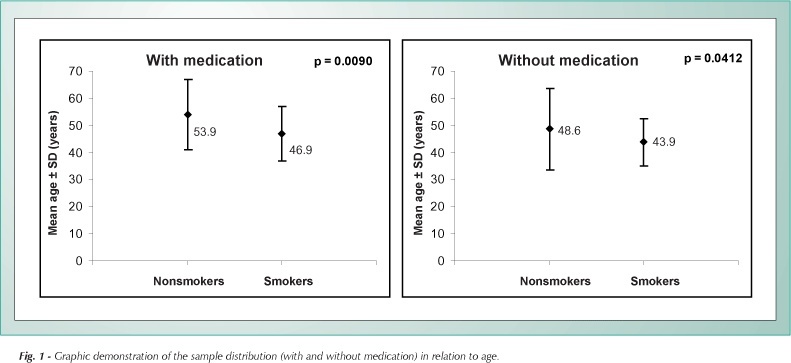
OBJECTIVE: To evaluate the effect of smoking on blood pressure trends during a 24-hour period, by analyzing the parameters of the ambulatory blood pressure monitoring (ABPM). METHODS: The results of 289 ABPM tests conducted on patients classified as smokers or nonsmokers were studied. The parameters analyzed were: mean 24-hour, daytime and nighttime systolic and diastolic blood pressure readings; nocturnal dipping of systolic and diastolic pressures and blood pressure load. The patients were classified in four groups according to whether or not they used antihypertensive medication: 1A – nonsmokers using medication; 1B – smokers using medication; 2A – nonsmokers not using medication; and 2B – smokers not using medication. Variables were expressed as minimum, maximum, median, mean and standard deviation values. Univariate analysis was used for comparing the smoking and nonsmoking groups. The significantly different variables from the groups were selected using multivariate analysis. The significance level adopted was 5%. RESULTS: Mean daytime systolic and diastolic blood pressures were significantly higher in the smokers, regardless of whether or not they used antihypertensive medication. Mean nocturnal blood pressure readings were similar between smokers and nonsmokers. Mean 24-hour systolic blood pressure readings were significantly higher in the smokers, regardless of whether or not they used antihypertensive medication. Nocturnal dipping was similar for all groups. Blood pressure loads were consistently and significantly higher in the smokers regardless of medication use. CONCLUSION: Mean daytime systolic and diastolic blood pressure readings were consistently higher in the smokers when compared to nonsmokers regardless of antihypertension medication use. Nocturnal dipping was similar for smokers and nonsmokers.

  • Blood Pressure
  • blood pressure monitoring
  • Hypertension
  • smoking
Read Full Article
Creative Commons Attribution (CC BY) Creative Commons license
21/11/2006 DOI: 10.1590/S0066-782X2006001700016

How to cite this article

EndNote RIS

Electronic Document Format (Vancouver)

Nobre F, Mion Junior D. Ambulatory Blood Pressure Monitoring: Five Decades of More Light and Less Shadows. Arquivos Brasileiros de Cardiologia 2016;106(6):528-37.

Electronic Document Format (ABNT)

Nobre, Fernando; Mion Junior, Décio. Ambulatory Blood Pressure Monitoring: Five Decades of More Light and Less Shadows. Arquivos Brasileiros de Cardiologia, v. 106, n. 6, p. 528-537, May. 2016.

Electronic Document Format (APA)

Nobre, F., & Mion Junior, D. (2016). Ambulatory Blood Pressure Monitoring: Five Decades of More Light and Less Shadows. Arquivos Brasileiros de Cardiologia, 106(6), 528-537.

Electronic Document Format (ISO)

Nobre, Fernando and Mion Junior, Décio. Ambulatory Blood Pressure Monitoring: Five Decades of More Light and Less Shadows. Arquivos Brasileiros de Cardiologia [online]. 2016, vol. 106, n. 6, [cited 2026-10-14], pp. 528-537. Available from: <https://journals.cardiol.br/en/article/ambulatory-blood-pressure-monitoring-five-decades-of-more-light-and-less-shadows/>. ISSN 0066-782X

EndNote RIS

Electronic Document Format (Vancouver)

Carvalho RST, Pires CMR, Junqueira GC, Freitas D, Marchi-Alves LM. Hypotensive Response Magnitude and Duration in Hypertensives: Continuous and Interval Exercise. Arquivos Brasileiros de Cardiologia 2014;104(3):234-41.

Electronic Document Format (ABNT)

Carvalho, Raphael Santos Teodoro de; Pires, Cássio Mascarenhas Robert; Junqueira, Gustavo Cardoso; Freitas, Dayana; Marchi-Alves, Leila Maria. Hypotensive Response Magnitude and Duration in Hypertensives: Continuous and Interval Exercise. Arquivos Brasileiros de Cardiologia, v. 104, n. 3, p. 234-241, Dec. 2014.

Electronic Document Format (APA)

Carvalho, R. S. T. , Pires, C. M. R., Junqueira, G. C., Freitas, D., & Marchi-Alves, L. M. (2014). Hypotensive Response Magnitude and Duration in Hypertensives: Continuous and Interval Exercise. Arquivos Brasileiros de Cardiologia, 104(3), 234-241.

Electronic Document Format (ISO)

Carvalho, Raphael Santos Teodoro de and Pires, Cássio Mascarenhas Robert and Junqueira, Gustavo Cardoso and Freitas, Dayana and Marchi-Alves, Leila Maria. Hypotensive Response Magnitude and Duration in Hypertensives: Continuous and Interval Exercise. Arquivos Brasileiros de Cardiologia [online]. 2014, vol. 104, n. 3, [cited 2026-10-14], pp. 234-241. Available from: <https://journals.cardiol.br/en/article/hypotensive-response-magnitude-and-duration-in-hypertensives-continuous-and-interval-exercise/>. ISSN 0066-782X

EndNote RIS

Electronic Document Format (Vancouver)

Lima MV, Ochiai ME, Vieira KN, Cardoso JN, Brancalhão EC, Puig R, Barretto ACP, et al. Continuous noninvasive hemodynamic monitoring in decompensated heart failure. Arquivos Brasileiros de Cardiologia 2012;99(3):843-7.

Electronic Document Format (ABNT)

Lima, Marcelo Villaça; Ochiai, Marcelo Eidi; Vieira, Kelly Novaes; Cardoso, Juliano Novaes; Brancalhão, Euler Cristovan; Puig, Raphael; Barretto, Antônio Carlos Pereira. Continuous noninvasive hemodynamic monitoring in decompensated heart failure. Arquivos Brasileiros de Cardiologia, v. 99, n. 3, p. 843-847, Jul. 2012.

Electronic Document Format (APA)

Lima, M. V., Ochiai, M. E., Vieira, K. N., Cardoso, J. N., Brancalhão, E. C., Puig, R., & Barretto, A. C. P. (2012). Continuous noninvasive hemodynamic monitoring in decompensated heart failure. Arquivos Brasileiros de Cardiologia, 99(3), 843-847.

Electronic Document Format (ISO)

Lima, Marcelo Villaça and Ochiai, Marcelo Eidi and Vieira, Kelly Novaes and Cardoso, Juliano Novaes and Brancalhão, Euler Cristovan and Puig, Raphael and Barretto, Antônio Carlos Pereira. Continuous noninvasive hemodynamic monitoring in decompensated heart failure. Arquivos Brasileiros de Cardiologia [online]. 2012, vol. 99, n. 3, [cited 2026-10-14], pp. 843-847. Available from: <https://journals.cardiol.br/en/article/continuous-noninvasive-hemodynamic-monitoring-in-decompensated-heart-failure/>. ISSN 0066-782X

EndNote RIS

Electronic Document Format (Vancouver)

Vaz-de-Melo RO, Toledo JCY, Loureiro AAC, Cipullo JP, Moreno Júnior H, Martin JFV. Absence of nocturnal dipping is associated with stroke and myocardium infarction. Arquivos Brasileiros de Cardiologia 2010;94(1):79-85.

Electronic Document Format (ABNT)

Vaz-de-Melo, Renan Oliveira; Toledo, Juan Carlos Yugar; Loureiro, Afonso Augusto Carvalho; Cipullo, José Paulo; Moreno Júnior, Heitor; Martin, José Fernando Vilela. Absence of nocturnal dipping is associated with stroke and myocardium infarction. Arquivos Brasileiros de Cardiologia, v. 94, n. 1, p. 79-85, Sep. 2010.

Electronic Document Format (APA)

Vaz-de-Melo, R. O., Toledo, J. C. Y., Loureiro, A. A. C., Cipullo, J. P., Moreno Júnior, H., & Martin, J. F. V. (2010). Absence of nocturnal dipping is associated with stroke and myocardium infarction. Arquivos Brasileiros de Cardiologia, 94(1), 79-85.

Electronic Document Format (ISO)

Vaz-de-Melo, Renan Oliveira and Toledo, Juan Carlos Yugar and Loureiro, Afonso Augusto Carvalho and Cipullo, José Paulo and Moreno Júnior, Heitor and Martin, José Fernando Vilela. Absence of nocturnal dipping is associated with stroke and myocardium infarction. Arquivos Brasileiros de Cardiologia [online]. 2010, vol. 94, n. 1, [cited 2026-10-14], pp. 79-85. Available from: <https://journals.cardiol.br/en/article/absence-of-nocturnal-dipping-is-associated-with-stroke-and-myocardium-infarction/>. ISSN 0066-782X

EndNote RIS

Electronic Document Format (Vancouver)

Aidar NA, Silva MAC, Silva CAM, Ferreira Júnior PN, Tavares P. ABPM in COPD patients with sleep desaturation. Arquivos Brasileiros de Cardiologia 2009;93(3):275-82.

Electronic Document Format (ABNT)

Aidar, Neila Anders; Silva, Márcio Alberto Carvalho da; Silva, César Augusto Melo e; Ferreira Júnior, Pedro Nery; Tavares, Paulo. ABPM in COPD patients with sleep desaturation. Arquivos Brasileiros de Cardiologia, v. 93, n. 3, p. 275-282, Oct. 2009.

Electronic Document Format (APA)

Aidar, N. A., Silva, M. A. C. , Silva, C. A. M. , Ferreira Júnior, P. N., & Tavares, P. (2009). ABPM in COPD patients with sleep desaturation. Arquivos Brasileiros de Cardiologia, 93(3), 275-282.

Electronic Document Format (ISO)

Aidar, Neila Anders and Silva, Márcio Alberto Carvalho da and Silva, César Augusto Melo e and Ferreira Júnior, Pedro Nery and Tavares, Paulo. ABPM in COPD patients with sleep desaturation. Arquivos Brasileiros de Cardiologia [online]. 2009, vol. 93, n. 3, [cited 2026-10-14], pp. 275-282. Available from: <https://journals.cardiol.br/en/article/abpm-in-copd-patients-with-sleep-desaturation/>. ISSN 0066-782X

EndNote RIS

Electronic Document Format (Vancouver)

Thalenberg JM, Póvoa RMS, Bombig MTN, Sá GAC, Atallah N, Luna Filho B. Slow breathing test increases the suspicion of white-coat hypertension in the office. Arquivos Brasileiros de Cardiologia 2008;91(4):267-73.

Electronic Document Format (ABNT)

Thalenberg, José Marcos; Póvoa, Rui Manoel dos Santos; Bombig, Maria Teresa Nogueira; Sá, Gustavo André Costa de; Atallah, Álvaro Nagib; Luna Filho, Bráulio. Slow breathing test increases the suspicion of white-coat hypertension in the office. Arquivos Brasileiros de Cardiologia, v. 91, n. 4, p. 267-273, Nov. 2008.

Electronic Document Format (APA)

Thalenberg, J. M., Póvoa, R. M. S., Bombig, M. T. N., Sá, G. A. C. , Atallah, N., & Luna Filho, B. (2008). Slow breathing test increases the suspicion of white-coat hypertension in the office. Arquivos Brasileiros de Cardiologia, 91(4), 267-273.

Electronic Document Format (ISO)

Thalenberg, José Marcos and Póvoa, Rui Manoel dos Santos and Bombig, Maria Teresa Nogueira and Sá, Gustavo André Costa de and Atallah, Álvaro Nagib and Luna Filho, Bráulio. Slow breathing test increases the suspicion of white-coat hypertension in the office. Arquivos Brasileiros de Cardiologia [online]. 2008, vol. 91, n. 4, [cited 2026-10-14], pp. 267-273. Available from: <https://journals.cardiol.br/en/article/slow-breathing-test-increases-the-suspicion-of-white-coat-hypertension-in-the-office/>. ISSN 0066-782X

EndNote RIS

Electronic Document Format (Vancouver)

Felício JS, Pacheco JT, Ferreira SR, Plavnik F, Kohlmann O, Ribeiro AB, Zanella MT, et al. Reproducibility of ambulatory blood pressure monitoring in hypertensive patients with type 2 diabetes mellitus. Arquivos Brasileiros de Cardiologia 2007;88(2):206-11.

Electronic Document Format (ABNT)

Felício, João Soares; Pacheco, Juliana Torres; Ferreira, Sandra Roberta; Plavnik, Frida; Kohlmann, Oswaldo; Ribeiro, Artur Beltrame; Zanella, Maria Tereza. Reproducibility of ambulatory blood pressure monitoring in hypertensive patients with type 2 diabetes mellitus. Arquivos Brasileiros de Cardiologia, v. 88, n. 2, p. 206-211, Mar. 2007.

Electronic Document Format (APA)

Felício, J. S., Pacheco, J. T., Ferreira, S. R., Plavnik, F., Kohlmann, O., Ribeiro, A. B., & Zanella, M. T. (2007). Reproducibility of ambulatory blood pressure monitoring in hypertensive patients with type 2 diabetes mellitus. Arquivos Brasileiros de Cardiologia, 88(2), 206-211.

Electronic Document Format (ISO)

Felício, João Soares and Pacheco, Juliana Torres and Ferreira, Sandra Roberta and Plavnik, Frida and Kohlmann, Oswaldo and Ribeiro, Artur Beltrame and Zanella, Maria Tereza. Reproducibility of ambulatory blood pressure monitoring in hypertensive patients with type 2 diabetes mellitus. Arquivos Brasileiros de Cardiologia [online]. 2007, vol. 88, n. 2, [cited 2026-10-14], pp. 206-211. Available from: <https://journals.cardiol.br/en/article/reproducibility-of-ambulatory-blood-pressure-monitoring-in-hypertensive-patients-with-type-2-diabetes-mellitus/>. ISSN 0066-782X

EndNote RIS

Electronic Document Format (Vancouver)

Morillo MG, Amato MCM, Filha SPC. Twenty-four hour blood pressure record for smokers and nonsmokers. Arquivos Brasileiros de Cardiologia 2006;87(4):504-11.

Electronic Document Format (ABNT)

Morillo, Marcos Galan; Amato, Marisa Campos Moraes; Filha, Sonia Perez Cendon. Twenty-four hour blood pressure record for smokers and nonsmokers. Arquivos Brasileiros de Cardiologia, v. 87, n. 4, p. 504-511, Nov. 2006.

Electronic Document Format (APA)

Morillo, M. G., Amato, M. C. M., & Filha, S. P. C. (2006). Twenty-four hour blood pressure record for smokers and nonsmokers. Arquivos Brasileiros de Cardiologia, 87(4), 504-511.

Electronic Document Format (ISO)

Morillo, Marcos Galan and Amato, Marisa Campos Moraes and Filha, Sonia Perez Cendon. Twenty-four hour blood pressure record for smokers and nonsmokers. Arquivos Brasileiros de Cardiologia [online]. 2006, vol. 87, n. 4, [cited 2026-10-14], pp. 504-511. Available from: <https://journals.cardiol.br/en/article/twenty-four-hour-blood-pressure-record-for-smokers-and-nonsmokers/>. ISSN 0066-782X

  • About ABC Family
  • Internal Regulation
  • Editorial Board
  • Brazilian Society of Cardiology (SBC)

Issues

SBC Guidelines

  • Videos
  • Podcasts
  • News