ABC Family Arquivos Brasileiros de Cardiologia International Journal of Cardiovascular Sciences ABC Heart Failure & Cardiomyopathy ABC Imagem Cardiovascular
Português English
ABC Family
Português English
  • About
    • About ABC Family
    • Internal Regulation
    • Editorial Board
    • Brazilian Society of Cardiology (SBC)
  • Issues
  • SBC Guidelines
  • Content
    • Videos
    • Podcasts
    • News
  • About
    • About ABC Family
    • Internal Regulation
    • Editorial Board
    • Brazilian Society of Cardiology (SBC)
  • Issues
  • SBC Guidelines
  • Content
    • Videos
    • Podcasts
    • News

ABC Family

  • ABC Family
  • Arquivos Brasileiros de Cardiologia
  • International Journal of Cardiovascular Sciences
  • ABC Heart Failure & Cardiomyopathy
  • ABC Imagem Cardiovascular
Search in

No content found.

Journals
Ordering
Article types
Others

  1. Home
  2. Keyword: Doppler
Strain in Monitoring Cancer Therapy-Induced Cardiotoxicity: Where are We After the SUCCOUR Study?
ABCIC
Editorial

Strain in Monitoring Cancer Therapy-Induced Cardiotoxicity: Where are We After the SUCCOUR Study?

Silvio Henrique Barberato et al. Ludhmila Abrão Hajjar

In recent decades, advances in cancer treatment have led to a significantly increased survival rate for several types of cancer. On the other hand, cancer survival increases patients’ vulnerability to cardiovascular complications induced by potentially cardiotoxic cancer therapy., Cardiovascular diseases are currently recognized as a main cause of morbidity and mortality in cancer survivors depending on the type of therapeutic approach used, patient age, and the presence of preexisting cardiovascular risk factors. Due to the high incidence of breast cancer in women, anthracyclines and monoclonal antibodies against human epidermal growth factor receptor type 2 (HER2) are the drugs most well-known as potential cardiotoxicity (CTX) inducers. However, other medications such as vascular endothelial growth factor inhibitors, tyrosine kinase inhibitors, proteasome inhibitors, and immunological checkpoint inhibitors, in addition to mediastinal radiotherapy, are also recognized for having a possible deleterious effect on the cardiovascular system. It is worth mentioning that CTX can express not only as myocardial dysfunction but also as acute coronary syndrome, arrhythmia, valve disease, pericardial disease, systemic arterial hypertension, and pulmonary hypertension. Thus, although left ventricular (LV) systolic dysfunction secondary to anticancer therapy is not the only CTX presentation, its development is among the most worrisome in clinical cardio-oncology practice, and the terms are often used interchangeably.

The diagnosis of LV dysfunction in a CTX setting is traditionally based on the serial evaluation of the LV ejection fraction (LVEF) using the Simpson method on two-dimensional echocardiography. Despite variation between international guidelines and cancer trials, the most commonly used CTX definition is a decrease of at least ten absolute points for a LVEF below the lower limit of normal after cancer treatment (considered below 53% by the cardiovascular imaging consensus of the European Association of Cardiovascular Imaging/American Society of Echocardiography [EACVI/ASE], or below 50% by the European Society of Cardiology [ESC]). However, LVEF measurements have important limitations, which include significant inter- and intra-observer variability, dependence on loading conditions, and low sensitivity to small LV function changes. Therefore, it was postulated that LVEF changes would occur later, when myocardial damage is severe enough to determine an irreversible cardiomyopathy.

[…]
  • Antineoplastic Agents
  • Cardiotoxicity
  • Doppler
  • Echocardiography
Read Full Article
Creative Commons Attribution (CC BY) Creative Commons license
26/11/2021 DOI: 10.47593/2675-312X/20213403eabc247
Figure 1
ABC
Original Article

Assessing Strategies for Heart Failure with Preserved Ejection Fraction at the Outpatient Clinic

Antonio José Lagoeiro Jorge et al. Maria Luiza Garcia Rosa Mario Luiz Ribeiro Luiz Claudio Maluhy Fernandes … Monica Di Calafiori Freire Dayse Silva Correia Patrick Duarte Teixeira Evandro Tinoco Mesquita

Background:

Heart failure with preserved ejection fraction (HFPEF) is the most common form of heart failure (HF), its diagnosis being a challenge to the outpatient clinic practice.

Objective:

To describe and compare two strategies derived from algorithms of the European Society of Cardiology Diastology Guidelines for the diagnosis of HFPEF.

Methods:

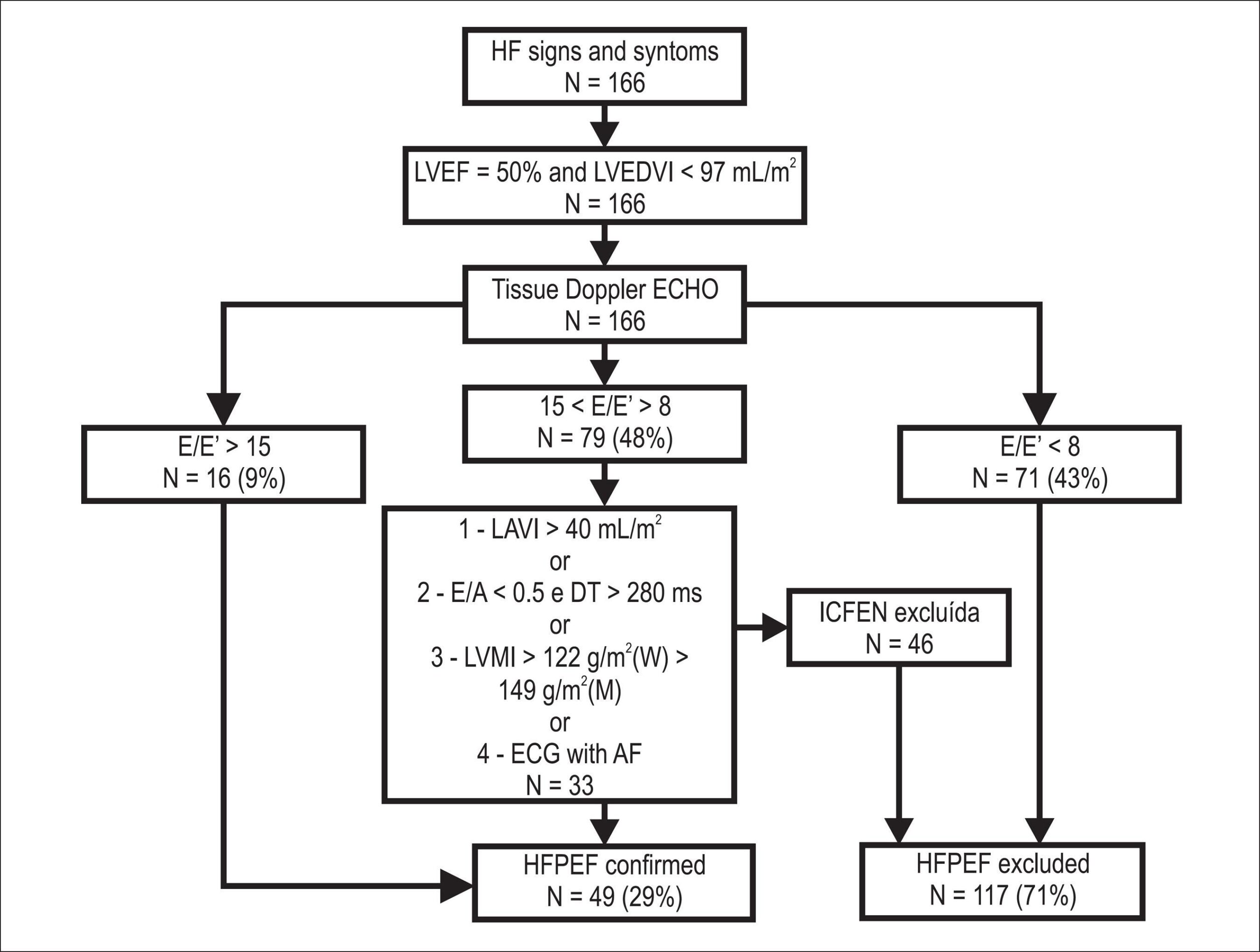
Cross-sectional study with 166 consecutive ambulatory patients (67.9±11.7 years; 72% of women). The strategies to confirm HFPEF were established according to the European Society of Cardiology Diastology Guidelines criteria. In strategy 1 (S1), tissue Doppler echocardiography (TDE) and electrocardiography (ECG) were used; in strategy 2 (S2), B-type natriuretic peptide (BNP) measurement was included.

Results:

In S1, patients were divided into groups based on the E/E’ratio as follows: GI, E/E’> 15 (n = 16; 9%); GII, E/E’8 to 15 (n = 79; 48%); and GIII, E/E'< 8 (n = 71; 43%). HFPEF was confirmed in GI and excluded in GIII. In GII, TDE [left atrial volume index (LAVI) ≥ 40 mL/m2; left ventricular mass index LVMI) > 122 for women and > 149 g/m2 for men] and ECG (atrial fibrillation) parameters were assessed, confirming HFPEF in 33 more patients, adding up to 49 (29%). In S2, patients were divided into three groups based on BNP levels. GI (BNP > 200 pg/mL) consisted of 12 patients, HFPEF being confirmed in all of them. GII (BNP ranging from 100 to 200 pg/mL) consisted of 20 patients with LAVI > 29 mL/m2, or LVMI ≥ 96 g/m2 for women or ≥ 116 g/m2 for men, or E/E’≥ 8 or atrial fibrillation on ECG, and the diagnosis of HFPEF was confirmed in 15. GIII (BNP < 100 pg/mL) consisted of 134 patients, 26 of whom had the diagnosis of HFPEF confirmed when GII parameters were used. Measuring BNP levels in S2 identified 4 more patients (8%) with HFPEF as compared with those identified in S1.

Conclusion:

The association of BNP measurement and TDE data is better than the isolated use of those parameters. BNP can be useful in identifying patients whose diagnosis of HF had been previously excluded based only on TDE findings.

  • Ambulatory Care
  • Doppler
  • Echocardiography
  • Heart Failure
  • Natriuretic Peptides
Read Full Article
Creative Commons Attribution (CC BY) Creative Commons license
13/08/2014 DOI: 10.5935/abc.20140120
Cardiac autonomic and ventricular mechanical functions in asymptomatic chronic chagasic cardiomyopathy
ABC
Artigo Original

Cardiac autonomic and ventricular mechanical functions in asymptomatic chronic chagasic cardiomyopathy

Daniel França Vasconcelos et al. Luiz Fernando Junqueira Junior

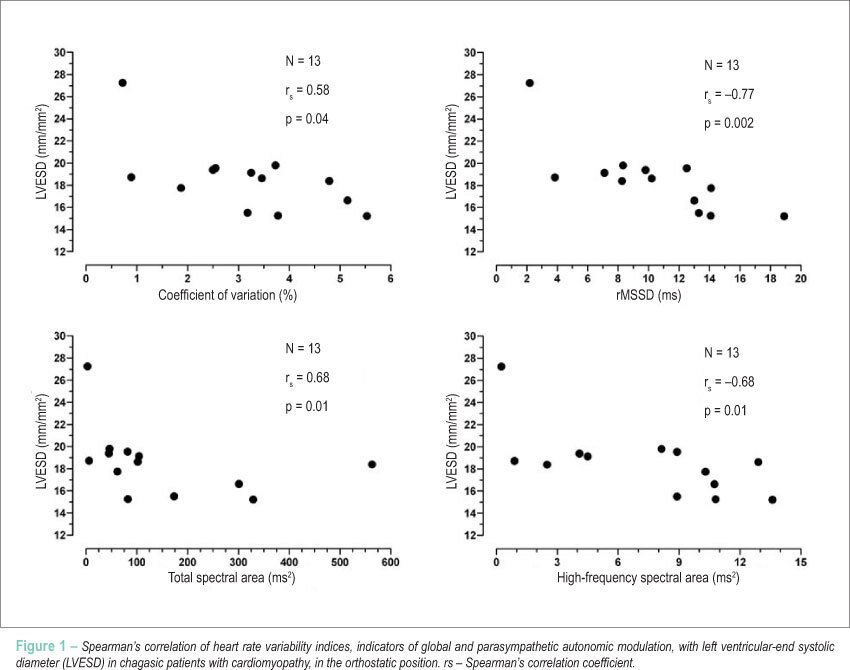
BACKGROUND: The association of variably altered cardiac autonomic and ventricular systolic and diastolic functions is still controversial and little explored in chronic Chagas’ disease. OBJECTIVE: To evaluate the extent to which cardiac autonomic and mechanical ventricular functions are altered and whether they are associated in asymptomatic chagasic cardiomyopathy. METHODS: A total of 13 patients with asymptomatic chagasic cardiomyopathy and 15 normal subjects (control group) were evaluated and the autonomic modulation of heart rate variability for five minutes, in the temporal and spectral domains, in the supine and orthostatic positions, as well as ventricular function based on morphological-functional variables obtained by Doppler echocardiography were correlated. Statistical analysis used the Mann-Whitney test and Spearman’s correlation. RESULTS: In both positions, the temporal index (p = 0.0004 to 0.01) and total (p = 0.0007-0.005) and absolute spectral areas, of low and high frequencies (p = 0.0001 to 0.002), were lower in the chagasic group. The vagal-sympathetic balance was similar in both positions (p = 0.43 to 0.89). The echocardiographic variables did not differ between groups (p = 0.13 to 0.82), except the left ventricular end-systolic diameter, which was larger (p = 0.04) and correlated directly with reduced rates of global (p = 0.01 to 0.04) and parasympathetic (p = 0.002 to 0.01) autonomic modulation in patients with Chagas disease in the orthostatic position. CONCLUSION: The sympathetic and parasympathetic depressions with preserved balance were associated with only one ventricular dysfunction indicator. This suggests that cardiac autonomic dysfunction may precede and be independently more severe than ventricular dysfunction, with no causal association between both disorders in chronic chagasic cardiomyopathy.

  • analysis of variance
  • Chagas Cardiomyopathy
  • Doppler
  • Echocardiography
  • Ventricular Function
Read Full Article
Creative Commons Attribution (CC BY) Creative Commons license
06/01/2012 DOI: 10.1590/S0066-782X2012005000002 Views 1
Use of intracardiac echocardiography in the electrophysiology laboratory
ABC
Atualização

Use of intracardiac echocardiography in the electrophysiology laboratory

Eduardo B. Saad et al. Ieda Prata Costa Luiz Eduardo M. Camanho

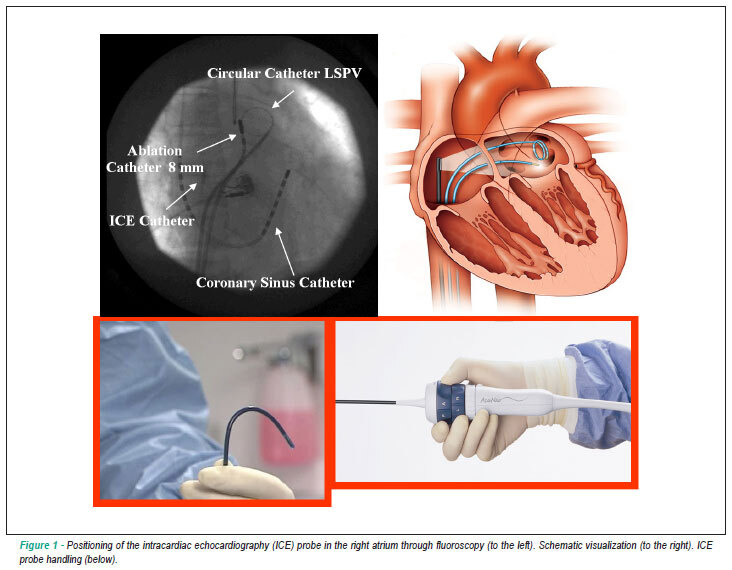
The intracardiac echocardiography (ICE) offers a detailed visualization of the cardiac structures, in association with hemodynamic information, allowing the precise and real-time positioning of the catheters, decreasing the time of exposure to fluoroscopy and the monitoring of acute complications during the electrophysiological procedure (i.e., formation of thrombi, pericardial effusion, cardiac tamponade), Consequently, its use has progressively increased, mainly in the ablation of atrial fibrillation and ventricular arrhythmias. It has shown to be very useful in the ablation of atrial fibrillation by providing anatomic data on the left atrium and pulmonary veins, helping in transseptal punctures, locating the ostium and antrum of the pulmonary veins, monitoring tissue injury during radiofrequency (RF) use, preventing esophageal injury by monitoring the injuries caused by RF on the left atrial posterior wall and assessing the pulmonary vein flow.

  • Doppler
  • Echocardiography
  • monitoring
Read Full Article
Creative Commons Attribution (CC BY) Creative Commons license
04/02/2011 DOI: 10.1590/S0066-782X2011000100019 Views 1
ABC
Review Article

Echocardiographic alterations in patients with chronic kidney failure undergoing hemodialysis

Silvio Henrique Barberato et al. Roberto Pecoits-Filho

Changes in cardiac structure and function detected by echocardiography are common in patients with chronic kidney disease undergoing hemodialysis, and have been recognized as key outcome predictors. This review attempts to summarize recent evidence pointing to the usefulness of the method in the detection of clinical and subclinical cardiac dysfunction, stratification of cardiovascular risk and assessment of intervention strategies.

  • Doppler
  • Echocardiography
  • renal dialysis
  • Risk Assessment
Read Full Article
Creative Commons Attribution (CC BY) Creative Commons license
22/09/2010 DOI: 10.1590/S0066-782X2010000100021
Heart failure with normal ejection fraction: new diagnostic criteria and pathophysiological advances
ABC
Review Article

Heart failure with normal ejection fraction: new diagnostic criteria and pathophysiological advances

Evandro Tinoco Mesquita et al. Antonio José Lagoeiro Jorge

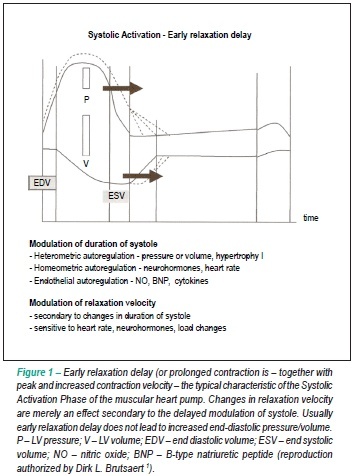
Heart failure (HF) is a highly prevalent complex cardiovascular syndrome, and its clinical presentation is usually associated with ventricular dilatation, decreased contractility and reduced left ventricular ejection fraction (EF). However, in the past two decades studies have demonstrated that many patients with signs and symptoms of HF have normal EF (higher than 50%). The great challenge for doctors lies in the identification of patients presenting heart failure with normal ejection fraction (HFNEF) and this challenge seems to be mainly related to the high complexity of the syndrome and to the lack of a standardized method to confirm or exclude the diagnosis that could be used in the daily clinical practice. Unlike in heart failure with reduced ejection fraction (HFREF) in which one single parameter – EF lower than 50%, is sufficient to confirm the diagnosis of the syndrome, in HFNEF different diastolic indexes have been used to characterize the presence or absence of diastolic dysfunction (DD). The purpose of this review is to show new concepts related to the diastolic function that will help understand the cardiovascular pathophysiology of HFNEF, and to discuss the new guideline of the European Society of Cardiology for the diagnosis and exclusion of HFNEF based on cardiac function indices obtained using tissue Doppler imaging (TDI) and natriuretic peptide determination.

  • Diastole
  • Doppler
  • Echocardiography
  • Heart Failure
  • Stroke Volume
  • Systole
Read Full Article
Creative Commons Attribution (CC BY) Creative Commons license
13/10/2009 DOI: 10.1590/S0066-782X2009000800018
ABC
Artigo Original

Influence of preload reduction on Tei index and other Doppler echocardiographic parameters of left ventricular function

Silvio Henrique Barberato et al. Roberto Pecoits Filho

OBJECTIVE: To assess the influence of preload reduction by hemodialysis on Doppler Tei Index of myocardial performance and other parameters of cardiac function. METHODS: The Tei index and left ventricular (LV) systolic and diastolic function parameters were estimated, before and after a single hemodialysis session. Only subjects who were in sinus rhythm, without history of coronary artery disease, and no evidence of cardiac valve disease and pericardial effusion were included in the study. RESULTS: Fifteen patients (8 men, mean age 53 ± 14 years) completed the study. After an ultrafiltration of 2,2 ± 1,1 liters, peak mitral E velocity decreased (p< 0,05) and A velocity remained unchanged (p = ns), resulting in reduction of E/A ratio (p< 0,01). The Tei index increased (from 0,57 ± 0,07 to 0,65 ± 0,09, p< 0,01) because of significant prolongations in isovolumetric relaxation time (from 101 ± 14 to 113 ± 17 ms, p< 0,01) and ejection time (from 271 ± 22 to 252 ± 22, p< 0,05). The isovolumetric contraction time did not vary (p = ns). There was no change in diastolic tissue Doppler parameters, while systolic velocities increased (p< 0,05). CONCLUSION: The Tei index was affected by hemodialysis-induced preload alterations, as well as other mitral inflow Doppler-derived parameters. The diastolic parameters of mitral annulus Doppler tissue were independent of preload, while systolic velocities suggested improved systolic function.

  • Doppler
  • Echocardiography
  • left
  • renal dialysis
  • Ventricular Function
Read Full Article
Creative Commons Attribution (CC BY) Creative Commons license
26/06/2006 DOI: 10.1590/S0066-782X2006000600004

How to cite this article

EndNote RIS

Electronic Document Format (Vancouver)

Barberato SH, Hajjar LA. Strain in Monitoring Cancer Therapy-Induced Cardiotoxicity: Where are We After the SUCCOUR Study?. ABC Imagem Cardiovascular 2021;34(3):eabc247.

Electronic Document Format (ABNT)

Barberato, Silvio Henrique; Hajjar, Ludhmila Abrão. Strain in Monitoring Cancer Therapy-Induced Cardiotoxicity: Where are We After the SUCCOUR Study?. ABC Imagem Cardiovascular, v. 34, n. 3, eabc247, Nov. 2021.

Electronic Document Format (APA)

Barberato, S. H., & Hajjar, L. A. (2021). Strain in Monitoring Cancer Therapy-Induced Cardiotoxicity: Where are We After the SUCCOUR Study?. ABC Imagem Cardiovascular, 34(3), eabc247.

Electronic Document Format (ISO)

Barberato, Silvio Henrique and Hajjar, Ludhmila Abrão. Strain in Monitoring Cancer Therapy-Induced Cardiotoxicity: Where are We After the SUCCOUR Study?. ABC Imagem Cardiovascular [online]. 2021, vol. 34, n. 3, [cited 2026-10-14], eabc247. Available from: <https://journals.cardiol.br/en/article/strain-in-monitoring-cancer-therapy-induced-cardiotoxicity-where-are-we-after-the-succour-study/>. ISSN 2318-8219

EndNote RIS

Electronic Document Format (Vancouver)

Jorge AJL, Rosa MLG, Ribeiro ML, Fernandes LCM, Freire MDC, Correia DS, Teixeira PD, et al. Assessing Strategies for Heart Failure with Preserved Ejection Fraction at the Outpatient Clinic. Arquivos Brasileiros de Cardiologia 2014;103(3):231-7.

Electronic Document Format (ABNT)

Jorge, Antonio José Lagoeiro; Rosa, Maria Luiza Garcia; Ribeiro, Mario Luiz; Fernandes, Luiz Claudio Maluhy; Freire, Monica Di Calafiori; Correia, Dayse Silva; Teixeira, Patrick Duarte; Mesquita, Evandro Tinoco. Assessing Strategies for Heart Failure with Preserved Ejection Fraction at the Outpatient Clinic. Arquivos Brasileiros de Cardiologia, v. 103, n. 3, p. 231-237, Aug. 2014.

Electronic Document Format (APA)

Jorge, A. J. L., Rosa, M. L. G., Ribeiro, M. L., Fernandes, L. C. M., Freire, M. D. C., Correia, D. S., Teixeira, P. D., & Mesquita, E. T. (2014). Assessing Strategies for Heart Failure with Preserved Ejection Fraction at the Outpatient Clinic. Arquivos Brasileiros de Cardiologia, 103(3), 231-237.

Electronic Document Format (ISO)

Jorge, Antonio José Lagoeiro and Rosa, Maria Luiza Garcia and Ribeiro, Mario Luiz and Fernandes, Luiz Claudio Maluhy and Freire, Monica Di Calafiori and Correia, Dayse Silva and Teixeira, Patrick Duarte and Mesquita, Evandro Tinoco. Assessing Strategies for Heart Failure with Preserved Ejection Fraction at the Outpatient Clinic. Arquivos Brasileiros de Cardiologia [online]. 2014, vol. 103, n. 3, [cited 2026-10-14], pp. 231-237. Available from: <https://journals.cardiol.br/en/article/assessing-strategies-for-heart-failure-with-preserved-ejection-fraction-at-the-outpatient-clinic/>. ISSN 0066-782X

EndNote RIS

Electronic Document Format (Vancouver)

Vasconcelos DF, Junqueira Junior LF. Cardiac autonomic and ventricular mechanical functions in asymptomatic chronic chagasic cardiomyopathy. Arquivos Brasileiros de Cardiologia 2012;98(2):111-9.

Electronic Document Format (ABNT)

Vasconcelos, Daniel França; Junqueira Junior, Luiz Fernando. Cardiac autonomic and ventricular mechanical functions in asymptomatic chronic chagasic cardiomyopathy. Arquivos Brasileiros de Cardiologia, v. 98, n. 2, p. 111-119, Jan. 2012.

Electronic Document Format (APA)

Vasconcelos, D. F., & Junqueira Junior, L. F. (2012). Cardiac autonomic and ventricular mechanical functions in asymptomatic chronic chagasic cardiomyopathy. Arquivos Brasileiros de Cardiologia, 98(2), 111-119.

Electronic Document Format (ISO)

Vasconcelos, Daniel França and Junqueira Junior, Luiz Fernando. Cardiac autonomic and ventricular mechanical functions in asymptomatic chronic chagasic cardiomyopathy. Arquivos Brasileiros de Cardiologia [online]. 2012, vol. 98, n. 2, [cited 2026-10-14], pp. 111-119. Available from: <https://journals.cardiol.br/en/article/cardiac-autonomic-and-ventricular-mechanical-functions-in-asymptomatic-chronic-chagasic-cardiomyopathy/>. ISSN 0066-782X

EndNote RIS

Electronic Document Format (Vancouver)

Saad EB, Costa IP, Camanho LEM. Use of intracardiac echocardiography in the electrophysiology laboratory. Arquivos Brasileiros de Cardiologia 2011;96(1):e11-7.

Electronic Document Format (ABNT)

Saad, Eduardo B.; Costa, Ieda Prata; Camanho, Luiz Eduardo M.. Use of intracardiac echocardiography in the electrophysiology laboratory. Arquivos Brasileiros de Cardiologia, v. 96, n. 1, p. e11-e17, Feb. 2011.

Electronic Document Format (APA)

Saad, E. B., Costa, I. P., & Camanho, L. E. M. (2011). Use of intracardiac echocardiography in the electrophysiology laboratory. Arquivos Brasileiros de Cardiologia, 96(1), e11-e17.

Electronic Document Format (ISO)

Saad, Eduardo B. and Costa, Ieda Prata and Camanho, Luiz Eduardo M.. Use of intracardiac echocardiography in the electrophysiology laboratory. Arquivos Brasileiros de Cardiologia [online]. 2011, vol. 96, n. 1, [cited 2026-10-14], pp. e11-e17. Available from: <https://journals.cardiol.br/en/article/use-of-intracardiac-echocardiography-in-the-electrophysiology-laboratory/>. ISSN 0066-782X

EndNote RIS

Electronic Document Format (Vancouver)

Barberato SH, Pecoits-Filho R. Echocardiographic alterations in patients with chronic kidney failure undergoing hemodialysis. Arquivos Brasileiros de Cardiologia 2010;94(1):140-6.

Electronic Document Format (ABNT)

Barberato, Silvio Henrique; Pecoits-Filho, Roberto. Echocardiographic alterations in patients with chronic kidney failure undergoing hemodialysis. Arquivos Brasileiros de Cardiologia, v. 94, n. 1, p. 140-146, Sep. 2010.

Electronic Document Format (APA)

Barberato, S. H., & Pecoits-Filho, R. (2010). Echocardiographic alterations in patients with chronic kidney failure undergoing hemodialysis. Arquivos Brasileiros de Cardiologia, 94(1), 140-146.

Electronic Document Format (ISO)

Barberato, Silvio Henrique and Pecoits-Filho, Roberto. Echocardiographic alterations in patients with chronic kidney failure undergoing hemodialysis. Arquivos Brasileiros de Cardiologia [online]. 2010, vol. 94, n. 1, [cited 2026-10-14], pp. 140-146. Available from: <https://journals.cardiol.br/en/article/echocardiographic-alterations-in-patients-with-chronic-kidney-failure-undergoing-hemodialysis/>. ISSN 0066-782X

EndNote RIS

Electronic Document Format (Vancouver)

Mesquita ET, Jorge AJL. Heart failure with normal ejection fraction: new diagnostic criteria and pathophysiological advances. Arquivos Brasileiros de Cardiologia 2009;93(2):180-7.

Electronic Document Format (ABNT)

Mesquita, Evandro Tinoco; Jorge, Antonio José Lagoeiro. Heart failure with normal ejection fraction: new diagnostic criteria and pathophysiological advances. Arquivos Brasileiros de Cardiologia, v. 93, n. 2, p. 180-187, Oct. 2009.

Electronic Document Format (APA)

Mesquita, E. T., & Jorge, A. J. L. (2009). Heart failure with normal ejection fraction: new diagnostic criteria and pathophysiological advances. Arquivos Brasileiros de Cardiologia, 93(2), 180-187.

Electronic Document Format (ISO)

Mesquita, Evandro Tinoco and Jorge, Antonio José Lagoeiro. Heart failure with normal ejection fraction: new diagnostic criteria and pathophysiological advances. Arquivos Brasileiros de Cardiologia [online]. 2009, vol. 93, n. 2, [cited 2026-10-14], pp. 180-187. Available from: <https://journals.cardiol.br/en/article/heart-failure-with-normal-ejection-fraction-new-diagnostic-criteria-and-pathophysiological-advances/>. ISSN 0066-782X

EndNote RIS

Electronic Document Format (Vancouver)

Barberato SH, Pecoits Filho R. Influence of preload reduction on Tei index and other Doppler echocardiographic parameters of left ventricular function. Arquivos Brasileiros de Cardiologia 2006;86(6):425-31.

Electronic Document Format (ABNT)

Barberato, Silvio Henrique; Pecoits Filho, Roberto. Influence of preload reduction on Tei index and other Doppler echocardiographic parameters of left ventricular function. Arquivos Brasileiros de Cardiologia, v. 86, n. 6, p. 425-431, Jun. 2006.

Electronic Document Format (APA)

Barberato, S. H., & Pecoits Filho, R. (2006). Influence of preload reduction on Tei index and other Doppler echocardiographic parameters of left ventricular function. Arquivos Brasileiros de Cardiologia, 86(6), 425-431.

Electronic Document Format (ISO)

Barberato, Silvio Henrique and Pecoits Filho, Roberto. Influence of preload reduction on Tei index and other Doppler echocardiographic parameters of left ventricular function. Arquivos Brasileiros de Cardiologia [online]. 2006, vol. 86, n. 6, [cited 2026-10-14], pp. 425-431. Available from: <https://journals.cardiol.br/en/article/influence-of-preload-reduction-on-tei-index-and-other-doppler-echocardiographic-parameters-of-left-ventricular-function/>. ISSN 0066-782X

  • About ABC Family
  • Internal Regulation
  • Editorial Board
  • Brazilian Society of Cardiology (SBC)

Issues

SBC Guidelines

  • Videos
  • Podcasts
  • News