ABC Family Arquivos Brasileiros de Cardiologia International Journal of Cardiovascular Sciences ABC Heart Failure & Cardiomyopathy ABC Imagem Cardiovascular
Português English
ABC Family
Português English
  • About
    • About ABC Family
    • Internal Regulation
    • Editorial Board
    • Brazilian Society of Cardiology (SBC)
  • Issues
  • SBC Guidelines
  • Content
    • Videos
    • Podcasts
    • News
  • About
    • About ABC Family
    • Internal Regulation
    • Editorial Board
    • Brazilian Society of Cardiology (SBC)
  • Issues
  • SBC Guidelines
  • Content
    • Videos
    • Podcasts
    • News

ABC Family

  • ABC Family
  • Arquivos Brasileiros de Cardiologia
  • International Journal of Cardiovascular Sciences
  • ABC Heart Failure & Cardiomyopathy
  • ABC Imagem Cardiovascular
Search in

No content found.

Journals
Ordering
Article types
Others

  1. Home
  2. Keyword: Systole
ABC
Editorial

New Method Improves the Evaluation of Subclinical Left Ventricular Dysfunction in Type 2 Diabetes Mellitus

Lutfu Askin et al. Okan Tanrıverdi Hakan Tibilli Serdar Turkmen

Tei et al. firstly described the myocardial performance index (MPI), which is showing both systolic and diastolic functions of the left ventricle. As a prognostic marker increased MPI has been shown to be an independent predictor of mortality and morbidity in various diseases such as myocardial infarction, hypertension, diabetes, and heart failure., Askin et al. showed that left ventricular (LV) diastolic and systolic functions were negatively affected in prediabetic patients. In addition, MPI can also be used in the assessment of abnormal cardiac function parameters in prediabetic patients. Furthermore, the most prominent feature of our method is that it can be obtained in a short period of time with easily available equipment. It is important to identify subclinical left ventricular diastolic dysfunction (LVDD) for clinical prevention before significant LVDD occurs. For this purpose, MPI is used to identify subclinical LVD in type 2 diabetes mellitus (DM).

Presystolic wave (PSW) measurement is obtained via doppler examination of LV outflow tract (LVOT)., Kul et al. found that the PSW is associated with subclinical LVDD in patients with type 2 diabetes. PSW is an easily measurable echocardiographic parameter obtained in late diastole and can predict subclinical left ventricular dysfunction in patients with type 2 diabetes. Possible causes of PSW formation are impaired LV compliance and increased LV stiffness, which are also leading causes of PSW in diabetic patients among others. Furthermore, the relationship between PSW and LVDD has been proven.

[…]
  • Antioxidants/pharmacology
  • Apoptosis/drug effects
  • Diabetes Mellitus
  • Dyastole
  • Heart Failure
  • Myocardial
  • Reactive Oxygen Species
  • Systole
Read Full Article
Creative Commons Attribution (CC BY) Creative Commons license
02/09/2019 DOI: 10.5935/abc.20190164 Views 2
Nonlinear methods to assess changes in heart rate variability in type 2 diabetic patients
ABC
Artigo Original

Nonlinear methods to assess changes in heart rate variability in type 2 diabetic patients

Bhaskar Roy et al. Sobhendu Ghatak

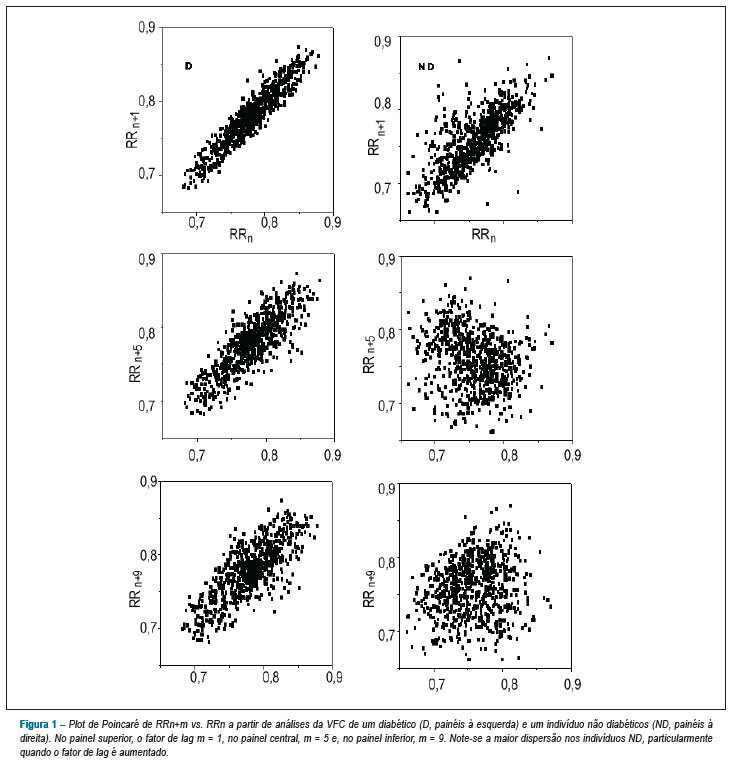
BACKGROUND: Heart rate variability (HRV) is an important indicator of autonomic modulation of cardiovascular function. Diabetes can alter cardiac autonomic modulation by damaging afferent inputs, thereby increasing the risk of cardiovascular disease. We applied nonlinear analytical methods to identify parameters associated with HRV that are indicative of changes in autonomic modulation of heart function in diabetic patients. OBJECTIVE: We analyzed differences in HRV patterns between diabetic and age-matched healthy control subjects using nonlinear methods. METHODS: Methods: Lagged Poincaré plot, autocorrelation, and detrended fluctuation analysis were applied to analyze HRV in electrocardiography (ECG) recordings. RESULTS: Lagged Poincaré plot analysis revealed a decrease in the standard deviation of instantaneous beat-to-beat interval variability (SD1) and in the ratio of SD1 to the continuous long-term R-R interval variability (SD12) in the diabetic group, indicating a decrease in heart rate parasympathetic modulation. The detrended fluctuation exponent derived from long-term fitting was higher than the short-term one in the diabetic population, which was also consistent with decreased parasympathetic input. The autocorrelation function of the deviation of inter-beat intervals exhibited a highly correlated pattern in the diabetic group compared with the control group. CONCLUSIONS: The HRV pattern significantly differs between diabetic patients and healthy subjects. All three statistical methods employed in the study may prove useful to detect the onset and extent of autonomic neuropathy in diabetic patients.

  • Diabetes Mellitus
  • Heart Failure
  • Measurements, Methods and Theories
  • Statistics as Topic
  • Systole
  • type 1
Read Full Article
Creative Commons Attribution (CC BY) Creative Commons license
06/09/2013 DOI: 10.5935/abc.20130181 Views 1
Heart failure with normal ejection fraction: new diagnostic criteria and pathophysiological advances
ABC
Review Article

Heart failure with normal ejection fraction: new diagnostic criteria and pathophysiological advances

Evandro Tinoco Mesquita et al. Antonio José Lagoeiro Jorge

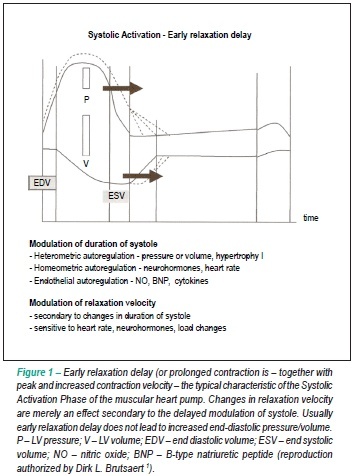
Heart failure (HF) is a highly prevalent complex cardiovascular syndrome, and its clinical presentation is usually associated with ventricular dilatation, decreased contractility and reduced left ventricular ejection fraction (EF). However, in the past two decades studies have demonstrated that many patients with signs and symptoms of HF have normal EF (higher than 50%). The great challenge for doctors lies in the identification of patients presenting heart failure with normal ejection fraction (HFNEF) and this challenge seems to be mainly related to the high complexity of the syndrome and to the lack of a standardized method to confirm or exclude the diagnosis that could be used in the daily clinical practice. Unlike in heart failure with reduced ejection fraction (HFREF) in which one single parameter – EF lower than 50%, is sufficient to confirm the diagnosis of the syndrome, in HFNEF different diastolic indexes have been used to characterize the presence or absence of diastolic dysfunction (DD). The purpose of this review is to show new concepts related to the diastolic function that will help understand the cardiovascular pathophysiology of HFNEF, and to discuss the new guideline of the European Society of Cardiology for the diagnosis and exclusion of HFNEF based on cardiac function indices obtained using tissue Doppler imaging (TDI) and natriuretic peptide determination.

  • Diastole
  • Doppler
  • Echocardiography
  • Heart Failure
  • Stroke Volume
  • Systole
Read Full Article
Creative Commons Attribution (CC BY) Creative Commons license
13/10/2009 DOI: 10.1590/S0066-782X2009000800018
Ventricular dyssynchrony index: comparison with two-dimensional and three-dimensional ejection fraction
ABC
Artigo Original

Ventricular dyssynchrony index: comparison with two-dimensional and three-dimensional ejection fraction

Marcelo L. C. Vieira et al. Alexandre F. Cury Naccarato Gustavo Wercules A. Oliveira … Cláudia G. Monaco Adriana Cordovil Ana C. T. Rodrigues Edgar B. Lira Filho Cláudio H. Fischer Samira S. Morhy

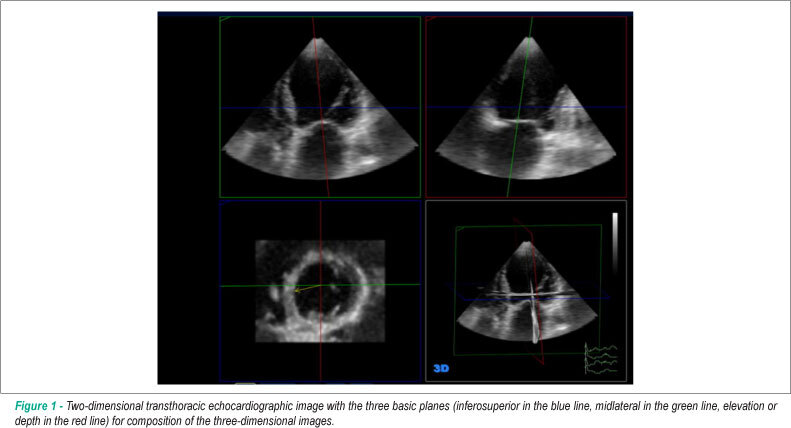
BACKGORUND: Left ventricular (LV) electromechanical coupling (synchrony) is important in the analysis of the systolic performance, especially for the indication of cardiac resynchronization therapy in patients with advanced CHF. OBJECTIVE: To compare LV synchrony as analyzed by real-time three-dimensional (3D) echocardiography (ECHO) with LVEF measurements as obtained with 2D and 3D ECHO. METHODS: Prospective study of 92 individuals (56 men, 47 ± 10 years of age), of which 60 had normal heart structure (ECHO) and ECG (N group), and 32 had dilated cardiomyopathy (DCM group). Using 3D ECHO, LVEF, volumes and dyssynchrony index (%DI) for 16 LV segments were measured. Using 2D ECHO, LVEF (Simpson’s method), and LV systolic and diastolic volumes were measured. Statistical analysis: Pearson’s correlation coefficient, 95% CI, linear regression model, Bland & Altman analysis, p<0.05. RESULTS: %DI ranged from 0.2900 to 28.1000 (5.2014±6.3281), 3D LVEF ranged from 0.17 to 0.81 (0.52±0.17); and 2D LVEF ranged from 0.3 to 0.69 (0.49±0.11). The correlation between DI and 3D LVEF was (r): -0.7432, p<0.0001, CI: -0.8227 to -0.6350, the linear relation between DI (x) and 3D LVEF (y) was y = 19.8124 + (-27.9578) x, p<0.0001. The correlation between DI and 2D LVEF was (r): -0.7012, p<0.0001, CI: -0.7923 to -0.5797. CONCLUSION: In this case series, a good negative correlation was observed between LV electromechanical three-dimensional systolic coupling and LVEF as measured by echocardiography (3D and 2D).

  • Echocardiography
  • left
  • Stroke Volume
  • Systole
  • Ventricular Function
Read Full Article
Creative Commons Attribution (CC BY) Creative Commons license
01/10/2008 DOI: 10.1590/S0066-782X2008001500004 Views 1

How to cite this article

EndNote RIS

Electronic Document Format (Vancouver)

Askin L, Tanrıverdi O, Tibilli H, Turkmen S. New Method Improves the Evaluation of Subclinical Left Ventricular Dysfunction in Type 2 Diabetes Mellitus. Arquivos Brasileiros de Cardiologia 2019;113(2):216-7.

Electronic Document Format (ABNT)

Askin, Lutfu; Tanrıverdi, Okan; Tibilli, Hakan; Turkmen, Serdar. New Method Improves the Evaluation of Subclinical Left Ventricular Dysfunction in Type 2 Diabetes Mellitus. Arquivos Brasileiros de Cardiologia, v. 113, n. 2, p. 216-217, Sep. 2019.

Electronic Document Format (APA)

Askin, L., Tanrıverdi, O., Tibilli, H., & Turkmen, S. (2019). New Method Improves the Evaluation of Subclinical Left Ventricular Dysfunction in Type 2 Diabetes Mellitus. Arquivos Brasileiros de Cardiologia, 113(2), 216-217.

Electronic Document Format (ISO)

Askin, Lutfu and Tanrıverdi, Okan and Tibilli, Hakan and Turkmen, Serdar. New Method Improves the Evaluation of Subclinical Left Ventricular Dysfunction in Type 2 Diabetes Mellitus. Arquivos Brasileiros de Cardiologia [online]. 2019, vol. 113, n. 2, [cited 2026-10-14], pp. 216-217. Available from: <https://journals.cardiol.br/en/article/new-method-improves-the-evaluation-of-subclinical-left-ventricular-dysfunction-in-type-2-diabetes-mellitus/>. ISSN 0066-782X

EndNote RIS

Electronic Document Format (Vancouver)

Roy B, Ghatak S. Nonlinear methods to assess changes in heart rate variability in type 2 diabetic patients. Arquivos Brasileiros de Cardiologia 2013;101(4):317-2.

Electronic Document Format (ABNT)

Roy, Bhaskar; Ghatak, Sobhendu. Nonlinear methods to assess changes in heart rate variability in type 2 diabetic patients. Arquivos Brasileiros de Cardiologia, v. 101, n. 4, p. 317-327, Sep. 2013.

Electronic Document Format (APA)

Roy, B., & Ghatak, S. (2013). Nonlinear methods to assess changes in heart rate variability in type 2 diabetic patients. Arquivos Brasileiros de Cardiologia, 101(4), 317-327.

Electronic Document Format (ISO)

Roy, Bhaskar and Ghatak, Sobhendu. Nonlinear methods to assess changes in heart rate variability in type 2 diabetic patients. Arquivos Brasileiros de Cardiologia [online]. 2013, vol. 101, n. 4, [cited 2026-10-14], pp. 317-327. Available from: <https://journals.cardiol.br/en/article/nonlinear-methods-to-assess-changes-in-heart-rate-variability-in-type-2-diabetic-patients/>. ISSN 0066-782X

EndNote RIS

Electronic Document Format (Vancouver)

Mesquita ET, Jorge AJL. Heart failure with normal ejection fraction: new diagnostic criteria and pathophysiological advances. Arquivos Brasileiros de Cardiologia 2009;93(2):180-7.

Electronic Document Format (ABNT)

Mesquita, Evandro Tinoco; Jorge, Antonio José Lagoeiro. Heart failure with normal ejection fraction: new diagnostic criteria and pathophysiological advances. Arquivos Brasileiros de Cardiologia, v. 93, n. 2, p. 180-187, Oct. 2009.

Electronic Document Format (APA)

Mesquita, E. T., & Jorge, A. J. L. (2009). Heart failure with normal ejection fraction: new diagnostic criteria and pathophysiological advances. Arquivos Brasileiros de Cardiologia, 93(2), 180-187.

Electronic Document Format (ISO)

Mesquita, Evandro Tinoco and Jorge, Antonio José Lagoeiro. Heart failure with normal ejection fraction: new diagnostic criteria and pathophysiological advances. Arquivos Brasileiros de Cardiologia [online]. 2009, vol. 93, n. 2, [cited 2026-10-14], pp. 180-187. Available from: <https://journals.cardiol.br/en/article/heart-failure-with-normal-ejection-fraction-new-diagnostic-criteria-and-pathophysiological-advances/>. ISSN 0066-782X

EndNote RIS

Electronic Document Format (Vancouver)

Vieira MLC, Cury AF, Gustavo N, Oliveira WA, Monaco CG, Cordovil A, Rodrigues ACT, et al. Ventricular dyssynchrony index: comparison with two-dimensional and three-dimensional ejection fraction. Arquivos Brasileiros de Cardiologia 2008;91(3):156-62.

Electronic Document Format (ABNT)

Vieira, Marcelo L. C.; Cury, Alexandre F.; Gustavo, Naccarato; Oliveira, Wercules A.; Monaco, Cláudia G.; Cordovil, Adriana; Rodrigues, Ana C. T.; Lira Filho, Edgar B.; Fischer, Cláudio H.; Morhy, Samira S.. Ventricular dyssynchrony index: comparison with two-dimensional and three-dimensional ejection fraction. Arquivos Brasileiros de Cardiologia, v. 91, n. 3, p. 156-162, Sep. 2008.

Electronic Document Format (APA)

Vieira, M. L. C., Cury, A. F., Gustavo, N., Oliveira, W. A., Monaco, C. G., Cordovil, A., Rodrigues, A. C. T., Lira Filho, E. B., Fischer, C. H., & Morhy, S. S. (2008). Ventricular dyssynchrony index: comparison with two-dimensional and three-dimensional ejection fraction. Arquivos Brasileiros de Cardiologia, 91(3), 156-162.

Electronic Document Format (ISO)

Vieira, Marcelo L. C. and Cury, Alexandre F. and Gustavo, Naccarato and Oliveira, Wercules A. and Monaco, Cláudia G. and Cordovil, Adriana and Rodrigues, Ana C. T. and Lira Filho, Edgar B. and Fischer, Cláudio H. and Morhy, Samira S.. Ventricular dyssynchrony index: comparison with two-dimensional and three-dimensional ejection fraction. Arquivos Brasileiros de Cardiologia [online]. 2008, vol. 91, n. 3, [cited 2026-10-14], pp. 156-162. Available from: <https://journals.cardiol.br/en/article/ventricular-dyssynchrony-index-comparison-with-two-dimensional-and-three-dimensional-ejection-fraction/>. ISSN 0066-782X

  • About ABC Family
  • Internal Regulation
  • Editorial Board
  • Brazilian Society of Cardiology (SBC)

Issues

SBC Guidelines

  • Videos
  • Podcasts
  • News