ABC Family Arquivos Brasileiros de Cardiologia International Journal of Cardiovascular Sciences ABC Heart Failure & Cardiomyopathy ABC Imagem Cardiovascular
Português English
ABC Family
Português English
  • About
    • About ABC Family
    • Internal Regulation
    • Editorial Board
    • Brazilian Society of Cardiology (SBC)
  • Issues
  • SBC Guidelines
  • Content
    • Videos
    • Podcasts
    • News
  • About
    • About ABC Family
    • Internal Regulation
    • Editorial Board
    • Brazilian Society of Cardiology (SBC)
  • Issues
  • SBC Guidelines
  • Content
    • Videos
    • Podcasts
    • News

ABC Family

  • ABC Family
  • Arquivos Brasileiros de Cardiologia
  • International Journal of Cardiovascular Sciences
  • ABC Heart Failure & Cardiomyopathy
  • ABC Imagem Cardiovascular
Search in

No content found.

Journals
Ordering
Article types
Others

  1. Home
  2. Keyword: Down Syndrome
ABC
Research Letter

Actions Against Covid-19 in the Down Syndrome Population

Giorgia Castilho Russo et al. Nathalia Bernardes Natália Rezende Baraldi Denise Jeanine Berlinger Saraiva … Kátia De Angelis Carla Janice Baister Lantieri José Francisco Saraiva

The World Health Organization (WHO) declared, on January 30, 2020, that the outbreak of the new coronavirus disease (COVID-19) constituted a Public Health Emergency of International Importance — the organization’s highest alert level as per its International Health Regulations. On March 11, 2020, COVID-19 was declared a pandemic. The fact that the lethality of COVID-19 is associated with common comorbidities has caused great concern among professionals who work with people with Down Syndrome (DS). The prevalence of cardiovascular diseases in people with DS is 40-50%,, and they are also more prone to overweight and obesity; moreover, patients with DS present changes in airways that facilitate infection by the virus, which can worsen the effects of COVID-19. In addition, children with DS are more susceptible to infections due to changes in cytokines regulation, while adults frequently display increased proinflammatory biomarkers. These changes can impact the patients’ anatomical disorders and increase the incidence of chronic inflammatory conditions and mortality by sepsis.

Currently, the only recognized strategy to prevent infection by the severe acute respiratory syndrome coronavirus 2 (SARS-CoV-2) is avoiding exposure to the virus. Social isolation was advised by several Brazilian states with the aim of separating healthy people from those with suspected COVID-19, or who had contact with suspected or confirmed COVID-19 cases. It is worth noting that socialization is a very important aspect of the treatment of people with DS that contributes to a better quality of life and autonomy; therefore, social isolation represents a major challenge for this population.

[…]
  • Cardiovascular Diseases
  • Coronavirus
  • COVID-19
  • Cytokines
  • Diet, Healthy
  • Down Syndrome
  • Infections
  • Pandemics
  • Personal Autonomy
  • Public Health/organization and administration
  • Quality of life
Read Full Article
Creative Commons Attribution (CC BY) Creative Commons license
07/12/2020 DOI: 10.36660/abc.20200685 Views 2
Figure 1
ABC
Clinicoradiological Correlation

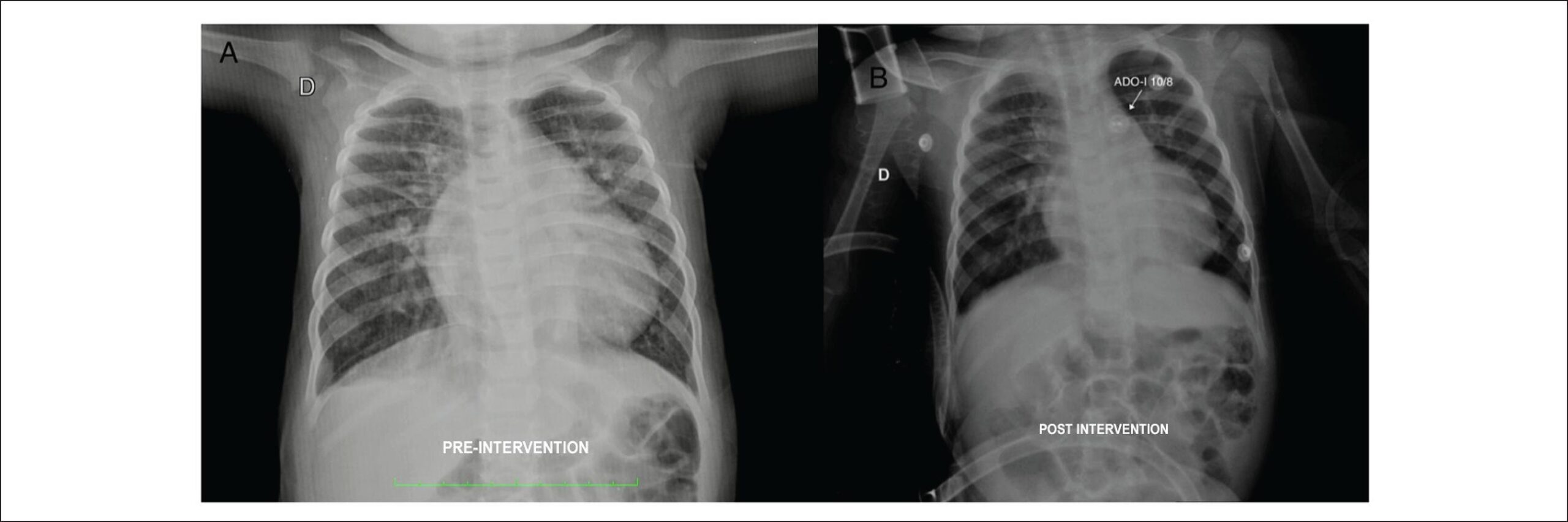
Case 6 / 2018 – Percutaneous Occlusion of a Large Ductus Arteriosus in a Low Weight Infant, with Immediate Clinical and Radiographic Improvement

Pablo Tomé Teixeirense et al. Vanessa de Moraes Sousa João Felipe Barros de Toledo Luiz Antonio Gubolino

Clinical Data

The patient was a one-year-old infant with Down syndrome, and heart murmur auscultated from birth. The child had a difficult clinical course due to failure to thrive, tachypnea, poor suckling due to fatigue and repeated respiratory infections, with pulmonary hypersecretion, and was receiving captopril and furosemide.

[…]

  • Down Syndrome
  • Ductus Arteriosus Patent/surgery
  • Heart Defects, Congenital/surgery
  • Infant
Read Full Article
Creative Commons Attribution (CC BY) Creative Commons license
01/11/2018 DOI: 10.5935/abc.20180219 Views 1
Figure 1
ABC
Clinicoradiological Session

Case 6/2016 – The Patient is a 29-Year-Old Male with Spontaneous Closure of Ventricular Septal Defect in Adulthood

Edmar Atik

Complementary tests:

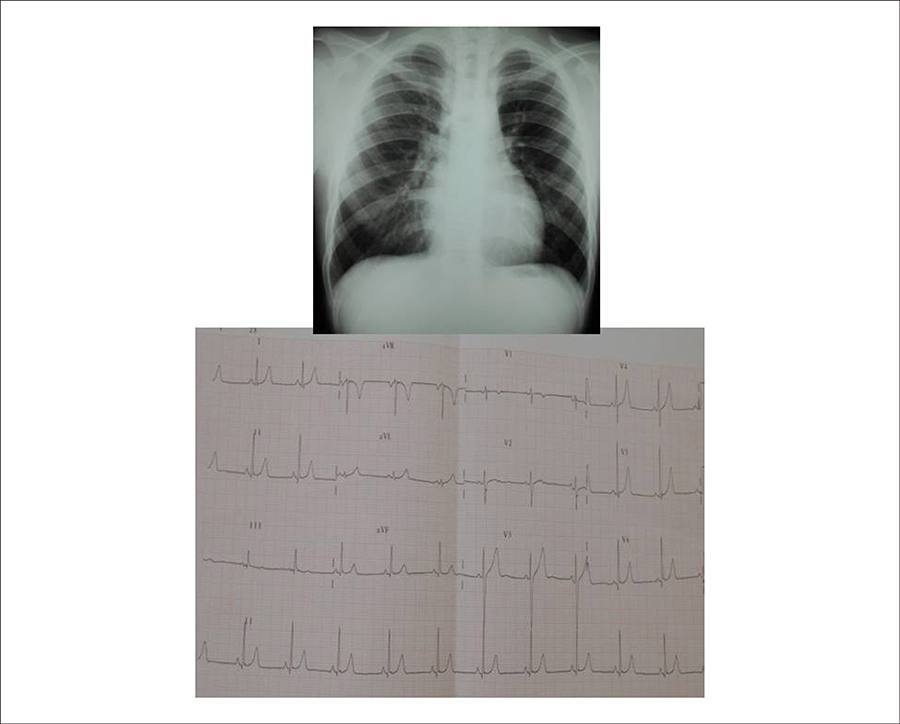
Electrocardiogram: Showed sinus rhythm, no chamber overload and no changes in ventricular repolarization. AP= +40º, AQRS= +60º, AT= +30º (). The ECGs performed before the closure of the defect were normal, in accordance with the corresponding ages.

Chest radiography: Showed heart area within the normal range (cardiothoracic index = 0.50) at the age of 13 years, prior to closure of the defect ().

[…]

  • Down Syndrome
  • Heart Defects, Congenital
  • Heart Septal Defects, Ventricular
Read Full Article
Creative Commons Attribution (CC BY) Creative Commons license
01/10/2016 DOI: 10.5935/abc.20160148
ABC
Original Article

Blood Pressure and Hemodynamic Adaptations after a Training Program in Young Individuals with Down Syndrome

Bruna Barboza Seron et al. Karla Fabiana Goessler Everaldo Lambert Modesto Eloise Werle Almeida Márcia Greguol

Background:

Cardiovascular diseases affect people worldwide. Individuals with Down Syndrome (DS) have an up to sixteen-time greater risk of mortality from cardiovascular diseases.

Objective:

To evaluate the effects of aerobic and resistance exercises on blood pressure and hemodynamic variables of young individuals with DS.

Methods:

A total of 29 young individuals with DS participated in the study. They were divided into two groups: aerobic training (AT) (n = 14), and resistance training (TR) (n = 15). Their mean age was 15.7 ± 2.82 years. The training program lasted 12 weeks, and had a frequency of three times a week for AT and twice a week for RT. AT was performed in treadmill/ bicycle ergometer, at an intensity between 50%-70% of the HR reserve. RT comprised nine exercises with three sets of 12 repetition-maximum. Systolic blood pressure (SBP), diastolic blood pressure (DBP), mean blood pressure (MBP) and hemodynamic variables were assessed beat-to-beat using the Finometer device before/after the training program. Descriptive analysis, the Shapiro-Wilk test to check the normality of data, and the two-way ANOVA for repeated measures were used to compare pre- and post-training variables. The Pearson’s correlation coefficient was calculated to correlate hemodynamic variables. The SPSS version 18.0 was used with the significance level set at p < 0.05.

Results:

After twelve weeks of aerobic and/or resistance training, significant reductions in variables SBP, DBP and MBP were observed.

Conclusion:

This study suggests a chronic hypotensive effect of moderate aerobic and resistance exercises on young individuals with DS.

  • Adolescent
  • Arterial Pressure / physiology
  • Down Syndrome
  • Heart Defects, Congenital
  • Hemodynamic / physiology
  • Resistance Training
Read Full Article
Creative Commons Attribution (CC BY) Creative Commons license
14/04/2015 DOI: 10.5935/abc.20150033 Views 1
Chromosomal abnormalities in patients with congenital heart disease
ABC
Artigo Original

Chromosomal abnormalities in patients with congenital heart disease

Patrícia Trevisan et al. Tatiana Diehl Zen Rafael Fabiano Machado Rosa Juliane Nascimento da Silva … Dayane Bohn Koshiyama Giorgio Adriano Paskulin Paulo Ricardo Gazzola Zen

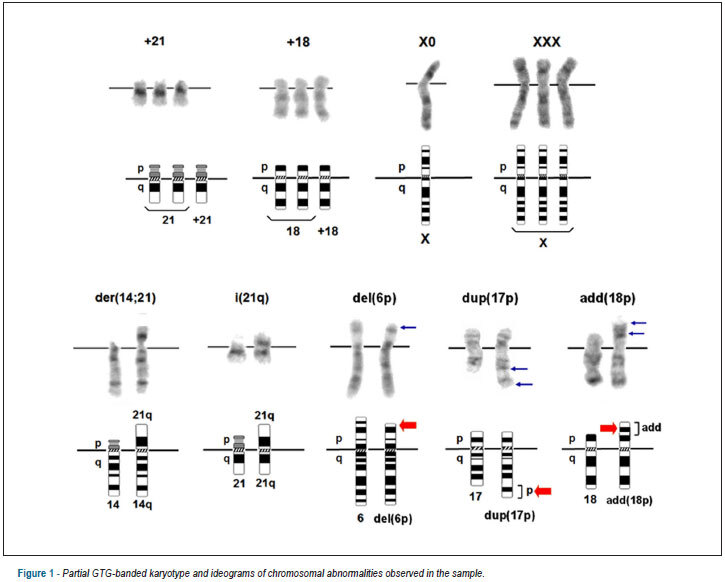
BACKGROUND: Chromosomal abnormalities (CAs) are an important cause of congenital heart disease (CHD). OBJECTIVE: Determine the frequency, types and clinical characteristics of CAs identified in a sample of prospective and consecutive patients with CHD. METHOD: Our sample consisted of patients with CHD evaluated during their first hospitalization in a cardiac intensive care unit of a pediatric referral hospital in Southern Brazil. All patients underwent clinical and cytogenetic assessment through high-resolution karyotype. CHDs were classified according to Botto et al. Chi-square, Fisher exact test and odds ratio were used in the statistical analysis (p < 0.05). RESULTS: Our sample consisted of 298 patients, 53.4% males, with age ranging from 1 day to 14 years. CAs were observed in 50 patients (16.8%), and 49 of them were syndromic. As for the CAs, 44 (88%) were numeric (40 patients with +21, 2 with +18, 1 with triple X and one with 45,X) and 6 (12%) structural [2 patients with der(14,21), +21, 1 with i(21q), 1 with dup(17p), 1 with del(6p) and 1 with add(18p)]. The group of CHDs more often associated with CAs was atrioventricular septal defect. CONCLUSIONS: CAs detected through karyotyping are frequent in patients with CHD. Thus, professionals, especially those working in Pediatric Cardiology Services, must be aware of the implications that performing the karyotype can bring to the diagnosis, treatment and prognosis and for genetic counseling of patients and families.

  • Chromosome Aberrations
  • Congenital
  • Down Syndrome
  • Heart Defects
  • Karyotype
  • Metaphase
Read Full Article
Creative Commons Attribution (CC BY) Creative Commons license
22/10/2013 DOI: 10.5935/abc.20130204 Views 2

How to cite this article

EndNote RIS

Electronic Document Format (Vancouver)

Russo GC, Bernardes N, Baraldi NR, Saraiva DJB, Angelis KD, Lantieri CJB, Saraiva JF, et al. Actions Against Covid-19 in the Down Syndrome Population. Arquivos Brasileiros de Cardiologia 2020;115(5):939-41.

Electronic Document Format (ABNT)

Russo, Giorgia Castilho; Bernardes, Nathalia; Baraldi, Natália Rezende; Saraiva, Denise Jeanine Berlinger; Angelis, Kátia De; Lantieri, Carla Janice Baister; Saraiva, José Francisco. Actions Against Covid-19 in the Down Syndrome Population. Arquivos Brasileiros de Cardiologia, v. 115, n. 5, p. 939-941, Dec. 2020.

Electronic Document Format (APA)

Russo, G. C., Bernardes, N., Baraldi, N. R., Saraiva, D. J. B., Angelis, K. D., Lantieri, C. J. B., & Saraiva, J. F. (2020). Actions Against Covid-19 in the Down Syndrome Population. Arquivos Brasileiros de Cardiologia, 115(5), 939-941.

Electronic Document Format (ISO)

Russo, Giorgia Castilho and Bernardes, Nathalia and Baraldi, Natália Rezende and Saraiva, Denise Jeanine Berlinger and Angelis, Kátia De and Lantieri, Carla Janice Baister and Saraiva, José Francisco. Actions Against Covid-19 in the Down Syndrome Population. Arquivos Brasileiros de Cardiologia [online]. 2020, vol. 115, n. 5, [cited 2026-10-14], pp. 939-941. Available from: <https://journals.cardiol.br/en/article/actions-against-covid-19-in-the-down-syndrome-population/>. ISSN 0066-782X

EndNote RIS

Electronic Document Format (Vancouver)

Teixeirense PT, Sousa VM, Toledo JFB, Gubolino LA. Case 6 / 2018 – Percutaneous Occlusion of a Large Ductus Arteriosus in a Low Weight Infant, with Immediate Clinical and Radiographic Improvement. Arquivos Brasileiros de Cardiologia 2018;111(5):753-4.

Electronic Document Format (ABNT)

Teixeirense, Pablo Tomé; Sousa, Vanessa de Moraes; Toledo, João Felipe Barros de; Gubolino, Luiz Antonio. Case 6 / 2018 – Percutaneous Occlusion of a Large Ductus Arteriosus in a Low Weight Infant, with Immediate Clinical and Radiographic Improvement. Arquivos Brasileiros de Cardiologia, v. 111, n. 5, p. 753-754, Oct. 2018.

Electronic Document Format (APA)

Teixeirense, P. T., Sousa, V. M., Toledo, J. F. B. , & Gubolino, L. A. (2018). Case 6 / 2018 – Percutaneous Occlusion of a Large Ductus Arteriosus in a Low Weight Infant, with Immediate Clinical and Radiographic Improvement. Arquivos Brasileiros de Cardiologia, 111(5), 753-754.

Electronic Document Format (ISO)

Teixeirense, Pablo Tomé and Sousa, Vanessa de Moraes and Toledo, João Felipe Barros de and Gubolino, Luiz Antonio. Case 6 / 2018 – Percutaneous Occlusion of a Large Ductus Arteriosus in a Low Weight Infant, with Immediate Clinical and Radiographic Improvement. Arquivos Brasileiros de Cardiologia [online]. 2018, vol. 111, n. 5, [cited 2026-10-14], pp. 753-754. Available from: <https://journals.cardiol.br/en/article/case-6-2018-percutaneous-occlusion-of-a-large-ductus-arteriosus-in-a-low-weight-infant-with-immediate-clinical-and-radiographic-improvement/>. ISSN 0066-782X

EndNote RIS

Electronic Document Format (Vancouver)

Atik E. Case 6/2016 – The Patient is a 29-Year-Old Male with Spontaneous Closure of Ventricular Septal Defect in Adulthood. Arquivos Brasileiros de Cardiologia 2016;107(4):375-7.

Electronic Document Format (ABNT)

Atik, Edmar. Case 6/2016 – The Patient is a 29-Year-Old Male with Spontaneous Closure of Ventricular Septal Defect in Adulthood. Arquivos Brasileiros de Cardiologia, v. 107, n. 4, p. 375-377, Sep. 2016.

Electronic Document Format (APA)

Atik, E. (2016). Case 6/2016 – The Patient is a 29-Year-Old Male with Spontaneous Closure of Ventricular Septal Defect in Adulthood. Arquivos Brasileiros de Cardiologia, 107(4), 375-377.

Electronic Document Format (ISO)

Atik, Edmar. Case 6/2016 – The Patient is a 29-Year-Old Male with Spontaneous Closure of Ventricular Septal Defect in Adulthood. Arquivos Brasileiros de Cardiologia [online]. 2016, vol. 107, n. 4, [cited 2026-10-14], pp. 375-377. Available from: <https://journals.cardiol.br/en/article/case-6-2016-the-patient-is-a-29-year-old-male-with-spontaneous-closure-of-ventricular-septal-defect-in-adulthood/>. ISSN 0066-782X

EndNote RIS

Electronic Document Format (Vancouver)

Seron BB, Goessler KF, Modesto EL, Almeida EW, Greguol M. Blood Pressure and Hemodynamic Adaptations after a Training Program in Young Individuals with Down Syndrome. Arquivos Brasileiros de Cardiologia 2015;104(6):487-91.

Electronic Document Format (ABNT)

Seron, Bruna Barboza; Goessler, Karla Fabiana; Modesto, Everaldo Lambert; Almeida, Eloise Werle; Greguol, Márcia. Blood Pressure and Hemodynamic Adaptations after a Training Program in Young Individuals with Down Syndrome. Arquivos Brasileiros de Cardiologia, v. 104, n. 6, p. 487-491, Apr. 2015.

Electronic Document Format (APA)

Seron, B. B., Goessler, K. F., Modesto, E. L., Almeida, E. W., & Greguol, M. (2015). Blood Pressure and Hemodynamic Adaptations after a Training Program in Young Individuals with Down Syndrome. Arquivos Brasileiros de Cardiologia, 104(6), 487-491.

Electronic Document Format (ISO)

Seron, Bruna Barboza and Goessler, Karla Fabiana and Modesto, Everaldo Lambert and Almeida, Eloise Werle and Greguol, Márcia. Blood Pressure and Hemodynamic Adaptations after a Training Program in Young Individuals with Down Syndrome. Arquivos Brasileiros de Cardiologia [online]. 2015, vol. 104, n. 6, [cited 2026-10-14], pp. 487-491. Available from: <https://journals.cardiol.br/en/article/blood-pressure-and-hemodynamic-adaptations-after-a-training-program-in-young-individuals-with-down-syndrome/>. ISSN 0066-782X

EndNote RIS

Electronic Document Format (Vancouver)

Trevisan P, Zen TD, Rosa RFM, Silva JN, Koshiyama DB, Paskulin GA, Zen PRG, et al. Chromosomal abnormalities in patients with congenital heart disease. Arquivos Brasileiros de Cardiologia 2013;101(6):

Electronic Document Format (ABNT)

Trevisan, Patrícia; Zen, Tatiana Diehl; Rosa, Rafael Fabiano Machado; Silva, Juliane Nascimento da; Koshiyama, Dayane Bohn; Paskulin, Giorgio Adriano; Zen, Paulo Ricardo Gazzola. Chromosomal abnormalities in patients with congenital heart disease. Arquivos Brasileiros de Cardiologia, v. 101, n. 6, Oct. 2013.

Electronic Document Format (APA)

Trevisan, P., Zen, T. D., Rosa, R. F. M., Silva, J. N. , Koshiyama, D. B., Paskulin, G. A., & Zen, P. R. G. (2013). Chromosomal abnormalities in patients with congenital heart disease. Arquivos Brasileiros de Cardiologia, 101(6), .

Electronic Document Format (ISO)

Trevisan, Patrícia and Zen, Tatiana Diehl and Rosa, Rafael Fabiano Machado and Silva, Juliane Nascimento da and Koshiyama, Dayane Bohn and Paskulin, Giorgio Adriano and Zen, Paulo Ricardo Gazzola. Chromosomal abnormalities in patients with congenital heart disease. Arquivos Brasileiros de Cardiologia [online]. 2013, vol. 101, n. 6, [cited 2026-10-14], Available from: <https://journals.cardiol.br/en/article/chromosomal-abnormalities-in-patients-with-congenital-heart-disease/>. ISSN 0066-782X

  • About ABC Family
  • Internal Regulation
  • Editorial Board
  • Brazilian Society of Cardiology (SBC)

Issues

SBC Guidelines

  • Videos
  • Podcasts
  • News