| ABC
ABC Family Arquivos Brasileiros de Cardiologia International Journal of Cardiovascular Sciences ABC Heart Failure & Cardiomyopathy ABC Imagem Cardiovascular
Português English
ABC Family | ABC
Português English
  • About
    • About the Journal
    • Internal Regulation
    • Editors Section
    • Editorial Board
    • History
    • SBC Award
  • Instructions to Authors
    • Guidelines for Publication
    • Editorial Policy
    • Ethics Policy
    • Policy on the Use of Artificial Intelligence
    • Mandatory Publication Form
    • Publication Fee
  • Issues
  • SBC Guidelines
  • Abstracts
    • How to Publish an Abstract Supplement?
    • Supplements from the Brazilian Congress of Cardiology
  • About
    • About the Journal
    • Internal Regulation
    • Editors Section
    • Editorial Board
    • History
    • SBC Award
  • Instructions to Authors
    • Guidelines for Publication
    • Editorial Policy
    • Ethics Policy
    • Policy on the Use of Artificial Intelligence
    • Mandatory Publication Form
    • Publication Fee
  • Issues
  • SBC Guidelines
  • Abstracts
    • How to Publish an Abstract Supplement?
    • Supplements from the Brazilian Congress of Cardiology

ABC Family

  • ABC Family
  • Arquivos Brasileiros de Cardiologia
  • International Journal of Cardiovascular Sciences
  • ABC Heart Failure & Cardiomyopathy
  • ABC Imagem Cardiovascular
Search in

No content found.

Journals
Ordering
Article types
Others

  1. Home
  2. ABC
  3. Issues
  4. 2004, Volume 82, Number 5
Angiographic morphologic characteristics in pulmonary atresia with intact ventricular septum
Artigo Original

Angiographic morphologic characteristics in pulmonary atresia with intact ventricular septum

Marco Aurélio Santos et al. Vitor Manuel Pereira Azevedo

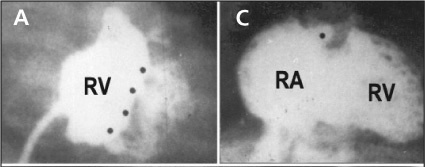
OBJECTIVE: To determine the morphological and functional changes in the right ventricle in pulmonary atresia with intact ventricular septum (PAIVS) for assessing the candidates for the different therapeutic procedures currently available. METHODS: Thirty-one patients underwent cineangiocardiographic study with axial projections. Their ages ranged from 1 to 50 days (x = 9.6), and 28 of them were studied during the first month of life. The statistical analysis comprised the following: chi-square test, Kruskal-Wallis test for the mean and standard deviation, multiple regression, and the 95% confidence interval (95%CI) was calculated. The significance level adopted was alpha < 0.05. RESULTS: The patients were divided into 3 groups according to the angiographic morphology of the right ventricle (RV): group A – tripartite RV (n=16); group B – bipartite RV (n=9); and group C – unipartite RV (n=6). The diameter of the tricuspid valve was 10.28 ± 2.67 mm (A); 7.82 ± 3.41 (B); and 5.27 ± 0.57 (C) (P=0.0005). Pulmonary atresia was of the valvular type in all group A patients and of the infundibular type in all group C patients (P<0.0001). Coronary-cavitary connections were rare (2/16) in group A patients, but occurred in all group C patients (P=0.0006), with retrograde opacity of the aorta (flow from the RV to the aorta) in 2 group A patients and in all group C patients (P=0.0003). Three patients (2 in group C and 1 in group A) had right-ventricular-dependent coronary circulation. Isolated moderate/severe tricuspid regurgitation showed a tendency towards being more frequent in group A (P=0.0525). The angle of the ductus arteriosus with the descending aorta was as follows: 104.06 ± 8.98 in group A; 79.17 ± 33.08 in group B; and 39.0 ± 6.52 in group C (P=0.0016). The correlation between the diameter of the tricuspid valve and the angle of the ductus arteriosus with the descending aorta was 0.6568 (P=0.0002). CONCLUSION: Because of the heterogeneity of the morphology of the RV in patients with pulmonary atresia with intact ventricular septum, knowledge about all these data is required for selecting candidates for the different therapeutic procedures.
  • Congenital Heart Disease
  • Ductus Arteriosus
  • prognostic factors
  • Pulmonary Atresia
  • pulmonary valvotomy
Read Full Article
Creative Commons Attribution (CC BY) Creative Commons license
09/06/2004 DOI: 10.1590/S0066-782X2004000500004
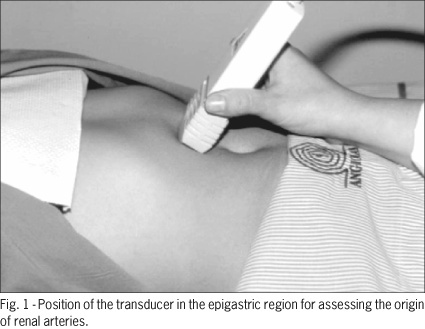
Vascular color Doppler ultrasound for assessing renovascular hypertension: accuracy of the direct technique for assessing the renal arteries
Artigo Original

Vascular color Doppler ultrasound for assessing renovascular hypertension: accuracy of the direct technique for assessing the renal arteries

Carlos Alberto Engelhorn et al. Ana Luiza Engelhorn Renata Pullig

OBJECTIVE: To assess the accuracy of vascular color Doppler ultrasound as compared with digital subtraction arteriography for identifying hemodynamically significant renal artery stenoses. METHODS: One hundred and thirty-seven renal arteries from 69 adult patients suspected of having renovascular arterial hypertension were prospectively studied with ultrasound. The results obtained were compared in a double-blind manner with those obtained on digital subtraction arteriography, and the following parameters were calculated according to previously defined criteria: sensitivity, specificity, positive predictive value, negative predictive value, and overall accuracy. RESULTS: The inconclusive results (7 arteries) were excluded. The comparison of the 2 methods in regard to the 130 remaining arteries showed concordant results for 116 (89.2%) arteries and discordant results for 14 (10.8%) arteries. The sensitivity, specificity, positive predictive value, negative predictive value, and overall accuracy of vascular color Doppler ultrasound were, respectively, 95.33%, 88.14%, 89.86%, 94.55%, and 91.94%. CONCLUSION: A good correlation between the 2 examinations was observed in the evaluation of the hemodynamically significant renal artery stenoses, making vascular color Doppler ultrasound a noninvasive method useful for selecting patients with suspected renovascular hypertension.

  • Hypertension
  • renal artery
  • ultrasound
Read Full Article
Creative Commons Attribution (CC BY) Creative Commons license
08/06/2004 DOI: 10.1590/S0066-782X2004000500010 Views 1
Artigo Original

A comparison of rescue and primary percutaneous coronary interventions for acute myocardial infarction: a multicenter registry report of 9,371 patients

Luiz Alberto Mattos et al. Amanda G.M.R. Sousa Ibraim M.F. Pinto Expedito R. Silva … José Klauber Carneiro J. Eduardo Sousa José Armando Mangione Paulo Caramori Valter Lima Ronaldo L. Bueno

OBJECTIVE: To perform a comparative analysis of in-hospital results obtained from AMI patients who underwent rescue or primary PTCA. METHODS: From the Brazilian Interventional National Registry (CENIC), we selected all consecutive patients who underwent a percutaneous coronary intervention for myocardial infarction (< 24 hours), between 1997 and 2000, analyzing those undergoing a rescue (n=840) or a primary (n=8,531) procedure, and comparing their in-hospital results. RESULTS: Rescue patients were significantly younger males with anterior wall infarctions, associated with left ventricular dysfunction, but had less multivessel disease, compared with those treated with primary intervention. Coronary stents were implanted in at similar rates (56.9% vs. 54.9%; P=0.283). Procedural success were lower for rescue cases (88.1% vs. 91.2%; P<0.001), with higher mortality (7.4% vs. 5.6%; P=0.034), compared with the primary intervention group; target vessel revascularization (< 0.5%), emergency bypass surgery (< 0.3%) and reinfarction (< 2.6%) rates were similar for both strategies. Multivariate analysis identified the rescue procedure as a predictor of in-hospital death [OR(CI=95%) = 1.60 (1.17-2.19); P=0.003]. CONCLUSION: Patients who underwent a rescue coronary intervention had higher in-hospital death rates compared with those who underwent a primary coronary intervention.

  • Angioplasty
  • Myocardial Infarction
  • platelet inhibitors
  • Reperfusion
  • stent
  • thrombolysis
Read Full Article
Creative Commons Attribution (CC BY) Creative Commons license
08/06/2004 DOI: 10.1590/S0066-782X2004000500006
Artigo Original

Evaluation of systolic, diastolic, and pulse pressure as risk factors for severe coronary arteriosclerotic disease in women with unstable angina non-ST-elevation acute myocardial infarction

José Marconi Almeida de Sousa et al. João L. V. Hermann João B. Guimarães Pedro Paulo O. Menezes Antonio Carlos Camargo Carvalho

OBJECTIVE: To evaluate pressures assessed at the aortic root as risk factors for severe atherosclerotic coronary heart disease in women with unstable angina/compatible clinical history associated with increase in cardiac enzymes (total CPK and CK-MB) 2 times greater than the standard value used in the hospital, with the absence of new Q waves on the electrocardiogram (UA/NSTEMI). METHODS: Five hundred and ninety-three female patients with clinical diagnosis of UA/NSTEMI underwent cinecoronariography from March 1993 to August 2001, and the risk factors for CHD were studied. During examination the pressures, at the aortic root, and coronary obstructions were visually assessed by 2 interventional cardiologists, and those stenosis over 70% were considered severe. RESULTS: Eight-one per cent of the population was white and 18.3% was black. Mean age was 59.2±11.2 years, and it was significantly higher in patients with severe coronary lesions: 61.9 ± 10.8 years versus 56.4 ± 10.8 years; smoking, diabetes mellitus and climacteric were more frequent in patients with CHD. The average mean arterial pressure and mean systolic blood pressure was the same in both groups, however, average left ventricle diastolic pressure (17.6 ± 8.7 x 15.1 ± 8.1, p=0.001), and aortic pulse pressure were significantly greater in patients with CHD (75.5 ± 22 x 70 ± 19, p=0.002), while average aortic diastolic pressure was significantly greater in patients without CHD (79.8 ± 16 x 75.3 ± 17.5, p=0.003). In the multivariated analysis, pulse pressure > 80 mmHg and systolic blood pressure > 165 were independently associated with severe CHD with odds ratio of 2.12 and 2.09, p 80 mmHg and systolic blood pressure > 165 mmHG determined risk two times greater of severe coronary disease.

  • Acute Myocardial Infarction
  • coronary arterioscherotic disease
  • Hypertension
  • Unstable Angina
Read Full Article
Creative Commons Attribution (CC BY) Creative Commons license
08/06/2004 DOI: 10.1590/S0066-782X2004000500005
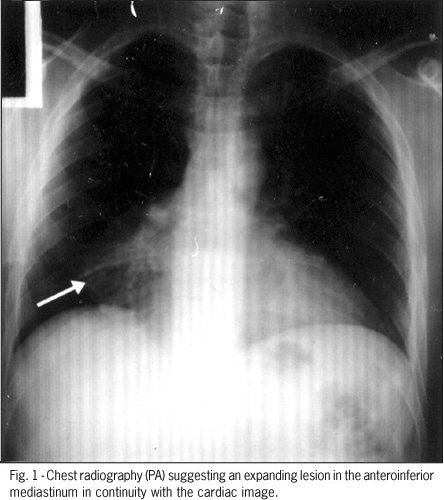
Chest pain due to right atrial compression caused by a thymolipoma
Relato de Caso

Chest pain due to right atrial compression caused by a thymolipoma

José Ramos Filho et al. Ricardo F. Melo Marcelo de Macedo Luiz Antônio Fiorelli … Alexandre Costa Roberto B. Isolatto

CASE REPORT

Chest pain due to right atrial compression caused by a thymolipoma

[…]

Read Full Article
Creative Commons Attribution (CC BY) Creative Commons license
08/06/2004 DOI: 10.1590/S0066-782X2004000500011
Surgical treatment for intermittent claudication in patients who do not improve with clinical treatment
Artigo Original

Surgical treatment for intermittent claudication in patients who do not improve with clinical treatment

Nelson Wolosker et al. Marco Antonio S. Munia Ruben Rosoky Ronald J. Fidelis … Livio Nakano Paulo Kauffman Pedro Puech-Leão

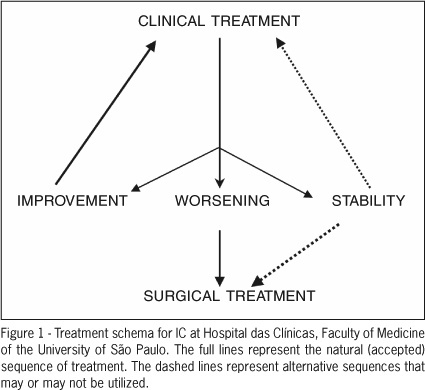
OBJECTIVE: To study the results obtained with surgical treatment of patients with intermittent claudication (IC) who did not clinically improve with conservative treatment, accompanied by a long follow-up (average 6 years). METHODS: From January 1992 to January 2002, 26 patients treated surgically in a group of 1380 IC patient, representing 1.88% of the total. RESULTS: Sixteen patients did not experience walking limitations after the surgery. Nine patients improved, however, with some degree of limitation. No intraoperative mortalities occurred. Three patients experienced thrombosis of the treated artery 6, 48, and 60 months after the procedure and started to suffer IC with onset at the same distances as before the surgery. During the long-term follow-up, we observed a mortality rate of 23.0% due to myocardial infarctions (4 patients), renal insufficiency (1 patient), and cerebral infarction (1 patient). Two patients underwent coronary bypasses 2 and 4 years after the vascular surgery, and one underwent coronary angioplasty after 3 years of follow-up. The mean follow-up was 73 months. CONCLUSION: In our study, the results from surgical treatment of IC brought about a lasting regression of the ischemic conditions in a significant number of patients, with excellent patency rates (88.4%). We conclude that this is a good alternative for select patients, with low rates of complications and positive long-term results.

  • claudication
  • clinical treatment
  • surgical treatment
Read Full Article
Creative Commons Attribution (CC BY) Creative Commons license
08/06/2004 DOI: 10.1590/S0066-782X2004000500007
Concordance of the scoring system for controlling the serum levels of cholesterol and fat
Artigo Original

Concordance of the scoring system for controlling the serum levels of cholesterol and fat

Marcia de Araujo Leite Nacif et al. Edeli Simioni de Abreu Elizabeth Aparecida Ferraz da Silva Torres

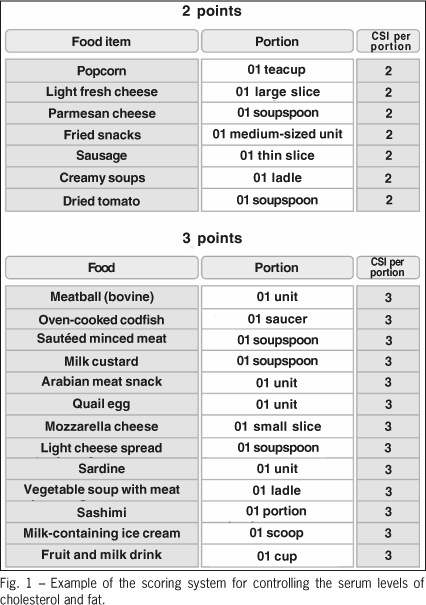
OBJECTIVE: To evaluate the comprehension of the scoring system for controlling the serum levels of cholesterol and fat as an instrument of dietary intervention for hypercholesterolemic patients. METHODS: The study comprised 153 individuals of both sexes, with ages ranging from 20 to 65 years, who sought medical care in a hospital or in a basic health unit. They were divided into the following 3 groups: hypercholesterolemic individuals, individuals with no diagnosis of hypercholesterolemia, and health care professionals. A 24-hour recall was used with each individual, who applied the cholesterol/saturated-fat index to their diets, consulting the scoring system. The researcher confirmed the calculation of each participant, considering her calculation as the a reference pattern. Understanding of the system was assessed through comparison between the reference pattern and the data obtained by the interviewees, using the intraclass correlation coefficient. RESULTS: The patients without a diagnosis of hypercholesterolemia obtained a high correlation in all meals. The morning and afternoon snacks and supper were the meals with the greatest correlation (r=1). In hypercholesterolemic individuals, supper was the meal with the greatest concordance with the reference score (r=1), and the health care professionals obtained a correlation coefficient of 1 in all meals, except lunch (r=0.99). CONCLUSION: The scoring system was fast, simple, and easy to be understood and accepted by the population studied.

  • Cholesterol
  • Lipids
  • score system
Read Full Article
Creative Commons Attribution (CC BY) Creative Commons license
08/06/2004 DOI: 10.1590/S0066-782X2004000500008
The posterior ventricular branches of the coronary arteries in the human heart
Artigo Original

The posterior ventricular branches of the coronary arteries in the human heart

José Roberto Ortale et al. Luisa Carolina Borges Keiralla Luciana Sacilotto

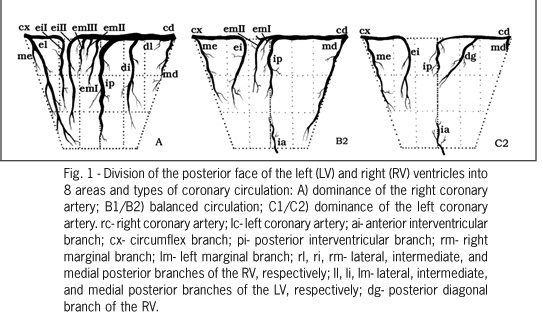
OBJECTIVE: To describe the trajectory of the posterior ventricular branches of the coronary arteries in the epicardial adipose tissue, and to propose a new criterion for analyzing the distribution of these branches, according to the traditional classification, to determine the predominance or balance of the coronary arteries in the arterial supply to the heart. METHODS: Forty hearts obtained from autopsies of adults were dissected and fixed in a formol solution. The posterior face of each ventricle was divided into 8 approximately equal areas for the morphological classification of the coronary circulation. The following 3 traditional types were considered: A) right dominance, B) balanced, and C) left dominance. The number, diameter, and terminal areas of the posterior ventricular branches in the epicardium were analyzed. RESULTS: The following branches and respective frequencies were found: left marginal branch – 100%; posterior left ventricular branches: lateral – 75%, intermediate – 82.5%, and medial – 87.5%; interventricular posterior branch – 95%; posterior right ventricular branch: medial – 40%, intermediate – 32.5%, and lateral – 40%; posterior diagonal branch of the right ventricle – 17.5%; right marginal branch – 95%. In regard to dominance, the following values were found: dominance of the right coronary artery – 62.5%; balanced type – 25%; and dominance of the left coronary artery – 12.5%. CONCLUSION: The method adopted allowed a more precise classification of the types of coronary artery distribution found. The right coronary artery dominance type was the most prevalent, followed by the balanced type and the left coronary artery dominance.

  • Anatomy
  • coronary circulation
  • Heart
Read Full Article
Creative Commons Attribution (CC BY) Creative Commons license
08/06/2004 DOI: 10.1590/S0066-782X2004000500009 Views 1

How to cite this article

EndNote RIS

Electronic Document Format (Vancouver)

Santos MA, Azevedo VMP. Angiographic morphologic characteristics in pulmonary atresia with intact ventricular septum. Arquivos Brasileiros de Cardiologia 2004;82(5):413-9.

Electronic Document Format (ABNT)

Santos, Marco Aurélio; Azevedo, Vitor Manuel Pereira. Angiographic morphologic characteristics in pulmonary atresia with intact ventricular septum. Arquivos Brasileiros de Cardiologia, v. 82, n. 5, p. 413-419, Jun. 2004.

Electronic Document Format (APA)

Santos, M. A., & Azevedo, V. M. P. (2004). Angiographic morphologic characteristics in pulmonary atresia with intact ventricular septum. Arquivos Brasileiros de Cardiologia, 82(5), 413-419.

Electronic Document Format (ISO)

Santos, Marco Aurélio and Azevedo, Vitor Manuel Pereira. Angiographic morphologic characteristics in pulmonary atresia with intact ventricular septum. Arquivos Brasileiros de Cardiologia [online]. 2004, vol. 82, n. 5, [cited 2026-10-14], pp. 413-419. Available from: <https://journals.cardiol.br/en/article/angiographic-morphologic-characteristics-in-pulmonary-atresia-with-intact-ventricular-septum/>. ISSN 0066-782X

EndNote RIS

Electronic Document Format (Vancouver)

Engelhorn CA, Engelhorn AL, Pullig R. Vascular color Doppler ultrasound for assessing renovascular hypertension: accuracy of the direct technique for assessing the renal arteries. Arquivos Brasileiros de Cardiologia 2004;82(5):473-6.

Electronic Document Format (ABNT)

Engelhorn, Carlos Alberto; Engelhorn, Ana Luiza; Pullig, Renata. Vascular color Doppler ultrasound for assessing renovascular hypertension: accuracy of the direct technique for assessing the renal arteries. Arquivos Brasileiros de Cardiologia, v. 82, n. 5, p. 473-476, Jun. 2004.

Electronic Document Format (APA)

Engelhorn, C. A., Engelhorn, A. L., & Pullig, R. (2004). Vascular color Doppler ultrasound for assessing renovascular hypertension: accuracy of the direct technique for assessing the renal arteries. Arquivos Brasileiros de Cardiologia, 82(5), 473-476.

Electronic Document Format (ISO)

Engelhorn, Carlos Alberto and Engelhorn, Ana Luiza and Pullig, Renata. Vascular color Doppler ultrasound for assessing renovascular hypertension: accuracy of the direct technique for assessing the renal arteries. Arquivos Brasileiros de Cardiologia [online]. 2004, vol. 82, n. 5, [cited 2026-10-14], pp. 473-476. Available from: <https://journals.cardiol.br/en/article/vascular-color-doppler-ultrasound-for-assessing-renovascular-hypertension-accuracy-of-the-direct-technique-for-assessing-the-renal-arteries/>. ISSN 0066-782X

EndNote RIS

Electronic Document Format (Vancouver)

Mattos LA, Sousa AG, Pinto IM, Silva ER, Carneiro JK, Sousa JE, Mangione JA, et al. A comparison of rescue and primary percutaneous coronary interventions for acute myocardial infarction: a multicenter registry report of 9,371 patients. Arquivos Brasileiros de Cardiologia 2004;82(5):434-9.

Electronic Document Format (ABNT)

Mattos, Luiz Alberto; Sousa, Amanda G.M.R.; Pinto, Ibraim M.F.; Silva, Expedito R.; Carneiro, José Klauber; Sousa, J. Eduardo; Mangione, José Armando; Caramori, Paulo; Lima, Valter; Bueno, Ronaldo L.. A comparison of rescue and primary percutaneous coronary interventions for acute myocardial infarction: a multicenter registry report of 9,371 patients. Arquivos Brasileiros de Cardiologia, v. 82, n. 5, p. 434-439, Jun. 2004.

Electronic Document Format (APA)

Mattos, L. A., Sousa, A. G., Pinto, I. M., Silva, E. R., Carneiro, J. K., Sousa, J. E., Mangione, J. A., Caramori, P., Lima, V., & Bueno, R. L. (2004). A comparison of rescue and primary percutaneous coronary interventions for acute myocardial infarction: a multicenter registry report of 9,371 patients. Arquivos Brasileiros de Cardiologia, 82(5), 434-439.

Electronic Document Format (ISO)

Mattos, Luiz Alberto and Sousa, Amanda G.M.R. and Pinto, Ibraim M.F. and Silva, Expedito R. and Carneiro, José Klauber and Sousa, J. Eduardo and Mangione, José Armando and Caramori, Paulo and Lima, Valter and Bueno, Ronaldo L.. A comparison of rescue and primary percutaneous coronary interventions for acute myocardial infarction: a multicenter registry report of 9,371 patients. Arquivos Brasileiros de Cardiologia [online]. 2004, vol. 82, n. 5, [cited 2026-10-14], pp. 434-439. Available from: <https://journals.cardiol.br/en/article/a-comparison-of-rescue-and-primary-percutaneous-coronary-interventions-for-acute-myocardial-infarction-a-multicenter-registry-report-of-9371-patients/>. ISSN 0066-782X

EndNote RIS

Electronic Document Format (Vancouver)

Sousa JMA, Hermann JLV, Guimarães JB, Menezes PPO, Carvalho ACC. Evaluation of systolic, diastolic, and pulse pressure as risk factors for severe coronary arteriosclerotic disease in women with unstable angina non-ST-elevation acute myocardial infarction. Arquivos Brasileiros de Cardiologia 2004;82(5):426-9.

Electronic Document Format (ABNT)

Sousa, José Marconi Almeida de; Hermann, João L. V.; Guimarães, João B.; Menezes, Pedro Paulo O.; Carvalho, Antonio Carlos Camargo. Evaluation of systolic, diastolic, and pulse pressure as risk factors for severe coronary arteriosclerotic disease in women with unstable angina non-ST-elevation acute myocardial infarction. Arquivos Brasileiros de Cardiologia, v. 82, n. 5, p. 426-429, Jun. 2004.

Electronic Document Format (APA)

Sousa, J. M. A. , Hermann, J. L. V., Guimarães, J. B., Menezes, P. P. O., & Carvalho, A. C. C. (2004). Evaluation of systolic, diastolic, and pulse pressure as risk factors for severe coronary arteriosclerotic disease in women with unstable angina non-ST-elevation acute myocardial infarction. Arquivos Brasileiros de Cardiologia, 82(5), 426-429.

Electronic Document Format (ISO)

Sousa, José Marconi Almeida de and Hermann, João L. V. and Guimarães, João B. and Menezes, Pedro Paulo O. and Carvalho, Antonio Carlos Camargo. Evaluation of systolic, diastolic, and pulse pressure as risk factors for severe coronary arteriosclerotic disease in women with unstable angina non-ST-elevation acute myocardial infarction. Arquivos Brasileiros de Cardiologia [online]. 2004, vol. 82, n. 5, [cited 2026-10-14], pp. 426-429. Available from: <https://journals.cardiol.br/en/article/evaluation-of-systolic-diastolic-and-pulse-pressure-as-risk-factors-for-severe-coronary-arteriosclerotic-disease-in-women-with-unstable-angina-non-st-elevation-acute-myocardial-infarction/>. ISSN 0066-782X

EndNote RIS

Electronic Document Format (Vancouver)

Ramos Filho J, Melo RF, Macedo M, Fiorelli LA, Costa A, Isolatto RB. Chest pain due to right atrial compression caused by a thymolipoma. Arquivos Brasileiros de Cardiologia 2004;82(5):481-3.

Electronic Document Format (ABNT)

Ramos Filho, José; Melo, Ricardo F.; Macedo, Marcelo de; Fiorelli, Luiz Antônio; Costa, Alexandre; Isolatto, Roberto B.. Chest pain due to right atrial compression caused by a thymolipoma. Arquivos Brasileiros de Cardiologia, v. 82, n. 5, p. 481-483, Jun. 2004.

Electronic Document Format (APA)

Ramos Filho, J., Melo, R. F., Macedo, M. , Fiorelli, L. A., Costa, A., & Isolatto, R. B. (2004). Chest pain due to right atrial compression caused by a thymolipoma. Arquivos Brasileiros de Cardiologia, 82(5), 481-483.

Electronic Document Format (ISO)

Ramos Filho, José and Melo, Ricardo F. and Macedo, Marcelo de and Fiorelli, Luiz Antônio and Costa, Alexandre and Isolatto, Roberto B.. Chest pain due to right atrial compression caused by a thymolipoma. Arquivos Brasileiros de Cardiologia [online]. 2004, vol. 82, n. 5, [cited 2026-10-14], pp. 481-483. Available from: <https://journals.cardiol.br/en/article/chest-pain-due-to-right-atrial-compression-caused-by-a-thymolipoma/>. ISSN 0066-782X

EndNote RIS

Electronic Document Format (Vancouver)

Wolosker N, Munia MAS, Rosoky R, Fidelis RJ, Nakano L, Kauffman P, Puech-Leão P, et al. Surgical treatment for intermittent claudication in patients who do not improve with clinical treatment. Arquivos Brasileiros de Cardiologia 2004;82(5):445-9.

Electronic Document Format (ABNT)

Wolosker, Nelson; Munia, Marco Antonio S.; Rosoky, Ruben; Fidelis, Ronald J.; Nakano, Livio; Kauffman, Paulo; Puech-Leão, Pedro. Surgical treatment for intermittent claudication in patients who do not improve with clinical treatment. Arquivos Brasileiros de Cardiologia, v. 82, n. 5, p. 445-449, Jun. 2004.

Electronic Document Format (APA)

Wolosker, N., Munia, M. A. S., Rosoky, R., Fidelis, R. J., Nakano, L., Kauffman, P., & Puech-Leão, P. (2004). Surgical treatment for intermittent claudication in patients who do not improve with clinical treatment. Arquivos Brasileiros de Cardiologia, 82(5), 445-449.

Electronic Document Format (ISO)

Wolosker, Nelson and Munia, Marco Antonio S. and Rosoky, Ruben and Fidelis, Ronald J. and Nakano, Livio and Kauffman, Paulo and Puech-Leão, Pedro. Surgical treatment for intermittent claudication in patients who do not improve with clinical treatment. Arquivos Brasileiros de Cardiologia [online]. 2004, vol. 82, n. 5, [cited 2026-10-14], pp. 445-449. Available from: <https://journals.cardiol.br/en/article/surgical-treatment-for-intermittent-claudication-in-patients-who-do-not-improve-with-clinical-treatment/>. ISSN 0066-782X

EndNote RIS

Electronic Document Format (Vancouver)

Nacif MAL, Abreu ES, Torres EAFS. Concordance of the scoring system for controlling the serum levels of cholesterol and fat. Arquivos Brasileiros de Cardiologia 2004;82(5):455-8.

Electronic Document Format (ABNT)

Nacif, Marcia de Araujo Leite; Abreu, Edeli Simioni de; Torres, Elizabeth Aparecida Ferraz da Silva. Concordance of the scoring system for controlling the serum levels of cholesterol and fat. Arquivos Brasileiros de Cardiologia, v. 82, n. 5, p. 455-458, Jun. 2004.

Electronic Document Format (APA)

Nacif, M. A. L., Abreu, E. S. , & Torres, E. A. F. S. (2004). Concordance of the scoring system for controlling the serum levels of cholesterol and fat. Arquivos Brasileiros de Cardiologia, 82(5), 455-458.

Electronic Document Format (ISO)

Nacif, Marcia de Araujo Leite and Abreu, Edeli Simioni de and Torres, Elizabeth Aparecida Ferraz da Silva. Concordance of the scoring system for controlling the serum levels of cholesterol and fat. Arquivos Brasileiros de Cardiologia [online]. 2004, vol. 82, n. 5, [cited 2026-10-14], pp. 455-458. Available from: <https://journals.cardiol.br/en/article/concordance-of-the-scoring-system-for-controlling-the-serum-levels-of-cholesterol-and-fat/>. ISSN 0066-782X

EndNote RIS

Electronic Document Format (Vancouver)

Ortale JR, Keiralla LCB, Sacilotto L. The posterior ventricular branches of the coronary arteries in the human heart. Arquivos Brasileiros de Cardiologia 2004;82(5):463-7.

Electronic Document Format (ABNT)

Ortale, José Roberto; Keiralla, Luisa Carolina Borges; Sacilotto, Luciana. The posterior ventricular branches of the coronary arteries in the human heart. Arquivos Brasileiros de Cardiologia, v. 82, n. 5, p. 463-467, Jun. 2004.

Electronic Document Format (APA)

Ortale, J. R., Keiralla, L. C. B., & Sacilotto, L. (2004). The posterior ventricular branches of the coronary arteries in the human heart. Arquivos Brasileiros de Cardiologia, 82(5), 463-467.

Electronic Document Format (ISO)

Ortale, José Roberto and Keiralla, Luisa Carolina Borges and Sacilotto, Luciana. The posterior ventricular branches of the coronary arteries in the human heart. Arquivos Brasileiros de Cardiologia [online]. 2004, vol. 82, n. 5, [cited 2026-10-14], pp. 463-467. Available from: <https://journals.cardiol.br/en/article/the-posterior-ventricular-branches-of-the-coronary-arteries-in-the-human-heart/>. ISSN 0066-782X

Sede – Rio de Janeiro
Av. Marechal Câmara, 160
3º andar – Sala: 330 – Centro
Rio de Janeiro – CEP: 20020-907
Tel.: (55 +21) 3478-2700
ou (21) 99386-3961
E-mail: revista@cardiol.br

Sede – São Paulo
Alameda Santos, 705 – 11º andar
Cerqueira César | São Paulo
CEP: 01419-001
Tel.: (55 +11) 3411-5500
E-mail: revista@cardiol.br

  • About the Journal
  • Internal Regulation
  • Editors Section
  • Editorial Board
  • History
  • SBC Award

  • Guidelines for Publication
  • Editorial Policy
  • Ethics Policy
  • Policy on the Use of Artificial Intelligence
  • Mandatory Publication Form
  • Publication Fee

Issues

SBC Guidelines

  • How to Publish an Abstract Supplement?
  • Supplements from the Brazilian Congress of Cardiology