ABC Family Arquivos Brasileiros de Cardiologia International Journal of Cardiovascular Sciences ABC Heart Failure & Cardiomyopathy ABC Imagem Cardiovascular
Português English
ABC Family
Português English
  • About
    • About ABC Family
    • Internal Regulation
    • Editorial Board
    • Brazilian Society of Cardiology (SBC)
  • Issues
  • SBC Guidelines
  • Content
    • Videos
    • Podcasts
    • News
  • About
    • About ABC Family
    • Internal Regulation
    • Editorial Board
    • Brazilian Society of Cardiology (SBC)
  • Issues
  • SBC Guidelines
  • Content
    • Videos
    • Podcasts
    • News

ABC Family

  • ABC Family
  • Arquivos Brasileiros de Cardiologia
  • International Journal of Cardiovascular Sciences
  • ABC Heart Failure & Cardiomyopathy
  • ABC Imagem Cardiovascular
Search in

No content found.

Journals
Ordering
Article types
Others

  1. Home
  2. Keyword: ultrasound
ABCIC
Editorial

Phenotyping of Congestion in Decompensated Heart Failure: Life-Saving Accuracy

Amanda Fernandes

Diagnosing heart failure (HF) in patients with multiple comorbidities continues to pose a challenge, especially when overlaps with pulmonary disease, obesity, or atypical clinical presentation. In this context, complementary diagnostic tools, such as NT-proBNP and venous excess ultrasound (VExUS) score, enable earlier and more accurate assessment of congestion, reducing adverse effects and fostering timely implementation of guideline-directed medical therapy.

Management of decompensated HF becomes even more complex when there is subclinical fluid retention, a frequently underestimated condition that is associated with higher rates of hospital readmission and a comparable mortality risk to that observed in patients with clinically evident edema., In these scenarios, VExUS has become a central tool in the diagnostic and therapeutic arsenal, both in differentiating the etiology of dyspnea and in managing patients with overt congestion and cardiorenal syndrome, by allowing for safer and more individualized management of diuresis, minimizing the risk of kidney injury.

[…]

  • Heart Failure
  • Natriuretic Peptides
  • ultrasound
Read Full Article
Creative Commons Attribution (CC BY) Creative Commons license
11/05/2026 DOI: 10.36660/abcimg.20260019i
Increased intima-media thickness is independently associated with Ischemic Stroke
ABC
Artigo Original

Increased intima-media thickness is independently associated with Ischemic Stroke

Dário Freitas et al. Ana Alves Alexandre Pereira Telmo Pereira

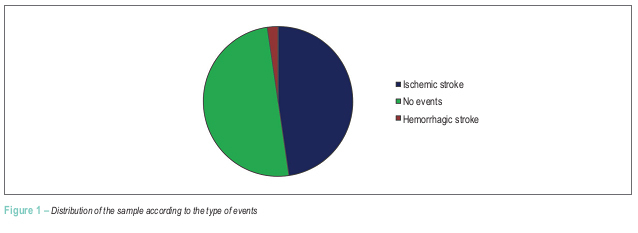
BACKGROUND: Stroke is one of the major causes of death worldwide. The importance of increased intima-media thickness in cardiovascular risk stratification has been recurrently studied. The relationship between them, however, is still controversial. OBJECTIVES: To determine whether increased common carotid artery (CCA) intima-media thickness can be used as an independent high-risk marker for the occurrence of stroke. METHODS: This study sample comprised 948 patients consecutively assessed by use of cervical triplex scan from January 2004 to June 2009. Those patients were divided into groups according to the presence or absence of recent stroke as follows: a group of patients with ischemic stroke (n = 452, 48%); a group of patients with hemorrhagic stroke (n = 22, 2%); and a group of patients with no events (n = 474, 50%). RESULTS: On logistic regression analysis adjusted for the classic cardiovascular risk factors, increased CCA intima-media thickness associated significantly and on an approximately linear way with ischemic stroke (Odds Ratio = 1.808, confidence interval: 1.291-2.534, p = 0.01), but not with hemorrhagic stroke (p = ns). A significant interaction with age was also found, showing a greater discriminative capacity for the risk of ischemic stroke in individuals aged less than 50 years. CONCLUSIONS: The increased CCA intima-media thickness was identified as an independent predictor of the risk for ischemic stroke, but not for hemorrhagic stroke, emphasizing the usefulness of its assessment on clinical practice. (Arq Bras Cardiol. 2012; [online].ahead print, PP.0-0)

  • Common Carotid Artery
  • increased intima-media thickness
  • Risk Factors
  • Stroke
  • ultrasound
Read Full Article
Creative Commons Attribution (CC BY) Creative Commons license
17/05/2012 DOI: 10.1590/S0066-782X2012005000045 Views 2
Vascular color Doppler ultrasound for assessing renovascular hypertension: accuracy of the direct technique for assessing the renal arteries
ABC
Artigo Original

Vascular color Doppler ultrasound for assessing renovascular hypertension: accuracy of the direct technique for assessing the renal arteries

Carlos Alberto Engelhorn et al. Ana Luiza Engelhorn Renata Pullig

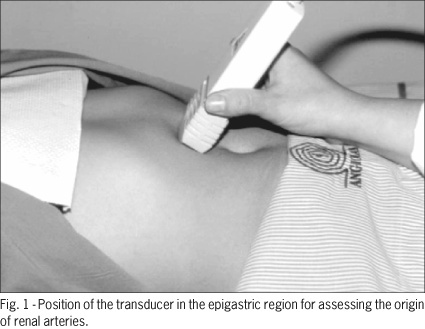
OBJECTIVE: To assess the accuracy of vascular color Doppler ultrasound as compared with digital subtraction arteriography for identifying hemodynamically significant renal artery stenoses. METHODS: One hundred and thirty-seven renal arteries from 69 adult patients suspected of having renovascular arterial hypertension were prospectively studied with ultrasound. The results obtained were compared in a double-blind manner with those obtained on digital subtraction arteriography, and the following parameters were calculated according to previously defined criteria: sensitivity, specificity, positive predictive value, negative predictive value, and overall accuracy. RESULTS: The inconclusive results (7 arteries) were excluded. The comparison of the 2 methods in regard to the 130 remaining arteries showed concordant results for 116 (89.2%) arteries and discordant results for 14 (10.8%) arteries. The sensitivity, specificity, positive predictive value, negative predictive value, and overall accuracy of vascular color Doppler ultrasound were, respectively, 95.33%, 88.14%, 89.86%, 94.55%, and 91.94%. CONCLUSION: A good correlation between the 2 examinations was observed in the evaluation of the hemodynamically significant renal artery stenoses, making vascular color Doppler ultrasound a noninvasive method useful for selecting patients with suspected renovascular hypertension.

  • Hypertension
  • renal artery
  • ultrasound
Read Full Article
Creative Commons Attribution (CC BY) Creative Commons license
08/06/2004 DOI: 10.1590/S0066-782X2004000500010 Views 1

How to cite this article

EndNote RIS

Electronic Document Format (Vancouver)

Fernandes A. Phenotyping of Congestion in Decompensated Heart Failure: Life-Saving Accuracy. ABC Imagem Cardiovascular 2026;39(1):e20260019.

Electronic Document Format (ABNT)

Fernandes, Amanda. Phenotyping of Congestion in Decompensated Heart Failure: Life-Saving Accuracy. ABC Imagem Cardiovascular, v. 39, n. 1, e20260019, May. 2026.

Electronic Document Format (APA)

Fernandes, A. (2026). Phenotyping of Congestion in Decompensated Heart Failure: Life-Saving Accuracy. ABC Imagem Cardiovascular, 39(1), e20260019.

Electronic Document Format (ISO)

Fernandes, Amanda. Phenotyping of Congestion in Decompensated Heart Failure: Life-Saving Accuracy. ABC Imagem Cardiovascular [online]. 2026, vol. 39, n. 1, [cited 2026-10-14], e20260019. Available from: <https://journals.cardiol.br/en/article/phenotyping-of-congestion-in-decompensated-heart-failure-life-saving-accuracy/>. ISSN 2318-8219

EndNote RIS

Electronic Document Format (Vancouver)

Freitas D, Alves A, Pereira A, Pereira T. Increased intima-media thickness is independently associated with Ischemic Stroke. Arquivos Brasileiros de Cardiologia 2012;98(6):497-504.

Electronic Document Format (ABNT)

Freitas, Dário; Alves, Ana; Pereira, Alexandre; Pereira, Telmo. Increased intima-media thickness is independently associated with Ischemic Stroke. Arquivos Brasileiros de Cardiologia, v. 98, n. 6, p. 497-504, May. 2012.

Electronic Document Format (APA)

Freitas, D., Alves, A., Pereira, A., & Pereira, T. (2012). Increased intima-media thickness is independently associated with Ischemic Stroke. Arquivos Brasileiros de Cardiologia, 98(6), 497-504.

Electronic Document Format (ISO)

Freitas, Dário and Alves, Ana and Pereira, Alexandre and Pereira, Telmo. Increased intima-media thickness is independently associated with Ischemic Stroke. Arquivos Brasileiros de Cardiologia [online]. 2012, vol. 98, n. 6, [cited 2026-10-14], pp. 497-504. Available from: <https://journals.cardiol.br/en/article/increased-intima-media-thickness-is-independently-associated-with-ischemic-stroke/>. ISSN 0066-782X

EndNote RIS

Electronic Document Format (Vancouver)

Engelhorn CA, Engelhorn AL, Pullig R. Vascular color Doppler ultrasound for assessing renovascular hypertension: accuracy of the direct technique for assessing the renal arteries. Arquivos Brasileiros de Cardiologia 2004;82(5):473-6.

Electronic Document Format (ABNT)

Engelhorn, Carlos Alberto; Engelhorn, Ana Luiza; Pullig, Renata. Vascular color Doppler ultrasound for assessing renovascular hypertension: accuracy of the direct technique for assessing the renal arteries. Arquivos Brasileiros de Cardiologia, v. 82, n. 5, p. 473-476, Jun. 2004.

Electronic Document Format (APA)

Engelhorn, C. A., Engelhorn, A. L., & Pullig, R. (2004). Vascular color Doppler ultrasound for assessing renovascular hypertension: accuracy of the direct technique for assessing the renal arteries. Arquivos Brasileiros de Cardiologia, 82(5), 473-476.

Electronic Document Format (ISO)

Engelhorn, Carlos Alberto and Engelhorn, Ana Luiza and Pullig, Renata. Vascular color Doppler ultrasound for assessing renovascular hypertension: accuracy of the direct technique for assessing the renal arteries. Arquivos Brasileiros de Cardiologia [online]. 2004, vol. 82, n. 5, [cited 2026-10-14], pp. 473-476. Available from: <https://journals.cardiol.br/en/article/vascular-color-doppler-ultrasound-for-assessing-renovascular-hypertension-accuracy-of-the-direct-technique-for-assessing-the-renal-arteries/>. ISSN 0066-782X

  • About ABC Family
  • Internal Regulation
  • Editorial Board
  • Brazilian Society of Cardiology (SBC)

Issues

SBC Guidelines

  • Videos
  • Podcasts
  • News