ABC Family Arquivos Brasileiros de Cardiologia International Journal of Cardiovascular Sciences ABC Heart Failure & Cardiomyopathy ABC Imagem Cardiovascular
Português English
ABC Family
Português English
  • About
    • About ABC Family
    • Internal Regulation
    • Editorial Board
    • Brazilian Society of Cardiology (SBC)
  • Issues
  • SBC Guidelines
  • Content
    • Videos
    • Podcasts
    • News
  • About
    • About ABC Family
    • Internal Regulation
    • Editorial Board
    • Brazilian Society of Cardiology (SBC)
  • Issues
  • SBC Guidelines
  • Content
    • Videos
    • Podcasts
    • News

ABC Family

  • ABC Family
  • Arquivos Brasileiros de Cardiologia
  • International Journal of Cardiovascular Sciences
  • ABC Heart Failure & Cardiomyopathy
  • ABC Imagem Cardiovascular
Search in

No content found.

Journals
Ordering
Article types
Others

  1. Home
  2. Keyword: Yoga
IJCS
Editorial

Breathing and Cardiovascular Patterns: What can we Learn from Respiratory Exercises?

Gabriel Dias Rodrigues

In the current issue of the International Journal of Cardiovascular Sciences, Fetter and colleagues found that respiratory movements of the abdominal cavity and rib cage, evaluated by circumferences measurements, were higher in Yoga practitioners than in an age-matched sedentary group. Also, the study confirmed that Yoga practitioners showed higher maximal expiratory strength and lower heart rate at rest than non-practitioners.

Yoga has been recommended as a non-pharmacological therapy to control cardiovascular risk factors. Respiratory exercises are part of the Yoga program that includes abdominal and rib cage expansion by rhythmic movements. – It was demonstrated that four months of Yoga respiratory training improved inspiratory and expiratory muscle strength, forced vital capacity and quality of life in healthy elderly. Another study demostrated that Yoga influenced cardiorespiratory control, affecting the resting sympatho-vagal balance, with a shift from vagal to sympathetic predominance, reflecting a sympathetic withdrawal. Several disease subsets are marked by autonomic dysfunction characterized by sympathetic overactivity at rest, and in this context, respiratory exercises such as Yoga may be a potential countermeasure.

[…]

  • Breathing
  • Breathing Exercises
  • Cardiovascular Diseases
  • Continuity of Patient Care
  • physical therapy modalities
  • Yoga
Read Full Article
Creative Commons Attribution (CC BY) Creative Commons license
10/03/2023 DOI: 10.36660/ijcs.20210191 Views 1
IJCS
Brief Communication

Increased Maximal Expiratory Pressure, Abdominal and Thoracic Respiratory Expansibility in Healthy Yoga Practitioners Compared to Healthy Sedentary Individuals

Cláudia Fetter et al. Liliane Appratto de Souza Daniela Ravizzoni Dartora Andressa Schein … Bruna Eibel Karina Casali Maria Cláudia Irigoyen

Abstract

Background

Increasing thoracic expansion is effective at reducing blood pressure in hypertensive subjects. Yoga prescribes many respiratory techniques with a growing number of practitioners. However, very little is known whether sedentary or yoga practitioners show measurable differences in their respiratory patterns.

Objective

This study aims to demonstrate differences between healthy sedentary individuals and healthy yoga practitioners regarding maximal respiratory pressures and thoracic and abdominal respiratory expansibility.

Methods

Maximal inspiratory and expiratory pressures (MIP and MEP, respectively) were evaluated by manovacuometry, while respiratory expansion was assessed by the cirtometry of abdominal (CA), thoracic xiphoidal (CTX), and thoracic axillary (CTA) circumferences at rest (end expiratory moment) and at full inspiration in healthy sedentary individuals (SED) and yoga practitioners (YOGA). A delta derived from rest and full inspiration measures (ΔCA, ΔCTX, and ΔCTA, respectively), followed by a percentage of each item (ΔCA/CA, ΔCTX/CTX, and ΔCTA/CTA) was then calculated. Groups were compared by means of an unpaired Student’s t-test, with a significance level p < 0.05.

Results

All respiratory expansion measures were significantly higher in in the YOGA group. A significantly higher MEP (cmH2O) was also detected in yoga practitioners: SED 89.3 ± 19.3 and YOGA 114.7 ± 24.8 ( p = 0.007), along with decreased heart rate at rest (bpm): SED 84±6 and YOGA 74±15 ( p = 0.001).

Conclusions

Yoga practitioners have shown greater thoracic and abdominal expansion and increased MEP, when compared to healthy sedentary individuals, as well as significantly lower heart rates at rest and body mass index (BMI). However, whether or not these findings are related to respiratory patterns is uncertain.

  • Blood Pressure
  • Breathing Exercises
  • Heart Rate
  • Maximal Respiratory Pressures
  • Sedentarism
  • Yoga
Read Full Article
Creative Commons Attribution (CC BY) Creative Commons license
07/07/2021 DOI: 10.36660/ijcs.20200030 Views 1
ABC
Editorial

Evidence-Based Alternative Therapies that “Touch the Heart”

Anderson Donelli da Silveira et al. Ricardo Stein

Introduction

Subcutaneous implantable defibrillator, bioabsorbable polymer stents, transcatheter aortic valve implant for certain patients with severe aortic stenosis, as well as the use of novel anticoagulants, are tangible examples of therapeutic advances in Cardiology in the end of this second decade of the 21st century. In parallel, despite their infinitely lower financial support and prominence in scientific journals and Cardiology Congresses, the non-pharmacological interventions defined as “alternative” have also been tested with the purpose of improving important outcomes in these patients. In Cardiology, studies also use Meditation, Tai Chi (TC), Yoga and even Laughter Therapy as forms of treatment. In this context, this clinical updating has two objectives: 1) To provide the reader of the Arquivos Brasileiros de Cardiologia (ABC cardiol) with access to information on the alternative therapies aforementioned; 2) To enable them, if they are interested, to use these therapies in their everyday professional life; 3) To show that Brazilian researchers have been publishing articles involving some of these alternative therapies in journals like the Arquivos Brasileiros de Cardiologia, as well as in international high impact journals.

[…]

  • Cardiovascular Diseases
  • Laughter Therapy
  • Meditation
  • Relaxation
  • Sense of Humor
  • Tai Chi
  • Yoga
Read Full Article
Creative Commons Attribution (CC BY) Creative Commons license
02/12/2019 DOI: 10.36660/abc.20190719 Views 1
Figure 1
ABC
Review Article

Effects of Yoga in Patients with Chronic Heart Failure: A Meta-Analysis

Mansueto Gomes-Neto et al. Erenaldo Sousa Rodrigues-Jr Walderi Monteiro Silva-Jr Vitor Oliveira Carvalho

The use of yoga as an effective cardiac rehabilitation in patients with chronic heart failure (CHF) remains controversial.

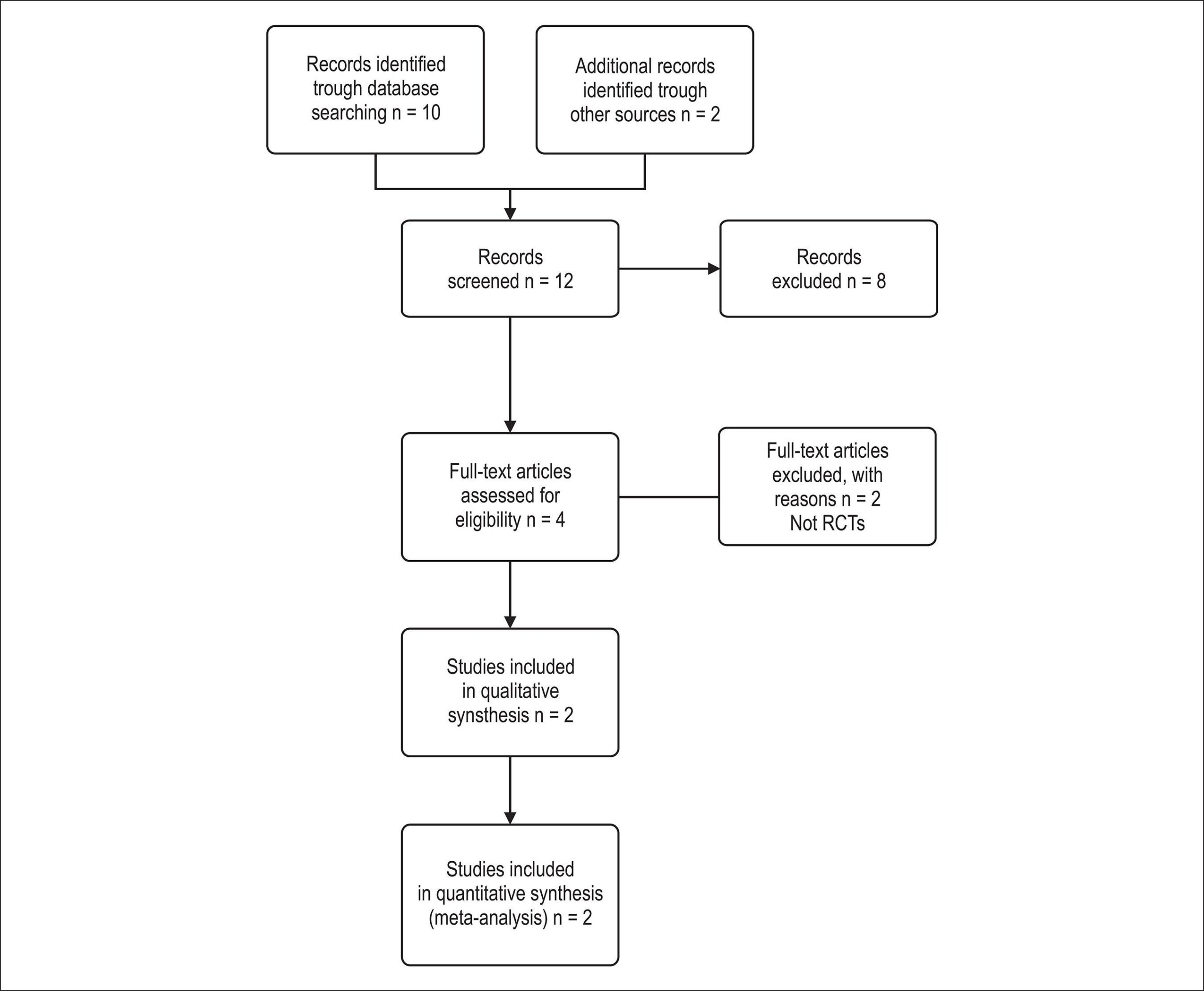
We performed a meta-analysis to examine the effects of yoga on exercise capacity and health-related quality of life (HRQOL) in patients with CHF. Methods: We searched MEDLINE, Cochrane Central Register of Controlled Trials, Excerpta Medica database, LILACS, Physiotherapy Evidence Database, The Scientific Electronic Library Online, and Cumulative Index to Nursing and Allied Health (from the earliest date available to December 2013) for randomized controlled trials (RCTs) examining the effects of yoga versus exercise and/or of yoga versus control on exercise capacity (peakVO2) and quality-of-life (HRQOL) in CHF. Two reviewers selected studies independently. Weighted mean differences (WMDs) and 95% confidence intervals (CIs) were calculated, and heterogeneity was assessed using the I2 test.

Two studies met the selection criteria (total: 30 yoga and 29 control patients). The results suggested that yoga compared with control had a positive impact on peak VO2 and HRQOL. Peak VO2, WMD (3.87 95% CI: 1.95 to 5.80), and global HRQOL standardized mean differences (-12.46 95% CI: -22.49 to -2.43) improved in the yoga group compared to the control group.

Yoga enhances peak VO2 and HRQOL in patients with CHF and could be considered for inclusion in cardiac rehabilitation programs. Larger RCTs are required to further investigate the effects of yoga in patients with CHF.

  • Complementary Therapies/utilization
  • Exercise Therapy
  • Heart Failure
  • Meta-Analysis
  • Yoga
Read Full Article
Creative Commons Attribution (CC BY) Creative Commons license
10/10/2014 DOI: 10.5935/abc.20140149

How to cite this article

EndNote RIS

Electronic Document Format (Vancouver)

Rodrigues GD. Breathing and Cardiovascular Patterns: What can we Learn from Respiratory Exercises?. International Journal of Cardiovascular Sciences 2023;34(6):732-3.

Electronic Document Format (ABNT)

Rodrigues, Gabriel Dias. Breathing and Cardiovascular Patterns: What can we Learn from Respiratory Exercises?. International Journal of Cardiovascular Sciences, v. 34, n. 6, p. 732-733, Mar. 2023.

Electronic Document Format (APA)

Rodrigues, G. D. (2023). Breathing and Cardiovascular Patterns: What can we Learn from Respiratory Exercises?. International Journal of Cardiovascular Sciences, 34(6), 732-733.

Electronic Document Format (ISO)

Rodrigues, Gabriel Dias. Breathing and Cardiovascular Patterns: What can we Learn from Respiratory Exercises?. International Journal of Cardiovascular Sciences [online]. 2023, vol. 34, n. 6, [cited 2026-10-14], pp. 732-733. Available from: <https://journals.cardiol.br/en/article/breathing-and-cardiovascular-patterns-what-can-we-learn-from-respiratory-exercises/>. ISSN 2359-4802

EndNote RIS

Electronic Document Format (Vancouver)

Fetter C, Souza LA, Dartora DR, Schein A, Eibel B, Casali K, Irigoyen MC, et al. Increased Maximal Expiratory Pressure, Abdominal and Thoracic Respiratory Expansibility in Healthy Yoga Practitioners Compared to Healthy Sedentary Individuals. International Journal of Cardiovascular Sciences 2021;34(6):728-31.

Electronic Document Format (ABNT)

Fetter, Cláudia; Souza, Liliane Appratto de; Dartora, Daniela Ravizzoni; Schein, Andressa; Eibel, Bruna; Casali, Karina; Irigoyen, Maria Cláudia. Increased Maximal Expiratory Pressure, Abdominal and Thoracic Respiratory Expansibility in Healthy Yoga Practitioners Compared to Healthy Sedentary Individuals. International Journal of Cardiovascular Sciences, v. 34, n. 6, p. 728-731, Jul. 2021.

Electronic Document Format (APA)

Fetter, C., Souza, L. A. , Dartora, D. R., Schein, A., Eibel, B., Casali, K., & Irigoyen, M. C. (2021). Increased Maximal Expiratory Pressure, Abdominal and Thoracic Respiratory Expansibility in Healthy Yoga Practitioners Compared to Healthy Sedentary Individuals. International Journal of Cardiovascular Sciences, 34(6), 728-731.

Electronic Document Format (ISO)

Fetter, Cláudia and Souza, Liliane Appratto de and Dartora, Daniela Ravizzoni and Schein, Andressa and Eibel, Bruna and Casali, Karina and Irigoyen, Maria Cláudia. Increased Maximal Expiratory Pressure, Abdominal and Thoracic Respiratory Expansibility in Healthy Yoga Practitioners Compared to Healthy Sedentary Individuals. International Journal of Cardiovascular Sciences [online]. 2021, vol. 34, n. 6, [cited 2026-10-14], pp. 728-731. Available from: <https://journals.cardiol.br/en/article/increased-maximal-expiratory-pressure-abdominal-and-thoracic-respiratory-expansibility-in-healthy-yoga-practitioners-compared-to-healthy-sedentary-individuals/>. ISSN 2359-4802

EndNote RIS

Electronic Document Format (Vancouver)

Silveira AD, Stein R. Evidence-Based Alternative Therapies that “Touch the Heart”. Arquivos Brasileiros de Cardiologia 2019;113(6):1059-61.

Electronic Document Format (ABNT)

Silveira, Anderson Donelli da; Stein, Ricardo. Evidence-Based Alternative Therapies that “Touch the Heart”. Arquivos Brasileiros de Cardiologia, v. 113, n. 6, p. 1059-1061, Dec. 2019.

Electronic Document Format (APA)

Silveira, A. D. , & Stein, R. (2019). Evidence-Based Alternative Therapies that “Touch the Heart”. Arquivos Brasileiros de Cardiologia, 113(6), 1059-1061.

Electronic Document Format (ISO)

Silveira, Anderson Donelli da and Stein, Ricardo. Evidence-Based Alternative Therapies that “Touch the Heart”. Arquivos Brasileiros de Cardiologia [online]. 2019, vol. 113, n. 6, [cited 2026-10-14], pp. 1059-1061. Available from: <https://journals.cardiol.br/en/article/evidence-based-alternative-therapies-that-touch-the-heart/>. ISSN 0066-782X

EndNote RIS

Electronic Document Format (Vancouver)

Gomes-Neto M, Rodrigues-Jr ES, Silva-Jr WM, Carvalho VO. Effects of Yoga in Patients with Chronic Heart Failure: A Meta-Analysis. Arquivos Brasileiros de Cardiologia 2014;103(5):433-9.

Electronic Document Format (ABNT)

Gomes-Neto, Mansueto; Rodrigues-Jr, Erenaldo Sousa; Silva-Jr, Walderi Monteiro; Carvalho, Vitor Oliveira. Effects of Yoga in Patients with Chronic Heart Failure: A Meta-Analysis. Arquivos Brasileiros de Cardiologia, v. 103, n. 5, p. 433-439, Oct. 2014.

Electronic Document Format (APA)

Gomes-Neto, M., Rodrigues-Jr, E. S., Silva-Jr, W. M., & Carvalho, V. O. (2014). Effects of Yoga in Patients with Chronic Heart Failure: A Meta-Analysis. Arquivos Brasileiros de Cardiologia, 103(5), 433-439.

Electronic Document Format (ISO)

Gomes-Neto, Mansueto and Rodrigues-Jr, Erenaldo Sousa and Silva-Jr, Walderi Monteiro and Carvalho, Vitor Oliveira. Effects of Yoga in Patients with Chronic Heart Failure: A Meta-Analysis. Arquivos Brasileiros de Cardiologia [online]. 2014, vol. 103, n. 5, [cited 2026-10-14], pp. 433-439. Available from: <https://journals.cardiol.br/en/article/effects-of-yoga-in-patients-with-chronic-heart-failure-a-meta-analysis/>. ISSN 0066-782X

  • About ABC Family
  • Internal Regulation
  • Editorial Board
  • Brazilian Society of Cardiology (SBC)

Issues

SBC Guidelines

  • Videos
  • Podcasts
  • News