ABC Family Arquivos Brasileiros de Cardiologia International Journal of Cardiovascular Sciences ABC Heart Failure & Cardiomyopathy ABC Imagem Cardiovascular
Português English
ABC Family
Português English
  • About
    • About ABC Family
    • Internal Regulation
    • Editorial Board
    • Brazilian Society of Cardiology (SBC)
  • Issues
  • SBC Guidelines
  • Content
    • Videos
    • Podcasts
    • News
  • About
    • About ABC Family
    • Internal Regulation
    • Editorial Board
    • Brazilian Society of Cardiology (SBC)
  • Issues
  • SBC Guidelines
  • Content
    • Videos
    • Podcasts
    • News

ABC Family

  • ABC Family
  • Arquivos Brasileiros de Cardiologia
  • International Journal of Cardiovascular Sciences
  • ABC Heart Failure & Cardiomyopathy
  • ABC Imagem Cardiovascular
Search in

No content found.

Journals
Ordering
Article types
Others

  1. Home
  2. Keyword: implantable cardioverter-defibrillator
Figure 1
ABC
Research Letter

Treating Brugada Syndrome: A Case of Successful Radiofrequency Catheter Ablation

Mirella Esmanhotto Facin et al. Cristiano Faria Pisani Luciana Sacilotto Francisco Carlos da Costa Darrieux … Nelson Samesima Maurício Ibrahim Scanavacca

Introduction

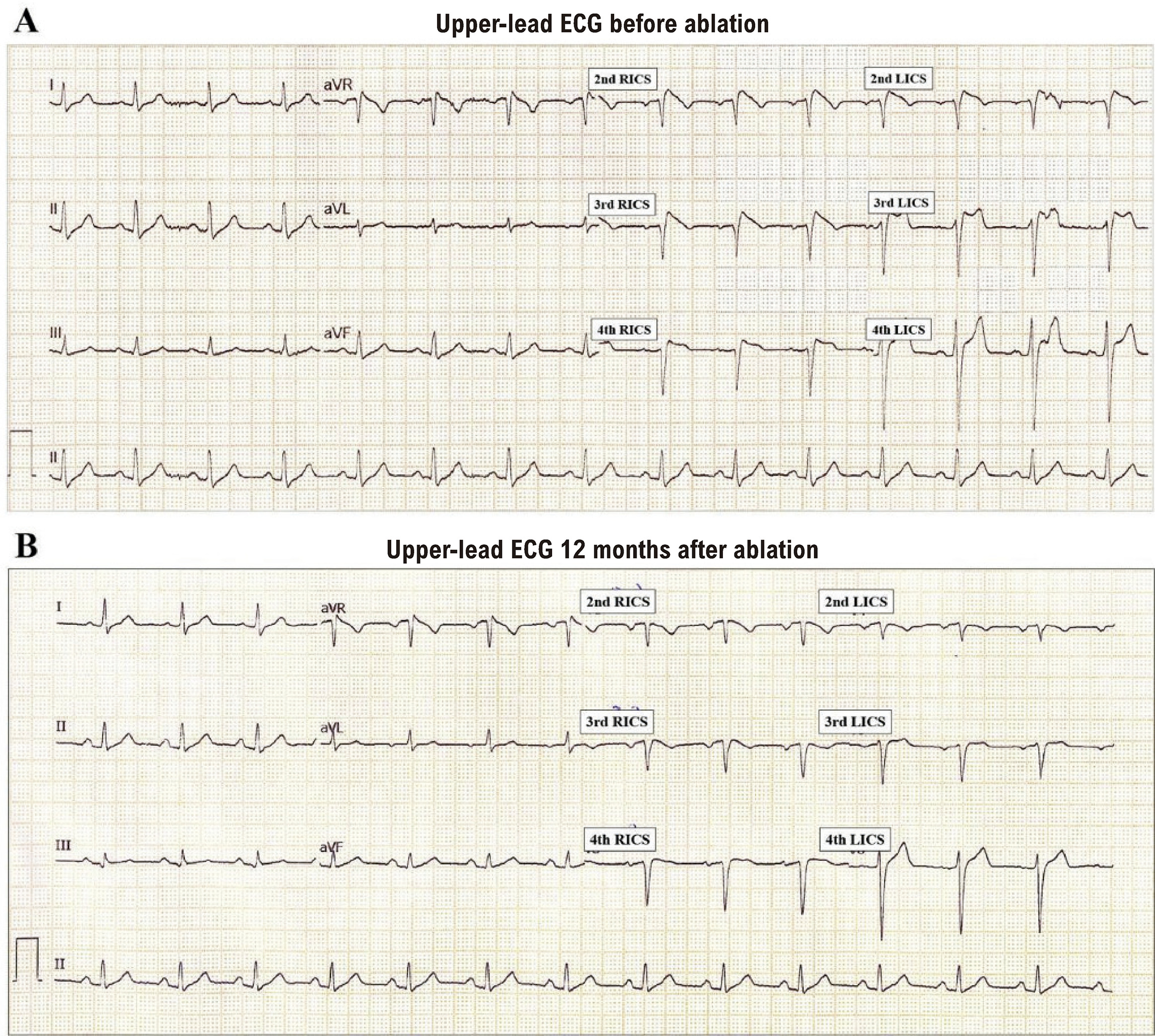
Brugada syndrome (BrS) is a severe health condition characterized by a distinctive electrocardiographic pattern and an increased risk of life-threatening cardiac arrhythmias. Traditional therapy has been limited to implantable cardioverter defibrillators (ICD). In the past two decades, however, radiofrequency catheter ablation (RFCA) has emerged as a valuable treatment option, especially for those ineligible for ICD implantation or who have already undergone appropriate device therapy., Nevertheless, reports on medium to long-term success of this procedure are still scarce. We reported herein the case of a symptomatic patient with BrS who underwent RFCA after experiencing an appropriate ICD shock.

[…]
  • Brugada Syndrome
  • implantable cardioverter-defibrillator
  • Life-threatening Arrhythmic Events
  • radiofrequency catheter ablation
Read Full Article
Creative Commons Attribution (CC BY) Creative Commons license
28/02/2025 DOI: 10.36660/abc.20240501i Views 1
Figure 1
ABC
Case Report

Family Screening in the Diagnosis of Short QT Syndrome after Sudden Cardiac Death as First Manifestation in Young Siblings

Guilherme Augusto Teodoro Athayde et al. Natália Quintella Sangiorgi Olivetti Francisco Carlos da Costa Darrieux Luciana Sacilotto … Gabrielle D’Arezzo Pessente Maurício Ibrahim Scanavacca

Introduction

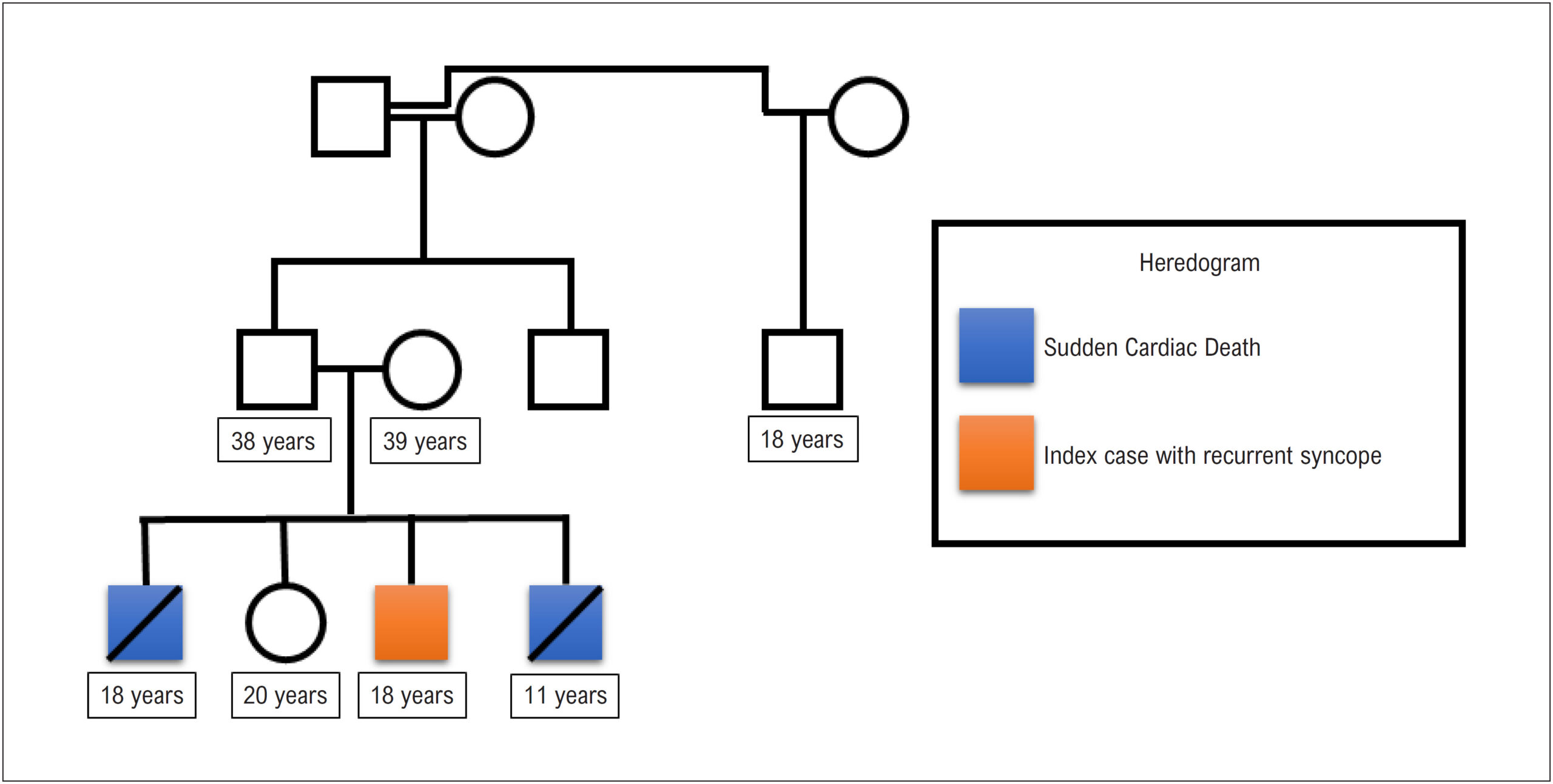
In 2000, Gussak et al., published a case series in which atrial tachyarrhythmias, syncope, and sudden cardiac death (SCD) were associated with a short QT interval, being the first to correlate all of these finding in one single study. Since then, efforts have been made to better understand the behavior of and find alternatives to treat short QT syndrome (SQTS); however, researchers face the barrier of the rarity of the disease, the difficulty in establishing diagnostic parameters, and its complex clinical manifestation. This article reports on the case of young siblings with SCD and SQTS and discusses the syndrome’s diagnostic and therapeutic difficulties.

[…]

  • Cardiac Channelopathies
  • Genetic Testing
  • implantable cardioverter-defibrillator
  • short QT syndrome
  • Sudden Cardiac Death
Read Full Article
Creative Commons Attribution (CC BY) Creative Commons license
19/07/2021 DOI: 10.36660/abc.20200274
IJCS
Review Article

Update on Sports Participation for Athletes with Implantable Cardioverter Defibrillators

Rachel Lampert

Abstract

Prior statements have recommended restriction from competitive sports participation for all athletes with ICDs. Recent data, however, suggests that many athletes can participate in sports without adverse events. In the ICD Sports Registry, 440 athletes, aged 8-60 years, 77 of which were high-level interscholastic athletes, who had continued to practice sports, were prospectively followed for 4 years, with no deaths or failures to defibrillate during practice, and no injuries related to arrhythmia or shock during sports. Shocks did occur, for ventricular and supraventricular arrhythmias. While more athletes received shocks during physical activity than at rest, there were no differences between competition or practice, versus other physical activity. Programming with higher rate cut-offs and longer durations was associated with fewer inappropriate shocks, with no increase in syncope. Based on this study, current recommendations now state that returning to competition may be considered for an athlete with an ICD. In considering this decision, the underlying disease and type of sport should be discussed, and shared decision-making between doctor, patient, and often family, is critical.

  • Athlete
  • implantable cardioverter-defibrillator
Read Full Article
Creative Commons Attribution (CC BY) Creative Commons license
12/08/2019 DOI: 10.5935/2359-4802.20190059
Clinical follow-up of patients with implantable cardioverter-defibrillator
ABC
Artigo Original

Clinical follow-up of patients with implantable cardioverter-defibrillator

Silvia Martelo Souza da Fonseca et al. Luiz Gustavo Belo Hécio Carvalho Nilson Araújo … Cláudio Munhoz Leonardo Siqueira Washington Maciel Eduardo Andréa Jacob Atié

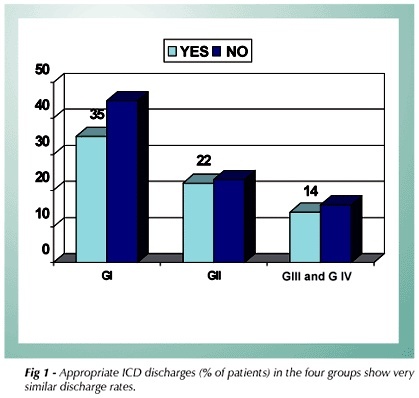
OBJECTIVE: To report appropriate (AT) and inappropriate (IT) ICD therapies in patients with ischemic and nonischemic heart disease, as well as early and late procedure-related complications. METHODS: One hundred and fifty-five patients (119 male and 36 female), mean age 47 years (21-88), who underwent ICD implantation between 1994 and March 2003 were analyzed. Patients were divided into the following groups: Group I – Post-AMI patients (n = 80); Group II – Patients with nonischemic heart disease and LV ejection fraction < 40% (n = 45), Chagas disease (n = 18), idiopathic dilated cardiomyopathy (n= 12), hypertensive disease (n = 8), hypertrophic cardiomyopathy (n = 4) and valvular heart disease (n = 3); Group III – Patients with arrhythmogenic right ventricular dysplasia (n = 13); and Group IV – Patients with channelopathies: Brugada Syndrome (n = 8) and idiopathic ventricular arrhythmias (n = 9). All patients underwent electrophysiological study (EPS) with induction of sustained ventricular arrhythmia ICD implantation. RESULTS: During the 26-month mean follow up, a high rate of appropriate ICD therapies (antitachycardia pacing and/or shock) was observed (46%) in the four groups, with no statistically significant difference. The four groups did not differ in either overall (8.4%) or arrhythmic mortality (1.3%). There was no correlation between appropriate ICD therapies and initial clinical presentation or inducible ventricular arrhythmia at EPS, and a 4% incidence of early and late procedure-related complications was found. CONCLUSION: The high incidence of appropriate ICD therapy and low rate of sudden death in the patients studied suggest that ICD is a valuable strategy in the management of ischemic and nonischemic patients previously selected by means of EPS.

  • appropriate and inappropriate discharges
  • implantable cardioverter-defibrillator
  • ischemic and nonischemic heart disease
  • Sudden Death
Read Full Article
Creative Commons Attribution (CC BY) Creative Commons license
07/03/2007 DOI: 10.1590/S0066-782X2007000100002 Views 1
Hypertrophic cardiomyopathy: the importance of arrhythmic events in patients at risk for sudden cardiac death
ABC
Artigo Original

Hypertrophic cardiomyopathy: the importance of arrhythmic events in patients at risk for sudden cardiac death

Paulo de Tarso Jorge Medeiros et al. Martino Martinelli Filho Edmundo Arteaga Roberto Costa … Sérgio Siqueira Charles Mady Leopoldo Soares Piegas José Antonio Franchini Ramires

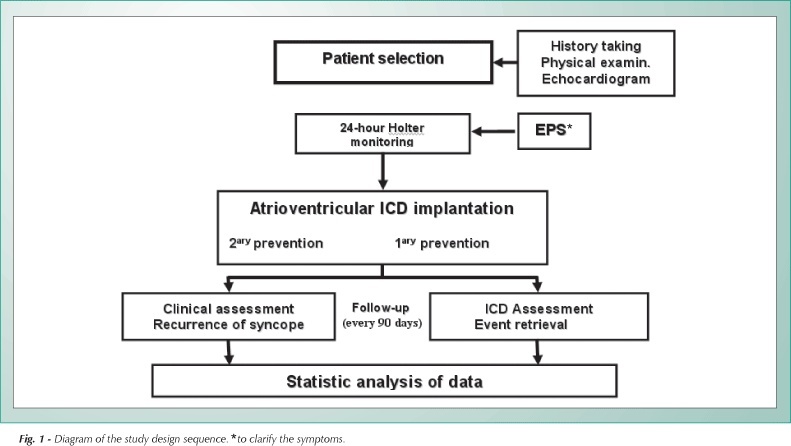
OBJECTIVE: It is controversial the correlation between complex ventricular arrhythmia of hypertrophic cardiomyopathy and cardiac sudden death (CSD). In patients with hypertrophic cardiomyopathy and at risk for CSD that have been undergone implantable cardioverter-defibrillator (ICD) implantation, we evaluated: a- occurrence of arrhythmic events; b- clinical event occurrence and its correlation with arrhythmic events; c- ICD shock therapy occurrence and clinical-functional correlation; d- prognosis clinical-functional predictors. METHODS: Twenty-six patients have been studied. They presented hypertrophic cardiomyopathy and risk factors for CSD. These patients underwent ICD implantation, period May, 2000 through January, 2004 (average follow-up – 19 months). Fourteen patients (53.8%) were female and the mean age was 42.7. Sixteen patients (61.5%) ICD was performed due to primary prevention for sudden death and ten (38.5%) secondary prevention. Twenty patients (76.9%) had had syncope, previus to ICD implantation, half of them associated with ventricular fibrillation or sustained ventricular tachycardia; 15 had had family sudden death; 12 patients (46.2%) presented non-sustained ventricular tachycardia at 24-hour Holter and 5 (19.2%) showed the ventricular septum thickness larger than 30 mm. RESULTS: During the follow-up, 4 shocks therapy were recorded by ICD in potentially lethal arrythmias (3 sustained ventricular tachycardia and 1 ventricular fibrillation). There was one death, due to likely stroke. Four patients had syncope recurrence, with no arrhythmic event recorded by ICD. The statistical analysis has showed precocity significance of ICD shock, in patients whose ventricular septum thickness was larger than 30 mm. CONCLUSION: 1- arrhythmic events have occurred in 50% of the patients. Most of those events (62%) were ventricular tachycardia, 31% sustained tachycardia and 31% non-sustained ventricular tachycardia. The remainders had supraventricular tachycardia. 2- recurrent syncope in only 16% of the patients. Nevertheless, they were not related to the presence of arrhythmic events. 3- the presence of ventricular septum larger than 30mm, at Echocardiogram, was associated with early shock therapy occurence (p = 0.003). 4- absence of clinical or functional predictors.

  • Arrhythmia
  • Hypertrophic Cardiomyopathy
  • implantable cardioverter-defibrillator
  • Risk Factors
  • Sudden Cardiac Death
Read Full Article
Creative Commons Attribution (CC BY) Creative Commons license
06/03/2007 DOI: 10.1590/S0066-782X2006001800016 Views 1

How to cite this article

EndNote RIS

Electronic Document Format (Vancouver)

Facin ME, Pisani CF, Sacilotto L, Darrieux FCC, Samesima N, Scanavacca MI. Treating Brugada Syndrome: A Case of Successful Radiofrequency Catheter Ablation. Arquivos Brasileiros de Cardiologia 2025;122(2):e20240501.

Electronic Document Format (ABNT)

Facin, Mirella Esmanhotto; Pisani, Cristiano Faria; Sacilotto, Luciana; Darrieux, Francisco Carlos da Costa; Samesima, Nelson; Scanavacca, Maurício Ibrahim. Treating Brugada Syndrome: A Case of Successful Radiofrequency Catheter Ablation. Arquivos Brasileiros de Cardiologia, v. 122, n. 2, e20240501, Feb. 2025.

Electronic Document Format (APA)

Facin, M. E., Pisani, C. F., Sacilotto, L., Darrieux, F. C. C., Samesima, N., & Scanavacca, M. I. (2025). Treating Brugada Syndrome: A Case of Successful Radiofrequency Catheter Ablation. Arquivos Brasileiros de Cardiologia, 122(2), e20240501.

Electronic Document Format (ISO)

Facin, Mirella Esmanhotto and Pisani, Cristiano Faria and Sacilotto, Luciana and Darrieux, Francisco Carlos da Costa and Samesima, Nelson and Scanavacca, Maurício Ibrahim. Treating Brugada Syndrome: A Case of Successful Radiofrequency Catheter Ablation. Arquivos Brasileiros de Cardiologia [online]. 2025, vol. 122, n. 2, [cited 2026-10-14], e20240501. Available from: <https://journals.cardiol.br/en/article/treating-brugada-syndrome-a-case-of-successful-radiofrequency-catheter-ablation/>. ISSN 0066-782X

EndNote RIS

Electronic Document Format (Vancouver)

Athayde GAT, Olivetti NQS, Darrieux FCC, Sacilotto L, Pessente GD, Scanavacca MI. Family Screening in the Diagnosis of Short QT Syndrome after Sudden Cardiac Death as First Manifestation in Young Siblings. Arquivos Brasileiros de Cardiologia 2021;117(1 suppl 1):12-5.

Electronic Document Format (ABNT)

Athayde, Guilherme Augusto Teodoro; Olivetti, Natália Quintella Sangiorgi; Darrieux, Francisco Carlos da Costa; Sacilotto, Luciana; Pessente, Gabrielle D’Arezzo; Scanavacca, Maurício Ibrahim. Family Screening in the Diagnosis of Short QT Syndrome after Sudden Cardiac Death as First Manifestation in Young Siblings. Arquivos Brasileiros de Cardiologia, v. 117, n. 1 suppl 1, p. 12-15, Jul. 2021.

Electronic Document Format (APA)

Athayde, G. A. T., Olivetti, N. Q. S., Darrieux, F. C. C., Sacilotto, L., Pessente, G. D., & Scanavacca, M. I. (2021). Family Screening in the Diagnosis of Short QT Syndrome after Sudden Cardiac Death as First Manifestation in Young Siblings. Arquivos Brasileiros de Cardiologia, 117(1 suppl 1), 12-15.

Electronic Document Format (ISO)

Athayde, Guilherme Augusto Teodoro and Olivetti, Natália Quintella Sangiorgi and Darrieux, Francisco Carlos da Costa and Sacilotto, Luciana and Pessente, Gabrielle D’Arezzo and Scanavacca, Maurício Ibrahim. Family Screening in the Diagnosis of Short QT Syndrome after Sudden Cardiac Death as First Manifestation in Young Siblings. Arquivos Brasileiros de Cardiologia [online]. 2021, vol. 117, n. 1 suppl 1, [cited 2026-10-14], pp. 12-15. Available from: <https://journals.cardiol.br/en/article/family-screening-in-the-diagnosis-of-short-qt-syndrome-after-sudden-cardiac-death-as-first-manifestation-in-young-siblings/>. ISSN 0066-782X

EndNote RIS

Electronic Document Format (Vancouver)

Lampert R. Update on Sports Participation for Athletes with Implantable Cardioverter Defibrillators. International Journal of Cardiovascular Sciences 2019;32(4):391-5.

Electronic Document Format (ABNT)

Lampert, Rachel. Update on Sports Participation for Athletes with Implantable Cardioverter Defibrillators. International Journal of Cardiovascular Sciences, v. 32, n. 4, p. 391-395, Aug. 2019.

Electronic Document Format (APA)

Lampert, R. (2019). Update on Sports Participation for Athletes with Implantable Cardioverter Defibrillators. International Journal of Cardiovascular Sciences, 32(4), 391-395.

Electronic Document Format (ISO)

Lampert, Rachel. Update on Sports Participation for Athletes with Implantable Cardioverter Defibrillators. International Journal of Cardiovascular Sciences [online]. 2019, vol. 32, n. 4, [cited 2026-10-14], pp. 391-395. Available from: <https://journals.cardiol.br/en/article/update-on-sports-participation-for-athletes-with-implantable-cardioverter-defibrillators/>. ISSN 2359-4802

EndNote RIS

Electronic Document Format (Vancouver)

Fonseca SMS, Belo LG, Carvalho H, Araújo N, Munhoz C, Siqueira L, Maciel W, et al. Clinical follow-up of patients with implantable cardioverter-defibrillator. Arquivos Brasileiros de Cardiologia 2007;88(1):8-16.

Electronic Document Format (ABNT)

Fonseca, Silvia Martelo Souza da; Belo, Luiz Gustavo; Carvalho, Hécio; Araújo, Nilson; Munhoz, Cláudio; Siqueira, Leonardo; Maciel, Washington; Andréa, Eduardo; Atié, Jacob. Clinical follow-up of patients with implantable cardioverter-defibrillator. Arquivos Brasileiros de Cardiologia, v. 88, n. 1, p. 8-16, Mar. 2007.

Electronic Document Format (APA)

Fonseca, S. M. S. , Belo, L. G., Carvalho, H., Araújo, N., Munhoz, C., Siqueira, L., Maciel, W., Andréa, E., & Atié, J. (2007). Clinical follow-up of patients with implantable cardioverter-defibrillator. Arquivos Brasileiros de Cardiologia, 88(1), 8-16.

Electronic Document Format (ISO)

Fonseca, Silvia Martelo Souza da and Belo, Luiz Gustavo and Carvalho, Hécio and Araújo, Nilson and Munhoz, Cláudio and Siqueira, Leonardo and Maciel, Washington and Andréa, Eduardo and Atié, Jacob. Clinical follow-up of patients with implantable cardioverter-defibrillator. Arquivos Brasileiros de Cardiologia [online]. 2007, vol. 88, n. 1, [cited 2026-10-14], pp. 8-16. Available from: <https://journals.cardiol.br/en/article/clinical-follow-up-of-patients-with-implantable-cardioverter-defibrillator/>. ISSN 0066-782X

EndNote RIS

Electronic Document Format (Vancouver)

Medeiros PTJ, Martinelli Filho M, Arteaga E, Costa R, Siqueira S, Mady C, Piegas LS, et al. Hypertrophic cardiomyopathy: the importance of arrhythmic events in patients at risk for sudden cardiac death. Arquivos Brasileiros de Cardiologia 2007;87(5):649-57.

Electronic Document Format (ABNT)

Medeiros, Paulo de Tarso Jorge; Martinelli Filho, Martino; Arteaga, Edmundo; Costa, Roberto; Siqueira, Sérgio; Mady, Charles; Piegas, Leopoldo Soares; Ramires, José Antonio Franchini. Hypertrophic cardiomyopathy: the importance of arrhythmic events in patients at risk for sudden cardiac death. Arquivos Brasileiros de Cardiologia, v. 87, n. 5, p. 649-657, Mar. 2007.

Electronic Document Format (APA)

Medeiros, P. T. J., Martinelli Filho, M., Arteaga, E., Costa, R., Siqueira, S., Mady, C., Piegas, L. S., & Ramires, J. A. F. (2007). Hypertrophic cardiomyopathy: the importance of arrhythmic events in patients at risk for sudden cardiac death. Arquivos Brasileiros de Cardiologia, 87(5), 649-657.

Electronic Document Format (ISO)

Medeiros, Paulo de Tarso Jorge and Martinelli Filho, Martino and Arteaga, Edmundo and Costa, Roberto and Siqueira, Sérgio and Mady, Charles and Piegas, Leopoldo Soares and Ramires, José Antonio Franchini. Hypertrophic cardiomyopathy: the importance of arrhythmic events in patients at risk for sudden cardiac death. Arquivos Brasileiros de Cardiologia [online]. 2007, vol. 87, n. 5, [cited 2026-10-14], pp. 649-657. Available from: <https://journals.cardiol.br/en/article/hypertrophic-cardiomyopathy-the-importance-of-arrhythmic-events-in-patients-at-risk-for-sudden-cardiac-death/>. ISSN 0066-782X

  • About ABC Family
  • Internal Regulation
  • Editorial Board
  • Brazilian Society of Cardiology (SBC)

Issues

SBC Guidelines

  • Videos
  • Podcasts
  • News