Tachycardiomyopathies
What are tachycardiomyopathies?
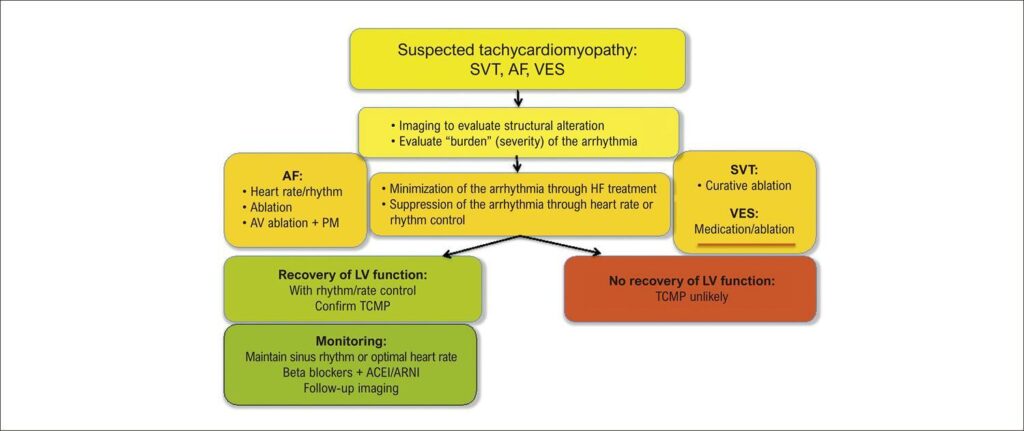
Tachycardiomyopathy is a relatively uncommon heart condition in which the myocardium develops ventricular dysfunction as a consequence of a persistently abnormal heart rhythm. One of the characteristics of this condition is that it is partially or completely reversible, once the arrhythmia has been controlled, making it crucial to recognize adequately in order to make recovery of ventricular function possible. In fact, the term “arrhythmia-induced cardiomyopathy” has emerged because tachycardiomyopathy results not only from prolonged and uncontrolled atrial or ventricular tachycardia, but also from atrial and/or ventricular ectopy leading to dyssynchrony. Both conditions can lead to chronic myocardial overload, resulting in ventricular dysfunction and heart failure.
Tachycardiomyopathies can be classified into two groups: in the first, arrhythmia is the only identified cause of ventricular dysfunction (arrhythmia-induced); in the second, the arrhythmia may aggravate ventricular dysfunction or worsen heart failure in a patient with pre-existing heart disease (arrhythmia-mediated).
[…]
Images
Image gallery fullscreen viewer
Comments are moderated by the editorial team before publication. Discussions should be evidence-based and use scientific language. Conflicts of interest should be declared.