| ABC
ABC Family Arquivos Brasileiros de Cardiologia International Journal of Cardiovascular Sciences ABC Heart Failure & Cardiomyopathy ABC Imagem Cardiovascular
Português English
ABC Family | ABC
Português English
  • About
    • About the Journal
    • Internal Regulation
    • Editors Section
    • Editorial Board
    • History
    • SBC Award
  • Instructions to Authors
    • Guidelines for Publication
    • Editorial Policy
    • Ethics Policy
    • Policy on the Use of Artificial Intelligence
    • Mandatory Publication Form
    • Publication Fee
  • Issues
  • SBC Guidelines
  • Abstracts
    • How to Publish an Abstract Supplement?
    • Supplements from the Brazilian Congress of Cardiology
  • About
    • About the Journal
    • Internal Regulation
    • Editors Section
    • Editorial Board
    • History
    • SBC Award
  • Instructions to Authors
    • Guidelines for Publication
    • Editorial Policy
    • Ethics Policy
    • Policy on the Use of Artificial Intelligence
    • Mandatory Publication Form
    • Publication Fee
  • Issues
  • SBC Guidelines
  • Abstracts
    • How to Publish an Abstract Supplement?
    • Supplements from the Brazilian Congress of Cardiology

ABC Family

  • ABC Family
  • Arquivos Brasileiros de Cardiologia
  • International Journal of Cardiovascular Sciences
  • ABC Heart Failure & Cardiomyopathy
  • ABC Imagem Cardiovascular
Search in

No content found.

Journals
Ordering
Article types
Others

  1. Home
  2. ABC
  3. Issues
  4. 2002, Volume 78, Number 1
Increase in mortality due to myocardial infarction in the Brazilian city of São Paulo during winter
Original Article

Increase in mortality due to myocardial infarction in the Brazilian city of São Paulo during winter

Rodolfo Sharovsky et al. Luiz Antônio Machado César

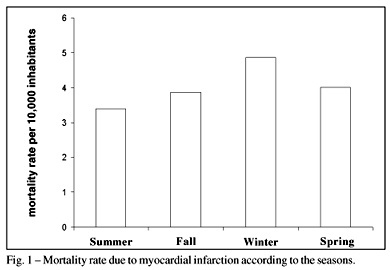
OBJECTIVE: To study the seasonal variation in mortality due to myocardial infarction in the city of São Paulo. METHODS: We analyzed the database of PROAIM (Programa de Aprimoramento de Informações de Mortalidade) containing the registrations of the certificates of deaths due to myocardial infarction (International Classification of Diseases, 10th edition, classification I21) of the residents of the municipality of São Paulo during 12 months (from December 1996 to November 1997). The number of deaths was corrected for a standard period of 90 days and then it was divided by the corresponding population to obtain the event rate per 10 thousand inhabitants. The magnitude of the seasonal variation, which was defined by the difference of the relative risks between the seasons with higher and lower mortality, was estimated. RESULTS: A total of 5,615 deaths due to myocardial infarction were included in the study. Sixty-one per cent occurred in the male sex, and the mean age was 68 years. The mortality rate during winter was always higher and that during summer was lower than that during the other seasons (P<0.01), independent from age and sex. Seasonal variations in deaths due to myocardial infarction was 30% in the general group, being 23% in individuals who died younger than 75 years, and 44% in the older ones. CONCLUSION: A marked seasonal variation in mortality due to myocardial infarction was observed in the city of São Paulo, with a significant increase in its magnitude and age distribution during the winter, similar to those reported in regions of North America and Europe with temperate climates.

  • Epidemiology
  • Myocardial Infarction
  • seasons
Read Full Article
Creative Commons Attribution (CC BY) Creative Commons license
19/02/2002 DOI: 10.1590/S0066-782X2002000100009 Views 1
Primary coronary angioplasty in a nonagenarian
Case Report

Primary coronary angioplasty in a nonagenarian

Luciano M. Baracioli et al. Carlos V. Serrano Jr Antônio Esteves Jean Pierre Ciporkin José Carlos Nicolau

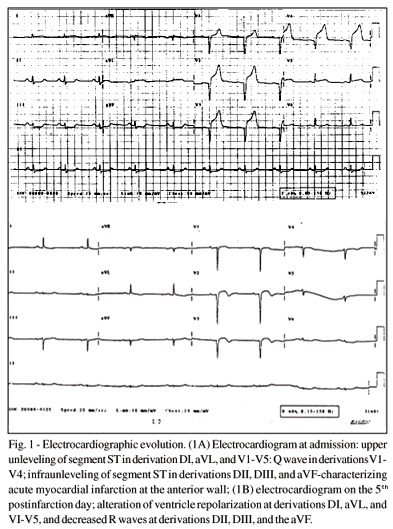
A woman aged 98 years entered the tertiary hospital service with a picture of acute myocardial infarction of the extensive anterior wall, which began 4 hours earlier. Due to the large myocardial risk area suggested by the electrocardiogram, the patient was taken to the hemodynamics laboratory for the performance of emergency coronary arteriography, which revealed occlusion in the proximal third of the anterior descending artery. Primary angioplasty followed by stent grafting was successfully performed. The patient had a satisfactory evolution (Killip I) and was discharged from the hospital on the seventh postinfarction day. We discuss here aspects of thrombolysis and coronary percutaneous interventions in the aged.

Read Full Article
Creative Commons Attribution (CC BY) Creative Commons license
19/02/2002 DOI: 10.1590/S0066-782X2002000100011 Views 1
Ambulatory blood pressure monitoring of patients with heart failure: a new prognosis marker
Original Article

Ambulatory blood pressure monitoring of patients with heart failure: a new prognosis marker

Manoel F. Canesin et al. Dante Giorgi Múcio T. de Oliveira Jr. Maurício Wajngarten … Alfredo J. Mansur José Antonio F. Ramires Antonio Carlos Pereira Barretto

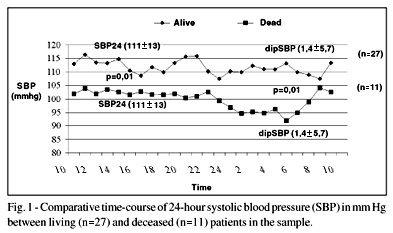
OBJECTIVE: To evaluate the relationship between 24-hour ambulatory arterial blood pressure monitoring and the prognosis of patients with advanced congestive heart failure. METHODS: We studied 38 patients with NYHA functional class IV congestive heart failure, and analyzed left ventricular ejection fraction, diastolic diameter, and ambulatory blood pressure monitoring data. RESULTS: Twelve deaths occurred. Left ventricular ejection fraction (35.2±7.3%) and diastolic diameter (72.2±7.8mm) were not correlated with the survival. The mean 24-hour (SBP24), waking (SBPw), and sleeping (SBPs) systolic pressures of the living patients were higher than those of the deceased patients and were significant for predicting survival. Patients with mean SBP24, SBPv, and SBPs > or = 105mmHg had longer survival (p=0.002, p=0.01 and p=0.0007, respectively). Patients with diastolic blood pressure sleep decrements (dip) and patients with mean blood pressure dip <=6mmHg had longer survival (p=0.04 and p=0.01, respectively). In the multivariate analysis, SBPs was the only variable with an odds ratio of 7.61 (CI: 1.56; 3704) (p=0.01). Patients with mean SBP or = 105 mmHg CONCLUSION: Ambulatory blood pressure monitoring appears to be a useful method for evaluating patients with congestive heart failure.

  • blood pressure ambulatory monitorization
  • Heart Failure
  • Prognosis
Read Full Article
Creative Commons Attribution (CC BY) Creative Commons license
19/02/2002 DOI: 10.1590/S0066-782X2002000100007 Views 1
Obstruction of the left ventricular outflow tract after mitral valvuloplasty with implantation of Gregori's ring
Case Report

Obstruction of the left ventricular outflow tract after mitral valvuloplasty with implantation of Gregori's ring

Roberto G. de Carvalho et al. Gustavo K. Pimentel Luciano de Oliveira Márcia M. da Silveira … Alexandre Alessi Dalton B. Precoma

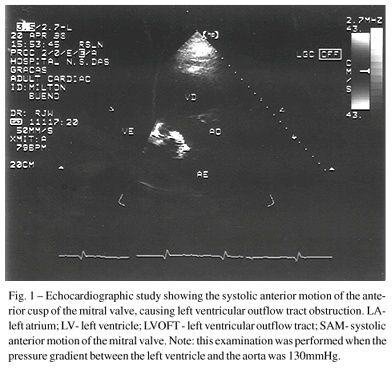
Mitral valvuloplasty is efficient for repairing mitral valve disease with few complications. In some cases, obstruction of the left ventricular outflow tract may occur due to systolic anterior motion of the mitral valve. We report the case of a patient with this complication and a pressure gradient between the left ventricle and the aorta of 130 mm Hg after mitral valvuloplasty with implantation of a Gregori’s ring. The management was clinical with suspension of the vasoactive drugs and introduction of a beta-blocker. Two years after the surgery, the patient is asymptomatic and has a normal life.

Read Full Article
Creative Commons Attribution (CC BY) Creative Commons license
19/02/2002 DOI: 10.1590/S0066-782X2002000100012 Views 1
Lipid metabolism in rats fed diets containing different types of lipids
Original Article

Lipid metabolism in rats fed diets containing different types of lipids

Márcia Barbosa Águila et al. Carla Cota Loureiro Alessandra da Rocha Pinheiro Carlos Alberto Mandarim-de-Lacerda

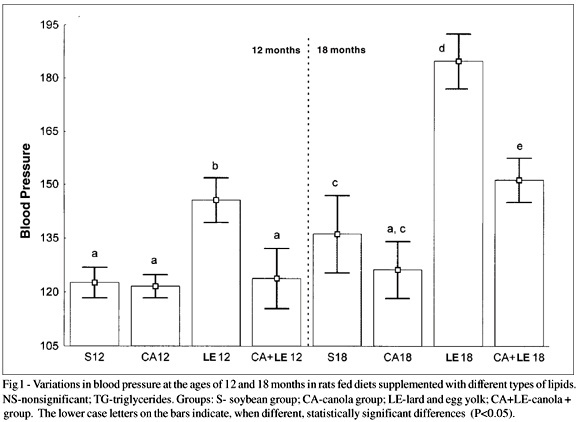
OBJECTIVE: To assess the effect of different types of lipid diets on the lipid metabolism of aging rats. METHODS: Fifty male Wistar rats were studied from the time of weaning to 12 and 18 months of age. Their diets were supplemented as follows: with soybean oil (S), canola oil (CA), lard and egg yolk (LE), and canola oil + lard and egg yolk (CA + LE). Blood pressure (BP) was measured every month, and the heart/body ratio (H/BR) was determined. The rats were euthanized at the age of 12 and 18 months, and blood samples were collected for lipid analysis as follows: total cholesterol (TC), LDL-C, VLDL-C, HDL-C, triglycerides (TG), and glucose. RESULTS: The type of oil ingested by the animals significantly altered BP, H/BR, and serum lipid levels in rats at 12 and 18 months. No difference was observed in the survival curve of the animals in the different groups. The LE group had the highest BP, and the CA group was the only one in which BP did not change with aging. A reduction in the H/BR was observed in the LE and CA+LE animals. At the age of 12 months, differences in TC, HDL-C, LDL-C, VLDL-C, TG, and glucose were observed. At the age of 18 months, a significant difference in TC, HDL-C, and glucose was observed. The highest TC value was found in the CA group and the lowest in the S group. CONCLUSION: No increase in BP occurred, and an improvement was evident in the lipid profile of rats fed a diet supplemented with CA, in which an elevation in HDL-C levels was observed, as compared with levels with the other types of diet.

  • canola oil
  • Lipoproteins
  • Rats
Read Full Article
Creative Commons Attribution (CC BY) Creative Commons license
19/02/2002 DOI: 10.1590/S0066-782X2002000100003 Views 1
An analysis of electrocardiographic criteria for determining left ventricular hypertrophy
Original Article

An analysis of electrocardiographic criteria for determining left ventricular hypertrophy

Carlos Alberto Gasperin et al. Helio Germiniani Carlos Roberto Facin Admar Moraes de Souza Cláudio Leinig Pereira da Cunha

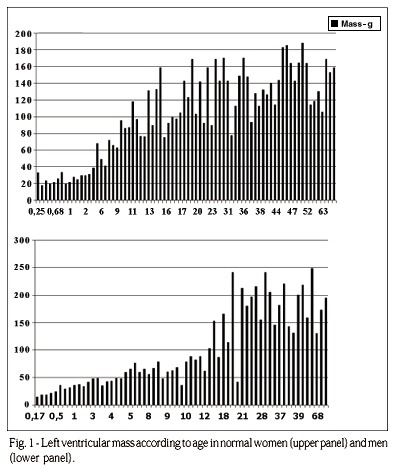
OBJECTIVE: To determine the most sensitive criterion for the detection of left ventricular hypertrophy according to echocardiographically defined left ventricular mass. METHODS: The Sokolow-Lyon voltage, Sokolow-Lyon-Rappaport, Cornell voltage duration product, White-Bock, and Romhilt-Estes point scoring criteria were compared with left ventricular mass index, corrected for body surface, obtained from the echocardiograms of 306 outpatients (176 females, 130 males), of all age groups. RESULTS: The Cornell voltage duration product criteria index had the greatest sensitivity in women (54.90%), and the Sokolow-Lyon-Rappaport index was most sensitive in men (73.53%). When applied to men at the same voltage amplitude (20mm) as that in women, the Cornell index showed increased sensitivity relative to the conventional index (28mm) of 67.65% (P<=0.01) and a sensitivity similar to that of the Sokolow-Lyon-Rappaport index, with higher specificity (P<=0.01). The White-Bock and Romhilt-Estes criteria were the least sensitive in men and women, despite their high specificity. The electrocardiographic criteria were more efficient when dilatation predominated over left ventricular hypertrophy. CONCLUSION: The Cornell index had greater sensitivity in women, and the Sokolow-Lyon-Rappaport index was more sensitive in men. When applied to men at the same voltage amplitude as that of women, the Cornell index had an increase in sensitivity similar to that of the Sokolow-Lyon-Rappaport index.

  • electrocardiogram
  • Hypertrophy
  • Left Ventricular Hypertrophy
Read Full Article
Creative Commons Attribution (CC BY) Creative Commons license
19/02/2002 DOI: 10.1590/S0066-782X2002000100006 Views 1
Cardiovascular assessment of patients with Ullrich-Turner's Syndrome on Doppler echocardiography and magnetic resonance imaging
Original Article

Cardiovascular assessment of patients with Ullrich-Turner's Syndrome on Doppler echocardiography and magnetic resonance imaging

Ana Valéria Barros de Castro et al. Katashi Okoshi Sérgio Marrone Ribeiro Maurício Fregonesi Barbosa … Patricia Ferreira Mattos Luciana Pagliare Nancy Figueiredo Bueno Débora Aparecida Rodrigueiro Adriana Lúcia Mendes Haddad

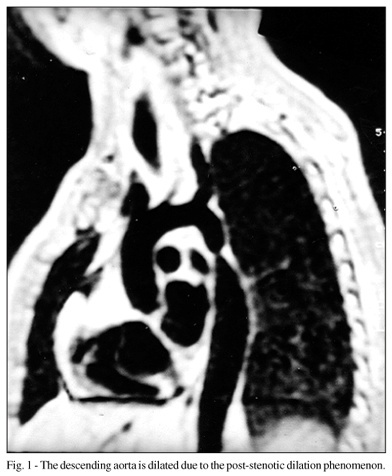
OBJECTIVE: To assess the cardiovascular features of Ullrich-Turner’s syndrome using echocardiography and magnetic resonance imaging, and to correlate them with the phenotype and karyotype of the patients. The diagnostic concordance between the 2 methods was also assessed. METHODS: Fifteen patients with the syndrome were assessed by echocardiography and magnetic resonance imaging (cardiac chambers, valves, and aorta). Their ages ranged from 10 to 28 (mean of 16.7) years. The karyotype was analyzed in 11 or 25 metaphases of peripheral blood lymphocytes, or both. RESULTS: The most common phenotypic changes were short stature and spontaneous absence of puberal development (100%); 1 patient had a cardiac murmur. The karyotypes detected were as follows: 45,X (n=7), mosaics (n=5), and deletions (n=3). No echocardiographic changes were observed. In regard to magnetic resonance imaging, coarctation and dilation of the aorta were found in 1 patient, and isolated dilation of the aorta was found in 4 patients. CONCLUSION: The frequencies of coarctation and dilation of the aorta detected on magnetic resonance imaging were similar to those reported in the literature (5.5% to 20%, and 6.3% to 29%, respectively). This confirmed the adjuvant role of magnetic resonance imaging to Doppler echocardiography for diagnosing cardiovascular alterations in patients with Ullrich-Turner’s syndrome.

  • Doppler Echocardiography
  • Magnetic Resonance Imaging
  • Turner's syndrome
Read Full Article
Creative Commons Attribution (CC BY) Creative Commons license
19/02/2002 DOI: 10.1590/S0066-782X2002000100005 Views 1
Anatomicopathological evidence of the beginning of atherosclerosis in infancy and adolescence
Updated

Anatomicopathological evidence of the beginning of atherosclerosis in infancy and adolescence

Lucimar Aparecida Françoso et al. Veronica Coates

Update

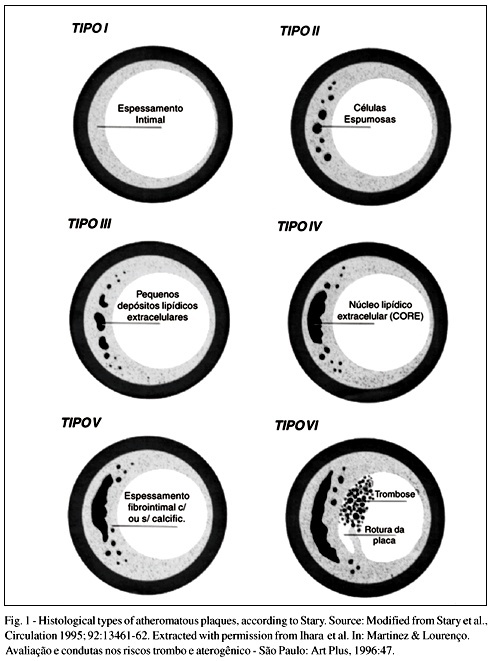
Anatomicopathological Evidence of the Beginning of Atherosclerosis in Infancy and Adolescence

[…]

Read Full Article
Creative Commons Attribution (CC BY) Creative Commons license
19/02/2002 DOI: 10.1590/S0066-782X2002000100014 Views 1
The use of abciximab associated with primary angioplasty for treating acute myocardial infarction
Original Article

The use of abciximab associated with primary angioplasty for treating acute myocardial infarction

Manuel Lisandro Hernández Brito et al. Newton F. Stadler de Souza Filho Álvaro Vieira Moura Luiz Augusto Lavalle … Rubens Zenobio Darwich Marisa Leal Eva Cantalejo Munhoz

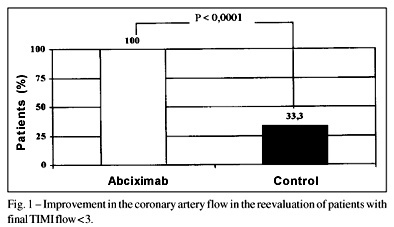
OBJECTIVE: To assess the benefit resulting from the use of abciximab associated with primary angioplasty. The following parameters were analyzed in-hospital, at 30 days, and 6 months: (a) flow in the culprit artery; (b) ventricular function; (c) combined outcome of death, acute myocardial infarction, and aditional revascularization. METHODS: From November 1997 to June 1999, a longitudinal nonrandomized study with historical data of 137 patients with acute myocardial infarction within the first 12 hours. Patients undergoing primary angioplasty and were divided into 2 groups: those receiving (A) abciximab (26) or (B) conventional therapy (111). TIMI flow and regional ventricular function estimated by the standard deviation (SD)/chordis index were analyzed. RESULTS: At the end of angioplasty, TIMI 3 flow was observed in 76.9% and 83.8% of the patients in groups A and B, respectively (P=0.58). In the reevaluation, patients with TIMI flow <3 showed a 100% improvement in group A and a 33% in group B (P<0.0001). A significant improvement (P<0.0001) in regional ventricular function, by SD/chordis index, occurred in each group; no significant difference between groups however, was observed (29.9% x 20.2%; P=0.58). A nonsignificant reduction in the combined outcome in the in-hospital phase (3.85% A x 9.0% B; P=0.34) and on the 30th day (4.0% x 12.0%; P=0.22) was observed in group A. CONCLUSION: Abciximab improved blood flow. Primary angioplasty improved regional ventricular function independent of antithrombotic therapy. Abciximab showed a trend toward reducing the combined outcome in the in-hospital phase and on the 30th day.

  • abciximab
  • Acute Myocardial Infarction
  • primary angioplasty
Read Full Article
Creative Commons Attribution (CC BY) Creative Commons license
19/02/2002 DOI: 10.1590/S0066-782X2002000100008 Views 1
Useful clinical features for the selection of ideal patients with strial fibrillation for mapping and catheter ablation
Original Article

Useful clinical features for the selection of ideal patients with strial fibrillation for mapping and catheter ablation

Niraj Mehta et al. Maria Zildany Pinheiro Távora Noriaki Takeschita Edilberto Figueiredo … Ricardo M. Lourenço Hélio Germiniani Dalton Précoma

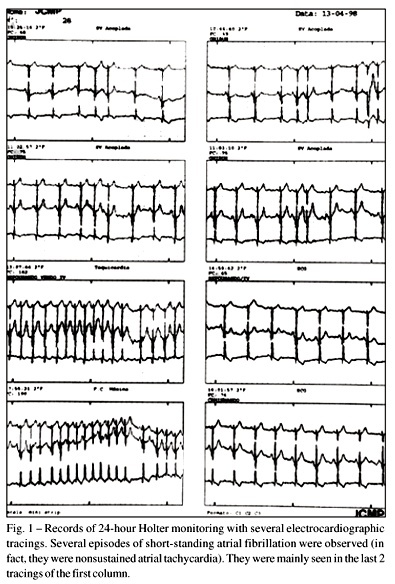
OBJECTIVE: To identify useful clinical characteristics for selecting patients eligible for mapping and ablation of atrial fibrillation. METHODS: We studied 9 patients with atrial fibrillation, without structural heart disease, associated with: 1) antiarrhythmic drugs, 2) symptoms of low cardiac output, and 3) intention to treat. Seven patients had paroxysmal atrial fibrillation and 2 had recurrent atrial fibrillation. RESULTS: In the 6 patients who underwent mapping (all had paroxysmal atrial fibrillation), catheter ablation was successfully carried out in superior pulmonary veins in 5 patients (the first 3 in the left superior pulmonary vein and the last 2 in the right superior pulmonary vein). One patient experienced a recurrence of atrial fibrillation after 10 days. We observed that patients who had short episodes of atrial fibrillation on 24-hour Holter monitoring before the procedure were those in whom mapping the focus of tachycardia was possible. Tachycardia was successfully suppressed in 4 of 6 patients. The cause of failure was due to the impossibility of maintaining sinus rhythm long enough for efficient mapping. CONCLUSION: Patients experiencing short episodes of atrial fibrillation during 24-hour Holter monitoring were the most eligible for mapping and ablation, with a final success rate of 66%, versus the global success rate of 44%. Patients with persistent atrial fibrillation were not good candidates for focal ablation.

  • Atrial Fibrillation
  • mapping
  • radiofrequency catheter ablation
Read Full Article
Creative Commons Attribution (CC BY) Creative Commons license
19/02/2002 DOI: 10.1590/S0066-782X2002000100001 Views 1
Ventricular resynchronization through biventricular cardiac pacing for the treatment of refractory heart failure in dilated cardiomyopathy
Original Article

Ventricular resynchronization through biventricular cardiac pacing for the treatment of refractory heart failure in dilated cardiomyopathy

Silas S. Galvão Fº et al. Cecília M. B. Barcellos J. Tarcísio M. Vasconcelos Jaime G. M. Arnez … Kátia N. Couceiro Leudo Campos Evandro Sbaraini Maurício G. Lyra Fernando S. O. Souza

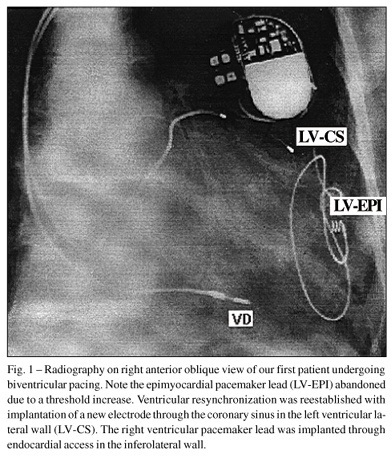
OBJECTIVE: The biventricular pacing (BVP) approach has good results in the treatment of congestive heart failure (CHF) in patients (pts) with disorders of intraventricular conduction. METHODS: We have applied BVP to 28 pts, with left ventricular pacing using minitoracotomy in 3 pts and the transvenous aproach via coronary sinus in 25 pts. The mean duration of the QRS complexes was 187 ms, in the presence of the left branch block in 22 pts, and right branch block + divisional hemiblock in 6 pts. All pts had been considerated candidates to cardiac transplantation, and were under optimized drug therapy. Sixteen pts were in Functional Class (NYHA) IV, and 12 in class III. The ejection fraction varied from 22 to 46% (average = 34%). The pacing mode employed was biventricular triple-chamber in 22 pts, and bi-ventricular dual-chamber in 6 pts (one with ICD). RESULTS: The pts were followed up for a period that ranged from 10 days to 14 months (mean 5 months). All pts presented clinical improvement after implant, chaging the NYHA Functional Class at the end of follow-up to Class I (9pts), Class II (10 pts) and Class III (6 pts). The initial mean ejection fraction have-raised to 37%. Two pts died suddenly. One patient died due to a pulmonary fungal infection. CONCLUSION: Ventricular resynchronization through BVP, improved significantly the Functional Class and, therefore, the quality of life. Assessments of myocardial function acutely performed do not reflect the clinical improvement observed.

  • biventricular pacing
  • Heart Failure
  • ventricular resynchronization
Read Full Article
Creative Commons Attribution (CC BY) Creative Commons license
19/02/2002 DOI: 10.1590/S0066-782X2002000100004 Views 1
Original Article

Biventricular pacing improves clinical behavior and reduces prevalence of ventricular srrhythmia in patients with heart failure

Martino Martinelli Filho et al. Anísio A. A. Pedrosa Roberto Costa Silvana A. D. Nishioka … Sérgio F. Siqueira Wagner T. Tamaki Eduardo Sosa

PURPOSE: To analyze the influence of biventricular pacing (BP) on clinical behavior, ventricular arrhythmia (VA) prevalence, and left ventricular ejection fraction (LV EF) by gated ventriculography. METHODS: Twenty-four patients with left bundle branch block (LBBB) and NYHA class III and IV underwent pacemaker implantation and were randomized either to the conventional or BP group, all receiving BP after 6 months. RESULTS: Sixteen patients were in NYHA class IV (66.6%) and 8 were in class III (33.4%). After 1-year follow-up, 14 patients were in class II (70%) and 5 were in class III (25%). Two sudden cardiac deaths occurred. A significant reduction in QRS length was found with BP (p=0.006). A significant statistical increase, from a mean of 19.13 ± 5.19% (at baseline) to 25.33 ± 5.90% (with BP) was observed in LVEF Premature ventricular contraction prevalence decreased from a mean of 10,670.00 ± 12,595.39 SD or to a mean of 3,007.00 ± 3,216.63 SD PVC/24 h with BP (p<0.05). Regarding the hospital admission rate over 1 year, we observed a significant reduction from 60. To 16 admissions with BP (p<0.05). CONCLUSION: Patients with LBBB and severe heart failure experienced, with BP, a significant NYHA class and LVEF improvement. A reduction in the hospital admission rate and VA prevalence also occurred.

  • biventricular pacing
  • Heart Failure
  • ventricular arrhythmias
Read Full Article
Creative Commons Attribution (CC BY) Creative Commons license
19/02/2002 DOI: 10.1590/S0066-782X2002000100010 Views 1

How to cite this article

EndNote RIS

Electronic Document Format (Vancouver)

Sharovsky R, César LAM. Increase in mortality due to myocardial infarction in the Brazilian city of São Paulo during winter. Arquivos Brasileiros de Cardiologia 2002;78(1):106-9.

Electronic Document Format (ABNT)

Sharovsky, Rodolfo; César, Luiz Antônio Machado. Increase in mortality due to myocardial infarction in the Brazilian city of São Paulo during winter. Arquivos Brasileiros de Cardiologia, v. 78, n. 1, p. 106-109, Feb. 2002.

Electronic Document Format (APA)

Sharovsky, R., & César, L. A. M. (2002). Increase in mortality due to myocardial infarction in the Brazilian city of São Paulo during winter. Arquivos Brasileiros de Cardiologia, 78(1), 106-109.

Electronic Document Format (ISO)

Sharovsky, Rodolfo and César, Luiz Antônio Machado. Increase in mortality due to myocardial infarction in the Brazilian city of São Paulo during winter. Arquivos Brasileiros de Cardiologia [online]. 2002, vol. 78, n. 1, [cited 2026-10-14], pp. 106-109. Available from: <https://journals.cardiol.br/en/article/increase-in-mortality-due-to-myocardial-infarction-in-the-brazilian-city-of-sao-paulo-during-winter/>. ISSN 0066-782X

EndNote RIS

Electronic Document Format (Vancouver)

Baracioli LM, Serrano Jr CV, Esteves A, Ciporkin JP, Nicolau JC. Primary coronary angioplasty in a nonagenarian. Arquivos Brasileiros de Cardiologia 2002;78(1):118-21.

Electronic Document Format (ABNT)

Baracioli, Luciano M.; Serrano Jr, Carlos V.; Esteves, Antônio; Ciporkin, Jean Pierre; Nicolau, José Carlos. Primary coronary angioplasty in a nonagenarian. Arquivos Brasileiros de Cardiologia, v. 78, n. 1, p. 118-121, Feb. 2002.

Electronic Document Format (APA)

Baracioli, L. M., Serrano Jr, C. V., Esteves, A., Ciporkin, J. P., & Nicolau, J. C. (2002). Primary coronary angioplasty in a nonagenarian. Arquivos Brasileiros de Cardiologia, 78(1), 118-121.

Electronic Document Format (ISO)

Baracioli, Luciano M. and Serrano Jr, Carlos V. and Esteves, Antônio and Ciporkin, Jean Pierre and Nicolau, José Carlos. Primary coronary angioplasty in a nonagenarian. Arquivos Brasileiros de Cardiologia [online]. 2002, vol. 78, n. 1, [cited 2026-10-14], pp. 118-121. Available from: <https://journals.cardiol.br/en/article/primary-coronary-angioplasty-in-a-nonagenarian/>. ISSN 0066-782X

EndNote RIS

Electronic Document Format (Vancouver)

Canesin MF, Giorgi D, Oliveira Jr. MT, Wajngarten M, Mansur AJ, Ramires JAF, Barretto ACP, et al. Ambulatory blood pressure monitoring of patients with heart failure: a new prognosis marker. Arquivos Brasileiros de Cardiologia 2002;78(1):83-9.

Electronic Document Format (ABNT)

Canesin, Manoel F.; Giorgi, Dante; Oliveira Jr., Múcio T. de; Wajngarten, Maurício; Mansur, Alfredo J.; Ramires, José Antonio F.; Barretto, Antonio Carlos Pereira. Ambulatory blood pressure monitoring of patients with heart failure: a new prognosis marker. Arquivos Brasileiros de Cardiologia, v. 78, n. 1, p. 83-89, Feb. 2002.

Electronic Document Format (APA)

Canesin, M. F., Giorgi, D., Oliveira Jr., M. T. , Wajngarten, M., Mansur, A. J., Ramires, J. A. F., & Barretto, A. C. P. (2002). Ambulatory blood pressure monitoring of patients with heart failure: a new prognosis marker. Arquivos Brasileiros de Cardiologia, 78(1), 83-89.

Electronic Document Format (ISO)

Canesin, Manoel F. and Giorgi, Dante and Oliveira Jr., Múcio T. de and Wajngarten, Maurício and Mansur, Alfredo J. and Ramires, José Antonio F. and Barretto, Antonio Carlos Pereira. Ambulatory blood pressure monitoring of patients with heart failure: a new prognosis marker. Arquivos Brasileiros de Cardiologia [online]. 2002, vol. 78, n. 1, [cited 2026-10-14], pp. 83-89. Available from: <https://journals.cardiol.br/en/article/ambulatory-blood-pressure-monitoring-of-patients-with-heart-failure-a-new-prognosis-marker/>. ISSN 0066-782X

EndNote RIS

Electronic Document Format (Vancouver)

Carvalho RG, Pimentel GK, Oliveira L, Silveira MM, Alessi A, Precoma DB. Obstruction of the left ventricular outflow tract after mitral valvuloplasty with implantation of Gregori’s ring. Arquivos Brasileiros de Cardiologia 2002;78(1):126-9.

Electronic Document Format (ABNT)

Carvalho, Roberto G. de; Pimentel, Gustavo K.; Oliveira, Luciano de; Silveira, Márcia M. da; Alessi, Alexandre; Precoma, Dalton B.. Obstruction of the left ventricular outflow tract after mitral valvuloplasty with implantation of Gregori’s ring. Arquivos Brasileiros de Cardiologia, v. 78, n. 1, p. 126-129, Feb. 2002.

Electronic Document Format (APA)

Carvalho, R. G. , Pimentel, G. K., Oliveira, L. , Silveira, M. M. , Alessi, A., & Precoma, D. B. (2002). Obstruction of the left ventricular outflow tract after mitral valvuloplasty with implantation of Gregori’s ring. Arquivos Brasileiros de Cardiologia, 78(1), 126-129.

Electronic Document Format (ISO)

Carvalho, Roberto G. de and Pimentel, Gustavo K. and Oliveira, Luciano de and Silveira, Márcia M. da and Alessi, Alexandre and Precoma, Dalton B.. Obstruction of the left ventricular outflow tract after mitral valvuloplasty with implantation of Gregori’s ring. Arquivos Brasileiros de Cardiologia [online]. 2002, vol. 78, n. 1, [cited 2026-10-14], pp. 126-129. Available from: <https://journals.cardiol.br/en/article/obstruction-of-the-left-ventricular-outflow-tract-after-mitral-valvuloplasty-with-implantation-of-gregoris-ring/>. ISSN 0066-782X

EndNote RIS

Electronic Document Format (Vancouver)

Águila MB, Loureiro CC, Pinheiro AR, Mandarim-de-Lacerda CA. Lipid metabolism in rats fed diets containing different types of lipids. Arquivos Brasileiros de Cardiologia 2002;78(1):32-8.

Electronic Document Format (ABNT)

Águila, Márcia Barbosa; Loureiro, Carla Cota; Pinheiro, Alessandra da Rocha; Mandarim-de-Lacerda, Carlos Alberto. Lipid metabolism in rats fed diets containing different types of lipids. Arquivos Brasileiros de Cardiologia, v. 78, n. 1, p. 32-38, Feb. 2002.

Electronic Document Format (APA)

Águila, M. B., Loureiro, C. C., Pinheiro, A. R., & Mandarim-de-Lacerda, C. A. (2002). Lipid metabolism in rats fed diets containing different types of lipids. Arquivos Brasileiros de Cardiologia, 78(1), 32-38.

Electronic Document Format (ISO)

Águila, Márcia Barbosa and Loureiro, Carla Cota and Pinheiro, Alessandra da Rocha and Mandarim-de-Lacerda, Carlos Alberto. Lipid metabolism in rats fed diets containing different types of lipids. Arquivos Brasileiros de Cardiologia [online]. 2002, vol. 78, n. 1, [cited 2026-10-14], pp. 32-38. Available from: <https://journals.cardiol.br/en/article/lipid-metabolism-in-rats-fed-diets-containing-different-types-of-lipids/>. ISSN 0066-782X

EndNote RIS

Electronic Document Format (Vancouver)

Gasperin CA, Germiniani H, Facin CR, Souza AM, Cunha CLP. An analysis of electrocardiographic criteria for determining left ventricular hypertrophy. Arquivos Brasileiros de Cardiologia 2002;78(1):72-8.

Electronic Document Format (ABNT)

Gasperin, Carlos Alberto; Germiniani, Helio; Facin, Carlos Roberto; Souza, Admar Moraes de; Cunha, Cláudio Leinig Pereira da. An analysis of electrocardiographic criteria for determining left ventricular hypertrophy. Arquivos Brasileiros de Cardiologia, v. 78, n. 1, p. 72-82, Feb. 2002.

Electronic Document Format (APA)

Gasperin, C. A., Germiniani, H., Facin, C. R., Souza, A. M. , & Cunha, C. L. P. (2002). An analysis of electrocardiographic criteria for determining left ventricular hypertrophy. Arquivos Brasileiros de Cardiologia, 78(1), 72-82.

Electronic Document Format (ISO)

Gasperin, Carlos Alberto and Germiniani, Helio and Facin, Carlos Roberto and Souza, Admar Moraes de and Cunha, Cláudio Leinig Pereira da. An analysis of electrocardiographic criteria for determining left ventricular hypertrophy. Arquivos Brasileiros de Cardiologia [online]. 2002, vol. 78, n. 1, [cited 2026-10-14], pp. 72-82. Available from: <https://journals.cardiol.br/en/article/an-analysis-of-electrocardiographic-criteria-for-determining-left-ventricular-hypertrophy/>. ISSN 0066-782X

EndNote RIS

Electronic Document Format (Vancouver)

Castro AVB, Okoshi K, Ribeiro SM, Barbosa MF, Mattos PF, Pagliare L, Bueno NF, et al. Cardiovascular assessment of patients with Ullrich-Turner’s Syndrome on Doppler echocardiography and magnetic resonance imaging. Arquivos Brasileiros de Cardiologia 2002;78(1):55-8.

Electronic Document Format (ABNT)

Castro, Ana Valéria Barros de; Okoshi, Katashi; Ribeiro, Sérgio Marrone; Barbosa, Maurício Fregonesi; Mattos, Patricia Ferreira; Pagliare, Luciana; Bueno, Nancy Figueiredo; Rodrigueiro, Débora Aparecida; Haddad, Adriana Lúcia Mendes. Cardiovascular assessment of patients with Ullrich-Turner’s Syndrome on Doppler echocardiography and magnetic resonance imaging. Arquivos Brasileiros de Cardiologia, v. 78, n. 1, p. 55-58, Feb. 2002.

Electronic Document Format (APA)

Castro, A. V. B. , Okoshi, K., Ribeiro, S. M., Barbosa, M. F., Mattos, P. F., Pagliare, L., Bueno, N. F., Rodrigueiro, D. A., & Haddad, A. L. M. (2002). Cardiovascular assessment of patients with Ullrich-Turner’s Syndrome on Doppler echocardiography and magnetic resonance imaging. Arquivos Brasileiros de Cardiologia, 78(1), 55-58.

Electronic Document Format (ISO)

Castro, Ana Valéria Barros de and Okoshi, Katashi and Ribeiro, Sérgio Marrone and Barbosa, Maurício Fregonesi and Mattos, Patricia Ferreira and Pagliare, Luciana and Bueno, Nancy Figueiredo and Rodrigueiro, Débora Aparecida and Haddad, Adriana Lúcia Mendes. Cardiovascular assessment of patients with Ullrich-Turner’s Syndrome on Doppler echocardiography and magnetic resonance imaging. Arquivos Brasileiros de Cardiologia [online]. 2002, vol. 78, n. 1, [cited 2026-10-14], pp. 55-58. Available from: <https://journals.cardiol.br/en/article/cardiovascular-assessment-of-patients-with-ullrich-turners-syndrome-on-doppler-echocardiography-and-magnetic-resonance-imaging/>. ISSN 0066-782X

EndNote RIS

Electronic Document Format (Vancouver)

Françoso LA, Coates V. Anatomicopathological evidence of the beginning of atherosclerosis in infancy and adolescence. Arquivos Brasileiros de Cardiologia 2002;78(1):137-42.

Electronic Document Format (ABNT)

Françoso, Lucimar Aparecida; Coates, Veronica. Anatomicopathological evidence of the beginning of atherosclerosis in infancy and adolescence. Arquivos Brasileiros de Cardiologia, v. 78, n. 1, p. 137-142, Feb. 2002.

Electronic Document Format (APA)

Françoso, L. A., & Coates, V. (2002). Anatomicopathological evidence of the beginning of atherosclerosis in infancy and adolescence. Arquivos Brasileiros de Cardiologia, 78(1), 137-142.

Electronic Document Format (ISO)

Françoso, Lucimar Aparecida and Coates, Veronica. Anatomicopathological evidence of the beginning of atherosclerosis in infancy and adolescence. Arquivos Brasileiros de Cardiologia [online]. 2002, vol. 78, n. 1, [cited 2026-10-14], pp. 137-142. Available from: <https://journals.cardiol.br/en/article/anatomicopathological-evidence-of-the-beginning-of-atherosclerosis-in-infancy-and-adolescence/>. ISSN 0066-782X

EndNote RIS

Electronic Document Format (Vancouver)

Brito MLH, Souza Filho NFS, Moura V, Lavalle LA, Darwich RZ, Leal M, Munhoz EC, et al. The use of abciximab associated with primary angioplasty for treating acute myocardial infarction. Arquivos Brasileiros de Cardiologia 2002;78(1):98-105.

Electronic Document Format (ABNT)

Brito, Manuel Lisandro Hernández; Souza Filho, Newton F. Stadler de; Moura, Álvaro Vieira; Lavalle, Luiz Augusto; Darwich, Rubens Zenobio; Leal, Marisa; Munhoz, Eva Cantalejo. The use of abciximab associated with primary angioplasty for treating acute myocardial infarction. Arquivos Brasileiros de Cardiologia, v. 78, n. 1, p. 98-105, Feb. 2002.

Electronic Document Format (APA)

Brito, M. L. H., Souza Filho, N. F. S. , Moura, V., Lavalle, L. A., Darwich, R. Z., Leal, M., & Munhoz, E. C. (2002). The use of abciximab associated with primary angioplasty for treating acute myocardial infarction. Arquivos Brasileiros de Cardiologia, 78(1), 98-105.

Electronic Document Format (ISO)

Brito, Manuel Lisandro Hernández and Souza Filho, Newton F. Stadler de and Moura, Álvaro Vieira and Lavalle, Luiz Augusto and Darwich, Rubens Zenobio and Leal, Marisa and Munhoz, Eva Cantalejo. The use of abciximab associated with primary angioplasty for treating acute myocardial infarction. Arquivos Brasileiros de Cardiologia [online]. 2002, vol. 78, n. 1, [cited 2026-10-14], pp. 98-105. Available from: <https://journals.cardiol.br/en/article/the-use-of-abciximab-associated-with-primary-angioplasty-for-treating-acute-myocardial-infarction/>. ISSN 0066-782X

EndNote RIS

Electronic Document Format (Vancouver)

Mehta N, Távora MZP, Takeschita N, Figueiredo E, Lourenço RM, Germiniani H, Précoma D, et al. Useful clinical features for the selection of ideal patients with strial fibrillation for mapping and catheter ablation. Arquivos Brasileiros de Cardiologia 2002;78(1):9-16.

Electronic Document Format (ABNT)

Mehta, Niraj; Távora, Maria Zildany Pinheiro; Takeschita, Noriaki; Figueiredo, Edilberto; Lourenço, Ricardo M.; Germiniani, Hélio; Précoma, Dalton. Useful clinical features for the selection of ideal patients with strial fibrillation for mapping and catheter ablation. Arquivos Brasileiros de Cardiologia, v. 78, n. 1, p. 9-16, Feb. 2002.

Electronic Document Format (APA)

Mehta, N., Távora, M. Z. P., Takeschita, N., Figueiredo, E., Lourenço, R. M., Germiniani, H., & Précoma, D. (2002). Useful clinical features for the selection of ideal patients with strial fibrillation for mapping and catheter ablation. Arquivos Brasileiros de Cardiologia, 78(1), 9-16.

Electronic Document Format (ISO)

Mehta, Niraj and Távora, Maria Zildany Pinheiro and Takeschita, Noriaki and Figueiredo, Edilberto and Lourenço, Ricardo M. and Germiniani, Hélio and Précoma, Dalton. Useful clinical features for the selection of ideal patients with strial fibrillation for mapping and catheter ablation. Arquivos Brasileiros de Cardiologia [online]. 2002, vol. 78, n. 1, [cited 2026-10-14], pp. 9-16. Available from: <https://journals.cardiol.br/en/article/useful-clinical-features-for-the-selection-of-ideal-patients-with-strial-fibrillation-for-mapping-and-catheter-ablation/>. ISSN 0066-782X

EndNote RIS

Electronic Document Format (Vancouver)

Fº SSG, Barcellos CMB, Vasconcelos JTM, Arnez JGM, Couceiro KN, Campos L, Sbaraini E, et al. Ventricular resynchronization through biventricular cardiac pacing for the treatment of refractory heart failure in dilated cardiomyopathy. Arquivos Brasileiros de Cardiologia 2002;78(1):45-50.

Electronic Document Format (ABNT)

Fº, Silas S. Galvão; Barcellos, Cecília M. B.; Vasconcelos, J. Tarcísio M.; Arnez, Jaime G. M.; Couceiro, Kátia N.; Campos, Leudo; Sbaraini, Evandro; Lyra, Maurício G.; Souza, Fernando S. O.. Ventricular resynchronization through biventricular cardiac pacing for the treatment of refractory heart failure in dilated cardiomyopathy. Arquivos Brasileiros de Cardiologia, v. 78, n. 1, p. 45-50, Feb. 2002.

Electronic Document Format (APA)

Fº, S. S. G., Barcellos, C. M. B., Vasconcelos, J. T. M., Arnez, J. G. M., Couceiro, K. N., Campos, L., Sbaraini, E., Lyra, M. G., & Souza, F. S. O. (2002). Ventricular resynchronization through biventricular cardiac pacing for the treatment of refractory heart failure in dilated cardiomyopathy. Arquivos Brasileiros de Cardiologia, 78(1), 45-50.

Electronic Document Format (ISO)

Fº, Silas S. Galvão and Barcellos, Cecília M. B. and Vasconcelos, J. Tarcísio M. and Arnez, Jaime G. M. and Couceiro, Kátia N. and Campos, Leudo and Sbaraini, Evandro and Lyra, Maurício G. and Souza, Fernando S. O.. Ventricular resynchronization through biventricular cardiac pacing for the treatment of refractory heart failure in dilated cardiomyopathy. Arquivos Brasileiros de Cardiologia [online]. 2002, vol. 78, n. 1, [cited 2026-10-14], pp. 45-50. Available from: <https://journals.cardiol.br/en/article/ventricular-resynchronization-through-biventricular-cardiac-pacing-for-the-treatment-of-refractory-heart-failure-in-dilated-cardiomyopathy/>. ISSN 0066-782X

EndNote RIS

Electronic Document Format (Vancouver)

Martinelli Filho M, Pedrosa AAA, Costa R, Nishioka SAD, Siqueira SF, Tamaki WT, Sosa E, et al. Biventricular pacing improves clinical behavior and reduces prevalence of ventricular srrhythmia in patients with heart failure. Arquivos Brasileiros de Cardiologia 2002;78(1):110-3.

Electronic Document Format (ABNT)

Martinelli Filho, Martino; Pedrosa, Anísio A. A.; Costa, Roberto; Nishioka, Silvana A. D.; Siqueira, Sérgio F.; Tamaki, Wagner T.; Sosa, Eduardo. Biventricular pacing improves clinical behavior and reduces prevalence of ventricular srrhythmia in patients with heart failure. Arquivos Brasileiros de Cardiologia, v. 78, n. 1, p. 110-113, Feb. 2002.

Electronic Document Format (APA)

Martinelli Filho, M., Pedrosa, A. A. A., Costa, R., Nishioka, S. A. D., Siqueira, S. F., Tamaki, W. T., & Sosa, E. (2002). Biventricular pacing improves clinical behavior and reduces prevalence of ventricular srrhythmia in patients with heart failure. Arquivos Brasileiros de Cardiologia, 78(1), 110-113.

Electronic Document Format (ISO)

Martinelli Filho, Martino and Pedrosa, Anísio A. A. and Costa, Roberto and Nishioka, Silvana A. D. and Siqueira, Sérgio F. and Tamaki, Wagner T. and Sosa, Eduardo. Biventricular pacing improves clinical behavior and reduces prevalence of ventricular srrhythmia in patients with heart failure. Arquivos Brasileiros de Cardiologia [online]. 2002, vol. 78, n. 1, [cited 2026-10-14], pp. 110-113. Available from: <https://journals.cardiol.br/en/article/biventricular-pacing-improves-clinical-behavior-and-reduces-prevalence-of-ventricular-srrhythmia-in-patients-with-heart-failure/>. ISSN 0066-782X

Sede – Rio de Janeiro
Av. Marechal Câmara, 160
3º andar – Sala: 330 – Centro
Rio de Janeiro – CEP: 20020-907
Tel.: (55 +21) 3478-2700
ou (21) 99386-3961
E-mail: revista@cardiol.br

Sede – São Paulo
Alameda Santos, 705 – 11º andar
Cerqueira César | São Paulo
CEP: 01419-001
Tel.: (55 +11) 3411-5500
E-mail: revista@cardiol.br

  • About the Journal
  • Internal Regulation
  • Editors Section
  • Editorial Board
  • History
  • SBC Award

  • Guidelines for Publication
  • Editorial Policy
  • Ethics Policy
  • Policy on the Use of Artificial Intelligence
  • Mandatory Publication Form
  • Publication Fee

Issues

SBC Guidelines

  • How to Publish an Abstract Supplement?
  • Supplements from the Brazilian Congress of Cardiology