ABC Family Arquivos Brasileiros de Cardiologia International Journal of Cardiovascular Sciences ABC Heart Failure & Cardiomyopathy ABC Imagem Cardiovascular
Português English
ABC Family
Português English
  • About
    • About ABC Family
    • Internal Regulation
    • Editorial Board
    • Brazilian Society of Cardiology (SBC)
  • Issues
  • SBC Guidelines
  • Content
    • Videos
    • Podcasts
    • News
  • About
    • About ABC Family
    • Internal Regulation
    • Editorial Board
    • Brazilian Society of Cardiology (SBC)
  • Issues
  • SBC Guidelines
  • Content
    • Videos
    • Podcasts
    • News

ABC Family

  • ABC Family
  • Arquivos Brasileiros de Cardiologia
  • International Journal of Cardiovascular Sciences
  • ABC Heart Failure & Cardiomyopathy
  • ABC Imagem Cardiovascular
Search in

No content found.

Journals
Ordering
Article types
Others

  1. Home
  2. Keyword: Hemostasis
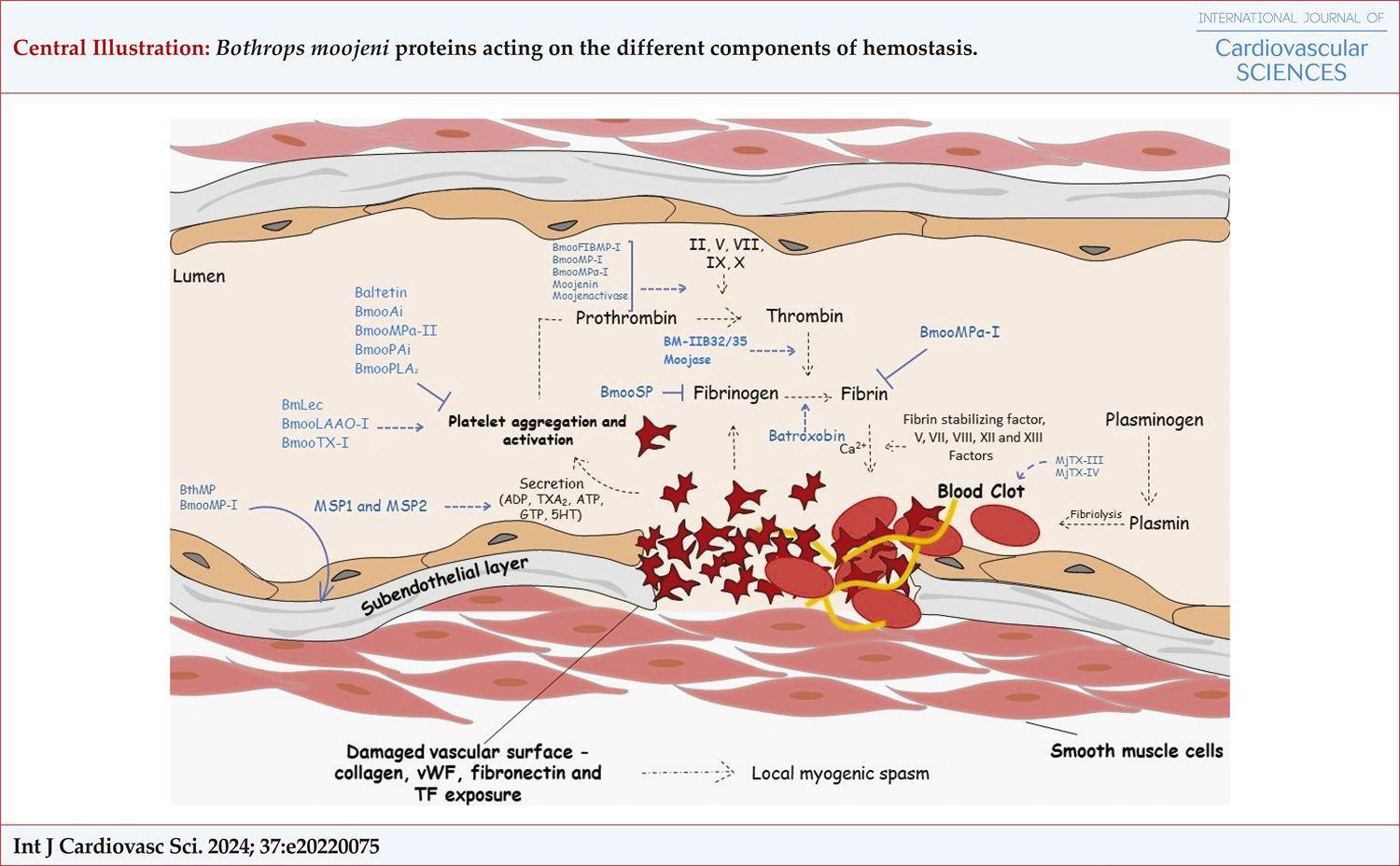
Central Illustration
IJCS
Review Article

Bothrops Moojeni Snake Venom: A Source of Potential Therapeutic Agents Against Hemostatic Disorders

Natália Barreira Silva et al. Edigar Henrique Vaz Dias Júnia de Oliveira Costa Carla Cristine Neves Mamede

Abstract

Hemostasis is a complex set of biological processes responsible for blood fluidity within normal vessels and for the physiological interruption of bleeding in cases of vascular injury. Bothrops moojeni snake venom is rich in bioactive compounds of pharmacological and clinical interest since its protein components are capable of interfering with many points of the hemostatic process. Here, we present the B. moojeni venom proteins that affect hemostasis and discuss their pharmacological and clinical potential. This systematic review was conducted according to the Preferred Reporting Items for Systematic Reviews and Meta-Analyses (PRISMA) protocol. Data were obtained from the CAPES Journal Portal database, using the terms “Bothrops” AND “hemostasis”, in a search for scientific articles made available in the last 20 years. Many components isolated from B. moojeni snake venom are characterized for their effect on hemostasis and possible application in the diagnosis and treatment of hemostatic disorders.
  • Hemostasis
  • Snake venoms
  • Therapeutics
Read Full Article
Creative Commons Attribution (CC BY) Creative Commons license
04/03/2024 DOI: 10.36660/ijcs.20220075
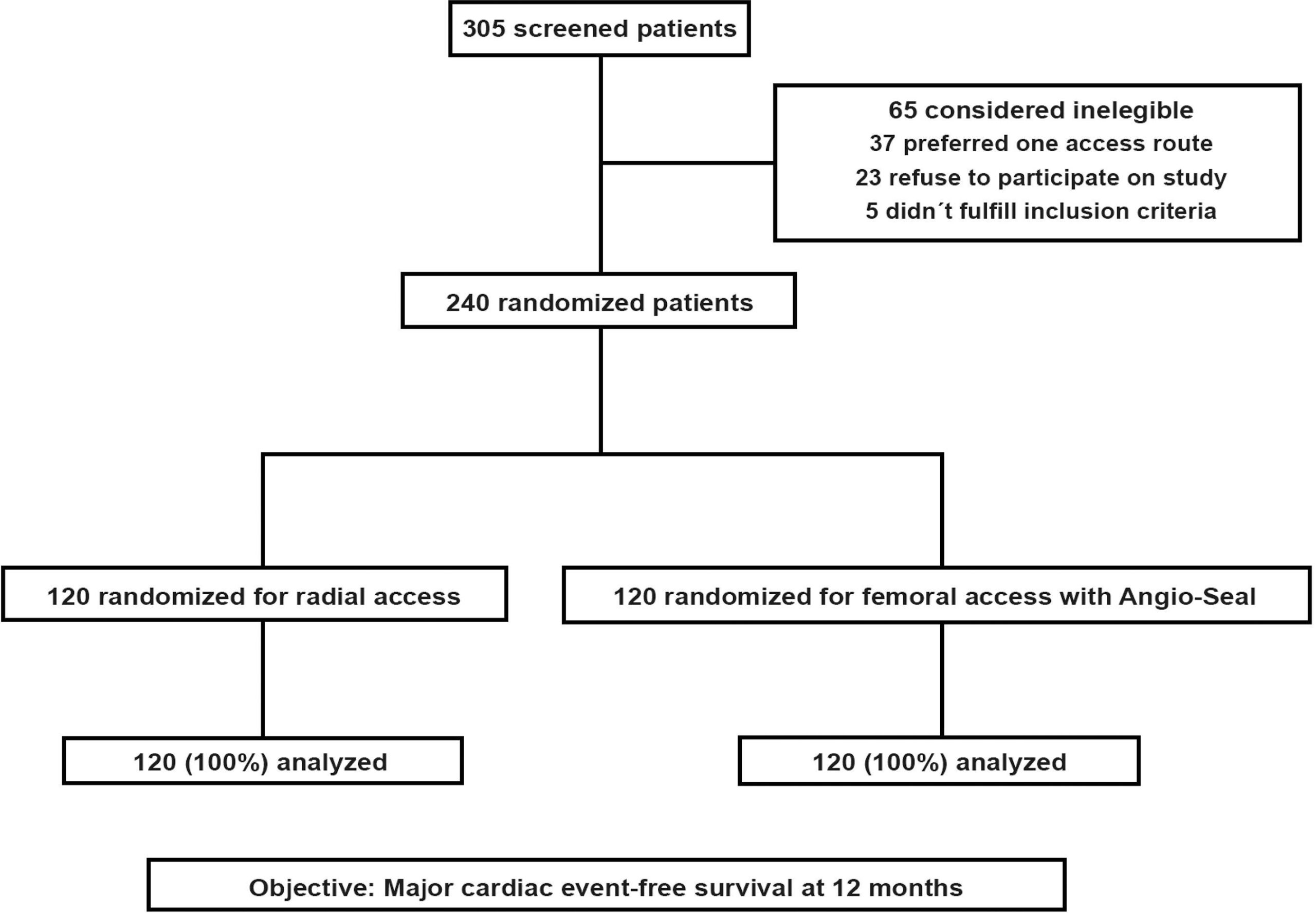
Figure 1
IJCS
Original Article

12-Month Clinical Follow-Up of Patients Undergoing Early Invasive Strategy by the Transradial or Transfemoral Approach with Vascular Closure Device

Pedro Beraldo de Andrade et al. Luiz Alberto Piva e Mattos Fabio Salerno Rinaldi Igor Ribeiro de Castro Bienert … Robson Alves Barbosa Sérgio Kreimer Vinícius Cardoso Esteves Marden André Tebet André Labrunie Amanda Guerra de Moraes Rego Sousa

Abstract

Background:

The radial approach reduces the prevalence of vascular complications, major bleeding and mortality when compared to the femoral approach. However, the last still prevails as the preferred approach for the performance of invasive coronary procedures, requiring the adoption of strategies to minimize complications.

Objectives:

To compare the survival free of major adverse cardiovascular events at 12 months in patients undergoing early intervention strategy by the radial or femoral access with vascular closure device.

Methods:

Randomized non inferiority trial involving 240 non-ST-segment elevation acute coronary syndrome patients. The survival free of death, myocardial infarction or stroke was estimated by the Kaplan-Meier method and compared using the log rank test.

Results:

The 30-day rate of vascular complications in the arterial puncture site was 12.5% in the Angio-Seal group and 13.3% in the radial group (p = 1.000). The 12-month incidence of major bleeding or blood transfusion did not differ between groups (2.5% vs. 1.7%, p = 1.000). There was no difference in survival free of major adverse cardiovascular events (90.8% versus 94.2%, p = 0.328).

Conclusions:

There was no distinction between the techniques in survival free of major adverse cardiovascular events at 12 months of follow-up. Clinical trials with greater statistical power are needed to validate these findings.

  • Hemostasis
  • Myocardial Ischemia
  • Percutaneous Coronary Percutaneous
  • Radial Artery
Read Full Article
Creative Commons Attribution (CC BY) Creative Commons license
01/01/2017 DOI: 10.5935/2359-4802.20170057 Views 1
ABC
Artigo Original

Hemostatic changes in children undergoing heart surgery with cardiopulmonary bypass

Fernanda Maria Rebouças da Costa Silveira et al. Dayse Maria Lourenço Miguel Maluf Werther B. Carvalho … Enio Buffolo Antonio Carlos Carvalho

PURPOSE: We evaluated hemostasic changes in children undergoing open heart surgery with cardiopulmonary bypass (CPB). METHODS: We studied 17 children before, during surgery, in the immediate, first and between the 4th and 7th postoperative days, measuring hematocrit, prothrombin time, activated partial thromboplastin time, fibrinogen, platelet count, factor V and euglobulin lysis time. Children were divided in those with and without excessive bleeding in the postoperative period. RESULTS: We observed significant prolongation of prothrombin time and activated partial thromboplastin time, reduction of fibrinogen and factor V, and shortening of euglobulin lysis time. Six (35%) children bled excessively. Platelet count reduction was greater in the intra operative period in these cases and the duration of CPB was longer in this group. CONCLUSION: Changes in hemostasis during open heart surgery are due to coagulation cascade disorders as well as fibrinolysis. The incidence of excessive bleeding is higher in the pediatric group. Prolonged CPB time and greater reduction in platelet count differentiated both groups.

  • cardiopulmonary bypass
  • heart surgery
  • Hemostasis
Read Full Article
Creative Commons Attribution (CC BY) Creative Commons license
08/01/2002 DOI: 10.1590/S0066-782X1998000100007

How to cite this article

EndNote RIS

Electronic Document Format (Vancouver)

Silva NB, Dias EHV, Costa JO, Mamede CCN. Bothrops Moojeni Snake Venom: A Source of Potential Therapeutic Agents Against Hemostatic Disorders. International Journal of Cardiovascular Sciences 2024;37:e20220075.

Electronic Document Format (ABNT)

Silva, Natália Barreira; Dias, Edigar Henrique Vaz; Costa, Júnia de Oliveira; Mamede, Carla Cristine Neves. Bothrops Moojeni Snake Venom: A Source of Potential Therapeutic Agents Against Hemostatic Disorders. International Journal of Cardiovascular Sciences, v. 37, e20220075, Mar. 2024.

Electronic Document Format (APA)

Silva, N. B., Dias, E. H. V., Costa, J. O., & Mamede, C. C. N. (2024). Bothrops Moojeni Snake Venom: A Source of Potential Therapeutic Agents Against Hemostatic Disorders. International Journal of Cardiovascular Sciences, 37, e20220075.

Electronic Document Format (ISO)

Silva, Natália Barreira and Dias, Edigar Henrique Vaz and Costa, Júnia de Oliveira and Mamede, Carla Cristine Neves. Bothrops Moojeni Snake Venom: A Source of Potential Therapeutic Agents Against Hemostatic Disorders. International Journal of Cardiovascular Sciences [online]. 2024, vol. 37, [cited 2026-10-14], e20220075. Available from: <https://journals.cardiol.br/en/article/bothrops-moojeni-snake-venom-a-source-of-potential-therapeutic-agents-against-hemostatic-disorders/>. ISSN 2359-4802

EndNote RIS

Electronic Document Format (Vancouver)

Andrade PB, Mattos LAP, Rinaldi FS, Bienert IRC, Barbosa RA, Kreimer S, Esteves VC, et al. 12-Month Clinical Follow-Up of Patients Undergoing Early Invasive Strategy by the Transradial or Transfemoral Approach with Vascular Closure Device. International Journal of Cardiovascular Sciences 2017;30(4):299-306.

Electronic Document Format (ABNT)

Andrade, Pedro Beraldo de; Mattos, Luiz Alberto Piva e; Rinaldi, Fabio Salerno; Bienert, Igor Ribeiro de Castro; Barbosa, Robson Alves; Kreimer, Sérgio; Esteves, Vinícius Cardoso; Tebet, Marden André; Labrunie, André; Sousa, Amanda Guerra de Moraes Rego. 12-Month Clinical Follow-Up of Patients Undergoing Early Invasive Strategy by the Transradial or Transfemoral Approach with Vascular Closure Device. International Journal of Cardiovascular Sciences, v. 30, n. 4, p. 299-306, Dec. 2016.

Electronic Document Format (APA)

Andrade, P. B. , Mattos, L. A. P. , Rinaldi, F. S., Bienert, I. R. C., Barbosa, R. A., Kreimer, S., Esteves, V. C., Tebet, M. A., Labrunie, A., & Sousa, A. G. M. R. (2017). 12-Month Clinical Follow-Up of Patients Undergoing Early Invasive Strategy by the Transradial or Transfemoral Approach with Vascular Closure Device. International Journal of Cardiovascular Sciences, 30(4), 299-306.

Electronic Document Format (ISO)

Andrade, Pedro Beraldo de and Mattos, Luiz Alberto Piva e and Rinaldi, Fabio Salerno and Bienert, Igor Ribeiro de Castro and Barbosa, Robson Alves and Kreimer, Sérgio and Esteves, Vinícius Cardoso and Tebet, Marden André and Labrunie, André and Sousa, Amanda Guerra de Moraes Rego. 12-Month Clinical Follow-Up of Patients Undergoing Early Invasive Strategy by the Transradial or Transfemoral Approach with Vascular Closure Device. International Journal of Cardiovascular Sciences [online]. 2017, vol. 30, n. 4, [cited 2026-10-14], pp. 299-306. Available from: <https://journals.cardiol.br/en/article/12-month-clinical-follow-up-of-patients-undergoing-early-invasive-strategy-by-the-transradial-or-transfemoral-approach-with-vascular-closure-device/>. ISSN 2359-4802

EndNote RIS

Electronic Document Format (Vancouver)

Silveira FMRC, Lourenço DM, Maluf M, Carvalho WB, Buffolo E, Carvalho AC. Hemostatic changes in children undergoing heart surgery with cardiopulmonary bypass. Arquivos Brasileiros de Cardiologia 2002;70(1):29-35.

Electronic Document Format (ABNT)

Silveira, Fernanda Maria Rebouças da Costa; Lourenço, Dayse Maria; Maluf, Miguel; Carvalho, Werther B.; Buffolo, Enio; Carvalho, Antonio Carlos. Hemostatic changes in children undergoing heart surgery with cardiopulmonary bypass. Arquivos Brasileiros de Cardiologia, v. 70, n. 1, p. 29-35, Jan. 2002.

Electronic Document Format (APA)

Silveira, F. M. R. C., Lourenço, D. M., Maluf, M., Carvalho, W. B., Buffolo, E., & Carvalho, A. C. (2002). Hemostatic changes in children undergoing heart surgery with cardiopulmonary bypass. Arquivos Brasileiros de Cardiologia, 70(1), 29-35.

Electronic Document Format (ISO)

Silveira, Fernanda Maria Rebouças da Costa and Lourenço, Dayse Maria and Maluf, Miguel and Carvalho, Werther B. and Buffolo, Enio and Carvalho, Antonio Carlos. Hemostatic changes in children undergoing heart surgery with cardiopulmonary bypass. Arquivos Brasileiros de Cardiologia [online]. 2002, vol. 70, n. 1, [cited 2026-10-14], pp. 29-35. Available from: <https://journals.cardiol.br/en/article/hemostatic-changes-in-children-undergoing-heart-surgery-with-cardiopulmonary-bypass/>. ISSN 0066-782X

  • About ABC Family
  • Internal Regulation
  • Editorial Board
  • Brazilian Society of Cardiology (SBC)

Issues

SBC Guidelines

  • Videos
  • Podcasts
  • News