ABC Family Arquivos Brasileiros de Cardiologia International Journal of Cardiovascular Sciences ABC Heart Failure & Cardiomyopathy ABC Imagem Cardiovascular
Português English
ABC Family
Português English
  • About
    • About ABC Family
    • Internal Regulation
    • Editorial Board
    • Brazilian Society of Cardiology (SBC)
  • Issues
  • SBC Guidelines
  • Content
    • Videos
    • Podcasts
    • News
  • About
    • About ABC Family
    • Internal Regulation
    • Editorial Board
    • Brazilian Society of Cardiology (SBC)
  • Issues
  • SBC Guidelines
  • Content
    • Videos
    • Podcasts
    • News

ABC Family

  • ABC Family
  • Arquivos Brasileiros de Cardiologia
  • International Journal of Cardiovascular Sciences
  • ABC Heart Failure & Cardiomyopathy
  • ABC Imagem Cardiovascular
Search in

No content found.

Journals
Ordering
Article types
Others

  1. Home
  2. Keyword: Physical Exercise
Graph 1
IJCS
Original Article

Electrocardiogram as Part of the Evaluation of Children and Adolescents Before Starting Physical Exercise

Diego Lineker Marquetto Silva et al. Rossano Cesar Bonatto Celia de Paula Pimenta Bonatto Carlos Roberto Padovani José Roberto Fioretto

Abstract

Background:

Children and adolescents should be encouraged to participate in sports; however, physicians should screen for cardiac abnormalities that can lead to sudden death. The European Society of Cardiology, the Brazilian Society of Cardiology and the Brazilian Society of Sports Medicine indicate performing an electrocardiogram (ECG) in evaluating athletes, while the American Heart Association indicates complementary exams only when there is a personal or family history of cardiovascular diseases or changes in clinical examination.

Objectives:

To evaluate the need for an ECG in evaluating children and adolescents before starting physical activities.

Methods:

We recruited 983 children and adolescents who practiced physical activities for anthropometric assessment, clinical examination and conventional ECG at rest. Variables were analysed using the Goodman test with a significance level of 5%.

Results:

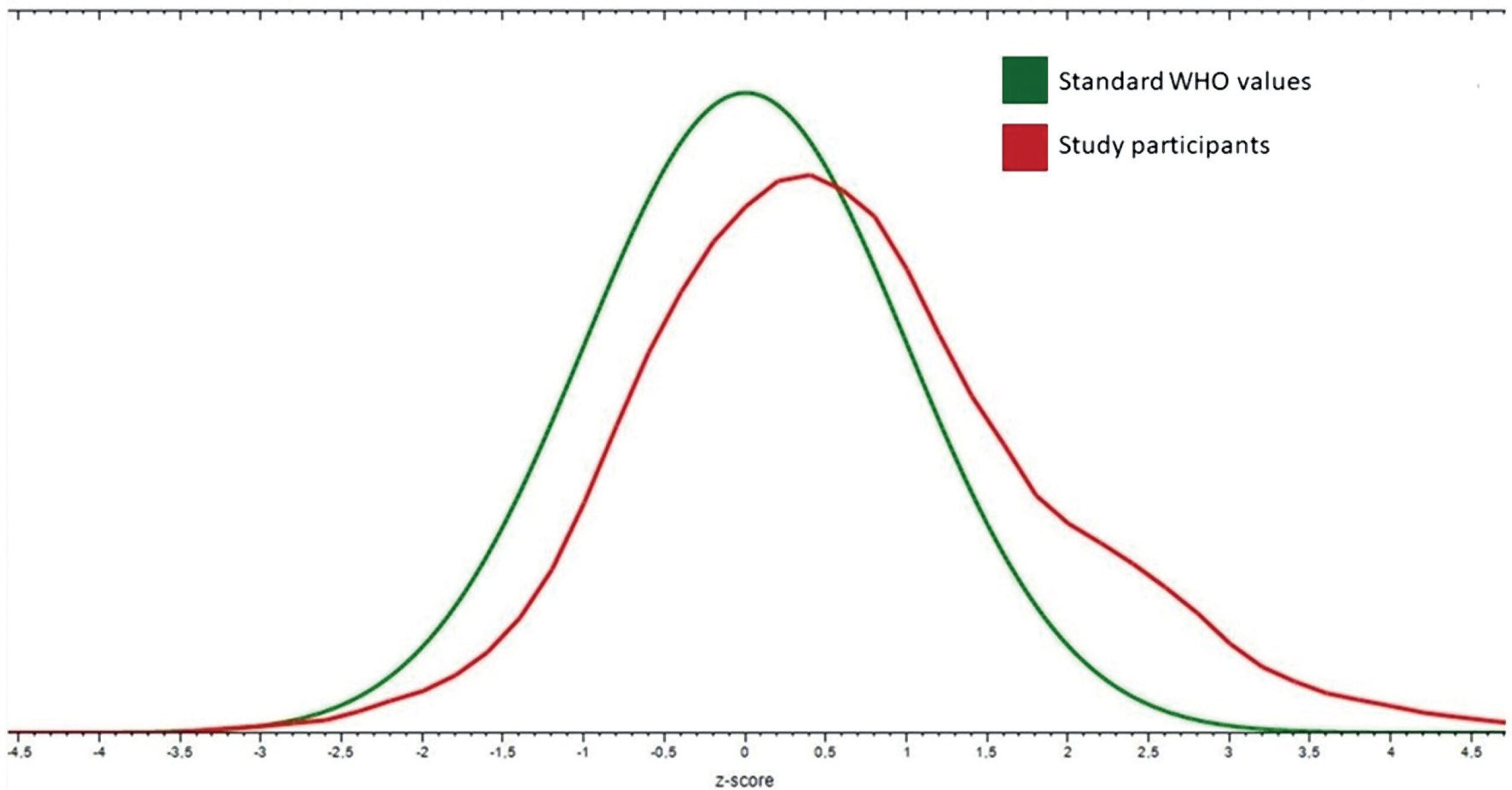
Participants had a higher incidence of overweight, obesity and severe obesity compared to standard World Health Organization (WHO) values. The most common finding in clinical examination was heart murmur (18.5% of participants). Electrocardiographic changes were found in 3.3% of participants, including paroxysmal supraventricular tachycardia and pre-excitation syndrome, which may be responsible for sudden death, even in asymptomatic individuals with no personal or family history of heart disease and no abnormality on clinical examination.

Conclusions:

ECG revealed arrhythmias that were not detected by clinical examination and may precede sudden death in individuals subjected to physical exertion, indicating its role in the assessment of children and adolescents before starting regular physical exercise.
  • Adolescents
  • Children
  • Electrocardiography/methods
  • Electrocardiography/prevention and control
  • Physical Exercise
  • Youth Sports
Read Full Article
Creative Commons Attribution (CC BY) Creative Commons license
21/04/2023 DOI: 10.36660/ijcs.20220052 Views 1
ABC
Review Article

Cardiac Cachexia: Perspectives for Prevention and Treatment

Marina Politi Okoshi et al. Rafael Verardino Capalbo Fernando G Romeiro Katashi Okoshi

Abstract

Cachexia is a prevalent pathological condition associated with chronic heart failure. Its occurrence predicts increased morbidity and mortality independent of important clinical variables such as age, ventricular function, or heart failure functional class. The clinical consequences of cachexia are dependent on both weight loss and systemic inflammation, which accompany cachexia development. Skeletal muscle wasting is an important component of cachexia; it often precedes cachexia development and predicts poor outcome in heart failure. Cachexia clinically affects several organs and systems. It is a multifactorial condition where underlying pathophysiological mechanisms are not completely understood making it difficult to develop specific prevention and treatment therapies. Preventive strategies have largely focused on muscle mass preservation. Different treatment options have been described, mostly in small clinical studies or experimental settings. These include nutritional support, neurohormonal blockade, reducing intestinal bacterial translocation, anemia and iron deficiency treatment, appetite stimulants, immunomodulatory agents, anabolic hormones, and physical exercise regimens. Currently, nonpharmacological therapy such as nutritional support and physical exercise are considered central to cachexia prevention and treatment.

  • Anemia
  • Heart Failure
  • Muscle Wasting
  • Nutrition
  • Physical Exercise
  • Prognosis
Read Full Article
Creative Commons Attribution (CC BY) Creative Commons license
27/10/2016 DOI: 10.5935/abc.20160142
ABC
Editorial

Cardiac Rehabilitation: Far Beyond Coronary Artery Disease

Claudio Gil Soares de Araújo

Cardiac rehabilitation (CR), as originally proposed in the mid of last century, was primarily aimed at returning life back to normal, with emphasis on aspects of physical, mental and professional plenitude. At that time, a few paradigms were modified. Instead of four to six weeks of bed rest and immobilization following acute myocardial infarction, patients were oriented to sit on chairs, which was described as “armchair treatment“; right after, studies began to show the favorable results of early ambulation. This has evolved and currently the Brazilian Society of Cardiology guidelines proposing and advising how to implement and to start supervised exercise programs for CR. Those guidelines comprise aerobic, muscle strengthening and flexibility exercises to be started as soon as clinical stability is reached after myocardial infarction. Currently CR is aimed at providing patients with better or much better conditions than those prior to the cardiac event or the diagnosis of cardiovascular disease.

Although CR is a frequent and recurring theme of several presentations in scientific meetings of the specialty, being thus known by clinical cardiologists, there is worldwide consensus that only a very small part of patients with coronary artery disease is usually referred by their physicians for CR programs. Several are the reasons for that insufficient referral and they will not be addressed in this editorial.

[…]

  • Cardiovascular Diseases
  • Exercise Programs
  • exercise training
  • Flexibility
  • Physical Exercise
Read Full Article
Creative Commons Attribution (CC BY) Creative Commons license
01/12/2015 DOI: 10.5935/abc.20160002
Decrease in blood pressure, body mass index and glycemia after aerobic training in elderly women with type 2 diabetes
ABC
Artigo Original

Decrease in blood pressure, body mass index and glycemia after aerobic training in elderly women with type 2 diabetes

Luciana Zaranza Monteiro et al. Cássio Ricardo Vaz Fiani Maria Cristina Foss de Freitas Maria Lúcia Zanetti Milton César Foss

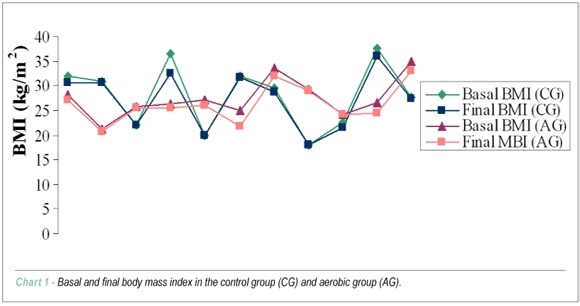
BACKGROUND: The aging process is associated with the development of several diseases, which can be attenuated by the practice of physical activities. Aerobic training is an effective method to maintain and improve cardiovascular function. Additionally, it has a crucial role in the prevention and treatment of several chronic-degenerative diseases, especially diabetes mellitus. }OBJECTIVE: To verify the effect of a 13-week aerobic training program on blood pressure (BP), body mass index (BMI) and glycemia levels in elderly women with type-2 diabetes mellitus (DM2). METHODS: Eleven sedentary elderly women with DM2, aged 61.0 ± 9.1 years, were submitted a 13-week aerobic training program, constituting group G2. Eleven controlled elderly women (aged 60.2 ± 6.8 years) were not submitted to the aerobic training, constituting the control group (G1). G1 attended educational lectures once a week, whereas G2 walked three times a week. RESULTS: Both groups presented a significant decrease in glycemia and diastolic blood pressure levels. No significant decreases in BMI were observed after the aerobic training in either group. CONCLUSION: The 13-week aerobic training program was enough to promote significant decrease in the diastolic blood pressure and glycemia levels; therefore, this type of exercise training decreases the risk factors for cardiovascular and metabolic diseases.

  • Aged
  • body mass index
  • Diabetes Mellitus
  • Exercise
  • Hypertension
  • Physical Exercise
Read Full Article
Creative Commons Attribution (CC BY) Creative Commons license
01/10/2010 DOI: 10.1590/S0066-782X2010005000135 Views 1

How to cite this article

EndNote RIS

Electronic Document Format (Vancouver)

Silva DLM, Bonatto RC, Bonatto CPP, Padovani CR, Fioretto JR. Electrocardiogram as Part of the Evaluation of Children and Adolescents Before Starting Physical Exercise. International Journal of Cardiovascular Sciences 2023;36:e20220052.

Electronic Document Format (ABNT)

Silva, Diego Lineker Marquetto; Bonatto, Rossano Cesar; Bonatto, Celia de Paula Pimenta; Padovani, Carlos Roberto; Fioretto, José Roberto. Electrocardiogram as Part of the Evaluation of Children and Adolescents Before Starting Physical Exercise. International Journal of Cardiovascular Sciences, v. 36, e20220052, Apr. 2023.

Electronic Document Format (APA)

Silva, D. L. M., Bonatto, R. C., Bonatto, C. P. P., Padovani, C. R., & Fioretto, J. R. (2023). Electrocardiogram as Part of the Evaluation of Children and Adolescents Before Starting Physical Exercise. International Journal of Cardiovascular Sciences, 36, e20220052.

Electronic Document Format (ISO)

Silva, Diego Lineker Marquetto and Bonatto, Rossano Cesar and Bonatto, Celia de Paula Pimenta and Padovani, Carlos Roberto and Fioretto, José Roberto. Electrocardiogram as Part of the Evaluation of Children and Adolescents Before Starting Physical Exercise. International Journal of Cardiovascular Sciences [online]. 2023, vol. 36, [cited 2026-10-14], e20220052. Available from: <https://journals.cardiol.br/en/article/electrocardiogram-as-part-of-the-evaluation-of-children-and-adolescents-before-starting-physical-exercise/>. ISSN 2359-4802

EndNote RIS

Electronic Document Format (Vancouver)

Okoshi MP, Capalbo RV, Romeiro FG, Okoshi K. Cardiac Cachexia: Perspectives for Prevention and Treatment. Arquivos Brasileiros de Cardiologia 2016;108(1):74-80.

Electronic Document Format (ABNT)

Okoshi, Marina Politi; Capalbo, Rafael Verardino; Romeiro, Fernando G; Okoshi, Katashi. Cardiac Cachexia: Perspectives for Prevention and Treatment. Arquivos Brasileiros de Cardiologia, v. 108, n. 1, p. 74-80, Oct. 2016.

Electronic Document Format (APA)

Okoshi, M. P., Capalbo, R. V., Romeiro, F. G., & Okoshi, K. (2016). Cardiac Cachexia: Perspectives for Prevention and Treatment. Arquivos Brasileiros de Cardiologia, 108(1), 74-80.

Electronic Document Format (ISO)

Okoshi, Marina Politi and Capalbo, Rafael Verardino and Romeiro, Fernando G and Okoshi, Katashi. Cardiac Cachexia: Perspectives for Prevention and Treatment. Arquivos Brasileiros de Cardiologia [online]. 2016, vol. 108, n. 1, [cited 2026-10-14], pp. 74-80. Available from: <https://journals.cardiol.br/en/article/cardiac-cachexia-perspectives-for-prevention-and-treatment/>. ISSN 0066-782X

EndNote RIS

Electronic Document Format (Vancouver)

Araújo CGS. Cardiac Rehabilitation: Far Beyond Coronary Artery Disease. Arquivos Brasileiros de Cardiologia 2015;105(6):549-51.

Electronic Document Format (ABNT)

Araújo, Claudio Gil Soares de. Cardiac Rehabilitation: Far Beyond Coronary Artery Disease. Arquivos Brasileiros de Cardiologia, v. 105, n. 6, p. 549-551, Nov. 2015.

Electronic Document Format (APA)

Araújo, C. G. S. (2015). Cardiac Rehabilitation: Far Beyond Coronary Artery Disease. Arquivos Brasileiros de Cardiologia, 105(6), 549-551.

Electronic Document Format (ISO)

Araújo, Claudio Gil Soares de. Cardiac Rehabilitation: Far Beyond Coronary Artery Disease. Arquivos Brasileiros de Cardiologia [online]. 2015, vol. 105, n. 6, [cited 2026-10-14], pp. 549-551. Available from: <https://journals.cardiol.br/en/article/cardiac-rehabilitation-far-beyond-coronary-artery-disease/>. ISSN 0066-782X

EndNote RIS

Electronic Document Format (Vancouver)

Monteiro LZ, Fiani CRV, Freitas MCF, Zanetti ML, Foss MC. Decrease in blood pressure, body mass index and glycemia after aerobic training in elderly women with type 2 diabetes. Arquivos Brasileiros de Cardiologia 2010;95(5):563-70.

Electronic Document Format (ABNT)

Monteiro, Luciana Zaranza; Fiani, Cássio Ricardo Vaz; Freitas, Maria Cristina Foss de; Zanetti, Maria Lúcia; Foss, Milton César. Decrease in blood pressure, body mass index and glycemia after aerobic training in elderly women with type 2 diabetes. Arquivos Brasileiros de Cardiologia, v. 95, n. 5, p. 563-570, Sep. 2010.

Electronic Document Format (APA)

Monteiro, L. Z., Fiani, C. R. V., Freitas, M. C. F. , Zanetti, M. L., & Foss, M. C. (2010). Decrease in blood pressure, body mass index and glycemia after aerobic training in elderly women with type 2 diabetes. Arquivos Brasileiros de Cardiologia, 95(5), 563-570.

Electronic Document Format (ISO)

Monteiro, Luciana Zaranza and Fiani, Cássio Ricardo Vaz and Freitas, Maria Cristina Foss de and Zanetti, Maria Lúcia and Foss, Milton César. Decrease in blood pressure, body mass index and glycemia after aerobic training in elderly women with type 2 diabetes. Arquivos Brasileiros de Cardiologia [online]. 2010, vol. 95, n. 5, [cited 2026-10-14], pp. 563-570. Available from: <https://journals.cardiol.br/en/article/decrease-in-blood-pressure-body-mass-index-and-glycemia-after-aerobic-training-in-elderly-women-with-type-2-diabetes/>. ISSN 0066-782X

  • About ABC Family
  • Internal Regulation
  • Editorial Board
  • Brazilian Society of Cardiology (SBC)

Issues

SBC Guidelines

  • Videos
  • Podcasts
  • News