ABC Family Arquivos Brasileiros de Cardiologia International Journal of Cardiovascular Sciences ABC Heart Failure & Cardiomyopathy ABC Imagem Cardiovascular
Português English
ABC Family
Português English
  • About
    • About ABC Family
    • Internal Regulation
    • Editorial Board
    • Brazilian Society of Cardiology (SBC)
  • Issues
  • SBC Guidelines
  • Content
    • Videos
    • Podcasts
    • News
  • About
    • About ABC Family
    • Internal Regulation
    • Editorial Board
    • Brazilian Society of Cardiology (SBC)
  • Issues
  • SBC Guidelines
  • Content
    • Videos
    • Podcasts
    • News

ABC Family

  • ABC Family
  • Arquivos Brasileiros de Cardiologia
  • International Journal of Cardiovascular Sciences
  • ABC Heart Failure & Cardiomyopathy
  • ABC Imagem Cardiovascular
Search in

No content found.

Journals
Ordering
Article types
Others

  1. Home
  2. Keyword: Men
ABC
Editorial

Gender Equity in Access to Reperfusion in Acute Myocardial Infarction: Still A Long Way to Go

Clara L. Fraga et al. Frederico V. B. Macedo Rodrigo T. L. Rocha Domingos Sávio G. Ferreira Filho Bruno R. Nascimento

Ischemic heart disease is the main cause of death worldwide, and its most severe presentation ST-elevation acute myocardial infarction (STEMI), which corresponds to approximately 1/3 of the presentations, and early reperfusion is the main strategy for reducing mortality. Despite broad historical knowledge of gender-related differences in treatment and prognosis of patients with an acute presentation of ischemic heart disease, male individuals, in addition to having earlier access to health systems, are even more likely to undergo a diagnostic coronary angiography and urgent revascularization than women.– The article “Access to Reperfusion Therapies and Mortality in Women with Acute Myocardial Infarction with ST-Segment Elevation: the VICTIM Registry” demonstrates very well this difference in access to reperfusion therapies in the Brazilian scenario. When evaluating 878 patients admitted with STEMI in the northeastern state of Sergipe, Brazil, it was observed that female individuals were less frequently submitted to reperfusion strategies when compared to males, both primary percutaneous coronary interventions (PCI) (44% x 54.5%; p = 0.003) and fibrinolysis (1.7% x 2.6%; p = 0.422). This scenario is in line with data from other previous studies on this topic carried out in different settings (). In the VICTIM registry, higher in-hospital mortality was observed in the female gender (16.1% x 6.7*; p <0.001), probably as a consequence of this lower access to reperfusion therapies. These data are consistent with systematic reviews of the literature on the topic.

Would the delay in calling for help be one of the reasons why women are less frequently submitted to revascularization therapies? The aforementioned study demonstrated that this does not seem to have been the problem in Sergipe, with the time spent calling for help after symptom onset being statistically similar between the genders. However, female patients underwent a greater delay in the primary hospital, until referral to a unit with infrastructure to perform the percutaneous reperfusion (transfer delay). These data differ in part from the findings of a recent study carried out in Italy, in which the mean time from symptom onset to presentation at the hospital was longer for women (280 x 240 minutes), with only 23.2% of women x 29.1 % of men undergoing a delay <120 minutes until hospital admission (p = 0.002). As in the VICTIM study, there was an impact on mortality: in cases with delay ≥120 minutes, mortality rates were higher among women (5.5% x 2.8%), whereas in cases with presentation <120 minutes, mortality was considerably lower and statistically similar between genders (2.0% in women vs. 1.6% in men).

[…]
  • Men
  • Myocardial Infarction
  • Myocardial Ischemia
  • Myocardial Reperfusion
  • Myocardial Revascularization
  • Womens
Read Full Article
Creative Commons Attribution (CC BY) Creative Commons license
16/04/2021 DOI: 10.36660/abc.20210082 Views 2
Figure 1
IJCS
Original Article

Acute Blood Pressure Response to Different Resistance Programs in Trained Men

Ariani França Conceição et al. Daniell Lima Muniz Clarcson Plácido Conceição dos Santos Ciro Oliveira Queiroz

Abstract

Background

Resistance training is used in different exercise programs, with different objectives and different levels of physical fitness. Training-related variables, such as volume, rest time and intensity, can affect the response of blood pressure (BP), but studies on the effect of these variables on BP are still needed.

Objective

To evaluate the acute response of BP in trained individuals undergoing two different methods of resistance training.

Methods

The sample was divided into three groups: (1) the German volume training (GVT) (n= 15), which consisted of 10 series of 10 repetitions at 50% of 1-repetition maximum (RM) with intervals of 30 seconds; (2) the sarcoplasm stimulating training (SST) (n= 16), performed at 8 RM and 85% of 1-RM and interval of 10 seconds until failure, followed by removal of 20% of weight and repetition of the whole series (total of three sets), and the control group (CG) (n= 15) who underwent BP measurements only. The two-way repeated measures ANOVA was used for analysis of variations, and a p< 0.05 was considered statistically significant.

Results

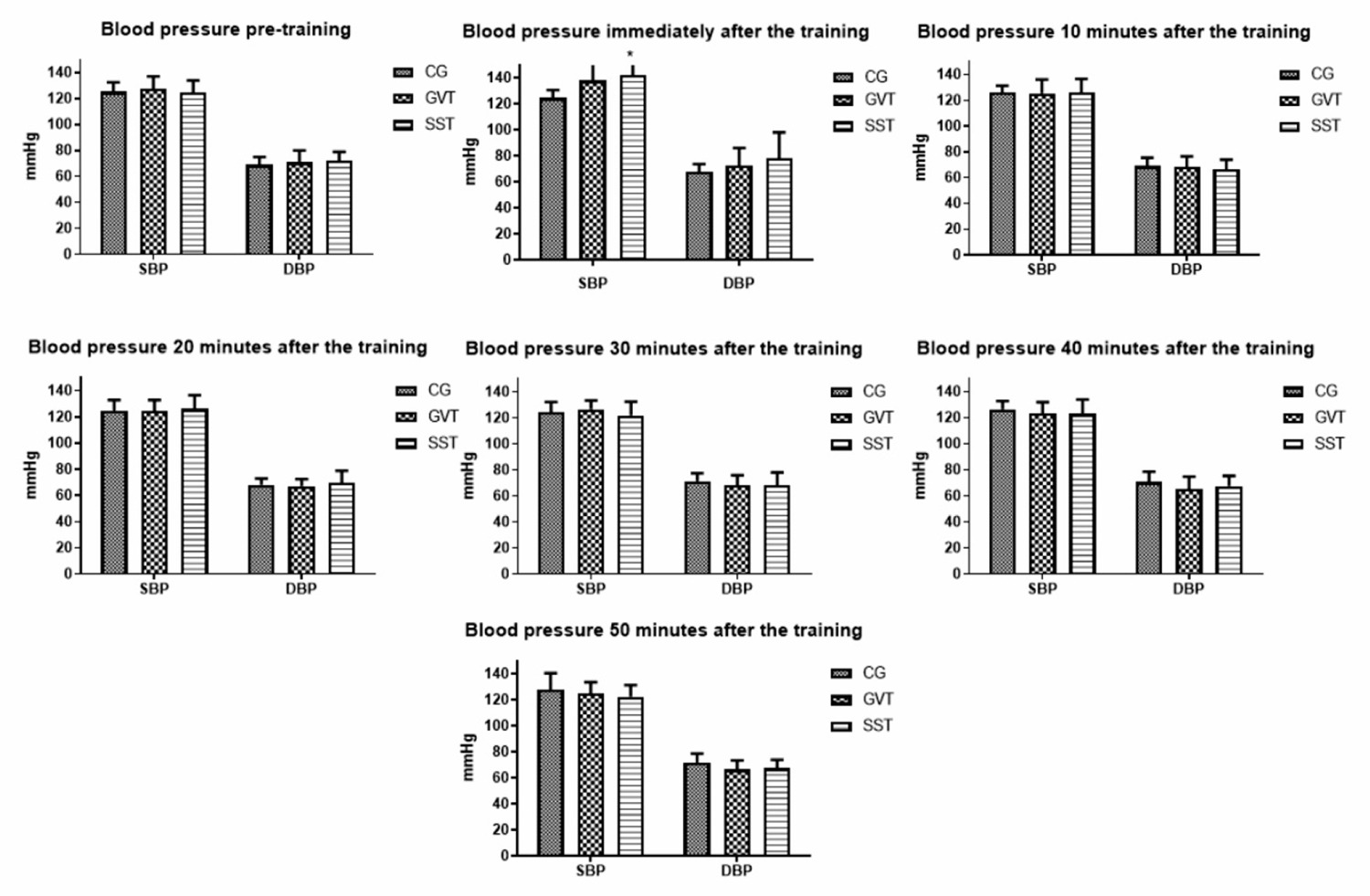
In the within-group analysis, a significant lowering of systolic blood pressure (SBP) was found at 10 minutes (125.4±10.8 mmHg, p= 0.045) and 20 minutes (124.5±8.5 mmHg, p= 0.044) post-training compared with immediately after training. In the between-group comparison, higher SBP values were observed immediately after training in the SST group (142.1±28.2, p= 0.048) compared with the CG.

Conclusion

High-volume and high-intensity resistance training programs did not cause abnormal changes in blood pressure. (Int J Cardiovasc Sci. 2021; [online].ahead print, PP.0-0)

  • Blood Pressure
  • Circuit Based Exercise
  • Exercise
  • Hypertension
  • Men
  • Rehabilitation
  • Resistance Training
Read Full Article
Creative Commons Attribution (CC BY) Creative Commons license
26/02/2021 DOI: 10.36660/ijcs.20190215 Views 1
ABC
Original Article

Prevalence of Metabolic Syndrome and Framingham Risk Score in Apparently Healthy Vegetarian and Omnivorous Men

Julio Cesar Acosta Navarro et al. Luiza Antoniazzi Adriana Midori Oki Maria Carlos Bonfim … Valeria Hong Luiz Aparecido Bortolotto Pedro Acosta-Cardenas Valeria Sandrim Marcio Hiroshi Miname Raul Dias dos Santos Filho

Abstract

Background:

Recent studies have shown a lower prevalence of metabolic syndrome (MSyn) in vegetarians (VEG) despite the inconclusive evidence from others.

Objective:

To verify the association between diet and other lifestyle characteristics and the prevalence of MSyn, cardiovascular risk factors (CRF), and Framingham Risk Score (FRS) in apparently healthy VEG and omnivorous (OMN) men.

Methods:

In this cross-sectional study, 88 apparently healthy men ≥ 35 years, 44 VEG and 44 OMN, were assessed for anthropometric data, blood pressure, blood lipids, glucose, C-reactive protein (CRP) and FRS. To test the association between lifestyle and MSyn, Student t test, chi-square test, and multiple logistic regression model were used. A significance level of 5% was considered in all statistical analyses.

Results:

Several CRF were significantly lower in VEG than in OMN: body mass index, systolic blood pressure, diastolic blood pressure, fasting serum total cholesterol, LDL-cholesterol, apolipoprotein b, glucose, and glycated hemoglobin (all p < 0.05). The FRS mean was lower in VEG than in OMN (2.98 ± 3.7 vs 4.82 ± 4.8, p = 0.029). The percentage of individuals with MSyn was higher among OMN than among VEG (52.3 vs.15.9%) (p < 0.001). The OMN diet was associated with MSyn (OR: 6.28 95%CI 2.11-18.71) and alterations in most MSyn components in the multiple regression model independently of caloric intake, age and physical activity.

Conclusion:

The VEG diet was associated with lower CRF, FRS and percentage of individuals with MSyn.

  • Coronary Artery Disease
  • Diet, Vegetarian
  • Men
  • Metabolic Syndrome
  • Risk Factors
  • Vegetarians
Read Full Article
Creative Commons Attribution (CC BY) Creative Commons license
01/05/2018 DOI: 10.5935/abc.20180073 Views 1
Figure 1
ABC
Original Article

Testosterone Deficiency Increases Hospital Readmission and Mortality Rates in Male Patients with Heart Failure

Marcelo Rodrigues dos Santos et al. Ana Luiza Carrari Sayegh Raphaela Vilar Ramalho Groehs Guilherme Fonseca … Ivani Credidio Trombetta Antônio Carlos Pereira Barretto Marco Antônio Arap Carlos Eduardo Negrão Holly R. Middlekauff Maria-Janieire de Nazaré Nunes Alves

Background:

Testosterone deficiency in patients with heart failure (HF) is associated with decreased exercise capacity and mortality; however, its impact on hospital readmission rate is uncertain. Furthermore, the relationship between testosterone deficiency and sympathetic activation is unknown.

Objective:

We investigated the role of testosterone level on hospital readmission and mortality rates as well as sympathetic nerve activity in patients with HF.

Methods:

Total testosterone (TT) and free testosterone (FT) were measured in 110 hospitalized male patients with a left ventricular ejection fraction < 45% and New York Heart Association classification IV. The patients were placed into low testosterone (LT; n = 66) and normal testosterone (NT; n = 44) groups. Hypogonadism was defined as TT < 300 ng/dL and FT < 131 pmol/L. Muscle sympathetic nerve activity (MSNA) was recorded by microneurography in a subpopulation of 27 patients.

Results:

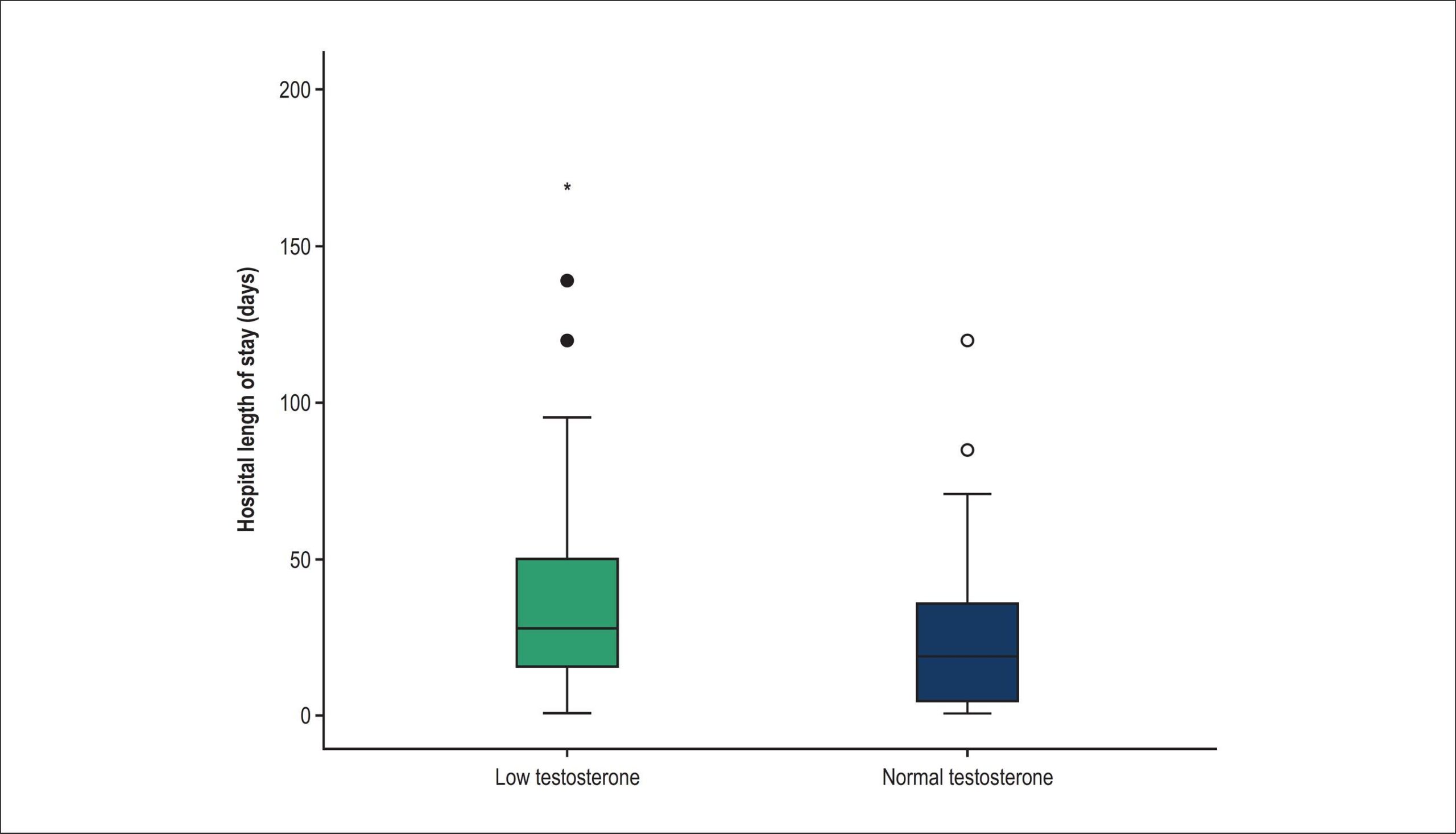
Length of hospital stay was longer in the LT group compared to in the NT group (37 ± 4 vs. 25 ± 4 days; p = 0.008). Similarly, the cumulative hazard of readmission within 1 year was greater in the LT group compared to in the NT group (44% vs. 22%, p = 0.001). In the single-predictor analysis, TT (hazard ratio [HR], 2.77; 95% confidence interval [CI], 1.58–4.85; p = 0.02) predicted hospital readmission within 90 days. In addition, TT (HR, 4.65; 95% CI, 2.67–8.10; p = 0.009) and readmission within 90 days (HR, 3.27; 95% CI, 1.23–8.69; p = 0.02) predicted increased mortality. Neurohumoral activation, as estimated by MSNA, was significantly higher in the LT group compared to in the NT group (65 ± 3 vs. 51 ± 4 bursts/100 heart beats; p < 0.001).

Conclusion:

These results support the concept that LT is an independent risk factor for hospital readmission within 90 days and increased mortality in patients with HF. Furthermore, increased MSNA was observed in patients with LT.

  • Heart Failure / mortality
  • Men
  • Patient Readmission
  • Testosterone / deficiency
Read Full Article
Creative Commons Attribution (CC BY) Creative Commons license
21/07/2015 DOI: 10.5935/abc.20150078 Views 1
ABC
Artigo Original

Immediate results of myocardial revascularization: comparison between men and women

Vivian Lerner Amato et al. Ari Timerman Ângela T. Paes Valéria T. Baltar … Pedro S. Farsky Jorge A. Farran Carlos Gun Paulo Paredes Paulista Leopoldo S. Piegas J. Eduardo M. R. Sousa

OBJECTIVE: To assess morbidity and mortality in men and women undergoing isolated myocardial revascularization and to analyze the factors related to differences occasionally found. METHODS: Comparative analysis of 2032 patients, 1402 (69%) men and 630 (31%) women, who consecutively underwent surgery from January 1999 to December 2002. RESULTS: Women had a greater mean age, more risk factors, and a greater incidence of unstable angina. Internal thoracic artery grafts were more frequently used in men, 85.6% vs 78.3%, P < 0.001. No differences in the postoperative complication rates were observed, except for infections, more frequent in women. In-hospital mortality rates were 4.1% and 6.3% for men and women, respectively (P = 0.026). On multivariate analysis, neither the female sex was identified as an independent prognostic factor for death nor was the use of thoracic artery grafts identified as an isolated protective factor. However, sex-internal thoracic artery graft interaction was significant. The following variables were also selected: age (OR = 1.03; 95% CI = 1.01 to 1.06; P = 0.004), preoperative renal failure (OR = 1.82; 95% CI = 1.07 to 3.11; P = 0.028) and urgent/emergency surgery (OR = 2.85; 95% CI = 1.32 to 6.14; P = 0.008). CONCLUSION: The female sex had a greater surgical mortality; this, however, was not an independent prognostic factor for death. The use of thoracic artery grafts proved to be protective. Older patients with renal failure in an emergency situation had greater indices of in-hospital death.

  • Men
  • Myocardial Revascularization/surgery
  • Women
Read Full Article
Creative Commons Attribution (CC BY) Creative Commons license
13/12/2004 DOI: 10.1590/S0066-782X2004001900004 Views 1

How to cite this article

EndNote RIS

Electronic Document Format (Vancouver)

Fraga CL, Macedo FVB, Rocha RTL, Ferreira Filho DSG, Nascimento BR. Gender Equity in Access to Reperfusion in Acute Myocardial Infarction: Still A Long Way to Go. Arquivos Brasileiros de Cardiologia 2021;116(4):704-5.

Electronic Document Format (ABNT)

Fraga, Clara L.; Macedo, Frederico V. B.; Rocha, Rodrigo T. L.; Ferreira Filho, Domingos Sávio G.; Nascimento, Bruno R.. Gender Equity in Access to Reperfusion in Acute Myocardial Infarction: Still A Long Way to Go. Arquivos Brasileiros de Cardiologia, v. 116, n. 4, p. 704-705, Apr. 2021.

Electronic Document Format (APA)

Fraga, C. L., Macedo, F. V. B., Rocha, R. T. L., Ferreira Filho, D. S. G., & Nascimento, B. R. (2021). Gender Equity in Access to Reperfusion in Acute Myocardial Infarction: Still A Long Way to Go. Arquivos Brasileiros de Cardiologia, 116(4), 704-705.

Electronic Document Format (ISO)

Fraga, Clara L. and Macedo, Frederico V. B. and Rocha, Rodrigo T. L. and Ferreira Filho, Domingos Sávio G. and Nascimento, Bruno R.. Gender Equity in Access to Reperfusion in Acute Myocardial Infarction: Still A Long Way to Go. Arquivos Brasileiros de Cardiologia [online]. 2021, vol. 116, n. 4, [cited 2026-10-14], pp. 704-705. Available from: <https://journals.cardiol.br/en/article/gender-equity-in-access-to-reperfusion-in-acute-myocardial-infarction-still-a-long-way-to-go/>. ISSN 0066-782X

EndNote RIS

Electronic Document Format (Vancouver)

Conceição AF, Muniz DL, Santos CPC, Queiroz CO. Acute Blood Pressure Response to Different Resistance Programs in Trained Men. International Journal of Cardiovascular Sciences 2021;34(3):294-9.

Electronic Document Format (ABNT)

Conceição, Ariani França; Muniz, Daniell Lima; Santos, Clarcson Plácido Conceição dos; Queiroz, Ciro Oliveira. Acute Blood Pressure Response to Different Resistance Programs in Trained Men. International Journal of Cardiovascular Sciences, v. 34, n. 3, p. 294-299, Feb. 2021.

Electronic Document Format (APA)

Conceição, A. F., Muniz, D. L., Santos, C. P. C. , & Queiroz, C. O. (2021). Acute Blood Pressure Response to Different Resistance Programs in Trained Men. International Journal of Cardiovascular Sciences, 34(3), 294-299.

Electronic Document Format (ISO)

Conceição, Ariani França and Muniz, Daniell Lima and Santos, Clarcson Plácido Conceição dos and Queiroz, Ciro Oliveira. Acute Blood Pressure Response to Different Resistance Programs in Trained Men. International Journal of Cardiovascular Sciences [online]. 2021, vol. 34, n. 3, [cited 2026-10-14], pp. 294-299. Available from: <https://journals.cardiol.br/en/article/acute-blood-pressure-response-to-different-resistance-programs-in-trained-men/>. ISSN 2359-4802

EndNote RIS

Electronic Document Format (Vancouver)

Navarro JCA, Antoniazzi L, Oki AM, Bonfim MC, Hong V, Bortolotto LA, Acosta-Cardenas P, et al. Prevalence of Metabolic Syndrome and Framingham Risk Score in Apparently Healthy Vegetarian and Omnivorous Men. Arquivos Brasileiros de Cardiologia 2018;110(5):430-7.

Electronic Document Format (ABNT)

Navarro, Julio Cesar Acosta; Antoniazzi, Luiza; Oki, Adriana Midori; Bonfim, Maria Carlos; Hong, Valeria; Bortolotto, Luiz Aparecido; Acosta-Cardenas, Pedro; Sandrim, Valeria; Miname, Marcio Hiroshi; Santos Filho, Raul Dias dos. Prevalence of Metabolic Syndrome and Framingham Risk Score in Apparently Healthy Vegetarian and Omnivorous Men. Arquivos Brasileiros de Cardiologia, v. 110, n. 5, p. 430-437, Apr. 2018.

Electronic Document Format (APA)

Navarro, J. C. A., Antoniazzi, L., Oki, A. M., Bonfim, M. C., Hong, V., Bortolotto, L. A., Acosta-Cardenas, P., Sandrim, V., Miname, M. H., & Santos Filho, R. D. (2018). Prevalence of Metabolic Syndrome and Framingham Risk Score in Apparently Healthy Vegetarian and Omnivorous Men. Arquivos Brasileiros de Cardiologia, 110(5), 430-437.

Electronic Document Format (ISO)

Navarro, Julio Cesar Acosta and Antoniazzi, Luiza and Oki, Adriana Midori and Bonfim, Maria Carlos and Hong, Valeria and Bortolotto, Luiz Aparecido and Acosta-Cardenas, Pedro and Sandrim, Valeria and Miname, Marcio Hiroshi and Santos Filho, Raul Dias dos. Prevalence of Metabolic Syndrome and Framingham Risk Score in Apparently Healthy Vegetarian and Omnivorous Men. Arquivos Brasileiros de Cardiologia [online]. 2018, vol. 110, n. 5, [cited 2026-10-14], pp. 430-437. Available from: <https://journals.cardiol.br/en/article/prevalence-of-metabolic-syndrome-and-framingham-risk-score-in-apparently-healthy-vegetarian-and-omnivorous-men/>. ISSN 0066-782X

EndNote RIS

Electronic Document Format (Vancouver)

Santos MR, Sayegh ALC, Groehs RVR, Fonseca G, Trombetta IC, Barretto ACP, Arap MA, et al. Testosterone Deficiency Increases Hospital Readmission and Mortality Rates in Male Patients with Heart Failure. Arquivos Brasileiros de Cardiologia 2015;105(3):256-64.

Electronic Document Format (ABNT)

Santos, Marcelo Rodrigues dos; Sayegh, Ana Luiza Carrari; Groehs, Raphaela Vilar Ramalho; Fonseca, Guilherme; Trombetta, Ivani Credidio; Barretto, Antônio Carlos Pereira; Arap, Marco Antônio; Negrão, Carlos Eduardo; Middlekauff, Holly R.; Alves, Maria-Janieire de Nazaré Nunes. Testosterone Deficiency Increases Hospital Readmission and Mortality Rates in Male Patients with Heart Failure. Arquivos Brasileiros de Cardiologia, v. 105, n. 3, p. 256-264, Jul. 2015.

Electronic Document Format (APA)

Santos, M. R. , Sayegh, A. L. C., Groehs, R. V. R., Fonseca, G., Trombetta, I. C., Barretto, A. C. P., Arap, M. A., Negrão, C. E., Middlekauff, H. R., & Alves, M. N. N. (2015). Testosterone Deficiency Increases Hospital Readmission and Mortality Rates in Male Patients with Heart Failure. Arquivos Brasileiros de Cardiologia, 105(3), 256-264.

Electronic Document Format (ISO)

Santos, Marcelo Rodrigues dos and Sayegh, Ana Luiza Carrari and Groehs, Raphaela Vilar Ramalho and Fonseca, Guilherme and Trombetta, Ivani Credidio and Barretto, Antônio Carlos Pereira and Arap, Marco Antônio and Negrão, Carlos Eduardo and Middlekauff, Holly R. and Alves, Maria-Janieire de Nazaré Nunes. Testosterone Deficiency Increases Hospital Readmission and Mortality Rates in Male Patients with Heart Failure. Arquivos Brasileiros de Cardiologia [online]. 2015, vol. 105, n. 3, [cited 2026-10-14], pp. 256-264. Available from: <https://journals.cardiol.br/en/article/testosterone-deficiency-increases-hospital-readmission-and-mortality-rates-in-male-patients-with-heart-failure/>. ISSN 0066-782X

EndNote RIS

Electronic Document Format (Vancouver)

Amato VL, Timerman A, Paes T, Baltar VT, Farsky PS, Farran JA, Gun C, et al. Immediate results of myocardial revascularization: comparison between men and women. Arquivos Brasileiros de Cardiologia 2004;83(spe):14-20.

Electronic Document Format (ABNT)

Amato, Vivian Lerner; Timerman, Ari; Paes, Ângela T.; Baltar, Valéria T.; Farsky, Pedro S.; Farran, Jorge A.; Gun, Carlos; Paulista, Paulo Paredes; Piegas, Leopoldo S.; Sousa, J. Eduardo M. R.. Immediate results of myocardial revascularization: comparison between men and women. Arquivos Brasileiros de Cardiologia, v. 83, n. spe, p. 14-20, Dec. 2004.

Electronic Document Format (APA)

Amato, V. L., Timerman, A., Paes, T., Baltar, V. T., Farsky, P. S., Farran, J. A., Gun, C., Paulista, P. P., Piegas, L. S., & Sousa, J. E. M. R. (2004). Immediate results of myocardial revascularization: comparison between men and women. Arquivos Brasileiros de Cardiologia, 83(spe), 14-20.

Electronic Document Format (ISO)

Amato, Vivian Lerner and Timerman, Ari and Paes, Ângela T. and Baltar, Valéria T. and Farsky, Pedro S. and Farran, Jorge A. and Gun, Carlos and Paulista, Paulo Paredes and Piegas, Leopoldo S. and Sousa, J. Eduardo M. R.. Immediate results of myocardial revascularization: comparison between men and women. Arquivos Brasileiros de Cardiologia [online]. 2004, vol. 83, n. spe, [cited 2026-10-14], pp. 14-20. Available from: <https://journals.cardiol.br/en/article/immediate-results-of-myocardial-revascularization-comparison-between-men-and-women/>. ISSN 0066-782X

  • About ABC Family
  • Internal Regulation
  • Editorial Board
  • Brazilian Society of Cardiology (SBC)

Issues

SBC Guidelines

  • Videos
  • Podcasts
  • News