ABC Family Arquivos Brasileiros de Cardiologia International Journal of Cardiovascular Sciences ABC Heart Failure & Cardiomyopathy ABC Imagem Cardiovascular
Português English
ABC Family
Português English
  • About
    • About ABC Family
    • Internal Regulation
    • Editorial Board
    • Brazilian Society of Cardiology (SBC)
  • Issues
  • SBC Guidelines
  • Content
    • Videos
    • Podcasts
    • News
  • About
    • About ABC Family
    • Internal Regulation
    • Editorial Board
    • Brazilian Society of Cardiology (SBC)
  • Issues
  • SBC Guidelines
  • Content
    • Videos
    • Podcasts
    • News

ABC Family

  • ABC Family
  • Arquivos Brasileiros de Cardiologia
  • International Journal of Cardiovascular Sciences
  • ABC Heart Failure & Cardiomyopathy
  • ABC Imagem Cardiovascular
Search in

No content found.

Journals
Ordering
Article types
Others

  1. Home
  2. Keyword: Animals
Figure 1
ABC
Editorial

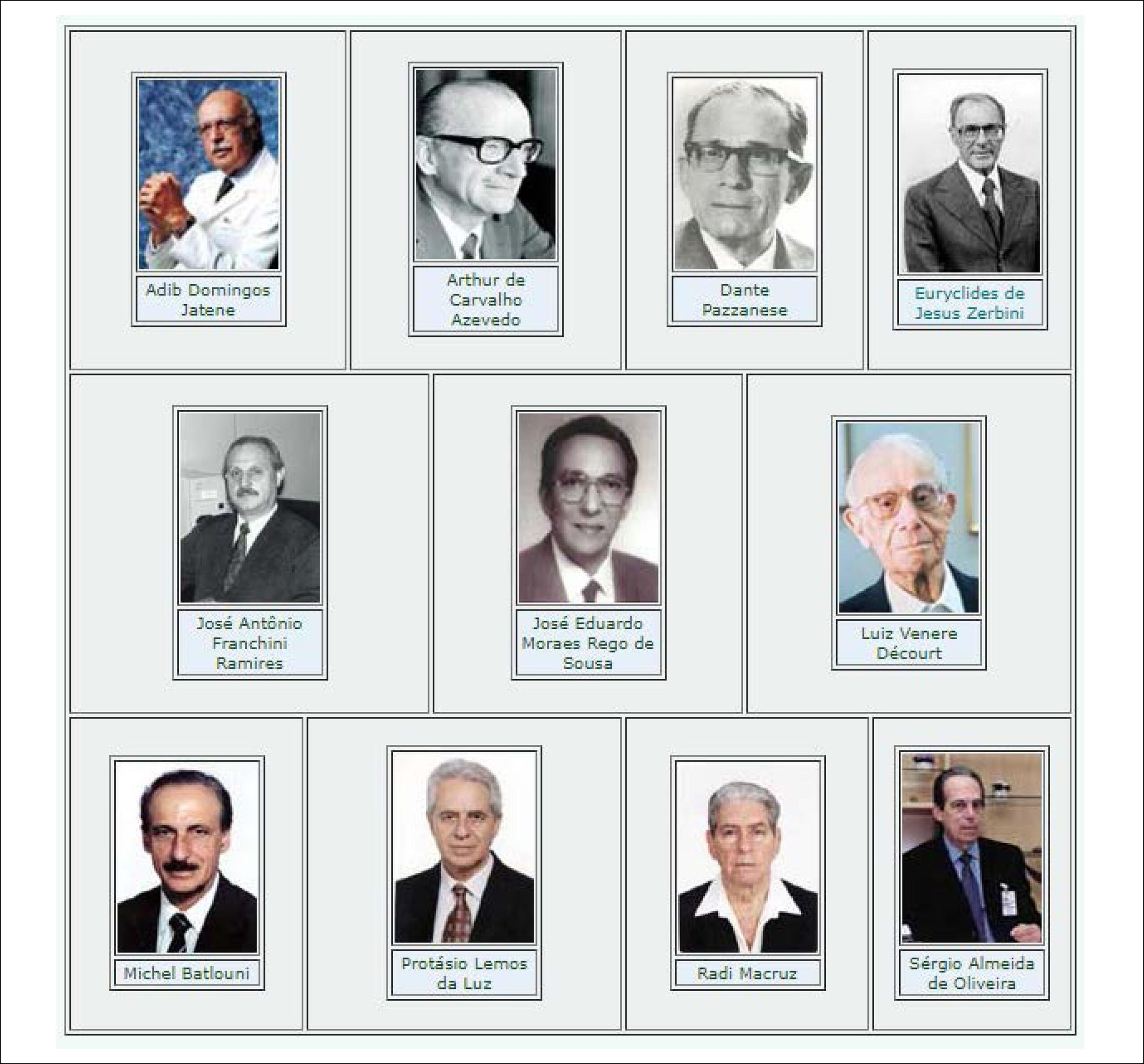
Cardiology and the Cardiologist – Yesterday, Today and Tomorrow

Evandro Tinoco Mesquita et al. Aurea Lucia Alves de Azevedo Grippa de Souza

[…]

  • Animals
  • Brazilian Society of Cardiology/history
  • Cardiology/history
  • Cardiology/trends
  • Heart Diseases/history
  • History,19th Century
  • History,20th Century
  • Humans
Read Full Article
Creative Commons Attribution (CC BY) Creative Commons license
10/10/2019 DOI: 10.5935/abc.20190207
Figure 1
ABC
Special Article

Multivariate Analysis for Animal Selection in Experimental Research

Renan Mercuri Pinto et al. Dijon Henrique Salomé de Campos Loreta Casquel Tomasi Antonio Carlos Cicogna … Katashi Okoshi Carlos Roberto Padovani

Background:

Several researchers seek methods for the selection of homogeneous groups of animals in experimental studies, a fact justified because homogeneity is an indispensable prerequisite for casualization of treatments. The lack of robust methods that comply with statistical and biological principles is the reason why researchers use empirical or subjective methods, influencing their results.

Objective:

To develop a multivariate statistical model for the selection of a homogeneous group of animals for experimental research and to elaborate a computational package to use it.

Methods:

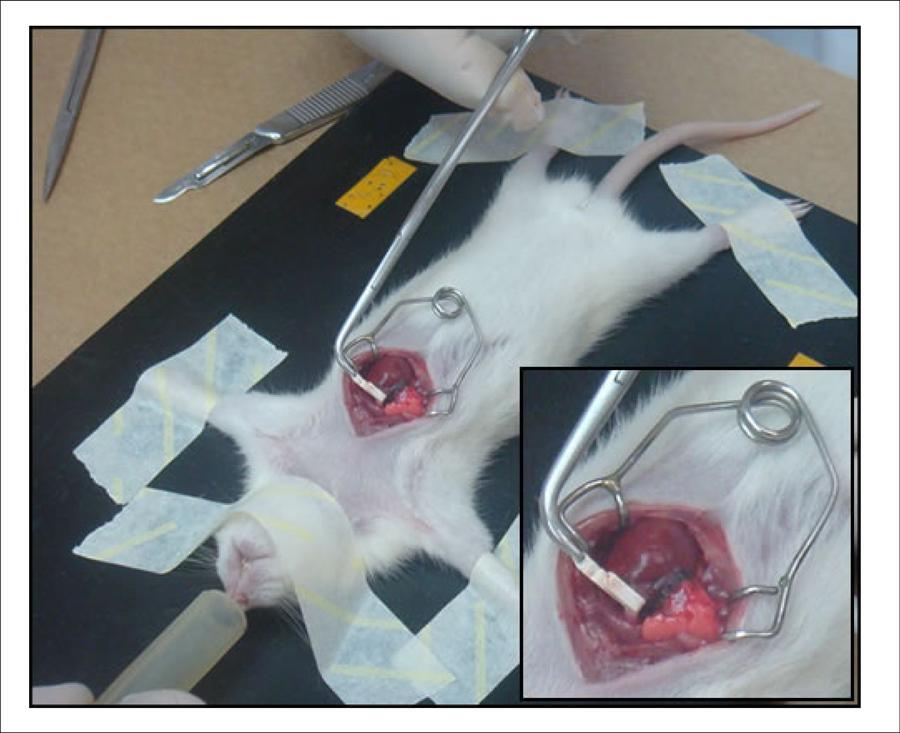
The set of echocardiographic data of 115 male Wistar rats with supravalvular aortic stenosis (AoS) was used as an example of model development. Initially, the data were standardized, and became dimensionless. Then, the variance matrix of the set was submitted to principal components analysis (PCA), aiming at reducing the parametric space and at retaining the relevant variability. That technique established a new Cartesian system into which the animals were allocated, and finally the confidence region (ellipsoid) was built for the profile of the animals’ homogeneous responses. The animals located inside the ellipsoid were considered as belonging to the homogeneous batch; those outside the ellipsoid were considered spurious.

Results:

The PCA established eight descriptive axes that represented the accumulated variance of the data set in 88.71%. The allocation of the animals in the new system and the construction of the confidence region revealed six spurious animals as compared to the homogeneous batch of 109 animals.

Conclusion:

The biometric criterion presented proved to be effective, because it considers the animal as a whole, analyzing jointly all parameters measured, in addition to having a small discard rate.

  • Animals
  • Aortic Valve Stenosis
  • Epidemiology
  • Experimental
  • multivariate analysis
Read Full Article
Creative Commons Attribution (CC BY) Creative Commons license
03/02/2015 DOI: 10.5935/abc.20140219 Views 1
Intermittent systolic overload promotes better myocardial performance in adult animals
ABC
Artigo Original

Intermittent systolic overload promotes better myocardial performance in adult animals

Leonardo Augusto Miana et al. Renato S. Assad Maria C. D. Abduch Guilherme Seva Gomes … Ananda Rigo Nogueira Fernanda Santos Oliveira Bruna Lopes Telles Maria Teresa Souto Gustavo J. Silva Noedir A. G. Stolf

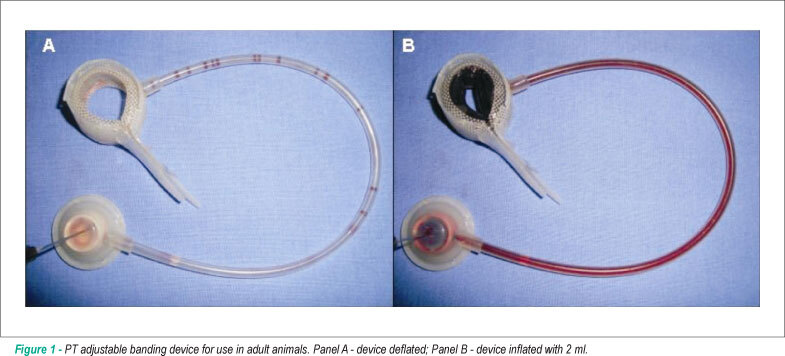
BACKGROUND: Corrected transposition of great arteries often evolves with right ventricular dysfunction. The ventricular preparation for anatomic correction in adult patients has produced disappointing results. OBJECTIVE: To assess right ventricular hypertrophy (RV) induced by conventional and intermittent pulmonary banding (PB) in adult animals. METHODS: Nineteen adult goats were divided into three groups: conventional (six animals), intermittent (six animals) and control (seven animals). The Conventional group underwent fixed PB with cardiac tape, while the intermittent group received PB adjustable device, which generated systolic overload for 12 hours, alternated with 12 hours of rest of RV. The pressures of the RV, pulmonary artery and aorta were measured throughout the study. Echocardiography was performed weekly. After four weeks, the animals were euthanized for morphological evaluation of the ventricles. The Control group was put to euthanasia for analysis at baseline. RESULTS: Pressure overload was lower in the intermittent group (p = 0.001), compared to the conventional group. There was an increase in the thickness of the RV of the Intermittent group measured by echocardiography compared to their baseline values (p < 0.05). The myocardial performance index in the RV group was better in the Intermittent group (p = 0.024), compared to the Conventional group. The groups stimulated showed increased muscle mass compared to the Control group (p = 0.001). There was no difference in myocardial water content. CONCLUSION: The intermittent BP developed hypertrophy of better performance, suggesting this protocol as the preferred method of ventricular preparation.

  • Animals
  • hipertrophy, right ventricular
  • Transposition of Great Vessels
  • Ventricular Dysfunction Right
Read Full Article
Creative Commons Attribution (CC BY) Creative Commons license
13/08/2010 DOI: 10.1590/S0066-782X2010005000105

How to cite this article

EndNote RIS

Electronic Document Format (Vancouver)

Mesquita ET, Souza ALAAG. Cardiology and the Cardiologist – Yesterday, Today and Tomorrow. Arquivos Brasileiros de Cardiologia 2019;113(3):335-8.

Electronic Document Format (ABNT)

Mesquita, Evandro Tinoco; Souza, Aurea Lucia Alves de Azevedo Grippa de. Cardiology and the Cardiologist – Yesterday, Today and Tomorrow. Arquivos Brasileiros de Cardiologia, v. 113, n. 3, p. 335-338, Oct. 2019.

Electronic Document Format (APA)

Mesquita, E. T., & Souza, A. L. A. A. G. (2019). Cardiology and the Cardiologist – Yesterday, Today and Tomorrow. Arquivos Brasileiros de Cardiologia, 113(3), 335-338.

Electronic Document Format (ISO)

Mesquita, Evandro Tinoco and Souza, Aurea Lucia Alves de Azevedo Grippa de. Cardiology and the Cardiologist – Yesterday, Today and Tomorrow. Arquivos Brasileiros de Cardiologia [online]. 2019, vol. 113, n. 3, [cited 2026-10-14], pp. 335-338. Available from: <https://journals.cardiol.br/en/article/cardiology-and-the-cardiologist-yesterday-today-and-tomorrow/>. ISSN 0066-782X

EndNote RIS

Electronic Document Format (Vancouver)

Pinto RM, Campos DHS, Tomasi LC, Cicogna AC, Okoshi K, Padovani CR. Multivariate Analysis for Animal Selection in Experimental Research. Arquivos Brasileiros de Cardiologia 2015;104(2):97-103.

Electronic Document Format (ABNT)

Pinto, Renan Mercuri; Campos, Dijon Henrique Salomé de; Tomasi, Loreta Casquel; Cicogna, Antonio Carlos; Okoshi, Katashi; Padovani, Carlos Roberto. Multivariate Analysis for Animal Selection in Experimental Research. Arquivos Brasileiros de Cardiologia, v. 104, n. 2, p. 97-103, Feb. 2015.

Electronic Document Format (APA)

Pinto, R. M., Campos, D. H. S. , Tomasi, L. C., Cicogna, A. C., Okoshi, K., & Padovani, C. R. (2015). Multivariate Analysis for Animal Selection in Experimental Research. Arquivos Brasileiros de Cardiologia, 104(2), 97-103.

Electronic Document Format (ISO)

Pinto, Renan Mercuri and Campos, Dijon Henrique Salomé de and Tomasi, Loreta Casquel and Cicogna, Antonio Carlos and Okoshi, Katashi and Padovani, Carlos Roberto. Multivariate Analysis for Animal Selection in Experimental Research. Arquivos Brasileiros de Cardiologia [online]. 2015, vol. 104, n. 2, [cited 2026-10-14], pp. 97-103. Available from: <https://journals.cardiol.br/en/article/multivariate-analysis-for-animal-selection-in-experimental-research/>. ISSN 0066-782X

EndNote RIS

Electronic Document Format (Vancouver)

Miana LA, Assad RS, Abduch MCD, Gomes GS, Nogueira AR, Oliveira FS, Telles BL, et al. Intermittent systolic overload promotes better myocardial performance in adult animals. Arquivos Brasileiros de Cardiologia 2010;95(3):364-72.

Electronic Document Format (ABNT)

Miana, Leonardo Augusto; Assad, Renato S.; Abduch, Maria C. D.; Gomes, Guilherme Seva; Nogueira, Ananda Rigo; Oliveira, Fernanda Santos; Telles, Bruna Lopes; Souto, Maria Teresa; Silva, Gustavo J.; Stolf, Noedir A. G.. Intermittent systolic overload promotes better myocardial performance in adult animals. Arquivos Brasileiros de Cardiologia, v. 95, n. 3, p. 364-372, Aug. 2010.

Electronic Document Format (APA)

Miana, L. A., Assad, R. S., Abduch, M. C. D., Gomes, G. S., Nogueira, A. R., Oliveira, F. S., Telles, B. L., Souto, M. T., Silva, G. J., & Stolf, N. A. G. (2010). Intermittent systolic overload promotes better myocardial performance in adult animals. Arquivos Brasileiros de Cardiologia, 95(3), 364-372.

Electronic Document Format (ISO)

Miana, Leonardo Augusto and Assad, Renato S. and Abduch, Maria C. D. and Gomes, Guilherme Seva and Nogueira, Ananda Rigo and Oliveira, Fernanda Santos and Telles, Bruna Lopes and Souto, Maria Teresa and Silva, Gustavo J. and Stolf, Noedir A. G.. Intermittent systolic overload promotes better myocardial performance in adult animals. Arquivos Brasileiros de Cardiologia [online]. 2010, vol. 95, n. 3, [cited 2026-10-14], pp. 364-372. Available from: <https://journals.cardiol.br/en/article/intermittent-systolic-overload-promotes-better-myocardial-performance-in-adult-animals/>. ISSN 0066-782X

  • About ABC Family
  • Internal Regulation
  • Editorial Board
  • Brazilian Society of Cardiology (SBC)

Issues

SBC Guidelines

  • Videos
  • Podcasts
  • News