Simplified International Index of Erectile Function (IIEF-5) and coronary artery disease in hypertensive patients
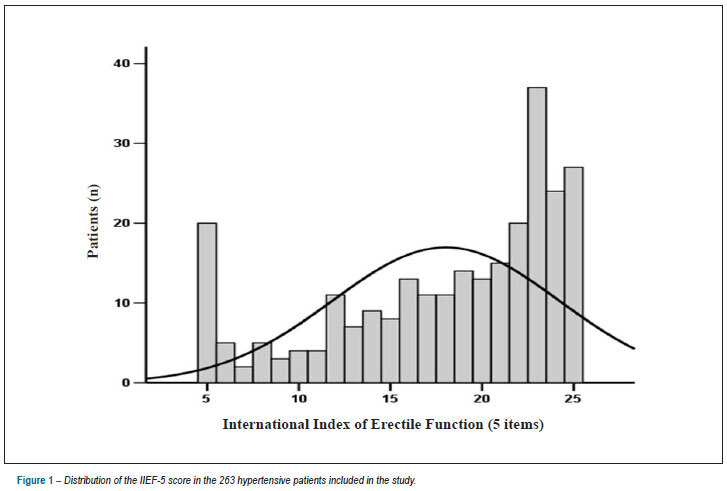
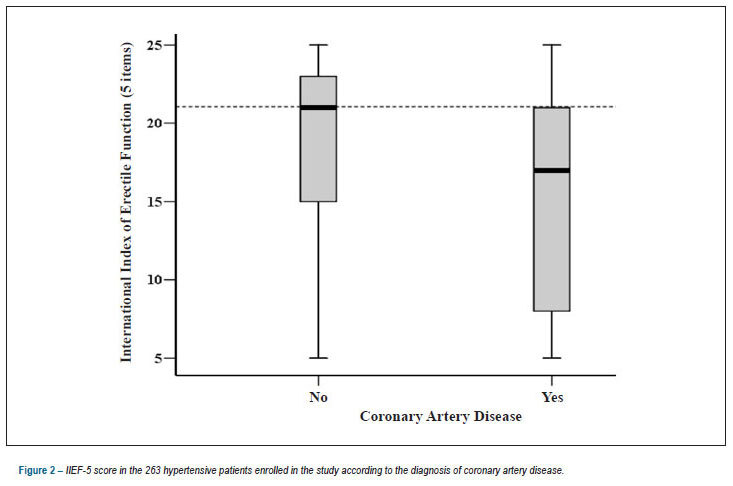
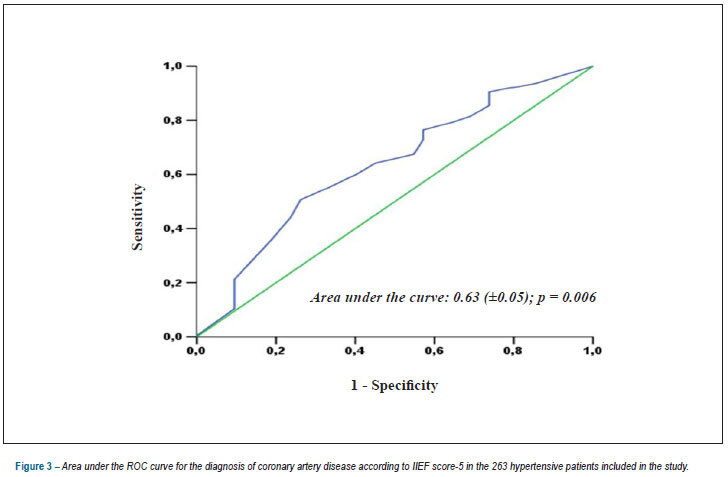
BACKGROUND: Erectile Dysfunction (ED) is associated with increased risk of coronary artery disease (CAD). OBJECTIVE: To evaluate the association between ED, determined by the Simplified International Index of Erectile Function (IIEF-5) and CAD. METHODS: This was a cross-sectional cohort study that evaluated 263 hypertensive patients (55 [50-61] years). ED was assessed through the IIEF-5 and CAD by the history of previous myocardial revascularization and/or coronary angiography. RESULTS: The IIEF-5 correlated with creatinine clearance [CrCl] (Rho = 0.23, p <0.001) and age (Rho = -0.22, p <0.001). Forty-two patients had CAD, and IIEF-5 was able to discriminate them (area under the ROC curve = 0.63, p = 0.006). Patients were divided into two groups: IIEF-5 20 (n = 123); those with lower IIEF-5 scores were older (57 [52-61] vs. 54 [45-60] years, p = 0.002), had higher prevalence of CAD (22% vs. 9%, p = 0.004), smoking (64% vs. 47%, p = 0.009) and use of calcium channel inhibitors (65% vs. 43.%, p = 0.001), as well as lower CrCl (67.3 [30.8 to 88.6] vs. 82.6 [65.9 – 98.2] ml/min, p <0.001). The IIEF-5 < 21 was associated with increased risk of CAD in the logistic regression, both univariate (RR = 2.89 [95%CI: 1.39 – 6.05]), and after adjusting for age, diabetes, CrCl, smoking, mean arterial pressure and use of antihypertensive drugs (RR = 2.59 [95% CI: 1.01 – 6.61]). CONCLUSION: The IIEF-5 is associated with the diagnosis of CAD and its use can add information to cardiovascular risk staging in hypertensive patients.
Images
Image gallery fullscreen viewer
Comments are moderated by the editorial team before publication. Discussions should be evidence-based and use scientific language. Conflicts of interest should be declared.