ABC Family Arquivos Brasileiros de Cardiologia International Journal of Cardiovascular Sciences ABC Heart Failure & Cardiomyopathy ABC Imagem Cardiovascular
Português English
ABC Family
Português English
  • About
    • About ABC Family
    • Internal Regulation
    • Editorial Board
    • Brazilian Society of Cardiology (SBC)
  • Issues
  • SBC Guidelines
  • Content
    • Videos
    • Podcasts
    • News
  • About
    • About ABC Family
    • Internal Regulation
    • Editorial Board
    • Brazilian Society of Cardiology (SBC)
  • Issues
  • SBC Guidelines
  • Content
    • Videos
    • Podcasts
    • News

ABC Family

  • ABC Family
  • Arquivos Brasileiros de Cardiologia
  • International Journal of Cardiovascular Sciences
  • ABC Heart Failure & Cardiomyopathy
  • ABC Imagem Cardiovascular
Search in

No content found.

Journals
Ordering
Article types
Others

  1. Home
  2. Keyword: Cardiac Output
ABC
Editorial

Inspiratory Muscle Training at Different Intensities in Heart Failure: Are There Differences in Central Hemodynamic Changes?

Lucas Helal et al. Filipe Ferrari

Inspiratory muscle training in heart failure

There is robust evidence suggesting that the weakness of inspiratory muscles is one of the main factors that lead to low exercise tolerance in patients with HF. , In fact, randomized clinical trials have shown several benefits of IMT in patients with this syndrome, namely: significant improvement in oxygen uptake efficiency, functional capacity and quality of life scores. These results were confirmed by meta-analyses, such as that carried out by Smart et al. When compared to the control group, patients undergoing IMT achieved an important improvement in maximum oxygen consumption (VO2max): 1.83 mL.kg-1.min-1(95%CI, 1.33 for 2.32 mL.kg-1.min-1, p <0.00001), as well as in the 6-minute walking test: 34.35 m (95%CI, 22.45 to 46.24 m, p <0.00001). In turn, inspiratory muscle strength seems to have a significant correlation with VO2max, which is an independent predictor of survival in individuals with HF. IMT should therefore be an integral part of these patients’ care whenever possible.

In this issue of the Arquivos Brasileiros de Cardiologia , a randomized, placebo-controlled trial evaluated the implications of an acute session of different intensities of IMT on the central hemodynamic response (CHR) of individuals with HF, using a non-invasive monitoring method. For this purpose, 20 patients with reduced ejection fraction (37.2% ± 6.3%), a mean age of 65 years, and the vast majority in New York Heart Association (NYHA) functional class II were included in the study. The IMT protocol consisted of 3 sessions lasting 15 minutes each. All participants underwent the training with an intensity of 30% and 60% of maximum inspiratory pressure (MIP), in addition to sham intervention (placebo), with a 1-hour washout between them. It was observed that CHR behaved in a heterogeneous way between intensities. For instance, there was an increase in heart rate with intensities of 30% and 60% of MIP (64 ± 15 to 69 ± 15 beats per minute; and 67 ± 14 to 73 ± 14 beats per minute, respectively). Regarding stroke volume, there was a tendency to decrease with a 30% load of MIP (73 ± 26 mL to 64 ± 20 mL). The cardiac output increased only in the group with the highest intensity (4.6 ± 1.5 L / min to 5.3 ± 1.7 L / min), a behavior that was similar in relation to the systolic blood pressure response. In fact, the increase in cardiac output observed at the highest applied intensity can be partially explained by the increase in heart rate in this group. These findings should not be ignored, since patients with HF tend to have impaired blood flow to the active muscles, secondary to reductions in cardiac output and peripheral vasodilator capacity. These changes are harmful, causing important intolerance to effort, being associated with reduced vasodilator capacity and increased sympathetic stimulation, common in these individuals.

[…]
  • Cardiac Output
  • Heart Failure
  • Heart Rate
  • Hemodynamic Monitoring/methods
  • Maximal Respiratory Pressures
  • Stroke Volume
Read Full Article
Creative Commons Attribution (CC BY) Creative Commons license
29/05/2020 DOI: 10.36660/abc.20200162 Views 1
ABC
Editorial

Time to Include Balance Training in the Cardiac Rehabilitation Programs of Patients with Heart Failure with Preserved Ejection Fraction

Fernando Ribeiro

The burden of heart failure exerts a significant personal, social and economic impact not only on patients and their families but also on society (including health care systems). Heart failure is a chronic, progressive condition affecting a huge amount of individuals worldwide (>37.7 million cases estimated in 2010). It is characterized by typical symptoms (e.g. breathlessness and fatigue) that may be accompanied by signs (e.g. peripheral edema) caused by cardiac abnormalities – structural and/or functional –, resulting in reduced cardiac output and/or elevated intracardiac pressures at rest or during stress. Heart failure has been categorized in heart failure with preserved (HFpEF), mid-range (HFmrEF) and reduced ejection fraction (HFrEF) according to the left ventricular ejection fraction.

Heart failure with preserved ejection fraction has become an increasingly recognized phenotype; despite being primarily considered a condition that affects old-age individuals, it represents approximately half of all cases of heart failure. , Despite the available pharmacological and device therapies, heart failure patients’ prognosis, quality of life, and 5-year survival remain poor and similar across all heart failure categories. –

[…]

  • Cardiac Output
  • Cardiac Rehabilitation
  • Heart Failure/physiopathology
  • Hospitalization
  • Stroke Volume
Read Full Article
Creative Commons Attribution (CC BY) Creative Commons license
29/05/2020 DOI: 10.36660/abc.20200157
Figure 1
ABC
Original Article

Value of Contrast Transesophageal Echocardiography in the Detection of Intrapulmonary Vascular Dilatations in Hepatosplenic Schistosomiasis

Aparecida de Gouvea et al. Claudio Henrique Fischer Jaquelina Sonoe Ota Arakaki Frederico José Mancuso … Paulo Brant Valdir Ambrósio Moisés Orlando Campos Filho

Abstract

Background:

Hepatopulmonary syndrome (HPS), found in cirrhotic patients, has been little studied in hepatosplenic schistosomiasis (HSS) and includes the occurrence of intrapulmonary vascular dilatations (IPVD). Contrast transesophageal echocardiography (cTEE) with microbubbles is more sensitive than contrast transthoracic echocardiography (cTTE) with microbubbles in the detection of IPVD in cirrhosis.

Objective:

To assess the performance of the cTEE, compared with that of cTTE, in detecting IPVD for the diagnosis of HPS in patients with HSS.

Methods:

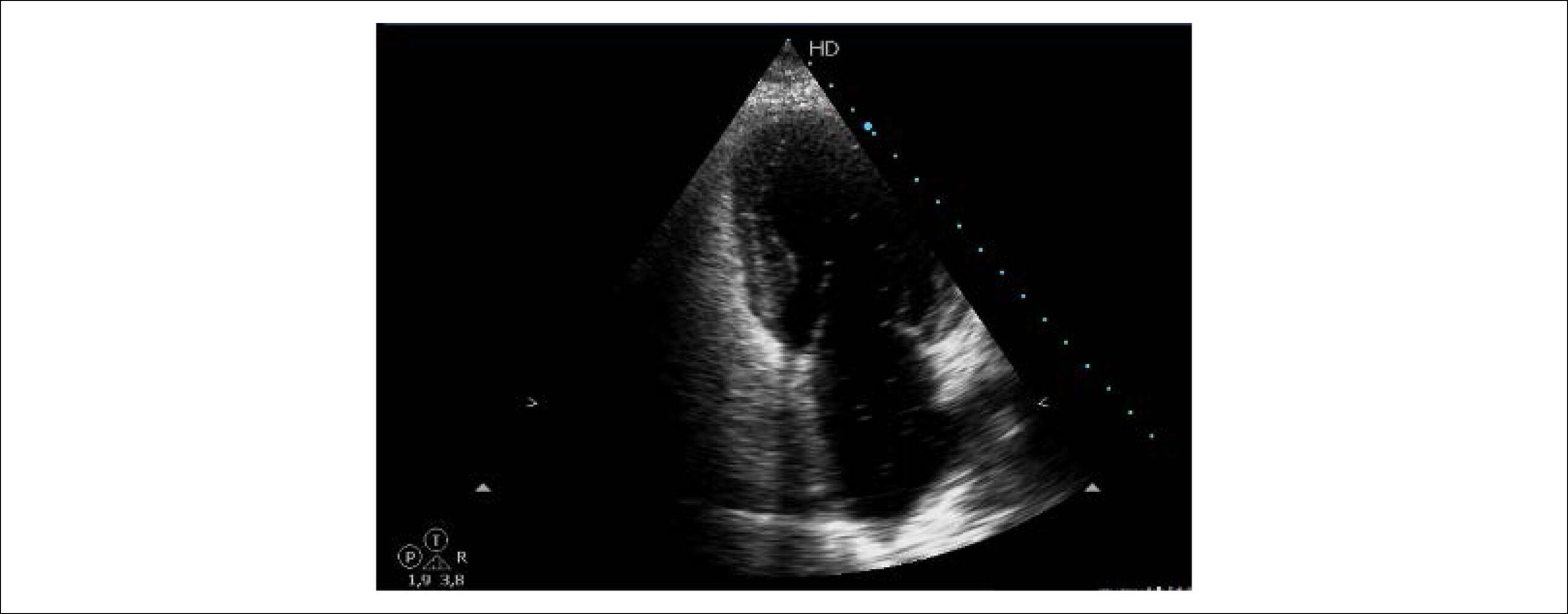
cTEE and cTTE for investigation of IPVD and laboratory tests were performed in 22 patients with HSS. Agitated saline solution was injected in peripheral vein during the cTEE and cTTE procedures. Late appearance of the microbubbles in the left chambers indicated the presence of IPVD. Results of the two methods were compared by the Student’s t-test and the chi-square test (p < 0.05).

Results:

cTEE was performed in all patients without complications. Three patients were excluded due to the presence of patent foramen ovale (PFO). The presence of IPVD was confirmed in 13 (68%) of 19 patients according to the cTEE and in only six (32%, p < 0.01) according to the cTTE. No significant differences in clinical or laboratory data were found between the groups with and without IPVD, including the alveolar-arterial gradient. The diagnosis of HPS (presence of IPVD with changes in the arterial blood gas analysis) was made in five patients by the cTEE and in only one by the cTTE (p = 0.09).

Conclusion:

In HSS patients, cTEE was safe and superior to cTTE in detecting IPVD and allowed the exclusion of PFO.

  • Cardiac Output
  • Dilatation, Pathologic
  • Echocardiography, Transesophageal/methods
  • Hypoxia
  • Liver Injury, Chronic/physiopathology
  • Schistosomiasis
Read Full Article
Creative Commons Attribution (CC BY) Creative Commons license
03/10/2019 DOI: 10.5935/abc.20190200 Views 1
Figure 1
ABC
Original Article

Test-Retest Reliability of Non-Invasive Cardiac Output Measurement during Exercise in Healthy Volunteers in Daily Clinical Routine

Michael Thomas Coll Barroso et al. Matthias Wilhelm Hoppe Philip Boehme Thomas Krahn … Christian Kiefer Frank Kramer Thomas Mondritzki Phillipe Pirez Wilfried Dinh

Abstract

Background:

Thoracic bioreactance (TB), a noninvasive method for the measurement of cardiac output (CO), shows good test-retest reliability in healthy adults examined under research and resting conditions.

Objective:

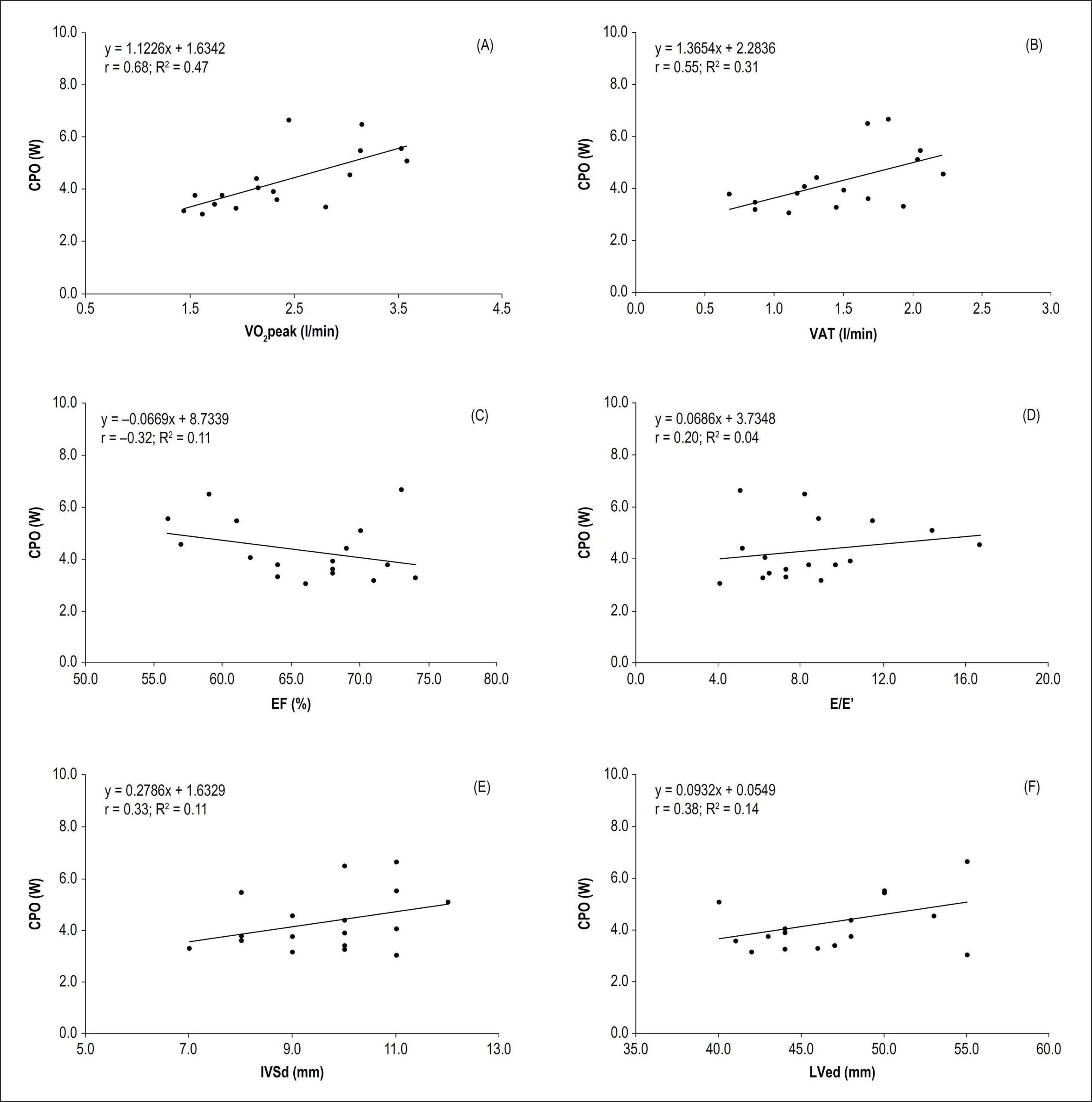
In this study, we evaluate the test-retest reliability of CO and cardiac power (CPO) output assessment during exercise assessed by TB in healthy adults under routine clinical conditions.

Methods:

25 test persons performed a symptom-limited graded cycling test in an outpatient office on two different days separated by one week. Cardiorespiratory (power output, VO2peak) and hemodynamic parameters (heart rate, stroke volume, CO, mean arterial pressure, CPO) were measured at rest and continuously under exercise using a spiroergometric system and bioreactance cardiograph (NICOM, Cheetah Medical).

Results:

After 8 participants were excluded due to measurement errors (outliers), there was no systematic bias in all parameters under all conditions (effect size: 0.2-0.6). We found that all noninvasively measured CO showed acceptable test-retest-reliability (intraclass correlation coefficient: 0.59-0.98; typical error: 0.3-1.8). Moreover, peak CPO showed better reliability (intraclass correlation coefficient: 0.80-0.85; effect size: 0.9-1.1) then the TB CO, thanks only to the superior reliability of MAP (intraclass correlation coefficient: 0.59-0.98; effect size: 0.3-1.8).

Conclusion:

Our findings preclude the clinical use of TB in healthy subject population when outliers are not identified.

  • Adult
  • Cardiac Output
  • Cardiography, Impedance/methods
  • Echocardiography/methods
  • Exercise
  • Exercise Test/methods
  • Reproducibility of Results
Read Full Article
Creative Commons Attribution (CC BY) Creative Commons license
10/07/2019 DOI: 10.5935/abc.20190116
ABC
Artigo Original

Expiratory positive airway pressure in postoperative cardiac hemodynamics

Ana Claudia Borges dos Santos Sena et al. Sérgio Pinto Ribeiro Robledo Leal Condessa Sílvia Regina Rios Vieira

BACKGROND: Expiratory positive airway pressure (EPAP) is used in after cardiac surgeries. However, its hemodynamic effects have not been clearly studied. OBJECTIVE: To evaluate the hemodynamic changes caused by EPAP in patients after cardiac surgery monitored by Swan-Ganz. METHODS: Patients at the first or second cardiac surgery postoperative period hemodynamically stable with a Swan-Ganz catheter were included in the study. They were assessed at rest and after using 10 cmH2O EPAP at random. The variables studied were: oxygen saturation, heart rate and respiratory rate, mean artery pressures and pulmonary artery mean pressures (MAP and PAMP), central venous pressure (CVP) and pulmonary capillary wedge pressure (PAOP), cardiac output and index, and systemic and pulmonary vascular resistances. Patients were divided into subgroups (with ejection fraction 50%) and data were compared by t test and ANOVA. RESULTS: Twenty-eight patients were studied (22 men, aged 68 ± 11 years). Comparing the period of rest versus EPAP, the changes observed were: PAOP (11.9 ± 3.8 to 17.1 ± 4.9 mmHg, p < 0.001), PVC (8.7 ± 4.1 to 10.9 ± 4.3 mmHg, p = 0.014), PAMP (21.5 ± 4.2 to 26.5 ± 5.8 mmHg, p < 0.001), MAP (76 ± 10 for 80 ± 10 mmHg, p = 0.035). The other variables showed no significant differences. CONCLUSION: EPAP was well tolerated by patients and the hemodynamic changes found showed an increase in pressure measurements of right and left ventricular filling, as well as mean arterial pressure.

  • Cardiac Output
  • facial masks
  • Hypertension
  • positive pressure respiration
  • Thoracic Surgery
Read Full Article
Creative Commons Attribution (CC BY) Creative Commons license
24/09/2010 DOI: 10.1590/S0066-782X2010005000128 Views 1
Vasopressin intravenous infusion causes dose dependent adverse cardiovascular effects in anesthetized dogs
ABC
Artigo Original

Vasopressin intravenous infusion causes dose dependent adverse cardiovascular effects in anesthetized dogs

Luiz Cláudio Martins et al. Maricene Sabha Maria Ondina Paganelli Otávio Rizzi Coelho … Silvia Elaine Ferreira-Melo Marcos Mello Moreira Adriana Camargo de Cavalho Sebastião Araujo Heitor Moreno Junior

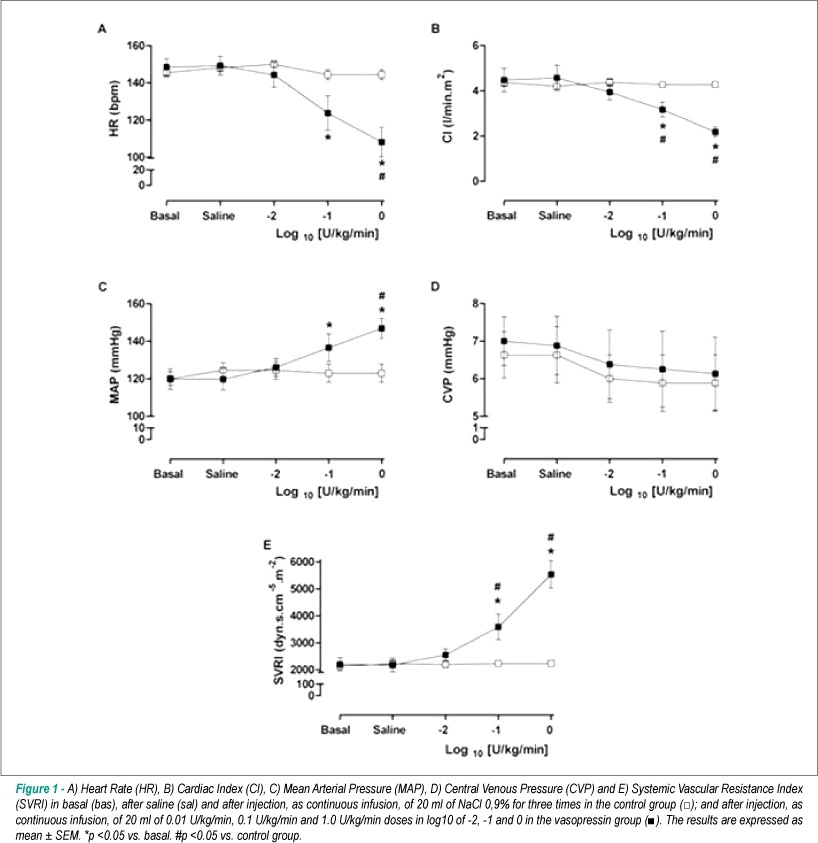
BACKGROUND: Arginine vasopressin (AVP) has been broadly used in the management of vasodilatory shock. However, there are many concerns regarding its clinical use, especially in high doses, as it can be associated with adverse cardiovascular events. OBJECTIVE: To investigate the cardiovascular effects of AVP in continuous IV infusion on hemodynamic parameters in dogs. METHODS: Sixteen healthy mongrel dogs, anesthetized with pentobarbital were intravascularly catheterized, and randomly assigned to: control (saline-placebo; n=8) and AVP (n=8) groups. The study group was infused with AVP for three consecutive 10-minute periods at logarithmically increasing doses (0.01; 0.1 and 1.0U/kg/min), at them 20-min intervals. Heart rate (HR) and intravascular pressures were continuously recorded. Cardiac output was measured by the thermodilution method. RESULTS: No significant hemodynamic effects were observed during 0.01U/kg/min of AVP infusion, but at higher doses (0.1 and 1.0U/kg/min) a progressive increase in mean arterial pressure (MAP) and systemic vascular resistance index (SVRI) were observed, with a significant decrease in HR and the cardiac index (CI). A significant increase in the pulmonary vascular resistance index (PVRI) was also observed with the 1.0U/kg/min dose, mainly due to the decrease in the CI. CONCLUSION: AVP, when administered at doses between 0.1 and 1.0U/kg/min, induced significant increases in MAP and SVRI, with negative inotropic and chronotropic effects in healthy animals. Although these doses are ten to thousand times greater than those routinely used for the management of vasodilatory shock, our data confirm that AVP might be used carefully and under strict hemodynamic monitoring in clinical practice, especially if doses higher than 0.01 U/kg/min are needed.

  • Arginine vasopressin
  • Cardiac Output
  • Dogs
  • drug toxicity
  • Hemodynamic
Read Full Article
Creative Commons Attribution (CC BY) Creative Commons license
15/01/2010 DOI: 10.1590/S0066-782X2010005000001 Views 1
C-reactive protein: an inflammatory marker with prognostic value in patients with decompensated heart failure
ABC
Artigo Original

C-reactive protein: an inflammatory marker with prognostic value in patients with decompensated heart failure

Humberto Villacorta et al. Antonio Claudio Masetto Evandro Tinoco Mesquita

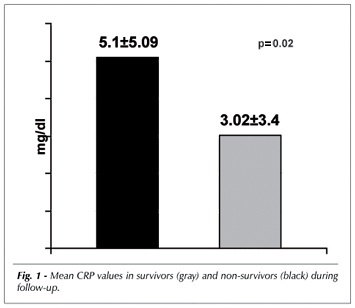
BACKGROUND: Inflammation has been implicated in the pathophysiology of a series of cardiovascular diseases. C-reactive protein (CRP) is a marker of inflammation easily obtained in the emergency room. OBJECTIVE: To study the prognostic value of CRP in patients admitted for acute decompensated heart failure (ADHF). METHODS: A prospective cohort of 119 patients with ADHF treated in the emergency room. Mean age was 74±11 years and 76 (64%) of patients were male. All were New York Heart Association Functional Class III or IV. CRP was measured by nephelometry at admission. Patients were followed after hospital discharge for an average of 12±9.7 months and cardiovascular mortality was the outcome analyzed. RESULTS: There were 44 (36.9%) deaths, all from cardiovascular causes. Individuals with CRP > 3 mg/dl had higher mortality than those below this level (p=0.018). In the multivariate analysis using Cox proportional model, CRP proved to be the most important independent prognostic factor (odds ratio 0.0916 [95% CI = 0.0341 – 0.1490] for each one-unit increment in CRP). CONCLUSION: CRP is an independent cardiovascular mortality predictor in patients with ADHF, indicating that inflammation represents an important component in the pathophysiology of the disease.

  • C-Reactive Protein
  • Cardiac Output
  • Cytokines
  • Heart Failure
  • Inflammation
  • low
Read Full Article
Creative Commons Attribution (CC BY) Creative Commons license
15/06/2007 DOI: 10.1590/S0066-782X2007000500014 Views 2
ABC
Artigo Original

Heart failure treatment profile at the beta blockers era

Christiano Pereira Silva et al. Fernando Bacal Philippe Vieira Pires Sandrigo Mangini … Victor Sarli Issa Silvia Ferreira Ayub Moreira Paulo Roberto Chizzola Germano Emílio Conceição Souza Guilherme Veiga Guimarães Edimar Alcides Bocchi

OBJECTIVES: The inhibition of the rennin-angiotensin-aldosterone system (RAAS) and sympathetic autonomous nervous system has increased the perspective of survival in these patients, as well as allowing the improvement of the quality of life. The aim of this study was to evaluate the reality of the treatment employed and its impact on the disease in patients followed at a specialized heart failure (HF) outpatient clinic. METHODS: A sample of 96 patients followed at the HF and Transplant Outpatient Clinic of Heart Institute of the University of São Paulo School of Medicine (InCor -HCFMUSP) were evaluated. The data were collected during the ambulatory consultation from the medical files and through physical examination. Patients were randomly selected for the study. RESULTS: Most of the patients were Functional Class II (42.3%) and evolution stage C (94.9%). The medical prescription given to the patients was quite similar to the one recommended by the directives. Approximately 95% of them received RAAS inhibitors (ACE inhibitor – enalapril and captopril – or angiotensin receptor antagonist – losartan), whereas 85% of the patients additionally received beta blockers (carvedilol). The mean dose prescribed was also similar to the one used in large studies and reached more than 60% of the maximum dose for each medication. The hemodynamic data show that patients were stable, despite the intensity of the dysfunction and ventricular remodeling observed in these patients. CONCLUSION: Patients with HF followed by a specialized medical team receive a medical prescription that is closer to the recommended one. These patients, despite the marked characteristics of disease severity, achieve hemodynamic and clinical stability with an adequate therapeutic optimization.

  • Cardiac Output
  • low heart failure
  • outpatient clinic hospital
  • Renin-Angiotensin System
Read Full Article
Creative Commons Attribution (CC BY) Creative Commons license
24/05/2007 DOI: 10.1590/S0066-782X2007000400018

How to cite this article

EndNote RIS

Electronic Document Format (Vancouver)

Helal L, Ferrari F. Inspiratory Muscle Training at Different Intensities in Heart Failure: Are There Differences in Central Hemodynamic Changes?. Arquivos Brasileiros de Cardiologia 2020;114(4):664-5.

Electronic Document Format (ABNT)

Helal, Lucas; Ferrari, Filipe. Inspiratory Muscle Training at Different Intensities in Heart Failure: Are There Differences in Central Hemodynamic Changes?. Arquivos Brasileiros de Cardiologia, v. 114, n. 4, p. 664-665, May. 2020.

Electronic Document Format (APA)

Helal, L., & Ferrari, F. (2020). Inspiratory Muscle Training at Different Intensities in Heart Failure: Are There Differences in Central Hemodynamic Changes?. Arquivos Brasileiros de Cardiologia, 114(4), 664-665.

Electronic Document Format (ISO)

Helal, Lucas and Ferrari, Filipe. Inspiratory Muscle Training at Different Intensities in Heart Failure: Are There Differences in Central Hemodynamic Changes?. Arquivos Brasileiros de Cardiologia [online]. 2020, vol. 114, n. 4, [cited 2026-10-14], pp. 664-665. Available from: <https://journals.cardiol.br/en/article/inspiratory-muscle-training-at-different-intensities-in-heart-failure-are-there-differences-in-central-hemodynamic-changes/>. ISSN 0066-782X

EndNote RIS

Electronic Document Format (Vancouver)

Ribeiro F. Time to Include Balance Training in the Cardiac Rehabilitation Programs of Patients with Heart Failure with Preserved Ejection Fraction. Arquivos Brasileiros de Cardiologia 2020;114(4):708-10.

Electronic Document Format (ABNT)

Ribeiro, Fernando. Time to Include Balance Training in the Cardiac Rehabilitation Programs of Patients with Heart Failure with Preserved Ejection Fraction. Arquivos Brasileiros de Cardiologia, v. 114, n. 4, p. 708-710, May. 2020.

Electronic Document Format (APA)

Ribeiro, F. (2020). Time to Include Balance Training in the Cardiac Rehabilitation Programs of Patients with Heart Failure with Preserved Ejection Fraction. Arquivos Brasileiros de Cardiologia, 114(4), 708-710.

Electronic Document Format (ISO)

Ribeiro, Fernando. Time to Include Balance Training in the Cardiac Rehabilitation Programs of Patients with Heart Failure with Preserved Ejection Fraction. Arquivos Brasileiros de Cardiologia [online]. 2020, vol. 114, n. 4, [cited 2026-10-14], pp. 708-710. Available from: <https://journals.cardiol.br/en/article/time-to-include-balance-training-in-the-cardiac-rehabilitation-programs-of-patients-with-heart-failure-with-preserved-ejection-fraction/>. ISSN 0066-782X

EndNote RIS

Electronic Document Format (Vancouver)

Gouvea A, Fischer CH, Arakaki JSO, Mancuso FJ, Brant P, Moisés VA, Campos Filho O, et al. Value of Contrast Transesophageal Echocardiography in the Detection of Intrapulmonary Vascular Dilatations in Hepatosplenic Schistosomiasis. Arquivos Brasileiros de Cardiologia 2019;113(5):915-22.

Electronic Document Format (ABNT)

Gouvea, Aparecida de; Fischer, Claudio Henrique; Arakaki, Jaquelina Sonoe Ota; Mancuso, Frederico José; Brant, Paulo; Moisés, Valdir Ambrósio; Campos Filho, Orlando. Value of Contrast Transesophageal Echocardiography in the Detection of Intrapulmonary Vascular Dilatations in Hepatosplenic Schistosomiasis. Arquivos Brasileiros de Cardiologia, v. 113, n. 5, p. 915-922, Oct. 2019.

Electronic Document Format (APA)

Gouvea, A. , Fischer, C. H., Arakaki, J. S. O., Mancuso, F. J., Brant, P., Moisés, V. A., & Campos Filho, O. (2019). Value of Contrast Transesophageal Echocardiography in the Detection of Intrapulmonary Vascular Dilatations in Hepatosplenic Schistosomiasis. Arquivos Brasileiros de Cardiologia, 113(5), 915-922.

Electronic Document Format (ISO)

Gouvea, Aparecida de and Fischer, Claudio Henrique and Arakaki, Jaquelina Sonoe Ota and Mancuso, Frederico José and Brant, Paulo and Moisés, Valdir Ambrósio and Campos Filho, Orlando. Value of Contrast Transesophageal Echocardiography in the Detection of Intrapulmonary Vascular Dilatations in Hepatosplenic Schistosomiasis. Arquivos Brasileiros de Cardiologia [online]. 2019, vol. 113, n. 5, [cited 2026-10-14], pp. 915-922. Available from: <https://journals.cardiol.br/en/article/value-of-contrast-transesophageal-echocardiography-in-the-detection-of-intrapulmonary-vascular-dilatations-in-hepatosplenic-schistosomiasis/>. ISSN 0066-782X

EndNote RIS

Electronic Document Format (Vancouver)

Barroso MTC, Hoppe MW, Boehme P, Krahn T, Kiefer C, Kramer F, Mondritzki T, et al. Test-Retest Reliability of Non-Invasive Cardiac Output Measurement during Exercise in Healthy Volunteers in Daily Clinical Routine. Arquivos Brasileiros de Cardiologia 2019;113(2):231-9.

Electronic Document Format (ABNT)

Barroso, Michael Thomas Coll; Hoppe, Matthias Wilhelm; Boehme, Philip; Krahn, Thomas; Kiefer, Christian; Kramer, Frank; Mondritzki, Thomas; Pirez, Phillipe; Dinh, Wilfried. Test-Retest Reliability of Non-Invasive Cardiac Output Measurement during Exercise in Healthy Volunteers in Daily Clinical Routine. Arquivos Brasileiros de Cardiologia, v. 113, n. 2, p. 231-239, Jul. 2019.

Electronic Document Format (APA)

Barroso, M. T. C., Hoppe, M. W., Boehme, P., Krahn, T., Kiefer, C., Kramer, F., Mondritzki, T., Pirez, P., & Dinh, W. (2019). Test-Retest Reliability of Non-Invasive Cardiac Output Measurement during Exercise in Healthy Volunteers in Daily Clinical Routine. Arquivos Brasileiros de Cardiologia, 113(2), 231-239.

Electronic Document Format (ISO)

Barroso, Michael Thomas Coll and Hoppe, Matthias Wilhelm and Boehme, Philip and Krahn, Thomas and Kiefer, Christian and Kramer, Frank and Mondritzki, Thomas and Pirez, Phillipe and Dinh, Wilfried. Test-Retest Reliability of Non-Invasive Cardiac Output Measurement during Exercise in Healthy Volunteers in Daily Clinical Routine. Arquivos Brasileiros de Cardiologia [online]. 2019, vol. 113, n. 2, [cited 2026-10-14], pp. 231-239. Available from: <https://journals.cardiol.br/en/article/test-retest-reliability-of-non-invasive-cardiac-output-measurement-during-exercise-in-healthy-volunteers-in-daily-clinical-routine/>. ISSN 0066-782X

EndNote RIS

Electronic Document Format (Vancouver)

Sena ACBS, Ribeiro SP, Condessa RL, Vieira SRR. Expiratory positive airway pressure in postoperative cardiac hemodynamics. Arquivos Brasileiros de Cardiologia 2010;95(5):594-9.

Electronic Document Format (ABNT)

Sena, Ana Claudia Borges dos Santos; Ribeiro, Sérgio Pinto; Condessa, Robledo Leal; Vieira, Sílvia Regina Rios. Expiratory positive airway pressure in postoperative cardiac hemodynamics. Arquivos Brasileiros de Cardiologia, v. 95, n. 5, p. 594-599, Sep. 2010.

Electronic Document Format (APA)

Sena, A. C. B. S., Ribeiro, S. P., Condessa, R. L., & Vieira, S. R. R. (2010). Expiratory positive airway pressure in postoperative cardiac hemodynamics. Arquivos Brasileiros de Cardiologia, 95(5), 594-599.

Electronic Document Format (ISO)

Sena, Ana Claudia Borges dos Santos and Ribeiro, Sérgio Pinto and Condessa, Robledo Leal and Vieira, Sílvia Regina Rios. Expiratory positive airway pressure in postoperative cardiac hemodynamics. Arquivos Brasileiros de Cardiologia [online]. 2010, vol. 95, n. 5, [cited 2026-10-14], pp. 594-599. Available from: <https://journals.cardiol.br/en/article/expiratory-positive-airway-pressure-in-postoperative-cardiac-hemodynamics/>. ISSN 0066-782X

EndNote RIS

Electronic Document Format (Vancouver)

Martins LC, Sabha M, Paganelli MO, Coelho OR, Ferreira-Melo SE, Moreira MM, Cavalho AC, et al. Vasopressin intravenous infusion causes dose dependent adverse cardiovascular effects in anesthetized dogs. Arquivos Brasileiros de Cardiologia 2010;94(2):229-34.

Electronic Document Format (ABNT)

Martins, Luiz Cláudio; Sabha, Maricene; Paganelli, Maria Ondina; Coelho, Otávio Rizzi; Ferreira-Melo, Silvia Elaine; Moreira, Marcos Mello; Cavalho, Adriana Camargo de; Araujo, Sebastião; Moreno Junior, Heitor. Vasopressin intravenous infusion causes dose dependent adverse cardiovascular effects in anesthetized dogs. Arquivos Brasileiros de Cardiologia, v. 94, n. 2, p. 229-234, Jan. 2010.

Electronic Document Format (APA)

Martins, L. C., Sabha, M., Paganelli, M. O., Coelho, O. R., Ferreira-Melo, S. E., Moreira, M. M., Cavalho, A. C. , Araujo, S., & Moreno Junior, H. (2010). Vasopressin intravenous infusion causes dose dependent adverse cardiovascular effects in anesthetized dogs. Arquivos Brasileiros de Cardiologia, 94(2), 229-234.

Electronic Document Format (ISO)

Martins, Luiz Cláudio and Sabha, Maricene and Paganelli, Maria Ondina and Coelho, Otávio Rizzi and Ferreira-Melo, Silvia Elaine and Moreira, Marcos Mello and Cavalho, Adriana Camargo de and Araujo, Sebastião and Moreno Junior, Heitor. Vasopressin intravenous infusion causes dose dependent adverse cardiovascular effects in anesthetized dogs. Arquivos Brasileiros de Cardiologia [online]. 2010, vol. 94, n. 2, [cited 2026-10-14], pp. 229-234. Available from: <https://journals.cardiol.br/en/article/vasopressin-intravenous-infusion-causes-dose-dependent-adverse-cardiovascular-effects-in-anesthetized-dogs/>. ISSN 0066-782X

EndNote RIS

Electronic Document Format (Vancouver)

Villacorta H, Masetto AC, Mesquita ET. C-reactive protein: an inflammatory marker with prognostic value in patients with decompensated heart failure. Arquivos Brasileiros de Cardiologia 2007;88(5):585-9.

Electronic Document Format (ABNT)

Villacorta, Humberto; Masetto, Antonio Claudio; Mesquita, Evandro Tinoco. C-reactive protein: an inflammatory marker with prognostic value in patients with decompensated heart failure. Arquivos Brasileiros de Cardiologia, v. 88, n. 5, p. 585-589, Jun. 2007.

Electronic Document Format (APA)

Villacorta, H., Masetto, A. C., & Mesquita, E. T. (2007). C-reactive protein: an inflammatory marker with prognostic value in patients with decompensated heart failure. Arquivos Brasileiros de Cardiologia, 88(5), 585-589.

Electronic Document Format (ISO)

Villacorta, Humberto and Masetto, Antonio Claudio and Mesquita, Evandro Tinoco. C-reactive protein: an inflammatory marker with prognostic value in patients with decompensated heart failure. Arquivos Brasileiros de Cardiologia [online]. 2007, vol. 88, n. 5, [cited 2026-10-14], pp. 585-589. Available from: <https://journals.cardiol.br/en/article/c-reactive-protein-an-inflammatory-marker-with-prognostic-value-in-patients-with-decompensated-heart-failure/>. ISSN 0066-782X

EndNote RIS

Electronic Document Format (Vancouver)

Silva CP, Bacal F, Pires PV, Mangini S, Issa VS, Moreira SFA, Chizzola PR, et al. Heart failure treatment profile at the beta blockers era. Arquivos Brasileiros de Cardiologia 2007;88(4):475-9.

Electronic Document Format (ABNT)

Silva, Christiano Pereira; Bacal, Fernando; Pires, Philippe Vieira; Mangini, Sandrigo; Issa, Victor Sarli; Moreira, Silvia Ferreira Ayub; Chizzola, Paulo Roberto; Souza, Germano Emílio Conceição; Guimarães, Guilherme Veiga; Bocchi, Edimar Alcides. Heart failure treatment profile at the beta blockers era. Arquivos Brasileiros de Cardiologia, v. 88, n. 4, p. 475-479, May. 2007.

Electronic Document Format (APA)

Silva, C. P., Bacal, F., Pires, P. V., Mangini, S., Issa, V. S., Moreira, S. F. A., Chizzola, P. R., Souza, G. E. C., Guimarães, G. V., & Bocchi, E. A. (2007). Heart failure treatment profile at the beta blockers era. Arquivos Brasileiros de Cardiologia, 88(4), 475-479.

Electronic Document Format (ISO)

Silva, Christiano Pereira and Bacal, Fernando and Pires, Philippe Vieira and Mangini, Sandrigo and Issa, Victor Sarli and Moreira, Silvia Ferreira Ayub and Chizzola, Paulo Roberto and Souza, Germano Emílio Conceição and Guimarães, Guilherme Veiga and Bocchi, Edimar Alcides. Heart failure treatment profile at the beta blockers era. Arquivos Brasileiros de Cardiologia [online]. 2007, vol. 88, n. 4, [cited 2026-10-14], pp. 475-479. Available from: <https://journals.cardiol.br/en/article/heart-failure-treatment-profile-at-the-beta-blockers-era/>. ISSN 0066-782X

  • About ABC Family
  • Internal Regulation
  • Editorial Board
  • Brazilian Society of Cardiology (SBC)

Issues

SBC Guidelines

  • Videos
  • Podcasts
  • News