| ABC
ABC Family Arquivos Brasileiros de Cardiologia International Journal of Cardiovascular Sciences ABC Heart Failure & Cardiomyopathy ABC Imagem Cardiovascular
Português English
ABC Family | ABC
Português English
  • About
    • About the Journal
    • Internal Regulation
    • Editors Section
    • Editorial Board
    • History
    • SBC Award
  • Instructions to Authors
    • Guidelines for Publication
    • Editorial Policy
    • Ethics Policy
    • Policy on the Use of Artificial Intelligence
    • Mandatory Publication Form
    • Publication Fee
  • Issues
  • SBC Guidelines
  • Abstracts
    • How to Publish an Abstract Supplement?
    • Supplements from the Brazilian Congress of Cardiology
  • About
    • About the Journal
    • Internal Regulation
    • Editors Section
    • Editorial Board
    • History
    • SBC Award
  • Instructions to Authors
    • Guidelines for Publication
    • Editorial Policy
    • Ethics Policy
    • Policy on the Use of Artificial Intelligence
    • Mandatory Publication Form
    • Publication Fee
  • Issues
  • SBC Guidelines
  • Abstracts
    • How to Publish an Abstract Supplement?
    • Supplements from the Brazilian Congress of Cardiology

ABC Family

  • ABC Family
  • Arquivos Brasileiros de Cardiologia
  • International Journal of Cardiovascular Sciences
  • ABC Heart Failure & Cardiomyopathy
  • ABC Imagem Cardiovascular
Search in

No content found.

Journals
Ordering
Article types
Others

  1. Home
  2. ABC
  3. Issues
  4. 2004, Volume 83, Number 2
Quantification of left ventricular infarcted mass on cardiac magnetic resonance imaging: comparison between planimetry and the semiquantitative visual scoring method
Artigo Original

Quantification of left ventricular infarcted mass on cardiac magnetic resonance imaging: comparison between planimetry and the semiquantitative visual scoring method

Clerio Francisco de Azevedo Filho et al. Marcelo Hadlich João Luiz Fernandes Petriz Luís Antonio Mendonça … Jorge Neval Moll Filho Carlos Eduardo Rochitte

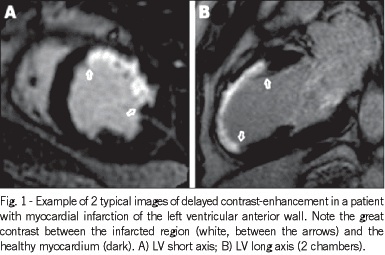
OBJECTIVE: To compare a new semiquantitative visual scoring method with quantitative digital planimetry for determining left ventricular infarcted mass by use of cardiac delayed contrast-enhanced magnetic resonance imaging. METHOD: Seventy-seven patients with previous myocardial infarction underwent delayed contrast-enhanced magnetic resonance imaging using a 1.5T device for assessing myocardial viability and calculating the infarcted mass. Cine magnetic resonance imaging was used for assessing left ventricular function with the Simpson method. The infarcted mass was calculated on the delayed contrast-enhanced images according to the following 2 methods: planimetry and the scoring method. Simple linear regression and correlation and agreement between the methods and observers according to the Bland-Altman plot were used. RESULTS: The infarcted areas in all 77 patients were detected by use of cardiac delayed contrast-enhanced magnetic resonance imaging. The size of the infarction measured by planimetry was similar to that obtained with the scoring method, with a mean difference between measurements of only 1.03% of the left ventricular mass. Inter- (0.41%) and intraobserver (0.34%) variabilities indicated an excellent reproducibility of the scoring method. Infarcted mass showed a good correlation with ejection fraction and indexed end-diastolic and end-systolic volumes, r=-0.76, r=0.63, and r=0.67, respectively. CONCLUSION: In patients with previous myocardial infarction, delayed-enhanced magnetic resonance imaging provides accurate infarct size quantification by planimetry and by semiquantitative score.
  • Magnetic Resonance Imaging
  • Myocardial Infarction
  • Myocardial Viability
Read Full Article
Creative Commons Attribution (CC BY) Creative Commons license
18/08/2004 DOI: 10.1590/S0066-782X2004001400003 Views 2
Analysis of heart rate variability in hypertensive patients before and after treatment with angiotensin II-converting enzyme inhibitors
Artigo Original

Analysis of heart rate variability in hypertensive patients before and after treatment with angiotensin II-converting enzyme inhibitors

Antônio da Silva Menezes Júnior et al. Humberto Graner Moreira Murilo Tavares Daher

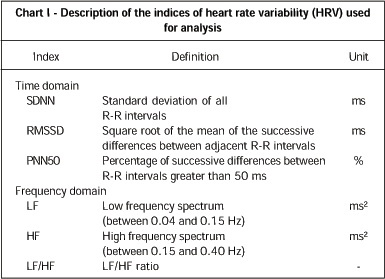
OBJECTIVE: To compare heart rate variability in normotensive and hypertensive individuals and to observe the behavior of the autonomic nervous system after treatment with angiotensin II-converting enzyme inhibitors. METHOD: The study comprised 286 patients diagnosed with arterial hypertension (AH) for the first time and divided into 4 groups according to diastolic blood pressure (DBP) levels: group A – DBP110 mmHg. Group A (110 healthy individuals) and group C (79 patients with moderate AH) underwent 24-hour Holter-ECG with analysis of heart rate variability in time domain (TD) and frequency domain (FD). The group C patients were treated with ACE inhibitors for 3 months, and, after this period, they underwent a new 24-hour Holter-ECG study for assessing heart rate variability, the values being compared with those of normotensive individuals. RESULTS: The SDNN and PNN50 parameters (TD), and the LF spectrum (FD) were significantly different in the 2 groups, with clearly reduced values in hypertensive individuals (P<0.05). Group C patients, after treatment with ACE inhibitors, showed a recovery in all variables of heart rate variability, achieving values close to those of normotensive individuals. CONCLUSION: Heart rate variability was reduced in hypertensive patients when compared with that in normotensive individuals, indicating a decrease in the baroreceptor reflex. A functional autonomic adjustment after the antihypertensive treatment with ACEI was observed, indicating recovery of parasympathetic tonus.

  • ACE inhibitors
  • arterial hypertension
  • Autonomic Nervous System
  • Heart Rate Variability
Read Full Article
Creative Commons Attribution (CC BY) Creative Commons license
18/08/2004 DOI: 10.1590/S0066-782X2004001400008 Views 1
Validation of the 4-second exercise test in the orthostatic position
Artigo Original

Validation of the 4-second exercise test in the orthostatic position

Marcos Bezerra de Almeida et al. Djalma Rabelo Ricardo Claudio Gil Soares de Araújo

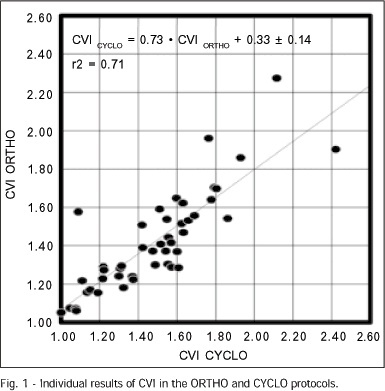
OBJECTIVE: To test the operational viability of and validate the 4-second exercise test (4sET) protocol in the orthostatic position (ORTHO). METHODS: The ORTHO protocol, an alternative to the conventional protocol (CYCLO), was used. The ORTHO protocol consists of performing sudden exercise in the orthostatic position – accelerated stationary walking (alternate upward flexion of the thighs) – from the fourth to the eighth second of a 12-second maximum inspiratory apnea, instead of rapid cycling without load. The adimensional cardiac vagal index (CVI) was calculated using the ratio between the longest RR interval (RRB) – the one immediately before, or the first during exercise – and the shortest RR interval during exercise – usually the last (RRC) – measured on electrocardiographic tracings at a 10-ms resolution. Forty-seven individuals (40±17 years, 169±9 cm, 72±14 kg) of both sexes, healthy or unhealthy, randomly underwent 3 consecutive repetitions of the 2 protocols, the first being performed only to acquaint patients with the procedure. RESULTS: Although differences in the CVI were found in both protocols (1.48±0.04 vs 1.42±0.04; P<0.001), no physiological relevance was observed. In 5 (11%) cases, a clinically significant difference between the ORTHO and CYCLO protocols was observed for CVI. The results of RRB, RRC, and CVI in the 2 protocols were strongly correlated, being 0.84, 0.85, and 0.93, respectively (P<0.001). CONCLUSION: The 4sET performed in the orthostatic position proved to be a valid option for assessing the vagal cardiac tonus in laboratories lacking a cycloergometer, without jeopardizing clinical interpretation. In addition to simplicity and applicability, the procedure also provides low operational costs.

  • 4-second exercise test
  • Exercise
  • Heart Rate
  • orthostatic position
  • vagal
Read Full Article
Creative Commons Attribution (CC BY) Creative Commons license
18/08/2004 DOI: 10.1590/S0066-782X2004001400007 Views 2
Artigo Original

Anti-beta2-glycoprotein I antibodies as risk factors for acute myocardial infarction

Aline Ranzolin et al. Jussara Marilú Bohn Gary L. Norman Euler Manenti … Luis Carlos Bodanese Carlos Alberto von Mühlen Henrique Luiz Staub

OBJECTIVE: To determine whether high levels of antibodies against the phospholipid beta2-glycoprotein I (beta2-gpI) cofactor are associated with an increase in the risk of acute myocardial infarction. METHODS: The study comprised 82 patients with acute myocardial infarction and 82 controls, who were assessed in regard to age, sex, race, hypertension, smoking, previous heart disease, history of diabetes mellitus, and hypercholesterolemia. The following antibodies were detected using immunoassay: anticardiolipin and anti-beta2-gpI IgA, IgG, and IgM. Adjusted odds ratios (OR) for risk factors were obtained through logistic regression. RESULTS: The mean ages of the cases and controls were, respectively, 57.7 and 51.1 years (P=0.003). Men (P=0.005) and the white race predominated in both groups (P=0.798). Of the risk factors, a history of diabetes (OR=5.3; 95% CI: 1.9 to 14.9; P=0.001) and previous heart disease (OR=4.7; 95% CI: 2.0 to 10.7; P<0.001) were the most consistent associations with myocardial infarction. The frequency of anticardiolipin IgG, IgM, and IgA antibodies did not differ between cases and controls (P=1.000). Anti-beta2-gpI IgA antibodies were more frequent in cases than in controls (P=0.054). The adjusted OR for anti-beta2-gpI IgA antibodies was 3.4 (95% CI: 1.3 to 9.1; P=0.015). CONCLUSION: Anti-beta2-gpI IgA antibodies, but not anticardiolipin antibodies, seemed to behave as independent risk factors for myocardial infarction, which may represent a link between autoimmunity and atherosclerosis in patients with acute myocardial infarction.

  • Acute Myocardial Infarction
  • anti-beta2-glycoprotein I antibodies
  • antiphospholipid antibodies
Read Full Article
Creative Commons Attribution (CC BY) Creative Commons license
17/08/2004 DOI: 10.1590/S0066-782X2004001400005 Views 2
Artigo Original

Acute renal failure after coronary artery bypass surgery with extracorporeal circulation: incidence, risk factors, and mortality

Fernando Oliveira Santos et al. Marco Antonio Silveira Roberto Barreto Maia Marcelo Dantas Cerqueira Monteiro Reinaldo Martinelli

OBJECTIVE: To identify the incidence, risk factors, and mortality of acute renal failure (ARF) in patients undergoing myocardial coronary artery bypass surgery with extracorporeal circulation. METHODS: All patients undergoing myocardial coronary artery bypass surgery were prospectively studied, and their clinical and laboratory variables were assessed using uni- and multivariate analysis (logistic regression). RESULTS: Acute renal failure occurred in 16.1% of the 223 patients studied; 4.9% of patients required dialysis. Risk factors associated with ARF in the univariate analysis were age > 63 years, OR 3.6 (95% CI=1.6 to 8.3); preoperative serum creatinine > 1.2 mg/dL, OR 5.9 (95% CI=2.4 to 14.6); duration of extracorporeal circulation > 90 min, OR 2.1 (95% CI=1.0 to 4.4); use of intraaortic balloon, OR 2.6 (95% CI=1.2 to 5.5); need for inotropic drugs, OR 4.4 (95% CI=1.9 to 10.2). In the multivariate analysis, independent factors associated with ARF were: age > 63 years, OR 3.0 (95% CI=1.3 to 7.2); preoperative serum creatinine > 1.2 mg/dL, OR 4.3 (95% CI=1.6 to 11.4); need for inotropic drugs, OR 3.2 (95% CI=1.3 to 8.0). Mortality in the patients with ARF was 25.0% compared with 1.1% in those without ARF and 63.6% in those who required dialysis. CONCLUSION: Acute renal failure after myocardial coronary artery bypass surgery is a frequent complication associated with a high mortality rate. The independent risk factors are age, previous renal failure, and the need for inotropic drugs.

  • acute renal failure
  • Cardiac Surgery
  • coronary artery bypass surgery
  • Extracorporeal Circulation
Read Full Article
Creative Commons Attribution (CC BY) Creative Commons license
17/08/2004 DOI: 10.1590/S0066-782X2004001400006 Views 2
Risk factors, morbidity, and mortality associated with atrial fibrillation in the postoperative period of cardiac surgery
Artigo Original

Risk factors, morbidity, and mortality associated with atrial fibrillation in the postoperative period of cardiac surgery

Rogério Gomes da Silva et al. Gustavo Glotz de Lima Andréia Laranjeira Altamiro Reis da Costa … Edemar Pereira Rubem Rodrigues

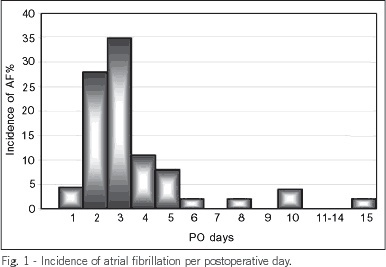
OBJECTIVE: To determine the incidence of atrial fibrillation in the postoperative period of cardiac surgery, its impact on morbidity, mortality, and hospital stay, and to analyze the risk factors in the pre, trans, and postoperative periods. METHOD: Contemporary cohort study with 158 adult patients undergoing cardiac surgery, of whom those with atrial fibrillation in the preoperative period were excluded. The patients were assessed with continuous cardiac monitoring and daily electrocardiograms. Any episode of irregular rhythm with the presence of f waves of variable morphology and amplitude was considered atrial fibrillation. RESULTS: The general incidence of atrial fibrillation was 28.5%, being 21.6% for revascularized patients and 44.3% for those undergoing valvular repair. Factors independently associated with atrial fibrillation were left heart failure in the preoperative period (p=0.05; RC=2.2), total fluid balance (p=0.01; RC=1.0), duration of surgery (p=0.03; RC=1.01) [and other associated factors, age > 70 years, aortic valvular disease, psychomotor agitation, length of installation of the drains, pulmonary congestion and respiratory insufficiency in the postoperative period]. The use of beta-blockers (p=0.01; RC=0.3) was a protective factor. Atrial fibrillation in the postoperative period was associated with an increase in the length of hospital stay (16.9±12.3 days versus 9.2±4.0 days, p<0.001) and a greater incidence of stroke or postoperative death (p=0.02). CONCLUSION: The incidence of atrial fibrillation in the postoperative period of cardiac surgery was high and caused a significant increase in morbidity, mortality, and the length of hospital stay. Among the independent risk factors, excessive fluid balance is significant. The use of beta-blockers was identified as a protective factor.

  • Arrhythmias
  • Atrial Fibrillation
  • Cardiac Surgery
  • Postoperative Care
  • Risk Factors
Read Full Article
Creative Commons Attribution (CC BY) Creative Commons license
17/08/2004 DOI: 10.1590/S0066-782X2004001400002 Views 1
Hypertensive crisis profile: prevalence and clinical presentation
Artigo Original

Hypertensive crisis profile: prevalence and clinical presentation

José Fernando Vilela Martin et al. Érika Higashiama Evandro Garcia Murilo Rizzatti Luizon José Paulo Cipullo

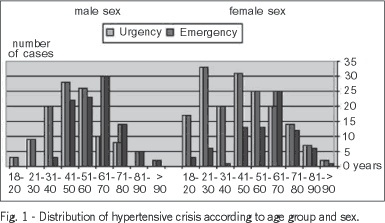
OBJECTIVE: To assess the prevalence of hypertensive crisis, related clinical findings, and the organic lesions involved. METHOD: This retrospective study comprised the analysis of the medical records of symptomatic patients with an elevation in diastolic blood pressure levels > 120 mmHg, who sought the emergency unit of a university-affiliated hospital over 12 months. Hypertensive urgency was characterized as the symptomatic elevation of blood pressure levels with no evidence of target-organ lesions, and hypertensive emergency was characterized as the symptomatic elevation of blood pressure levels with evidence of acute or ongoing target-organ lesion. RESULTS: This study comprised 452 patients with hypertensive crisis, accounting for 0.5% of all clinicosurgical emergencies, of which, 273 (60.4%) were hypertensive urgencies and 179 (39.6%) were hypertensive emergencies. Eighteen percent of the patients ignored their hypertensive condition. Smoking and diabetes were risk factors associated with the development of a hypertensive crisis in 1/4 and 1/5 of the patients, respectively. The patients with a hypertensive emergency were older (59.6±14.8 versus 49.9±18.6 years, p < 0.001) and had greater diastolic blood pressure (129.1±12 versus 126.6±14.4 mmHg, p < 0.05) than those with hypertensive urgencies. Ischemic stroke and acute pulmonary edema were the most common hypertensive emergencies, being in accordance with the most frequently found clinical manifestations of neurologic deficit and dyspnea. CONCLUSION: Hypertensive crises accounted for 0.5% of all emergency cases studied and for 1.7% of all clinical emergencies, hypertensive urgency being more common than hypertensive emergency. Ischemic stroke and acute pulmonary edema were the most frequent target-organ lesions in hypertensive emergencies.

  • hypertensive crisis
  • hypertensive emergency
  • hypertensive urgency
  • Prevalence
Read Full Article
Creative Commons Attribution (CC BY) Creative Commons license
17/08/2004 DOI: 10.1590/S0066-782X2004001400004 Views 2
Generalized edema and hyperdynamic circulation: a possible case of beriberi
Case Report

Generalized edema and hyperdynamic circulation: a possible case of beriberi

Marcos F. Minicucci et al. Leonardo A. M. Zornoff Mirna Matsue Roberto M. T. Inoue … Luiz S. Matsubara Marina P. Okoshi Katashi Okoshi Álvaro O. Campana Sergio A. R. Paiva

CASE REPORT

Generalized edema and hyperdynamic circulation. A possible case of beriberi

[…]

Read Full Article
Creative Commons Attribution (CC BY) Creative Commons license
17/08/2004 DOI: 10.1590/S0066-782X2004001400009 Views 1

How to cite this article

EndNote RIS

Electronic Document Format (Vancouver)

Azevedo Filho CF, Hadlich M, Petriz JLF, Mendonça LA, Moll Filho JN, Rochitte CE. Quantification of left ventricular infarcted mass on cardiac magnetic resonance imaging: comparison between planimetry and the semiquantitative visual scoring method. Arquivos Brasileiros de Cardiologia 2004;83(2):111-7.

Electronic Document Format (ABNT)

Azevedo Filho, Clerio Francisco de; Hadlich, Marcelo; Petriz, João Luiz Fernandes; Mendonça, Luís Antonio; Moll Filho, Jorge Neval; Rochitte, Carlos Eduardo. Quantification of left ventricular infarcted mass on cardiac magnetic resonance imaging: comparison between planimetry and the semiquantitative visual scoring method. Arquivos Brasileiros de Cardiologia, v. 83, n. 2, p. 111-117, Aug. 2004.

Electronic Document Format (APA)

Azevedo Filho, C. F. , Hadlich, M., Petriz, J. L. F., Mendonça, L. A., Moll Filho, J. N., & Rochitte, C. E. (2004). Quantification of left ventricular infarcted mass on cardiac magnetic resonance imaging: comparison between planimetry and the semiquantitative visual scoring method. Arquivos Brasileiros de Cardiologia, 83(2), 111-117.

Electronic Document Format (ISO)

Azevedo Filho, Clerio Francisco de and Hadlich, Marcelo and Petriz, João Luiz Fernandes and Mendonça, Luís Antonio and Moll Filho, Jorge Neval and Rochitte, Carlos Eduardo. Quantification of left ventricular infarcted mass on cardiac magnetic resonance imaging: comparison between planimetry and the semiquantitative visual scoring method. Arquivos Brasileiros de Cardiologia [online]. 2004, vol. 83, n. 2, [cited 2026-10-14], pp. 111-117. Available from: <https://journals.cardiol.br/en/article/quantification-of-left-ventricular-infarcted-mass-on-cardiac-magnetic-resonance-imaging-comparison-between-planimetry-and-the-semiquantitative-visual-scoring-method/>. ISSN 0066-782X

EndNote RIS

Electronic Document Format (Vancouver)

Menezes Júnior AS, Moreira HG, Daher MT. Analysis of heart rate variability in hypertensive patients before and after treatment with angiotensin II-converting enzyme inhibitors. Arquivos Brasileiros de Cardiologia 2004;83(2):165-8.

Electronic Document Format (ABNT)

Menezes Júnior, Antônio da Silva; Moreira, Humberto Graner; Daher, Murilo Tavares. Analysis of heart rate variability in hypertensive patients before and after treatment with angiotensin II-converting enzyme inhibitors. Arquivos Brasileiros de Cardiologia, v. 83, n. 2, p. 165-168, Aug. 2004.

Electronic Document Format (APA)

Menezes Júnior, A. S., Moreira, H. G., & Daher, M. T. (2004). Analysis of heart rate variability in hypertensive patients before and after treatment with angiotensin II-converting enzyme inhibitors. Arquivos Brasileiros de Cardiologia, 83(2), 165-168.

Electronic Document Format (ISO)

Menezes Júnior, Antônio da Silva and Moreira, Humberto Graner and Daher, Murilo Tavares. Analysis of heart rate variability in hypertensive patients before and after treatment with angiotensin II-converting enzyme inhibitors. Arquivos Brasileiros de Cardiologia [online]. 2004, vol. 83, n. 2, [cited 2026-10-14], pp. 165-168. Available from: <https://journals.cardiol.br/en/article/analysis-of-heart-rate-variability-in-hypertensive-patients-before-and-after-treatment-with-angiotensin-ii-converting-enzyme-inhibitors/>. ISSN 0066-782X

EndNote RIS

Electronic Document Format (Vancouver)

Almeida MB, Ricardo DR, Araújo CGS. Validation of the 4-second exercise test in the orthostatic position. Arquivos Brasileiros de Cardiologia 2004;83(2):155-9.

Electronic Document Format (ABNT)

Almeida, Marcos Bezerra de; Ricardo, Djalma Rabelo; Araújo, Claudio Gil Soares de. Validation of the 4-second exercise test in the orthostatic position. Arquivos Brasileiros de Cardiologia, v. 83, n. 2, p. 155-159, Aug. 2004.

Electronic Document Format (APA)

Almeida, M. B. , Ricardo, D. R., & Araújo, C. G. S. (2004). Validation of the 4-second exercise test in the orthostatic position. Arquivos Brasileiros de Cardiologia, 83(2), 155-159.

Electronic Document Format (ISO)

Almeida, Marcos Bezerra de and Ricardo, Djalma Rabelo and Araújo, Claudio Gil Soares de. Validation of the 4-second exercise test in the orthostatic position. Arquivos Brasileiros de Cardiologia [online]. 2004, vol. 83, n. 2, [cited 2026-10-14], pp. 155-159. Available from: <https://journals.cardiol.br/en/article/validation-of-the-4-second-exercise-test-in-the-orthostatic-position/>. ISSN 0066-782X

EndNote RIS

Electronic Document Format (Vancouver)

Ranzolin A, Bohn JM, Norman GL, Manenti E, Bodanese LC, Mühlen CA, Staub HL, et al. Anti-beta2-glycoprotein I antibodies as risk factors for acute myocardial infarction. Arquivos Brasileiros de Cardiologia 2004;83(2):137-40.

Electronic Document Format (ABNT)

Ranzolin, Aline; Bohn, Jussara Marilú; Norman, Gary L.; Manenti, Euler; Bodanese, Luis Carlos; Mühlen, Carlos Alberto von; Staub, Henrique Luiz. Anti-beta2-glycoprotein I antibodies as risk factors for acute myocardial infarction. Arquivos Brasileiros de Cardiologia, v. 83, n. 2, p. 137-140, Aug. 2004.

Electronic Document Format (APA)

Ranzolin, A., Bohn, J. M., Norman, G. L., Manenti, E., Bodanese, L. C., Mühlen, C. A. , & Staub, H. L. (2004). Anti-beta2-glycoprotein I antibodies as risk factors for acute myocardial infarction. Arquivos Brasileiros de Cardiologia, 83(2), 137-140.

Electronic Document Format (ISO)

Ranzolin, Aline and Bohn, Jussara Marilú and Norman, Gary L. and Manenti, Euler and Bodanese, Luis Carlos and Mühlen, Carlos Alberto von and Staub, Henrique Luiz. Anti-beta2-glycoprotein I antibodies as risk factors for acute myocardial infarction. Arquivos Brasileiros de Cardiologia [online]. 2004, vol. 83, n. 2, [cited 2026-10-14], pp. 137-140. Available from: <https://journals.cardiol.br/en/article/anti-beta2-glycoprotein-i-antibodies-as-risk-factors-for-acute-myocardial-infarction/>. ISSN 0066-782X

EndNote RIS

Electronic Document Format (Vancouver)

Santos FO, Silveira MA, Maia RB, Monteiro MDC, Martinelli R. Acute renal failure after coronary artery bypass surgery with extracorporeal circulation: incidence, risk factors, and mortality. Arquivos Brasileiros de Cardiologia 2004;83(2):145-9.

Electronic Document Format (ABNT)

Santos, Fernando Oliveira; Silveira, Marco Antonio; Maia, Roberto Barreto; Monteiro, Marcelo Dantas Cerqueira; Martinelli, Reinaldo. Acute renal failure after coronary artery bypass surgery with extracorporeal circulation: incidence, risk factors, and mortality. Arquivos Brasileiros de Cardiologia, v. 83, n. 2, p. 145-149, Aug. 2004.

Electronic Document Format (APA)

Santos, F. O., Silveira, M. A., Maia, R. B., Monteiro, M. D. C., & Martinelli, R. (2004). Acute renal failure after coronary artery bypass surgery with extracorporeal circulation: incidence, risk factors, and mortality. Arquivos Brasileiros de Cardiologia, 83(2), 145-149.

Electronic Document Format (ISO)

Santos, Fernando Oliveira and Silveira, Marco Antonio and Maia, Roberto Barreto and Monteiro, Marcelo Dantas Cerqueira and Martinelli, Reinaldo. Acute renal failure after coronary artery bypass surgery with extracorporeal circulation: incidence, risk factors, and mortality. Arquivos Brasileiros de Cardiologia [online]. 2004, vol. 83, n. 2, [cited 2026-10-14], pp. 145-149. Available from: <https://journals.cardiol.br/en/article/acute-renal-failure-after-coronary-artery-bypass-surgery-with-extracorporeal-circulation-incidence-risk-factors-and-mortality/>. ISSN 0066-782X

EndNote RIS

Electronic Document Format (Vancouver)

Silva RG, Lima GG, Laranjeira A, Costa AR, Pereira E, Rodrigues R. Risk factors, morbidity, and mortality associated with atrial fibrillation in the postoperative period of cardiac surgery. Arquivos Brasileiros de Cardiologia 2004;83(2):99-104.

Electronic Document Format (ABNT)

Silva, Rogério Gomes da; Lima, Gustavo Glotz de; Laranjeira, Andréia; Costa, Altamiro Reis da; Pereira, Edemar; Rodrigues, Rubem. Risk factors, morbidity, and mortality associated with atrial fibrillation in the postoperative period of cardiac surgery. Arquivos Brasileiros de Cardiologia, v. 83, n. 2, p. 99-104, Aug. 2004.

Electronic Document Format (APA)

Silva, R. G. , Lima, G. G. , Laranjeira, A., Costa, A. R. , Pereira, E., & Rodrigues, R. (2004). Risk factors, morbidity, and mortality associated with atrial fibrillation in the postoperative period of cardiac surgery. Arquivos Brasileiros de Cardiologia, 83(2), 99-104.

Electronic Document Format (ISO)

Silva, Rogério Gomes da and Lima, Gustavo Glotz de and Laranjeira, Andréia and Costa, Altamiro Reis da and Pereira, Edemar and Rodrigues, Rubem. Risk factors, morbidity, and mortality associated with atrial fibrillation in the postoperative period of cardiac surgery. Arquivos Brasileiros de Cardiologia [online]. 2004, vol. 83, n. 2, [cited 2026-10-14], pp. 99-104. Available from: <https://journals.cardiol.br/en/article/risk-factors-morbidity-and-mortality-associated-with-atrial-fibrillation-in-the-postoperative-period-of-cardiac-surgery/>. ISSN 0066-782X

EndNote RIS

Electronic Document Format (Vancouver)

Martin JFV, Higashiama , Garcia E, Luizon MR, Cipullo JP. Hypertensive crisis profile: prevalence and clinical presentation. Arquivos Brasileiros de Cardiologia 2004;83(2):125-30.

Electronic Document Format (ABNT)

Martin, José Fernando Vilela; Higashiama, Érika; Garcia, Evandro; Luizon, Murilo Rizzatti; Cipullo, José Paulo. Hypertensive crisis profile: prevalence and clinical presentation. Arquivos Brasileiros de Cardiologia, v. 83, n. 2, p. 125-130, Aug. 2004.

Electronic Document Format (APA)

Martin, J. F. V., Higashiama, , Garcia, E., Luizon, M. R., & Cipullo, J. P. (2004). Hypertensive crisis profile: prevalence and clinical presentation. Arquivos Brasileiros de Cardiologia, 83(2), 125-130.

Electronic Document Format (ISO)

Martin, José Fernando Vilela and Higashiama, Érika and Garcia, Evandro and Luizon, Murilo Rizzatti and Cipullo, José Paulo. Hypertensive crisis profile: prevalence and clinical presentation. Arquivos Brasileiros de Cardiologia [online]. 2004, vol. 83, n. 2, [cited 2026-10-14], pp. 125-130. Available from: <https://journals.cardiol.br/en/article/hypertensive-crisis-profile-prevalence-and-clinical-presentation/>. ISSN 0066-782X

EndNote RIS

Electronic Document Format (Vancouver)

Minicucci MF, Zornoff LAM, Matsue M, Inoue RMT, Matsubara LS, Okoshi MP, Okoshi K, et al. Generalized edema and hyperdynamic circulation: a possible case of beriberi. Arquivos Brasileiros de Cardiologia 2004;83(2):173-5.

Electronic Document Format (ABNT)

Minicucci, Marcos F.; Zornoff, Leonardo A. M.; Matsue, Mirna; Inoue, Roberto M. T.; Matsubara, Luiz S.; Okoshi, Marina P.; Okoshi, Katashi; Campana, Álvaro O.; Paiva, Sergio A. R.. Generalized edema and hyperdynamic circulation: a possible case of beriberi. Arquivos Brasileiros de Cardiologia, v. 83, n. 2, p. 173-175, Aug. 2004.

Electronic Document Format (APA)

Minicucci, M. F., Zornoff, L. A. M., Matsue, M., Inoue, R. M. T., Matsubara, L. S., Okoshi, M. P., Okoshi, K., Campana, O., & Paiva, S. A. R. (2004). Generalized edema and hyperdynamic circulation: a possible case of beriberi. Arquivos Brasileiros de Cardiologia, 83(2), 173-175.

Electronic Document Format (ISO)

Minicucci, Marcos F. and Zornoff, Leonardo A. M. and Matsue, Mirna and Inoue, Roberto M. T. and Matsubara, Luiz S. and Okoshi, Marina P. and Okoshi, Katashi and Campana, Álvaro O. and Paiva, Sergio A. R.. Generalized edema and hyperdynamic circulation: a possible case of beriberi. Arquivos Brasileiros de Cardiologia [online]. 2004, vol. 83, n. 2, [cited 2026-10-14], pp. 173-175. Available from: <https://journals.cardiol.br/en/article/generalized-edema-and-hyperdynamic-circulation-a-possible-case-of-beriberi/>. ISSN 0066-782X

Sede – Rio de Janeiro
Av. Marechal Câmara, 160
3º andar – Sala: 330 – Centro
Rio de Janeiro – CEP: 20020-907
Tel.: (55 +21) 3478-2700
ou (21) 99386-3961
E-mail: revista@cardiol.br

Sede – São Paulo
Alameda Santos, 705 – 11º andar
Cerqueira César | São Paulo
CEP: 01419-001
Tel.: (55 +11) 3411-5500
E-mail: revista@cardiol.br

  • About the Journal
  • Internal Regulation
  • Editors Section
  • Editorial Board
  • History
  • SBC Award

  • Guidelines for Publication
  • Editorial Policy
  • Ethics Policy
  • Policy on the Use of Artificial Intelligence
  • Mandatory Publication Form
  • Publication Fee

Issues

SBC Guidelines

  • How to Publish an Abstract Supplement?
  • Supplements from the Brazilian Congress of Cardiology