| ABC
ABC Family Arquivos Brasileiros de Cardiologia International Journal of Cardiovascular Sciences ABC Heart Failure & Cardiomyopathy ABC Imagem Cardiovascular
Português English
ABC Family | ABC
Português English
  • About
    • About the Journal
    • Internal Regulation
    • Editors Section
    • Editorial Board
    • History
    • SBC Award
  • Instructions to Authors
    • Guidelines for Publication
    • Editorial Policy
    • Ethics Policy
    • Policy on the Use of Artificial Intelligence
    • Mandatory Publication Form
    • Publication Fee
  • Issues
  • SBC Guidelines
  • Abstracts
    • How to Publish an Abstract Supplement?
    • Supplements from the Brazilian Congress of Cardiology
  • About
    • About the Journal
    • Internal Regulation
    • Editors Section
    • Editorial Board
    • History
    • SBC Award
  • Instructions to Authors
    • Guidelines for Publication
    • Editorial Policy
    • Ethics Policy
    • Policy on the Use of Artificial Intelligence
    • Mandatory Publication Form
    • Publication Fee
  • Issues
  • SBC Guidelines
  • Abstracts
    • How to Publish an Abstract Supplement?
    • Supplements from the Brazilian Congress of Cardiology

ABC Family

  • ABC Family
  • Arquivos Brasileiros de Cardiologia
  • International Journal of Cardiovascular Sciences
  • ABC Heart Failure & Cardiomyopathy
  • ABC Imagem Cardiovascular
Search in

No content found.

Journals
Ordering
Article types
Others

  1. Home
  2. ABC
  3. Issues
  4. 2002, Volume 79, Number 2
Analysis of Plasma Homocysteine Levels in Patients with Unstable Angina
Original Article

Analysis of Plasma Homocysteine Levels in Patients with Unstable Angina

José Roberto Tavares et al. Vânia D'Almeida Daniela C. Diniz Carolina A. Terzi … Edison N. Cruz Edson Stefanini Adagmar Andriollo Angelo A.V. de Paola Antonio C. Carvalho

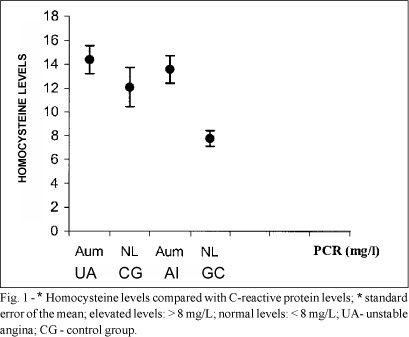
OBJECTIVE – To determine the prevalence of hyperhomocystinemia in patients with acute ischemic syndrome of the unstable angina type. METHODS – We prospectively studied 46 patients (24 females) with unstable angina and 46 control patients (19 males), paired by sex and age, blinded to the laboratory data. Details of diets, smoking habits, medication used, body mass index, and the presence of hypertension and diabetes were recorded, as were plasma lipid and glucose levels, C-reactive protein, and lipoperoxidation in all participants. Patients with renal disease were excluded. Plasma homocysteine was estimated using high-pressure liquid chromatography. RESULTS – Plasma homocysteine levels were significantly higher in the group of patients with unstable angina (12.7±6.7 µmol/L) than in the control group (8.7±4.4 µmol/L) (p<0.05). Among males, homocystinemia was higher in the group with unstable angina than in the control group, but this difference was not statistically significant (14.1±5.9 µmol/L versus 11.9±4.2 µmol/L). Among females, however, a statistically significant difference was observed between the 2 groups: 11.0±7.4 µmol/L versus 6.4±2.9 µmol/L (p<0.05) in the unstable angina and control groups, respectively. Approximately 24% of the patients had unstable angina at homocysteine levels above 15 µmol/L. CONCLUSION – High homocysteine levels seem to be a relevant prevalent factor in the population with unstable angina, particularly among females.
  • acute ischemic syndrome
  • homocysteine
  • Unstable Angina
Read Full Article
Creative Commons Attribution (CC BY) Creative Commons license
10/09/2002 DOI: 10.1590/S0066-782X2002001100008 Views 1
QRS Voltage-Duration Product in the Identification of Left Ventricular Hypertrophy in Spontaneously Hypertensive Rats
Original Article

QRS Voltage-Duration Product in the Identification of Left Ventricular Hypertrophy in Spontaneously Hypertensive Rats

Ljuba Bacharova et al. Jan Kyselovic Jan Klimas

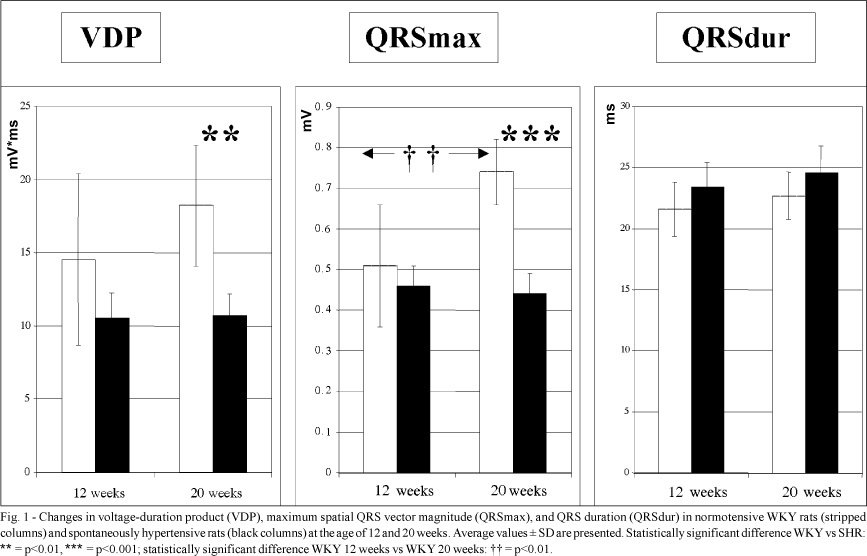
OBJECTIVE – Evaluation of the performance of the QRS voltage-duration product (VDP) for detection of left ventricular hypertrophy (LVH) in spontaneously hypertensive rats (SHR). METHODS – Orthogonal electrocardiograms (ECG) were recorded in male SHR at the age of 12 and 20 weeks, when systolic blood pressure (sBP) reached the average values of 165±3 mmHg and 195±12 mmHg, respectively. Age- and sex- matched normotensive Wistar Kyoto (WKY) rats were used as controls. VDP was calculated as a product of maximum QRS spatial vector magnitude and QRS duration. Left ventricular mass (LVM) was weighed after rats were sacrificed. RESULTS – LVM in SHR at 12 and 20 weeks of age (0.86±0.05 g and 1.05±0.07 g, respectively) was significantly higher as compared with that in WKY (0.65±0.07 g and 0.70±0.02 g). The increase in LVM closely correlated with the sBP increase. VDP did not reflect the increase in LVM in SHR. VDP was lower in SHR as compared with that in WKY, and the difference was significant at the age of 20 weeks (18.2mVms compared with 10.7mVms, p<0.01). On the contrary, a significant increase in the VDP was observed in the control WKY at the age of 20 weeks without changes in LVM. The changes in VDP were influenced mainly by the changes in QRSmax. CONCLUSION – LVM was not the major determinant of QRS voltage changes and consequently of the VDP. These data point to the importance of the nonspatial determinants of the recorded QRS voltage in terms of the solid angle theory.

  • Electrocardiography
  • Left Ventricular Hypertrophy
  • QRS voltage-duration product
  • spontaneously hypertensive rat
Read Full Article
Creative Commons Attribution (CC BY) Creative Commons license
10/09/2002 DOI: 10.1590/S0066-782X2002001100006
Electrocardiographic and Blood Pressure Alterations During Electroconvulsive Therapy in Young Adults
Original Article

Electrocardiographic and Blood Pressure Alterations During Electroconvulsive Therapy in Young Adults

Demetrio Ortega Rumi et al. Maria Cecília Solimene Júlio Yoshio Takada César José Grupi … Dante Marcelo Giorgi Sérgio Paulo Rigonatti Protásio Lemos da Luz José Antonio Franchini Ramires

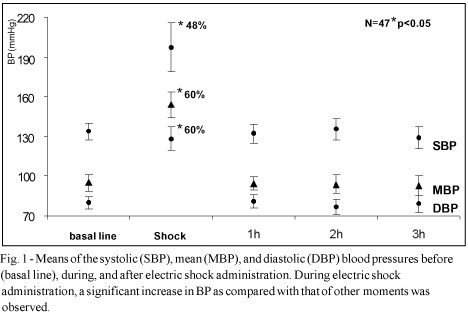
OBJECTIVE – To study cardiovascular alterations in young patients with no apparent organic disease who underwent electroconvulsive therapy. METHODS – The study comprised 47 healthy patients (22 males and 25 females) with a mean age of 30.3 years, who underwent electroconvulsive therapy. Ambulatory blood pressure monitoring and continuous electrocardiographic monitoring (Holter monitor) were performed during 24 hours. Blood pressure and heart rate were assessed 4 hours prior to electric shock administration, during electric shock administration, and 3 hours after electric shock administration. Arrhythmias and alterations in the ST segment in 24 hours were recorded. RESULTS – On electroconvulsive therapy, a significant increase in blood pressure and heart rate was observed and the measurements returned to basal values after 25 minutes. Three females had tracings with depression of the ST segment suggesting myocardial ischemia prior to and after electroconvulsive therapy. Coronary angiography was normal. No severe cardiac arrhythmias were diagnosed. CONCLUSION – 1) Electroconvulsive therapy is a safe therapeutic modality in psychiatry; 2) it causes a significant increase in blood pressure and heart rate; 3) it may be associated with myocardial ischemia in the absence of coronary obstructive disease; 4) electroconvulsive therapy was not associated with the occurrence of severe cardiac arrhythmias.

  • Arrhythmias
  • Blood Pressure
  • electroconvulsive therapy
  • Heart Rate
  • Myocardial Ischemia
Read Full Article
Creative Commons Attribution (CC BY) Creative Commons license
10/09/2002 DOI: 10.1590/S0066-782X2002001100007
Chest Pain Units: A Modern Way of Managing Patients with Chest Pain in the Emergency Department
Updated

Chest Pain Units: A Modern Way of Managing Patients with Chest Pain in the Emergency Department

Roberto Bassan

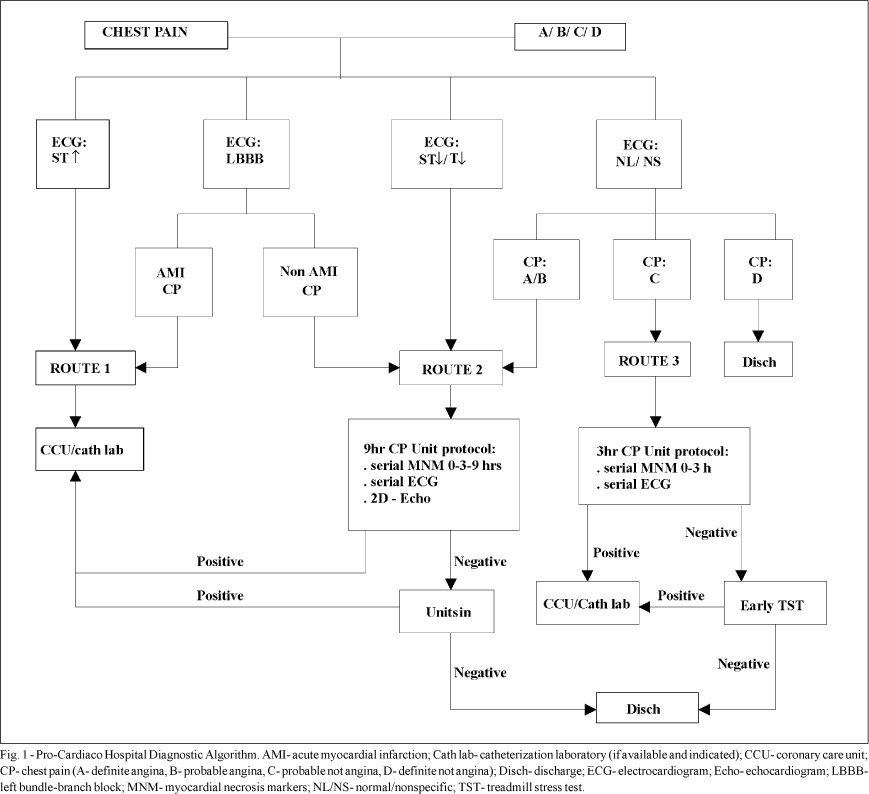
It is estimated that 5 to 8 million individuals with chest pain or other symptoms suggestive of myocardial ischemia are seen each year in emergency departments (ED) in the United States 1,2, which corresponds to 5 to 10% of all visits 3,4. Most of these patients are hospitalized for evaluation of possible acute coronary syndrome (ACS). This generates an estimated cost of 3 – 6 thousand dollars per patient 5,6. From this evaluation process, about 1.2 million patients receive the diagnosis of acute myocardial infarction (AMI), and just about the same number have unstable angina. Therefore, about one half to two thirds of these patients with chest pain do not have a cardiac cause for their symptoms 2,3. Thus, the emergency physician is faced with the difficult challenge of identifying those with ACS – a life-threatening disease – to treat them properly, and to discharge the others to suitable outpatient investigation and management.

Read Full Article
Creative Commons Attribution (CC BY) Creative Commons license
10/09/2002 DOI: 10.1590/S0066-782X2002001100015
Artigo Original

Plant sterol ester Efficiency on the Plasma Lipid Reduction in Moderate Hipercholesterolemic Subjects

Ana M. P. Lottenberg et al. Valéria S. Nunes Edna R. Nakandakare Mônica Neves … Márcia Bernik José E. Santos Eder C. R. Quintão

OBJECTIVE – This study aimed at relating the pattern of response to dietary plant sterol ester (PSE) treatment of plasma lipids concentrations and apo E polymorphisms. METHODS – Patients (20-60y old: 50 women; 10 men) with primary moderate hypercholesterolemia were fed margarine (20g/d), received no treatment (placebo), and were fed PSE (2.8g/d = 1.68 phytosterols), during 3 periods of 4 weeks each, in a crossover, double-blind study. DNA was extracted from white blood cells for the apo E polymorphisms. RESULTS – PSE treatment significantly lowered TC and LDL-C 10% and 12%, respectively, in relation to the baseline, and 6% and 8% in relation to the placebo phase, but HDL-C and TG levels were not modified. In regard to the apo E genotyping, no significant difference occurred between apo E 3/3 and apo E 3/4. CONCLUSION – Dietary plant sterol ester (PSE) treatment reduced cholesterolemia, and the reduction of LDL-C in absolute values was more pronounced when the initial LDL – C concentration were elevated.

  • apo E
  • Cholesterol
  • LDL-colesterol
  • plant sterol ester
Read Full Article
Creative Commons Attribution (CC BY) Creative Commons license
10/09/2002 DOI: 10.1590/S0066-782X2002001100005 Views 1
Internal Mammary to Pulmonary Artery Fistula Presenting as Early Recurrent Angina after Coronary Bypass
Case Report

Internal Mammary to Pulmonary Artery Fistula Presenting as Early Recurrent Angina after Coronary Bypass

Alexandre C. Ferreira et al. Eduardo de Marchena Michelle Liester Afolabi O. Sangosanya

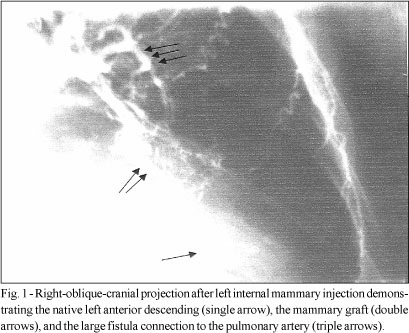
A 50-year-old man developed recurrent angina 1 year after coronary artery bypass surgery. The patient was found to have a large fistula involving branches of the internal mammary artery graft and the left pulmonary artery. In the absence of another clear cause for the patient’s symptoms, we speculated that our patient’s angina and abnormal stress nuclear study were due to coronary steal. In patients with a history of coronary bypass grafting, fistula formation between graft and native vessels should be considered as a possible cause of early recurrent angina.

Read Full Article
Creative Commons Attribution (CC BY) Creative Commons license
10/09/2002 DOI: 10.1590/S0066-782X2002001100010
Cross-sectional Study on Blood Pressure Control in the Department of Nephrology of the Escola Paulista de Medicina - UNIFESP
Original Article

Cross-sectional Study on Blood Pressure Control in the Department of Nephrology of the Escola Paulista de Medicina – UNIFESP

João Batista de Freitas et al. Agostinho Tavares Osvaldo Kohlmann Jr Maria Tereza Zanella Artur Beltrame Ribeiro

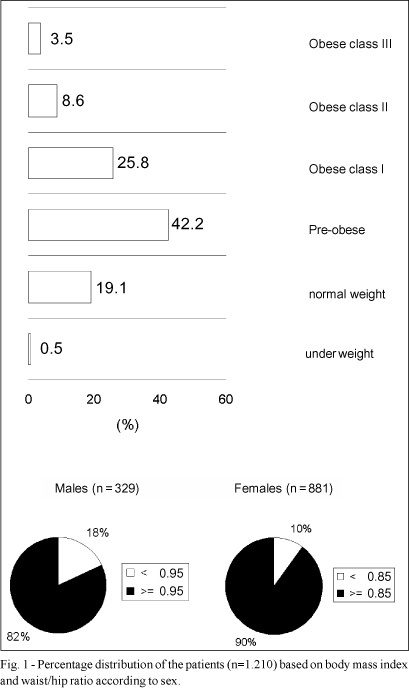
OBJECTIVE – To assess hypertension control rates in a specialized university-affiliated medical department, the influence of sex, diabetes, and obesity on that control, and the strategies for the treatment of hypertension. METHODS – We carried out a cross-sectional study with 1,210 patients followed up for at least 6 months. Information was gathered from medical and nursing records and comprised the following data: sex, age, weight, height, abdominal and hip circumferences, blood pressure, and class and number of the antihypertensive drugs prescribed. To assess obesity, we used body mass index and waist/hip ratio. Blood pressure was considered under control when its levels were below 140/90 mmHg. RESULTS – The study consisted of 73% females and 27% males. Most females (31.7%) were 50 to 59 years of age, and most males (28.3%) were 60 to 69 years. The blood pressure control rate found was 20.9% for the 1,210 patients and 23.4% for the hypertensive diabetic patients (n=290). Despite the low control rates found, 70% of the patients used 1 or 2 antihypertensive medications. A high prevalence of obesity (38%) was observed, and females had a greater abdominal obesity index than males did (90% vs 82%, p<0.05). Patients with a greater body mass index had less control of blood pressure. CONCLUSION – The percentage of hypertensive patients with controlled blood pressure levels was low and was associated with a high prevalence of obesity. These data indicate the need for reviewing the strategies of global treatment for hypertension.

  • blood pressure control
  • Hypertension
  • Treatment
Read Full Article
Creative Commons Attribution (CC BY) Creative Commons license
10/09/2002 DOI: 10.1590/S0066-782X2002001100003 Views 2
Initial Energy for External Electrical Cardioversion of Atrial Fibrillation
Original Article

Initial Energy for External Electrical Cardioversion of Atrial Fibrillation

Edilberto Figueiredo et al. Henrique Horta Veloso Angelo Amato Vincenzo de Paola

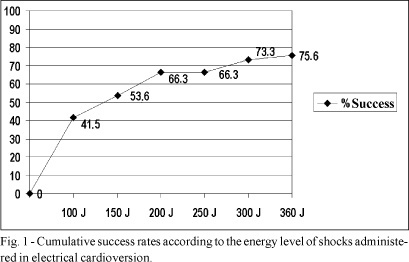
OBJECTIVE – To investigate the initial energy level required for electrical cardioversion of atrial fibrillation (AF). METHODS – We studied patients undergoing electrical cardioversion in the 1st Multicenter Trial of SOCESP. Patients were divided into 2 groups according to the initial energy level of electrical cardioversion: 100J and > or = 150J. We compared the efficacy of the initial and final shock of the procedure, the number of shocks administered, and the cumulative energy levels. RESULTS – Eight-six patients underwent electrical cardioversion. In 53 patients (62%), cardioversion was started with 100J, and in 33 patients (38%), cardioversion was started with > or = 150J. Groups did not differ regarding clinical features and therapeutical interventions. A tendency existed towards greater efficacy of the initial shock in patients who received > or = 150J (61% vs. 42% in the 100J group, p=0.08). The number of shocks was smaller in the > or = 150J group (1.5±0.7 vs. 2.1±1.3, p=0.04). No difference existed regarding the final efficacy of electrical cardioversion and total cumulative energy levels in both groups. In the subgroup of patients with recent-onset AF ( or = 150J received fewer counter shocks with a tendency toward greater success than those patients who were given 100J; however, in patients with recent-onset AF, the average cumulative energy level was lower in the 100J group. These data suggest that electrical cardioversion should be initiated with energy levels > or = 150J in patients with chronic AF.

  • Arrhythmia
  • Atrial Fibrillation
  • electrical cardioversion
Read Full Article
Creative Commons Attribution (CC BY) Creative Commons license
10/09/2002 DOI: 10.1590/S0066-782X2002001100004
Retinal Detachment in Preeclampsia
Case Report

Retinal Detachment in Preeclampsia

Renata Silva do Prado et al. Estêvão Lanna Figueiredo Télcia Vasconcelos Barros Magalhães

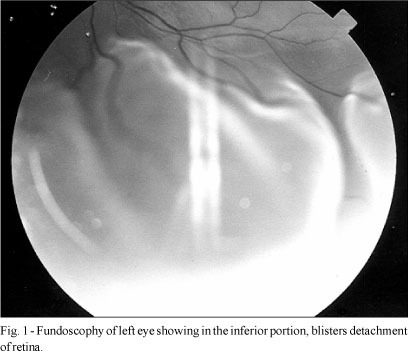
Preeclampsia is an obstetric disease of unknown cause that affects approximately 5% of pregnant women. The visual system may be affected with variable intensity, being the retinal detachment a rare complication. The retinal detachment in preeclampsia is usually bilateral and serous, and its pathogenesis is related to the choroidal ischemia secondary to an intense arteriolar vasospasm. The majority of patients have complete recovery of vision with clinical management, and surgery is unnecessary. This is a case report of a 27 year old patient who developed the severe form of preeclampsia on her first pregnancy. She had progressive blurred vision, until she could see only shadows. Ophthalmic examination diagnosed spread and bilateral retinal detachment. With blood pressure control at postpartum, the patient had her retina reattached, and recovery of vision.

Read Full Article
Creative Commons Attribution (CC BY) Creative Commons license
10/09/2002 DOI: 10.1590/S0066-782X2002001100011 Views 2
Study of Coronary Sinus Flow Reserve Through Transesophageal Doppler Echocardiography in Normal Subjects
Original Article

Study of Coronary Sinus Flow Reserve Through Transesophageal Doppler Echocardiography in Normal Subjects

José Ramos Filho et al. José A. F. Ramires Marko Turina Caio J. Medeiros … Mário Lachat Jeane Tsutsui

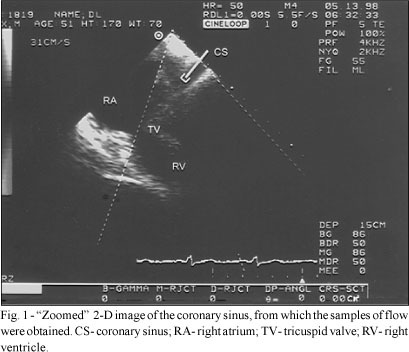
OBJECTIVE – To evaluate the Coronary Flow Reserve in the Coronary Sinus through transesophageal Doppler echocardiography in normal subjects. METHODS – We obtained technically adequate flow samples for analysis in 10 healthy volunteers (37±8 years, 5 men) with no history of heart or systemic disease and with mean left ventricular mass index by transthoracic echocardiography of 87±18 g/m². Coronary sinus flow velocity was recorded within the coronary sinus with the patient in a resting condition and during intravenous adenosine infusion at a dose of 140 µg/kg/min for 4 minutes. Recording of coronary sinus blood flow was possible in all cases with measurement of peak systolic, diastolic, and retrograde velocities (PSV, PDV, and PRV, cm/sec), mean systolic and diastolic velocities (MSV and MDV, cm/sec), and systolic and diastolic velocity time integral (VTI S and VTI D, cm/sec). RESULTS – The coronary flow reserve was calculated as the ratio between the blood flow in the basal state and the maximum measured hyperemic blood flow with adenosine infusion. Results are shown as mean and standard deviations. (CFR = PSV + PDV — PRV/basal PSV): 1st min = 2.2±0.21; 2nd min = 3±0.3; 3rd min = 3.4±0.37; 4th min = 3.6 ± 0.33. CONCLUSION – Although coronary sinus flow had significantly increased in the first minute, higher velocities were seen at third and fourth minutes, indicating that these should be the best times to study coronary sinus flow with intravenous adenosine in continuous infusion.

  • coronary reserve
  • Coronary sinus
  • transesophageal Doppler echocardiography
Read Full Article
Creative Commons Attribution (CC BY) Creative Commons license
10/09/2002 DOI: 10.1590/S0066-782X2002001100001
Arterial Hypertension in a Child with Williams-Beuren Syndrome (7q11.23 Chromosomal Deletion)
Case Report

Arterial Hypertension in a Child with Williams-Beuren Syndrome (7q11.23 Chromosomal Deletion)

Cristina de Sylos et al. Alexandre C. Pereira Estela Azeka Nana Miura … Sônia Maria Ferreira Mesquita Munir Ebaid

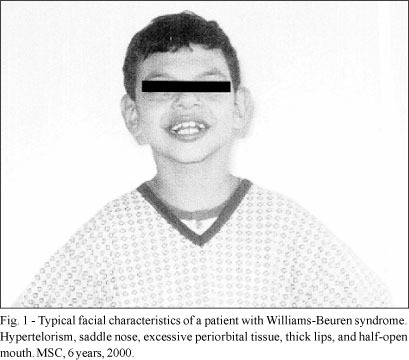
We report the case of a 7-year-old male child diagnosed with Williams-Beuren syndrome and arterial hypertension refractory to clinical treatment. The diagnosis was confirmed by genetic study. Narrowing of the descending aorta and stenosis of the renal arteries were also diagnosed. Systemic vascular alterations caused by deletion of the elastin gene may occur early in individuals with Williams-Beuren syndrome, leading to the clinical manifestation of systemic arterial hypertension refractory to drug treatment.

Read Full Article
Creative Commons Attribution (CC BY) Creative Commons license
10/09/2002 DOI: 10.1590/S0066-782X2002001100009 Views 1

How to cite this article

EndNote RIS

Electronic Document Format (Vancouver)

Tavares JR, D’Almeida V, Diniz DC, Terzi CA, Cruz EN, Stefanini E, Andriollo A, et al. Analysis of Plasma Homocysteine Levels in Patients with Unstable Angina. Arquivos Brasileiros de Cardiologia 2002;79(2):167-72.

Electronic Document Format (ABNT)

Tavares, José Roberto; D’Almeida, Vânia; Diniz, Daniela C.; Terzi, Carolina A.; Cruz, Edison N.; Stefanini, Edson; Andriollo, Adagmar; Paola, Angelo A.V. de; Carvalho, Antonio C.. Analysis of Plasma Homocysteine Levels in Patients with Unstable Angina. Arquivos Brasileiros de Cardiologia, v. 79, n. 2, p. 167-172, Sep. 2002.

Electronic Document Format (APA)

Tavares, J. R., D’Almeida, V., Diniz, D. C., Terzi, C. A., Cruz, E. N., Stefanini, E., Andriollo, A., Paola, A. A. , & Carvalho, A. C. (2002). Analysis of Plasma Homocysteine Levels in Patients with Unstable Angina. Arquivos Brasileiros de Cardiologia, 79(2), 167-172.

Electronic Document Format (ISO)

Tavares, José Roberto and D’Almeida, Vânia and Diniz, Daniela C. and Terzi, Carolina A. and Cruz, Edison N. and Stefanini, Edson and Andriollo, Adagmar and Paola, Angelo A.V. de and Carvalho, Antonio C.. Analysis of Plasma Homocysteine Levels in Patients with Unstable Angina. Arquivos Brasileiros de Cardiologia [online]. 2002, vol. 79, n. 2, [cited 2026-10-14], pp. 167-172. Available from: <https://journals.cardiol.br/en/article/analysis-of-plasma-homocysteine-levels-in-patients-with-unstable-angina/>. ISSN 0066-782X

EndNote RIS

Electronic Document Format (Vancouver)

Bacharova L, Kyselovic J, Klimas J. QRS Voltage-Duration Product in the Identification of Left Ventricular Hypertrophy in Spontaneously Hypertensive Rats. Arquivos Brasileiros de Cardiologia 2002;79(2):143-8.

Electronic Document Format (ABNT)

Bacharova, Ljuba; Kyselovic, Jan; Klimas, Jan. QRS Voltage-Duration Product in the Identification of Left Ventricular Hypertrophy in Spontaneously Hypertensive Rats. Arquivos Brasileiros de Cardiologia, v. 79, n. 2, p. 143-148, Sep. 2002.

Electronic Document Format (APA)

Bacharova, L., Kyselovic, J., & Klimas, J. (2002). QRS Voltage-Duration Product in the Identification of Left Ventricular Hypertrophy in Spontaneously Hypertensive Rats. Arquivos Brasileiros de Cardiologia, 79(2), 143-148.

Electronic Document Format (ISO)

Bacharova, Ljuba and Kyselovic, Jan and Klimas, Jan. QRS Voltage-Duration Product in the Identification of Left Ventricular Hypertrophy in Spontaneously Hypertensive Rats. Arquivos Brasileiros de Cardiologia [online]. 2002, vol. 79, n. 2, [cited 2026-10-14], pp. 143-148. Available from: <https://journals.cardiol.br/en/article/qrs-voltage-duration-product-in-the-identification-of-left-ventricular-hypertrophy-in-spontaneously-hypertensive-rats/>. ISSN 0066-782X

EndNote RIS

Electronic Document Format (Vancouver)

Rumi DO, Solimene MC, Takada JY, Grupi CJ, Giorgi DM, Rigonatti SP, Luz PL, et al. Electrocardiographic and Blood Pressure Alterations During Electroconvulsive Therapy in Young Adults. Arquivos Brasileiros de Cardiologia 2002;79(2):155-60.

Electronic Document Format (ABNT)

Rumi, Demetrio Ortega; Solimene, Maria Cecília; Takada, Júlio Yoshio; Grupi, César José; Giorgi, Dante Marcelo; Rigonatti, Sérgio Paulo; Luz, Protásio Lemos da; Ramires, José Antonio Franchini. Electrocardiographic and Blood Pressure Alterations During Electroconvulsive Therapy in Young Adults. Arquivos Brasileiros de Cardiologia, v. 79, n. 2, p. 155-160, Sep. 2002.

Electronic Document Format (APA)

Rumi, D. O., Solimene, M. C., Takada, J. Y., Grupi, C. J., Giorgi, D. M., Rigonatti, S. P., Luz, P. L. , & Ramires, J. A. F. (2002). Electrocardiographic and Blood Pressure Alterations During Electroconvulsive Therapy in Young Adults. Arquivos Brasileiros de Cardiologia, 79(2), 155-160.

Electronic Document Format (ISO)

Rumi, Demetrio Ortega and Solimene, Maria Cecília and Takada, Júlio Yoshio and Grupi, César José and Giorgi, Dante Marcelo and Rigonatti, Sérgio Paulo and Luz, Protásio Lemos da and Ramires, José Antonio Franchini. Electrocardiographic and Blood Pressure Alterations During Electroconvulsive Therapy in Young Adults. Arquivos Brasileiros de Cardiologia [online]. 2002, vol. 79, n. 2, [cited 2026-10-14], pp. 155-160. Available from: <https://journals.cardiol.br/en/article/electrocardiographic-and-blood-pressure-alterations-during-electroconvulsive-therapy-in-young-adults/>. ISSN 0066-782X

EndNote RIS

Electronic Document Format (Vancouver)

Bassan R. Chest Pain Units: A Modern Way of Managing Patients with Chest Pain in the Emergency Department. Arquivos Brasileiros de Cardiologia 2002;79(2):203-9.

Electronic Document Format (ABNT)

Bassan, Roberto. Chest Pain Units: A Modern Way of Managing Patients with Chest Pain in the Emergency Department. Arquivos Brasileiros de Cardiologia, v. 79, n. 2, p. 203-209, Sep. 2002.

Electronic Document Format (APA)

Bassan, R. (2002). Chest Pain Units: A Modern Way of Managing Patients with Chest Pain in the Emergency Department. Arquivos Brasileiros de Cardiologia, 79(2), 203-209.

Electronic Document Format (ISO)

Bassan, Roberto. Chest Pain Units: A Modern Way of Managing Patients with Chest Pain in the Emergency Department. Arquivos Brasileiros de Cardiologia [online]. 2002, vol. 79, n. 2, [cited 2026-10-14], pp. 203-209. Available from: <https://journals.cardiol.br/en/article/chest-pain-units-a-modern-way-of-managing-patients-with-chest-pain-in-the-emergency-department/>. ISSN 0066-782X

EndNote RIS

Electronic Document Format (Vancouver)

Lottenberg AMP, Nunes VS, Nakandakare ER, Neves M, Bernik M, Santos JE, Quintão ECR, et al. Plant sterol ester Efficiency on the Plasma Lipid Reduction in Moderate Hipercholesterolemic Subjects. Arquivos Brasileiros de Cardiologia 2002;79(2):139-42.

Electronic Document Format (ABNT)

Lottenberg, Ana M. P.; Nunes, Valéria S.; Nakandakare, Edna R.; Neves, Mônica; Bernik, Márcia; Santos, José E.; Quintão, Eder C. R.. Plant sterol ester Efficiency on the Plasma Lipid Reduction in Moderate Hipercholesterolemic Subjects. Arquivos Brasileiros de Cardiologia, v. 79, n. 2, p. 139-142, Sep. 2002.

Electronic Document Format (APA)

Lottenberg, A. M. P., Nunes, V. S., Nakandakare, E. R., Neves, M., Bernik, M., Santos, J. E., & Quintão, E. C. R. (2002). Plant sterol ester Efficiency on the Plasma Lipid Reduction in Moderate Hipercholesterolemic Subjects. Arquivos Brasileiros de Cardiologia, 79(2), 139-142.

Electronic Document Format (ISO)

Lottenberg, Ana M. P. and Nunes, Valéria S. and Nakandakare, Edna R. and Neves, Mônica and Bernik, Márcia and Santos, José E. and Quintão, Eder C. R.. Plant sterol ester Efficiency on the Plasma Lipid Reduction in Moderate Hipercholesterolemic Subjects. Arquivos Brasileiros de Cardiologia [online]. 2002, vol. 79, n. 2, [cited 2026-10-14], pp. 139-142. Available from: <https://journals.cardiol.br/en/article/plant-sterol-ester-efficiency-on-the-plasma-lipid-reduction-in-moderate-hipercholesterolemic-subjects/>. ISSN 0066-782X

EndNote RIS

Electronic Document Format (Vancouver)

Ferreira AC, Marchena E, Liester M, Sangosanya AO. Internal Mammary to Pulmonary Artery Fistula Presenting as Early Recurrent Angina after Coronary Bypass. Arquivos Brasileiros de Cardiologia 2002;79(2):181-2.

Electronic Document Format (ABNT)

Ferreira, Alexandre C.; Marchena, Eduardo de; Liester, Michelle; Sangosanya, Afolabi O.. Internal Mammary to Pulmonary Artery Fistula Presenting as Early Recurrent Angina after Coronary Bypass. Arquivos Brasileiros de Cardiologia, v. 79, n. 2, p. 181-182, Sep. 2002.

Electronic Document Format (APA)

Ferreira, A. C., Marchena, E. , Liester, M., & Sangosanya, A. O. (2002). Internal Mammary to Pulmonary Artery Fistula Presenting as Early Recurrent Angina after Coronary Bypass. Arquivos Brasileiros de Cardiologia, 79(2), 181-182.

Electronic Document Format (ISO)

Ferreira, Alexandre C. and Marchena, Eduardo de and Liester, Michelle and Sangosanya, Afolabi O.. Internal Mammary to Pulmonary Artery Fistula Presenting as Early Recurrent Angina after Coronary Bypass. Arquivos Brasileiros de Cardiologia [online]. 2002, vol. 79, n. 2, [cited 2026-10-14], pp. 181-182. Available from: <https://journals.cardiol.br/en/article/internal-mammary-to-pulmonary-artery-fistula-presenting-as-early-recurrent-angina-after-coronary-bypass/>. ISSN 0066-782X

EndNote RIS

Electronic Document Format (Vancouver)

Freitas JB, Tavares A, Kohlmann Jr O, Zanella MT, Ribeiro AB. Cross-sectional Study on Blood Pressure Control in the Department of Nephrology of the Escola Paulista de Medicina – UNIFESP. Arquivos Brasileiros de Cardiologia 2002;79(2):123-8.

Electronic Document Format (ABNT)

Freitas, João Batista de; Tavares, Agostinho; Kohlmann Jr, Osvaldo; Zanella, Maria Tereza; Ribeiro, Artur Beltrame. Cross-sectional Study on Blood Pressure Control in the Department of Nephrology of the Escola Paulista de Medicina – UNIFESP. Arquivos Brasileiros de Cardiologia, v. 79, n. 2, p. 123-128, Sep. 2002.

Electronic Document Format (APA)

Freitas, J. B. , Tavares, A., Kohlmann Jr, O., Zanella, M. T., & Ribeiro, A. B. (2002). Cross-sectional Study on Blood Pressure Control in the Department of Nephrology of the Escola Paulista de Medicina – UNIFESP. Arquivos Brasileiros de Cardiologia, 79(2), 123-128.

Electronic Document Format (ISO)

Freitas, João Batista de and Tavares, Agostinho and Kohlmann Jr, Osvaldo and Zanella, Maria Tereza and Ribeiro, Artur Beltrame. Cross-sectional Study on Blood Pressure Control in the Department of Nephrology of the Escola Paulista de Medicina – UNIFESP. Arquivos Brasileiros de Cardiologia [online]. 2002, vol. 79, n. 2, [cited 2026-10-14], pp. 123-128. Available from: <https://journals.cardiol.br/en/article/cross-sectional-study-on-blood-pressure-control-in-the-department-of-nephrology-of-the-escola-paulista-de-medicina-unifesp/>. ISSN 0066-782X

EndNote RIS

Electronic Document Format (Vancouver)

Figueiredo E, Veloso HH, Paola AAV. Initial Energy for External Electrical Cardioversion of Atrial Fibrillation. Arquivos Brasileiros de Cardiologia 2002;79(2):134-8.

Electronic Document Format (ABNT)

Figueiredo, Edilberto; Veloso, Henrique Horta; Paola, Angelo Amato Vincenzo de. Initial Energy for External Electrical Cardioversion of Atrial Fibrillation. Arquivos Brasileiros de Cardiologia, v. 79, n. 2, p. 134-138, Sep. 2002.

Electronic Document Format (APA)

Figueiredo, E., Veloso, H. H., & Paola, A. A. V. (2002). Initial Energy for External Electrical Cardioversion of Atrial Fibrillation. Arquivos Brasileiros de Cardiologia, 79(2), 134-138.

Electronic Document Format (ISO)

Figueiredo, Edilberto and Veloso, Henrique Horta and Paola, Angelo Amato Vincenzo de. Initial Energy for External Electrical Cardioversion of Atrial Fibrillation. Arquivos Brasileiros de Cardiologia [online]. 2002, vol. 79, n. 2, [cited 2026-10-14], pp. 134-138. Available from: <https://journals.cardiol.br/en/article/initial-energy-for-external-electrical-cardioversion-of-atrial-fibrillation/>. ISSN 0066-782X

EndNote RIS

Electronic Document Format (Vancouver)

Prado RS, Figueiredo EL, Magalhães TVB. Retinal Detachment in Preeclampsia. Arquivos Brasileiros de Cardiologia 2002;79(2):185-6.

Electronic Document Format (ABNT)

Prado, Renata Silva do; Figueiredo, Estêvão Lanna; Magalhães, Télcia Vasconcelos Barros. Retinal Detachment in Preeclampsia. Arquivos Brasileiros de Cardiologia, v. 79, n. 2, p. 185-186, Sep. 2002.

Electronic Document Format (APA)

Prado, R. S. , Figueiredo, E. L., & Magalhães, T. V. B. (2002). Retinal Detachment in Preeclampsia. Arquivos Brasileiros de Cardiologia, 79(2), 185-186.

Electronic Document Format (ISO)

Prado, Renata Silva do and Figueiredo, Estêvão Lanna and Magalhães, Télcia Vasconcelos Barros. Retinal Detachment in Preeclampsia. Arquivos Brasileiros de Cardiologia [online]. 2002, vol. 79, n. 2, [cited 2026-10-14], pp. 185-186. Available from: <https://journals.cardiol.br/en/article/retinal-detachment-in-preeclampsia/>. ISSN 0066-782X

EndNote RIS

Electronic Document Format (Vancouver)

Ramos Filho J, Ramires JAF, Turina M, Medeiros CJ, Lachat M, Tsutsui J. Study of Coronary Sinus Flow Reserve Through Transesophageal Doppler Echocardiography in Normal Subjects. Arquivos Brasileiros de Cardiologia 2002;79(2):102-6.

Electronic Document Format (ABNT)

Ramos Filho, José; Ramires, José A. F.; Turina, Marko; Medeiros, Caio J.; Lachat, Mário; Tsutsui, Jeane. Study of Coronary Sinus Flow Reserve Through Transesophageal Doppler Echocardiography in Normal Subjects. Arquivos Brasileiros de Cardiologia, v. 79, n. 2, p. 102-106, Sep. 2002.

Electronic Document Format (APA)

Ramos Filho, J., Ramires, J. A. F., Turina, M., Medeiros, C. J., Lachat, M., & Tsutsui, J. (2002). Study of Coronary Sinus Flow Reserve Through Transesophageal Doppler Echocardiography in Normal Subjects. Arquivos Brasileiros de Cardiologia, 79(2), 102-106.

Electronic Document Format (ISO)

Ramos Filho, José and Ramires, José A. F. and Turina, Marko and Medeiros, Caio J. and Lachat, Mário and Tsutsui, Jeane. Study of Coronary Sinus Flow Reserve Through Transesophageal Doppler Echocardiography in Normal Subjects. Arquivos Brasileiros de Cardiologia [online]. 2002, vol. 79, n. 2, [cited 2026-10-14], pp. 102-106. Available from: <https://journals.cardiol.br/en/article/study-of-coronary-sinus-flow-reserve-through-transesophageal-doppler-echocardiography-in-normal-subjects/>. ISSN 0066-782X

EndNote RIS

Electronic Document Format (Vancouver)

Sylos C, Pereira AC, Azeka E, Miura N, Mesquita SMF, Ebaid M. Arterial Hypertension in a Child with Williams-Beuren Syndrome (7q11.23 Chromosomal Deletion). Arquivos Brasileiros de Cardiologia 2002;79(2):177-80.

Electronic Document Format (ABNT)

Sylos, Cristina de; Pereira, Alexandre C.; Azeka, Estela; Miura, Nana; Mesquita, Sônia Maria Ferreira; Ebaid, Munir. Arterial Hypertension in a Child with Williams-Beuren Syndrome (7q11.23 Chromosomal Deletion). Arquivos Brasileiros de Cardiologia, v. 79, n. 2, p. 177-180, Sep. 2002.

Electronic Document Format (APA)

Sylos, C. , Pereira, A. C., Azeka, E., Miura, N., Mesquita, S. M. F., & Ebaid, M. (2002). Arterial Hypertension in a Child with Williams-Beuren Syndrome (7q11.23 Chromosomal Deletion). Arquivos Brasileiros de Cardiologia, 79(2), 177-180.

Electronic Document Format (ISO)

Sylos, Cristina de and Pereira, Alexandre C. and Azeka, Estela and Miura, Nana and Mesquita, Sônia Maria Ferreira and Ebaid, Munir. Arterial Hypertension in a Child with Williams-Beuren Syndrome (7q11.23 Chromosomal Deletion). Arquivos Brasileiros de Cardiologia [online]. 2002, vol. 79, n. 2, [cited 2026-10-14], pp. 177-180. Available from: <https://journals.cardiol.br/en/article/arterial-hypertension-in-a-child-with-williams-beuren-syndrome-7q11-23-chromosomal-deletion/>. ISSN 0066-782X

Sede – Rio de Janeiro
Av. Marechal Câmara, 160
3º andar – Sala: 330 – Centro
Rio de Janeiro – CEP: 20020-907
Tel.: (55 +21) 3478-2700
ou (21) 99386-3961
E-mail: revista@cardiol.br

Sede – São Paulo
Alameda Santos, 705 – 11º andar
Cerqueira César | São Paulo
CEP: 01419-001
Tel.: (55 +11) 3411-5500
E-mail: revista@cardiol.br

  • About the Journal
  • Internal Regulation
  • Editors Section
  • Editorial Board
  • History
  • SBC Award

  • Guidelines for Publication
  • Editorial Policy
  • Ethics Policy
  • Policy on the Use of Artificial Intelligence
  • Mandatory Publication Form
  • Publication Fee

Issues

SBC Guidelines

  • How to Publish an Abstract Supplement?
  • Supplements from the Brazilian Congress of Cardiology