ABC Family Arquivos Brasileiros de Cardiologia International Journal of Cardiovascular Sciences ABC Heart Failure & Cardiomyopathy ABC Imagem Cardiovascular
Português English
ABC Family
Português English
  • About
    • About ABC Family
    • Internal Regulation
    • Editorial Board
    • Brazilian Society of Cardiology (SBC)
  • Issues
  • SBC Guidelines
  • Content
    • Videos
    • Podcasts
    • News
  • About
    • About ABC Family
    • Internal Regulation
    • Editorial Board
    • Brazilian Society of Cardiology (SBC)
  • Issues
  • SBC Guidelines
  • Content
    • Videos
    • Podcasts
    • News

ABC Family

  • ABC Family
  • Arquivos Brasileiros de Cardiologia
  • International Journal of Cardiovascular Sciences
  • ABC Heart Failure & Cardiomyopathy
  • ABC Imagem Cardiovascular
Search in

No content found.

Journals
Ordering
Article types
Others

  1. Home
  2. Keyword: Natriuretic Peptide
ABC
Editorial

What to Expect from Cardiovascular Life at 85?

Wouter Kok

While there is plenty of literature for risk prediction of cardiovascular disease and preventive therapies, risk estimates are less well known for patients aged > 80 years. There is a need to address this gap in knowledge, as the health status of very elderly people will increasingly impact on health care.

A detailed study carried out in Beijing by Zhu et al., published in this journal, describes the 5-year risk of cardiovascular disease in 724 very elderly Chinese patients – all > 80 years old, most of them men. They were admitted to the geriatric cardiology department, something that is an evolving field at the international level. The reasons for hospital admission were mostly related to coronary artery disease and hypertension control; only a few were admitted for respiratory or digestive tract disease. After a median follow-up of 5.3 years and a follow-up rate of 98%, about 50% of the patients died, most of them from infections and only 1 in 16 patients from a cardiac cause. The study shows that cardiovascular morbidity and all-cause mortality risk in this population can be successfully predicted by the N-terminal pro-B-type natriuretic peptide levels (NT-proBNP).

[…]

  • B-Type
  • Cardiovascular Diseases
  • Health Services for the Aged
  • Mortality
  • Natriuretic Peptide
  • Risk Factors
Read Full Article
Creative Commons Attribution (CC BY) Creative Commons license
14/06/2021 DOI: 10.36660/abc.20210138
ABC
Editorial

Is Grace Risk Score the Holy Grail in Risk Stratification or Can We Improve it Even Further with Additional Biomarkers?

Ana Teresa Timóteo

B-type natriuretic peptide (BNP) has been recognized as a very useful marker for the detection of acute and chronic left ventricular dysfunction, both systolic and diastolic, that can be present in the context of sudden and prolonged myocardial ischemia. , These are the first steps in the ischemic cascade, leading to cell necrosis. For that reason, natriuretic peptides are usually elevated in the context of acute coronary syndromes.

Myocardial ischemia, even in the absence of left ventricular dysfunction, augments cardiac BNP gene expression, increasing plasma NT-proBNP concentrations. , BNP kinetics usually peaks at 16 hours of symptom’s onset in ST-elevation myocardial infarction and a second peak is usually observed by the fifth day. We can speculate that the first peak might be associated with ischemia and the second peak to left ventricular dysfunction associated with cell necrosis and early remodelling.

[…]

  • Acute coronary syndrome
  • Biomarkers
  • Brain
  • Factor, Natriuretic Atrial
  • Heart Failure
  • Mortality
  • Natriuretic Peptide
  • Ventricular Dysfunction, Left
Read Full Article
Creative Commons Attribution (CC BY) Creative Commons license
29/05/2020 DOI: 10.36660/abc.20200171 Views 2
Figure 1
IJCS
Original Article

NT-ProBNP at Admission Versus NT-ProBNP at Discharge as a Prognostic Predictor in Acute Decompensated Heart Failure

Janine Magalhães et al. Fábio Soares Márcia Noya Gabriel Neimann … Lucas Andrade Luiz Correia

Abstract

Background:

Patients admitted for decompensated heart failure (HF) receive intensive diuretic and vasodilator therapy in the first days. Normally, this is a successful approach that leads to HF compensation and hospital discharge. However, recurrences within the first week of discharge are common.

Objective:

to evaluate whether the main predictor of recurrent outcomes in patients with HF is the severity of decompensation at admission or patient’s blood volume after clinical management.

Methods:

Prospective, cohort study of patients admitted between January 2013 and October 2014, with diagnosis of acute decompensated HF, who were followed-up for 60 days after discharge. Inclusion criterion was increased plasma NT-proBNP (> 450 pg/mL for patients younger than 50 years or > 900 pg/mL for patients older than 50 years). Primary outcome was the combination of cardiovascular death with rehospitalization for decompensated HF in 60 days.

Results:

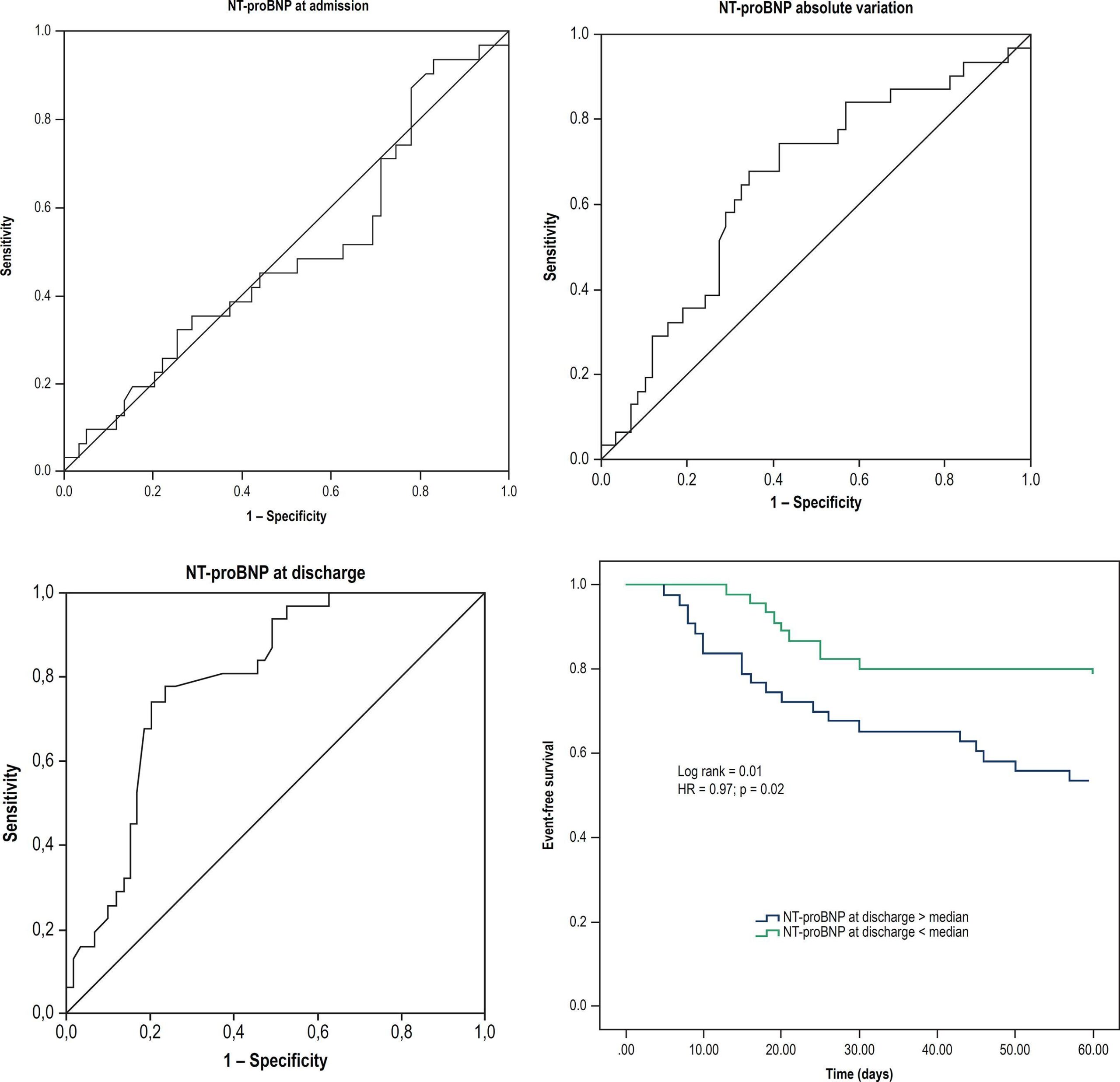
Ninety patients were studied, with median NT-proBNP at admission of 3,947pg/mL (IQR: 2,370 – 7,000 pg/mL), and median NT-proBNP at discharge of 1,946pg/mL (IQR: 1,000 – 3,781 pg/mL). The incidence of combined outcome was 30% (12.2% of deaths and 20% of rehospitalization). The area under the ROC curve for NT-proBNP at admission and 60-day cardiovascular events was 0.49 (p = 0.89; 95% CI = 0.36 – 0.62). The area under the curve of NT-proBNP absolute variation for 60 day-events was 0.65 (p = 0.04; 95%CI = 0.51 – 0.79), and the area under the curve for NT-BNP at discharge was 0.69 (p = 0.03; 95%CI = 0.58 – 0.80). In the multivariate analysis, pre-discharge NT-proBNP was a predictor of the primary outcome, independently of the NT-proBNP at admission and other risk factors.

Conclusion:

Different from the severity of decompensation at hospitalization, blood volume after compensation of HF is associated with recurrent event. This finding suggests that, regardless of initial severity, therapy response during hospitalization is determinant of the risk of recurrent decompensation.

  • Heart Failure / mortality
  • Heart Failure /therapy
  • Hospitalization
  • Natriuretic Peptide
  • Ventricular Dysfunction
Read Full Article
Creative Commons Attribution (CC BY) Creative Commons license
25/09/2017 DOI: 10.5935/2359-4802.20170082 Views 1
Figure 1
ABC
Original Article

BNP was Associated with Ischemic Myocardial Scintigraphy and Death in Patients at Chest Pain Unit

Jader Cunha de Azevedo et al. Bruno Cezario Costa Reis Nathalia Monerat P.B. Barreto Diogenes S. F. Junior … Lais S. Prezotti Victor Rebelo Procaci Vivian Werneck Octaviano Andre Volschan Evandro Tinoco Mesquita Claudio Tinoco Mesquita

Background:

Recent studies have suggested that B-type Natriuretic Peptide (BNP) is an important predictor of ischemia and death in patients with suspected acute coronary syndrome. Increased levels of BNP are seen after episodes of myocardial ischemia and may be related to future adverse events.

Objectives:

To determine the prognostic value of BNP for major cardiac events and to evaluate its association with ischemic myocardial perfusion scintigraphy (MPS).

Methods:

This study included retrospectively 125 patients admitted to the chest pain unit between 2002 and 2006, who had their BNP levels measured on admission and underwent CPM for risk stratification. BNP values were compared with the results of the MPS. The chi-square test was used for qualitative variables and the Student t test, for quantitative variables. Survival curves were adjusted using the Kaplan-Meier method and analyzed by using Cox regression. The significance level was 5%.

Results:

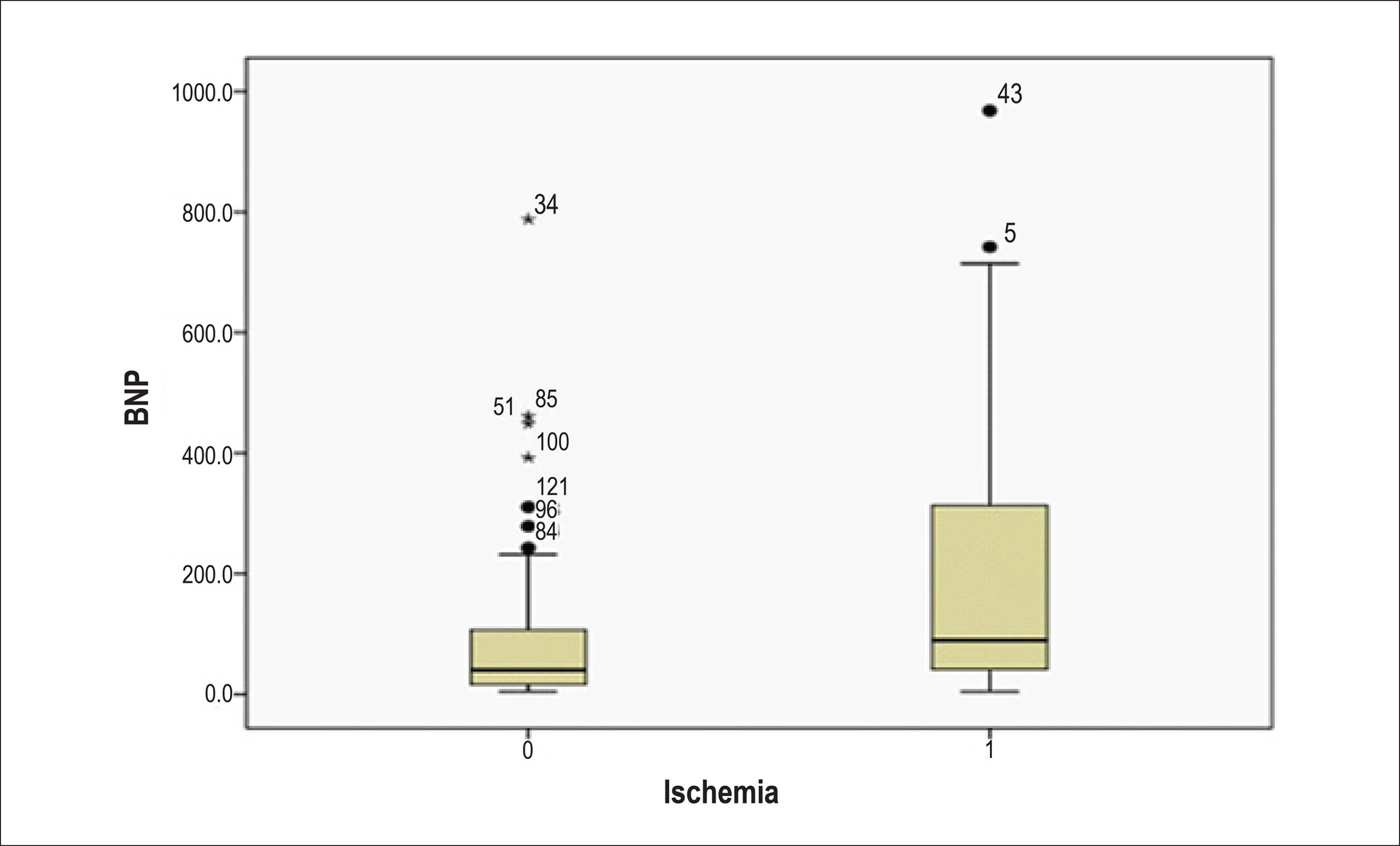
The mean age was 63.9 ± 13.8 years, and the male sex represented 51.2% of the sample. Ischemia was found in 44% of the MPS. The mean BNP level was higher in patients with ischemia compared to patients with non-ischemic MPS (188.3 ± 208.7 versus 131.8 ± 88.6; p = 0.003). A BNP level greater than 80 pg/mL was the strongest predictor of ischemia on MPS (sensitivity = 60%, specificity = 70%, accuracy = 66%, PPV = 61%, NPV = 70%), and could predict medium-term mortality (RR = 7.29, 95% CI: 0.90-58.6; p = 0.045) independently of the presence of ischemia.

Conclusions:

BNP levels are associated with ischemic MPS findings and adverse prognosis in patients presenting with acute chest pain to the emergency room, thus, providing important prognostic information for an unfavorable clinical outcome.

  • Brain
  • Heart Failure
  • Myocardial Ischemia
  • Myocardial Perfusion Imaging
  • Natriuretic Peptide
Read Full Article
Creative Commons Attribution (CC BY) Creative Commons license
18/11/2014 DOI: 10.5935/abc.20140175
Prognostic value of perioperative N-terminal pro-B-type natriuretic peptide in noncardiac surgery
ABC
Artigo Original

Prognostic value of perioperative N-terminal pro-B-type natriuretic peptide in noncardiac surgery

Flávia Kessler Borges et al. Mariana Vargas Furtado Ana Paula Webber Rossini Carolina Bertoluci … Vinícius Leite Gonzalez Eduardo Gehling Bertoldi Denis Maltz Grutcki Leandro Gazziero Rech Mariana Magalhães Carisi Anne Polanczyk

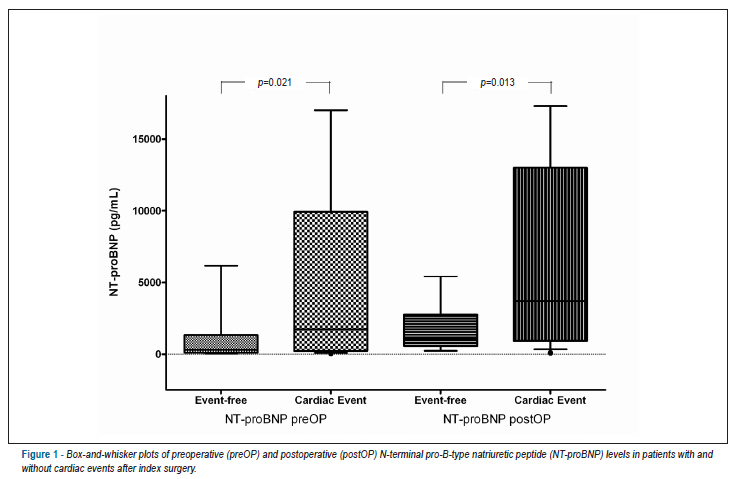
BACKGROUND: Preoperative NT-proBNP has been shown to predict adverse cardiac outcomes, although recent studies suggested that postoperative NT-proBNP determination could provide additional information in patients submitted to noncardiac surgery. OBJECTIVE: To evaluate the prognostic value of perioperative NT-proBNP in intermediate and high risk cardiovascular patients undergoing noncardiac surgery. METHODS: This study prospectively enrolled 145 patients aged >45 years, with at least one Revised Cardiac Risk Index risk factor and submitted to intermediate or high risk noncardiac surgery. NT-proBNP levels were measured pre- and postoperatively. Short-term cardiac outcome predictors were evaluated by logistic regression models. RESULTS: During a median follow-up of 29 days, 17 patients (11.7%) experienced major adverse cardiac events (MACE- 14 nonfatal myocardial infarctions, 2 nonfatal cardiac arrests and 3 cardiac deaths). The optimum discriminatory threshold levels for pre- and postoperative NT-proBNP were 917 and 2962 pg/mL, respectively. Pre- and postoperative NT-proBNP (OR 4.7; 95% CI 1.62-13.73; p=0.005 and OR 4.5; 95% CI 1.53-13.16; p=0.006) were significantly associated with MACE. Preoperative NT-proBNP was significantly and independently associated with adverse cardiac events in multivariate regression analysis (adjusted OR 4.2; 95% CI 1.38-12.62; p=0.011). CONCLUSION: NT-proBNP is a powerful short-term marker of perioperative cardiovascular events in high risk patients. Postoperative levels were less informative than preoperative levels. A single preoperative NT-proBNP measurement should be considered in the preoperative risk assessment.

  • Brain
  • Cardiovascular Diseases
  • Natriuretic Peptide
  • Operative
  • Peptide Fragments
  • Preoperative Care
  • Risk Assessment
  • surgical procedures
Read Full Article
Creative Commons Attribution (CC BY) Creative Commons license
07/05/2013 DOI: 10.5935/abc.20130090 Views 1
ABC
Artigo Original

Effects of levosimendan on TNF-alpha, BNP and MMP-1 in patients with heart failure with anemia

Mutlu Büyüklü et al. Akif Turhan Kürüm Ersan Tatlý Turan Set

BACKGROUND: Levosimendan is known with its two-sided effects of strengthening myofibril contraction without increasing myocardial oxygen demand. Anemia is a deteriorating situation that causes increase of drug dosing in patients with heart failure. OBJECTIVES: In this study, we compared the effectiveness of levosimendan treatment in decompensated heart failure patients with or without anemia. METHODS: Twenty-three anemic patients having class 3 or 4 heart failure according to New York Heart Association (NYHA) and an ejection fraction of below 35% were included to the study. Another 23 patients with the same cardiac diagnosis but without anemia served as control group. Twenty-four hours levosimendan treatment was added to the traditional heart failure treatment of these patients. Samples were taken to measure serum tumor necrotizing factor alpha (TNF-alpha), aminoterminal pro-brain natriuretic peptide (NT-proBNP) and matrix metalloproteinase-1 (MMP-1) levels before and after the administration. RESULTS: There was no significant difference between serum TNF-alpha and MMP-1 levels before and after the treatment (p>0.05). Although NT-proBNP level decreased in both groups after the treatment this was not statistically significant (p=0.531 and p=0.913 for anemia and control groups respectively). Significant restoration of functional capacity was seen in both groups assessed according to NYHA (p<0.001 and p=0.001 for anemia and control groups respectively). CONCLUSION: Levosimendan treatment shows similar effects in heart failure patients with anemia to that of patients without anemia. However, the early effect of this treatment on TNF-alpha, NT-proBNP and MMP-1 levels is not evident. It provides significant improvement in functional capacity without influence from anemia.

  • Anemia
  • Brain
  • factor-alpha
  • Heart Failure
  • matrix metalloproteinase 1
  • Natriuretic Peptide
  • tumor necrosis
Read Full Article
Creative Commons Attribution (CC BY) Creative Commons license
26/06/2012 DOI: 10.1590/S0066-782X2012005000055 Views 1
ACE inhibitors and plasma B-type natriuretic peptide levels in elderly patients with heart failure
ABC
Artigo Original

ACE inhibitors and plasma B-type natriuretic peptide levels in elderly patients with heart failure

Felicio Savioli Neto et al. Hélio M. Magalhães Michel Batlouni Leopoldo S. Piegas

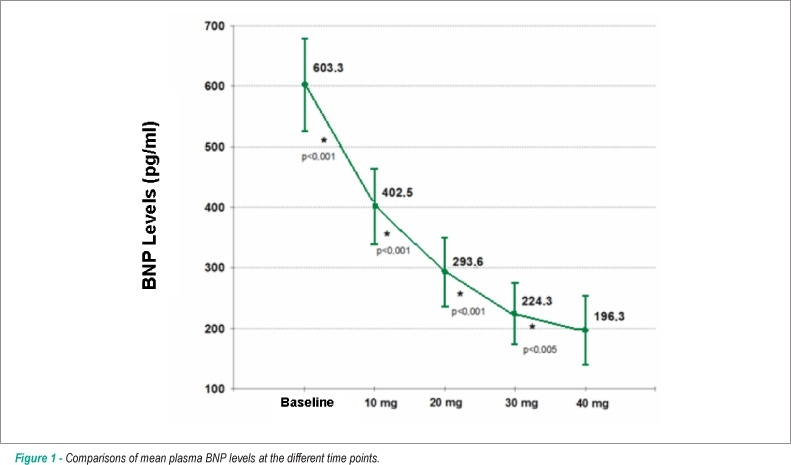
BACKGROUND: Clinical trials have demonstrated the benefits of ACE inhibitors (ACEI) in the neurohormonal activity and in the functional capacity of patients with heart failure (HF), and also that these effects are dose dependent. However, since elderly individuals have been systematically excluded from the majority of these studies, the validation and incorporation of these results in the geriatric population has been questioned. OBJECTIVE: To evaluate the effects of different doses of quinapril, an ACEI with a > 24-hour biological half-life, on plasma BNP levels, on the distance walked in the 6-minute walk test (6MWT) and on the incidence of adverse reactions in elderly individuals with systolic HF. METHODS: A total of 30 patients (76.1 ± 5.3 years; 15 women), in NYHA functional class II-III HF, with left ventricular EF < 40% (33.5 ± 4.5%), on diuretics (30), digoxin (24) and nitrates (13) were included. The patients were assessed at baseline and every two months, with escalating doses of quinapril of 10, 20, 30 and 40 mg. RESULTS: After eight months, BNP levels were 67.4% lower and the distance walked in the 6MWT was 64.9% longer in relation to baseline. Arterial hypotension with symptoms of low cerebral blood flow and/or renal dysfunction was not observed, so that the maximum quinapril dose could be used in all patients. CONCLUSION: The results demonstrated the benefits of ACEI on the neurohormonal profile and functional capacity of elderly individuals with systolic HF, as well as the positive relationship between dose and effect of these drugs.

  • Aged
  • Angiotensin-Converting Enzyme Inhibitors
  • B-Type
  • Heart Failure
  • Natriuretic Peptide
Read Full Article
Creative Commons Attribution (CC BY) Creative Commons license
20/07/2009 DOI: 10.1590/S0066-782X2009000500003 Views 2

How to cite this article

EndNote RIS

Electronic Document Format (Vancouver)

Kok W. What to Expect from Cardiovascular Life at 85?. Arquivos Brasileiros de Cardiologia 2021;116(6):1037-8.

Electronic Document Format (ABNT)

Kok, Wouter. What to Expect from Cardiovascular Life at 85?. Arquivos Brasileiros de Cardiologia, v. 116, n. 6, p. 1037-1038, Jun. 2021.

Electronic Document Format (APA)

Kok, W. (2021). What to Expect from Cardiovascular Life at 85?. Arquivos Brasileiros de Cardiologia, 116(6), 1037-1038.

Electronic Document Format (ISO)

Kok, Wouter. What to Expect from Cardiovascular Life at 85?. Arquivos Brasileiros de Cardiologia [online]. 2021, vol. 116, n. 6, [cited 2026-10-14], pp. 1037-1038. Available from: <https://journals.cardiol.br/en/article/what-to-expect-from-cardiovascular-life-at-85/>. ISSN 0066-782X

EndNote RIS

Electronic Document Format (Vancouver)

Timóteo AT. Is Grace Risk Score the Holy Grail in Risk Stratification or Can We Improve it Even Further with Additional Biomarkers?. Arquivos Brasileiros de Cardiologia 2020;114(4):673-4.

Electronic Document Format (ABNT)

Timóteo, Ana Teresa. Is Grace Risk Score the Holy Grail in Risk Stratification or Can We Improve it Even Further with Additional Biomarkers?. Arquivos Brasileiros de Cardiologia, v. 114, n. 4, p. 673-674, May. 2020.

Electronic Document Format (APA)

Timóteo, A. T. (2020). Is Grace Risk Score the Holy Grail in Risk Stratification or Can We Improve it Even Further with Additional Biomarkers?. Arquivos Brasileiros de Cardiologia, 114(4), 673-674.

Electronic Document Format (ISO)

Timóteo, Ana Teresa. Is Grace Risk Score the Holy Grail in Risk Stratification or Can We Improve it Even Further with Additional Biomarkers?. Arquivos Brasileiros de Cardiologia [online]. 2020, vol. 114, n. 4, [cited 2026-10-14], pp. 673-674. Available from: <https://journals.cardiol.br/en/article/is-grace-risk-score-the-holy-grail-in-risk-stratification-or-can-we-improve-it-even-further-with-additional-biomarkers/>. ISSN 0066-782X

EndNote RIS

Electronic Document Format (Vancouver)

Magalhães J, Soares F, Noya M, Neimann G, Andrade L, Correia L. NT-ProBNP at Admission Versus NT-ProBNP at Discharge as a Prognostic Predictor in Acute Decompensated Heart Failure. International Journal of Cardiovascular Sciences 2017;30(6):469-75.

Electronic Document Format (ABNT)

Magalhães, Janine; Soares, Fábio; Noya, Márcia; Neimann, Gabriel; Andrade, Lucas; Correia, Luiz. NT-ProBNP at Admission Versus NT-ProBNP at Discharge as a Prognostic Predictor in Acute Decompensated Heart Failure. International Journal of Cardiovascular Sciences, v. 30, n. 6, p. 469-475, Sep. 2017.

Electronic Document Format (APA)

Magalhães, J., Soares, F., Noya, M., Neimann, G., Andrade, L., & Correia, L. (2017). NT-ProBNP at Admission Versus NT-ProBNP at Discharge as a Prognostic Predictor in Acute Decompensated Heart Failure. International Journal of Cardiovascular Sciences, 30(6), 469-475.

Electronic Document Format (ISO)

Magalhães, Janine and Soares, Fábio and Noya, Márcia and Neimann, Gabriel and Andrade, Lucas and Correia, Luiz. NT-ProBNP at Admission Versus NT-ProBNP at Discharge as a Prognostic Predictor in Acute Decompensated Heart Failure. International Journal of Cardiovascular Sciences [online]. 2017, vol. 30, n. 6, [cited 2026-10-14], pp. 469-475. Available from: <https://journals.cardiol.br/en/article/nt-probnp-at-admission-versus-nt-probnp-at-discharge-as-a-prognostic-predictor-in-acute-decompensated-heart-failure/>. ISSN 2359-4802

EndNote RIS

Electronic Document Format (Vancouver)

Azevedo JC, Reis BCC, Barreto NMP, F. Junior DS, Prezotti LS, Procaci VR, Octaviano VW, et al. BNP was Associated with Ischemic Myocardial Scintigraphy and Death in Patients at Chest Pain Unit. Arquivos Brasileiros de Cardiologia 2014;104(1):16-23.

Electronic Document Format (ABNT)

Azevedo, Jader Cunha de; Reis, Bruno Cezario Costa; Barreto, Nathalia Monerat P.B.; F. Junior, Diogenes S.; Prezotti, Lais S.; Procaci, Victor Rebelo; Octaviano, Vivian Werneck; Volschan, Andre; Mesquita, Evandro Tinoco; Mesquita, Claudio Tinoco. BNP was Associated with Ischemic Myocardial Scintigraphy and Death in Patients at Chest Pain Unit. Arquivos Brasileiros de Cardiologia, v. 104, n. 1, p. 16-23, Nov. 2014.

Electronic Document Format (APA)

Azevedo, J. C. , Reis, B. C. C., Barreto, N. M. P., F. Junior, D. S., Prezotti, L. S., Procaci, V. R., Octaviano, V. W., Volschan, A., Mesquita, E. T., & Mesquita, C. T. (2014). BNP was Associated with Ischemic Myocardial Scintigraphy and Death in Patients at Chest Pain Unit. Arquivos Brasileiros de Cardiologia, 104(1), 16-23.

Electronic Document Format (ISO)

Azevedo, Jader Cunha de and Reis, Bruno Cezario Costa and Barreto, Nathalia Monerat P.B. and F. Junior, Diogenes S. and Prezotti, Lais S. and Procaci, Victor Rebelo and Octaviano, Vivian Werneck and Volschan, Andre and Mesquita, Evandro Tinoco and Mesquita, Claudio Tinoco. BNP was Associated with Ischemic Myocardial Scintigraphy and Death in Patients at Chest Pain Unit. Arquivos Brasileiros de Cardiologia [online]. 2014, vol. 104, n. 1, [cited 2026-10-14], pp. 16-23. Available from: <https://journals.cardiol.br/en/article/bnp-was-associated-with-ischemic-myocardial-scintigraphy-and-death-in-patients-at-chest-pain-unit/>. ISSN 0066-782X

EndNote RIS

Electronic Document Format (Vancouver)

Borges FK, Furtado MV, Rossini APW, Bertoluci C, Gonzalez VL, Bertoldi EG, Grutcki DM, et al. Prognostic value of perioperative N-terminal pro-B-type natriuretic peptide in noncardiac surgery. Arquivos Brasileiros de Cardiologia 2013;100(6):561-70.

Electronic Document Format (ABNT)

Borges, Flávia Kessler; Furtado, Mariana Vargas; Rossini, Ana Paula Webber; Bertoluci, Carolina; Gonzalez, Vinícius Leite; Bertoldi, Eduardo Gehling; Grutcki, Denis Maltz; Rech, Leandro Gazziero; Magalhães, Mariana; Polanczyk, Carisi Anne. Prognostic value of perioperative N-terminal pro-B-type natriuretic peptide in noncardiac surgery. Arquivos Brasileiros de Cardiologia, v. 100, n. 6, p. 561-570, May. 2013.

Electronic Document Format (APA)

Borges, F. K., Furtado, M. V., Rossini, A. P. W., Bertoluci, C., Gonzalez, V. L., Bertoldi, E. G., Grutcki, D. M., Rech, L. G., Magalhães, M., & Polanczyk, C. A. (2013). Prognostic value of perioperative N-terminal pro-B-type natriuretic peptide in noncardiac surgery. Arquivos Brasileiros de Cardiologia, 100(6), 561-570.

Electronic Document Format (ISO)

Borges, Flávia Kessler and Furtado, Mariana Vargas and Rossini, Ana Paula Webber and Bertoluci, Carolina and Gonzalez, Vinícius Leite and Bertoldi, Eduardo Gehling and Grutcki, Denis Maltz and Rech, Leandro Gazziero and Magalhães, Mariana and Polanczyk, Carisi Anne. Prognostic value of perioperative N-terminal pro-B-type natriuretic peptide in noncardiac surgery. Arquivos Brasileiros de Cardiologia [online]. 2013, vol. 100, n. 6, [cited 2026-10-14], pp. 561-570. Available from: <https://journals.cardiol.br/en/article/prognostic-value-of-perioperative-n-terminal-pro-b-type-natriuretic-peptide-in-noncardiac-surgery/>. ISSN 0066-782X

EndNote RIS

Electronic Document Format (Vancouver)

Büyüklü M, Kürüm AT, Tatlý E, Set T. Effects of levosimendan on TNF-alpha, BNP and MMP-1 in patients with heart failure with anemia. Arquivos Brasileiros de Cardiologia 2012;99(1):659-64.

Electronic Document Format (ABNT)

Büyüklü, Mutlu; Kürüm, Akif Turhan; Tatlý, Ersan; Set, Turan. Effects of levosimendan on TNF-alpha, BNP and MMP-1 in patients with heart failure with anemia. Arquivos Brasileiros de Cardiologia, v. 99, n. 1, p. 659-664, Jun. 2012.

Electronic Document Format (APA)

Büyüklü, M., Kürüm, A. T., Tatlý, E., & Set, T. (2012). Effects of levosimendan on TNF-alpha, BNP and MMP-1 in patients with heart failure with anemia. Arquivos Brasileiros de Cardiologia, 99(1), 659-664.

Electronic Document Format (ISO)

Büyüklü, Mutlu and Kürüm, Akif Turhan and Tatlý, Ersan and Set, Turan. Effects of levosimendan on TNF-alpha, BNP and MMP-1 in patients with heart failure with anemia. Arquivos Brasileiros de Cardiologia [online]. 2012, vol. 99, n. 1, [cited 2026-10-14], pp. 659-664. Available from: <https://journals.cardiol.br/en/article/effects-of-levosimendan-on-tnf-alpha-bnp-and-mmp-1-in-patients-with-heart-failure-with-anemia/>. ISSN 0066-782X

EndNote RIS

Electronic Document Format (Vancouver)

Savioli Neto F, Magalhães HM, Batlouni M, Piegas LS. ACE inhibitors and plasma B-type natriuretic peptide levels in elderly patients with heart failure. Arquivos Brasileiros de Cardiologia 2009;92(5):349-56.

Electronic Document Format (ABNT)

Savioli Neto, Felicio; Magalhães, Hélio M.; Batlouni, Michel; Piegas, Leopoldo S.. ACE inhibitors and plasma B-type natriuretic peptide levels in elderly patients with heart failure. Arquivos Brasileiros de Cardiologia, v. 92, n. 5, p. 349-356, Jul. 2009.

Electronic Document Format (APA)

Savioli Neto, F., Magalhães, H. M., Batlouni, M., & Piegas, L. S. (2009). ACE inhibitors and plasma B-type natriuretic peptide levels in elderly patients with heart failure. Arquivos Brasileiros de Cardiologia, 92(5), 349-356.

Electronic Document Format (ISO)

Savioli Neto, Felicio and Magalhães, Hélio M. and Batlouni, Michel and Piegas, Leopoldo S.. ACE inhibitors and plasma B-type natriuretic peptide levels in elderly patients with heart failure. Arquivos Brasileiros de Cardiologia [online]. 2009, vol. 92, n. 5, [cited 2026-10-14], pp. 349-356. Available from: <https://journals.cardiol.br/en/article/ace-inhibitors-and-plasma-b-type-natriuretic-peptide-levels-in-elderly-patients-with-heart-failure/>. ISSN 0066-782X

  • About ABC Family
  • Internal Regulation
  • Editorial Board
  • Brazilian Society of Cardiology (SBC)

Issues

SBC Guidelines

  • Videos
  • Podcasts
  • News