| ABC
ABC Family Arquivos Brasileiros de Cardiologia International Journal of Cardiovascular Sciences ABC Heart Failure & Cardiomyopathy ABC Imagem Cardiovascular
Português English
ABC Family | ABC
Português English
  • About
    • About the Journal
    • Internal Regulation
    • Editors Section
    • Editorial Board
    • History
    • SBC Award
  • Instructions to Authors
    • Guidelines for Publication
    • Editorial Policy
    • Ethics Policy
    • Policy on the Use of Artificial Intelligence
    • Mandatory Publication Form
    • Publication Fee
  • Issues
  • SBC Guidelines
  • Abstracts
    • How to Publish an Abstract Supplement?
    • Supplements from the Brazilian Congress of Cardiology
  • About
    • About the Journal
    • Internal Regulation
    • Editors Section
    • Editorial Board
    • History
    • SBC Award
  • Instructions to Authors
    • Guidelines for Publication
    • Editorial Policy
    • Ethics Policy
    • Policy on the Use of Artificial Intelligence
    • Mandatory Publication Form
    • Publication Fee
  • Issues
  • SBC Guidelines
  • Abstracts
    • How to Publish an Abstract Supplement?
    • Supplements from the Brazilian Congress of Cardiology

ABC Family

  • ABC Family
  • Arquivos Brasileiros de Cardiologia
  • International Journal of Cardiovascular Sciences
  • ABC Heart Failure & Cardiomyopathy
  • ABC Imagem Cardiovascular
Search in

No content found.

Journals
Ordering
Article types
Others

  1. Home
  2. ABC
  3. Issues
  4. 2005, Volume 85, Number 3
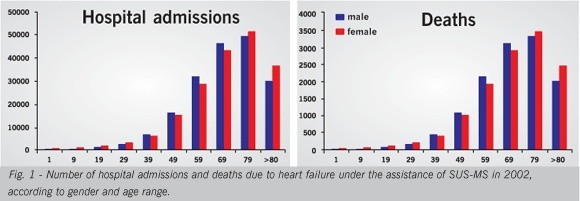
What is the current scenario for heart failure in Brazil?
Editorial

What is the current scenario for heart failure in Brazil?

Francisco Manes Albanesi Filho

EDITORIAL EDITORIAL

What is the current scenario for heart failure in Brazil?

[…]

Read Full Article
Creative Commons Attribution (CC BY) Creative Commons license
10/10/2005 DOI: 10.1590/S0066-782X2005001600001
Artigo Original

Relationship between regular attendance to ambulatory appointments and blood pressure control among hypertensive patients

Eduardo Barbosa Coelho et al. Miguel Moysés Neto Raquel Palhares Maria Camila de Miranda Cardoso … Tufik José Magalhães Geleilete Fernando Nobre

OBJECTIVE: Our objective was to determine the rate of hypertensive patients with controlled BP (BP <140X90 mmHg) and to study its relationship with regular attendance to ambulatory appointments. METHODS: A total of 245 medical records from patients followed up at the Unidade Clínica de Hipertensão Arterial (Clinical Unit of Arterial Hypertension) HCFMRP-USP for a period of one year were randomly and retrospectively reviewed. The patients were classified as assiduous (A) and as regularly absent to scheduled appointments (F), with the second group being defined as those who failed to appear longer than 30 days after the scheduled appointment. The mean of three measurements prior to the date of the scheduled appointment was calculated to determine the rate of patients with controlled BP. Compliance with the treatment was inferred through a questionnaire applied by the nurse team before the appointment. RESULTS: From the 245 patients analyzed, 220 were classified as A (89.7%) and 25 (10.3%) as F. Group A patients showed a higher rate of BP control than F patients (30% vs. 8%, p=0.02, Fischer exact test). Compliance with pharmacological treatment was higher in A patients than in F patients (91% vs. 56 %, p<0.05) as well as to non-pharmacological treatment (63% vs. 44%, p<0.05). CONCLUSION: Although the rate of blood pressure control was low in the population studied, lower compliance with the treatment and BP control was observed in individuals who usually missed the scheduled appointments.

  • Blood Pressure
  • compliance
  • Hypertension
  • Treatment
Read Full Article
Creative Commons Attribution (CC BY) Creative Commons license
10/10/2005 DOI: 10.1590/S0066-782X2005001600002
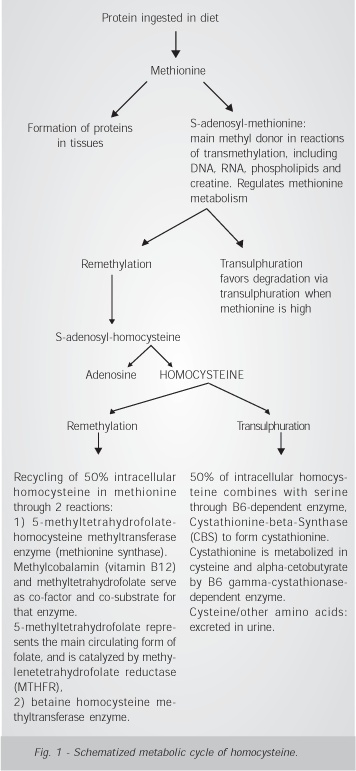
Hyperhomocysteinemia as a risk factor for coronary atherosclerotic diseases in the elderly
Artigo Original

Hyperhomocysteinemia as a risk factor for coronary atherosclerotic diseases in the elderly

Claudia Felícia Gravina-Taddei et al. Michel Batlouni Camila Sarteschi Valéria T Baltar … Nívea A.C Salvarini Marcelo C Bertolami José Eduardo M. R Sousa

OBJECTIVE: To investigate whether hyperhomocysteinemia is an independent risk factor for atherosclerotic disease in elderly individuals METHODS: A case-control study with 172 elderly individuals, 88 belonging to control group and 84 to case group, who showed coronary angiography requested for clinical indications. Quantitative coronary angiography was performed in 91% of the patients. Homocysteinemia was assessed in a continuous and categorized way, through univariate and multivariate analysis. RESULTS: When analyzed continuously, in univariate analysis, it was verified that case group elderly individuals showed an average homocysteinemia levels significantly higher than the control group individuals’ (14.33±4.59 µmol/l against 11.99±4.59 µmol/l, p=0.015). In multivariate analysis, continuous homocysteinemia was associated to the risk rate for coronary artery disease of 1.07 for each 1 µmol/l increase of homocysteine level. Na increase of 5 µmol/l corresponded to the risk rate of 1.40. When analyzed in categorized way, the values found over percentile 75 of control group (14 µmol/l) were defined as hyperhomocysteinemia. Hyperhomocysteinemia was found in 34% of elderly individuals, being 37.3% in control group and 62.7% in case group (p= 0.009). In multivariate analysis, hyperhomocysteinemia constituted an independent risk factor for coronary atherosclerotic disease for elderly individuals, with a risk rate for coronary artery disease of 2.03, confidence interval 95%, 1.02-4.03. CONCLUSION: Hyperhomocysteinemia was an independent risk factor for coronary artery disease in elderly individuals.

  • Coronary Artery Disease
  • Elderly
  • homocysteine
  • hyperhomocysteinemia
  • octogenarian
  • Risk Factor
Read Full Article
Creative Commons Attribution (CC BY) Creative Commons license
10/10/2005 DOI: 10.1590/S0066-782X2005001600004
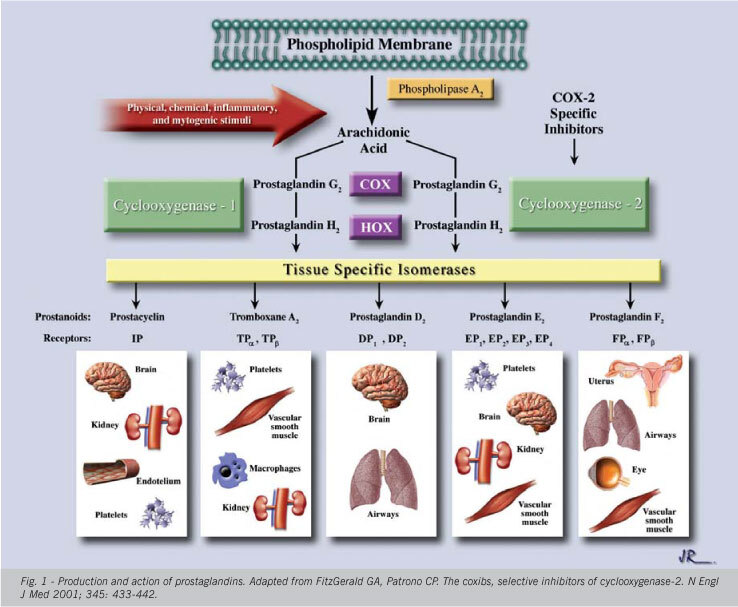
Cardiovascular events: a class effect by COX-2 inhibitors
Atualização

Cardiovascular events: a class effect by COX-2 inhibitors

Leila Fernandes Araujo et al. Alexandre de Matos Soeiro Juliano de Lara Fernandes Carlos Vicente Serrano Júnior

UPDATE

Cardiovascular events: a class effect by COX-2 inhibitors

[…]

Read Full Article
Creative Commons Attribution (CC BY) Creative Commons license
10/10/2005 DOI: 10.1590/S0066-782X2005001600016
Critical left ventricular volume in aortic stenosis in first year of life: its importance in patients selection candidates to univentricular surgical correction pos-valvotomy
Artigo Original

Critical left ventricular volume in aortic stenosis in first year of life: its importance in patients selection candidates to univentricular surgical correction pos-valvotomy

Marco Aurélio Santos et al. Vitor Manuel Pereira Azevedo Maria Ourinda Mesquita da Cunha

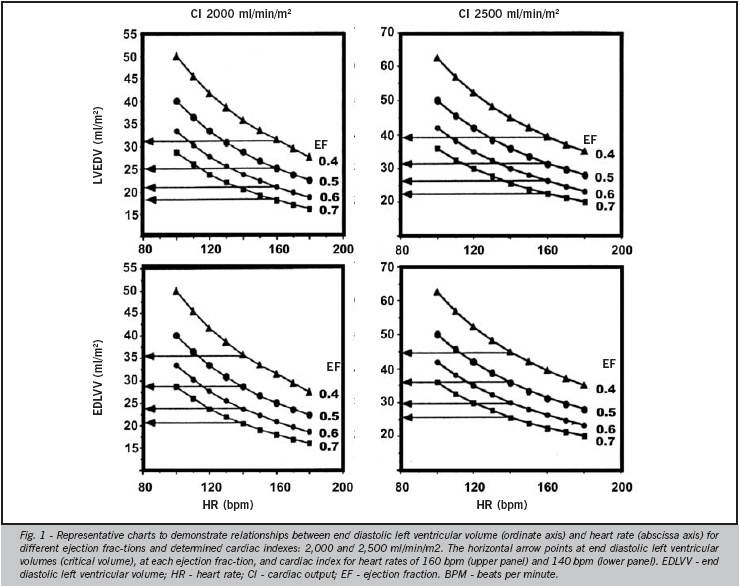
OBJECTIVE: Analysis of critical end diastolic left ventricular volume (EDLVV), defined as the lowest acceptable volume to keep cardiac output, in the selection of patients with post-valvotomy aortic stenosis, candidates to univentricular correction. METHODS: A retrospective study in 21 patients with aortic stenosis, during the first year of life, and 232 patients compiled from literature. Values of end diastolic volume (EDLVV), from 20 to 60 ml/m2 were determined as normal. The EDLVV of deceased patients was compared to that from survival patients. A correlation between the age and EDLVV was carried out at the time of valvotomy, between the groups. Finally, the critical EDLVV through the theoretical relationship between the EDLVV and heart rate for different ejection fractions and designated cardiac indexes (CI): 2,000 and 2,500 20-60 ml/min/m2 was determined. RESULTS: For EDLVV values 60 ml/m2, there was statistical significance between deceased and survival patients (p< 0.0001). However, in the range between 20 and 60 ml/m2, that significance was lower (p=0.0309). A greater incidence of death took place among those who showed it in the first week of life. For a CI of 2,500 ml/min/m2 and a heart rate (HR) of 140 bpm, critical EDLVV will be 26 ml/m2 if left ventricular ejection fraction (LVEF) is 0.70, and 44.5 ml/m2, if LVFE is 0.40. CONCLUSION: The analysis of critical end diastolic left ventricular volume (EDLVV) can add another parameter in the indication of univentricular correction in patients with post-valvotomy aortic stenosis, during the first year of life.

  • Aortic Stenosis
  • left ventricular volume
  • Prognostic
  • univentricular correction
Read Full Article
Creative Commons Attribution (CC BY) Creative Commons license
10/10/2005 DOI: 10.1590/S0066-782X2005001600007
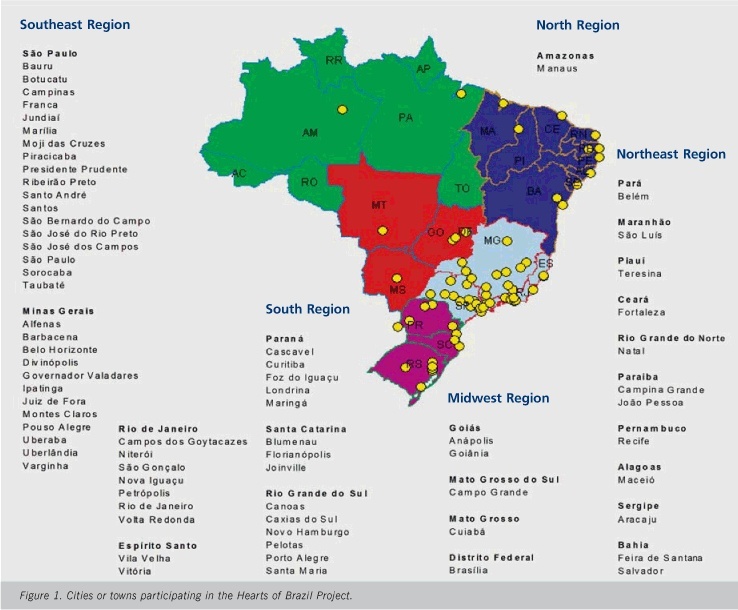
Hearts of Brazil Project
Point of view

Hearts of Brazil Project

Raimundo Marques do Nascimento Neto et al. José Eduardo Krieger George L Machado-Coelho Alexandre da Costa Pereira

POINT OF VIEW

Hearts of Brazil Project

[…]

Read Full Article
Creative Commons Attribution (CC BY) Creative Commons license
10/10/2005 DOI: 10.1590/S0066-782X2005001600015 Views 2
Point of view

How many days, which period of the day and how many measurements per day are recommended in home blood pressure monitoring?

Audes Diógenes de Magalhães Feitosa et al. Marco Antônio Mota Gomes Décio Mion Júnior

POINT OF VIEW

How many days, which period of the day and how many measurements per day are recommended in home blood pressure monitoring?

[…]

Read Full Article
Creative Commons Attribution (CC BY) Creative Commons license
10/10/2005 DOI: 10.1590/S0066-782X2005001600012
Which threshold values should be recommended in ambulatory blood pressure monitoring and self blood pressure monitoring?
Point of view

Which threshold values should be recommended in ambulatory blood pressure monitoring and self blood pressure monitoring?

Miguel Gus

POINT OF VIEW

Which threshold values should be recommended in ambulatory blood pressure monitoring and self blood pressure monitoring?

[…]

Read Full Article
Creative Commons Attribution (CC BY) Creative Commons license
10/10/2005 DOI: 10.1590/S0066-782X2005001600013
Point of view

What is the best prognostic determinant for ambulatory blood pressure monitoring: nondipping or morning surge in blood pressure?

Katia Coelho Ortega et al. Décio Mion Júnior

POINT OF VIEW

What is the best prognostic determinant for ambulatory blood pressure monitoring: nondipping or morning surge in blood pressure?

[…]

Read Full Article
Creative Commons Attribution (CC BY) Creative Commons license
10/10/2005 DOI: 10.1590/S0066-782X2005001600011 Views 1
Point of view

Is ABPM indicated for all hypertensives and normotensives?: Is supportive evidence available?

Giovânio Vieira da Silva et al. Décio Mion Júnior

POINT OF VIEW

Is ABPM indicated for all hypertensives and normotensives? Is supportive evidence available?

[…]

Read Full Article
Creative Commons Attribution (CC BY) Creative Commons license
10/10/2005 DOI: 10.1590/S0066-782X2005001600014 Views 2
Artigo Original

Safety and feasibility of dobutamine-atropine stress echocardiography in octogenarian patients

José Sebastião de Abreu et al. Tereza Cristina Pinheiro Diógenes Ana Gardenia Liberato Ponte Farias José Maria Bonfim de Morais José Nogueira Paes Júnior

OBJECTIVE: To assess the feasibility and safety of dobutamine-atropine stress echocardiography (DASE) in octogenarians. METHODS: We evaluated 5,467 DASE which were distributed in two groups: group I (GI) with 203 DASE performed in octogenarians, and group II (GII), the control group, with 5,264 DASE. The mean age of GI and GII was 83±3 (80-95) and 59±11 (17-79) years, respectively. DASE parameters that were prospectively collected, were compared and analyzed. RESULTS: The percentage of patients that achieved maximum heart rate was 63.5% in GI and 41% in GII (p<0.001), and GI patients required less atropine compared to GII (GI=47%, GII=78%, p<0.001).The presence of chest pain (GI=13%, GII=15.6%, p=0.429) and DASE positive for myocardial ischemia (GI=20.7%, GII=16.9%, p=0.296) were not statistically different between the two groups. However, concomitant positive DASE and absence of chest pain (GI=17%, GII=11%, p=0.029) was higher in GI. The incidence of premature beats in GI was higher than in GII (GI=47.8%, GII=27.6%, p<0.001), and there were more supraventricular tachyarrhythmias (ST) in GI than in GII (GI=5.9%, GII=1.9%, p=0.001). Out of 11 ST that happened in GI, 9 reverted spontaneously. There weren't either deaths or acute myocardial infarction. Ventricular fibrillation only happened in GII (2 cases, 0.03%). CONCLUSION: In the present study, octogenarians achieved maximum heart rate more frequently despite the lesser amount of atropine that they required for DASE completion. Moreover, in this elderly population, there was a higher correlation between positive DASE and absence of chest pain. Although octogenarians did present more heart rhythm disturbs, they usually resolved spontaneously. In our study, DASE proved to be feasible and safe in octogenarians.

  • Dobutamine
  • Echocardiography
  • octogenarian
Read Full Article
Creative Commons Attribution (CC BY) Creative Commons license
10/10/2005 DOI: 10.1590/S0066-782X2005001600009
Low rate of achieving LDL-cholesterol objective in a low income population
Artigo Original

Low rate of achieving LDL-cholesterol objective in a low income population

Luciano J Vacanti et al. Silvio C. de Moraes Santos Alessandro M Fujita David S Lima … Alan F Lopes Rodrigo Vetorazi Ana Sellera Nataly R Scarin

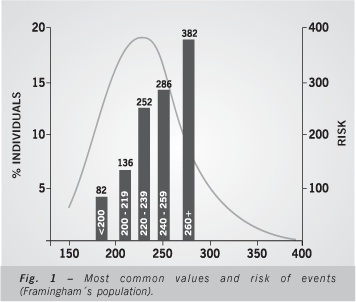
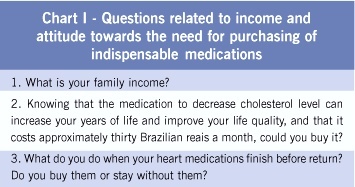
OBJECTIVE: To assess the percentage of patients suitable to the objectives preconized by III Diretrizes sobre Dislipidemias da Sociedade Brasileira de Cardiologia (3rd Guidelines on Dyslipidemia of Brazilian Society of Cardiology), in a low income population. To determine whether there was a difference of that percentage in high risk patients, according to their age (75 years old). METHODS: We analyzed, consecutively, 190 patients, divided in two groups: 51 low and middle risk patients (G I) and 139 high risk patients for coronaray artery disease (G II). The sample was characterized by low income patients (69% for the patients had a family income between 1 and 2 minimum salaries), whose hypolipidemic therapy was irregularly supplied by the State. RESULTS: G I and G II showed, respectively, 70.1±13.7 years old and 13.7% of men and 68.5±10.6 years old and 62.6% of men. Among patients from G II, 30% showed LDL-cholesterol within the preconized objectives. The frequency of patients suitable to the objectives was significantly lower in individuals with 75 years of age or older than among those younger than 75 years old (16% vs. 30%, p=0.04). CONCLUSION: In a predominantly low income population and without continuous assistance from the State to purchase statins, the achievement of preconized objectives for LDL-cholesterol, by 3rd Guidelines on Dyslipidemia of Brasilian Society of Cardiology, is low and also significantly lower among very old patients, with a high risk profile for atherosclerosis.

  • Coronary Artery Disease
  • dyslipidemia
  • hypolipidemic therapy
  • LDL-cholesterol
Read Full Article
Creative Commons Attribution (CC BY) Creative Commons license
10/10/2005 DOI: 10.1590/S0066-782X2005001600003 Views 2
Artigo Original

Intracoronary inflammatory markers after percutaneous coronary interventions

Wilson Salgado Filho et al. Eulógio E Martinez Filho Pedro Horta Pedro A Lemos … Bruno C Migueletto Carlos Vicente Serrano Jr José Antonio Franchini Ramires Tania Leme da Rocha Martinez

OBJECTIVE: To analyze intracoronary release of inflammatory markers (IM) after percutaneous coronary interventions (PCI) and compare their concentrations concerning the type of PCI used (rotablator vs. balloon angioplasty). METHODS: Twenty-two patients with average age of 60±11.9 years old, 12 of male sex, with stable coronary disease, submitted to elective treatment of a single coronary lesion, using rotablator (N=11) or balloon pre-dilatation (N=11) for stent implant were randomized. Samples were collected at aorta root and coronary sinus, immediately before and 15 minutes after intervention. All dosages were made before stent implant, and the cytokines TNF-a, IL-6 and IL-1 and the soluble adhesion molecules ICAM-1, E-selectin and P-selectin were analyzed by using ELISA method. RESULTS: TNF-a and IL-6 concentrations increased after PCI, respectively from 9.5±1.5 pg/ml to 9.9±1.8 pg/ml (p=0.017) and from 6.0±2.4 pg/ml to 6.9±3.0 pg/ml (p<0.001). There was no significant changes in IL-1, ICAM-1 and P-selectin, and a decrease in E-selectin concentrations after the procedures (52.0±17.5 ng/ml to 49.3±18.7 ng/ml; p=0.009) was observed. There were no significant differences between IM concentrations after PCI, concerning the type of procedure used. CONCLUSION: At the early period, post-percutaneous coronary interventions, an increase of intracoronary concentrations of TNF-a and IL-6, and absence of significant difference between concentrations of inflammatory markers released in coronary flow through rotablator and balloon angioplasty were observed.

  • inflammatory markers
  • percutaneous coronary interventions
  • stable coronary syndromes
Read Full Article
Creative Commons Attribution (CC BY) Creative Commons license
10/10/2005 DOI: 10.1590/S0066-782X2005001600006

How to cite this article

EndNote RIS

Electronic Document Format (Vancouver)

Albanesi Filho FM. What is the current scenario for heart failure in Brazil?. Arquivos Brasileiros de Cardiologia 2005;85(3):155-6.

Electronic Document Format (ABNT)

Albanesi Filho, Francisco Manes. What is the current scenario for heart failure in Brazil?. Arquivos Brasileiros de Cardiologia, v. 85, n. 3, p. 155-156, Oct. 2005.

Electronic Document Format (APA)

Albanesi Filho, F. M. (2005). What is the current scenario for heart failure in Brazil?. Arquivos Brasileiros de Cardiologia, 85(3), 155-156.

Electronic Document Format (ISO)

Albanesi Filho, Francisco Manes. What is the current scenario for heart failure in Brazil?. Arquivos Brasileiros de Cardiologia [online]. 2005, vol. 85, n. 3, [cited 2026-10-14], pp. 155-156. Available from: <https://journals.cardiol.br/en/article/what-is-the-current-scenario-for-heart-failure-in-brazil/>. ISSN 0066-782X

EndNote RIS

Electronic Document Format (Vancouver)

Coelho EB, Moysés Neto M, Palhares R, Cardoso MCM, Geleilete TJM, Nobre F. Relationship between regular attendance to ambulatory appointments and blood pressure control among hypertensive patients. Arquivos Brasileiros de Cardiologia 2005;85(3):157-61.

Electronic Document Format (ABNT)

Coelho, Eduardo Barbosa; Moysés Neto, Miguel; Palhares, Raquel; Cardoso, Maria Camila de Miranda; Geleilete, Tufik José Magalhães; Nobre, Fernando. Relationship between regular attendance to ambulatory appointments and blood pressure control among hypertensive patients. Arquivos Brasileiros de Cardiologia, v. 85, n. 3, p. 157-161, Oct. 2005.

Electronic Document Format (APA)

Coelho, E. B., Moysés Neto, M., Palhares, R., Cardoso, M. C. M., Geleilete, T. J. M., & Nobre, F. (2005). Relationship between regular attendance to ambulatory appointments and blood pressure control among hypertensive patients. Arquivos Brasileiros de Cardiologia, 85(3), 157-161.

Electronic Document Format (ISO)

Coelho, Eduardo Barbosa and Moysés Neto, Miguel and Palhares, Raquel and Cardoso, Maria Camila de Miranda and Geleilete, Tufik José Magalhães and Nobre, Fernando. Relationship between regular attendance to ambulatory appointments and blood pressure control among hypertensive patients. Arquivos Brasileiros de Cardiologia [online]. 2005, vol. 85, n. 3, [cited 2026-10-14], pp. 157-161. Available from: <https://journals.cardiol.br/en/article/relationship-between-regular-attendance-to-ambulatory-appointments-and-blood-pressure-control-among-hypertensive-patients/>. ISSN 0066-782X

EndNote RIS

Electronic Document Format (Vancouver)

Gravina-Taddei CF, Batlouni M, Sarteschi C, Baltar VT, Salvarini NA, Bertolami MC, Sousa JEMR, et al. Hyperhomocysteinemia as a risk factor for coronary atherosclerotic diseases in the elderly. Arquivos Brasileiros de Cardiologia 2005;85(3):166-73.

Electronic Document Format (ABNT)

Gravina-Taddei, Claudia Felícia; Batlouni, Michel; Sarteschi, Camila; Baltar, Valéria T; Salvarini, Nívea A.C; Bertolami, Marcelo C; Sousa, José Eduardo M. R. Hyperhomocysteinemia as a risk factor for coronary atherosclerotic diseases in the elderly. Arquivos Brasileiros de Cardiologia, v. 85, n. 3, p. 166-173, Oct. 2005.

Electronic Document Format (APA)

Gravina-Taddei, C. F., Batlouni, M., Sarteschi, C., Baltar, V. T., Salvarini, N. A., Bertolami, M. C., & Sousa, J. E. M. R. (2005). Hyperhomocysteinemia as a risk factor for coronary atherosclerotic diseases in the elderly. Arquivos Brasileiros de Cardiologia, 85(3), 166-173.

Electronic Document Format (ISO)

Gravina-Taddei, Claudia Felícia and Batlouni, Michel and Sarteschi, Camila and Baltar, Valéria T and Salvarini, Nívea A.C and Bertolami, Marcelo C and Sousa, José Eduardo M. R. Hyperhomocysteinemia as a risk factor for coronary atherosclerotic diseases in the elderly. Arquivos Brasileiros de Cardiologia [online]. 2005, vol. 85, n. 3, [cited 2026-10-14], pp. 166-173. Available from: <https://journals.cardiol.br/en/article/hyperhomocysteinemia-as-a-risk-factor-for-coronary-atherosclerotic-diseases-in-the-elderly/>. ISSN 0066-782X

EndNote RIS

Electronic Document Format (Vancouver)

Araujo LF, Soeiro AM, Fernandes JL, Serrano Júnior CV. Cardiovascular events: a class effect by COX-2 inhibitors. Arquivos Brasileiros de Cardiologia 2005;85(3):222-9.

Electronic Document Format (ABNT)

Araujo, Leila Fernandes; Soeiro, Alexandre de Matos; Fernandes, Juliano de Lara; Serrano Júnior, Carlos Vicente. Cardiovascular events: a class effect by COX-2 inhibitors. Arquivos Brasileiros de Cardiologia, v. 85, n. 3, p. 222-229, Oct. 2005.

Electronic Document Format (APA)

Araujo, L. F., Soeiro, A. M., Fernandes, J. L., & Serrano Júnior, C. V. (2005). Cardiovascular events: a class effect by COX-2 inhibitors. Arquivos Brasileiros de Cardiologia, 85(3), 222-229.

Electronic Document Format (ISO)

Araujo, Leila Fernandes and Soeiro, Alexandre de Matos and Fernandes, Juliano de Lara and Serrano Júnior, Carlos Vicente. Cardiovascular events: a class effect by COX-2 inhibitors. Arquivos Brasileiros de Cardiologia [online]. 2005, vol. 85, n. 3, [cited 2026-10-14], pp. 222-229. Available from: <https://journals.cardiol.br/en/article/cardiovascular-events-a-class-effect-by-cox-2-inhibitors/>. ISSN 0066-782X

EndNote RIS

Electronic Document Format (Vancouver)

Santos MA, Azevedo VMP, Cunha MOM. Critical left ventricular volume in aortic stenosis in first year of life: its importance in patients selection candidates to univentricular surgical correction pos-valvotomy. Arquivos Brasileiros de Cardiologia 2005;85(3):186-90.

Electronic Document Format (ABNT)

Santos, Marco Aurélio; Azevedo, Vitor Manuel Pereira; Cunha, Maria Ourinda Mesquita da. Critical left ventricular volume in aortic stenosis in first year of life: its importance in patients selection candidates to univentricular surgical correction pos-valvotomy. Arquivos Brasileiros de Cardiologia, v. 85, n. 3, p. 186-190, Oct. 2005.

Electronic Document Format (APA)

Santos, M. A., Azevedo, V. M. P., & Cunha, M. O. M. (2005). Critical left ventricular volume in aortic stenosis in first year of life: its importance in patients selection candidates to univentricular surgical correction pos-valvotomy. Arquivos Brasileiros de Cardiologia, 85(3), 186-190.

Electronic Document Format (ISO)

Santos, Marco Aurélio and Azevedo, Vitor Manuel Pereira and Cunha, Maria Ourinda Mesquita da. Critical left ventricular volume in aortic stenosis in first year of life: its importance in patients selection candidates to univentricular surgical correction pos-valvotomy. Arquivos Brasileiros de Cardiologia [online]. 2005, vol. 85, n. 3, [cited 2026-10-14], pp. 186-190. Available from: <https://journals.cardiol.br/en/article/critical-left-ventricular-volume-in-aortic-stenosis-in-first-year-of-life-its-importance-in-patients-selection-candidates-to-univentricular-surgical-correction-pos-valvotomy/>. ISSN 0066-782X

EndNote RIS

Electronic Document Format (Vancouver)

Nascimento Neto RM, Krieger JE, Machado-Coelho GL, Pereira AC. Hearts of Brazil Project. Arquivos Brasileiros de Cardiologia 2005;85(3):218-21.

Electronic Document Format (ABNT)

Nascimento Neto, Raimundo Marques do; Krieger, José Eduardo; Machado-Coelho, George L; Pereira, Alexandre da Costa. Hearts of Brazil Project. Arquivos Brasileiros de Cardiologia, v. 85, n. 3, p. 218-221, Oct. 2005.

Electronic Document Format (APA)

Nascimento Neto, R. M. , Krieger, J. E., Machado-Coelho, G. L., & Pereira, A. C. (2005). Hearts of Brazil Project. Arquivos Brasileiros de Cardiologia, 85(3), 218-221.

Electronic Document Format (ISO)

Nascimento Neto, Raimundo Marques do and Krieger, José Eduardo and Machado-Coelho, George L and Pereira, Alexandre da Costa. Hearts of Brazil Project. Arquivos Brasileiros de Cardiologia [online]. 2005, vol. 85, n. 3, [cited 2026-10-14], pp. 218-221. Available from: <https://journals.cardiol.br/en/article/hearts-of-brazil-project/>. ISSN 0066-782X

EndNote RIS

Electronic Document Format (Vancouver)

Feitosa ADM, Gomes MAM, Mion Júnior D. How many days, which period of the day and how many measurements per day are recommended in home blood pressure monitoring?. Arquivos Brasileiros de Cardiologia 2005;85(3):210-1.

Electronic Document Format (ABNT)

Feitosa, Audes Diógenes de Magalhães; Gomes, Marco Antônio Mota; Mion Júnior, Décio. How many days, which period of the day and how many measurements per day are recommended in home blood pressure monitoring?. Arquivos Brasileiros de Cardiologia, v. 85, n. 3, p. 210-211, Oct. 2005.

Electronic Document Format (APA)

Feitosa, A. D. M., Gomes, M. A. M., & Mion Júnior, D. (2005). How many days, which period of the day and how many measurements per day are recommended in home blood pressure monitoring?. Arquivos Brasileiros de Cardiologia, 85(3), 210-211.

Electronic Document Format (ISO)

Feitosa, Audes Diógenes de Magalhães and Gomes, Marco Antônio Mota and Mion Júnior, Décio. How many days, which period of the day and how many measurements per day are recommended in home blood pressure monitoring?. Arquivos Brasileiros de Cardiologia [online]. 2005, vol. 85, n. 3, [cited 2026-10-14], pp. 210-211. Available from: <https://journals.cardiol.br/en/article/how-many-days-which-period-of-the-day-and-how-many-measurements-per-day-are-recommended-in-home-blood-pressure-monitoring/>. ISSN 0066-782X

EndNote RIS

Electronic Document Format (Vancouver)

Gus M. Which threshold values should be recommended in ambulatory blood pressure monitoring and self blood pressure monitoring?. Arquivos Brasileiros de Cardiologia 2005;85(3):212-4.

Electronic Document Format (ABNT)

Gus, Miguel. Which threshold values should be recommended in ambulatory blood pressure monitoring and self blood pressure monitoring?. Arquivos Brasileiros de Cardiologia, v. 85, n. 3, p. 212-214, Oct. 2005.

Electronic Document Format (APA)

Gus, M. (2005). Which threshold values should be recommended in ambulatory blood pressure monitoring and self blood pressure monitoring?. Arquivos Brasileiros de Cardiologia, 85(3), 212-214.

Electronic Document Format (ISO)

Gus, Miguel. Which threshold values should be recommended in ambulatory blood pressure monitoring and self blood pressure monitoring?. Arquivos Brasileiros de Cardiologia [online]. 2005, vol. 85, n. 3, [cited 2026-10-14], pp. 212-214. Available from: <https://journals.cardiol.br/en/article/which-threshold-values-should-be-recommended-in-ambulatory-blood-pressure-monitoring-and-self-blood-pressure-monitoring/>. ISSN 0066-782X

EndNote RIS

Electronic Document Format (Vancouver)

Ortega KC, Mion Júnior D. What is the best prognostic determinant for ambulatory blood pressure monitoring: nondipping or morning surge in blood pressure?. Arquivos Brasileiros de Cardiologia 2005;85(3):208-9.

Electronic Document Format (ABNT)

Ortega, Katia Coelho; Mion Júnior, Décio. What is the best prognostic determinant for ambulatory blood pressure monitoring: nondipping or morning surge in blood pressure?. Arquivos Brasileiros de Cardiologia, v. 85, n. 3, p. 208-209, Oct. 2005.

Electronic Document Format (APA)

Ortega, K. C., & Mion Júnior, D. (2005). What is the best prognostic determinant for ambulatory blood pressure monitoring: nondipping or morning surge in blood pressure?. Arquivos Brasileiros de Cardiologia, 85(3), 208-209.

Electronic Document Format (ISO)

Ortega, Katia Coelho and Mion Júnior, Décio. What is the best prognostic determinant for ambulatory blood pressure monitoring: nondipping or morning surge in blood pressure?. Arquivos Brasileiros de Cardiologia [online]. 2005, vol. 85, n. 3, [cited 2026-10-14], pp. 208-209. Available from: <https://journals.cardiol.br/en/article/what-is-the-best-prognostic-determinant-for-ambulatory-blood-pressure-monitoring-nondipping-or-morning-surge-in-blood-pressure/>. ISSN 0066-782X

EndNote RIS

Electronic Document Format (Vancouver)

Silva GV, Mion Júnior D. Is ABPM indicated for all hypertensives and normotensives?: Is supportive evidence available?. Arquivos Brasileiros de Cardiologia 2005;85(3):215-7.

Electronic Document Format (ABNT)

Silva, Giovânio Vieira da; Mion Júnior, Décio. Is ABPM indicated for all hypertensives and normotensives?: Is supportive evidence available?. Arquivos Brasileiros de Cardiologia, v. 85, n. 3, p. 215-217, Oct. 2005.

Electronic Document Format (APA)

Silva, G. V. , & Mion Júnior, D. (2005). Is ABPM indicated for all hypertensives and normotensives?: Is supportive evidence available?. Arquivos Brasileiros de Cardiologia, 85(3), 215-217.

Electronic Document Format (ISO)

Silva, Giovânio Vieira da and Mion Júnior, Décio. Is ABPM indicated for all hypertensives and normotensives?: Is supportive evidence available?. Arquivos Brasileiros de Cardiologia [online]. 2005, vol. 85, n. 3, [cited 2026-10-14], pp. 215-217. Available from: <https://journals.cardiol.br/en/article/is-abpm-indicated-for-all-hypertensives-and-normotensives-is-supportive-evidence-available/>. ISSN 0066-782X

EndNote RIS

Electronic Document Format (Vancouver)

Abreu JS, Diógenes TCP, Farias AGLP, Morais JMB, Paes Júnior JN. Safety and feasibility of dobutamine-atropine stress echocardiography in octogenarian patients. Arquivos Brasileiros de Cardiologia 2005;85(3):198-204.

Electronic Document Format (ABNT)

Abreu, José Sebastião de; Diógenes, Tereza Cristina Pinheiro; Farias, Ana Gardenia Liberato Ponte; Morais, José Maria Bonfim de; Paes Júnior, José Nogueira. Safety and feasibility of dobutamine-atropine stress echocardiography in octogenarian patients. Arquivos Brasileiros de Cardiologia, v. 85, n. 3, p. 198-204, Oct. 2005.

Electronic Document Format (APA)

Abreu, J. S. , Diógenes, T. C. P., Farias, A. G. L. P., Morais, J. M. B. , & Paes Júnior, J. N. (2005). Safety and feasibility of dobutamine-atropine stress echocardiography in octogenarian patients. Arquivos Brasileiros de Cardiologia, 85(3), 198-204.

Electronic Document Format (ISO)

Abreu, José Sebastião de and Diógenes, Tereza Cristina Pinheiro and Farias, Ana Gardenia Liberato Ponte and Morais, José Maria Bonfim de and Paes Júnior, José Nogueira. Safety and feasibility of dobutamine-atropine stress echocardiography in octogenarian patients. Arquivos Brasileiros de Cardiologia [online]. 2005, vol. 85, n. 3, [cited 2026-10-14], pp. 198-204. Available from: <https://journals.cardiol.br/en/article/safety-and-feasibility-of-dobutamine-atropine-stress-echocardiography-in-octogenarian-patients/>. ISSN 0066-782X

EndNote RIS

Electronic Document Format (Vancouver)

Vacanti LJ, Santos SCM, Fujita AM, Lima DS, Lopes AF, Vetorazi R, Sellera A, et al. Low rate of achieving LDL-cholesterol objective in a low income population. Arquivos Brasileiros de Cardiologia 2005;85(3):162-5.

Electronic Document Format (ABNT)

Vacanti, Luciano J; Santos, Silvio C. de Moraes; Fujita, Alessandro M; Lima, David S; Lopes, Alan F; Vetorazi, Rodrigo; Sellera, Ana; Scarin, Nataly R. Low rate of achieving LDL-cholesterol objective in a low income population. Arquivos Brasileiros de Cardiologia, v. 85, n. 3, p. 162-165, Oct. 2005.

Electronic Document Format (APA)

Vacanti, L. J., Santos, S. C. M., Fujita, A. M., Lima, D. S., Lopes, A. F., Vetorazi, R., Sellera, A., & Scarin, N. R. (2005). Low rate of achieving LDL-cholesterol objective in a low income population. Arquivos Brasileiros de Cardiologia, 85(3), 162-165.

Electronic Document Format (ISO)

Vacanti, Luciano J and Santos, Silvio C. de Moraes and Fujita, Alessandro M and Lima, David S and Lopes, Alan F and Vetorazi, Rodrigo and Sellera, Ana and Scarin, Nataly R. Low rate of achieving LDL-cholesterol objective in a low income population. Arquivos Brasileiros de Cardiologia [online]. 2005, vol. 85, n. 3, [cited 2026-10-14], pp. 162-165. Available from: <https://journals.cardiol.br/en/article/low-rate-of-achieving-ldl-cholesterol-objective-in-a-low-income-population/>. ISSN 0066-782X

EndNote RIS

Electronic Document Format (Vancouver)

Salgado Filho W, Martinez Filho EE, Horta P, Lemos PA, Migueletto BC, Serrano Jr CV, Ramires JAF, et al. Intracoronary inflammatory markers after percutaneous coronary interventions. Arquivos Brasileiros de Cardiologia 2005;85(3):180-5.

Electronic Document Format (ABNT)

Salgado Filho, Wilson; Martinez Filho, Eulógio E; Horta, Pedro; Lemos, Pedro A; Migueletto, Bruno C; Serrano Jr, Carlos Vicente; Ramires, José Antonio Franchini; Martinez, Tania Leme da Rocha. Intracoronary inflammatory markers after percutaneous coronary interventions. Arquivos Brasileiros de Cardiologia, v. 85, n. 3, p. 180-185, Oct. 2005.

Electronic Document Format (APA)

Salgado Filho, W., Martinez Filho, E. E., Horta, P., Lemos, P. A., Migueletto, B. C., Serrano Jr, C. V., Ramires, J. A. F., & Martinez, T. L. R. (2005). Intracoronary inflammatory markers after percutaneous coronary interventions. Arquivos Brasileiros de Cardiologia, 85(3), 180-185.

Electronic Document Format (ISO)

Salgado Filho, Wilson and Martinez Filho, Eulógio E and Horta, Pedro and Lemos, Pedro A and Migueletto, Bruno C and Serrano Jr, Carlos Vicente and Ramires, José Antonio Franchini and Martinez, Tania Leme da Rocha. Intracoronary inflammatory markers after percutaneous coronary interventions. Arquivos Brasileiros de Cardiologia [online]. 2005, vol. 85, n. 3, [cited 2026-10-14], pp. 180-185. Available from: <https://journals.cardiol.br/en/article/intracoronary-inflammatory-markers-after-percutaneous-coronary-interventions/>. ISSN 0066-782X

Sede – Rio de Janeiro
Av. Marechal Câmara, 160
3º andar – Sala: 330 – Centro
Rio de Janeiro – CEP: 20020-907
Tel.: (55 +21) 3478-2700
ou (21) 99386-3961
E-mail: revista@cardiol.br

Sede – São Paulo
Alameda Santos, 705 – 11º andar
Cerqueira César | São Paulo
CEP: 01419-001
Tel.: (55 +11) 3411-5500
E-mail: revista@cardiol.br

  • About the Journal
  • Internal Regulation
  • Editors Section
  • Editorial Board
  • History
  • SBC Award

  • Guidelines for Publication
  • Editorial Policy
  • Ethics Policy
  • Policy on the Use of Artificial Intelligence
  • Mandatory Publication Form
  • Publication Fee

Issues

SBC Guidelines

  • How to Publish an Abstract Supplement?
  • Supplements from the Brazilian Congress of Cardiology