ABC Family Arquivos Brasileiros de Cardiologia International Journal of Cardiovascular Sciences ABC Heart Failure & Cardiomyopathy ABC Imagem Cardiovascular
Português English
ABC Family
Português English
  • About
    • About ABC Family
    • Internal Regulation
    • Editorial Board
    • Brazilian Society of Cardiology (SBC)
  • Issues
  • SBC Guidelines
  • Content
    • Videos
    • Podcasts
    • News
  • About
    • About ABC Family
    • Internal Regulation
    • Editorial Board
    • Brazilian Society of Cardiology (SBC)
  • Issues
  • SBC Guidelines
  • Content
    • Videos
    • Podcasts
    • News

ABC Family

  • ABC Family
  • Arquivos Brasileiros de Cardiologia
  • International Journal of Cardiovascular Sciences
  • ABC Heart Failure & Cardiomyopathy
  • ABC Imagem Cardiovascular
Search in

No content found.

Journals
Ordering
Article types
Others

  1. Home
  2. Keyword: inflammatory markers
Inflammatory markers of atherosclerotic plaque stabilization after acute coronary event - temporal trends
ABC
Artigo Original

Inflammatory markers of atherosclerotic plaque stabilization after acute coronary event – temporal trends

Osana Maria Coelho Costa Mouco et al. José Carlos Nicolau Tatiana da Rocha e Souza Lilia Nigro Maia José Antônio Franchini Ramires

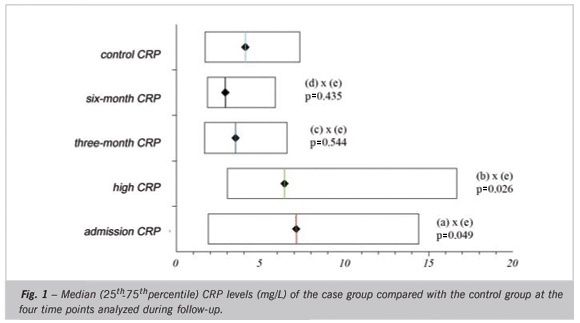
OBJECTIVE: To evaluate the length of time required for atherosclerotic plaque stabilization in acute coronary syndromes (ACS), using inflammatory markers. METHODS: In this prospective study, C-reactive protein (CRP), fibrinogen, factor VIIIc, interleukin-6 (IL-6), and tumor necrosis factor-alpha (TNF-alpha) levels were measured on admission, at discharge, and three and six months post-discharge in 40 patients with non-ST-segment elevation ACS (NSTE-ACS) and 40 healthy subjects. RESULTS: C-reactive protein levels were significantly higher on admission and at discharge, but not at three and six months post-discharge, compared with the control group. Fibrinogen levels remained unchanged, except at six months, when they were significantly lower than in the control group. Factor VIII-c did not differ from that of the control group on admission, but it was significantly higher at discharge, with no differences at three and six months. Interleukin-6 levels were significantly higher than in the control group in all time points. However, they declined significantly between discharge and three months. In no time point was TNF-alpha significantly different from that of the control group. Only IL-6 correlated significantly and independently with future cardiovascular events. CONCLUSION: With respect to CRP and factor VIIIc, plaque stabilization is suggested in up to three months; IL-6 analysis suggests stabilization as from the third month, although it remained higher than that of the control group for up to six months. Only IL-6 showed prognostic value for further events within a year.
  • inflammatory markers
  • non-ST-segment elevation myocardial infarction
  • Stable Angina
Read Full Article
Creative Commons Attribution (CC BY) Creative Commons license
28/07/2006 DOI: 10.1590/S0066-782X2006001400005 Views 1
ABC
Artigo Original

Intracoronary inflammatory markers after percutaneous coronary interventions

Wilson Salgado Filho et al. Eulógio E Martinez Filho Pedro Horta Pedro A Lemos … Bruno C Migueletto Carlos Vicente Serrano Jr José Antonio Franchini Ramires Tania Leme da Rocha Martinez

OBJECTIVE: To analyze intracoronary release of inflammatory markers (IM) after percutaneous coronary interventions (PCI) and compare their concentrations concerning the type of PCI used (rotablator vs. balloon angioplasty). METHODS: Twenty-two patients with average age of 60±11.9 years old, 12 of male sex, with stable coronary disease, submitted to elective treatment of a single coronary lesion, using rotablator (N=11) or balloon pre-dilatation (N=11) for stent implant were randomized. Samples were collected at aorta root and coronary sinus, immediately before and 15 minutes after intervention. All dosages were made before stent implant, and the cytokines TNF-a, IL-6 and IL-1 and the soluble adhesion molecules ICAM-1, E-selectin and P-selectin were analyzed by using ELISA method. RESULTS: TNF-a and IL-6 concentrations increased after PCI, respectively from 9.5±1.5 pg/ml to 9.9±1.8 pg/ml (p=0.017) and from 6.0±2.4 pg/ml to 6.9±3.0 pg/ml (p<0.001). There was no significant changes in IL-1, ICAM-1 and P-selectin, and a decrease in E-selectin concentrations after the procedures (52.0±17.5 ng/ml to 49.3±18.7 ng/ml; p=0.009) was observed. There were no significant differences between IM concentrations after PCI, concerning the type of procedure used. CONCLUSION: At the early period, post-percutaneous coronary interventions, an increase of intracoronary concentrations of TNF-a and IL-6, and absence of significant difference between concentrations of inflammatory markers released in coronary flow through rotablator and balloon angioplasty were observed.

  • inflammatory markers
  • percutaneous coronary interventions
  • stable coronary syndromes
Read Full Article
Creative Commons Attribution (CC BY) Creative Commons license
10/10/2005 DOI: 10.1590/S0066-782X2005001600006
Inflammatory, lipid, and metabolic profile in acute ischemic syndrome: correlation with hospital and posthospital events
ABC
Artigo Original

Inflammatory, lipid, and metabolic profile in acute ischemic syndrome: correlation with hospital and posthospital events

Elizabeth da Rosa Duarte et al. Lucia Campos Pellanda Vera Lúcia Portal

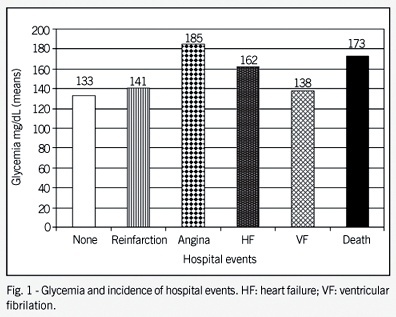
OBJECTIVE: To associate the markers lipid profile, inflammatory profile (high-sensitivity C-reactive protein HSCRP and fibrinogen), and metabolic profile (glucose determination) with hospital and posthospital events in patients with acute ischemic syndrome (AIS) and to describe the predictors of mortality in this population. METHODS: A cohort study with 199 patients with AIS (unstable angina, acute myocardial infarction (AMI) with or without ST segment elevation) admitted to the intensive care unit (ICU) of a university cardiology Hospital, from March to November 2002. The previous diseases, the medication in use, and the coronary risk factors were recorded. The clinical events considered in the hospital were reinfarction, angina, heart failure (HF), ventricular fibrillation, and death; the posthospital events considered (30 days after hospital discharge) were reinfarction, angina, HF, death, and admittance for percutaneous procedures (PTCA) or for revascularization (MRS). RESULTS: HSCRP and altered glycemia were significantly associated with hospital events (P = 0.03 and P < 0.01, respectively); however, they were not associated with posthospital events (P = 0.19 and P = 0.61, respectively). Lipid profile and fibrinogen did not have a statistically significant association in any of the times assessed. Using multiple logistic regression, age (P = 0.04), previous AMI (P = 0.04), myocardial infarction with ST segment elevation (P = 0.008) or without ST segment elevation (P = 0.048), and altered glycemia (P = 0.002) were predictors of hospital mortality. CONCLUSION: Increased HSCRP and altered glycemia were associated with a greater number of hospital events, whereas age, previous AMI, AMI with or without ST segment elevation, and altered glycemia were predictors of hospital mortality.

  • acute ischemic syndrome
  • inflammatory markers
  • Lipid profile
Read Full Article
Creative Commons Attribution (CC BY) Creative Commons license
08/03/2005 DOI: 10.1590/S0066-782X2005000200006 Views 2
ABC
Original Article

Behavior of inflammatory markers of myocardial injury in cardiac surgery: laboratory correlation with the clinical picture of postpericardiotomy syndrome

Ilmar Köhler et al. Paulo J. Saraiva Orlando B. Wender Alcides J. Zago

OBJECTIVE: To verify the association of serum markers of myocardial injury, such as troponin I, creatinine kinase, and creatinine kinase isoenzyme MB, and inflammatory markers, such as tumor necrosis factor alpha (TNF-alpha), C-reactive protein, and the erythrocyte sedimentation rate in the perioperative period of cardiac surgery, with the occurrence of possible postpericardiotomy syndrome. METHODS: This was a cohort study with 96 patients undergoing cardiac surgery assessed at the following 4 different time periods: the day before surgery (D0); the 3rd postoperative day (D3); between the 7th and 10th postoperative days (D7-10); and the 30th postoperative day (D30). During each period, we evaluated demographic variables (sex and age), surgical variables (type and duration , extracorporeal circulation), and serum dosages of the markers of myocardial injury and inflammatory response. RESULTS: Of all patients, 12 (12.5%) met the clinical criteria for a diagnosis of postpericardiotomy syndrome, and their mean age was 10.3 years lower than the age of the others (P=0.02). The results of the serum markers for tissue injury and inflammatory response were not significantly different between the 2 assessed groups. No significant difference existed regarding either surgery duration or extracorporeal circulation. CONCLUSION: The patients who met the clinical criteria for postpericardiotomy syndrome were significantly younger than the others were. Serum markers for tissue injury and inflammatory response were not different in the clinically affected group, and did not correlate with the different types and duration of surgery or with extracorporeal circulation.

  • Cardiac Surgery
  • inflammatory markers
  • injury markers
  • Postpericardiotomy Syndrome
Read Full Article
Creative Commons Attribution (CC BY) Creative Commons license
09/10/2003 DOI: 10.1590/S0066-782X2003001100008

How to cite this article

EndNote RIS

Electronic Document Format (Vancouver)

Mouco OMCC, Nicolau JC, Souza TR, Maia LN, Ramires JAF. Inflammatory markers of atherosclerotic plaque stabilization after acute coronary event – temporal trends. Arquivos Brasileiros de Cardiologia 2006;87(1):28-36.

Electronic Document Format (ABNT)

Mouco, Osana Maria Coelho Costa; Nicolau, José Carlos; Souza, Tatiana da Rocha e; Maia, Lilia Nigro; Ramires, José Antônio Franchini. Inflammatory markers of atherosclerotic plaque stabilization after acute coronary event – temporal trends. Arquivos Brasileiros de Cardiologia, v. 87, n. 1, p. 28-36, Jul. 2006.

Electronic Document Format (APA)

Mouco, O. M. C. C., Nicolau, J. C., Souza, T. R. , Maia, L. N., & Ramires, J. A. F. (2006). Inflammatory markers of atherosclerotic plaque stabilization after acute coronary event – temporal trends. Arquivos Brasileiros de Cardiologia, 87(1), 28-36.

Electronic Document Format (ISO)

Mouco, Osana Maria Coelho Costa and Nicolau, José Carlos and Souza, Tatiana da Rocha e and Maia, Lilia Nigro and Ramires, José Antônio Franchini. Inflammatory markers of atherosclerotic plaque stabilization after acute coronary event – temporal trends. Arquivos Brasileiros de Cardiologia [online]. 2006, vol. 87, n. 1, [cited 2026-10-14], pp. 28-36. Available from: <https://journals.cardiol.br/en/article/inflammatory-markers-of-atherosclerotic-plaque-stabilization-after-acute-coronary-event-temporal-trends/>. ISSN 0066-782X

EndNote RIS

Electronic Document Format (Vancouver)

Salgado Filho W, Martinez Filho EE, Horta P, Lemos PA, Migueletto BC, Serrano Jr CV, Ramires JAF, et al. Intracoronary inflammatory markers after percutaneous coronary interventions. Arquivos Brasileiros de Cardiologia 2005;85(3):180-5.

Electronic Document Format (ABNT)

Salgado Filho, Wilson; Martinez Filho, Eulógio E; Horta, Pedro; Lemos, Pedro A; Migueletto, Bruno C; Serrano Jr, Carlos Vicente; Ramires, José Antonio Franchini; Martinez, Tania Leme da Rocha. Intracoronary inflammatory markers after percutaneous coronary interventions. Arquivos Brasileiros de Cardiologia, v. 85, n. 3, p. 180-185, Oct. 2005.

Electronic Document Format (APA)

Salgado Filho, W., Martinez Filho, E. E., Horta, P., Lemos, P. A., Migueletto, B. C., Serrano Jr, C. V., Ramires, J. A. F., & Martinez, T. L. R. (2005). Intracoronary inflammatory markers after percutaneous coronary interventions. Arquivos Brasileiros de Cardiologia, 85(3), 180-185.

Electronic Document Format (ISO)

Salgado Filho, Wilson and Martinez Filho, Eulógio E and Horta, Pedro and Lemos, Pedro A and Migueletto, Bruno C and Serrano Jr, Carlos Vicente and Ramires, José Antonio Franchini and Martinez, Tania Leme da Rocha. Intracoronary inflammatory markers after percutaneous coronary interventions. Arquivos Brasileiros de Cardiologia [online]. 2005, vol. 85, n. 3, [cited 2026-10-14], pp. 180-185. Available from: <https://journals.cardiol.br/en/article/intracoronary-inflammatory-markers-after-percutaneous-coronary-interventions/>. ISSN 0066-782X

EndNote RIS

Electronic Document Format (Vancouver)

Duarte ER, Pellanda LC, Portal VL. Inflammatory, lipid, and metabolic profile in acute ischemic syndrome: correlation with hospital and posthospital events. Arquivos Brasileiros de Cardiologia 2005;84(2):122-9.

Electronic Document Format (ABNT)

Duarte, Elizabeth da Rosa; Pellanda, Lucia Campos; Portal, Vera Lúcia. Inflammatory, lipid, and metabolic profile in acute ischemic syndrome: correlation with hospital and posthospital events. Arquivos Brasileiros de Cardiologia, v. 84, n. 2, p. 122-129, Mar. 2005.

Electronic Document Format (APA)

Duarte, E. R., Pellanda, L. C., & Portal, V. L. (2005). Inflammatory, lipid, and metabolic profile in acute ischemic syndrome: correlation with hospital and posthospital events. Arquivos Brasileiros de Cardiologia, 84(2), 122-129.

Electronic Document Format (ISO)

Duarte, Elizabeth da Rosa and Pellanda, Lucia Campos and Portal, Vera Lúcia. Inflammatory, lipid, and metabolic profile in acute ischemic syndrome: correlation with hospital and posthospital events. Arquivos Brasileiros de Cardiologia [online]. 2005, vol. 84, n. 2, [cited 2026-10-14], pp. 122-129. Available from: <https://journals.cardiol.br/en/article/inflammatory-lipid-and-metabolic-profile-in-acute-ischemic-syndrome-correlation-with-hospital-and-posthospital-events/>. ISSN 0066-782X

EndNote RIS

Electronic Document Format (Vancouver)

Köhler I, Saraiva PJ, Wender OB, Zago AJ. Behavior of inflammatory markers of myocardial injury in cardiac surgery: laboratory correlation with the clinical picture of postpericardiotomy syndrome. Arquivos Brasileiros de Cardiologia 2003;81(3):285-90.

Electronic Document Format (ABNT)

Köhler, Ilmar; Saraiva, Paulo J.; Wender, Orlando B.; Zago, Alcides J.. Behavior of inflammatory markers of myocardial injury in cardiac surgery: laboratory correlation with the clinical picture of postpericardiotomy syndrome. Arquivos Brasileiros de Cardiologia, v. 81, n. 3, p. 285-290, Oct. 2003.

Electronic Document Format (APA)

Köhler, I., Saraiva, P. J., Wender, O. B., & Zago, A. J. (2003). Behavior of inflammatory markers of myocardial injury in cardiac surgery: laboratory correlation with the clinical picture of postpericardiotomy syndrome. Arquivos Brasileiros de Cardiologia, 81(3), 285-290.

Electronic Document Format (ISO)

Köhler, Ilmar and Saraiva, Paulo J. and Wender, Orlando B. and Zago, Alcides J.. Behavior of inflammatory markers of myocardial injury in cardiac surgery: laboratory correlation with the clinical picture of postpericardiotomy syndrome. Arquivos Brasileiros de Cardiologia [online]. 2003, vol. 81, n. 3, [cited 2026-10-14], pp. 285-290. Available from: <https://journals.cardiol.br/en/article/behavior-of-inflammatory-markers-of-myocardial-injury-in-cardiac-surgery-laboratory-correlation-with-the-clinical-picture-of-postpericardiotomy-syndrome/>. ISSN 0066-782X

  • About ABC Family
  • Internal Regulation
  • Editorial Board
  • Brazilian Society of Cardiology (SBC)

Issues

SBC Guidelines

  • Videos
  • Podcasts
  • News