ABC Family Arquivos Brasileiros de Cardiologia International Journal of Cardiovascular Sciences ABC Heart Failure & Cardiomyopathy ABC Imagem Cardiovascular
Português English
ABC Family
Português English
  • About
    • About ABC Family
    • Internal Regulation
    • Editorial Board
    • Brazilian Society of Cardiology (SBC)
  • Issues
  • SBC Guidelines
  • Content
    • Videos
    • Podcasts
    • News
  • About
    • About ABC Family
    • Internal Regulation
    • Editorial Board
    • Brazilian Society of Cardiology (SBC)
  • Issues
  • SBC Guidelines
  • Content
    • Videos
    • Podcasts
    • News

ABC Family

  • ABC Family
  • Arquivos Brasileiros de Cardiologia
  • International Journal of Cardiovascular Sciences
  • ABC Heart Failure & Cardiomyopathy
  • ABC Imagem Cardiovascular
Search in

No content found.

Journals
Ordering
Article types
Others

  1. Home
  2. Keyword: Emergency Service Hospital
Figura 1
IJCS
Original Article

Factors Predicting Heart Failure in Children Admitted to a Pediatric Emergency Ward in a Developing Country

Uchenna Onubogu

Abstract

Background

Heart failure is an important cause of morbidity and mortality in children.

Objective

To determine the clinical characteristics of children with acute heart failure syndrome in the emergency ward of River state university teaching hospital, Nigeria and identify factors associated with poor outcomes.

Methods

This was an 18month retrospective review of the acute heart failure register. Poor outcome measures were defined as the persistence of heart failure after 4 days on admission or death.

Results

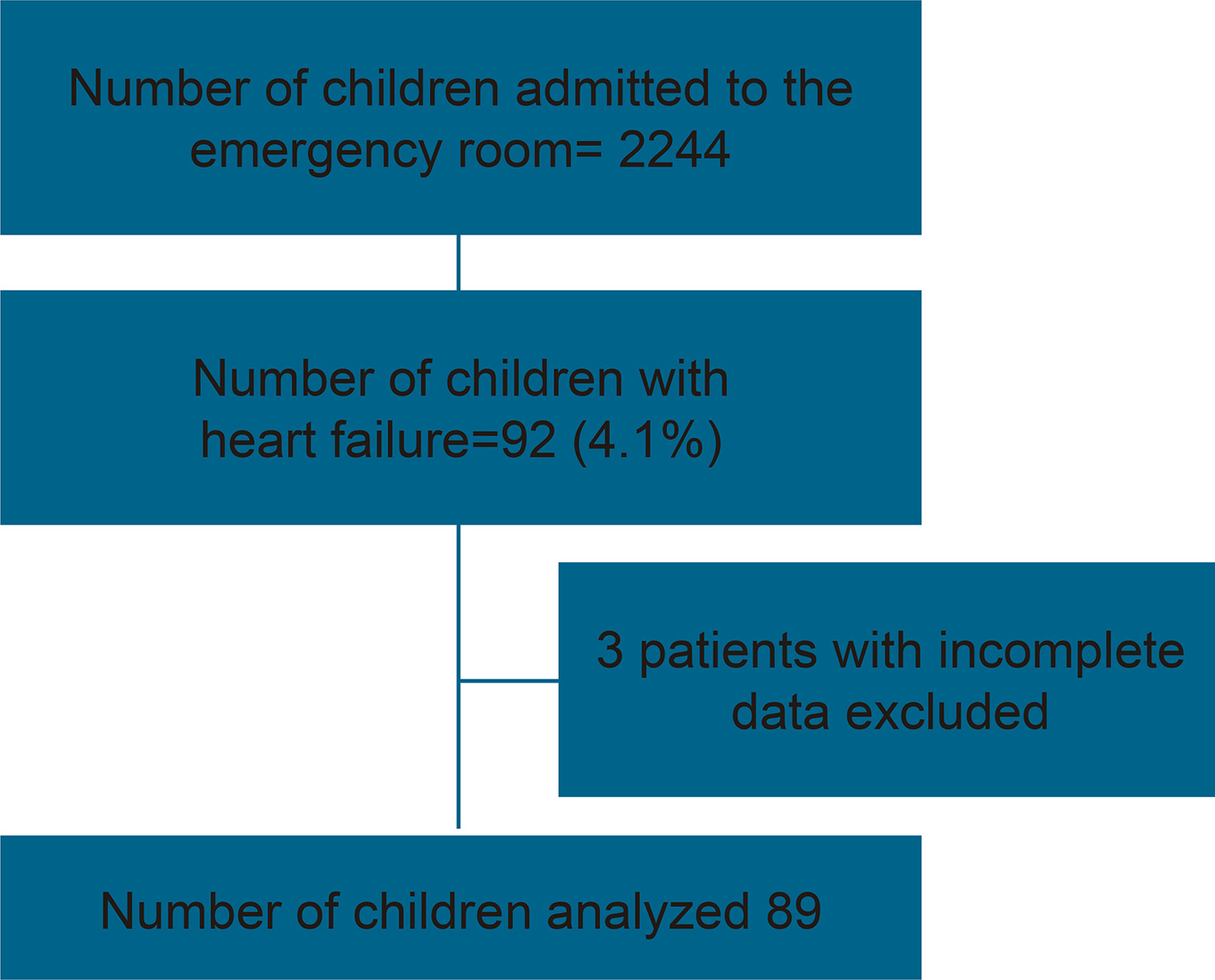
Ninety-two (4.1%) of 2,244 children admitted were in heart failure, Non-cardiac disorders [bronchopneumonia 32(36%), sepsis 21(24%), severe malaria 10(11%), sickle cell anaemia 8(9%) and tuberculosis 3(3%)] contributed to 74(83%) while congenital heart disease(CHD) was 15(17%). Seventy-four (83%) were discharged, 10(11%) died and 4(5%) left against medical advice. The median time to resolution of heart failure was significantly 24 hours longer for malnourished children than those with normal-nutritional status, 72Vs48hrs, log rank:0.001. Those with modified Ross score of >7 and sepsis were more likely to die, OR,8.8(95% CI,1.2 to 72.5,p = 0.02) and 3.9(95% CI,1.01 to 15.2;p =0.04). Age <2yrs(OR,3.1,CI,1.2 to 8.5,p = 0.02), and CHD (OR 3.6,95% CI,1.1 to 12,P=0.02) were associated with a higher likelihood of having a poor outcome. Each unit increase in weight for age Z score of 1, decreased the odds of having a poor outcome, OR,0.77 (95% CI,0.63 to 0.95)p=0.016.

Conclusion

Heart failure in our setting is predominantly caused by non-cardiac disorders. Modified Ross score of >7 and sepsis are risk factors for mortality in children with heart failure. Int J Cardiovasc Sci. 2020; [online].ahead print, PP.0-0

  • Child
  • Critical Care Outcomes
  • Emergency Service Hospital
  • Heart Failure
  • Mortality and Morbidity
  • Pediatric Emergency
Read Full Article
Creative Commons Attribution (CC BY) Creative Commons license
06/11/2020 DOI: 10.36660/ijcs.20190212
Figure 1A
IJCS
Case Report

Sgarbossa Criteria in Left Bundle Branch Block in a Hypertensive Emergency, a Case Report

Yaser Mohammed Hassanain El Sayed

Abstract

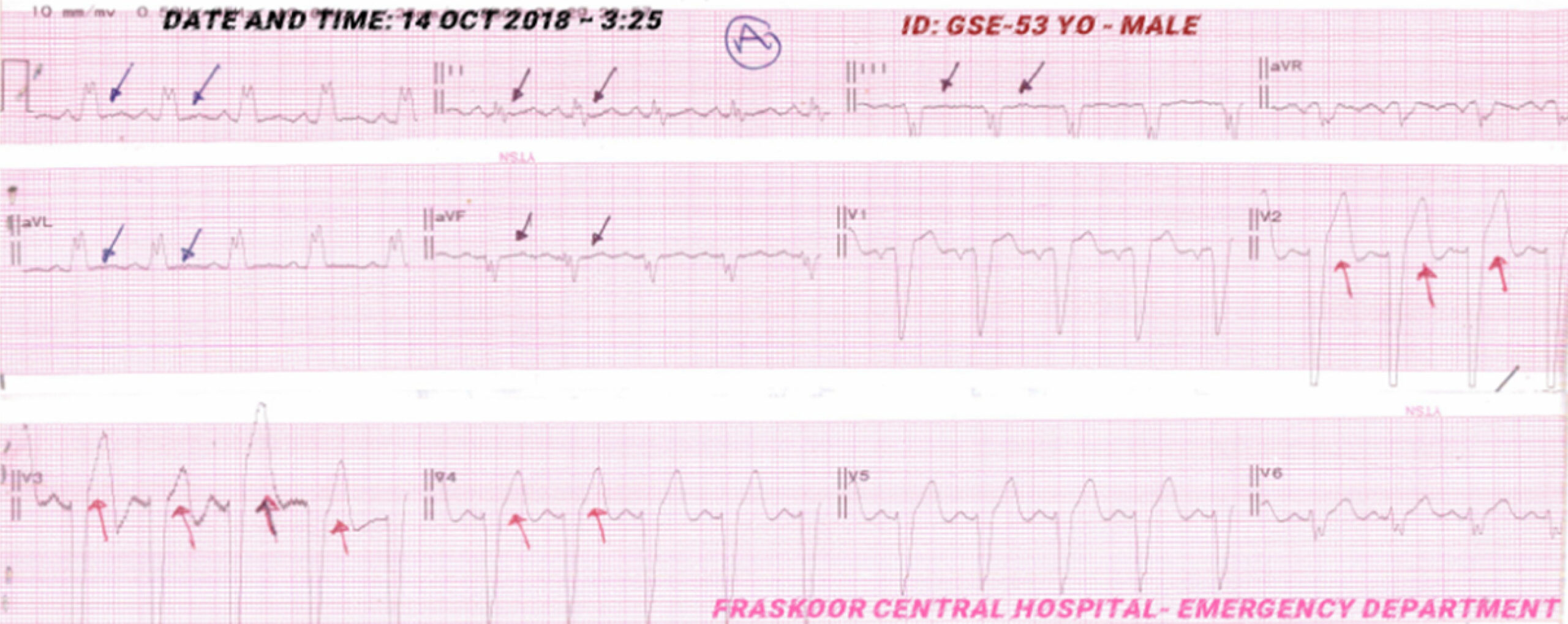
Left bundle branch block and hypertensive emergency are very common conditions in clinical cardiovascular and emergency practice. Hypertensive emergency encompasses a spectrum of clinical presentations in which uncontrolled blood pressure leads to progressive end-organ dysfunction. Suspected acute myocardial infarction in the setting of a left bundle branch block presents a unique diagnostic and therapeutic challenge to the clinician. The diagnosis is especially difficult due to electrocardiographic changes caused by altered ventricular depolarization. However, reports on the use of the Sgarbossa’s criteria during the management of hypertensive emergency are rare. My current case is a hypertensive emergency patient with acute chest pain and left bundle branch block. Sgarbossa’s criteria were initially very weak and, over time, became highly suggestive of acute ST-segment elevation myocardial infarction. Interestingly, chest pain increased as the Sgarbossa’s diagnostic criteria were met. Here, we present a case of developing ST-segment elevation myocardial infarction with left bundle branch block that is indicating for thrombolytic therapy. Thrombolytic therapy was strongly indicated because of a higher developing of Sgarbossa criteria scoring. Thus, the higher Sgarbossa criteria scoring in the case was the only indication for thrombolytic. Therefore, how did Sgarbossa criteria developing during the course of the case to indicating the need for thrombolytic therapy?

  • Bundle-Branch Block/complications
  • Coronary Occlusion/complications
  • Electrocardiography
  • Emergency Service Hospital
  • ST Elevation Myocardial Infarction/complications
Read Full Article
Creative Commons Attribution (CC BY) Creative Commons license
24/10/2019 DOI: 10.5935/2359-4802.20190071 Views 1
Figure 1
IJCS
Original Article

Implementation of an Acute Coronary Syndrome Simulation Training Strategy for Emergency Healthcare Professionals

Maíra Viana Rego Souza-Silva et al. Priscilla Fortes de Oliveira Passos Thais Ribeiro Lemos Bárbara Campos Abreu Marino … Thatiane Dantas Dias Geisiane Sousa Braga Machado Edson Alexandre Silva Carvalho Gabriel Almeida Silqueira Rocha Antonio Luiz Ribeiro Milena Soriano Marcolino

Abstract

Background:

The knowledge on the management of patients with acute coronary syndrome (ACS) is essential to reduce the gap between evidence and practice.

Objective:

To describe a simulation training strategy for emergency healthcare professionals and provide preliminary data on knowledge acquisition, learners’ confidence and prescription of medications after training.

Methods:

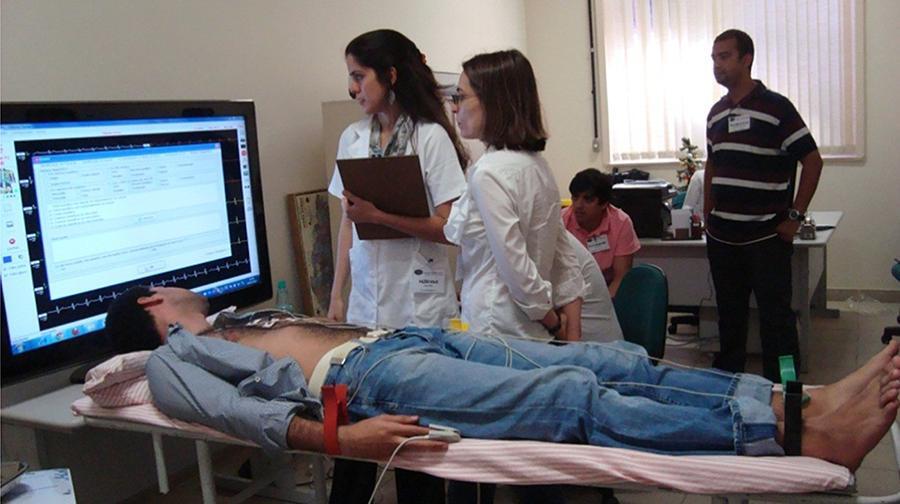
The training was part of the implementation of two myocardial infarction systems of care. It comprehended lectures and simulation-based learning using high and low-fidelity mannequins and actors. It was tested in two phases: the first one in Belo Horizonte and the second one in Montes Claros, both in the state of Minas Gerais. A test was applied before and after training to assess knowledge acquisition. Confidence to perform thrombolysis in ST-elevation myocardial infarction (STEMI) patients was assessed using a questionnaire, and the impact on medication prescription analyzed STEMI patients admitted to hospitals in Montes Claros.

Results:

In the first phase, 156 professionals answered both tests: 70% of them improved their results and the median number of right answers increased (6, interquartile range [IQR] 5-7; vs 7 ([IQR] 6-9; p < 0.05). In the second phase, 242 professionals answered both tests: 58% of the physicians and 83% of the nurses obtained better test scores. Participants referred a positive impact on their clinical practice, 95% reported feeling very secure when perform fibrinolysis after the training, and there was also an impact on medication prescription.

Conclusions:

There was an impact on the learners’ knowledge acquisition and confidence using our two-phase training model, with evidence of impact on performance.

  • Acute coronary syndrome
  • Emergency Service Hospital
  • Myocardial Infarction
  • Myocardial Reperfusion
  • Quality Indicators,Health Care
Read Full Article
Creative Commons Attribution (CC BY) Creative Commons license
21/01/2019 DOI: 10.5935/2359-4802.20180098 Views 1

How to cite this article

EndNote RIS

Electronic Document Format (Vancouver)

Onubogu U. Factors Predicting Heart Failure in Children Admitted to a Pediatric Emergency Ward in a Developing Country. International Journal of Cardiovascular Sciences 2020;33(6):673-85.

Electronic Document Format (ABNT)

Onubogu, Uchenna. Factors Predicting Heart Failure in Children Admitted to a Pediatric Emergency Ward in a Developing Country. International Journal of Cardiovascular Sciences, v. 33, n. 6, p. 673-685, Nov. 2020.

Electronic Document Format (APA)

Onubogu, U. (2020). Factors Predicting Heart Failure in Children Admitted to a Pediatric Emergency Ward in a Developing Country. International Journal of Cardiovascular Sciences, 33(6), 673-685.

Electronic Document Format (ISO)

Onubogu, Uchenna. Factors Predicting Heart Failure in Children Admitted to a Pediatric Emergency Ward in a Developing Country. International Journal of Cardiovascular Sciences [online]. 2020, vol. 33, n. 6, [cited 2026-10-14], pp. 673-685. Available from: <https://journals.cardiol.br/en/article/factors-predicting-heart-failure-in-children-admitted-to-a-pediatric-emergency-ward-in-a-developing-country/>. ISSN 2359-4802

EndNote RIS

Electronic Document Format (Vancouver)

Sayed YMHE. Sgarbossa Criteria in Left Bundle Branch Block in a Hypertensive Emergency, a Case Report. International Journal of Cardiovascular Sciences 2019;34(1):107-11.

Electronic Document Format (ABNT)

Sayed, Yaser Mohammed Hassanain El. Sgarbossa Criteria in Left Bundle Branch Block in a Hypertensive Emergency, a Case Report. International Journal of Cardiovascular Sciences, v. 34, n. 1, p. 107-111, Oct. 2019.

Electronic Document Format (APA)

Sayed, Y. M. H. E. (2019). Sgarbossa Criteria in Left Bundle Branch Block in a Hypertensive Emergency, a Case Report. International Journal of Cardiovascular Sciences, 34(1), 107-111.

Electronic Document Format (ISO)

Sayed, Yaser Mohammed Hassanain El. Sgarbossa Criteria in Left Bundle Branch Block in a Hypertensive Emergency, a Case Report. International Journal of Cardiovascular Sciences [online]. 2019, vol. 34, n. 1, [cited 2026-10-14], pp. 107-111. Available from: <https://journals.cardiol.br/en/article/sgarbossa-criteria-in-left-bundle-branch-block-in-a-hypertensive-emergency-a-case-report/>. ISSN 2359-4802

EndNote RIS

Electronic Document Format (Vancouver)

Souza-Silva MVR, Passos PFO, Lemos TR, Marino BCA, Dias TD, Machado GSB, Carvalho EAS, et al. Implementation of an Acute Coronary Syndrome Simulation Training Strategy for Emergency Healthcare Professionals. International Journal of Cardiovascular Sciences 2019;32(3):227-3.

Electronic Document Format (ABNT)

Souza-Silva, Maíra Viana Rego; Passos, Priscilla Fortes de Oliveira; Lemos, Thais Ribeiro; Marino, Bárbara Campos Abreu; Dias, Thatiane Dantas; Machado, Geisiane Sousa Braga; Carvalho, Edson Alexandre Silva; Rocha, Gabriel Almeida Silqueira; Ribeiro, Antonio Luiz; Marcolino, Milena Soriano. Implementation of an Acute Coronary Syndrome Simulation Training Strategy for Emergency Healthcare Professionals. International Journal of Cardiovascular Sciences, v. 32, n. 3, p. 227-237, Jan. 2019.

Electronic Document Format (APA)

Souza-Silva, M. V. R., Passos, P. F. O., Lemos, T. R., Marino, B. C. A., Dias, T. D., Machado, G. S. B., Carvalho, E. A. S., Rocha, G. A. S., Ribeiro, A. L., & Marcolino, M. S. (2019). Implementation of an Acute Coronary Syndrome Simulation Training Strategy for Emergency Healthcare Professionals. International Journal of Cardiovascular Sciences, 32(3), 227-237.

Electronic Document Format (ISO)

Souza-Silva, Maíra Viana Rego and Passos, Priscilla Fortes de Oliveira and Lemos, Thais Ribeiro and Marino, Bárbara Campos Abreu and Dias, Thatiane Dantas and Machado, Geisiane Sousa Braga and Carvalho, Edson Alexandre Silva and Rocha, Gabriel Almeida Silqueira and Ribeiro, Antonio Luiz and Marcolino, Milena Soriano. Implementation of an Acute Coronary Syndrome Simulation Training Strategy for Emergency Healthcare Professionals. International Journal of Cardiovascular Sciences [online]. 2019, vol. 32, n. 3, [cited 2026-10-14], pp. 227-237. Available from: <https://journals.cardiol.br/en/article/implementation-of-an-acute-coronary-syndrome-simulation-training-strategy-for-emergency-healthcare-professionals/>. ISSN 2359-4802

  • About ABC Family
  • Internal Regulation
  • Editorial Board
  • Brazilian Society of Cardiology (SBC)

Issues

SBC Guidelines

  • Videos
  • Podcasts
  • News