ABC Family Arquivos Brasileiros de Cardiologia International Journal of Cardiovascular Sciences ABC Heart Failure & Cardiomyopathy ABC Imagem Cardiovascular
Português English
ABC Family
Português English
  • About
    • About ABC Family
    • Internal Regulation
    • Editorial Board
    • Brazilian Society of Cardiology (SBC)
  • Issues
  • SBC Guidelines
  • Content
    • Videos
    • Podcasts
    • News
  • About
    • About ABC Family
    • Internal Regulation
    • Editorial Board
    • Brazilian Society of Cardiology (SBC)
  • Issues
  • SBC Guidelines
  • Content
    • Videos
    • Podcasts
    • News

ABC Family

  • ABC Family
  • Arquivos Brasileiros de Cardiologia
  • International Journal of Cardiovascular Sciences
  • ABC Heart Failure & Cardiomyopathy
  • ABC Imagem Cardiovascular
Search in

No content found.

Journals
Ordering
Article types
Others

  1. Home
  2. Keyword: Glomerular Filtration Rate
Central Illustration
ABCHF
Original Article

Unrecognized Chronic Kidney Disease and the Therapeutic Gap in Outpatients with Heart Failure and Reduced Ejection Fraction

Felipe Lopes Grillo et al. Julia Rosembach Bruscato Felipe Storm Ross Eduardo Zanetti Bergamaschi … Gabriel Della Torres Marinho Juliana Berndt Nunes Rosane Carolina Paes De Lira Lidia Ana Zytynski Moura

Abstract

Background

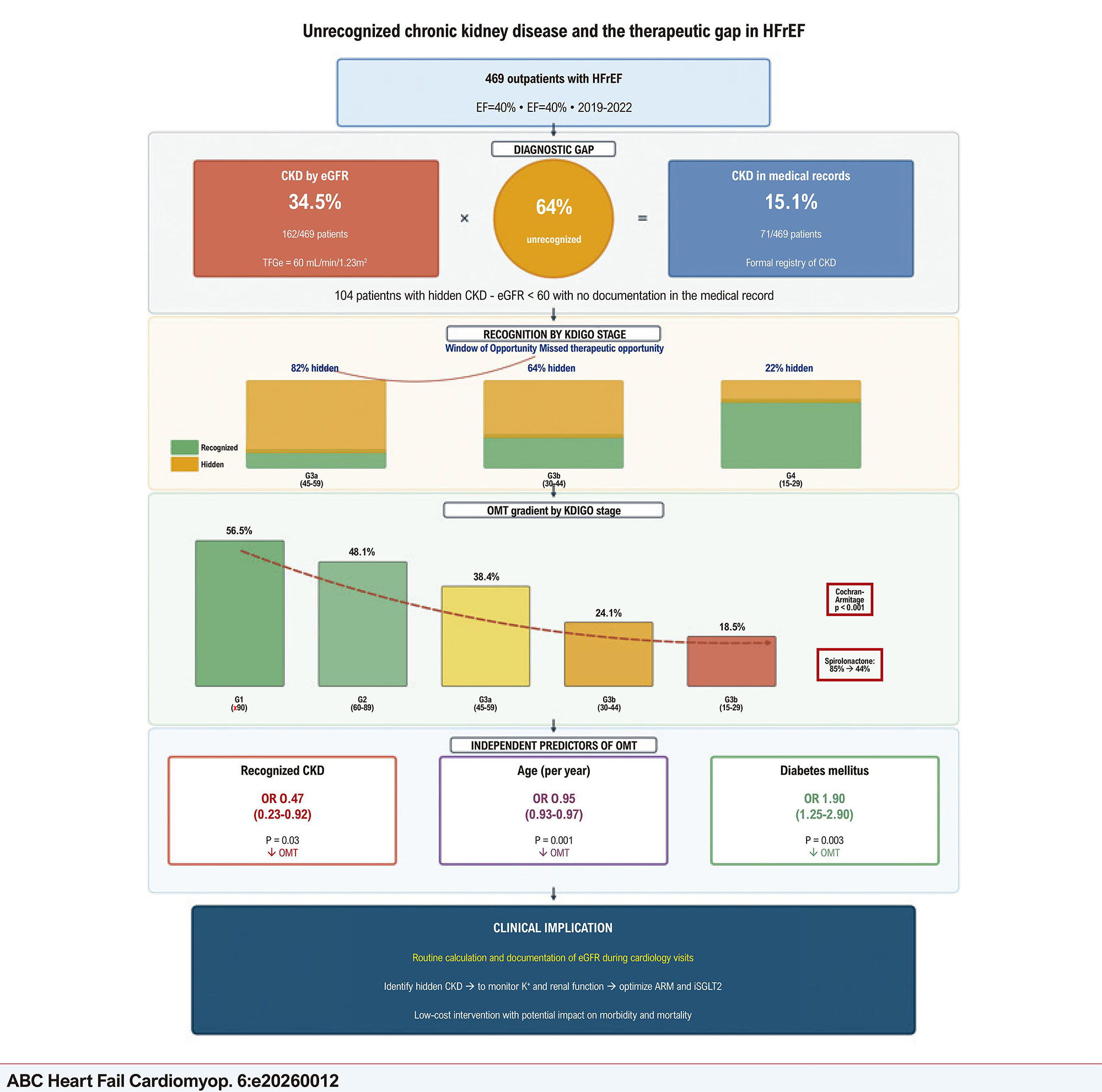
Chronic kidney disease (CKD) is common in heart failure with reduced ejection fraction (HFrEF), but its true prevalence may substantially exceed formal diagnosis, contributing to undertreatment with guideline-directed medical therapy (GDMT).

Objectives

To determine the prevalence of unrecognized CKD in an HFrEF outpatient clinic, compare optimized medical therapy (OMT) according to renal status and KDIGO stages, and identify independent predictors of OMT.

Methods

Analytical cross-sectional study including 469 patients with HFrEF (LVEF ≤ 40%) followed between 2019–2022 with calculable eGFR (CKD-EPI 2021). Classification: no CKD (eGFR ≥ 60; n = 307), hidden CKD (eGFR < 60 without documentation; n = 104), and recognized CKD (formal documentation; n = 58). OMT was defined as RAAS blockade + beta-blocker + MRA at ≥ 50% of target doses.

Results

CKD affected 34.5% by eGFR, but only 15.1% had documentation – 64% were hidden, predominantly G3a (82%) and G3b (64%). OMT followed a monotonic gradient across KDIGO stages: G1 56.5%, G2 48.1%, G3a 38.4%, G3b 24.1%, G4 18.5% (Cochran–Armitage p < 0.001). Spironolactone was the most affected therapy (84.7% vs. 60.3%; p < 0.001). In multivariable analysis, recognized CKD was associated with lower OMT (OR 0.47; 95% CI 0.23–0.92; p = 0.03), along with age (OR 0.95/year; p < 0.001), while diabetes was paradoxically associated with higher OMT (OR 1.90; p = 0.003).

Conclusion

Nearly two-thirds of CKD cases in HFrEF are unrecognized, concentrated in moderate stages where therapeutic benefit is greatest. Routine calculation of eGFR is a simple intervention to reduce this gap.
  • chronic renal insufficiency
  • Glomerular Filtration Rate
  • Heart Failure
  • Mineralocorticoid Receptor Antagonists
  • Therapeutics
Read Full Article
Creative Commons Attribution (CC BY) Creative Commons license
05/08/2026 DOI: 10.36660/abchf.20260012i Views 3
Comparison of Different Glomerular Filtration Rate Formulas in the Prediction of Coronary Artery Disease Severity and Extent
ABC
Original Article

Comparison of Different Glomerular Filtration Rate Formulas in the Prediction of Coronary Artery Disease Severity and Extent

Monica Verdoia et al. Alyssa Clemente Aurelio Malabaila Chantal Montini Andrea Rognoni

Abstract

Background

Chronic kidney disease (CKD) is an established risk factor for coronary artery disease (CAD), displaying a linear relationship with glomerular filtration rate (GFR). The prognostic role of the different formulas for the estimation of GFR is still debated.

Objective

To evaluate the impact of GFR calculation in the prediction of angiographically assessed CAD.

Methods

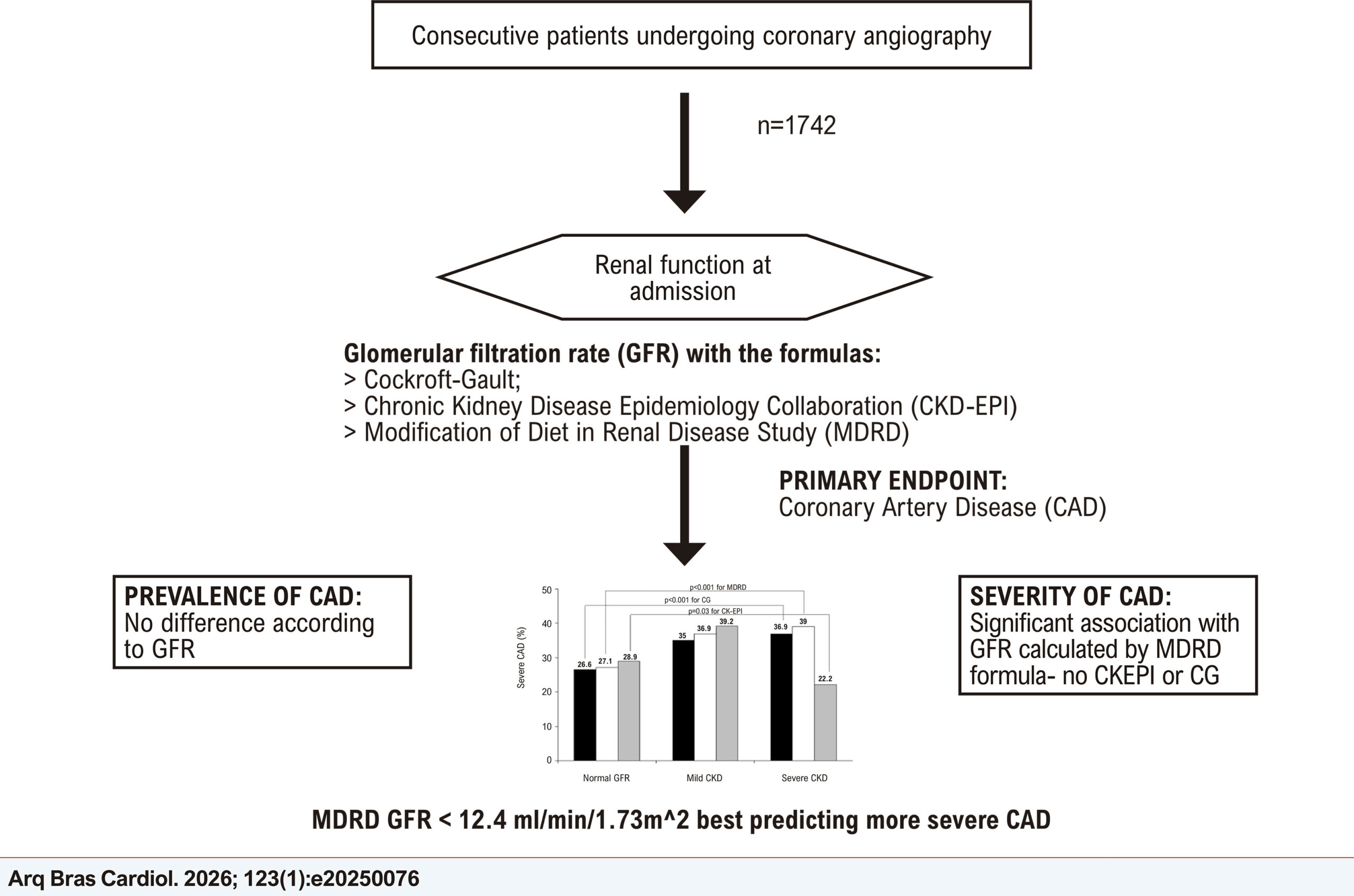
In consecutive patients undergoing coronary angiography, GFR was assessed at admission with the formulas Cockroft-Gault, Chronic Kidney Disease Epidemiology Collaboration (CKD-EPI), and Modification of Diet in Renal Disease Study (MDRD). A 2-sided p-value < 0.05 was considered statistically significant.

Results

Among 1742 patients, 79.8% displayed CAD. No difference in the mean values of GFR was observed in patients with and without CAD with the three different GFR formulas. We observed a significant association between severe CAD and GFR, by Cockcroft Gault (26.6% vs 35% vs 36.9%, p<0.001), MDRD (27.1% vs 36.9% vs 39%, p<0.001), and CKD-EPI (28.9% vs 39.2% vs 22.2%, p=0.03). In multivariate analysis, only MDRD remained statistically significant (adjusted OR[95%CI]= 1.27[1.01-1.59], p=0.04). In ROC curve analysis, we identified the value of 12.4 ml/min/1.73m^2 as the best predicting value for severe CAD with the MDRD formula. Higher rates of calcifications, restenosis, and chronic occlusion were observed for the Cockroft-Gault and MDRD formulas.

Conclusion

The present study showed a significant association between the extent of angiographically-defined CAD and GFR, estimated by the MDRD, but not for the Cockroft-Gault and CKD-EPI formulas. MDRD values below 12.4 ml/min/1.73m^2 best predicted more severe CAD.

  • Chronic Kidney Disease
  • Coronary Artery Disease
  • Glomerular Filtration Rate
Read Full Article
Creative Commons Attribution (CC BY) Creative Commons license
27/02/2026 DOI: 10.36660/abc.20250076i Views 6
Higher Arterial Stiffness Predicts Chronic Kidney Disease in Adults: The ELSA-Brasil Cohort Study
ABC
Original Article

Higher Arterial Stiffness Predicts Chronic Kidney Disease in Adults: The ELSA-Brasil Cohort Study

Júlia Cândido et al. Lidyane do Valle Camelo Luisa Brant Roberto Sá Cunha … José Geraldo Mill Sandhi Maria Barreto

Abstract

Background

Arterial stiffening can directly affect the kidneys, which are passively perfused by a high flow. However, whether the relation between arterial stiffness and renal function depends on diabetes and hypertension conditions, is a matter of debate.

Objective

To investigate the relationship between arterial stiffening by carotid-to-femoral pulse wave velocity (cfPWV) and chronic kidney disease (CKD) incidence in individuals and verify whether this association is present in individuals without hypertension and diabetes.

Methods

A longitudinal study of 11,647 participants of the ELSA-Brasil followed up for four years (2008/10-2012/14). Baseline cfPWV was grouped per quartile, according to sex-specific cut-offs. Presence of CKD was ascertained by glomerular filtration rate (eGFR-CKD-EPI) < 60 ml/min/1.73 m2 and/or albumin-to-creatinine ratio ≥ 30 mg/g. Logistic regression models were run for the whole cohort and a subsample free from hypertension and diabetes at baseline, after adjustment for age, sex, race, schooling, smoking, cholesterol/HDL ratio, body mass index, diabetes, use of antihypertensive, systolic blood pressure, heart rate, and cardiovascular disease. Statistical significance was set at 5%.

Results

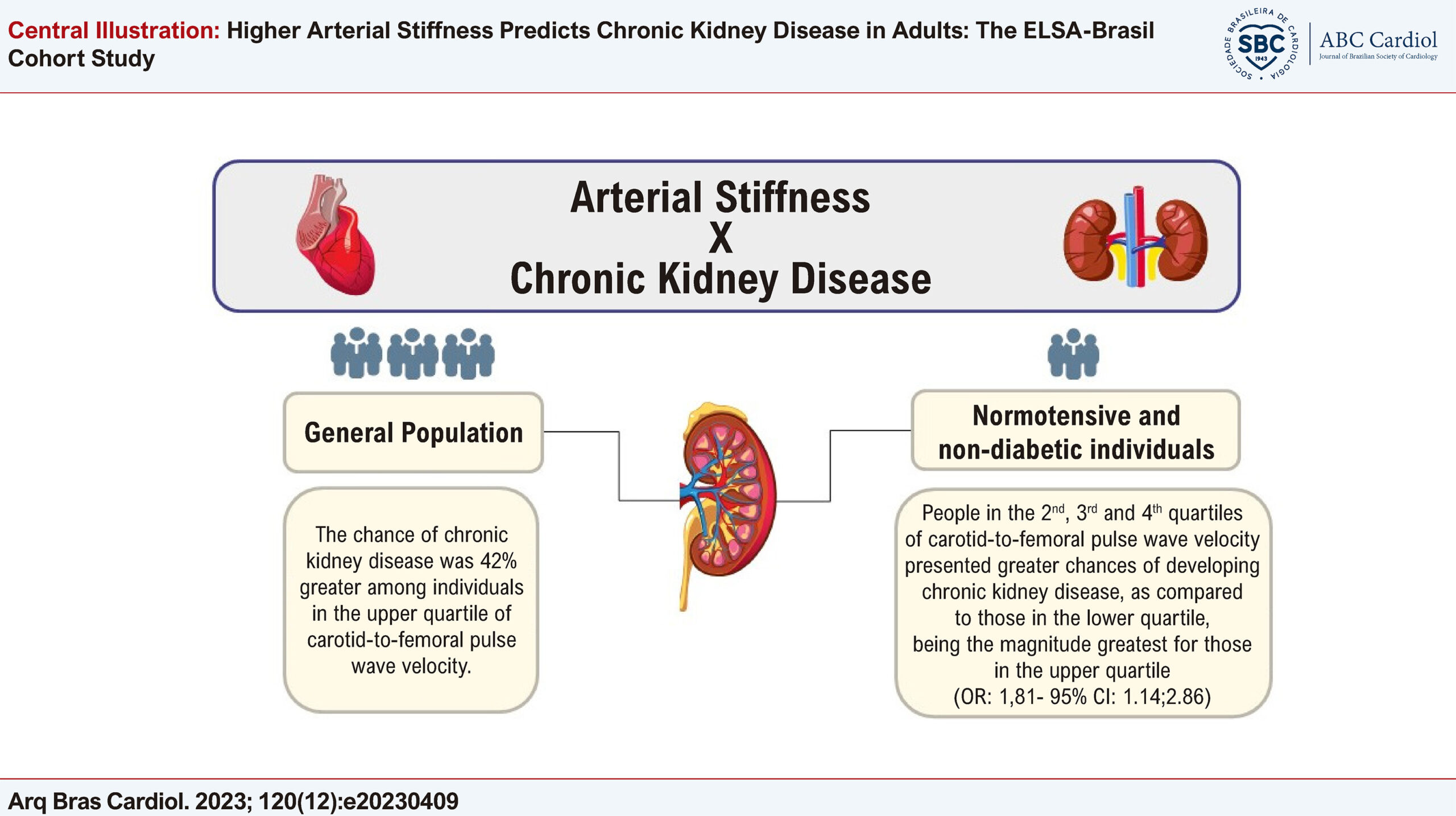
The chance of CKD was 42% (CI 95%: 1.05;1.92) greater among individuals in the upper quartile of cfPWV. Among normotensive, non-diabetic participants, individuals in the 2nd, 3rd, and 4th quartiles of cfPWV presented greater chances of developing CKD, as compared to those in the lower quartile, and the magnitude of this association was the greatest for those in the upper quartile (OR: 1.81 CI 95%: 1.14;2.86).

Conclusion

Higher cfPWV increased the chances of CKD and suggests that this effect is even greater in individuals without diabetes and hypertension.

  • Arterial Stiffness
  • Chronic Kidney Disease
  • Glomerular Filtration Rate
Read Full Article
Creative Commons Attribution (CC BY) Creative Commons license
04/03/2024 DOI: 10.36660/abc.20230409
ABC
Editorial

Cystatin C as a Candidate Biomarker of Cardiovascular Outcomes: Too Near, but too Far from Reality

Luiz Sérgio F. de Carvalho et al. Thiago Quinaglia AC Silva Otávio Rizzi Coelho-Filho

While the development of novel risk factors for cardiovascular risk assessment is necessary to improve risk stratification, proving its clinical value on top of traditional risk factors is routinely challenging.– Besides all the innovative and straightforward biomarker research published in the last decades, only very few markers of cardiovascular risk have shown clinical significance., Among many of them, cystatin C has emerged some years ago as a candidate for improving cardiovascular risk stratification.

In the Cardiovascular Health Study (CHS), a community-based and longitudinal study with over 4,600 elderly individuals, cystatin C has shown to predict cardiovascular outcomes. As compared with the lowest quintile, the highest quintile of cystatin C was associated with a significantly increased risk of death from cardiovascular causes (hazard ratio [HR] 2.27 [1.73 to 2.97]), myocardial infarction (HR 1.48 [1.08 to 2.02]), and stroke (HR 1.47 [1.09 to 1.96]) after multivariate adjustment. However, cystatin C is typically known as a marker of renal function, being roughly correlated with glomerular filtration rate in early stages of kidney diseases., Reasonably, since glomerular function is a strong surrogate marker of cardiovascular disease, it suggests an obvious association between cystatin C and cardiovascular outcomes. A mechanism to avoid the impact of this inexorable bias was to study only individuals with normal kidney function. Yet, additional studies have shown inconsistent magnitudes of effect between cystatin C and cardiovascular outcomes.

[…]

  • Atherosclerosis
  • Biomarkers
  • Cardiovascular Diseases
  • Cystatin C
  • Glomerular Filtration Rate
Read Full Article
Creative Commons Attribution (CC BY) Creative Commons license
01/12/2018 DOI: 10.5935/abc.20180226
Effect of levosimendan in patients with severe systolic heart failure and worsening renal function
ABC
Artigo Original

Effect of levosimendan in patients with severe systolic heart failure and worsening renal function

Ali Zorlu et al. Hasan Yücel Osman Can Yontar Oguz Karahan … Izzet Tandogan Nurkay Katrancioglu Mehmet Birhan Yilmaz

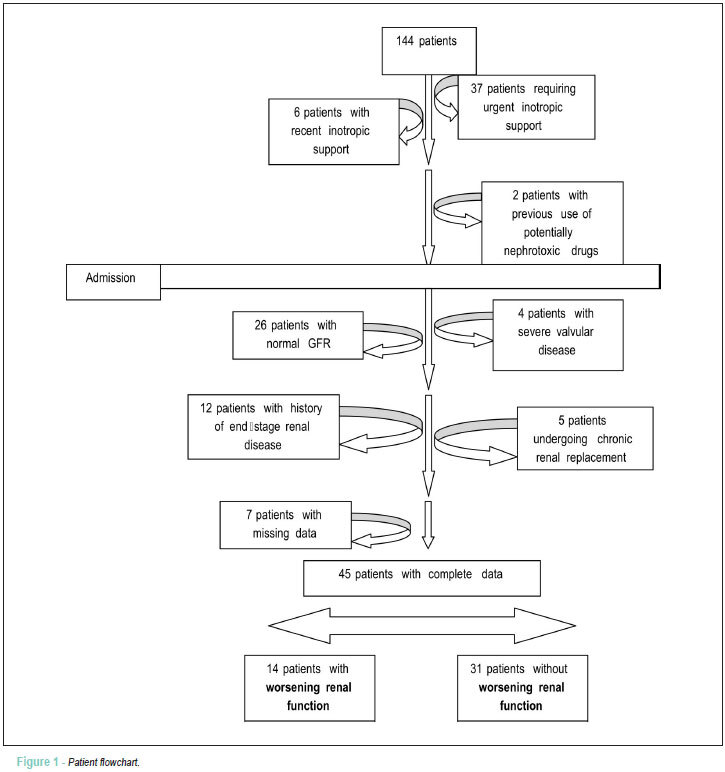
BACKGROUND: Levosimendan, a calcium sensitizer, increases the sensitivity of the heart to calcium, thus increasing myocardial contractility without a rise in intracellular calcium. It was recently shown that levosimendan is beneficial in improving renal function. However, it remains to be established that the beneficial effect is differentially related to renal status during index event. OBJECTIVE: The purpose of the current study was to determine whether levosimendan could improve renal outcome in acute decompensated heart failure patients with and without worsening renal function. METHODS: Forty-five consecutive patients who had a reduced glomerular filtration rate and had at least two consecutive data regarding renal function prior to administration of levosimendan were enrolled in the study. Patients were classified into two groups as those with and without worsening renal function based on an increase in serum creatinine >0.3 mg/dL. RESULTS: A significant improvement was noted in renal function in patients with worsening renal function (serum creatinine from 1.4±0.16 to 1.21±0.23 mg/dL, p=0.001 and glomerular filtration rate level from 48.9±15 to 59.3±21.8 mL/min/m², p=0.011), while there was no significant improvement in those without worsening renal function (serum creatinine from 1.29±0.33 to 1.37±0.66 mg/dL, p=0.240 and glomerular filtration rate level from 53.7±17.6 to 52.9±21.4 mL/min/m², p=0.850). CONCLUSION: Levosimendan appears to provide a renal-enhancing effect in patients with severe, acute decompensated systolic heart failure and worsening renal function. Consideration of this differential effect might help obtain beneficial renal outcomes. (Arq Bras Cardiol. 2012; [online].ahead print, PP.0-0)

  • Creatinine
  • Glomerular Filtration Rate
  • Heart Failure
  • levosimendan
  • renal-enhancing effect
  • worsening renal function
Read Full Article
Creative Commons Attribution (CC BY) Creative Commons license
29/05/2012 DOI: 10.1590/S0066-782X2012005000048 Views 1
ABC
Artigo Original

Hypertension prevalence and risk factors in a Brazilian urban population

José Paulo Cipullo et al. José Fernando Vilela Martin Luiz Alberto de Souza Ciorlia Maria Regina Pereira de Godoy … João Castilho Cação Afonso Augusto Carvalho Loureiro Cláudia Bernardi Cesarino Antônio C Carvalho José Antônio Cordeiro Emmanuel de Almeida Burdmann

BACKGROUND: The available studies have not fully analyzed the several factors involved in the genesis of hypertension (HT), especially the association among blood pressure, urinary sodium excretion and renal dysfunction. OBJECTIVE: To assess the HT prevalence and risk factors in different age groups in a representative sample of an urban Brazilian population. METHODS: The studied population (1717 adult individuals) was evaluated by age groups: 18 to 39 years; 40 to 49; 50 to 59; 60 to 69 and > 70 years. Quantitative variable means and categorical variables of the hypertensive and normotensive groups were compared. RESULTS: The adjusted overall prevalence of HT was 25.23%. The prevalence increased with age and was higher in individuals with low educational level. Increased body mass index and abdominal waist were positively related to a higher prevalence of HT. There was a significant positive association between HT and urinary sodium excretion. Hypertensive individuals presented higher frequency of renal dysfunction, defined as measured creatinine clearance <60 ml/min/m². The prevalence of diabetes mellitus was 5.6% in the overall population and 14.5% in hypertensive individuals. Hypertension was a known condition to 74.4% of the hypertensive individuals. Among treated hypertensive individuals, 52.4% achieved controlled blood pressure and only 34.3% of the overall hypertensive patients (treated or not) had blood pressure controlled. CONCLUSION: This population-based is unique by gathering different demographic, epidemiologic and risk factors involved in the genesis of hypertension in a single sample assessment with a population calculation, which might be extrapolated to other hypertensive populations.

  • age
  • epidemiology and biostatistics
  • Glomerular Filtration Rate
  • Hypertension
  • Risk Factors
Read Full Article
Creative Commons Attribution (CC BY) Creative Commons license
26/03/2010 DOI: 10.1590/S0066-782X2010005000014 Views 1

How to cite this article

EndNote RIS

Electronic Document Format (Vancouver)

Grillo FL, Bruscato JR, Ross FS, Bergamaschi EZ, Marinho GDT, Nunes JB, Lira RCPD, et al. Unrecognized Chronic Kidney Disease and the Therapeutic Gap in Outpatients with Heart Failure and Reduced Ejection Fraction. ABC Heart Fail Cardiomyop 2026;6:e20260012.

Electronic Document Format (ABNT)

Grillo, Felipe Lopes; Bruscato, Julia Rosembach; Ross, Felipe Storm; Bergamaschi, Eduardo Zanetti; Marinho, Gabriel Della Torres; Nunes, Juliana Berndt; Lira, Rosane Carolina Paes De; Moura, Lidia Ana Zytynski. Unrecognized Chronic Kidney Disease and the Therapeutic Gap in Outpatients with Heart Failure and Reduced Ejection Fraction. ABC Heart Fail Cardiomyop, v. 6, e20260012, Aug. 2026.

Electronic Document Format (APA)

Grillo, F. L., Bruscato, J. R., Ross, F. S., Bergamaschi, E. Z., Marinho, G. D. T., Nunes, J. B., Lira, R. C. P. D., & Moura, L. A. Z. (2026). Unrecognized Chronic Kidney Disease and the Therapeutic Gap in Outpatients with Heart Failure and Reduced Ejection Fraction. ABC Heart Fail Cardiomyop, 6, e20260012.

Electronic Document Format (ISO)

Grillo, Felipe Lopes and Bruscato, Julia Rosembach and Ross, Felipe Storm and Bergamaschi, Eduardo Zanetti and Marinho, Gabriel Della Torres and Nunes, Juliana Berndt and Lira, Rosane Carolina Paes De and Moura, Lidia Ana Zytynski. Unrecognized Chronic Kidney Disease and the Therapeutic Gap in Outpatients with Heart Failure and Reduced Ejection Fraction. ABC Heart Fail Cardiomyop [online]. 2026, vol. 6, [cited 2026-10-14], e20260012. Available from: <https://journals.cardiol.br/en/article/unrecognized-chronic-kidney-disease-and-the-therapeutic-gap-in-outpatients-with-heart-failure-and-reduced-ejection-fraction/>

EndNote RIS

Electronic Document Format (Vancouver)

Verdoia M, Clemente A, Malabaila A, Montini C, Rognoni A. Comparison of Different Glomerular Filtration Rate Formulas in the Prediction of Coronary Artery Disease Severity and Extent. Arquivos Brasileiros de Cardiologia 2026;123(1):e20250076.

Electronic Document Format (ABNT)

Verdoia, Monica; Clemente, Alyssa; Malabaila, Aurelio; Montini, Chantal; Rognoni, Andrea. Comparison of Different Glomerular Filtration Rate Formulas in the Prediction of Coronary Artery Disease Severity and Extent. Arquivos Brasileiros de Cardiologia, v. 123, n. 1, e20250076, Feb. 2026.

Electronic Document Format (APA)

Verdoia, M., Clemente, A., Malabaila, A., Montini, C., & Rognoni, A. (2026). Comparison of Different Glomerular Filtration Rate Formulas in the Prediction of Coronary Artery Disease Severity and Extent. Arquivos Brasileiros de Cardiologia, 123(1), e20250076.

Electronic Document Format (ISO)

Verdoia, Monica and Clemente, Alyssa and Malabaila, Aurelio and Montini, Chantal and Rognoni, Andrea. Comparison of Different Glomerular Filtration Rate Formulas in the Prediction of Coronary Artery Disease Severity and Extent. Arquivos Brasileiros de Cardiologia [online]. 2026, vol. 123, n. 1, [cited 2026-10-14], e20250076. Available from: <https://journals.cardiol.br/en/article/comparison-of-different-glomerular-filtration-rate-formulas-in-the-prediction-of-coronary-artery-disease-severity-and-extent/>. ISSN 0066-782X

EndNote RIS

Electronic Document Format (Vancouver)

Cândido J, Camelo LV, Brant L, Cunha RS, Mill JG, Barreto SM. Higher Arterial Stiffness Predicts Chronic Kidney Disease in Adults: The ELSA-Brasil Cohort Study. Arquivos Brasileiros de Cardiologia 2024;120(12):e20230409.

Electronic Document Format (ABNT)

Cândido, Júlia; Camelo, Lidyane do Valle; Brant, Luisa; Cunha, Roberto Sá; Mill, José Geraldo; Barreto, Sandhi Maria. Higher Arterial Stiffness Predicts Chronic Kidney Disease in Adults: The ELSA-Brasil Cohort Study. Arquivos Brasileiros de Cardiologia, v. 120, n. 12, e20230409, Mar. 2024.

Electronic Document Format (APA)

Cândido, J., Camelo, L. V., Brant, L., Cunha, R. S., Mill, J. G., & Barreto, S. M. (2024). Higher Arterial Stiffness Predicts Chronic Kidney Disease in Adults: The ELSA-Brasil Cohort Study. Arquivos Brasileiros de Cardiologia, 120(12), e20230409.

Electronic Document Format (ISO)

Cândido, Júlia and Camelo, Lidyane do Valle and Brant, Luisa and Cunha, Roberto Sá and Mill, José Geraldo and Barreto, Sandhi Maria. Higher Arterial Stiffness Predicts Chronic Kidney Disease in Adults: The ELSA-Brasil Cohort Study. Arquivos Brasileiros de Cardiologia [online]. 2024, vol. 120, n. 12, [cited 2026-10-14], e20230409. Available from: <https://journals.cardiol.br/en/article/higher-arterial-stiffness-predicts-chronic-kidney-disease-in-adults-the-elsa-brasil-cohort-study/>. ISSN 0066-782X

EndNote RIS

Electronic Document Format (Vancouver)

Carvalho LSF, Silva TQA, Coelho-Filho OR. Cystatin C as a Candidate Biomarker of Cardiovascular Outcomes: Too Near, but too Far from Reality. Arquivos Brasileiros de Cardiologia 2018;111(6):808-9.

Electronic Document Format (ABNT)

Carvalho, Luiz Sérgio F. de; Silva, Thiago Quinaglia AC; Coelho-Filho, Otávio Rizzi. Cystatin C as a Candidate Biomarker of Cardiovascular Outcomes: Too Near, but too Far from Reality. Arquivos Brasileiros de Cardiologia, v. 111, n. 6, p. 808-809, Nov. 2018.

Electronic Document Format (APA)

Carvalho, L. S. F. , Silva, T. Q. A., & Coelho-Filho, O. R. (2018). Cystatin C as a Candidate Biomarker of Cardiovascular Outcomes: Too Near, but too Far from Reality. Arquivos Brasileiros de Cardiologia, 111(6), 808-809.

Electronic Document Format (ISO)

Carvalho, Luiz Sérgio F. de and Silva, Thiago Quinaglia AC and Coelho-Filho, Otávio Rizzi. Cystatin C as a Candidate Biomarker of Cardiovascular Outcomes: Too Near, but too Far from Reality. Arquivos Brasileiros de Cardiologia [online]. 2018, vol. 111, n. 6, [cited 2026-10-14], pp. 808-809. Available from: <https://journals.cardiol.br/en/article/cystatin-c-as-a-candidate-biomarker-of-cardiovascular-outcomes-too-near-but-too-far-from-reality/>. ISSN 0066-782X

EndNote RIS

Electronic Document Format (Vancouver)

Zorlu A, Yücel H, Yontar OC, Karahan O, Tandogan I, Katrancioglu N, Yilmaz MB, et al. Effect of levosimendan in patients with severe systolic heart failure and worsening renal function. Arquivos Brasileiros de Cardiologia 2012;98(6):537-43.

Electronic Document Format (ABNT)

Zorlu, Ali; Yücel, Hasan; Yontar, Osman Can; Karahan, Oguz; Tandogan, Izzet; Katrancioglu, Nurkay; Yilmaz, Mehmet Birhan. Effect of levosimendan in patients with severe systolic heart failure and worsening renal function. Arquivos Brasileiros de Cardiologia, v. 98, n. 6, p. 537-543, May. 2012.

Electronic Document Format (APA)

Zorlu, A., Yücel, H., Yontar, O. C., Karahan, O., Tandogan, I., Katrancioglu, N., & Yilmaz, M. B. (2012). Effect of levosimendan in patients with severe systolic heart failure and worsening renal function. Arquivos Brasileiros de Cardiologia, 98(6), 537-543.

Electronic Document Format (ISO)

Zorlu, Ali and Yücel, Hasan and Yontar, Osman Can and Karahan, Oguz and Tandogan, Izzet and Katrancioglu, Nurkay and Yilmaz, Mehmet Birhan. Effect of levosimendan in patients with severe systolic heart failure and worsening renal function. Arquivos Brasileiros de Cardiologia [online]. 2012, vol. 98, n. 6, [cited 2026-10-14], pp. 537-543. Available from: <https://journals.cardiol.br/en/article/effect-of-levosimendan-in-patients-with-severe-systolic-heart-failure-and-worsening-renal-function/>. ISSN 0066-782X

EndNote RIS

Electronic Document Format (Vancouver)

Cipullo JP, Martin JFV, Ciorlia LAS, Godoy MRP, Cação JC, Loureiro AAC, Cesarino CB, et al. Hypertension prevalence and risk factors in a Brazilian urban population. Arquivos Brasileiros de Cardiologia 2010;94(4):519-26.

Electronic Document Format (ABNT)

Cipullo, José Paulo; Martin, José Fernando Vilela; Ciorlia, Luiz Alberto de Souza; Godoy, Maria Regina Pereira de; Cação, João Castilho; Loureiro, Afonso Augusto Carvalho; Cesarino, Cláudia Bernardi; Carvalho, Antônio C; Cordeiro, José Antônio; Burdmann, Emmanuel de Almeida. Hypertension prevalence and risk factors in a Brazilian urban population. Arquivos Brasileiros de Cardiologia, v. 94, n. 4, p. 519-526, Mar. 2010.

Electronic Document Format (APA)

Cipullo, J. P., Martin, J. F. V., Ciorlia, L. A. S., Godoy, M. R. P. , Cação, J. C., Loureiro, A. A. C., Cesarino, C. B., Carvalho, A. C., Cordeiro, J. A., & Burdmann, E. A. (2010). Hypertension prevalence and risk factors in a Brazilian urban population. Arquivos Brasileiros de Cardiologia, 94(4), 519-526.

Electronic Document Format (ISO)

Cipullo, José Paulo and Martin, José Fernando Vilela and Ciorlia, Luiz Alberto de Souza and Godoy, Maria Regina Pereira de and Cação, João Castilho and Loureiro, Afonso Augusto Carvalho and Cesarino, Cláudia Bernardi and Carvalho, Antônio C and Cordeiro, José Antônio and Burdmann, Emmanuel de Almeida. Hypertension prevalence and risk factors in a Brazilian urban population. Arquivos Brasileiros de Cardiologia [online]. 2010, vol. 94, n. 4, [cited 2026-10-14], pp. 519-526. Available from: <https://journals.cardiol.br/en/article/hypertension-prevalence-and-risk-factors-in-a-brazilian-urban-population/>. ISSN 0066-782X

  • About ABC Family
  • Internal Regulation
  • Editorial Board
  • Brazilian Society of Cardiology (SBC)

Issues

SBC Guidelines

  • Videos
  • Podcasts
  • News