Comparison of Different Glomerular Filtration Rate Formulas in the Prediction of Coronary Artery Disease Severity and Extent
Abstract
Background
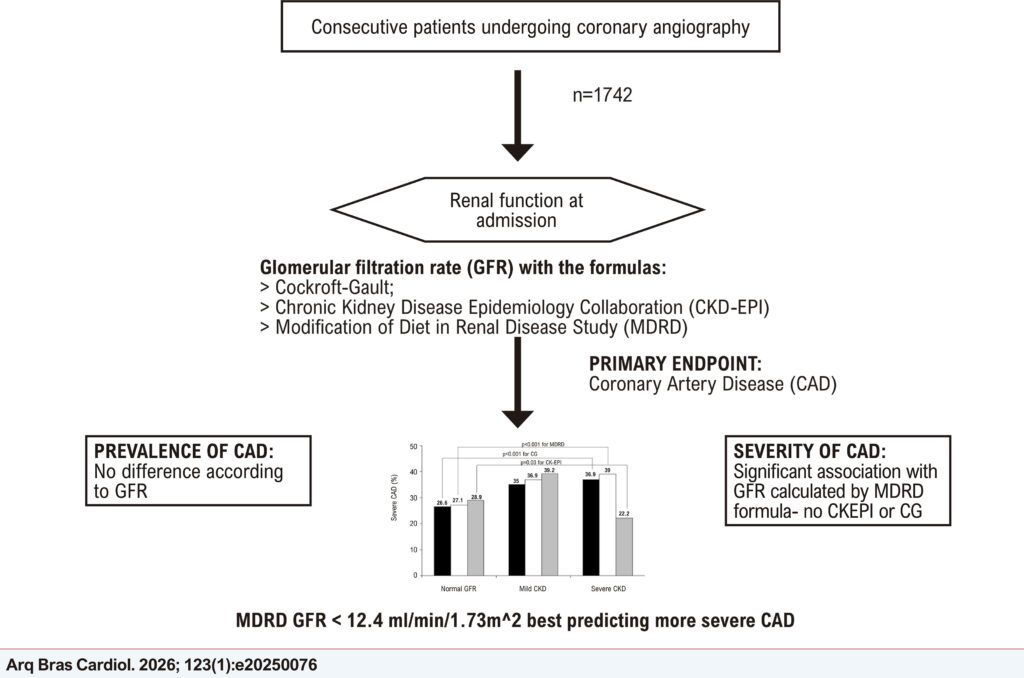
Chronic kidney disease (CKD) is an established risk factor for coronary artery disease (CAD), displaying a linear relationship with glomerular filtration rate (GFR). The prognostic role of the different formulas for the estimation of GFR is still debated.
Objective
To evaluate the impact of GFR calculation in the prediction of angiographically assessed CAD.
Methods
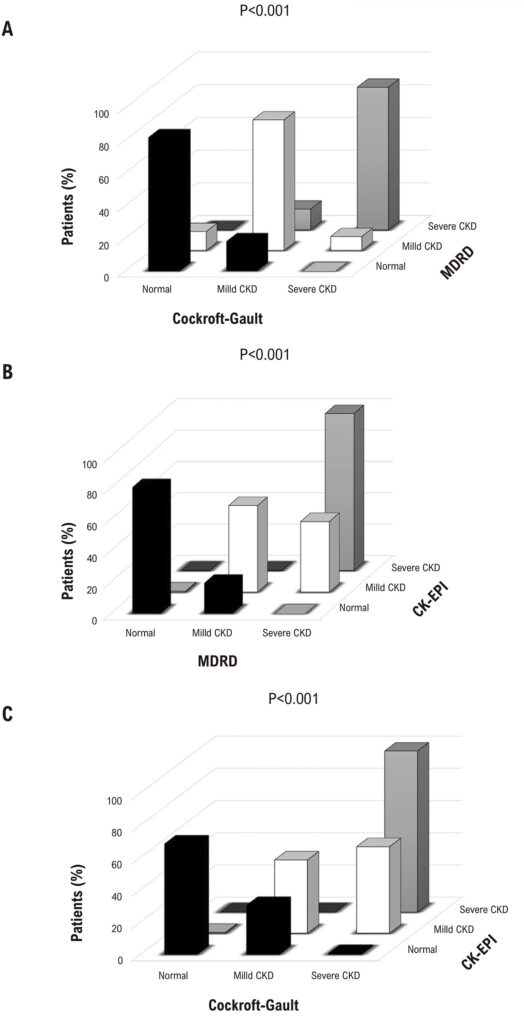
In consecutive patients undergoing coronary angiography, GFR was assessed at admission with the formulas Cockroft-Gault, Chronic Kidney Disease Epidemiology Collaboration (CKD-EPI), and Modification of Diet in Renal Disease Study (MDRD). A 2-sided p-value < 0.05 was considered statistically significant.
Results
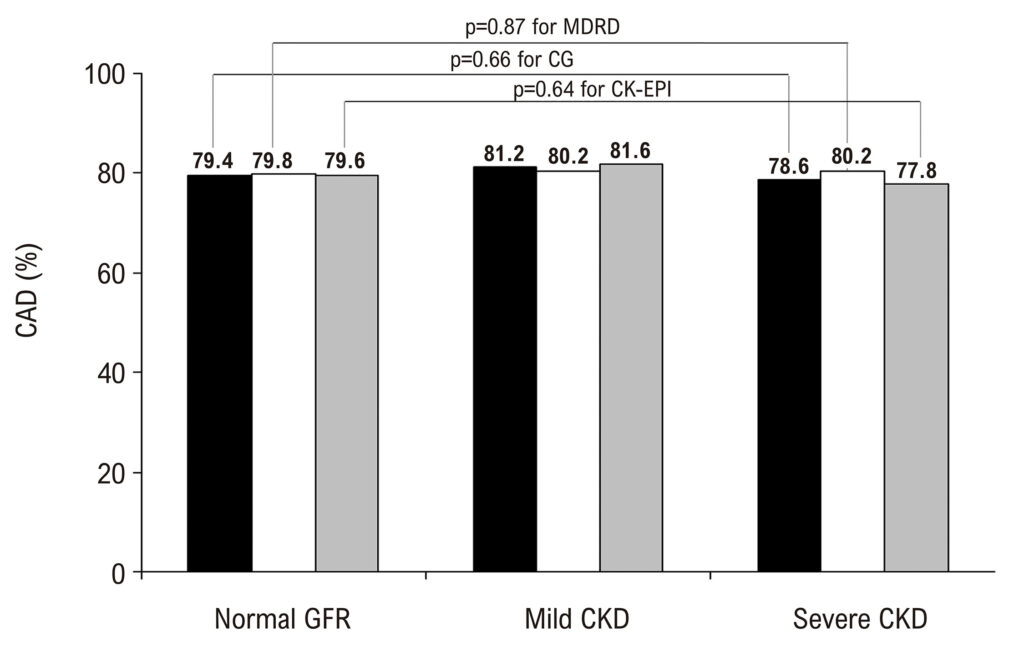
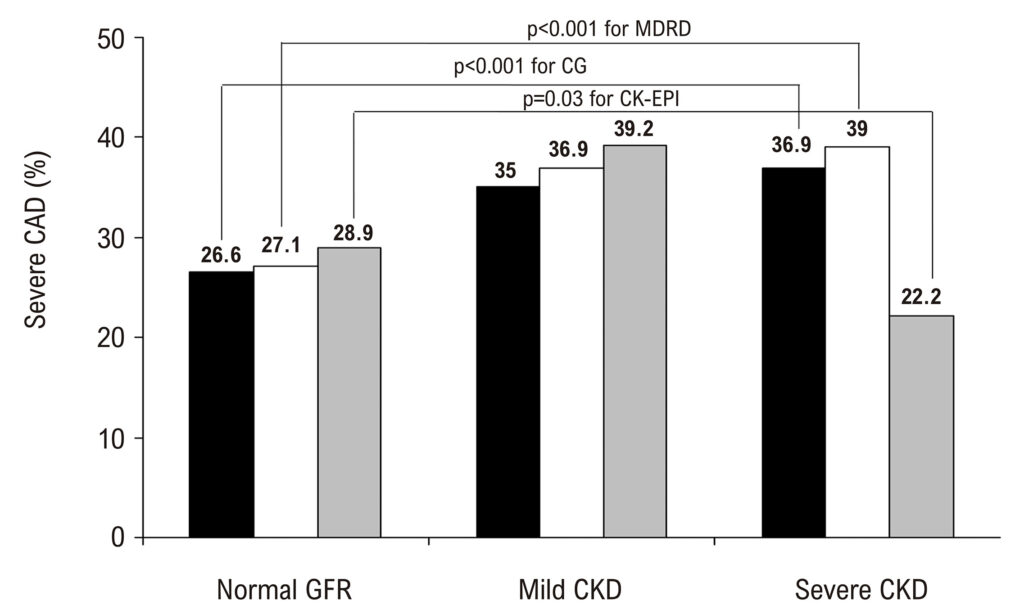
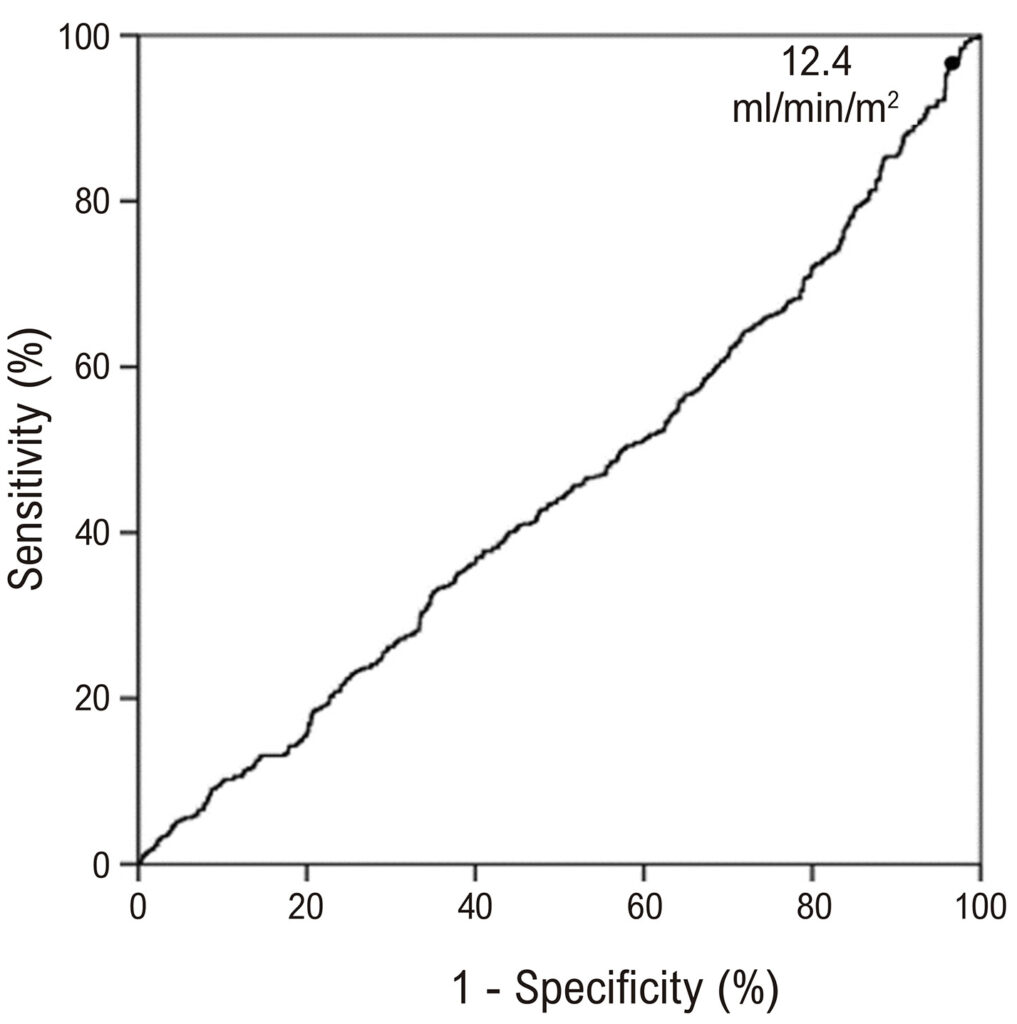
Among 1742 patients, 79.8% displayed CAD. No difference in the mean values of GFR was observed in patients with and without CAD with the three different GFR formulas. We observed a significant association between severe CAD and GFR, by Cockcroft Gault (26.6% vs 35% vs 36.9%, p<0.001), MDRD (27.1% vs 36.9% vs 39%, p<0.001), and CKD-EPI (28.9% vs 39.2% vs 22.2%, p=0.03). In multivariate analysis, only MDRD remained statistically significant (adjusted OR[95%CI]= 1.27[1.01-1.59], p=0.04). In ROC curve analysis, we identified the value of 12.4 ml/min/1.73m^2 as the best predicting value for severe CAD with the MDRD formula. Higher rates of calcifications, restenosis, and chronic occlusion were observed for the Cockroft-Gault and MDRD formulas.
Conclusion
The present study showed a significant association between the extent of angiographically-defined CAD and GFR, estimated by the MDRD, but not for the Cockroft-Gault and CKD-EPI formulas. MDRD values below 12.4 ml/min/1.73m^2 best predicted more severe CAD.
Images
Image gallery fullscreen viewer
Comments are moderated by the editorial team before publication. Discussions should be evidence-based and use scientific language. Conflicts of interest should be declared.