| ABCHF
ABC Family Arquivos Brasileiros de Cardiologia International Journal of Cardiovascular Sciences ABC Heart Failure & Cardiomyopathy ABC Imagem Cardiovascular
Português English
ABC Family | ABCHF
Português English
  • About
    • About the Journal
    • Internal Regulation
    • Editors Section
    • Editorial Board
    • SBC Award
  • Instructions to Authors
    • Guidelines for Publication
    • Editorial Policy
    • Ethics Policy
    • Policy on the Use of Artificial Intelligence
    • Mandatory Publication Form
  • Issues
  • SBC Guidelines
  • About
    • About the Journal
    • Internal Regulation
    • Editors Section
    • Editorial Board
    • SBC Award
  • Instructions to Authors
    • Guidelines for Publication
    • Editorial Policy
    • Ethics Policy
    • Policy on the Use of Artificial Intelligence
    • Mandatory Publication Form
  • Issues
  • SBC Guidelines

ABC Family

  • ABC Family
  • Arquivos Brasileiros de Cardiologia
  • International Journal of Cardiovascular Sciences
  • ABC Heart Failure & Cardiomyopathy
  • ABC Imagem Cardiovascular
Search in

No content found.

Journals
Ordering
Article types
Others

  1. Home
  2. ABCHF
  3. Issues
  4. 2024, Volume 4, Number 3
Figure 1
Viewpoint

Another Brick in the Wall Through the Knowledge of Desmoplakin Cardiomyopathy: Three Siblings Case Reports

Gustavo Aliano Gâmbaro et al. Marcello Laneza Felicio Luís Gustavo Modelli de Andrade Leonardo Rufino Garcia Flavio de Souza Brito

Abstract

Desmoplakin (DSP) is a pivotal component of the desmosome, a cell junction complex anchoring intermediate filaments. In the heart molecular architecture, desmosomes play a relevant role in cellular adhesion and force transducer through the myocardium. Mutations in the DSP gene cause distinct arrhythmogenic cardiomyopathy with myocardial injury, left ventricular fibrosis, further systolic dysfunction, and a high incidence of ventricular arrhythmias.

We describe the clinical cases of three siblings with DSP cardiomyopathy diagnosed after the index patient had been referred to an inherited cardiac disease investigation due to recurrent myocarditis. A novel nonsense variant in the DSP gene was diagnosed, and the patients were treated to avoid sudden cardiac death.
  • Desmoplakins
  • Genetic Predisposition to Disease
  • Heart Failure
Read Full Article
Creative Commons Attribution (CC BY) Creative Commons license
27/12/2024 DOI: 10.36660/abchf.20240038i Views 1
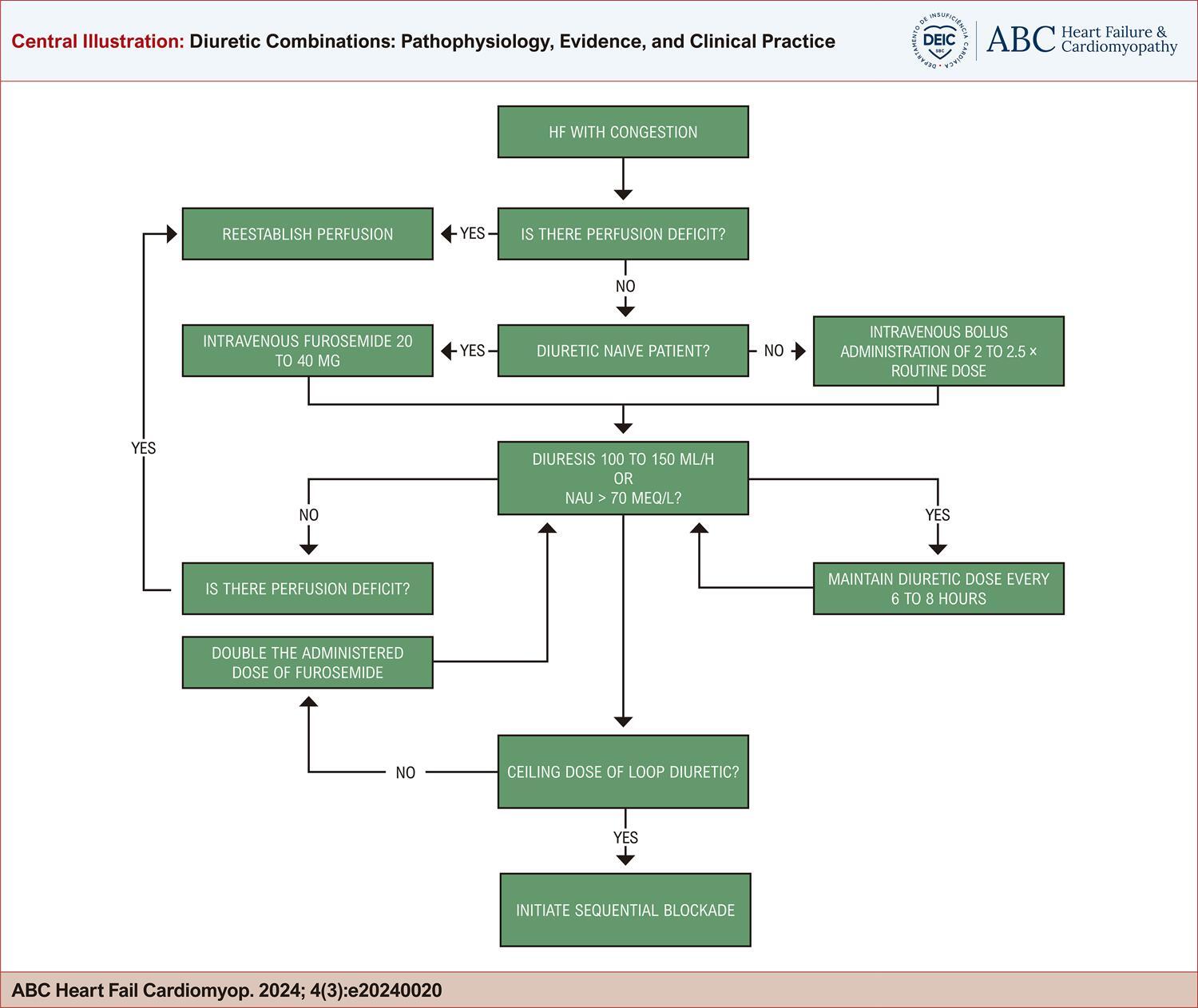
Central Illustration
Review Article

Diuretic Combinations: Pathophysiology, Evidence, and Clinical Practice

Ricardo Mourilhe-Rocha et al. Pedro Fernandes Ribeiro Ana Luíza Ferreira Sales Pedro Pimenta de Mello Spineti … Felipe Neves de Albuquerque Marcelo Imbroinise Bittencourt

Abstract

Heart failure is a highly prevalent syndrome worldwide, including in Latin America, where prevalence rates are estimated at 1.2% to 2.1% of the population. This reality is no different in Brazil, where the syndrome is estimated to affect approximately 2% of the adult population, leading to an overwhelming financial impact of approximately 28.1 billion Brazilian reals in 2015 alone, when the total costs to society and the health system were measured. As if the broad economic impact were not enough, heart failure is also one of the leading causes and amplifiers of morbidity and mortality, including important prognostic asymmetries when comparing different socioeconomic realities among the population. In this context, given the unquestionable epidemiological and economic relevance of heart failure, the national BREATHE registry was carried out and published in 2015. It was able to assess that approximately 85.3% of heart failure decompensations in Brazil occurred in profiles with volume congestion, a result that remained similar in the study extension published in 2023. In this type of scenario, the use of diuretics is one of the central pillars of treatment, aiming to correct the volume status and relieve patients’ symptoms.

  • Diuretics
  • Heart Failure
  • Pathology
Read Full Article
Creative Commons Attribution (CC BY) Creative Commons license
19/11/2024 DOI: 10.36660/abchf.20240020i Views 2
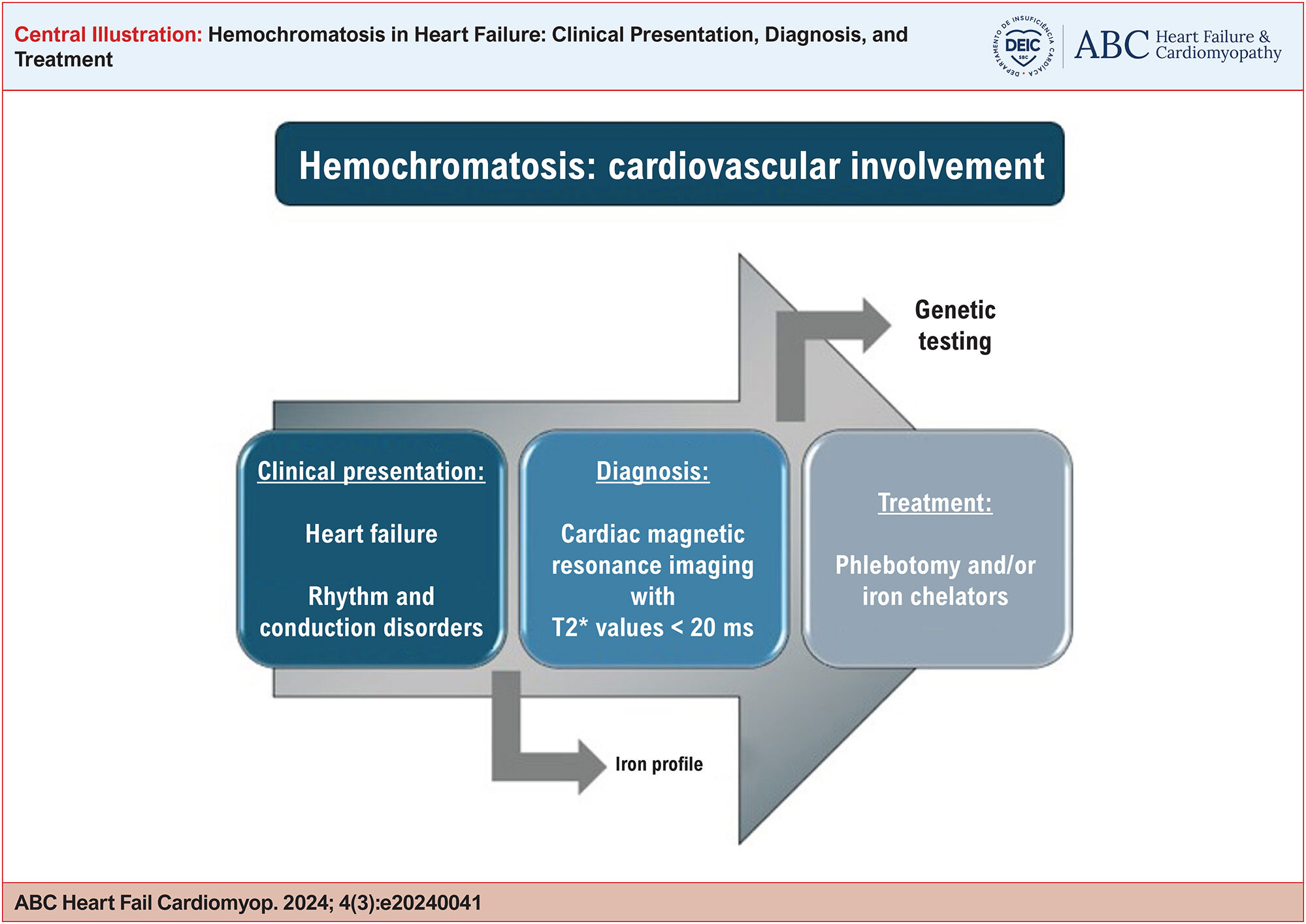
Hemochromatosis in Heart Failure: Clinical Presentation, Diagnosis, and Treatment
Review Article

Hemochromatosis in Heart Failure: Clinical Presentation, Diagnosis, and Treatment

Rodrigo Mantovani Roehrs Sguario et al. Bruno Biselli Luis Fernando Bernal da Costa Seguro

Introduction

Hemochromatosis is a disease characterized by excessive intestinal absorption of iron and its deposition in various organs, including the heart. There are 2 types of hemochromatosis: primary and secondary. Primary or hereditary hemochromatosis (HH) is a genetic disease, whereas secondary hemochromatosis is a consequence of systemic diseases, such as anemia, thalassemia, liver disease, or excessive blood transfusions.

It was first described in the nineteenth century by the French physician Armand Trousseau, who raised the hypothesis that some excess element in the blood was responsible for causing organ damage and skin pigmentation. In 1935, Joseph Sheldon identified that iron accumulation in tissues was responsible for toxicity and was the first to suggest that this metabolic defect had a genetic origin. In the 1950s, a study of iron kinetics correlated increased intestinal iron absorption in patients with hemochromatosis. It was only in 1996 that the “hemochromatosis gene,” HFE (“high Fe”), which is responsible for most cases of the disease, was identified.

[…]

  • cardiomyopathy
  • Heart Failure
  • Hemochromatosis
Read Full Article
Creative Commons Attribution (CC BY) Creative Commons license
18/11/2024 DOI: 10.36660/abchf.20240041i Views 1
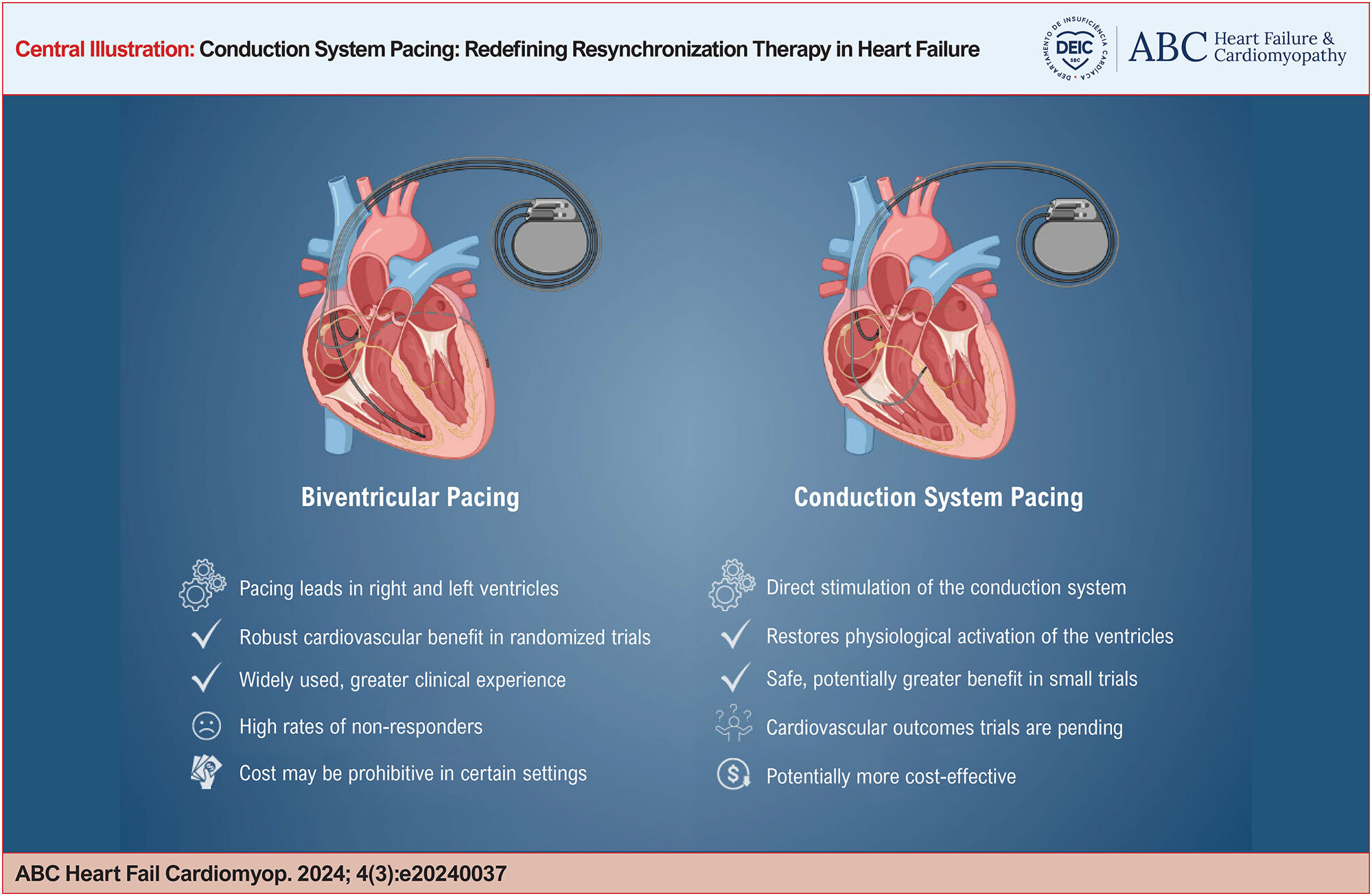
Conduction System Pacing: Redefining Resynchronization Therapy in Heart Failure
Review Article

Conduction System Pacing: Redefining Resynchronization Therapy in Heart Failure

Caique M. P. Ternes et al. André Zimerman

Abstract

Cardiac resynchronization therapy is a foundational treatment in patients with heart failure with reduced ejection fraction (HFrEF) and left bundle branch block (LBBB). Although resynchronization has traditionally been performed via biventricular pacing, this approach may be limited by a high rate of non-responders and elevated cost. Conduction system pacing, sometimes referred to as “physiologic” pacing, involves direct stimulation of the heart’s intrinsic conduction pathways and has emerged as a promising alternative. Large intercontinental registries have supported the safety of conduction system pacing in different settings, with high procedural success and low complication rates that are comparable to biventricular pacing. Moreover, in small, randomized trials, conduction system pacing has led to similar or greater improvements in left ventricular ejection fraction and QRS duration versus biventricular pacing, potentially at a lower cost. Ongoing cardiovascular outcomes trials are expected to conclusively determine the role of conduction system pacing in the management of patients with HFrEF and LBBB.

  • Bundle of His
  • Cardiac Resynchronization Therapy
  • Heart Failure
  • Left Bundle Branch Block
Read Full Article
Creative Commons Attribution (CC BY) Creative Commons license
08/11/2024 DOI: 10.36660/abchf.20240037i Views 2
Central Illustration
Review Article

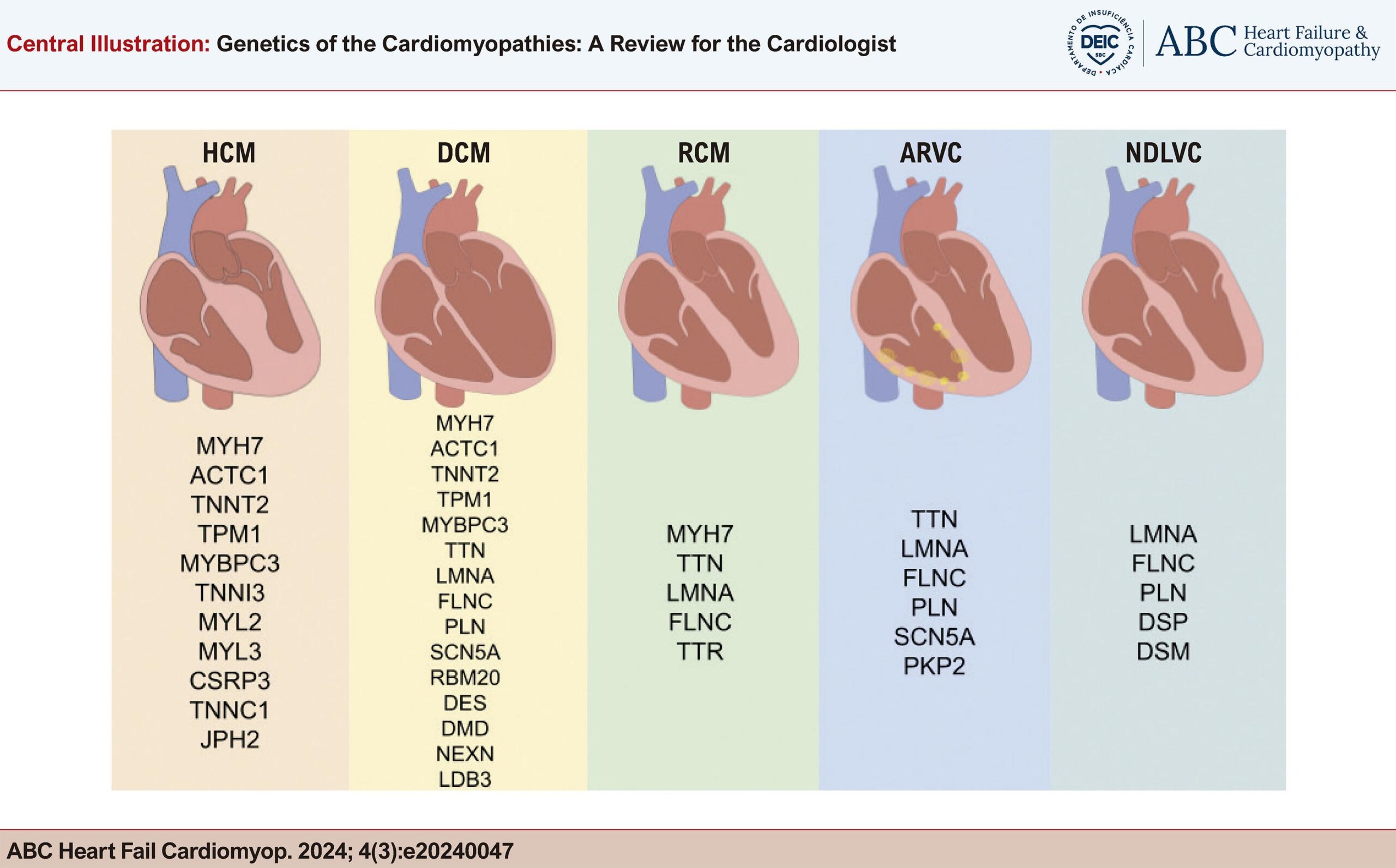
Genetics of the Cardiomyopathies: A Review for the Cardiologist

Fernando Luis Scolari et al. Henrique Iahnke Garbin Thais Mariel Andara Beuren Felipe Cerqueira Matheus … Ricardo Mourilhe-Rocha Marcelo Imbroinise Bittencourt

Abstract

Cardiomyopathies, myocardial diseases without other causative factors like hypertension or coronary artery disease, were once considered rare but have seen increased diagnoses due to improved imaging and clinical awareness. Recent categorizations based on predominant phenotypes, such as hypertrophic cardiomyopathy, dilated cardiomyopathy, non-dilated left ventricular cardiomyopathy, restrictive cardiomyopathy and arrhythmogenic right ventricular cardiomyopathy highlight their complexity. Phenotype characterization is challenging due to overlapping features among different cardiomyopathies, making genetic testing indispensable, offering insights into etiology, risks, and guiding treatments. Advancements in testing accessibility and standardized classification guidelines have facilitated early detection, enabling interventions like lifestyle modifications and targeted medication regimens to mitigate risks. Current guidelines recommend genetic testing for all cardiomyopathy patients. This review elucidates genetic variants underlying the distinct cardiomyopathies phenotypes, enabling accurate diagnoses and treatment.

  • Cardiomyopathies
  • Genetic Testing
  • Heart Failure
  • Phenotype
Read Full Article
Creative Commons Attribution (CC BY) Creative Commons license
01/11/2024 DOI: 10.36660/abchf.20240047i Views 2
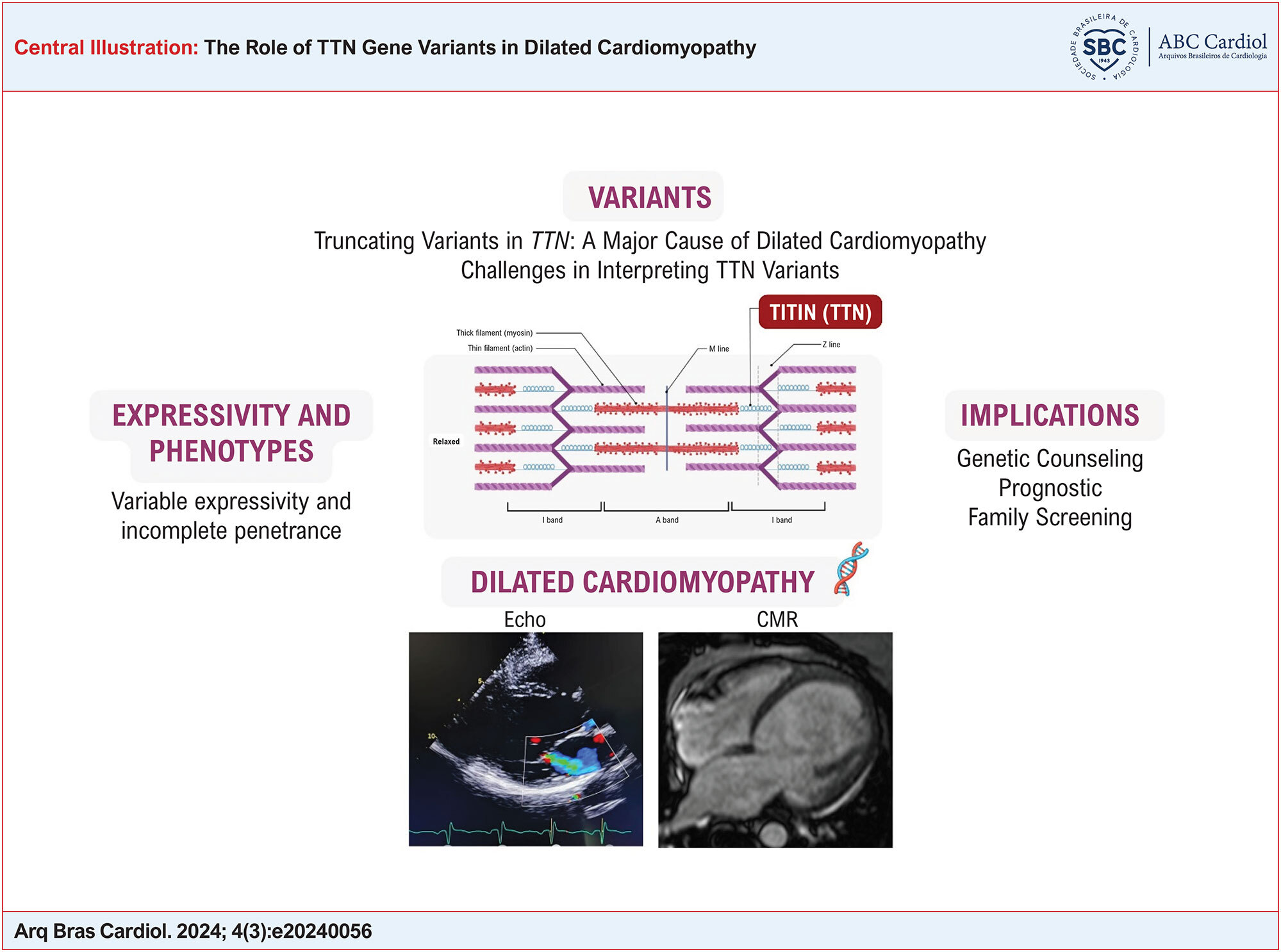
The Role of TTN Gene Variants in Dilated Cardiomyopathy
Review Article

The Role of TTN Gene Variants in Dilated Cardiomyopathy

Silas Ramos Furquim et al. Paula de Mendonça Senra Bianca Domit Werner Linnenkamp Kelvin Henrique Vilalva … Marjorie Hayashida Mizuta Bruno Moreira dos Santos Bruno de Oliveira Stephan Elisangela Aparecida da Silva Nara Alves Buriti Vitória Pelegrino do Val Fernanda Almeida Andrade Jose Eduardo Krieger

Abstract

Titin, encoded by the TTN gene, is the largest human protein, essential for maintaining muscle cell stability and regulating myocardial contraction. TTN truncating variants (TTNtv) have emerged as the most common genetic cause of dilated cardiomyopathy (DCM), accounting for up to 25% of familial cases and 18% of sporadic cases. This review examines the complex relationship between TTN variants and DCM, highlighting the challenges posed by incomplete penetrance and variable expressivity. While truncating variants primarily in the A-band region are linked to DCM, not all carriers exhibit clinical symptoms, indicating the influence of additional genetic and environmental factors. We also discuss the prognostic implications of TTN variants, which, despite similar clinical outcomes to other DCM cases, demonstrate a higher rate of reverse remodeling in response to heart failure treatment. Emerging therapeutic strategies targeting the underlying molecular mechanisms of TTN variants, including mTOR inhibitors and CRISPR-based gene editing, offer promising avenues for personalized treatment. Understanding the genetic underpinnings of TTN-related DCM is crucial for improving diagnosis, family screening, and therapeutic outcomes, paving the way for more effective management of this complex condition.

  • Dilated Cardiomyopathy
  • Genes
  • Titin
Read Full Article
Creative Commons Attribution (CC BY) Creative Commons license
18/10/2024 DOI: 10.36660/abchf.20240056i Views 1

How to cite this article

EndNote RIS

Electronic Document Format (Vancouver)

Gâmbaro GA, Felicio ML, Andrade LGM, Garcia LR, Brito FS. Another Brick in the Wall Through the Knowledge of Desmoplakin Cardiomyopathy: Three Siblings Case Reports. ABC Heart Fail Cardiomyop 2024;4(3):e20240038.

Electronic Document Format (ABNT)

Gâmbaro, Gustavo Aliano; Felicio, Marcello Laneza; Andrade, Luís Gustavo Modelli de; Garcia, Leonardo Rufino; Brito, Flavio de Souza. Another Brick in the Wall Through the Knowledge of Desmoplakin Cardiomyopathy: Three Siblings Case Reports. ABC Heart Fail Cardiomyop, v. 4, n. 3, e20240038, Dec. 2024.

Electronic Document Format (APA)

Gâmbaro, G. A., Felicio, M. L., Andrade, L. G. M. , Garcia, L. R., & Brito, F. S. (2024). Another Brick in the Wall Through the Knowledge of Desmoplakin Cardiomyopathy: Three Siblings Case Reports. ABC Heart Fail Cardiomyop, 4(3), e20240038.

Electronic Document Format (ISO)

Gâmbaro, Gustavo Aliano and Felicio, Marcello Laneza and Andrade, Luís Gustavo Modelli de and Garcia, Leonardo Rufino and Brito, Flavio de Souza. Another Brick in the Wall Through the Knowledge of Desmoplakin Cardiomyopathy: Three Siblings Case Reports. ABC Heart Fail Cardiomyop [online]. 2024, vol. 4, n. 3, [cited 2026-10-14], e20240038. Available from: <https://journals.cardiol.br/en/article/another-brick-in-the-wall-through-the-knowledge-of-desmoplakin-cardiomyopathy-three-siblings-case-reports/>

EndNote RIS

Electronic Document Format (Vancouver)

Mourilhe-Rocha R, Ribeiro PF, Sales ALF, Spineti PPM, Albuquerque FN, Bittencourt MI. Diuretic Combinations: Pathophysiology, Evidence, and Clinical Practice. ABC Heart Fail Cardiomyop 2024;4(3):e20240020.

Electronic Document Format (ABNT)

Mourilhe-Rocha, Ricardo; Ribeiro, Pedro Fernandes; Sales, Ana Luíza Ferreira; Spineti, Pedro Pimenta de Mello; Albuquerque, Felipe Neves de; Bittencourt, Marcelo Imbroinise. Diuretic Combinations: Pathophysiology, Evidence, and Clinical Practice. ABC Heart Fail Cardiomyop, v. 4, n. 3, e20240020, Nov. 2024.

Electronic Document Format (APA)

Mourilhe-Rocha, R., Ribeiro, P. F., Sales, A. L. F., Spineti, P. P. M., Albuquerque, F. N. , & Bittencourt, M. I. (2024). Diuretic Combinations: Pathophysiology, Evidence, and Clinical Practice. ABC Heart Fail Cardiomyop, 4(3), e20240020.

Electronic Document Format (ISO)

Mourilhe-Rocha, Ricardo and Ribeiro, Pedro Fernandes and Sales, Ana Luíza Ferreira and Spineti, Pedro Pimenta de Mello and Albuquerque, Felipe Neves de and Bittencourt, Marcelo Imbroinise. Diuretic Combinations: Pathophysiology, Evidence, and Clinical Practice. ABC Heart Fail Cardiomyop [online]. 2024, vol. 4, n. 3, [cited 2026-10-14], e20240020. Available from: <https://journals.cardiol.br/en/article/diuretic-combinations-pathophysiology-evidence-and-clinical-practice/>

EndNote RIS

Electronic Document Format (Vancouver)

Sguario RMR, Biselli B, Seguro LFBC. Hemochromatosis in Heart Failure: Clinical Presentation, Diagnosis, and Treatment. ABC Heart Fail Cardiomyop 2024;4(3):e20240041.

Electronic Document Format (ABNT)

Sguario, Rodrigo Mantovani Roehrs; Biselli, Bruno; Seguro, Luis Fernando Bernal da Costa. Hemochromatosis in Heart Failure: Clinical Presentation, Diagnosis, and Treatment. ABC Heart Fail Cardiomyop, v. 4, n. 3, e20240041, Nov. 2024.

Electronic Document Format (APA)

Sguario, R. M. R., Biselli, B., & Seguro, L. F. B. C. (2024). Hemochromatosis in Heart Failure: Clinical Presentation, Diagnosis, and Treatment. ABC Heart Fail Cardiomyop, 4(3), e20240041.

Electronic Document Format (ISO)

Sguario, Rodrigo Mantovani Roehrs and Biselli, Bruno and Seguro, Luis Fernando Bernal da Costa. Hemochromatosis in Heart Failure: Clinical Presentation, Diagnosis, and Treatment. ABC Heart Fail Cardiomyop [online]. 2024, vol. 4, n. 3, [cited 2026-10-14], e20240041. Available from: <https://journals.cardiol.br/en/article/hemochromatosis-in-heart-failure-clinical-presentation-diagnosis-and-treatment/>

EndNote RIS

Electronic Document Format (Vancouver)

Ternes CMP, Zimerman A. Conduction System Pacing: Redefining Resynchronization Therapy in Heart Failure. ABC Heart Fail Cardiomyop 2024;4(3):e20240037.

Electronic Document Format (ABNT)

Ternes, Caique M. P.; Zimerman, André. Conduction System Pacing: Redefining Resynchronization Therapy in Heart Failure. ABC Heart Fail Cardiomyop, v. 4, n. 3, e20240037, Nov. 2024.

Electronic Document Format (APA)

Ternes, C. M. P., & Zimerman, A. (2024). Conduction System Pacing: Redefining Resynchronization Therapy in Heart Failure. ABC Heart Fail Cardiomyop, 4(3), e20240037.

Electronic Document Format (ISO)

Ternes, Caique M. P. and Zimerman, André. Conduction System Pacing: Redefining Resynchronization Therapy in Heart Failure. ABC Heart Fail Cardiomyop [online]. 2024, vol. 4, n. 3, [cited 2026-10-14], e20240037. Available from: <https://journals.cardiol.br/en/article/conduction-system-pacing-redefining-resynchronization-therapy-in-heart-failure/>

EndNote RIS

Electronic Document Format (Vancouver)

Scolari FL, Garbin HI, Beuren TMA, Matheus FC, Mourilhe-Rocha R, Bittencourt MI. Genetics of the Cardiomyopathies: A Review for the Cardiologist. ABC Heart Fail Cardiomyop 2024;4(3):e20240047.

Electronic Document Format (ABNT)

Scolari, Fernando Luis; Garbin, Henrique Iahnke; Beuren, Thais Mariel Andara; Matheus, Felipe Cerqueira; Mourilhe-Rocha, Ricardo; Bittencourt, Marcelo Imbroinise. Genetics of the Cardiomyopathies: A Review for the Cardiologist. ABC Heart Fail Cardiomyop, v. 4, n. 3, e20240047, Oct. 2024.

Electronic Document Format (APA)

Scolari, F. L., Garbin, H. I., Beuren, T. M. A., Matheus, F. C., Mourilhe-Rocha, R., & Bittencourt, M. I. (2024). Genetics of the Cardiomyopathies: A Review for the Cardiologist. ABC Heart Fail Cardiomyop, 4(3), e20240047.

Electronic Document Format (ISO)

Scolari, Fernando Luis and Garbin, Henrique Iahnke and Beuren, Thais Mariel Andara and Matheus, Felipe Cerqueira and Mourilhe-Rocha, Ricardo and Bittencourt, Marcelo Imbroinise. Genetics of the Cardiomyopathies: A Review for the Cardiologist. ABC Heart Fail Cardiomyop [online]. 2024, vol. 4, n. 3, [cited 2026-10-14], e20240047. Available from: <https://journals.cardiol.br/en/article/genetics-of-the-cardiomyopathies-a-review-for-the-cardiologist/>

EndNote RIS

Electronic Document Format (Vancouver)

Furquim SR, Senra PM, Linnenkamp BDW, Vilalva KH, Mizuta MH, Santos BM, Stephan BO, et al. The Role of TTN Gene Variants in Dilated Cardiomyopathy. ABC Heart Fail Cardiomyop 2024;4(3):e20240056.

Electronic Document Format (ABNT)

Furquim, Silas Ramos; Senra, Paula de Mendonça; Linnenkamp, Bianca Domit Werner; Vilalva, Kelvin Henrique; Mizuta, Marjorie Hayashida; Santos, Bruno Moreira dos; Stephan, Bruno de Oliveira; Silva, Elisangela Aparecida da; Buriti, Nara Alves; Val, Vitória Pelegrino do; Andrade, Fernanda Almeida; Krieger, Jose Eduardo. The Role of TTN Gene Variants in Dilated Cardiomyopathy. ABC Heart Fail Cardiomyop, v. 4, n. 3, e20240056, Oct. 2024.

Electronic Document Format (APA)

Furquim, S. R., Senra, P. M., Linnenkamp, B. D. W., Vilalva, K. H., Mizuta, M. H., Santos, B. M. , Stephan, B. O., Silva, E. A. , Buriti, N. A., Val, V. P. , Andrade, F. A., & Krieger, J. E. (2024). The Role of TTN Gene Variants in Dilated Cardiomyopathy. ABC Heart Fail Cardiomyop, 4(3), e20240056.

Electronic Document Format (ISO)

Furquim, Silas Ramos and Senra, Paula de Mendonça and Linnenkamp, Bianca Domit Werner and Vilalva, Kelvin Henrique and Mizuta, Marjorie Hayashida and Santos, Bruno Moreira dos and Stephan, Bruno de Oliveira and Silva, Elisangela Aparecida da and Buriti, Nara Alves and Val, Vitória Pelegrino do and Andrade, Fernanda Almeida and Krieger, Jose Eduardo. The Role of TTN Gene Variants in Dilated Cardiomyopathy. ABC Heart Fail Cardiomyop [online]. 2024, vol. 4, n. 3, [cited 2026-10-14], e20240056. Available from: <https://journals.cardiol.br/en/article/the-role-of-ttn-gene-variants-in-dilated-cardiomyopathy/>

Sede – Rio de Janeiro
Av. Marechal Câmara, 160
3º andar – Sala: 330 – Centro
Rio de Janeiro – CEP: 20020-907
Tel.: (+55 21) 3478-2700
ou (21) 99386-3961
E-mail: abcheartfailure@cardiol.br

Sede – São Paulo
Alameda Santos, 705 – 11º andar
Cerqueira César | São Paulo
CEP: 01419-001
Tel.: (55 +11) 3411-5500
E-mail: abcheartfailure@cardiol.br

  • About the Journal
  • Internal Regulation
  • Editors Section
  • Editorial Board
  • SBC Award

  • Guidelines for Publication
  • Editorial Policy
  • Ethics Policy
  • Policy on the Use of Artificial Intelligence
  • Mandatory Publication Form

Issues

SBC Guidelines