ABC Family Arquivos Brasileiros de Cardiologia International Journal of Cardiovascular Sciences ABC Heart Failure & Cardiomyopathy ABC Imagem Cardiovascular
Português English
ABC Family
Português English
  • About
    • About ABC Family
    • Internal Regulation
    • Editorial Board
    • Brazilian Society of Cardiology (SBC)
  • Issues
  • SBC Guidelines
  • Content
    • Videos
    • Podcasts
    • News
  • About
    • About ABC Family
    • Internal Regulation
    • Editorial Board
    • Brazilian Society of Cardiology (SBC)
  • Issues
  • SBC Guidelines
  • Content
    • Videos
    • Podcasts
    • News

ABC Family

  • ABC Family
  • Arquivos Brasileiros de Cardiologia
  • International Journal of Cardiovascular Sciences
  • ABC Heart Failure & Cardiomyopathy
  • ABC Imagem Cardiovascular
Search in

No content found.

Journals
Ordering
Article types
Others

  1. Home
  2. Keyword: heart catheterization
ABC
Editorial

Percutaneous left atrial appendage occlusion: putting the most lethal human attachment behind bars

Adriano Caixeta et al. Erlon O. de Abreu Silva Philippe Généreux

EDITORIAL

Percutaneous left atrial appendage occlusion: putting the most lethal human attachment behind bars

[…]

  • Anticoagulants
  • Atrial Appendage
  • Atrial Fibrillation
  • heart catheterization
Read Full Article
Creative Commons Attribution (CC BY) Creative Commons license
22/11/2012 DOI: 10.1590/S0066-782X2012001400001 Views 1
Sedation with sufentanil and clonidine in patients undergoing heart catheterization
ABC
Artigo Original

Sedation with sufentanil and clonidine in patients undergoing heart catheterization

Anita Perpetua Carvalho Rocha et al. Guilherme Antonio Moreira Barros Jedson dos Santos Nascimento Kleber Pimentel Santos … Lilian Mendes de Vasconcelos Pedro Augusto Costa Rebouças de Castro

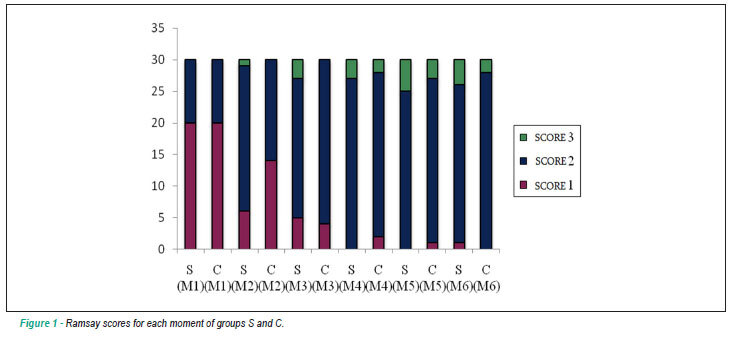
BACKGROUND: Sedation for heart catheterization has been a cause for concern. Benzodiazepines, alpha-2 adrenergic agonists and opioids are used for this purpose. However, each drug has advantages and disadvantages. OBJECTIVE: To evaluate the efficacy of sufentanil and clonidine as sedative in patients undergoing heart catheterization, observing their impact on hemodynamic and respiratory parameters, the presence of side effects and satisfaction of the patient and interventional cardiologist with the examination. METHODS: This is a prospective, double-blind, randomized and controlled clinical trial involving 60 patients who received 0.1 µg/kg of sufentanil or 0.5 µg/kg of clonidine before heart catheterization. The score of sedation according to the Ramsay scale, the need for use of midazolam, side effects and hemodynamic and respiratory parameters were recorded, with the data being analyzed at 06 different moments. RESULTS: The behavior of blood pressure, heart rate and respiratory rate was similar in both groups, but, at moment 2, the patients in the sufentanil group (Group S) had a lower sedation score on the Ramsay scale, and the peripheral oxyhemoglobin saturation was lower than in the clonidine group (Group C) at time 6. Patients in Group S had higher incidence of nausea and vomiting after surgery than patients in Group C. Patient satisfaction was higher in the clonidine group. The interventional cardiologists were satisfied in both groups. CONCLUSION: Sufentanil and clonidine were effective as sedative in patients undergoing heart catheterization.

  • Clonidine
  • heart catheterization
  • sufentanil
Read Full Article
Creative Commons Attribution (CC BY) Creative Commons license
26/01/2011 DOI: 10.1590/S0066-782X2011005000012
Clinical and angiographic profile in coronary artery disease: hospital outcome with emphasis on the very elderly
ABC
Artigo Original

Clinical and angiographic profile in coronary artery disease: hospital outcome with emphasis on the very elderly

Micheli Zanotti Galon et al. George César Ximenes Meireles Sérgio Kreimer Gilberto Guilherme Ajjar Marchiori … Desidério Favarato João Aparecido Pimenta de Almeida Lorena Squassante Capeline

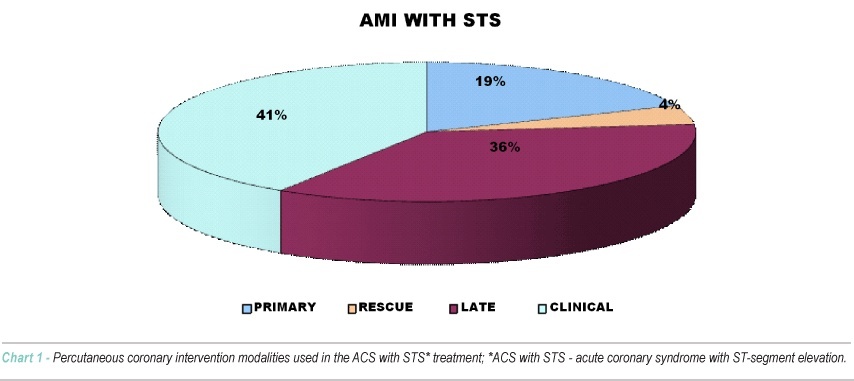
BACKGROUND: Knowing the risk factors and clinical manifestations of coronary artery disease (CAD) allows us to intervene more effectively with a particular population. OBJECTIVE: To identify clinical and angiographic profiles of patients undergoing cardiac catheterization, treated at a tertiary hospital and treated by percutaneous coronary interventions (PCI). METHODS: The study of 1,282 patients who underwent 1,410 cardiac catheterizations, selected from March/2007 to May/2008 from a database in a general hospital for diagnosis of coronary artery disease (CAD). Risk factors, indication for examination, technical details of PCI and in-hospital outcomes were prospectively collected. RESULTS: There were 688 (54.0%) males, mean age 65.4 ± 10.9 years and 20.0% above 75 years age. The most frequent clinical condition was acute coronary syndrome (ACS) without ST-segment elevation (STS) (38.7%). The multi artery CAD occurred in 46.4%, PCI was indicated in 464 patients, 547 target lesions were treated (type B2 or C, 86.0%), and of these, 14.0% treated with drug eluting stents. Among those with AMI with STS, primary PCI was performed in 19.0% of the patients, from these, 77.0% were transferred from the origin hospitals late (late PCI) and had not received prior thrombolytic, and 4.0% had PCI rescue. Angiographic success was achieved in 94.2% of PCIs. Death occurred in 5.6% of patients, with average age of 75.2 ± 10.2 years. CONCLUSION: The prevalence of elderly (20.1% being > 75 years) and male was observed. From the risk factors for CAD, the most common were systemic hypertension and dyslipidemia. There was a predominance of ACS. Age > 75 years old, multiarterial CAD and chronic renal failure were predictors of in-hospital deaths.

  • Aged
  • Coronary Artery Disease
  • heart catheterization
  • Risk Factors
  • sickness impact profile
Read Full Article
Creative Commons Attribution (CC BY) Creative Commons license
17/09/2010 DOI: 10.1590/S0066-782X2010005000127
The importance of pre-clinical animal testing in interventional cardiology
ABC
Review Article

The importance of pre-clinical animal testing in interventional cardiology

Yoriyasu Suzuki et al. Alan C. Yeung Fumiaki Ikeno

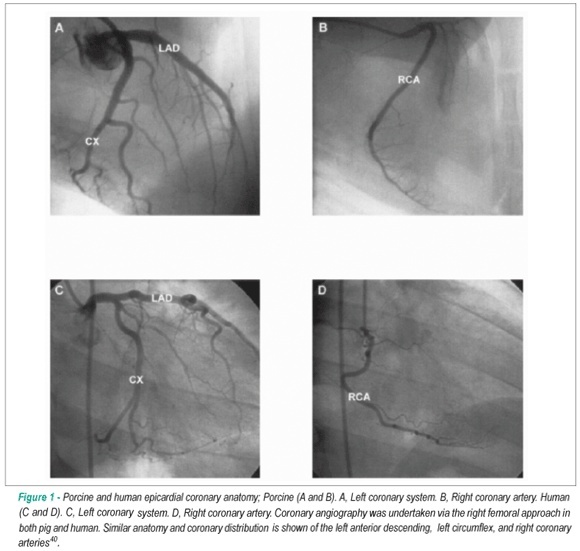
The treatment of cardiovascular disease has changed dramatically over the past 2 decades, allowing patients to live longer and better quality lives. The introduction of new therapies has contributed much to this success. Nowhere has this been more evident than in interventional cardiology, where percutaneous cardiovascular intervention has evolved in the past 2 decades from a quirky experimental procedure to a therapeutic cornerstone for patients with symptomatic cardiovascular disease. The development of these technologies from the earliest stages requires preclinical experiments using animal models. Once introduced into the clinical arena, an understanding of therapeutic mechanisms of these devices can be ascertained through comparisons of animal model research findings with clinical pathological specimens. This review provides an overview of the emerging role, results of preclinical studies and development, and evaluation of animal models for percutaneous cardiovascular intervention technologies for patients with symptomatic cardiovascular disease.

  • Applied research
  • Coronary Angiography
  • heart catheterization
  • models, animals
Read Full Article
Creative Commons Attribution (CC BY) Creative Commons license
05/01/2009 DOI: 10.1590/S0066-782X2008001700011
ABC
Artigo Original

Coronary arteriography with a very low profile catheter. Efficacy and safety of the procedure and of the 60 minute hospital discharge

Sergio Berti et al. Fausto Feres Danilo Castro Marcos Gusmão … Rodolfo Staico Rone Padilha Aurea Chaves Marinella Centemero Luiz A. Mattos Amanda Sousa J. Eduardo Sousa

PURPOSE: To evaluate the feasibility, efficacy and safety of the use of 4F Judkins catheters for coronary angiography. METHODS: From August/95 to January/96, 70 patients with suspected coronary artery disease underwent coronary cineangiography by the Judkins technique, with 4F catheters. Following punture of the right femoral artery, 4F sheaths were introduced. At the end of the procedure, the sheath was removed and manual compression was applied for 15min. Patients were oriented to walk under specialized supervision, 60min after the procedure, and discharged after 4h. RESULTS: Thirty nine (56%) patients were male, the age ranged from 31 to 83 (mean 57) years and weight from 43 to 101 (mean 69) kg. Optimal quality images were obtained in 62 patients (88%). It was necessary to use larger caliber catheters (6 and 8F) in 8 patients, due to femoral tortuosity or inadequate opacification of coronary arteries. There were no vascular complications nor major bleedings. In only 2 cases (3%) there was a minor bleeding, treated by new local compression. Sixty (85%) patients walked after 60±5min and were discharged after 4h. CONCLUSION: The use of 4F catheters for coronary angiography by femoral approach allowed early deambulation with no major bleeding. Image quality was good, with little contrast used and short hospital stay. This technique may lead to a simpler less traumatic and less invasive coronary angiography,.

  • Coronary Angiography
  • early deambulation
  • heart catheterization
Read Full Article
Creative Commons Attribution (CC BY) Creative Commons license
08/01/2002 DOI: 10.1590/S0066-782X1998000100002
ABC
Artigo Original

Blood cell count, sodium, potassium, calcium, osmolality and viscosity, during pediatric angiocardiography with ioxaglate

Mauro Regis Silva Moura et al. Flávio Leboute Carlos Antonio Mascia Gottschall

PURPOSE: Children’s blood changes during angiocardiography may not be only due to the contrast media (CM). METHODS: We studied the presence and severity of changes in those parameters in 35 pediatric patients undergoing angiocardiography with ioxaglate aiming to identify independent variables responsible for those changes. Blood samples were taken at the beginning of the procedure (S1), at the end (S2) and two hours later (S3). RESULTS: Hematocrit: S1= 47.3±6.9%; S2= 40.7± 7.4% (p<0.001), (related to the CM volume r=0.37, p<0.05). Hemoglobin: S1= 15±2.1g%; S2= 13.2±2.4g% (p<0.001), and S3= 12.7±2.5g% (NS). White blood cell count: S1= 7940±3040 leukocytes/mm³; S2= 6950± 2700/mm³ (NS); S3= 10830±4690 leukocytes/mm³, (p<0.001). Procedure duration (r=0.38, p<0.05) and 5% glucose fluid given between S2 and S3 (r=0.49, p<0.05) were isolated. Sodium: S1= 134.5±0.4mEq/L; S2= 130.7±0.4mEq/L (p<0.001) (due to 5% glucose fluid injected, r=0.61, p<0.01). Potassium: S1= 4.22±0.45mEq/L, S2= 3.83±0.4mEq/L (p<0.001). Calcium: S1= 9.13± 1.03mg%; S2= 8.4±0.91mg/dL. (related to the CM, r=0.43, p<0.01.) Osmolality: S1= 293.3±12.5mOsm/kg; S2= 300.6±13.3mOsm/kg (p<0.001). Viscosity: S1= 3.36±0.81; S2= 3.09±0.74 (p<0.01); S3= 3.87±0.89, p<0.001. There was an indirect linear regression with the CM. CONCLUSION: There were profound differences among the dependent variables observed but the ioxaglate was partially related to changes in hematocrit/ hemoglobin, total calcium and viscosity. We failed to demonstrate significant regression coefficient between CM and changes in leukocytes, sodium, potassium, and osmolality.

  • angiocardiography
  • Contrast Media
  • heart catheterization
  • pediatric cardiology
Read Full Article
Creative Commons Attribution (CC BY) Creative Commons license
08/01/2002 DOI: 10.1590/S0066-782X1998000400004

How to cite this article

EndNote RIS

Electronic Document Format (Vancouver)

Caixeta A, Silva EOA, Généreux P. Percutaneous left atrial appendage occlusion: putting the most lethal human attachment behind bars. Arquivos Brasileiros de Cardiologia 2012;99(5):968-70.

Electronic Document Format (ABNT)

Caixeta, Adriano; Silva, Erlon O. de Abreu; Généreux, Philippe. Percutaneous left atrial appendage occlusion: putting the most lethal human attachment behind bars. Arquivos Brasileiros de Cardiologia, v. 99, n. 5, p. 968-970, Nov. 2012.

Electronic Document Format (APA)

Caixeta, A., Silva, E. O. A., & Généreux, P. (2012). Percutaneous left atrial appendage occlusion: putting the most lethal human attachment behind bars. Arquivos Brasileiros de Cardiologia, 99(5), 968-970.

Electronic Document Format (ISO)

Caixeta, Adriano and Silva, Erlon O. de Abreu and Généreux, Philippe. Percutaneous left atrial appendage occlusion: putting the most lethal human attachment behind bars. Arquivos Brasileiros de Cardiologia [online]. 2012, vol. 99, n. 5, [cited 2026-10-15], pp. 968-970. Available from: <https://journals.cardiol.br/en/article/percutaneous-left-atrial-appendage-occlusion-putting-the-most-lethal-human-attachment-behind-bars/>. ISSN 0066-782X

EndNote RIS

Electronic Document Format (Vancouver)

Rocha APC, Barros GAM, Nascimento JS, Santos KP, Vasconcelos LM, Castro PACR. Sedation with sufentanil and clonidine in patients undergoing heart catheterization. Arquivos Brasileiros de Cardiologia 2011;96(3):00311-160.

Electronic Document Format (ABNT)

Rocha, Anita Perpetua Carvalho; Barros, Guilherme Antonio Moreira; Nascimento, Jedson dos Santos; Santos, Kleber Pimentel; Vasconcelos, Lilian Mendes de; Castro, Pedro Augusto Costa Rebouças de. Sedation with sufentanil and clonidine in patients undergoing heart catheterization. Arquivos Brasileiros de Cardiologia, v. 96, n. 3, p. 00311-16310, Jan. 2011.

Electronic Document Format (APA)

Rocha, A. P. C., Barros, G. A. M., Nascimento, J. S., Santos, K. P., Vasconcelos, L. M. , & Castro, P. A. C. R. (2011). Sedation with sufentanil and clonidine in patients undergoing heart catheterization. Arquivos Brasileiros de Cardiologia, 96(3), 00311-16310.

Electronic Document Format (ISO)

Rocha, Anita Perpetua Carvalho and Barros, Guilherme Antonio Moreira and Nascimento, Jedson dos Santos and Santos, Kleber Pimentel and Vasconcelos, Lilian Mendes de and Castro, Pedro Augusto Costa Rebouças de. Sedation with sufentanil and clonidine in patients undergoing heart catheterization. Arquivos Brasileiros de Cardiologia [online]. 2011, vol. 96, n. 3, [cited 2026-10-15], pp. 00311-16310. Available from: <https://journals.cardiol.br/en/article/sedation-with-sufentanil-and-clonidine-in-patients-undergoing-heart-catheterization/>. ISSN 0066-782X

EndNote RIS

Electronic Document Format (Vancouver)

Galon MZ, Meireles GCX, Kreimer S, Marchiori GGA, Favarato D, Almeida JAP, Capeline LS, et al. Clinical and angiographic profile in coronary artery disease: hospital outcome with emphasis on the very elderly. Arquivos Brasileiros de Cardiologia 2010;95(4):422-9.

Electronic Document Format (ABNT)

Galon, Micheli Zanotti; Meireles, George César Ximenes; Kreimer, Sérgio; Marchiori, Gilberto Guilherme Ajjar; Favarato, Desidério; Almeida, João Aparecido Pimenta de; Capeline, Lorena Squassante. Clinical and angiographic profile in coronary artery disease: hospital outcome with emphasis on the very elderly. Arquivos Brasileiros de Cardiologia, v. 95, n. 4, p. 422-429, Sep. 2010.

Electronic Document Format (APA)

Galon, M. Z., Meireles, G. C. X., Kreimer, S., Marchiori, G. G. A., Favarato, D., Almeida, J. A. P. , & Capeline, L. S. (2010). Clinical and angiographic profile in coronary artery disease: hospital outcome with emphasis on the very elderly. Arquivos Brasileiros de Cardiologia, 95(4), 422-429.

Electronic Document Format (ISO)

Galon, Micheli Zanotti and Meireles, George César Ximenes and Kreimer, Sérgio and Marchiori, Gilberto Guilherme Ajjar and Favarato, Desidério and Almeida, João Aparecido Pimenta de and Capeline, Lorena Squassante. Clinical and angiographic profile in coronary artery disease: hospital outcome with emphasis on the very elderly. Arquivos Brasileiros de Cardiologia [online]. 2010, vol. 95, n. 4, [cited 2026-10-15], pp. 422-429. Available from: <https://journals.cardiol.br/en/article/clinical-and-angiographic-profile-in-coronary-artery-disease-hospital-outcome-with-emphasis-on-the-very-elderly/>. ISSN 0066-782X

EndNote RIS

Electronic Document Format (Vancouver)

Suzuki Y, Yeung AC, Ikeno F. The importance of pre-clinical animal testing in interventional cardiology. Arquivos Brasileiros de Cardiologia 2009;91(5):348-60.

Electronic Document Format (ABNT)

Suzuki, Yoriyasu; Yeung, Alan C.; Ikeno, Fumiaki. The importance of pre-clinical animal testing in interventional cardiology. Arquivos Brasileiros de Cardiologia, v. 91, n. 5, p. 348-360, Jan. 2009.

Electronic Document Format (APA)

Suzuki, Y., Yeung, A. C., & Ikeno, F. (2009). The importance of pre-clinical animal testing in interventional cardiology. Arquivos Brasileiros de Cardiologia, 91(5), 348-360.

Electronic Document Format (ISO)

Suzuki, Yoriyasu and Yeung, Alan C. and Ikeno, Fumiaki. The importance of pre-clinical animal testing in interventional cardiology. Arquivos Brasileiros de Cardiologia [online]. 2009, vol. 91, n. 5, [cited 2026-10-15], pp. 348-360. Available from: <https://journals.cardiol.br/en/article/the-importance-of-pre-clinical-animal-testing-in-interventional-cardiology/>. ISSN 0066-782X

EndNote RIS

Electronic Document Format (Vancouver)

Berti S, Feres F, Castro D, Gusmão M, Staico R, Padilha R, Chaves A, et al. Coronary arteriography with a very low profile catheter. Efficacy and safety of the procedure and of the 60 minute hospital discharge. Arquivos Brasileiros de Cardiologia 2002;70(1):3-7.

Electronic Document Format (ABNT)

Berti, Sergio; Feres, Fausto; Castro, Danilo; Gusmão, Marcos; Staico, Rodolfo; Padilha, Rone; Chaves, Aurea; Centemero, Marinella; Mattos, Luiz A.; Sousa, Amanda; Sousa, J. Eduardo. Coronary arteriography with a very low profile catheter. Efficacy and safety of the procedure and of the 60 minute hospital discharge. Arquivos Brasileiros de Cardiologia, v. 70, n. 1, p. 3-7, Jan. 2002.

Electronic Document Format (APA)

Berti, S., Feres, F., Castro, D., Gusmão, M., Staico, R., Padilha, R., Chaves, A., Centemero, M., Mattos, L. A., Sousa, A., & Sousa, J. E. (2002). Coronary arteriography with a very low profile catheter. Efficacy and safety of the procedure and of the 60 minute hospital discharge. Arquivos Brasileiros de Cardiologia, 70(1), 3-7.

Electronic Document Format (ISO)

Berti, Sergio and Feres, Fausto and Castro, Danilo and Gusmão, Marcos and Staico, Rodolfo and Padilha, Rone and Chaves, Aurea and Centemero, Marinella and Mattos, Luiz A. and Sousa, Amanda and Sousa, J. Eduardo. Coronary arteriography with a very low profile catheter. Efficacy and safety of the procedure and of the 60 minute hospital discharge. Arquivos Brasileiros de Cardiologia [online]. 2002, vol. 70, n. 1, [cited 2026-10-15], pp. 3-7. Available from: <https://journals.cardiol.br/article/coronary-arteriography-with-a-very-low-profile-catheter-efficacy-and-safety-of-the-procedure-and-of-the-60-minute-hospital-discharge/>. ISSN 0066-782X

EndNote RIS

Electronic Document Format (Vancouver)

Moura MRS, Leboute F, Gottschall CAM. Blood cell count, sodium, potassium, calcium, osmolality and viscosity, during pediatric angiocardiography with ioxaglate. Arquivos Brasileiros de Cardiologia 2002;70(4):257-64.

Electronic Document Format (ABNT)

Moura, Mauro Regis Silva; Leboute, Flávio; Gottschall, Carlos Antonio Mascia. Blood cell count, sodium, potassium, calcium, osmolality and viscosity, during pediatric angiocardiography with ioxaglate. Arquivos Brasileiros de Cardiologia, v. 70, n. 4, p. 257-264, Jan. 2002.

Electronic Document Format (APA)

Moura, M. R. S., Leboute, F., & Gottschall, C. A. M. (2002). Blood cell count, sodium, potassium, calcium, osmolality and viscosity, during pediatric angiocardiography with ioxaglate. Arquivos Brasileiros de Cardiologia, 70(4), 257-264.

Electronic Document Format (ISO)

Moura, Mauro Regis Silva and Leboute, Flávio and Gottschall, Carlos Antonio Mascia. Blood cell count, sodium, potassium, calcium, osmolality and viscosity, during pediatric angiocardiography with ioxaglate. Arquivos Brasileiros de Cardiologia [online]. 2002, vol. 70, n. 4, [cited 2026-10-15], pp. 257-264. Available from: <https://journals.cardiol.br/en/article/blood-cell-count-sodium-potassium-calcium-osmolality-and-viscosity-during-pediatric-angiocardiography-with-ioxaglate/>. ISSN 0066-782X

  • About ABC Family
  • Internal Regulation
  • Editorial Board
  • Brazilian Society of Cardiology (SBC)

Issues

SBC Guidelines

  • Videos
  • Podcasts
  • News