ABC Family Arquivos Brasileiros de Cardiologia International Journal of Cardiovascular Sciences ABC Heart Failure & Cardiomyopathy ABC Imagem Cardiovascular
Português English
ABC Family
Português English
  • About
    • About ABC Family
    • Internal Regulation
    • Editorial Board
    • Brazilian Society of Cardiology (SBC)
  • Issues
  • SBC Guidelines
  • Content
    • Videos
    • Podcasts
    • News
  • About
    • About ABC Family
    • Internal Regulation
    • Editorial Board
    • Brazilian Society of Cardiology (SBC)
  • Issues
  • SBC Guidelines
  • Content
    • Videos
    • Podcasts
    • News

ABC Family

  • ABC Family
  • Arquivos Brasileiros de Cardiologia
  • International Journal of Cardiovascular Sciences
  • ABC Heart Failure & Cardiomyopathy
  • ABC Imagem Cardiovascular
Search in

No content found.

Journals
Ordering
Article types
Others

  1. Home
  2. Keyword: Valsalva Maneuver
Figure 1
ABCHF
Viewpoint

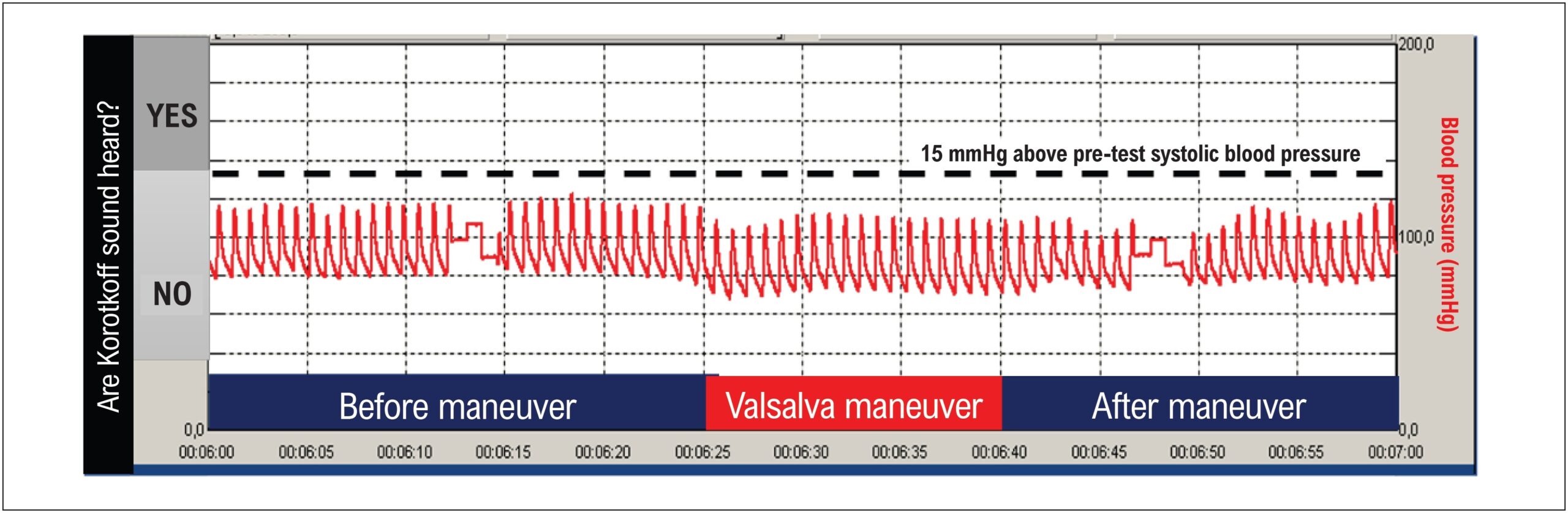
Is Your "Dry" Patient Really Not Congested? Physiological Basis and Clinical Use of Valsalva's Maneuver in Heart Failure

Renata R. T. Castro

Introduction

In 2003, Nohria et al. published a manuscript considered a game-changer in acute heart failure (HF) treatment. As by this manuscript, patients admitted with heart failure should be clinically classified into four hemodynamic profiles defined by the presence or absence of congestion and hypoperfusion. Congestion was defined by “recent history of orthopnea and/or physical exam evidence of rales, jugular venous distension, hepatojugular reflux, ascites, peripheral edema, left-ward radiation of the pulmonic heart sound, or a square wave blood pressure response to the Valsalva maneuver.”

More than 20 years after this publication, the Valsalva maneuver continues to be routinely used during clinical evaluation of patients admitted to the advanced heart failure service at the Brigham and Women’s Hospital (personal experience), where profiles were created and validated. However, despite the fact that clinical profile determination has become a routine procedure, few physicians have incorporated the Valsalva maneuver in their practices. To date, no study has compared the accuracy of the different clinical methods available for assessing congestion in patients with HF. Therefore, we should not categorize a patient as “dry” before all possibilities of congestion are excluded. It is possible that patients are being categorized as dry when, in fact, they have congestion that would only be identified by the Valsalva maneuver. Correct determination of hemodynamic profile is pivotal, as the existence of congestion and/or hypoperfusion guides the management of patients admitted with heart failure decompensation. This manuscript aims to review the physiological bases of the Valsalva maneuver, justifying and encouraging its use in clinical practice.

[…]

  • Heart Failure
  • Physical Examination
  • Valsalva Maneuver
Read Full Article
Creative Commons Attribution (CC BY) Creative Commons license
31/08/2024 DOI: 10.36660/abchf.20240039i Views 1
Figure 1
ABC
Viewpoint

The Importance of the Effective Valsalva Maneuver during Echocardiography in Hypertrophic Cardiomyopathy

Viviane Tiemi Hotta et al. Minna Moreira Dias Romano Silvio Henrique Barberato Marcelo Luiz Campos Vieira … Fábio Fernandes Marcus Vinicius Simões

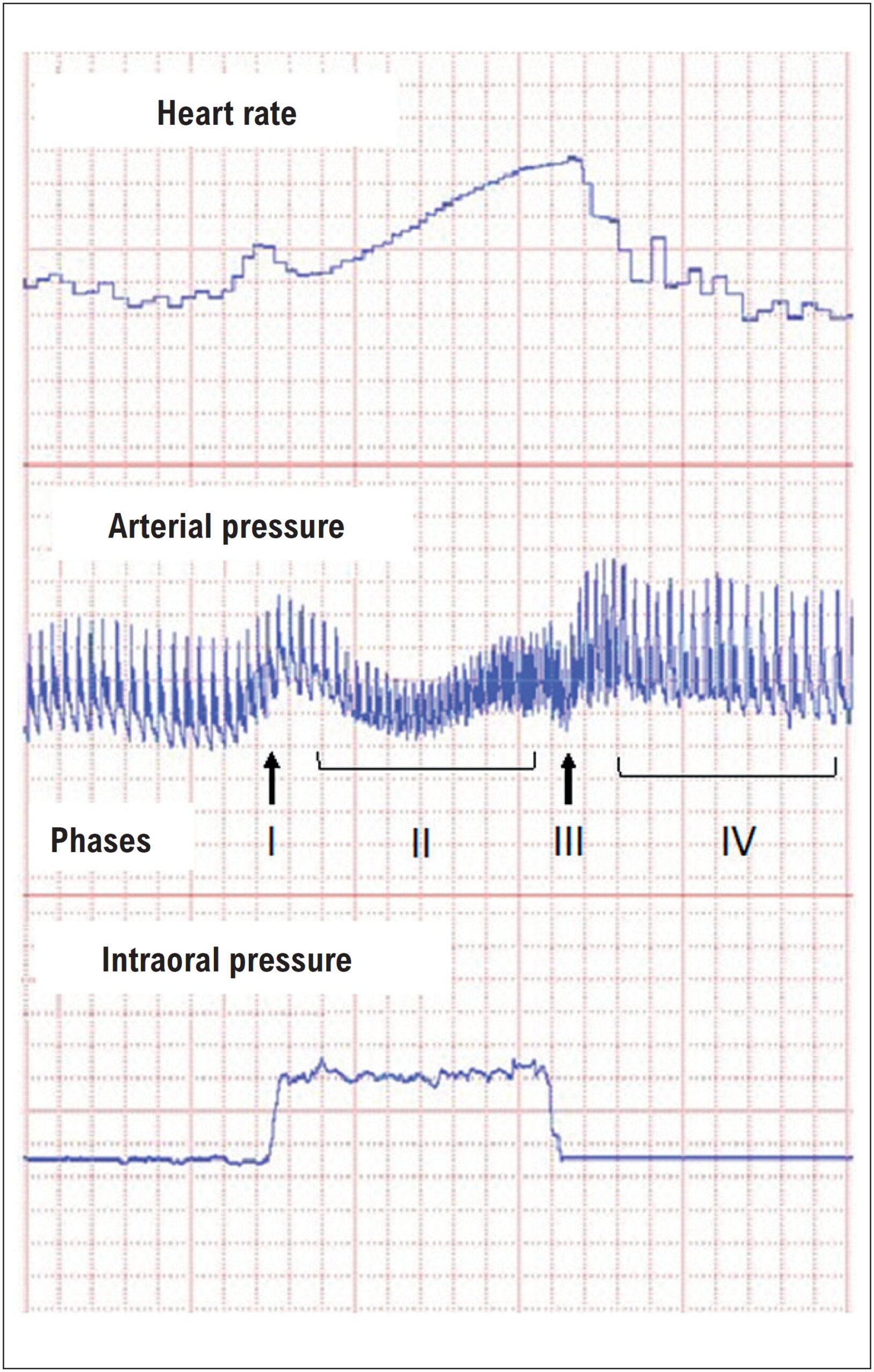
The Valsalva maneuver (VM) was first described in 1704 as a forceful expiration against the closed nose and glottis., At that time, no observations of the circulatory effects were mentioned. In 1853, Weber et al. described the hemodynamic and circulatory effects related to the VM, and it has been widely used in cardiology since then. The initial applications of the VM focused on the investigation of cardiac autonomic reflex control.

Currently, the VM is recommended in echocardiography, in specific scenarios, such as in patients with hypertrophic cardiomyopathy (HCM), for evaluation of dynamic left ventricular outflow tract (LVOT) obstruction. Nevertheless, its execution varies greatly, and there is a lack of standardization of pressure control and time of execution.

[…]

  • Echocardiography
  • Hypertrophic Cardiomyopathy
  • Valsalva Maneuver
Read Full Article
Creative Commons Attribution (CC BY) Creative Commons license
15/07/2024 DOI: 10.36660/abc.20230871i

How to cite this article

EndNote RIS

Electronic Document Format (Vancouver)

Castro RRT. Is Your “Dry” Patient Really Not Congested? Physiological Basis and Clinical Use of Valsalva’s Maneuver in Heart Failure. ABC Heart Fail Cardiomyop 2024;4(2):e20240039.

Electronic Document Format (ABNT)

Castro, Renata R. T.. Is Your “Dry” Patient Really Not Congested? Physiological Basis and Clinical Use of Valsalva’s Maneuver in Heart Failure. ABC Heart Fail Cardiomyop, v. 4, n. 2, e20240039, Nov. 2023.

Electronic Document Format (APA)

Castro, R. R. T. (2024). Is Your “Dry” Patient Really Not Congested? Physiological Basis and Clinical Use of Valsalva’s Maneuver in Heart Failure. ABC Heart Fail Cardiomyop, 4(2), e20240039.

Electronic Document Format (ISO)

Castro, Renata R. T.. Is Your “Dry” Patient Really Not Congested? Physiological Basis and Clinical Use of Valsalva’s Maneuver in Heart Failure. ABC Heart Fail Cardiomyop [online]. 2024, vol. 4, n. 2, [cited 2026-10-14], e20240039. Available from: <https://journals.cardiol.br/en/article/is-your-dry-patient-really-not-congested-physiological-basis-and-clinical-use-of-valsalvas-maneuver-in-heart-failure/>

EndNote RIS

Electronic Document Format (Vancouver)

Hotta VT, Romano MMD, Barberato SH, Vieira MLC, Fernandes F, Simões MV. The Importance of the Effective Valsalva Maneuver during Echocardiography in Hypertrophic Cardiomyopathy. Arquivos Brasileiros de Cardiologia 2024;121(7):e20230871.

Electronic Document Format (ABNT)

Hotta, Viviane Tiemi; Romano, Minna Moreira Dias; Barberato, Silvio Henrique; Vieira, Marcelo Luiz Campos; Fernandes, Fábio; Simões, Marcus Vinicius. The Importance of the Effective Valsalva Maneuver during Echocardiography in Hypertrophic Cardiomyopathy. Arquivos Brasileiros de Cardiologia, v. 121, n. 7, e20230871, Jul. 2024.

Electronic Document Format (APA)

Hotta, V. T., Romano, M. M. D., Barberato, S. H., Vieira, M. L. C., Fernandes, F., & Simões, M. V. (2024). The Importance of the Effective Valsalva Maneuver during Echocardiography in Hypertrophic Cardiomyopathy. Arquivos Brasileiros de Cardiologia, 121(7), e20230871.

Electronic Document Format (ISO)

Hotta, Viviane Tiemi and Romano, Minna Moreira Dias and Barberato, Silvio Henrique and Vieira, Marcelo Luiz Campos and Fernandes, Fábio and Simões, Marcus Vinicius. The Importance of the Effective Valsalva Maneuver during Echocardiography in Hypertrophic Cardiomyopathy. Arquivos Brasileiros de Cardiologia [online]. 2024, vol. 121, n. 7, [cited 2026-10-14], e20230871. Available from: <https://journals.cardiol.br/en/article/the-importance-of-the-effective-valsalva-maneuver-during-echocardiography-in-hypertrophic-cardiomyopathy/>. ISSN 0066-782X

  • About ABC Family
  • Internal Regulation
  • Editorial Board
  • Brazilian Society of Cardiology (SBC)

Issues

SBC Guidelines

  • Videos
  • Podcasts
  • News