ABC Family Arquivos Brasileiros de Cardiologia International Journal of Cardiovascular Sciences ABC Heart Failure & Cardiomyopathy ABC Imagem Cardiovascular
Português English
ABC Family
Português English
  • About
    • About ABC Family
    • Internal Regulation
    • Editorial Board
    • Brazilian Society of Cardiology (SBC)
  • Issues
  • SBC Guidelines
  • Content
    • Videos
    • Podcasts
    • News
  • About
    • About ABC Family
    • Internal Regulation
    • Editorial Board
    • Brazilian Society of Cardiology (SBC)
  • Issues
  • SBC Guidelines
  • Content
    • Videos
    • Podcasts
    • News

ABC Family

  • ABC Family
  • Arquivos Brasileiros de Cardiologia
  • International Journal of Cardiovascular Sciences
  • ABC Heart Failure & Cardiomyopathy
  • ABC Imagem Cardiovascular
Search in

No content found.

Journals
Ordering
Article types
Others

  1. Home
  2. Keyword: Ebstein Anomaly
Figure 1
ABCIC
Case Report

Implantation of a Post-Dilatable Stent in Aortic Coarctation Via Carotid Access in a Newborn With Ebstein's Anomaly: Case Report

Jonathan Guimarães Lombardi et al. Paulo Correia Calamita Orlando Carlos Barbosa Mayra Rosana Palmeira Barreto Giulliano Gardenghi

Introduction

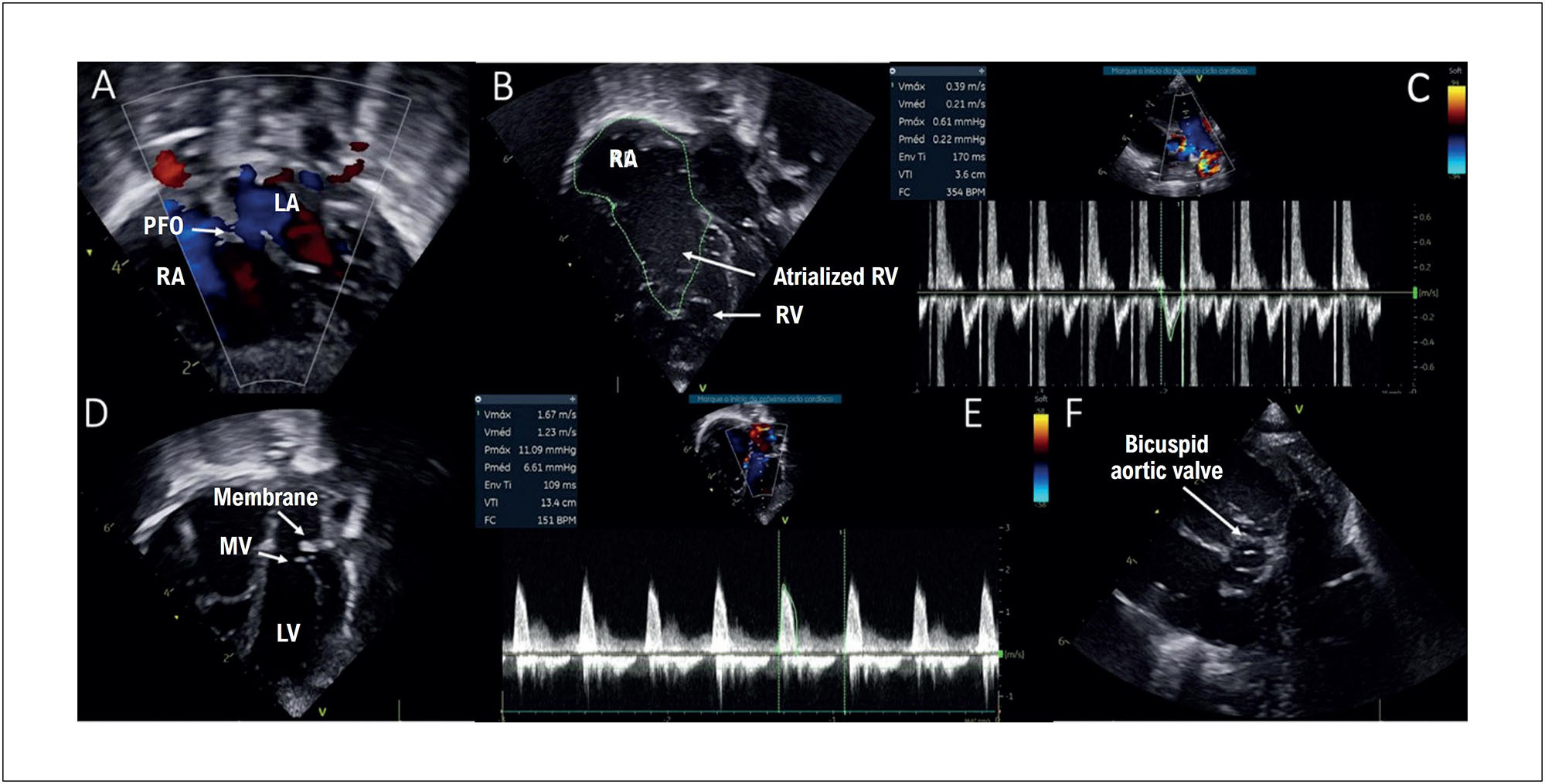
Ebstein’s anomaly is a complex congenital heart disease that occurs in one out of every 200,000 live births. Its association with left-sided obstructive lesions is rare and poses significant challenges for both clinical and surgical management. In this case report, we present a newborn patient with Ebstein’s anomaly associated with supravalvular mitral stenosis and coarctation of the aorta (CoA), who underwent cardiac catheterization for the implantation of a post-dilatable stent in the aortic isthmus via the carotid approach.

[…]
  • Aortic Coarctation
  • Cardiac Catheterization
  • Ebstein Anomaly
  • Newborn Infant
  • Stents
Read Full Article
Creative Commons Attribution (CC BY) Creative Commons license
04/03/2026 DOI: 10.36660/abcimg.20250085i Views 10
Figure 1
ABC
Image

Oscillating Ductal Stent in Valvar Pulmonary Atresia

Arun Gopalakrishnan et al. Kavassery Mahadevan Krishnamoorthy Paidi Suresh Kumar Sivasankaran Sivasubramonian

A 2.7 kg term neonate was diagnosed on day 3 of life with Ebstein’s anomaly of the tricuspid valve, severe tricuspid regurgitation, valvar pulmonary atresia and duct-dependent pulmonary circulation. The cardiothoracic ratio was 90%, and GOSE score was 1.48. Oxygen saturation was 65% and improved to 88% on 0.005 mcg/kg/min of prostaglandin. The right ventricular systolic pressure was 40mmHg against a systolic blood pressure of 65mmHg. The child was taken up for stenting of the arterial duct on day 7 of life after the confirmation of anatomic pulmonary atresia. The long arterial duct was stented with 3.5x16mm and 3.5x8mm stents, using a 4F right femoral artery access. Both the pulmonary and aortic ends were well covered and systemic saturation improved to 85% on room air and off prostaglandin.

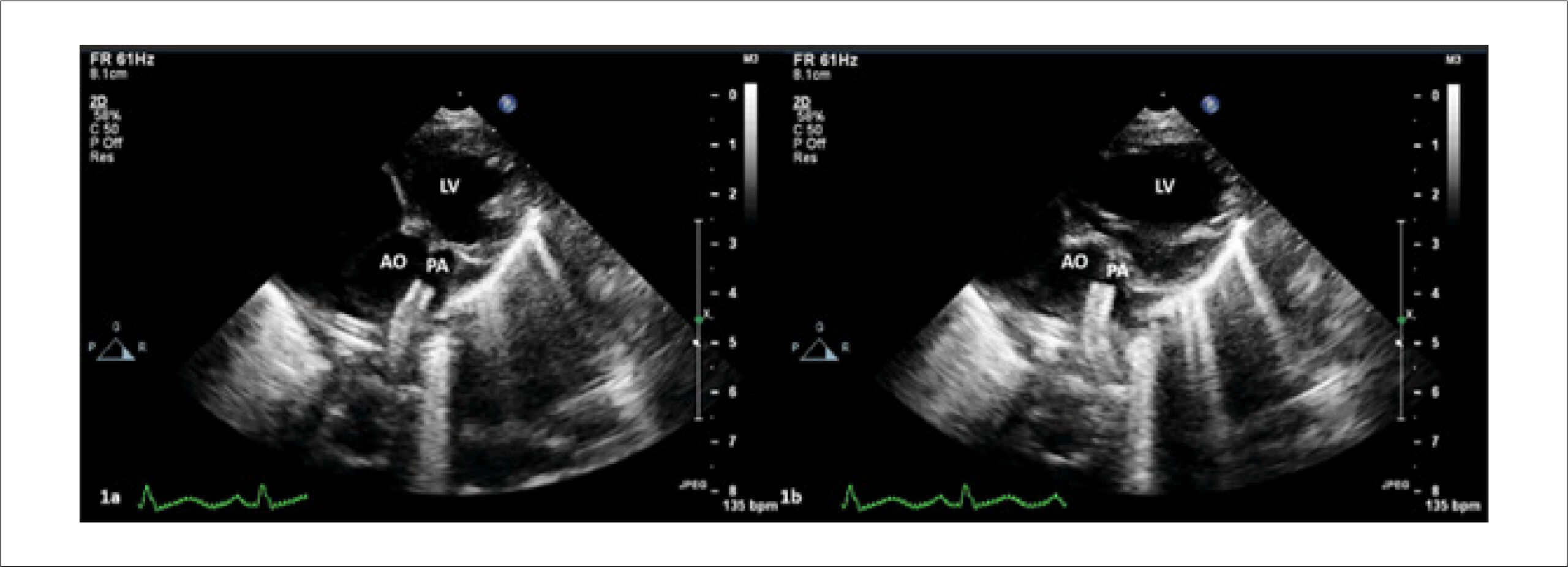
The post-procedure echocardiography confirmed a well-positioned stent with good flow. However, the stent appeared to oscillate with every cardiac cycle (, ). This “oscillating stent sign” was confirmed on the post-stenting aortic angiogram (). Valvar pulmonary atresia is associated with the well-described “seagull sign” on angiogram. Pooling of contrast in the main pulmonary artery that retains a fibrous attachment to pulmonary annular tissue leads to the seagull sign, with the branch pulmonary arteries assuming the shape of the wings of the ‘seagull’. Valvar pulmonary atresia is generally associated with a straight arterial duct inserted into the main pulmonary artery in half of the cases. Even when the duct is long and tortuous in the others, studies suggest that it is more readily negotiated during ductal stenting in valvar pulmonary atresia as opposed to long segment pulmonary atresia., The oscillation of the ductal stent in valvar pulmonary atresia with every cardiac cycle suggests that the pulmonary end of the stent is within the main pulmonary artery, which is an intrapericardial structure and faithfully reflects the mechanical contractions of the heart. We suggest that this echocardiographic finding may be utilized for the assessment of stent position with respect to the pulmonary end in valvar pulmonary atresia.

[…]

  • Ductus arteriosus, patent
  • Ebstein Anomaly
  • Echocardiography/methods
  • Heart Defects, Congenital
  • Pulmonary Atresia
Read Full Article
Creative Commons Attribution (CC BY) Creative Commons license
07/12/2020 DOI: 10.36660/abc.20190829 Views 1
Figure 1
ABC
Clinicoradiological Correlation

Case 5/2019 – Naturally Evolving Ebstein’s Anomaly of Discrete Repercussion in 24-Year-old Asymptomatic Adult

Edmar Atik et al. Maria Angélica Binotto Alessandra Costa Barreto

Clinical data

Patient reports 3 episodes of paroxysmal tachycardia of up to 20 minutes, accompanied by precordial pain in the past 7 years, all with spontaneous reversal. Four years prior, the patient presented another tachycardia with signs of low output, including pallor, visual turbidity, cold extremities and mental confusion, requiring electrical reversion. On that occasion, ventricular tachycardia ablation in the right ventricular (RV) inflow tract through the right posterior accessory pathway was successfully performed. Ebstein’s anomaly diagnosis was given for the first time by echocardiography scan, at that time. Ever since, the patient remained asymptomatic, living a normal life and with no medication.

Physical examination: Good general condition, eupneic, acyanotic, normal pulses in the 4 limbs. Weight: 80 kg, Height: 180 cm, BP: 110 x 70 mmHg, HR: 70 bpm, Sat O2 = 94%.

[…]

  • Cardiac Output,Low
  • Ebstein Anomaly
  • Echocardiography/methods
  • Magnetic Resonance Spectroscopy/ methods
  • Tachycardia,Paroxysmal
  • Tricuspide Valve Insufficiency
Read Full Article
Creative Commons Attribution (CC BY) Creative Commons license
10/10/2019 DOI: 10.5935/abc.20190158 Views 1
Figure 1
ABC
Image

Left Ventricular Rigid Body Rotation in Ebstein's Anomaly from the MAGYAR-Path Study

Attila Nemes et al. Kálmán Havasi Péter Domsik Anita Kalapos Tamás Forster

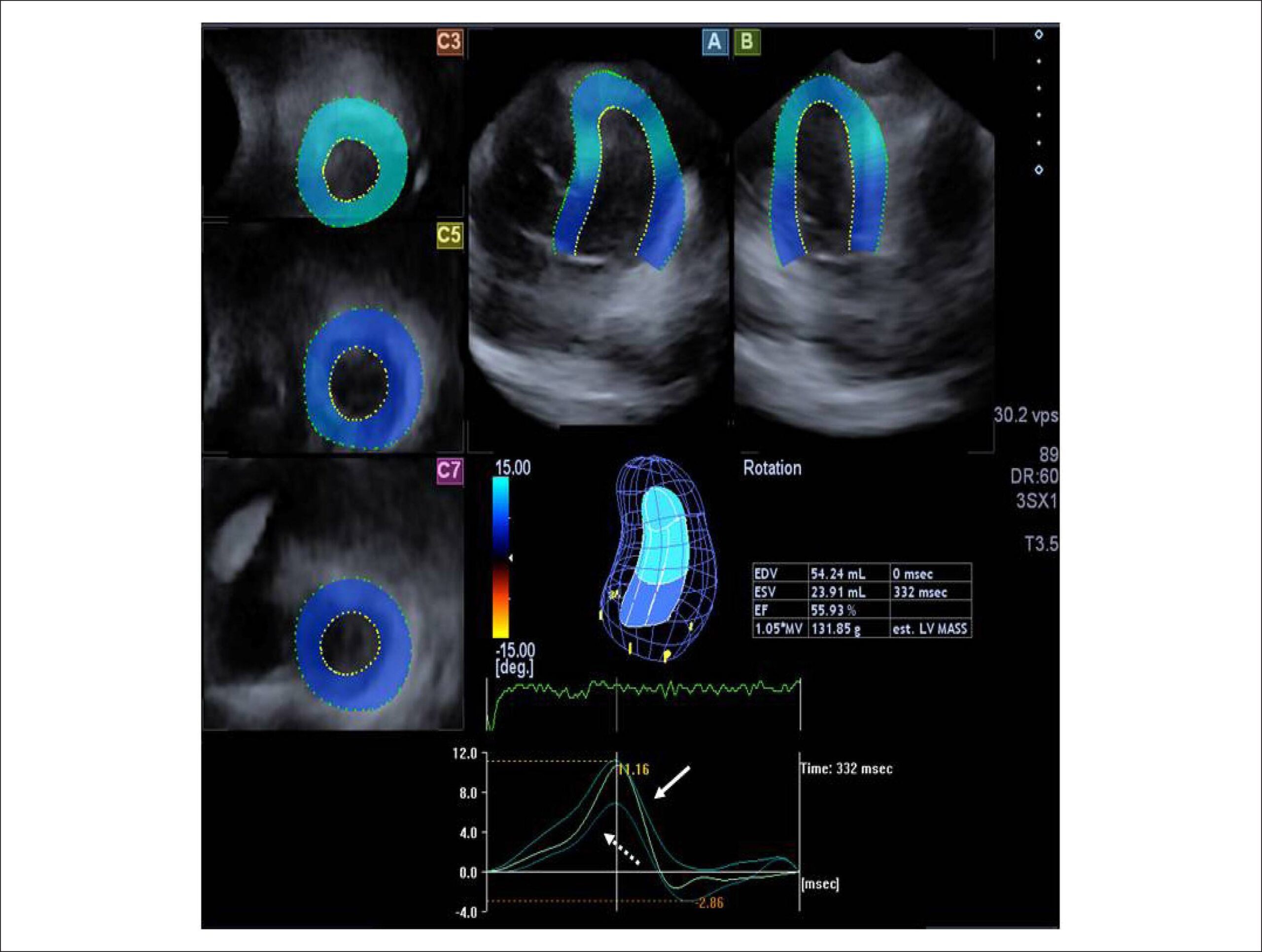
A 70-year-old female patient with Ebstein’s anomaly (EA) that had never undergone palliation was assessed (the case originates from the MAGYAR-Path Study). Complete two-dimensional (2D) Doppler and three-dimensional (3D) speckle-tracking echocardiography were carried out with commercially available Toshiba Artida™ echocardiography equipment. During 2D echocardiography, the septal leaflet-tricuspid annulus distance showed to be 25 mm, confirming EA. While the right ventricle (RV) was enlarged with tricuspid annular plane systolic excursion > 23 mm and mitral regurgitation grade III, left ventricular (LV) size and function showed to be normal with an ejection fraction of 56% without wall motion abnormalities. However, all LV regions moved in almost the same counterclockwise direction, confirming absence of LV twist, called “rigid body rotation” (RBR) (). The mean global LV radial, circumferential, longitudinal, 3D and area strain parameters showed to be 11.5 ± 10.0%, -25.5 ± 15.4%, -18.6 ± 10.2%, 15.2 ± 10.8% and -34.7 ± 20.8%, respectively. EA is a congenital heart defect in which septal and posterior leaflets of the tricuspid valve are displaced towards the RV apex, leading to RV partial atrialization, although the anatomic annulus of the valve is in the normal position. Malformation and displacement of the anterior leaflet can also be present. To the best of our knowledge, this is the first report to demonstrate LV-RBR, a known feature in LV myocardial mechanics, in a single patient with unrepaired EA. LV-RBR could be partially explained by the impaired ventricle-to-ventricle interactions due to displaced tricuspid valve leaflet attachments, alterations in the anatomic myocardial fiber orientation, but other reasons could also not be excluded.

[…]

  • Congenital Heart Defects
  • Ebstein Anomaly
  • Rotation
  • Torsion, Mechanical
Read Full Article
Creative Commons Attribution (CC BY) Creative Commons license
01/06/2016 DOI: 10.5935/abc.20160050 Views 1
Figure 1
ABC
Clinicoradiological Session

Case 1/2015 A 76-year-old Male Patient with Ebstein Anomaly in Natural Course

Atik Edmar

Laboratory tests

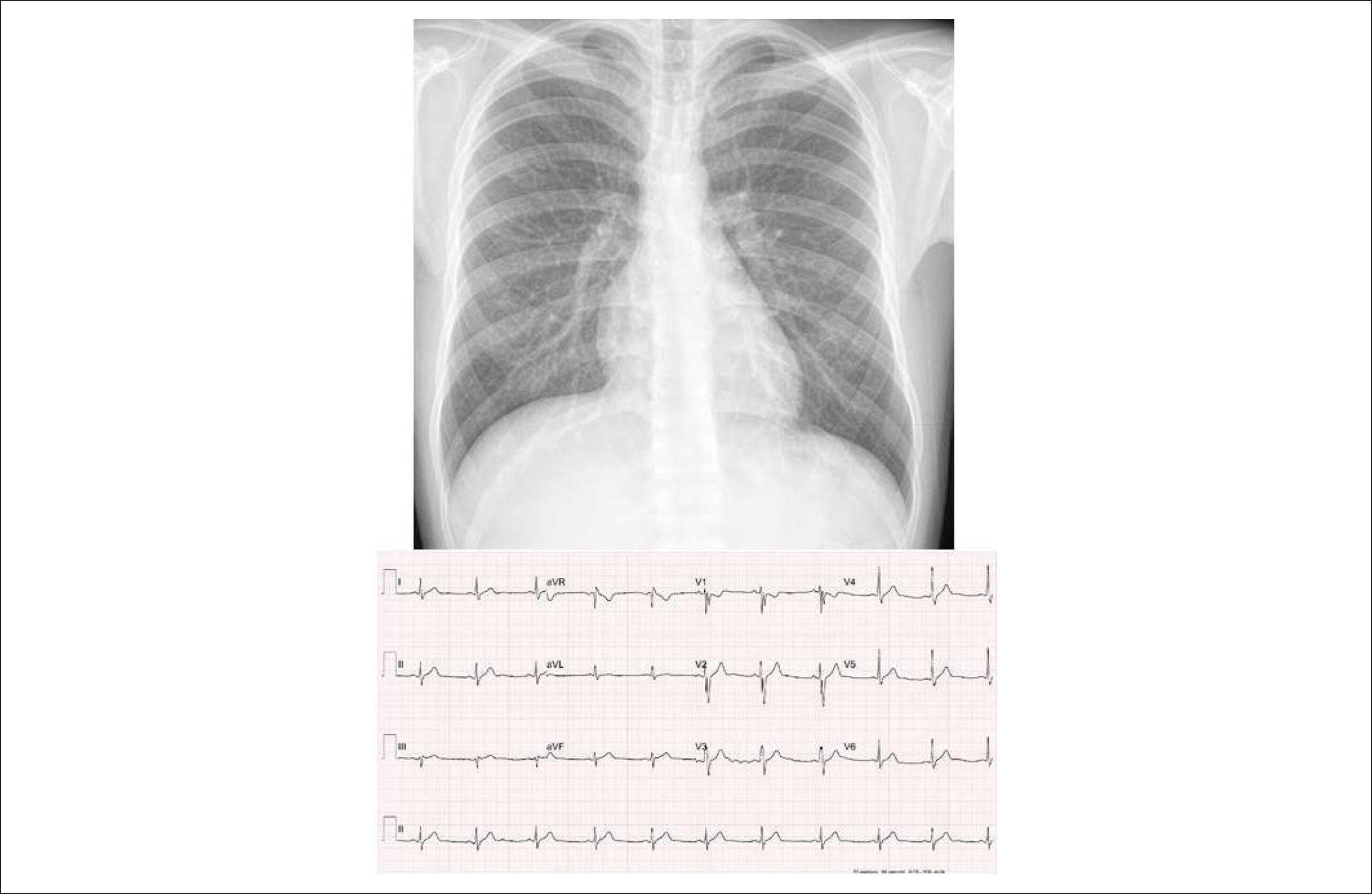
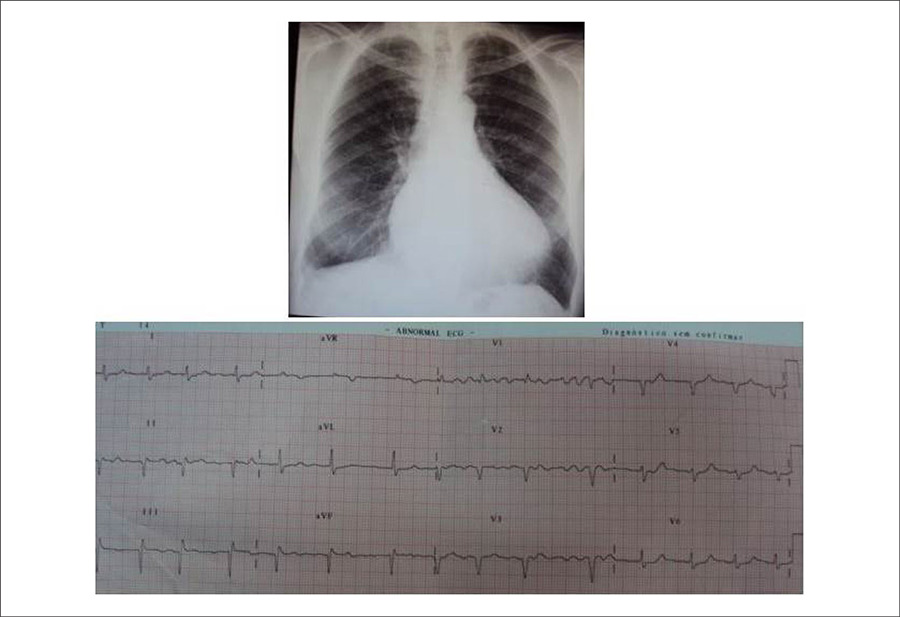
Electrocardiogram (ECG) showed atrial fibrillation, signs of right ventricular (RV) diastolic overload, and left anterior superior hemiblock. Low-voltage QRS complex with qr morphology in V1; RS in V6, with final conduction disturbance in the right bundle branch. QRSA: – 70º, TA: + 30° ().

Chest radiograph showed moderately enlarged cardiac silhouette (cardiothoracic ratio: 0.61), resulting from enlarged right chambers. The pulmonary vascular network was slightly decreased, the arch of the pulmonary artery was concave, and the aortic knob was prominent. ().

[…]

  • Ebstein Anomaly
  • Heart Defects, Congenital
Read Full Article
Creative Commons Attribution (CC BY) Creative Commons license
01/01/2015 DOI: 10.5935/abc.20150004 Views 1
Cone reconstruction in Ebstein's anomaly repair: early and long-term results
ABC
Artigo Original

Cone reconstruction in Ebstein's anomaly repair: early and long-term results

José Pedro da Silva et al. Luciana da Fonseca da Silva Luiz Felipe P. Moreira Lilian Maria Lopez … Sônia Meiken Franchi Alessandro Cavalcante Lianza José Francisco Baumgratz Glaucia Maria P. Tavares

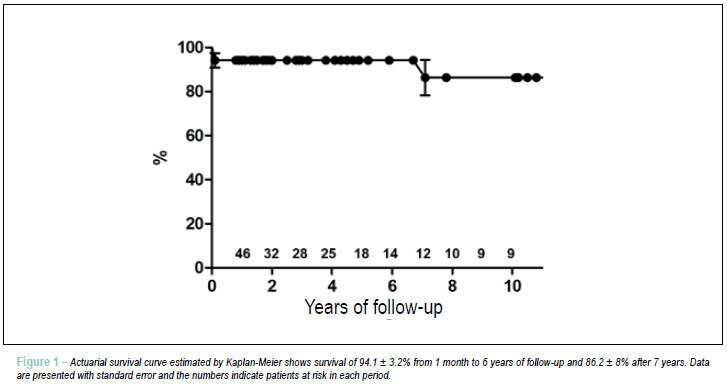
BACKGROUND: The main Ebstein anomaly (EA) repairs are based on the monocusp reconstruction of the tricuspid valve and are limited by the frequent need for replacement or the high recurrence of valve regurgitation. OBJECTIVE: To evaluate the feasibility and effects of anatomical repair of Ebstein’s anomaly using the cone reconstruction technique on patients’ clinical evaluation, tricuspid valve function and right ventricular morphology. METHODS: We compared the clinical, echocardiographic and radiological data of 52 consecutive patients, with a mean age of 18.5 ± 13.8 years, submitted to the cone reconstruction technique, obtained in the preoperative, early postoperative (EPO) and long-term (LPO) periods. RESULTS: There were two in-hospital deaths (3.8%) and two more during the follow-up. Mean functional class of pre-operative heart failure improved from 2.2 to 1.2 after 57 months of mean follow up of 97% of patients (p <0.001). The mean degree of preoperative tricuspid regurgitation decreased from 3.6 to 1.6 in the EPO (p 0.05). The indexed RV functional area increased from 8.53 ± 7.02 cm2/m2 preoperatively to 21.01 ± 6.87 cm2/m2 in the EPO (p 0.05). The mean cardiothoracic ratio was decreased from 0.66 ± 0.09 to 0.54 ± 0.06 (p <0.001) in the long term. CONCLUSION: The cone technique showed low in-hospital mortality, resulting in an effective and long-lasting repair of tricuspid regurgitation, restoring the functional area of the right ventricle and allowing reverse remodeling of the heart and clinical improvement in most patients in the long term.

  • Ebstein Anomaly
  • physiopathology
  • Surgery
Read Full Article
Creative Commons Attribution (CC BY) Creative Commons license
05/08/2011 DOI: 10.1590/S0066-782X2011005000084 Views 1

How to cite this article

EndNote RIS

Electronic Document Format (Vancouver)

Lombardi JG, Calamita PC, Barbosa OC, Barreto MRP, Gardenghi G. Implantation of a Post-Dilatable Stent in Aortic Coarctation Via Carotid Access in a Newborn With Ebstein’s Anomaly: Case Report. ABC Imagem Cardiovascular 2026;39(1):e20250085.

Electronic Document Format (ABNT)

Lombardi, Jonathan Guimarães; Calamita, Paulo Correia; Barbosa, Orlando Carlos; Barreto, Mayra Rosana Palmeira; Gardenghi, Giulliano. Implantation of a Post-Dilatable Stent in Aortic Coarctation Via Carotid Access in a Newborn With Ebstein’s Anomaly: Case Report. ABC Imagem Cardiovascular, v. 39, n. 1, e20250085, Mar. 2026.

Electronic Document Format (APA)

Lombardi, J. G., Calamita, P. C., Barbosa, O. C., Barreto, M. R. P., & Gardenghi, G. (2026). Implantation of a Post-Dilatable Stent in Aortic Coarctation Via Carotid Access in a Newborn With Ebstein’s Anomaly: Case Report. ABC Imagem Cardiovascular, 39(1), e20250085.

Electronic Document Format (ISO)

Lombardi, Jonathan Guimarães and Calamita, Paulo Correia and Barbosa, Orlando Carlos and Barreto, Mayra Rosana Palmeira and Gardenghi, Giulliano. Implantation of a Post-Dilatable Stent in Aortic Coarctation Via Carotid Access in a Newborn With Ebstein’s Anomaly: Case Report. ABC Imagem Cardiovascular [online]. 2026, vol. 39, n. 1, [cited 2026-10-14], e20250085. Available from: <https://journals.cardiol.br/en/article/implantation-of-a-post-dilatable-stent-in-aortic-coarctation-via-carotid-access-in-a-newborn-with-ebsteins-anomaly-case-report/>. ISSN 2318-8219

EndNote RIS

Electronic Document Format (Vancouver)

Gopalakrishnan A, Krishnamoorthy KM, Kumar PS, Sivasubramonian S. Oscillating Ductal Stent in Valvar Pulmonary Atresia. Arquivos Brasileiros de Cardiologia 2020;115(5):961-3.

Electronic Document Format (ABNT)

Gopalakrishnan, Arun; Krishnamoorthy, Kavassery Mahadevan; Kumar, Paidi Suresh; Sivasubramonian, Sivasankaran. Oscillating Ductal Stent in Valvar Pulmonary Atresia. Arquivos Brasileiros de Cardiologia, v. 115, n. 5, p. 961-963, Dec. 2020.

Electronic Document Format (APA)

Gopalakrishnan, A., Krishnamoorthy, K. M., Kumar, P. S., & Sivasubramonian, S. (2020). Oscillating Ductal Stent in Valvar Pulmonary Atresia. Arquivos Brasileiros de Cardiologia, 115(5), 961-963.

Electronic Document Format (ISO)

Gopalakrishnan, Arun and Krishnamoorthy, Kavassery Mahadevan and Kumar, Paidi Suresh and Sivasubramonian, Sivasankaran. Oscillating Ductal Stent in Valvar Pulmonary Atresia. Arquivos Brasileiros de Cardiologia [online]. 2020, vol. 115, n. 5, [cited 2026-10-14], pp. 961-963. Available from: <https://journals.cardiol.br/en/article/oscillating-ductal-stent-in-valvar-pulmonary-atresia/>. ISSN 0066-782X

EndNote RIS

Electronic Document Format (Vancouver)

Atik E, Binotto MA, Barreto AC. Case 5/2019 – Naturally Evolving Ebstein’s Anomaly of Discrete Repercussion in 24-Year-old Asymptomatic Adult. Arquivos Brasileiros de Cardiologia 2019;113(3):435-7.

Electronic Document Format (ABNT)

Atik, Edmar; Binotto, Maria Angélica; Barreto, Alessandra Costa. Case 5/2019 – Naturally Evolving Ebstein’s Anomaly of Discrete Repercussion in 24-Year-old Asymptomatic Adult. Arquivos Brasileiros de Cardiologia, v. 113, n. 3, p. 435-437, Oct. 2019.

Electronic Document Format (APA)

Atik, E., Binotto, M. A., & Barreto, A. C. (2019). Case 5/2019 – Naturally Evolving Ebstein’s Anomaly of Discrete Repercussion in 24-Year-old Asymptomatic Adult. Arquivos Brasileiros de Cardiologia, 113(3), 435-437.

Electronic Document Format (ISO)

Atik, Edmar and Binotto, Maria Angélica and Barreto, Alessandra Costa. Case 5/2019 – Naturally Evolving Ebstein’s Anomaly of Discrete Repercussion in 24-Year-old Asymptomatic Adult. Arquivos Brasileiros de Cardiologia [online]. 2019, vol. 113, n. 3, [cited 2026-10-14], pp. 435-437. Available from: <https://journals.cardiol.br/en/article/case-5-2019-naturally-evolving-ebsteins-anomaly-of-discrete-repercussion-in-24-year-old-asymptomatic-adult/>. ISSN 0066-782X

EndNote RIS

Electronic Document Format (Vancouver)

Nemes A, Havasi K, Domsik P, Kalapos A, Forster T. Left Ventricular Rigid Body Rotation in Ebstein’s Anomaly from the MAGYAR-Path Study. Arquivos Brasileiros de Cardiologia 2016;106(6):544-5.

Electronic Document Format (ABNT)

Nemes, Attila; Havasi, Kálmán; Domsik, Péter; Kalapos, Anita; Forster, Tamás. Left Ventricular Rigid Body Rotation in Ebstein’s Anomaly from the MAGYAR-Path Study. Arquivos Brasileiros de Cardiologia, v. 106, n. 6, p. 544-545, May. 2016.

Electronic Document Format (APA)

Nemes, A., Havasi, K., Domsik, P., Kalapos, A., & Forster, T. (2016). Left Ventricular Rigid Body Rotation in Ebstein’s Anomaly from the MAGYAR-Path Study. Arquivos Brasileiros de Cardiologia, 106(6), 544-545.

Electronic Document Format (ISO)

Nemes, Attila and Havasi, Kálmán and Domsik, Péter and Kalapos, Anita and Forster, Tamás. Left Ventricular Rigid Body Rotation in Ebstein’s Anomaly from the MAGYAR-Path Study. Arquivos Brasileiros de Cardiologia [online]. 2016, vol. 106, n. 6, [cited 2026-10-14], pp. 544-545. Available from: <https://journals.cardiol.br/en/article/left-ventricular-rigid-body-rotation-in-ebsteins-anomaly-from-the-magyar-path-study/>. ISSN 0066-782X

EndNote RIS

Electronic Document Format (Vancouver)

Edmar A. Case 1/2015 A 76-year-old Male Patient with Ebstein Anomaly in Natural Course. Arquivos Brasileiros de Cardiologia 2015;104(1):e1-3.

Electronic Document Format (ABNT)

Edmar, Atik. Case 1/2015 A 76-year-old Male Patient with Ebstein Anomaly in Natural Course. Arquivos Brasileiros de Cardiologia, v. 104, n. 1, p. e1-e3, Dec. 2014.

Electronic Document Format (APA)

Edmar, A. (2015). Case 1/2015 A 76-year-old Male Patient with Ebstein Anomaly in Natural Course. Arquivos Brasileiros de Cardiologia, 104(1), e1-e3.

Electronic Document Format (ISO)

Edmar, Atik. Case 1/2015 A 76-year-old Male Patient with Ebstein Anomaly in Natural Course. Arquivos Brasileiros de Cardiologia [online]. 2015, vol. 104, n. 1, [cited 2026-10-14], pp. e1-e3. Available from: <https://journals.cardiol.br/en/article/case-1-2015-a-76-year-old-male-patient-with-ebstein-anomaly-in-natural-course/>. ISSN 0066-782X

EndNote RIS

Electronic Document Format (Vancouver)

Silva JP, Silva LF, Moreira LFP, Lopez LM, Franchi SM, Lianza AC, Baumgratz JF, et al. Cone reconstruction in Ebstein’s anomaly repair: early and long-term results. Arquivos Brasileiros de Cardiologia 2011;97(3):199-208.

Electronic Document Format (ABNT)

Silva, José Pedro da; Silva, Luciana da Fonseca da; Moreira, Luiz Felipe P.; Lopez, Lilian Maria; Franchi, Sônia Meiken; Lianza, Alessandro Cavalcante; Baumgratz, José Francisco; Tavares, Glaucia Maria P.. Cone reconstruction in Ebstein’s anomaly repair: early and long-term results. Arquivos Brasileiros de Cardiologia, v. 97, n. 3, p. 199-208, Aug. 2011.

Electronic Document Format (APA)

Silva, J. P. , Silva, L. F. , Moreira, L. F. P., Lopez, L. M., Franchi, S. M., Lianza, A. C., Baumgratz, J. F., & Tavares, G. M. P. (2011). Cone reconstruction in Ebstein’s anomaly repair: early and long-term results. Arquivos Brasileiros de Cardiologia, 97(3), 199-208.

Electronic Document Format (ISO)

Silva, José Pedro da and Silva, Luciana da Fonseca da and Moreira, Luiz Felipe P. and Lopez, Lilian Maria and Franchi, Sônia Meiken and Lianza, Alessandro Cavalcante and Baumgratz, José Francisco and Tavares, Glaucia Maria P.. Cone reconstruction in Ebstein’s anomaly repair: early and long-term results. Arquivos Brasileiros de Cardiologia [online]. 2011, vol. 97, n. 3, [cited 2026-10-14], pp. 199-208. Available from: <https://journals.cardiol.br/en/article/cone-reconstruction-in-ebsteins-anomaly-repair-early-and-long-term-results/>. ISSN 0066-782X

  • About ABC Family
  • Internal Regulation
  • Editorial Board
  • Brazilian Society of Cardiology (SBC)

Issues

SBC Guidelines

  • Videos
  • Podcasts
  • News