ABC Family Arquivos Brasileiros de Cardiologia International Journal of Cardiovascular Sciences ABC Heart Failure & Cardiomyopathy ABC Imagem Cardiovascular
Português English
ABC Family
Português English
  • About
    • About ABC Family
    • Internal Regulation
    • Editorial Board
    • Brazilian Society of Cardiology (SBC)
  • Issues
  • SBC Guidelines
  • Content
    • Videos
    • Podcasts
    • News
  • About
    • About ABC Family
    • Internal Regulation
    • Editorial Board
    • Brazilian Society of Cardiology (SBC)
  • Issues
  • SBC Guidelines
  • Content
    • Videos
    • Podcasts
    • News

ABC Family

  • ABC Family
  • Arquivos Brasileiros de Cardiologia
  • International Journal of Cardiovascular Sciences
  • ABC Heart Failure & Cardiomyopathy
  • ABC Imagem Cardiovascular
Search in

No content found.

Journals
Ordering
Article types
Others

  1. Home
  2. Keyword: Experimental
Figure 1
ABC
Acute Coronary Syndrome

Protective Effect of Ischemic Preconditioning on Myocardium Against Remote Tissue Injury Following Transient Focal Cerebral Ischemia in Diabetic Rats

Meltem Kumas et al. Ozge Altintas Ersin Karatas Abdurrahim Kocyigit

Abstract

Background:

Remote ischemic preconditioning (IPreC) could provide tissue-protective effect at a remote site by anti-inflammatory, neuronal, and humoral signaling pathways.

Objectives:

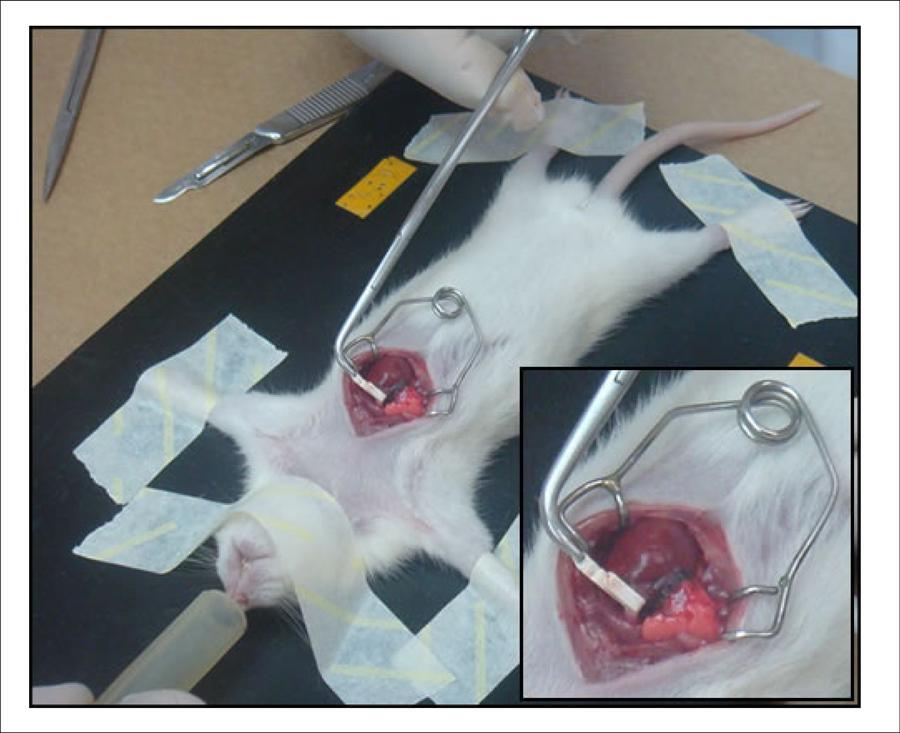
The aim of the study was to investigate the possible protective effects of remote IPreC on myocardium after transient middle cerebral artery occlusion (MCAo) in streptozotocin- induced diabetic (STZ) and non-diabetic rats.

Methods:

48 male Spraque Dawley rats were divided into eight groups: Sham, STZ, IPreC, MCAo, IPreC+MCAo, STZ+IPreC, STZ+MCAo and STZ+IPreC+MCAo groups. We induced transient MCAo seven days after STZ-induced diabetes, and performed IPreC 72 hours before transient MCAo. Remote myocardial injury was investigated histopathologically. Bax, Bcl2 and caspase-3 protein levels were measured by Western blot analysis. Total antioxidant status (TAS), total oxidant status (TOS) of myocardial tissue were measured by colorimetric assay. Oxidative stress index(OSI) was calculated as TOS-to-TAS ratio. For all statistical analysis, p values < 0.05 were considered significant.

Results:

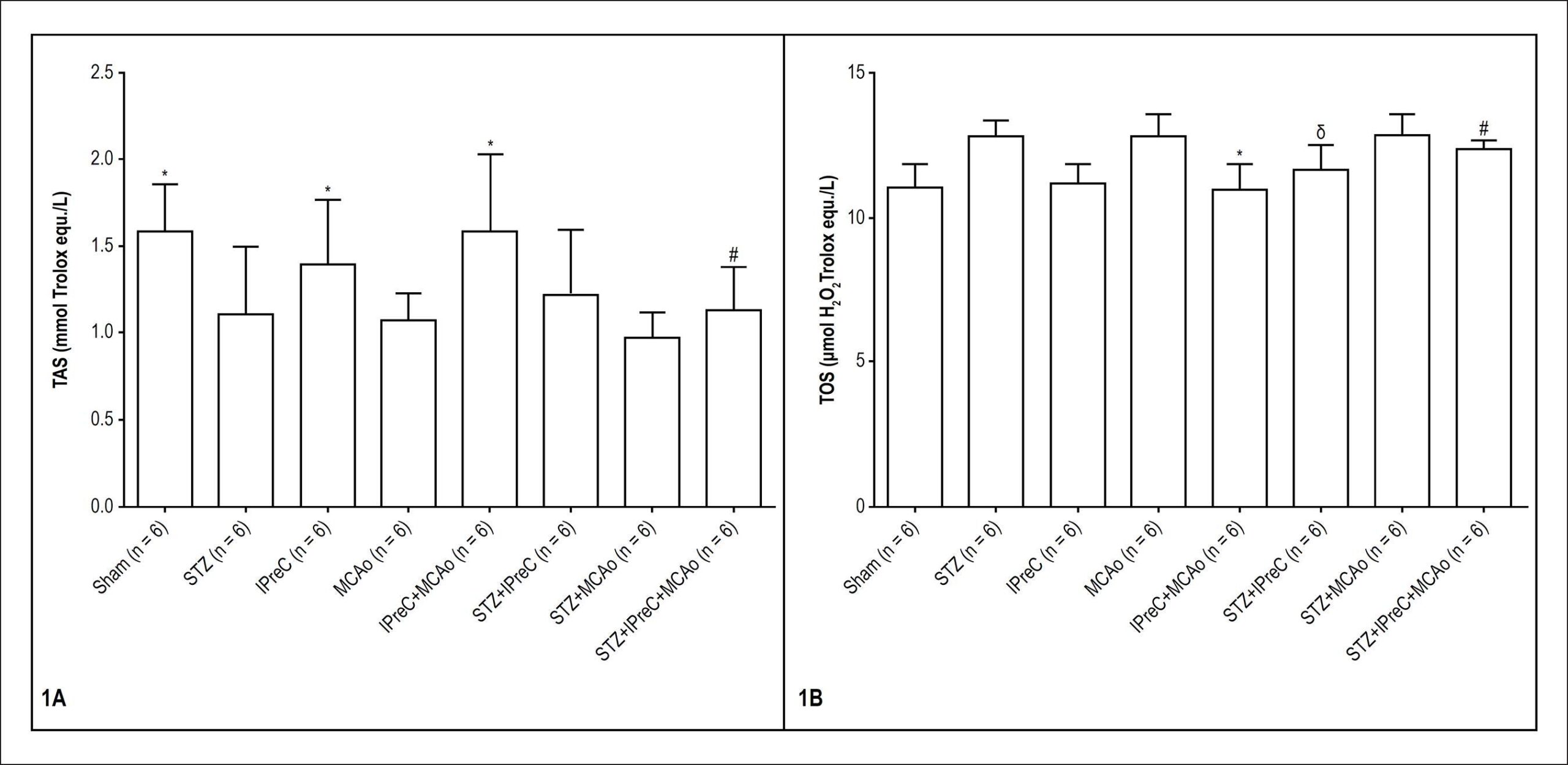
We observed serious damage including necrosis, congestion and mononuclear cell infiltration in myocardial tissue of the diabetic and ischemic groups. In these groups TOS and OSI levels were significantly higher; TAS levels were lower than those of IPreC related groups (p < 0.05). IPreC had markedly improved histopathological alterations and increased TAS levels in IPreC+MCAo and STZ+IPreC+MCAo compared to MCAo and STZ+MCAo groups (p < 0.05). In non-diabetic rats, MCAo activated apoptotic cell death via increasing Bax/Bcl2 ratio and caspase-3 levels. IPreC reduced apoptotic cell death by suppressing pro-apoptotic proteins. Diabetes markedly increased apoptotic protein levels and the effect did not reversed by IPreC.

Conclusions:

We could suggest that IPreC attenuates myocardial injury via ameliorating histological findings, activating antioxidant mechanisms, and inducing antiapoptotic activity in diabetic rats.
  • Diabetes Mellitus
  • Experimental
  • Ischemic Preconditioning Myocardial
  • Middle Cerebral Artery
  • Rats
Read Full Article
Creative Commons Attribution (CC BY) Creative Commons license
13/11/2017 DOI: 10.5935/abc.20170164 Views 1
Figure 1
ABC
Special Article

Multivariate Analysis for Animal Selection in Experimental Research

Renan Mercuri Pinto et al. Dijon Henrique Salomé de Campos Loreta Casquel Tomasi Antonio Carlos Cicogna … Katashi Okoshi Carlos Roberto Padovani

Background:

Several researchers seek methods for the selection of homogeneous groups of animals in experimental studies, a fact justified because homogeneity is an indispensable prerequisite for casualization of treatments. The lack of robust methods that comply with statistical and biological principles is the reason why researchers use empirical or subjective methods, influencing their results.

Objective:

To develop a multivariate statistical model for the selection of a homogeneous group of animals for experimental research and to elaborate a computational package to use it.

Methods:

The set of echocardiographic data of 115 male Wistar rats with supravalvular aortic stenosis (AoS) was used as an example of model development. Initially, the data were standardized, and became dimensionless. Then, the variance matrix of the set was submitted to principal components analysis (PCA), aiming at reducing the parametric space and at retaining the relevant variability. That technique established a new Cartesian system into which the animals were allocated, and finally the confidence region (ellipsoid) was built for the profile of the animals’ homogeneous responses. The animals located inside the ellipsoid were considered as belonging to the homogeneous batch; those outside the ellipsoid were considered spurious.

Results:

The PCA established eight descriptive axes that represented the accumulated variance of the data set in 88.71%. The allocation of the animals in the new system and the construction of the confidence region revealed six spurious animals as compared to the homogeneous batch of 109 animals.

Conclusion:

The biometric criterion presented proved to be effective, because it considers the animal as a whole, analyzing jointly all parameters measured, in addition to having a small discard rate.

  • Animals
  • Aortic Valve Stenosis
  • Epidemiology
  • Experimental
  • multivariate analysis
Read Full Article
Creative Commons Attribution (CC BY) Creative Commons license
03/02/2015 DOI: 10.5935/abc.20140219 Views 1
Figure 1
ABC
Artigo Original

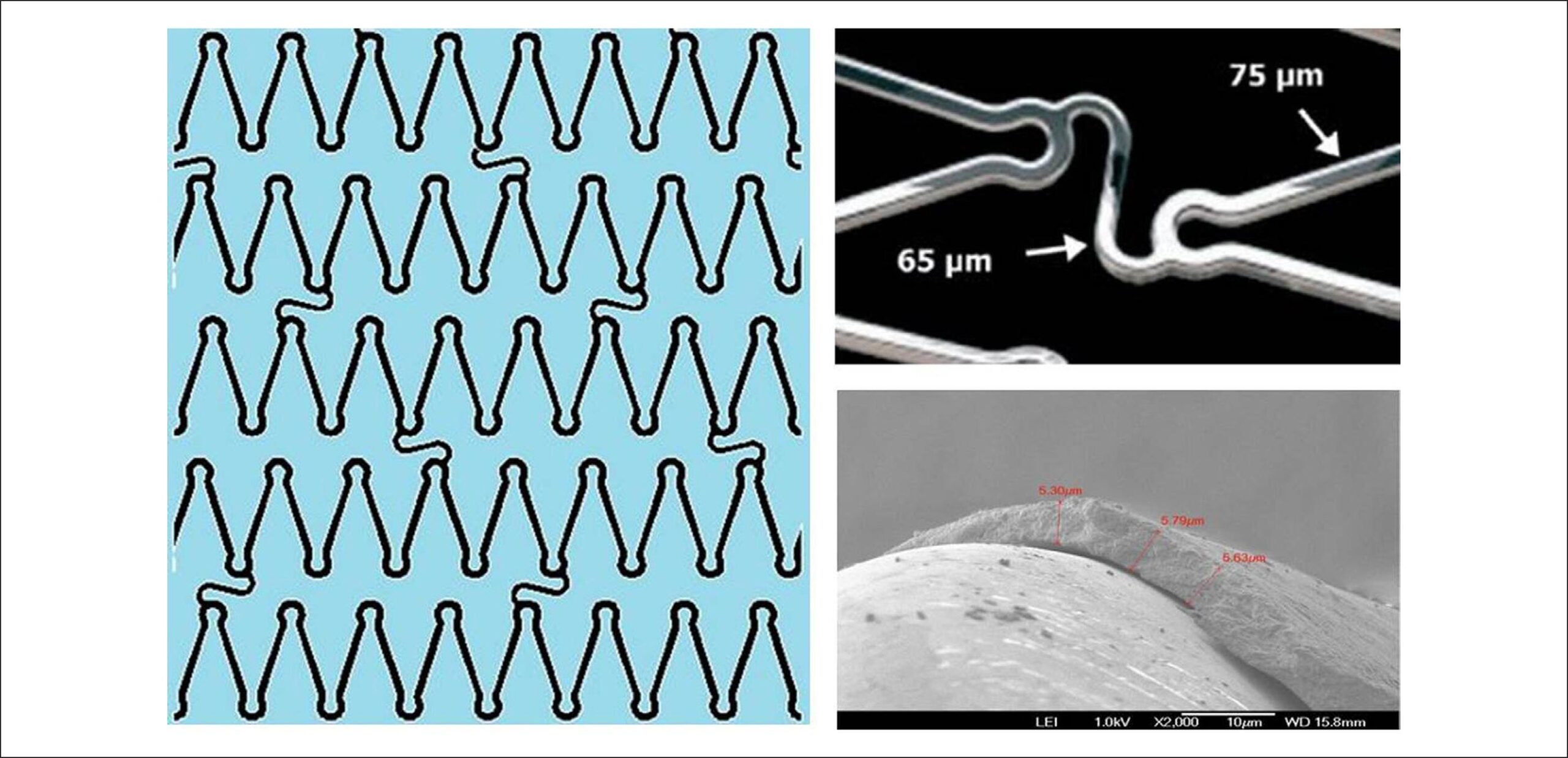
Preclinical Study of a Biodegradable Polymer-based Stent with Abluminal Sirolimus Release

Celso Kiyochi Takimura et al. Carlos Augusto Homem M. Campos Pedro Henrique Magualhães Craveiro Melo Julliana Carvalho Campos … Paulo Sampaio Gutierrez Thiago Francisco Costa Borges Luciano Curado Spero Penha Morato Francisco Rafael Martins Laurindo Pedro Alves Lemos Neto

Background:

Bioabsorbable polymer stents with drug elution only on the abluminal surface may be safer than durable polymer drug-eluting stents.

Objective:

To report the experimental findings with the Inspiron(tm) stent – a bioabsorbable polymer-coated stent with sirolimus release from the abluminal surface only, recently approved for clinical use.

Methods:

45 stents were implanted in the coronary arteries of 15 pigs. On day 28 after implantation, angiographic, intracoronary ultrasonographic and histomorphological data were collected. Five groups were analyzed: Group I (nine bare-metal stents); Group II (nine coated with bioabsorbable polymer on the luminal and abluminal surfaces); Group III (eight stents coated with bioabsorbable polymer on the abluminal surface); Group IV (nine stents with bioabsorbable polymer and sirolimus on the luminal and abluminal surfaces); and Group V (ten stents with bioabsorbable polymer and sirolimus only on the abluminal surface).

Results:

The following results were observed for Groups I, II, III, IV and V, respectively: percentage stenosis of 29 ± 20; 36 ± 14; 33 ± 19; 22 ± 13 and 26 ± 15 (p = 0.443); late lumen loss (in mm) of 1.02 ± 0.60; 1.24 ± 0.48; 1.11 ± 0.54; 0.72 ± 0.44 and 0.78 ± 0.39 (p = 0.253); neointimal area (in mm )) of 2.60 ± 1.99; 2.74 ± 1.51; 2.74 ± 1.30; 1.30 ± 1.14 and 0.97 ± 0.84 (p = 0.001; Groups IV and V versus Groups I, II and III); and percentage neointimal area of 35 ± 25; 38 ± 18; 39 ± 19; 19 ± 18 and 15 ± 12 (p = 0.001; Groups IV and V versus Groups I, II and III). Injury and inflammation scores were low and with no differences between the groups.

Conclusion:

The Inspiron(tm) stent proved to be safe and was able to significantly inhibit the neointimal hyperplasia observed on day 28 after implantation in porcine coronary arteries.

  • Drug-Eluting Stents
  • Epidemiology
  • Experimental
  • Sirolimus
Read Full Article
Creative Commons Attribution (CC BY) Creative Commons license
17/04/2014 DOI: 10.5935/abc.20140044 Views 1
Effects of metformin on QT and QTc interval dispersion of diabetic rats
ABC
Artigo Original

Effects of metformin on QT and QTc interval dispersion of diabetic rats

Eunice Cristina da Silva Costa et al. Antonio Ari Gonçalves Miguel Arcanjo Areas Rafael Gustavo Birochi Morgabel

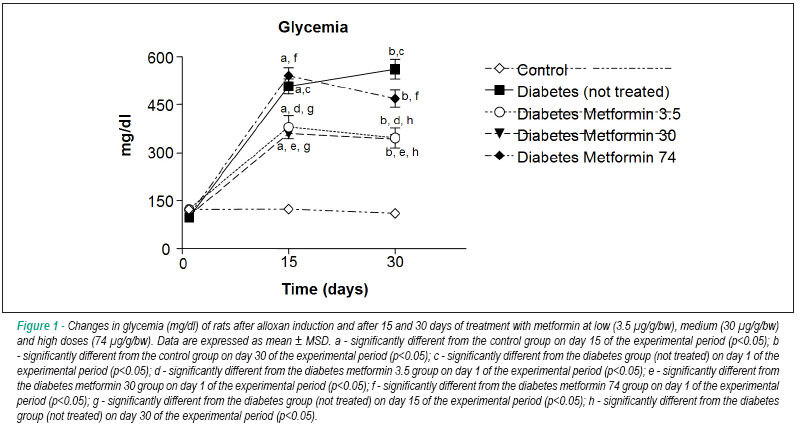
BACKGROUND: Several drugs can cause prolonged QT interval, as well as prolonged QT dispersion (QTd) in electrocardiographic (EKG) recordings. QTd may be a potentially sensitive marker of increased risk of cardiac arrhythmias and sudden cardiac death. Metformin is an effective antihyperglycemic agent used in the treatment of diabetes. However, studies have correlated dose-dependent effects of metformin on glycemia and cardiovascular risk markers. OBJECTIVE: To evaluate the dose-response effects of metformin on QT and QTd of diabetic rats. METHODS: Male Wistar rats were distributed in five groups: non-treated control (C), non-treated diabetics (D), diabetics treated with metmorfin at the doses of 3.5, 30 and 74 µg/kg/bw (DM 3.5, DM 30 and DM 74). Diabetes was induced by an alloxan injection (40 mg/kg, IV). EKG was recorded (days 1, 15 and 30) using four electrodes inserted into the subcutaneous layer of the paws. Both RR and QT intervals were measured, and then corrected QT and QT dispersion values were calculated. RESULTS: The DM 3.5 and DM 30 groups showed a significant reduction of glycemia (p< 0.05) when compared with the high dose (DM 74). Rats of the DM 74 group presented prolonged QTc, QTd and QTcd intervals, whereas rats of the DM 3.5 and DM 30 groups presented less prolonged intervals. CONCLUSION: Metformin at high doses provided greater dispersion of the QT interval probably because of the increased ventricular repolarization inhomogeneity, whereas at low doses decreased QT intervals were observed in diabetic rats.

  • Diabetes Mellitus
  • Electrocardiography
  • Experimental
  • Metformin
Read Full Article
Creative Commons Attribution (CC BY) Creative Commons license
29/05/2008 DOI: 10.1590/S0066-782X2008000400004 Views 2
Total plasmatic homocysteine and von Willebrand factor in experimental diabetes mellitus
ABC
Artigo Original

Total plasmatic homocysteine and von Willebrand factor in experimental diabetes mellitus

Renato Delascio Lopes et al. Lindalva Batista Neves Vânia D'Almeida Gleice Margarete de Souza Conceição Alexandre Gabriel Junior

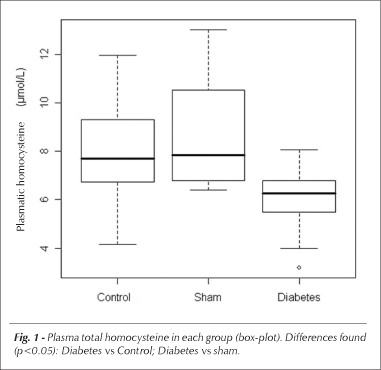
OBJECTIVES: To determine the plasma homocysteine and von Willebrand factor levels as markers of endothelial dysfunction in rats with diabetes mellitus induced by streptozotocin. METHODS: Thirty-five adult male rats (Rattus norvegicus albinus) (weight between 180-200g) were randomized into three groups: control group (n=10), which received no drugs or vehicles; sham group (n=10), which received streptozotocin solution; and diabetic group (n=15), which received streptozotocin. Eight weeks after diabetes mellitus induction, the animals were weighed and anesthesized; blood samples were collected from abdominal aorta for plasma total homocysteine, von Willebrand factor and glucose levels. RESULTS: The experimental model was reproducible in 100% of animals. The mean plasma homocysteine levels were: 7.9 µmol/l (control), 8.6µmol/l (sham) and 6.1µmol/l (diabetic), with difference among the groups (p<0.01). Multiple comparison analysis among the groups showed that values in the diabetic group were lower than in the sham group (p<0.01). The mean von Willebrand factor values were 0.15 U/l (control), 0.16U/l (sham) and 0.18 U/l (diabetic), with difference among the groups (p=0.03). The mean value was higher in the diabetic group than in the control group (p<0.05). Correlation between homocysteine and von Willebrand factor was not observed in the diabetic group. CONCLUSION: Reduced homocysteine levels and increased von Willebrand factor levels were observed in diabetes mellitus induced by streptozotocin; nevertheless, there were no correlations between them and with final glucose levels.

  • Diabetes Mellitus
  • Epidemiology
  • Experimental
  • homocysteine
  • von Willebrand factor
Read Full Article
Creative Commons Attribution (CC BY) Creative Commons license
24/05/2007 DOI: 10.1590/S0066-782X2007000400010 Views 2

How to cite this article

EndNote RIS

Electronic Document Format (Vancouver)

Kumas M, Altintas O, Karatas E, Kocyigit A. Protective Effect of Ischemic Preconditioning on Myocardium Against Remote Tissue Injury Following Transient Focal Cerebral Ischemia in Diabetic Rats. Arquivos Brasileiros de Cardiologia 2017;109(6):516-2.

Electronic Document Format (ABNT)

Kumas, Meltem; Altintas, Ozge; Karatas, Ersin; Kocyigit, Abdurrahim. Protective Effect of Ischemic Preconditioning on Myocardium Against Remote Tissue Injury Following Transient Focal Cerebral Ischemia in Diabetic Rats. Arquivos Brasileiros de Cardiologia, v. 109, n. 6, p. 516-526, Nov. 2017.

Electronic Document Format (APA)

Kumas, M., Altintas, O., Karatas, E., & Kocyigit, A. (2017). Protective Effect of Ischemic Preconditioning on Myocardium Against Remote Tissue Injury Following Transient Focal Cerebral Ischemia in Diabetic Rats. Arquivos Brasileiros de Cardiologia, 109(6), 516-526.

Electronic Document Format (ISO)

Kumas, Meltem and Altintas, Ozge and Karatas, Ersin and Kocyigit, Abdurrahim. Protective Effect of Ischemic Preconditioning on Myocardium Against Remote Tissue Injury Following Transient Focal Cerebral Ischemia in Diabetic Rats. Arquivos Brasileiros de Cardiologia [online]. 2017, vol. 109, n. 6, [cited 2026-10-15], pp. 516-526. Available from: <https://journals.cardiol.br/en/article/protective-effect-of-ischemic-preconditioning-on-myocardium-against-remote-tissue-injury-following-transient-focal-cerebral-ischemia-in-diabetic-rats/>. ISSN 0066-782X

EndNote RIS

Electronic Document Format (Vancouver)

Pinto RM, Campos DHS, Tomasi LC, Cicogna AC, Okoshi K, Padovani CR. Multivariate Analysis for Animal Selection in Experimental Research. Arquivos Brasileiros de Cardiologia 2015;104(2):97-103.

Electronic Document Format (ABNT)

Pinto, Renan Mercuri; Campos, Dijon Henrique Salomé de; Tomasi, Loreta Casquel; Cicogna, Antonio Carlos; Okoshi, Katashi; Padovani, Carlos Roberto. Multivariate Analysis for Animal Selection in Experimental Research. Arquivos Brasileiros de Cardiologia, v. 104, n. 2, p. 97-103, Feb. 2015.

Electronic Document Format (APA)

Pinto, R. M., Campos, D. H. S. , Tomasi, L. C., Cicogna, A. C., Okoshi, K., & Padovani, C. R. (2015). Multivariate Analysis for Animal Selection in Experimental Research. Arquivos Brasileiros de Cardiologia, 104(2), 97-103.

Electronic Document Format (ISO)

Pinto, Renan Mercuri and Campos, Dijon Henrique Salomé de and Tomasi, Loreta Casquel and Cicogna, Antonio Carlos and Okoshi, Katashi and Padovani, Carlos Roberto. Multivariate Analysis for Animal Selection in Experimental Research. Arquivos Brasileiros de Cardiologia [online]. 2015, vol. 104, n. 2, [cited 2026-10-15], pp. 97-103. Available from: <https://journals.cardiol.br/en/article/multivariate-analysis-for-animal-selection-in-experimental-research/>. ISSN 0066-782X

EndNote RIS

Electronic Document Format (Vancouver)

Takimura CK, Campos CAHM, Melo PHMC, Campos JC, Gutierrez PS, Borges TFC, Curado L, et al. Preclinical Study of a Biodegradable Polymer-based Stent with Abluminal Sirolimus Release. Arquivos Brasileiros de Cardiologia 2014;102(5):432-40.

Electronic Document Format (ABNT)

Takimura, Celso Kiyochi; Campos, Carlos Augusto Homem M.; Melo, Pedro Henrique Magualhães Craveiro; Campos, Julliana Carvalho; Gutierrez, Paulo Sampaio; Borges, Thiago Francisco Costa; Curado, Luciano; Morato, Spero Penha; Laurindo, Francisco Rafael Martins; Lemos Neto, Pedro Alves. Preclinical Study of a Biodegradable Polymer-based Stent with Abluminal Sirolimus Release. Arquivos Brasileiros de Cardiologia, v. 102, n. 5, p. 432-440, Apr. 2014.

Electronic Document Format (APA)

Takimura, C. K., Campos, C. A. H. M., Melo, P. H. M. C., Campos, J. C., Gutierrez, P. S., Borges, T. F. C., Curado, L., Morato, S. P., Laurindo, F. R. M., & Lemos Neto, P. A. (2014). Preclinical Study of a Biodegradable Polymer-based Stent with Abluminal Sirolimus Release. Arquivos Brasileiros de Cardiologia, 102(5), 432-440.

Electronic Document Format (ISO)

Takimura, Celso Kiyochi and Campos, Carlos Augusto Homem M. and Melo, Pedro Henrique Magualhães Craveiro and Campos, Julliana Carvalho and Gutierrez, Paulo Sampaio and Borges, Thiago Francisco Costa and Curado, Luciano and Morato, Spero Penha and Laurindo, Francisco Rafael Martins and Lemos Neto, Pedro Alves. Preclinical Study of a Biodegradable Polymer-based Stent with Abluminal Sirolimus Release. Arquivos Brasileiros de Cardiologia [online]. 2014, vol. 102, n. 5, [cited 2026-10-15], pp. 432-440. Available from: <https://journals.cardiol.br/en/article/preclinical-study-of-a-biodegradable-polymer-based-stent-with-abluminal-sirolimus-release/>. ISSN 0066-782X

EndNote RIS

Electronic Document Format (Vancouver)

Costa ECS, Gonçalves AA, Areas MA, Morgabel RGB. Effects of metformin on QT and QTc interval dispersion of diabetic rats. Arquivos Brasileiros de Cardiologia 2008;90(4):254-60.

Electronic Document Format (ABNT)

Costa, Eunice Cristina da Silva; Gonçalves, Antonio Ari; Areas, Miguel Arcanjo; Morgabel, Rafael Gustavo Birochi. Effects of metformin on QT and QTc interval dispersion of diabetic rats. Arquivos Brasileiros de Cardiologia, v. 90, n. 4, p. 254-260, May. 2008.

Electronic Document Format (APA)

Costa, E. C. S., Gonçalves, A. A., Areas, M. A., & Morgabel, R. G. B. (2008). Effects of metformin on QT and QTc interval dispersion of diabetic rats. Arquivos Brasileiros de Cardiologia, 90(4), 254-260.

Electronic Document Format (ISO)

Costa, Eunice Cristina da Silva and Gonçalves, Antonio Ari and Areas, Miguel Arcanjo and Morgabel, Rafael Gustavo Birochi. Effects of metformin on QT and QTc interval dispersion of diabetic rats. Arquivos Brasileiros de Cardiologia [online]. 2008, vol. 90, n. 4, [cited 2026-10-15], pp. 254-260. Available from: <https://journals.cardiol.br/en/article/effects-of-metformin-on-qt-and-qtc-interval-dispersion-of-diabetic-rats/>. ISSN 0066-782X

EndNote RIS

Electronic Document Format (Vancouver)

Lopes RD, Neves LB, D’Almeida V, Conceição GMS, Gabriel Junior A. Total plasmatic homocysteine and von Willebrand factor in experimental diabetes mellitus. Arquivos Brasileiros de Cardiologia 2007;88(4):424-9.

Electronic Document Format (ABNT)

Lopes, Renato Delascio; Neves, Lindalva Batista; D’Almeida, Vânia; Conceição, Gleice Margarete de Souza; Gabriel Junior, Alexandre. Total plasmatic homocysteine and von Willebrand factor in experimental diabetes mellitus. Arquivos Brasileiros de Cardiologia, v. 88, n. 4, p. 424-429, May. 2007.

Electronic Document Format (APA)

Lopes, R. D., Neves, L. B., D’Almeida, V., Conceição, G. M. S., & Gabriel Junior, A. (2007). Total plasmatic homocysteine and von Willebrand factor in experimental diabetes mellitus. Arquivos Brasileiros de Cardiologia, 88(4), 424-429.

Electronic Document Format (ISO)

Lopes, Renato Delascio and Neves, Lindalva Batista and D’Almeida, Vânia and Conceição, Gleice Margarete de Souza and Gabriel Junior, Alexandre. Total plasmatic homocysteine and von Willebrand factor in experimental diabetes mellitus. Arquivos Brasileiros de Cardiologia [online]. 2007, vol. 88, n. 4, [cited 2026-10-15], pp. 424-429. Available from: <https://journals.cardiol.br/en/article/total-plasmatic-homocysteine-and-von-willebrand-factor-in-experimental-diabetes-mellitus/>. ISSN 0066-782X

  • About ABC Family
  • Internal Regulation
  • Editorial Board
  • Brazilian Society of Cardiology (SBC)

Issues

SBC Guidelines

  • Videos
  • Podcasts
  • News