ABC Family Arquivos Brasileiros de Cardiologia International Journal of Cardiovascular Sciences ABC Heart Failure & Cardiomyopathy ABC Imagem Cardiovascular
Português English
ABC Family
Português English
  • About
    • About ABC Family
    • Internal Regulation
    • Editorial Board
    • Brazilian Society of Cardiology (SBC)
  • Issues
  • SBC Guidelines
  • Content
    • Videos
    • Podcasts
    • News
  • About
    • About ABC Family
    • Internal Regulation
    • Editorial Board
    • Brazilian Society of Cardiology (SBC)
  • Issues
  • SBC Guidelines
  • Content
    • Videos
    • Podcasts
    • News

ABC Family

  • ABC Family
  • Arquivos Brasileiros de Cardiologia
  • International Journal of Cardiovascular Sciences
  • ABC Heart Failure & Cardiomyopathy
  • ABC Imagem Cardiovascular
Search in

No content found.

Journals
Ordering
Article types
Others

  1. Home
  2. Keyword: Liver Cirrhosis / mortality
Figure 1
IJCS
Original Article

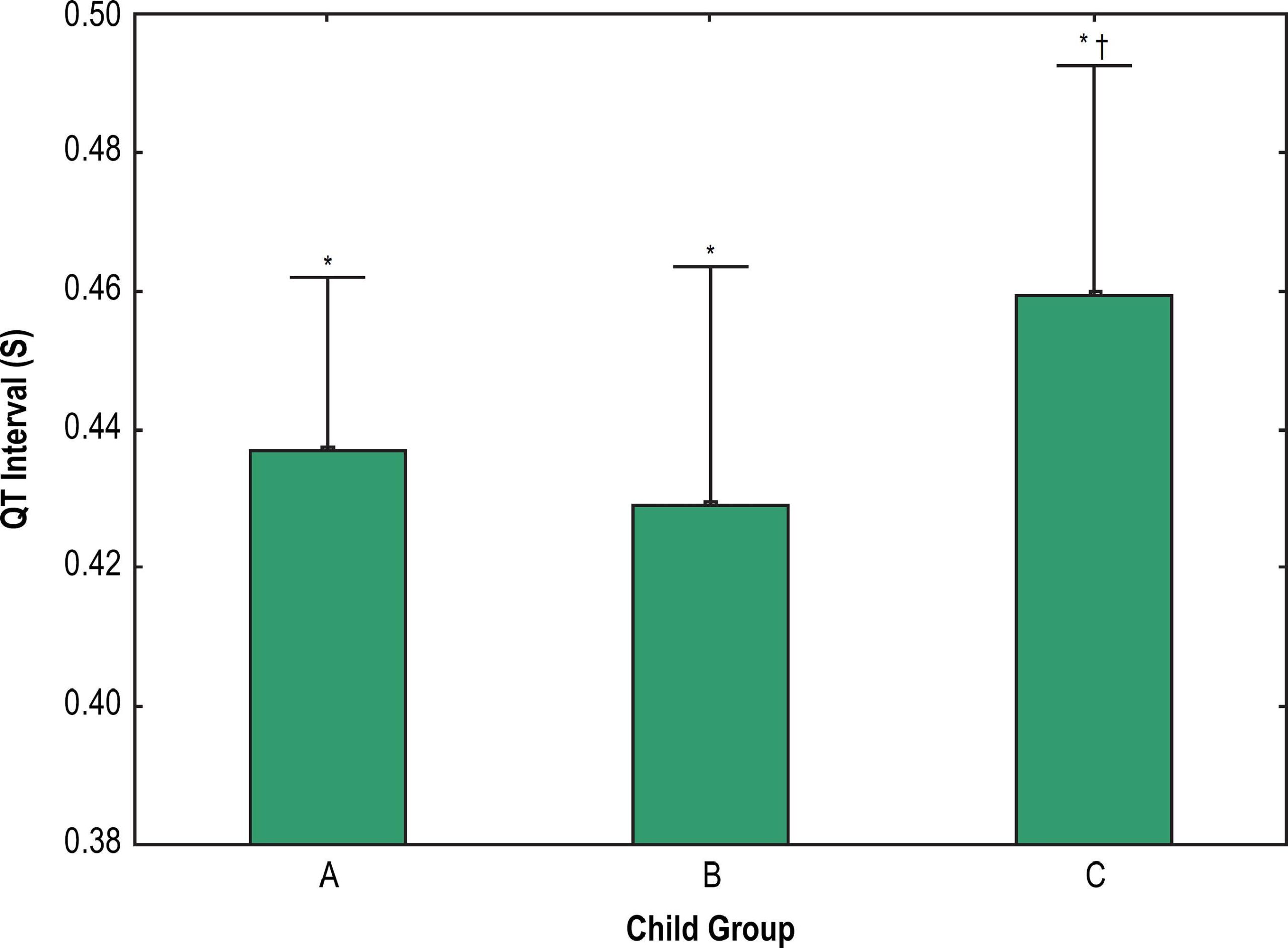
Cirrhotic Patients with Child-Pugh C Have Longer QT Intervals

Pedro Gemal Lanzieri et al. Ronaldo Altenburg Gismondi Matheus de Castro Abi-Ramia Chimelli Raíssa Pereira Cysne … Thais Guaraná Cláudio Tinoco Mesquita Luís Otávio Mocarzel

Abstract

Background and aims:

Cirrhotic cardiomyopathy has been used to describe chronic cardiac dysfunction in cirrhotic patients with no previous structural heart disease. Additionally, QT prolongation is one of the most important cardiac alterations related to cirrhosis. Previous studies suggest that QT prolongation is associated with a higher mortality rate among cirrhotic patients. The aim of this study was to analyze QT intervals according to cirrhosis severity as measured by the Child-Pugh classification.

Materials and methods:

In a cross-sectional study, a total of 67 patients with nonalcoholic cirrhosis underwent clinical and electrocardiographic evaluation. Cirrhosis severity was classified according to the Child-Pugh score. The QT interval was measured by a 12-lead electrocardiogram.

Results:

The QT intervals were longer in patients in the Child-Pugh C group than those in the Child-Pugh A and B groups (459 ± 33 vs 436 ± 25 and 428 ± 34 ms, respectively, p = 0.004). There was a positive correlation between the QT interval and the Child-Pugh score in individuals with Child-Pugh scores ≥ 7 (r = 0.50, p < 0.05) and QT intervals ≥ 440 ms (r = 0.46, p < 0.05).

Conclusion:

The present study showed longer QT intervals in patients with Child-Pugh C cirrhosis, which reinforced the relationship between the severity of cirrhosis and electrocardiographic findings of cirrhotic cardiomyopathy. Moreover, this finding emerged in patients with no cardiac symptoms, which highlighted the importance of a simple and noninvasive method (ECG) to identify cirrhotic patients with cardiomyopathy.
  • Cardiomyopathies
  • Electrocardiography/methods
  • Liver Cirrhosis / mortality
  • Long QT Syndrome
Read Full Article
Creative Commons Attribution (CC BY) Creative Commons license
23/10/2017 DOI: 10.5935/2359-4802.20170084 Views 1
Figure 1
ABC
Review Article

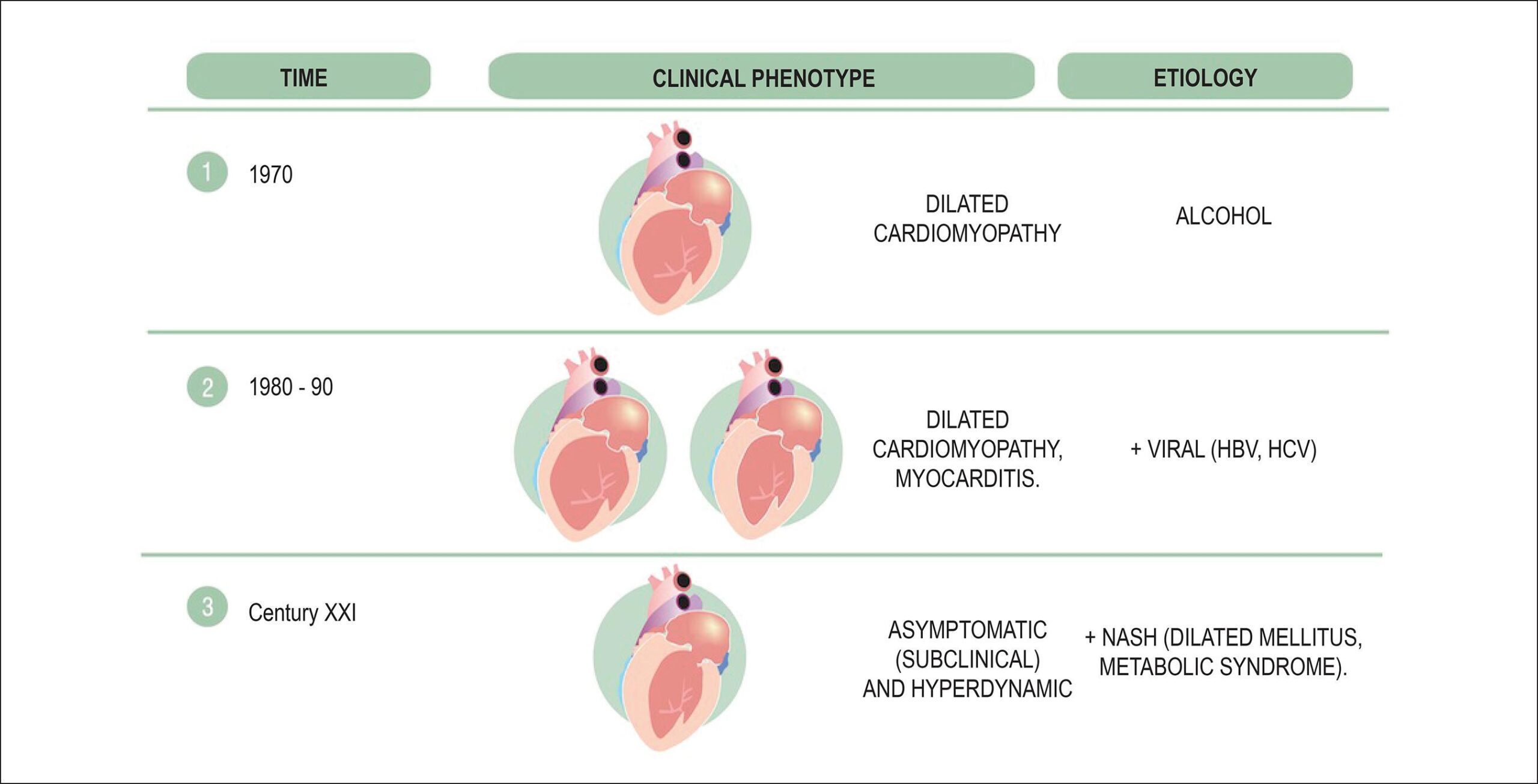
Cirrhotic Cardiomyopathy: A New Clinical Phenotype

Luis Otávio Cardoso Mocarzel et al. Mariana Macedo Rossi Bruna de Mello Miliosse Pedro Gemal Lanzieri Ronaldo Altenburg Gismondi

Introduction

Hepatic cirrhosis is the final spectrum of several aggressions to the liver, with great relevance to public healthcare. National data estimate a prevalence of 0.14% to 0.35%, mortality of 3 to 35 per 100,000 individuals and an annual average of 30,000 hospital admissions in Brazil., With the ageing population, the prevalence of chronic liver diseases, in particular steatohepatitis associated to obesity and metabolic syndrome, results in an increase in the number of hepatic cirrhosis cases.

Cardiac manifestations of hepatic cirrhosis were first reported in the 20th century, with alterations on cardiac output. With new information on the extra-hepatic repercussions of cirrhosis, cirrhotic cardiomyopathy (CCM) has been described as a spectrum of chronic morphofunctional alterations in the heart of cirrhotic patients with no previous cardiac diseases.– The cardiomyocyte lesion is provoked by an imbalance in hemeostasis that occurs in the progression of cirrhosis, with exhaustion of beta-adrenergic receptors, cytoplasmic impregnation by endocannabinoids, and imbalance of nitric oxide and endothelin. CCM is asymptomatic; however, systolic and diastolic structural alterations are described in the electrocardiogram (ECG) and Doppler echocardiogram (ECHO).

[…]

  • aging
  • Cardiomyopathy, Alcoholic
  • Fatty Liver
  • Liver Cirrhosis / mortality
  • Metabolic Syndrome
  • Obesity
Read Full Article
Creative Commons Attribution (CC BY) Creative Commons license
01/06/2017 DOI: 10.5935/abc.20170066
Figure 1
ABC
Original Article

Prognostic Value of a New Marker of Ventricular Repolarization in Cirrhotic Patients

Angelo Antunes Salgado et al. Paulo Roberto Benchimol Barbosa Alinne Gimenez Ferreira Camila Aparecida de Souza Segrégio Reis Carlos Terra

Abstract

Background:

There is still debate about the relationship between changes in ventricular repolarization on the surface electrocardiogram and cirrhosis severity.

Objective:

To study the relationship between variables related to ventricular repolarization and the clinical severity of the cirrhotic disease.

Methods:

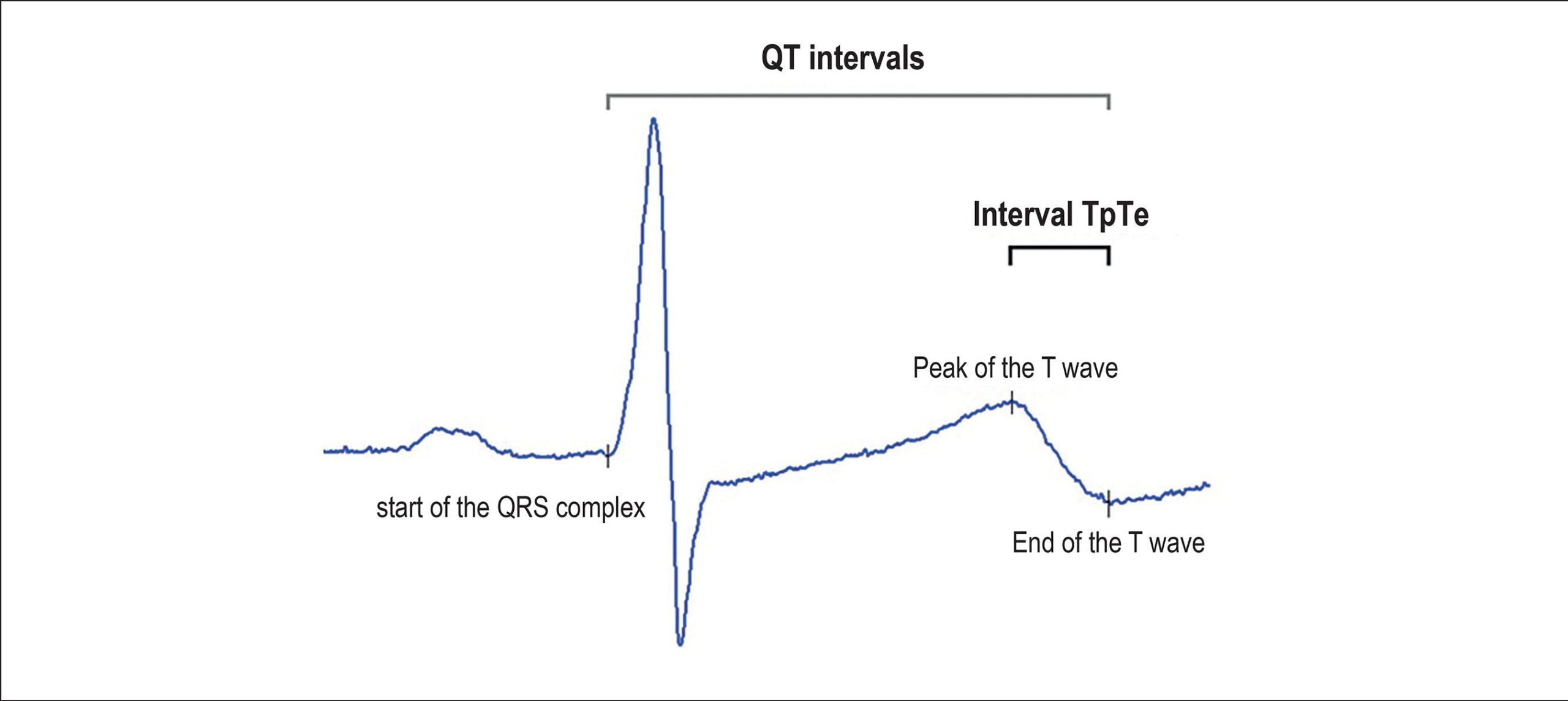
We selected 79 individuals with hepatic cirrhosis, classified according to the Child-Pugh-Turcotte criteria (Child A, B, and C). We measured the QT and corrected QT (QTc) intervals, and the interval between the peak and the end of the T wave (TpTe), and we identified their minimum, maximum, and mean values in the 12-lead electrocardiogram. We also calculated the dispersion of the QT (DQT) and QTc (DQTc) intervals.

Results:

In 12 months of clinical follow-up, nine subjects underwent hepatic transplantation (Child A: 0 [0%]; Child B: 6 [23.1%]; Child C: 3 [18.8%]; p = 0.04) and 12 died (Child A: 3 [12.0%]; Child B: 4 [15.4%]; Child C: 5 [31.3%]; p = 0.002). No significant differences were observed between the cirrhotic groups related to the minimum, maximum, and mean values for the QT, QTc, TpTe, DQT, and DQTc intervals. A minimum TpTe interval ≤ 50 ms was a predictor for the composite endpoints of death or liver transplantation with a sensitivity of 90% and a specificity of 57% (p = 0.005). In the Cox multivariate analysis, the Child groups and a minimum TpTe of ≤ 50 ms were independent predictors of the composite endpoints.

Conclusion:

The intervals QT, QTc, DQT, DQTc, and TpTe have similar distributions between different severity stages in cirrhotic disease. The TpTe interval proved to be a prognostic marker in subjects with cirrhosis, regardless of disease severity (NCT01433848).

  • Cardiomyopathies/physiopathology
  • Electrocardiography
  • Liver Cirrhosis / etiology
  • Liver Cirrhosis / mortality
  • Prognosis
  • Ventricular Dysfunction, Left/physiopathology
Read Full Article
Creative Commons Attribution (CC BY) Creative Commons license
01/12/2016 DOI: 10.5935/abc.20160181 Views 2

How to cite this article

EndNote RIS

Electronic Document Format (Vancouver)

Lanzieri PG, Gismondi RA, Chimelli MCA, Cysne RP, Guaraná T, Mesquita CT, Mocarzel LO, et al. Cirrhotic Patients with Child-Pugh C Have Longer QT Intervals. International Journal of Cardiovascular Sciences 2017;30(6):496-503.

Electronic Document Format (ABNT)

Lanzieri, Pedro Gemal; Gismondi, Ronaldo Altenburg; Chimelli, Matheus de Castro Abi-Ramia; Cysne, Raíssa Pereira; Guaraná, Thais; Mesquita, Cláudio Tinoco; Mocarzel, Luís Otávio. Cirrhotic Patients with Child-Pugh C Have Longer QT Intervals. International Journal of Cardiovascular Sciences, v. 30, n. 6, p. 496-503, Oct. 2017.

Electronic Document Format (APA)

Lanzieri, P. G., Gismondi, R. A., Chimelli, M. C. A., Cysne, R. P., Guaraná, T., Mesquita, C. T., & Mocarzel, L. O. (2017). Cirrhotic Patients with Child-Pugh C Have Longer QT Intervals. International Journal of Cardiovascular Sciences, 30(6), 496-503.

Electronic Document Format (ISO)

Lanzieri, Pedro Gemal and Gismondi, Ronaldo Altenburg and Chimelli, Matheus de Castro Abi-Ramia and Cysne, Raíssa Pereira and Guaraná, Thais and Mesquita, Cláudio Tinoco and Mocarzel, Luís Otávio. Cirrhotic Patients with Child-Pugh C Have Longer QT Intervals. International Journal of Cardiovascular Sciences [online]. 2017, vol. 30, n. 6, [cited 2026-10-14], pp. 496-503. Available from: <https://journals.cardiol.br/en/article/cirrhotic-patients-with-child-pugh-c-have-longer-qt-intervals/>. ISSN 2359-4802

EndNote RIS

Electronic Document Format (Vancouver)

Mocarzel LOC, Rossi MM, Miliosse BM, Lanzieri PG, Gismondi RA. Cirrhotic Cardiomyopathy: A New Clinical Phenotype. Arquivos Brasileiros de Cardiologia 2017;108(6):564-8.

Electronic Document Format (ABNT)

Mocarzel, Luis Otávio Cardoso; Rossi, Mariana Macedo; Miliosse, Bruna de Mello; Lanzieri, Pedro Gemal; Gismondi, Ronaldo Altenburg. Cirrhotic Cardiomyopathy: A New Clinical Phenotype. Arquivos Brasileiros de Cardiologia, v. 108, n. 6, p. 564-568, May. 2017.

Electronic Document Format (APA)

Mocarzel, L. O. C., Rossi, M. M., Miliosse, B. M., Lanzieri, P. G., & Gismondi, R. A. (2017). Cirrhotic Cardiomyopathy: A New Clinical Phenotype. Arquivos Brasileiros de Cardiologia, 108(6), 564-568.

Electronic Document Format (ISO)

Mocarzel, Luis Otávio Cardoso and Rossi, Mariana Macedo and Miliosse, Bruna de Mello and Lanzieri, Pedro Gemal and Gismondi, Ronaldo Altenburg. Cirrhotic Cardiomyopathy: A New Clinical Phenotype. Arquivos Brasileiros de Cardiologia [online]. 2017, vol. 108, n. 6, [cited 2026-10-14], pp. 564-568. Available from: <https://journals.cardiol.br/en/article/cirrhotic-cardiomyopathy-a-new-clinical-phenotype/>. ISSN 0066-782X

EndNote RIS

Electronic Document Format (Vancouver)

Salgado AA, Barbosa PRB, Ferreira AG, Reis CASS, Terra C. Prognostic Value of a New Marker of Ventricular Repolarization in Cirrhotic Patients. Arquivos Brasileiros de Cardiologia 2016;107(6):523-31.

Electronic Document Format (ABNT)

Salgado, Angelo Antunes; Barbosa, Paulo Roberto Benchimol; Ferreira, Alinne Gimenez; Reis, Camila Aparecida de Souza Segrégio; Terra, Carlos. Prognostic Value of a New Marker of Ventricular Repolarization in Cirrhotic Patients. Arquivos Brasileiros de Cardiologia, v. 107, n. 6, p. 523-531, Nov. 2016.

Electronic Document Format (APA)

Salgado, A. A., Barbosa, P. R. B., Ferreira, A. G., Reis, C. A. S. S., & Terra, C. (2016). Prognostic Value of a New Marker of Ventricular Repolarization in Cirrhotic Patients. Arquivos Brasileiros de Cardiologia, 107(6), 523-531.

Electronic Document Format (ISO)

Salgado, Angelo Antunes and Barbosa, Paulo Roberto Benchimol and Ferreira, Alinne Gimenez and Reis, Camila Aparecida de Souza Segrégio and Terra, Carlos. Prognostic Value of a New Marker of Ventricular Repolarization in Cirrhotic Patients. Arquivos Brasileiros de Cardiologia [online]. 2016, vol. 107, n. 6, [cited 2026-10-14], pp. 523-531. Available from: <https://journals.cardiol.br/en/article/prognostic-value-of-a-new-marker-of-ventricular-repolarization-in-cirrhotic-patients/>. ISSN 0066-782X

  • About ABC Family
  • Internal Regulation
  • Editorial Board
  • Brazilian Society of Cardiology (SBC)

Issues

SBC Guidelines

  • Videos
  • Podcasts
  • News