Família ABC Arquivos Brasileiros de Cardiologia International Journal of Cardiovascular Sciences ABC Heart Failure & Cardiomyopathy ABC Imagem Cardiovascular
Português English
  • Família ABC
  • Arquivos Brasileiros de Cardiologia
  • International Journal of Cardiovascular Sciences
  • ABC Heart Failure & Cardiomyopathy
  • ABC Imagem Cardiovascular
Português English
  • Sobre
    • Sobre a Família ABC
    • Regimento Interno
    • Conselho Editorial
    • Sociedade Brasileira de Cardiologia (SBC)
  • Edições
  • Diretrizes da SBC
  • Conteúdos
    • Vídeos
    • Podcasts
    • Notícias
  • Sobre
    • Sobre a Família ABC
    • Regimento Interno
    • Conselho Editorial
    • Sociedade Brasileira de Cardiologia (SBC)
  • Edições
  • Diretrizes da SBC
  • Conteúdos
    • Vídeos
    • Podcasts
    • Notícias
Buscar em

Nenhum conteúdo encontrado.

Revistas
Ordenação
Tipos de artigo
Outros

  1. Início
  2. Percutaneous Coronary Intervention
IJCS
Review Article

Percutaneous Coronary Intervention With Ridaforolimus-Eluting Stents in Patients With Coronary Artery Disease: A Systematic Review and Single-Arm Meta-Analysis

Edmundo Damiani Bertoli et al. Christian Ken Fukunaga Vinicius Martins Everton Victor Belmiro da Silva … Ricardo Fonseca Oliveira Suruagy Motta Eric Katsuyama Isabela Tonon Floriano Marcos Danillo Oliveira Cristina Silveira Luis Augusto Dallan Marcelo Harada Ribeiro

Abstract

Background:

The ridaforolimus-eluting stent (RES) is a new-generation drug-eluting stent (DES) featuring thin struts and a durable polymer, designed to provide a high therapeutic-to-toxicity margin. However, its long-term clinical performance remains uncertain.

Methods:

We conducted a systematic review and meta-analysis following Cochrane and PRISMA guidelines. PubMed, Embase, and Cochrane databases were searched for randomized controlled trials (RCTs) and prospective non-RCT studies evaluating RES in patients with coronary artery disease (CAD). Outcomes were expressed as event rates using a generalized linear mixed model (GLMM). Statistical significance was defined as P < 0.05.

Results:

Six studies with eight reports and 1,709 patients were included. The mean age was 63 years; 76% were men; 35% had a previous myocardial infarction (MI); and 41% presented with acute coronary syndrome. Mean lesion length was 27.84 mm, and ACC/AHA lesion class B2/C accounted for 61% of lesions. Target lesion failure (TLF) was 3.89% (95% confidence intervals [CI]: 2.58–5.82) at 1 year and 11.73% (95% CI: 9.94–13.73) at 5 years. Major adverse cardiac events (MACE) occurred in 4.82% (95% CI: 3.19–7.21) at 1 year and 16.22% (95% CI: 14.14–18.47) at 5 years. Cardiovascular mortality remained low, at 0.59% (95% CI: 0.28–1.02) at one year and 3.36% (95% CI: 2.40–4.57) at 5 years. MI occurred in 2.68% (95% CI: 1.50–4.76) at 1 year and 9.84% (95% CI: 8.18–11.70) at five years.

Conclusion:

In this single-arm meta-analysis, RES was associated with high procedural success and low observed rates of adverse clinical events across available studies.
  • Coronary Artery Disease
  • Drug-Eluting Stents
  • Percutaneous Coronary Intervention
Ler artigo completo
Creative Commons Attribution (CC BY) Creative Commons license
30/09/2026 DOI: 10.36660/ijcs.20250143 Visualizações 3
IJCS
Viewpoint

Asymptomatic Patients With Suspected Coronary Artery Disease: What Are Clinicians Afraid Of?

Antônio Sérgio Cordeiro da Rocha et al. Dany Kruczan

Introduction

In contemporary practice, myocardial revascularization, particularly Percutaneous Coronary Intervention (PCI), is frequently performed in asymptomatic individuals with suspected Coronary Artery Disease (CAD). This occurs despite robust evidence from Randomized Clinical Trials (RCTs) over the past two decades demonstrating that, in patients with Chronic Coronary Syndromes (CCS), neither PCI nor Coronary Artery Bypass Grafting (CABG) reduces mortality when compared with Guideline-directed Medical Therapy (GDMT). In selected populations, revascularization confers symptomatic relief, particularly among patients with frequent angina, but without prognostic advantage.

The persistence of invasive strategies in asymptomatic patients appears to be driven largely by two cognitive biases: the “oculostenotic reflex”, the impulse to correct angiographically visible stenoses, and the “oculoischemic reflex”, the perceived need to revascularize documented ischemia irrespective of symptoms. Both are rooted in the fear that untreated coronary obstructions inevitably herald sudden cardiac death or Acute Myocardial Infarction (AMI).,

[…]

  • acute coronary syndrome
  • Coronary Artery Disease
  • Percutaneous Coronary Intervention
  • Risk Factors
Ler artigo completo
Creative Commons Attribution (CC BY) Creative Commons license
21/08/2026 DOI: 10.36660/ijcs.20250075 Visualizações 9
IJCS
Editorial

The "Right" Side of Myocardial Infarction: Sinister Outcomes?

Monica Verdoia

Right ventricular myocardial infarction (RVI) is rarely an isolated event; rather, it generally complicates 10% to 50% of cases of acute inferior ST-segment elevation myocardial infarction (STEMI)., Proximal right coronary artery occlusion, impairing right ventricular (RV) branch flow, is most frequently the culprit vessel, although it depends on coronary tree anatomy.

Previous studies underlined that RVI is often unrecognized, since RV ischemic dysfunction is generally transient, due to the different composition and higher resistance to hypoxia of the RV wall. In addition, the diagnostic criteria for RVI, which are mainly based on electrocardiogram (), can lead to underestimation, unless RV involvement becomes clinically manifest with hemodynamic complications. In fact, acute RV dysfunction can lead to reduced output, insufficient left heart filling, and cardiogenic shock, despite preserved left contractility. Moreover, intrapericardial ventricular interaction can translate into an abrupt RV dilation and further compression of the left chambers.

[…]

  • Heart Ventricles
  • Myocardial Infarction
  • Percutaneous Coronary Intervention
Ler artigo completo
Creative Commons Attribution (CC BY) Creative Commons license
13/03/2026 DOI: 10.36660/ijcs.20250249 Visualizações 9
IJCS
Original Article

Evaluation of Different Therapeutic Approaches for Acute Coronary Syndromes in Patients Undergoing Chronic Dialysis: A Retrospective Cohort Study

Matheus Eduardo França et al. Ana Luiza de Fragas Franciani Rodrigues da Rocha Leonardo Claudino Ribeiro Silvia R. Froes Toniazzo

Abstract

Background:

Cardiovascular disease (CVD) is the leading cause of death among individuals with chronic kidney disease (CKD), particularly those undergoing dialysis, accounting for approximately 40% of deaths. The prevalence of ischemic coronary disease among patients undergoing hemodialysis over the age of 45 reaches 41%.

Objective:

To analyze outcomes of symptomatic coronary artery disease (CAD) in patients undergoing chronic dialysis, stratified by invasive assessment, and treated with one of three approaches: medical therapy alone (MTA), percutaneous coronary intervention (PCI), or coronary artery bypass grafting.

Methods:

This was a retrospective, analytical, observational cohort study based on data from electronic medical records collected between 2013 and 2023, including a total of 68 patients. Quantitative variables were analyzed using one-way Analysis of Variance (ANOVA), and qualitative variables were assessed using Pearson’s chi-square test. A p-value <0.05 was considered statistically significant.

Results:

The mean age was 60.2 ± 13.1 years, with a male predominance of 42 patients (62.8%). The highest mortality was observed in the MTA group with 25 deaths (69.4%), followed by PCI with 10 deaths (56.6%), and the lowest in the coronary artery bypass grafting group with six deaths (42.9%). Among patients who did not use statins, 19 (82.6%) died (p < 0.01). The lowest rate of readmission due to coronary syndrome occurred in the MTA group (two patients; 18.2%), while the highest was in the PCI group (six patients; 54.5%) (p = 0.02).

Conclusion:

Although no statistically significant difference in mortality was found among the three therapeutic strategies, MTA was associated with lower rates of readmission and repeat cardiac catheterization. In contrast, PCI was linked to a higher risk of readmission due to coronary syndrome.

  • Coronary Artery Bypass
  • Coronary Artery Disease
  • Drug Therapy
  • Percutaneous Coronary Intervention
  • renal dialysis
Ler artigo completo
Creative Commons Attribution (CC BY) Creative Commons license
17/11/2025 DOI: 10.36660/ijcs.20250029 Visualizações 11
IJCS
Original Article

Delay Times in Acute Myocardial Infarction Care: Comparison Between Periods Before and During the COVID-19 Pandemic

Layla Pasolini Lott et al. Roberto Ramos Barbosa Rhaaby Rodrigues Muzi Camila Marianelli … Isadora Cardozo Bragatto Valentin Trevizani Neto Glícia Chierici Baptista Eduardo Gomes Vieira Rodolfo Costa Sylvestre Osmar Araújo Calil Renato Giestas Serpa Lucas Crespo de Barros Larissa Novaes Paganini Lucas Martins Frizzera Borges Luiz Fernando Machado Barbosa

Abstract

Background

The success of acute myocardial infarction with ST-segment elevation (STEMI) treatment is time-dependent, requiring prompt access, diagnosis, and immediate medical intervention. The COVID-19 pandemic has significantly impacted the care of patients with STEMI.

Objective

To analyze delay times and clinical outcomes of patients with STEMI undergoing primary percutaneous coronary intervention (PPCI) before and during the COVID-19 pandemic.

Methods

This retrospective observational study included patients with STEMI undergoing PPCI from June 2019 to July 2022. The COVID-19 pandemic period was divided into 3 time groups. Pandemic I referred to the interval from March to August 2020, pandemic II from September 2020 to July 2021, and pandemic III from August 2021 to July 2022. Delay times, clinical characteristics, and in-hospital mortality were analyzed. The chi-square, Fisher’s exact, Student’s t and one-way ANOVA tests were applied, with p values less than 0.05 being considered statistically significant.

Results

Comparing the periods, the total ischemic time to PPCI was 346.3 versus 448.4 versus 398.4 versus 348.4 minutes (p = 0.47); onset-to-door time 253.1 versus 421.1 versus 377.4 versus 370.6 minutes (p = 0.42); first medical contact (FMC)-to-balloon time 243.9 versus 313.0 versus 239.5 versus 279.4 minutes (p = 0.38); and door-to-balloon time 71.8 versus 76.8 versus 58.03 versus 88 minutes (p = 0.9). Mortality significantly increased in pandemic I compared to pre-pandemic (29.4% versus 5.0%, p = 0.01), with a marginal difference compared to pandemic II and III combined (12.2%, p = 0.05).

Conclusion

There was a trend toward increased onset-to-door time and FMC-to-balloon time in STEMI care during the pandemic compared to the pre-pandemic period, although not statistically significant. Higher mortality in STEMI was observed in the first months of the COVID-19 pandemic.

  • COVID-19
  • Mortality
  • Myocardial Infarction
  • Percutaneous Coronary Intervention
Ler artigo completo
Creative Commons Attribution (CC BY) Creative Commons license
03/03/2025 DOI: 10.36660/ijcs.20240022 Visualizações 10
IJCS
Original Article

Role of the CHA2DS2-Vasc Score in Predicting Contrast-Induced Nephropathy After Primary Percutaneous Coronary Intervention

Nolly Octavianes Habel Rantung et al. Starry Homenta Rampengan Edmond Leonard Jim Dewa Gde Prema Ananda Fima Lanra Fredrik Gerarld Langi

Abstract

Background

Primary percutaneous coronary intervention (PPCI) is the preferred reperfusion strategy for ST-elevation myocardial infarction (STEMI) with an onset time <12 h. However, it poses a risk of contrast-induced nephropathy (CIN), occurring in one out of five patients. In this context, the CHA2DS2-VASc score can be used as a predictor of CIN in patients with STEMI undergoing PPCI.

Objectives

To evaluate the role of the CHA2DS2-VASc score in predicting CIN in patients with STEMI who underwent PPCI.

Methods

In this retrospective cohort study, data were collected from the medical records of patients with STEMI who underwent PPCI at the department of cardiovascular medicine of our institution from January 1, 2019, to October 31, 2021. The association of CIN with the CHA2DS2-VASc and Mehran scores, the and neutrophil–lymphocyte ratio were evaluated using a logistic regression model with a p value < 0.05.

Results

This study included 66 patients with CIN from a total of 326 patients with STEMI who underwent PPCI. Patients with CIN showed a higher CHA2DS2-VASc score compared with those without CIN (median [interquartile range — IQR], 2 [1–3] vs. 1 [1–2], p < 0.001). The sensitivity, specificity, negative predictive value, and positive predictive value of the CHA2DS2-VASc score in predicting CIN after PPCI were 73.6%, 92.3%, 87.9%, and 82.1%, respectively.

Conclusion

A CHA2DS2-VASc score ≥ 2.5 is as accurate as a Mehran score ≥6.5 in predicting CIN following PPCI, suggesting that the CHA2DS2-VASc score is a practical and efficient tool for clinical use.

  • Contrast Media
  • Infarto do Miocárdio com Supradesnível do Segmento ST
  • Percutaneous Coronary Intervention
Ler artigo completo
Creative Commons Attribution (CC BY) Creative Commons license
10/02/2025 DOI: 10.36660/ijcs.20240111 Visualizações 4
IJCS
Original Article

Distal Transradial Access for Coronary Procedures: Insights from 6,800 Consecutive All-Comers Patients from the DISTRACTION Registry

Marcos Danillo Oliveira et al. Ricardo Fonseca Oliveira Suruagy Motta Adriano Caixeta

Abstract

Background:

Distal transradial access (dTRA), an improvement of the conventional proximal transradial access (pTRA), has advantages in terms of faster hemostasis and lower rates of proximal radial artery occlusion (RAO).

Objectives:

We aim to describe our real-world experience with dTRA as the default approach for routine coronary angiography and percutaneous coronary interventions (PCI) in a large-scale sample of all-comers patients.

Methods:

From February 2019 to April 2024, 6,800 consecutive patients undergoing coronary procedures via dTRA were enrolled in the DISTRACTION (DIStal TRAnsradial access as default approach for Coronary angiography and intervenTIONs) Registry.

Results:

Mean patient age was 63.8 ± 15.7 years; 65% were male. Overall, 20.8% of patients had non-ST-elevation myocardial infarction (NSTEMI); 22.3% had ST-elevation myocardial infarction (STEMI), and 2.5% presented in cardiogenic shock. There were only 2% access site crossovers, mainly to ipsilateral pTRA. In only 119 patients dTRA sheath insertion could not be obtained. Right dTRA was the most frequent access, followed by redo ipsilateral dTRA, left dTRA, and simultaneous bilateral dTRA. PCI was performed in 59.5% of all cases, and the left anterior descending artery was the most treated vessel. No significant access site-related bleeding and no hand/thumb dysfunction after any procedure were documented. There were neither major complications nor major adverse cerebrovascular and cardiac events directly related to dTRA.

Conclusions:

In this real-world large-scale registry of all-comers patients, the adoption of dTRA by proficient operators as the default for routine coronary angiography and interventions was safe and feasible.

  • Coronary Angiography
  • Percutaneous Coronary Intervention
  • Registries
Ler artigo completo
Creative Commons Attribution (CC BY) Creative Commons license
04/11/2024 DOI: 10.36660/ijcs.20240084 Visualizações 10
IJCS
Original Article

Characteristics of ST-Elevation Myocardial Infarction during the SARS-CoV-2 Outbreak

Guilherme Pinheiro Machado et al. Gustavo Neves de Araujo Rafael Beltrame André Luiz Theobald … Matheus de Souza Niches Julia Fagundes Fracasso Victoria Milan Julia Luchese Custodio Camila Porto Cardoso Pedro Henrique Torres Tietz Giulia Bonatto Reichert Marcia Moura Schmidt Alexandre Schaan de Quadros Marco Vugman Wainstein

Abstract

Background

The SARS-CoV-2 outbreak has led to radical transformation in social, economic, and healthcare systems. This may lead to profound indirect consequences on clinical presentation and management of patients with ST-segment–elevation myocardial infarction.

Objectives

The objective of this study was to describe the characteristics, management, and outcomes of patients admitted with acute myocardial infarction with ST-segment elevation (STEMI), in two tertiary reference hospitals during the SARS-CoV-2 outbreak and compare them with patients admitted in the previous year.

Methods

We analyzed data from a multicenter STEMI registry from reference centers in the South Region of Brazil from March 2019 to May 2021. The beginning of the COVID-19 outbreak was considered to be March 2020 and compared to the same period in 2019. Only patients with STEMI submitted to primary percutaneous coronary intervention (PCI) were included in the analysis. Mortality rates were compared with chi-square test. All hypothesis tests had a two-sided significance level of 5%.

Results

A total of 1169 patients admitted with STEMI were enrolled in our registry, 635 of whom were admitted during the pandemic period. The mean age of our sample was 61.6 (± 12.4) years, and 66.7% of patients were male. Pain-to-door time and door-to-balloon time were longer during the pandemic period. However, there was no difference in mortality rates or major adverse cardiovascular outcomes (MACE).

Conclusions

We observed a stable incidence of STEMI cases in our registry during the SARS-CoV-2 outbreak with higher pain-to-door time and door-to-balloon time, without any influence on mortality rates however.

  • COVID-19
  • Mortality
  • Myocardial Infarction
  • Pandemics
  • Percutaneous Coronary Intervention
Ler artigo completo
Creative Commons Attribution (CC BY) Creative Commons license
09/02/2024 DOI: 10.36660/ijcs.20220203 Visualizações 13
IJCS
Original Article

The Relationship between CHA2DS2-VASc Score and Reperfusion Success in Elective Percutaneous Saphenous Vein Graft Interventions

Yücel Kanal et al. Kevser Gülcihan Balci Nezaket Merye Yaman Ídris Yakut … Mustafa Bilal Ozbay Orhan Maden

Abstract

Background

Patients with degenerated saphenous vein grafts (SVG) have a higher risk of developing no-reflow. The CHA2DS2-VASc score was established as a no-reflow predictor in patients with acute coronary syndrome (ACS).

Objectives

In our study, we aimed to assess the association between CHA2DS2-VASc score and no-reflow after the procedure and short-term mortality in patients with SVG who underwent elective percutaneous coronary intervention (PCI).

Methods

Our retrospective study comprised 118 patients who were divided into two groups according to the occurrence of the no-reflow phenomenon. The groups were compared on the basis of demographic characteristics, angiographic parameters, CHA2DS2-VASc scores, and outcome. A logistic regression analysis was additionally performed to determine the predictors of no-reflow. A p value of < 0.05 was considered statistically significant.

Results

Mean age of the participants was 66.4 ± 9.2 years, and 25.4% of them were female. Apart from the history of diabetes (p = 0.032), demographic data, blood parameters, ejection fraction, total stent length and diameter, medication use, median CHA2DS2-VASc score, and adverse cardiac events did not differ between the groups. In univariate logistic regression analysis, the presence of diabetes and stent length appeared to be associated with no-reflow, but not in multivariate analysis. The median CHA2DS2-VASc score was higher in non-survivors at 1-year follow-up (4.5 versus 3, p = 0.047).

Conclusions

In our study, we did not observe a significant relationship between no-reflow and CHA2DS2-VASc score. Larger studies are needed to reveal the indicators of improved post-intervention reperfusion in elective SVG PCI.

  • Coronary Artery Disease
  • No-Reflow
  • Percutaneous Coronary Intervention
  • Saphenous Vein
Ler artigo completo
Creative Commons Attribution (CC BY) Creative Commons license
09/10/2023 DOI: 10.36660/ijcs.20230027 Visualizações 7
Figura 1
ABC
Artigo Original

Registro Brasileiro de Cardiologia Intervencionista durante a Pandemia de COVID-19 (RBCI-COVID19)

Viviana Guzzo Lemke et al. Maria Sanali Souza Paiva Giordana Zeferino Mariano Thales Siqueira Alves … Esmeralci Ferreira Leonardo Avany Nunes Flavio Roberto Azevedo Oliveira Rodrigo Cantarelli Emilia Matos do Nascimento Gláucia Maria Moraes de Oliveira

Resumo

Fundamento

No início da pandemia de COVID-19, os pacientes com infarto do miocárdio (IM) demoraram para procurar um hospital por medo de contágio ou dificuldades no acesso aos serviços de saúde.

Objetivos

Avaliar procedimentos de cardiologia intervencionista realizados durante a pandemia de COVID-19 e implicações na abordagem do IM.

Métodos

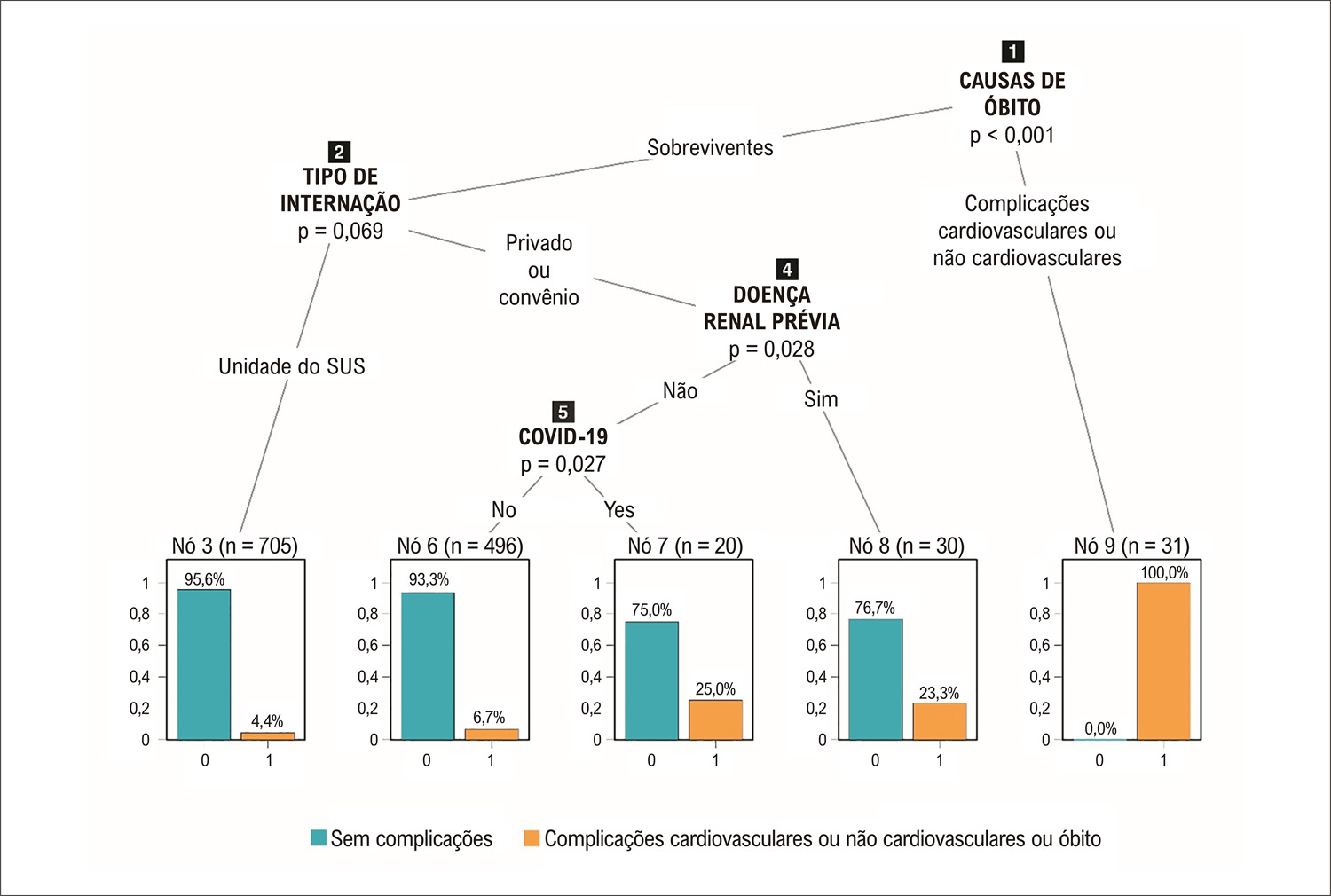
Registro prospectivo de 24 centros de hemodinâmica no Brasil, com pacientes adultos submetidos a procedimentos de cardiologia intervencionista entre 26 de maio e 30 de novembro de 2020. Os desfechos foram complicações cardiovasculares (CV) e não CV, morte e IM. A concomitância de COVID-19 foi confirmada com RT-PCR. Técnicas de machine learning foram usadas com modelos não paramétricos de árvores de classificação. Usou-se análise de correspondência simples com o software R. Adotou-se nível de significância de 5%.

Resultados

Este estudo incluiu 1.282 pacientes, 435 dos quais (33,9%) apresentaram IM: IM com supra de ST (IMCSST), 239 (54,9%); e IM sem supra de ST(IMSSST), 196 (45.1%). Dos 1.282 pacientes, 29 tiveram complicações CV, 47 tiveram complicações não CV e 31 morreram. O diagnóstico de COVID-19 foi confirmado em 77 pacientes (6%), com 15,58% de mortalidade e 6,49% de complicações não CV. A maioria dos pacientes apresentou significativa doença arterial coronariana (63%). Trombo intracoronariano foi mais frequente na presença de IMCSST (3,4%) e COVID-19 (4%). Tempo porta-mesa superior a 12 horas no IMSSST associou-se a 30,8% de complicações, 25% em pacientes com COVID-19.

Conclusões

Todos os óbitos foram precedidos por complicações CV ou não CV. A presença de COVID-19 foi associada a óbito e complicações não fatais dos pacientes submetidos a procedimentos de cardiologia intervencionista durante a pandemia.

  • Coronary Angiography
  • Coronary Artery Disease
  • COVID-19
  • Myocardial Infarction
  • Percutaneous Coronary Intervention
Ler artigo completo
Creative Commons Attribution (CC BY) Creative Commons license
01/09/2023 DOI: 10.36660/abc.20220840 Visualizações 9
IJCS
Case Report

Beyond Atherothrombotic Disease in Acute Coronary Syndrome

Mayra Alejandra Mora et al. Manuela Molano-Perez Cristian Orlando Becerra-Gonzalez Kenny Buitrago-Toro … Silvana Jimenez-Salazar Carlos Ortiz

Abstract

Half of the global population over 20 years of age will be affected by cardiovascular disease. Cardiovascular events in young people is challenging. Spontaneous coronary artery dissection is a non-traumatic and non-iatrogenic separation of the coronary arterial wall and is an uncommon and underdiagnosed cause of acute myocardial infarction predominately found in young women. Medical management has been more widely accepted, with percutaneous and surgery treatment reserved for precise indications. Optimal control of individual risk factors is essential in order to avoid recurrences.

  • acute coronary syndrome
  • Cardiovascular Diseases/complications
  • Coronary Thrombosis
  • Dissection
  • Percutaneous Coronary Intervention
  • Pregnancy Complications
  • Young Adult
Ler artigo completo
Creative Commons Attribution (CC BY) Creative Commons license
12/05/2021 DOI: 10.36660/ijcs.20200052 Visualizações 7
IJCS
Editorial

Chagas Disease – Past and Future

Aurea Lúcia Alves de Azevedo Grippa de Souza et al. Claudio Tinoco Mesquita

After 111 years of its discovery, Chagas disease remains a major public health challenge in Brazil and in other Latin American countries, reason why it continues to be a relevant topic in discussion panels worldwide. The disease was first described in 1909 by Carlos Justiniano Ribeiro das Chagas after his observations during an expedition to eradicate malaria in the rural areas of the state of Minas Gerais, in the city of Lassance. Carlos Chagas’ magnificent life journey makes him a unique figure in the history of medicine, as he alone described all the stages of a new infectious disease: pathological findings, means of transmission (Triatoma infestans), etiology, clinical manifestations, and epidemiology. For this reason, he was one of the few Brazilians to be nominated for a Nobel Prize, which, unfortunately, he did not win. This issue of the International Journal of Cardiovascular Sciences (IJCS) focuses on Chagas disease and its repercussions on the cardiovascular system.

Carlos Chagas graduated in 1904 in Rio de Janeiro and began his professional life in the city of Niterói as a physician of the Public Hygiene Committee at Santa Isabel Maritime Hospital, after declining Oswaldo Cruz’s invitation to work at Manguinhos. The Maritime Hospital, a beautiful architectural complex () built during the 19th century from an old farm, was considered a reference for the treatment of infectious diseases until the end of the 4th decade of the 20th century. Sailors, immigrants and local residents with bubonic plague, yellow fever or tuberculosis were treated at the institution. In this hospital, the Italian physician Camillo Terni, from the Serum Therapy Institute of Messina, conducted pioneering studies on a plague vaccine (). After working for 1 year at the Maritime Hospital, Chagas left to Manguinhos, where he began his journey to eradicate yellow fever and malaria, which led him to discover the disease caused by the insect known as barbeiro (kissing bug).

[…]

  • Aging
  • Chagas disease, Carlos Chagas, Trypanosoma Cruzi, Heart Failure
  • Myocardial Infarction
  • Percutaneous Coronary Intervention
  • Platelet Aggregation
  • Women
Ler artigo completo
Creative Commons Attribution (CC BY) Creative Commons license
25/11/2020 DOI: 10.36660/ijcs.20200351 Visualizações 7
IJCS
Editorial

After a STEMI, is Less Sugar more Protective to Myocardium?

Rafael Willain Lopes et al. Alexandre Hohl

The infarct size reduction in acute myocardial infarction (AMI) has been studied for more than 50 years. Animal experiments were conducted in the 1970s, followed by the first clinical studies to reduce infarct size (IS), with fibrinolytic agents or with mechanical coronary angioplasty (PTCA). The clinical experience of coronary reperfusion indicated that left ventricle function was not normalized in 30% of the patients, and despite unblocking the epicardial vessel, demonstrated hemodynamically, there was no equivalent in myocardial perfusion. New concepts emerged such as reperfusion injury, microvascular dysfunction, “no-reflow” phenomenon, and stunned and hibernating myocardium, which became the focus of basic research and clinical investigation. To improve characterization, different technologies were used, such as contrast echocardiography, isotopic studies, including positron emission tomography, and magnetic resonance.

Cardioprotection (CP) aims to reduce IS and improve clinical outcomes. The translation of CP from preclinical and promising proof-of-concept studies to clinical benefit (CB) for patients has been quite unsatisfactory. Almost all these studies that did not translate into CB had infarct size reduction as the primary endpoint and used protocols selected to achieve IS reduction.

[…]

  • Angioplasty
  • Diagnostic Imaging
  • Fibrinolytic Agents
  • Myocardial Reperfusion
  • Myocardial Stunning
  • Percutaneous Coronary Intervention
  • ST Elevation Myocardial Infarction
  • Ventricular Dysfunction Left
Ler artigo completo
Creative Commons Attribution (CC BY) Creative Commons license
09/10/2020 DOI: 10.36660/ijcs.20200173 Visualizações 9
IJCS
Viewpoint

Controversies in the Indications of Percutaneous Angioplasty Or Coronary Artery Bypass Grafting In The Treatment Of Left Main Disease

Renato A. K. Kalil et al. Roberto T. Sant´Anna Felipe Borsu de Salles

Introduction

Left main coronary artery (LMCA) disease is a high-risk clinical situation, since this artery is responsible for the irrigation of more than two-thirds of the myocardial tissue, LMCA disease is associated with increased risk of adverse cardiac events. Traditionally, the gold standard of treatment for significant LMCA disase, understood as a stenosis> 50%, is coronary artery bypass grafting (CABG) surgery. –

The technological evolution of percutaneous treatment and its safe application for LMCA disease in the PRECOMBAT study made it a viable alternative, initially restricted to patients at high surgical risk and with LMCA disease confined to the proximal portion of the trunk. Subsequent studies have suggested the equivalence of percutaneous coronary intervention (PCI) and CABG in low and moderate complexity LMCA disease, which was reflected in the most recent guidelines ( ). Clinical registries, with real-patient outcomes, – and long-term results from the EXCEL study, contest this notion of equivalence between therapies in terms of mortality. The study was controversial, especially regarding the definition of clinical outcomes.

[…]

  • Coronary Angiography
  • Coronary Artery Bypass
  • Coronary Artery Disease
  • Coronary Restenosis
  • Left Main Coronary Artery
  • Myocardial revascularization
  • Percutaneous Coronary Intervention
Ler artigo completo
Creative Commons Attribution (CC BY) Creative Commons license
17/07/2020 DOI: 10.36660/ijcs.20200037 Visualizações 8
IJCS
Original Article

An Overview of Care Changes in the Last 6 Year in Primary PCI in ST-Elevation Myocardial Infarction in a Tertiary University Brazilian Hospital

Guilherme Pinheiro Machado et al. Fernando Pivatto Junior Rodrigo Wainstein Gustavo Neves de Araujo … Christian Kunde Carpes Mateus Correa Lech Felipe Homem Valle Luiz Carlos Corsetti Bergoli Sandro Cadaval Gonçalves Marco Vugman Wainstein

Abstract

Background:

Although new studies and guidelines can be considered useful tools, it does not necessarily mean they are put into clinical practice.

Objective:

The aim of the current analysis was to assess the changes in primary percutaneous coronary intervention (PCI) and mortality in a tertiary university hospital in southern Brazil during a six-year period.

Methods:

We have included consecutive patients with ST-elevation myocardial infarction (STEMI) who underwent primary PCI between March 2011 and February 2017. Previous clinical history, characteristics of the procedure, and reperfusion strategies were collected. In-hospital, short and long-term mortalities were also evaluated. The significance level adopted for all tests was 5%.

Results:

There was an increase in the use of radial access in patients from 20.0% in 2011 to 62.7% in 2016 (ptrend < 0.0001). Moreover, thrombus aspiration decreased significantly from 66.7% in 2011 to less than 3.0% in 2016 (ptrend < 0.0001). In-hospital, short and long-term mortalities remained reasonably stable from 2011 to 2016 (ptrend > 0.05). However, a lower in-hospital mortality was observed in patients treated through radial access (p < 0.001). Cardiogenic shock occurred in 11.1%, without statistical differences in the period (ptrend = 0.39), while long-term mortality rate decreased from 80.0% in 2011 to 27.3% in 2016 in this patient group (ptrend = 0.29).

Conclusions:

During a 6-year follow-up period, primary PCI characteristics underwent important modifications. Radial access became widely used, with a decrease in mortality with the use of this route, while aspiration thrombectomy became a rare procedure. The incidence of cardiogenic shock remained stable, but has shown a reduction in its mortality.

  • Mocardial Infarction/mortality
  • Mortality
  • Percutaneous Coronary Intervention
  • Shock, Cardiogenic
Ler artigo completo
Creative Commons Attribution (CC BY) Creative Commons license
17/12/2018 DOI: 10.5935/2359-4802.20180090 Visualizações 5
IJCS
Original Article

Option for the Radial versus Femoral Access in Coronary Intervention in Acute Coronary Syndromes: A Risk-Treatment Paradox

Yasmin Falcon Lacerda et al. Nicole Cruz de Sá Jessica Gonzalez Suerdieck Letícia Fonseca … Fernanda Lopes Gabriella Sant'Ana Sodré Mateus dos Santos Viana Marcia Maria Noya Rabelo Luis Claudio Lemos Correia

Abstract

Background:

In coronary procedures, although the radial approach protects patients from hemorrhagic complications, it is technically more complex than the femoral approach.

Objectives:

To test the hypothesis that the radial approach is the procedure of choice in ACS patients due to the high risk of bleeding; and to identify independent predictors of the choice for radial access.

Methods:

Patients admitted for ACS who underwent invasive coronary procedure were included. We registered the type of access (femoral or radial) chosen by the physician for the first angiography; the investigators did not interfere with this choosing process. Student’s t-test was used for comparisons between the CRUSADE and ACUITY scores. Predictors of radial access were compared between the groups. Statistical significance was defined by p < 0,05.

Results: Radial access was chosen in 67% of 347 consecutive patients. Patients who underwent radial approach had lower risk of bleeding determined by CRUSADE (30 ± 14 vs. 37 ± 15; p < 0.001) as compared with femoral access. In multivariate analysis, four variables were identified as independent predictors negatively associated with radial access – age (OR = 0.98; 95%CI = 0.96 – 0.99), creatinine (OR = 0.54; 95%CI = 0.3 – 0.98), signs of left ventricular failure (OR = 0.45; 95% CI = 0.22 – 0.92) and previous CABG (OR = 0.022; 95%CI = 0.003 – 0.166).

Conclusion:

The propensity to choose radial over femoral access in coronary intervention was not primarily influenced by patients’ bleeding risk. Predictors of this decision, identified in the study, indicated less complex patients, suggesting that the difficulty in performing the technique was a stronger determinant than its potential antihemorrhagic effect. (Int J Cardiovasc Sci. 2018; [online].ahead print, PP.0-0)

  • Angioplasty
  • Catheterism
  • Coronary Artery Disease
  • Femoral Artery
  • Percutaneous Coronary Intervention
  • Radial Artery
  • Stents
Ler artigo completo
Creative Commons Attribution (CC BY) Creative Commons license
27/08/2018 DOI: 10.5935/2359-4802.20180066 Visualizações 7
IJCS
Original Article

Acute Myocardial Infarction and Primary Percutaneous Coronary Intervention at Night Time

Roberto Ramos Barbosa et al. Felipe Bortot Cesar Denis Moulin dos Reis Bayerl Renato Giestas Serpa … Vinicius Fraga Mauro Walkimar Ururay Gloria Veloso Roberto de Almeida Cesar Pedro Abilio Ribeiro Reseck

Abstract

Background:

Primary percutaneous coronary intervention is the preferred treatment in ST-elevation myocardial infarction. At night period, the delay until performing primary percutaneous coronary intervention may be determinant to prognosis worsening.

Objective:

To analyze the results of primary percutaneous coronary intervention performed at day and night periods.

Methods:

Cohort study that included patients admitted with ST-elevation myocardial infarction who underwent primary percutaneous coronary intervention from December 2013 until December 2016 in a ST-elevation myocardial infarction reference hospital of a metropolitan region in Brazil, followed from admission to hospital discharge or death, compared according to time of primary percutaneous coronary intervention (night or day). Statistical analysis comprehended the Chi-square test, the Fisher test, the Student’s t-test and the analysis of variance, with significance level of 5%.

Results:

446 patients were submitted to primary percutaneous coronary intervention, 159 (35.6%) at night time and 287 (64.4%) at day time. No differences were found between the two groups concerning clinical baseline characteristics. Door-to-balloon time (101 ± 81 minutes vs. 99 ± 78 minutes; p = 0,59) and onset-to-ballon time (294 ± 158 minutes vs. 278 ± 174 minutes; p = 0,32) did not differ between the groups. The incidence of combined major adverse cardiac events (15.1% vs. 14.3%; p = 0,58) and in-hospital mortality (9.4% vs. 8.0%; p = 0,61) were similar between the groups, as well as length of hospital stay (6.0 ± 4 days vs. 4.9 ± 4 days; p = 0,91).

Conclusion:

Primary percutaneous coronary intervention at night time showed similar results as the procedure performed at day time, without significant increase of in-hospital adverse events, length of stay or mortality.

  • Cohort Studies
  • Myocardial Infarction
  • Night Care
  • Percutaneous Coronary Intervention
Ler artigo completo
Creative Commons Attribution (CC BY) Creative Commons license
30/07/2018 DOI: 10.5935/2359-4802.20180050 Visualizações 9

Como citar este artigo

EndNote RIS

Formato de Documento Eletrônico (Vancouver)

Bertoli ED, Fukunaga CK, Martins V, Silva EVB, Motta RFOS, Katsuyama E, Floriano IT, et al. Percutaneous Coronary Intervention With Ridaforolimus-Eluting Stents in Patients With Coronary Artery Disease: A Systematic Review and Single-Arm Meta-Analysis. International Journal of Cardiovascular Sciences 2026;39:e20250143.

Formato de Documento Eletrônico (ABNT)

Bertoli, Edmundo Damiani; Fukunaga, Christian Ken; Martins, Vinicius; Silva, Everton Victor Belmiro da; Motta, Ricardo Fonseca Oliveira Suruagy; Katsuyama, Eric; Floriano, Isabela Tonon; Oliveira, Marcos Danillo; Silveira, Cristina; Dallan, Luis Augusto; Ribeiro, Marcelo Harada. Percutaneous Coronary Intervention With Ridaforolimus-Eluting Stents in Patients With Coronary Artery Disease: A Systematic Review and Single-Arm Meta-Analysis. International Journal of Cardiovascular Sciences, v. 39, e20250143, set. 2026.

Formato de Documento Eletrônico (APA)

Bertoli, E. D., Fukunaga, C. K., Martins, V., Silva, E. V. B. , Motta, R. F. O. S., Katsuyama, E., Floriano, I. T., Oliveira, M. D., Silveira, C., Dallan, L. A., & Ribeiro, M. H. (2026). Percutaneous Coronary Intervention With Ridaforolimus-Eluting Stents in Patients With Coronary Artery Disease: A Systematic Review and Single-Arm Meta-Analysis. International Journal of Cardiovascular Sciences, 39, e20250143.

Formato de Documento Eletrônico (ISO)

Bertoli, Edmundo Damiani and Fukunaga, Christian Ken and Martins, Vinicius and Silva, Everton Victor Belmiro da and Motta, Ricardo Fonseca Oliveira Suruagy and Katsuyama, Eric and Floriano, Isabela Tonon and Oliveira, Marcos Danillo and Silveira, Cristina and Dallan, Luis Augusto and Ribeiro, Marcelo Harada. Percutaneous Coronary Intervention With Ridaforolimus-Eluting Stents in Patients With Coronary Artery Disease: A Systematic Review and Single-Arm Meta-Analysis. International Journal of Cardiovascular Sciences [online]. 2026, vol. 39, [citado 2026-11-15], e20250143. Disponível em: <https://journals.cardiol.br/article/percutaneous-coronary-intervention-with-ridaforolimus-eluting-stents-in-patients-with-coronary-artery-disease-a-systematic-review-and-single-arm-meta-analysis-2/>. ISSN 2359-4802

EndNote RIS

Formato de Documento Eletrônico (Vancouver)

Rocha ASC, Kruczan D. Asymptomatic Patients With Suspected Coronary Artery Disease: What Are Clinicians Afraid Of?. International Journal of Cardiovascular Sciences 2026;39:e20250075.

Formato de Documento Eletrônico (ABNT)

Rocha, Antônio Sérgio Cordeiro da; Kruczan, Dany. Asymptomatic Patients With Suspected Coronary Artery Disease: What Are Clinicians Afraid Of?. International Journal of Cardiovascular Sciences, v. 39, e20250075, ago. 2026.

Formato de Documento Eletrônico (APA)

Rocha, A. S. C. , & Kruczan, D. (2026). Asymptomatic Patients With Suspected Coronary Artery Disease: What Are Clinicians Afraid Of?. International Journal of Cardiovascular Sciences, 39, e20250075.

Formato de Documento Eletrônico (ISO)

Rocha, Antônio Sérgio Cordeiro da and Kruczan, Dany. Asymptomatic Patients With Suspected Coronary Artery Disease: What Are Clinicians Afraid Of?. International Journal of Cardiovascular Sciences [online]. 2026, vol. 39, [citado 2026-11-15], e20250075. Disponível em: <https://journals.cardiol.br/article/asymptomatic-patients-with-suspected-coronary-artery-disease-what-are-clinicians-afraid-of-2/>. ISSN 2359-4802

EndNote RIS

Formato de Documento Eletrônico (Vancouver)

Verdoia M. The “Right” Side of Myocardial Infarction: Sinister Outcomes?. International Journal of Cardiovascular Sciences 2026;39:e20250249.

Formato de Documento Eletrônico (ABNT)

Verdoia, Monica. The “Right” Side of Myocardial Infarction: Sinister Outcomes?. International Journal of Cardiovascular Sciences, v. 39, e20250249, mar. 2026.

Formato de Documento Eletrônico (APA)

Verdoia, M. (2026). The “Right” Side of Myocardial Infarction: Sinister Outcomes?. International Journal of Cardiovascular Sciences, 39, e20250249.

Formato de Documento Eletrônico (ISO)

Verdoia, Monica. The “Right” Side of Myocardial Infarction: Sinister Outcomes?. International Journal of Cardiovascular Sciences [online]. 2026, vol. 39, [citado 2026-11-15], e20250249. Disponível em: <https://journals.cardiol.br/article/the-right-side-of-myocardial-infarction-sinister-outcomes-2/>. ISSN 2359-4802

EndNote RIS

Formato de Documento Eletrônico (Vancouver)

França ME, Fragas AL, Rocha FR, Ribeiro LC, Toniazzo SRF. Evaluation of Different Therapeutic Approaches for Acute Coronary Syndromes in Patients Undergoing Chronic Dialysis: A Retrospective Cohort Study. International Journal of Cardiovascular Sciences 2025;38:e20250029.

Formato de Documento Eletrônico (ABNT)

França, Matheus Eduardo; Fragas, Ana Luiza de; Rocha, Franciani Rodrigues da; Ribeiro, Leonardo Claudino; Toniazzo, Silvia R. Froes. Evaluation of Different Therapeutic Approaches for Acute Coronary Syndromes in Patients Undergoing Chronic Dialysis: A Retrospective Cohort Study. International Journal of Cardiovascular Sciences, v. 38, e20250029, nov. 2025.

Formato de Documento Eletrônico (APA)

França, M. E., Fragas, A. L. , Rocha, F. R. , Ribeiro, L. C., & Toniazzo, S. R. F. (2025). Evaluation of Different Therapeutic Approaches for Acute Coronary Syndromes in Patients Undergoing Chronic Dialysis: A Retrospective Cohort Study. International Journal of Cardiovascular Sciences, 38, e20250029.

Formato de Documento Eletrônico (ISO)

França, Matheus Eduardo and Fragas, Ana Luiza de and Rocha, Franciani Rodrigues da and Ribeiro, Leonardo Claudino and Toniazzo, Silvia R. Froes. Evaluation of Different Therapeutic Approaches for Acute Coronary Syndromes in Patients Undergoing Chronic Dialysis: A Retrospective Cohort Study. International Journal of Cardiovascular Sciences [online]. 2025, vol. 38, [citado 2026-11-15], e20250029. Disponível em: <https://journals.cardiol.br/article/evaluation-of-different-therapeutic-approaches-for-acute-coronary-syndromes-in-patients-undergoing-chronic-dialysis-a-retrospective-cohort-study-2/>. ISSN 2359-4802

EndNote RIS

Formato de Documento Eletrônico (Vancouver)

Lott LP, Barbosa RR, Muzi RR, Marianelli C, Bragatto IC, Trevizani Neto V, Baptista GC, et al. Delay Times in Acute Myocardial Infarction Care: Comparison Between Periods Before and During the COVID-19 Pandemic. International Journal of Cardiovascular Sciences 2025;38:e20240022.

Formato de Documento Eletrônico (ABNT)

Lott, Layla Pasolini; Barbosa, Roberto Ramos; Muzi, Rhaaby Rodrigues; Marianelli, Camila; Bragatto, Isadora Cardozo; Trevizani Neto, Valentin; Baptista, Glícia Chierici; Vieira, Eduardo Gomes; Sylvestre, Rodolfo Costa; Calil, Osmar Araújo; Serpa, Renato Giestas; Barros, Lucas Crespo de; Paganini, Larissa Novaes; Borges, Lucas Martins Frizzera; Barbosa, Luiz Fernando Machado. Delay Times in Acute Myocardial Infarction Care: Comparison Between Periods Before and During the COVID-19 Pandemic. International Journal of Cardiovascular Sciences, v. 38, e20240022, mar. 2025.

Formato de Documento Eletrônico (APA)

Lott, L. P., Barbosa, R. R., Muzi, R. R., Marianelli, C., Bragatto, I. C., Trevizani Neto, V., Baptista, G. C., Vieira, E. G., Sylvestre, R. C., Calil, O. A., Serpa, R. G., Barros, L. C. , Paganini, L. N., Borges, L. M. F., & Barbosa, L. F. M. (2025). Delay Times in Acute Myocardial Infarction Care: Comparison Between Periods Before and During the COVID-19 Pandemic. International Journal of Cardiovascular Sciences, 38, e20240022.

Formato de Documento Eletrônico (ISO)

Lott, Layla Pasolini and Barbosa, Roberto Ramos and Muzi, Rhaaby Rodrigues and Marianelli, Camila and Bragatto, Isadora Cardozo and Trevizani Neto, Valentin and Baptista, Glícia Chierici and Vieira, Eduardo Gomes and Sylvestre, Rodolfo Costa and Calil, Osmar Araújo and Serpa, Renato Giestas and Barros, Lucas Crespo de and Paganini, Larissa Novaes and Borges, Lucas Martins Frizzera and Barbosa, Luiz Fernando Machado. Delay Times in Acute Myocardial Infarction Care: Comparison Between Periods Before and During the COVID-19 Pandemic. International Journal of Cardiovascular Sciences [online]. 2025, vol. 38, [citado 2026-11-15], e20240022. Disponível em: <https://journals.cardiol.br/article/delay-times-in-acute-myocardial-infarction-care-comparison-between-periods-before-and-during-the-covid-19-pandemic-2/>. ISSN 2359-4802

EndNote RIS

Formato de Documento Eletrônico (Vancouver)

Rantung NOH, Rampengan SH, Jim EL, Ananda DGP, Langi FLFG. Role of the CHA2DS2-Vasc Score in Predicting Contrast-Induced Nephropathy After Primary Percutaneous Coronary Intervention. International Journal of Cardiovascular Sciences 2025;38:e20240111.

Formato de Documento Eletrônico (ABNT)

Rantung, Nolly Octavianes Habel; Rampengan, Starry Homenta; Jim, Edmond Leonard; Ananda, Dewa Gde Prema; Langi, Fima Lanra Fredrik Gerarld. Role of the CHA2DS2-Vasc Score in Predicting Contrast-Induced Nephropathy After Primary Percutaneous Coronary Intervention. International Journal of Cardiovascular Sciences, v. 38, e20240111, fev. 2025.

Formato de Documento Eletrônico (APA)

Rantung, N. O. H., Rampengan, S. H., Jim, E. L., Ananda, D. G. P., & Langi, F. L. F. G. (2025). Role of the CHA2DS2-Vasc Score in Predicting Contrast-Induced Nephropathy After Primary Percutaneous Coronary Intervention. International Journal of Cardiovascular Sciences, 38, e20240111.

Formato de Documento Eletrônico (ISO)

Rantung, Nolly Octavianes Habel and Rampengan, Starry Homenta and Jim, Edmond Leonard and Ananda, Dewa Gde Prema and Langi, Fima Lanra Fredrik Gerarld. Role of the CHA2DS2-Vasc Score in Predicting Contrast-Induced Nephropathy After Primary Percutaneous Coronary Intervention. International Journal of Cardiovascular Sciences [online]. 2025, vol. 38, [citado 2026-11-15], e20240111. Disponível em: <https://journals.cardiol.br/article/role-of-the-cha2ds2-vasc-score-in-predicting-contrast-induced-nephropathy-after-primary-percutaneous-coronary-intervention-2/>. ISSN 2359-4802

EndNote RIS

Formato de Documento Eletrônico (Vancouver)

Oliveira MD, Motta RFOS, Caixeta A. Distal Transradial Access for Coronary Procedures: Insights from 6,800 Consecutive All-Comers Patients from the DISTRACTION Registry. International Journal of Cardiovascular Sciences 2024;37:e20240084.

Formato de Documento Eletrônico (ABNT)

Oliveira, Marcos Danillo; Motta, Ricardo Fonseca Oliveira Suruagy; Caixeta, Adriano. Distal Transradial Access for Coronary Procedures: Insights from 6,800 Consecutive All-Comers Patients from the DISTRACTION Registry. International Journal of Cardiovascular Sciences, v. 37, e20240084, nov. 2024.

Formato de Documento Eletrônico (APA)

Oliveira, M. D., Motta, R. F. O. S., & Caixeta, A. (2024). Distal Transradial Access for Coronary Procedures: Insights from 6,800 Consecutive All-Comers Patients from the DISTRACTION Registry. International Journal of Cardiovascular Sciences, 37, e20240084.

Formato de Documento Eletrônico (ISO)

Oliveira, Marcos Danillo and Motta, Ricardo Fonseca Oliveira Suruagy and Caixeta, Adriano. Distal Transradial Access for Coronary Procedures: Insights from 6,800 Consecutive All-Comers Patients from the DISTRACTION Registry. International Journal of Cardiovascular Sciences [online]. 2024, vol. 37, [citado 2026-11-15], e20240084. Disponível em: <https://journals.cardiol.br/article/distal-transradial-access-for-coronary-procedures-insights-from-6800-consecutive-all-comers-patients-from-the-distraction-registry-2/>. ISSN 2359-4802

EndNote RIS

Formato de Documento Eletrônico (Vancouver)

Machado GP, Araujo GN, Beltrame R, Theobald AL, Niches MS, Fracasso JF, Milan V, et al. Characteristics of ST-Elevation Myocardial Infarction during the SARS-CoV-2 Outbreak. International Journal of Cardiovascular Sciences 2024;37:e20220203.

Formato de Documento Eletrônico (ABNT)

Machado, Guilherme Pinheiro; Araujo, Gustavo Neves de; Beltrame, Rafael; Theobald, André Luiz; Niches, Matheus de Souza; Fracasso, Julia Fagundes; Milan, Victoria; Custodio, Julia Luchese; Cardoso, Camila Porto; Tietz, Pedro Henrique Torres; Reichert, Giulia Bonatto; Schmidt, Marcia Moura; Quadros, Alexandre Schaan de; Wainstein, Marco Vugman. Characteristics of ST-Elevation Myocardial Infarction during the SARS-CoV-2 Outbreak. International Journal of Cardiovascular Sciences, v. 37, e20220203, fev. 2024.

Formato de Documento Eletrônico (APA)

Machado, G. P., Araujo, G. N. , Beltrame, R., Theobald, A. L., Niches, M. S., Fracasso, J. F., Milan, V., Custodio, J. L., Cardoso, C. P., Tietz, P. H. T., Reichert, G. B., Schmidt, M. M., Quadros, A. S. , & Wainstein, M. V. (2024). Characteristics of ST-Elevation Myocardial Infarction during the SARS-CoV-2 Outbreak. International Journal of Cardiovascular Sciences, 37, e20220203.

Formato de Documento Eletrônico (ISO)

Machado, Guilherme Pinheiro and Araujo, Gustavo Neves de and Beltrame, Rafael and Theobald, André Luiz and Niches, Matheus de Souza and Fracasso, Julia Fagundes and Milan, Victoria and Custodio, Julia Luchese and Cardoso, Camila Porto and Tietz, Pedro Henrique Torres and Reichert, Giulia Bonatto and Schmidt, Marcia Moura and Quadros, Alexandre Schaan de and Wainstein, Marco Vugman. Characteristics of ST-Elevation Myocardial Infarction during the SARS-CoV-2 Outbreak. International Journal of Cardiovascular Sciences [online]. 2024, vol. 37, [citado 2026-11-15], e20220203. Disponível em: <https://journals.cardiol.br/article/characteristics-of-st-elevation-myocardial-infarction-during-the-sars-cov-2-outbreak-2/>. ISSN 2359-4802

EndNote RIS

Formato de Documento Eletrônico (Vancouver)

Kanal Y, Balci KG, Yaman NM, Yakut , Ozbay MB, Maden O. The Relationship between CHA2DS2-VASc Score and Reperfusion Success in Elective Percutaneous Saphenous Vein Graft Interventions. International Journal of Cardiovascular Sciences 2023;36:e20230027.

Formato de Documento Eletrônico (ABNT)

Kanal, Yücel; Balci, Kevser Gülcihan; Yaman, Nezaket Merye; Yakut, Ídris; Ozbay, Mustafa Bilal; Maden, Orhan. The Relationship between CHA2DS2-VASc Score and Reperfusion Success in Elective Percutaneous Saphenous Vein Graft Interventions. International Journal of Cardiovascular Sciences, v. 36, e20230027, out. 2023.

Formato de Documento Eletrônico (APA)

Kanal, Y., Balci, K. G., Yaman, N. M., Yakut, , Ozbay, M. B., & Maden, O. (2023). The Relationship between CHA2DS2-VASc Score and Reperfusion Success in Elective Percutaneous Saphenous Vein Graft Interventions. International Journal of Cardiovascular Sciences, 36, e20230027.

Formato de Documento Eletrônico (ISO)

Kanal, Yücel and Balci, Kevser Gülcihan and Yaman, Nezaket Merye and Yakut, Ídris and Ozbay, Mustafa Bilal and Maden, Orhan. The Relationship between CHA2DS2-VASc Score and Reperfusion Success in Elective Percutaneous Saphenous Vein Graft Interventions. International Journal of Cardiovascular Sciences [online]. 2023, vol. 36, [citado 2026-11-15], e20230027. Disponível em: <https://journals.cardiol.br/article/the-relationship-between-cha2ds2-vasc-score-and-reperfusion-success-in-elective-percutaneous-saphenous-vein-graft-interventions-2/>. ISSN 2359-4802

EndNote RIS

Formato de Documento Eletrônico (Vancouver)

Lemke VG, Paiva MSS, Mariano GZ, Alves TS, Ferreira E, Nunes LA, Oliveira FRA, et al. Registro Brasileiro de Cardiologia Intervencionista durante a Pandemia de COVID-19 (RBCI-COVID19). Arquivos Brasileiros de Cardiologia 2023;120(8):e20220840.

Formato de Documento Eletrônico (ABNT)

Lemke, Viviana Guzzo; Paiva, Maria Sanali Souza; Mariano, Giordana Zeferino; Alves, Thales Siqueira; Ferreira, Esmeralci; Nunes, Leonardo Avany; Oliveira, Flavio Roberto Azevedo; Cantarelli, Rodrigo; Nascimento, Emilia Matos do; Oliveira, Gláucia Maria Moraes de. Registro Brasileiro de Cardiologia Intervencionista durante a Pandemia de COVID-19 (RBCI-COVID19). Arquivos Brasileiros de Cardiologia, v. 120, n. 8, e20220840, ago. 2023.

Formato de Documento Eletrônico (APA)

Lemke, V. G., Paiva, M. S. S., Mariano, G. Z., Alves, T. S., Ferreira, E., Nunes, L. A., Oliveira, F. R. A., Cantarelli, R., Nascimento, E. M. , & Oliveira, G. M. M. (2023). Registro Brasileiro de Cardiologia Intervencionista durante a Pandemia de COVID-19 (RBCI-COVID19). Arquivos Brasileiros de Cardiologia, 120(8), e20220840.

Formato de Documento Eletrônico (ISO)

Lemke, Viviana Guzzo and Paiva, Maria Sanali Souza and Mariano, Giordana Zeferino and Alves, Thales Siqueira and Ferreira, Esmeralci and Nunes, Leonardo Avany and Oliveira, Flavio Roberto Azevedo and Cantarelli, Rodrigo and Nascimento, Emilia Matos do and Oliveira, Gláucia Maria Moraes de. Registro Brasileiro de Cardiologia Intervencionista durante a Pandemia de COVID-19 (RBCI-COVID19). Arquivos Brasileiros de Cardiologia [online]. 2023, vol. 120, n. 8, [citado 2026-11-15], e20220840. Disponível em: <https://journals.cardiol.br/article/registro-brasileiro-de-cardiologia-intervencionista-durante-a-pandemia-de-covid-19-rbci-covid19/>. ISSN 0066-782X

EndNote RIS

Formato de Documento Eletrônico (Vancouver)

Mora MA, Molano-Perez M, Becerra-Gonzalez CO, Buitrago-Toro K, Jimenez-Salazar S, Ortiz C. Beyond Atherothrombotic Disease in Acute Coronary Syndrome. International Journal of Cardiovascular Sciences 2021;34(4):494-7.

Formato de Documento Eletrônico (ABNT)

Mora, Mayra Alejandra; Molano-Perez, Manuela; Becerra-Gonzalez, Cristian Orlando; Buitrago-Toro, Kenny; Jimenez-Salazar, Silvana; Ortiz, Carlos. Beyond Atherothrombotic Disease in Acute Coronary Syndrome. International Journal of Cardiovascular Sciences, v. 34, n. 4, p. 494-497, maio. 2021.

Formato de Documento Eletrônico (APA)

Mora, M. A., Molano-Perez, M., Becerra-Gonzalez, C. O., Buitrago-Toro, K., Jimenez-Salazar, S., & Ortiz, C. (2021). Beyond Atherothrombotic Disease in Acute Coronary Syndrome. International Journal of Cardiovascular Sciences, 34(4), 494-497.

Formato de Documento Eletrônico (ISO)

Mora, Mayra Alejandra and Molano-Perez, Manuela and Becerra-Gonzalez, Cristian Orlando and Buitrago-Toro, Kenny and Jimenez-Salazar, Silvana and Ortiz, Carlos. Beyond Atherothrombotic Disease in Acute Coronary Syndrome. International Journal of Cardiovascular Sciences [online]. 2021, vol. 34, n. 4, [citado 2026-11-15], pp. 494-497. Disponível em: <https://journals.cardiol.br/article/beyond-atherothrombotic-disease-in-acute-coronary-syndrome-2/>. ISSN 2359-4802

EndNote RIS

Formato de Documento Eletrônico (Vancouver)

Souza ALAAG, Mesquita CT. Chagas Disease – Past and Future. International Journal of Cardiovascular Sciences 2020;33(6):601-3.

Formato de Documento Eletrônico (ABNT)

Souza, Aurea Lúcia Alves de Azevedo Grippa de; Mesquita, Claudio Tinoco. Chagas Disease – Past and Future. International Journal of Cardiovascular Sciences, v. 33, n. 6, p. 601-603, nov. 2020.

Formato de Documento Eletrônico (APA)

Souza, A. L. A. A. G. , & Mesquita, C. T. (2020). Chagas Disease – Past and Future. International Journal of Cardiovascular Sciences, 33(6), 601-603.

Formato de Documento Eletrônico (ISO)

Souza, Aurea Lúcia Alves de Azevedo Grippa de and Mesquita, Claudio Tinoco. Chagas Disease – Past and Future. International Journal of Cardiovascular Sciences [online]. 2020, vol. 33, n. 6, [citado 2026-11-15], pp. 601-603. Disponível em: <https://journals.cardiol.br/article/chagas-disease-past-and-future-2/>. ISSN 2359-4802

EndNote RIS

Formato de Documento Eletrônico (Vancouver)

Lopes RW, Hohl A. After a STEMI, is Less Sugar more Protective to Myocardium?. International Journal of Cardiovascular Sciences 2020;33(5):506-8.

Formato de Documento Eletrônico (ABNT)

Lopes, Rafael Willain; Hohl, Alexandre. After a STEMI, is Less Sugar more Protective to Myocardium?. International Journal of Cardiovascular Sciences, v. 33, n. 5, p. 506-508, out. 2020.

Formato de Documento Eletrônico (APA)

Lopes, R. W., & Hohl, A. (2020). After a STEMI, is Less Sugar more Protective to Myocardium?. International Journal of Cardiovascular Sciences, 33(5), 506-508.

Formato de Documento Eletrônico (ISO)

Lopes, Rafael Willain and Hohl, Alexandre. After a STEMI, is Less Sugar more Protective to Myocardium?. International Journal of Cardiovascular Sciences [online]. 2020, vol. 33, n. 5, [citado 2026-11-15], pp. 506-508. Disponível em: <https://journals.cardiol.br/article/after-a-stemi-is-less-sugar-more-protective-to-myocardium-2/>. ISSN 2359-4802

EndNote RIS

Formato de Documento Eletrônico (Vancouver)

Kalil RAK, Sant´Anna RT, Salles FB. Controversies in the Indications of Percutaneous Angioplasty Or Coronary Artery Bypass Grafting In The Treatment Of Left Main Disease. International Journal of Cardiovascular Sciences 2020;33(5):565-71.

Formato de Documento Eletrônico (ABNT)

Kalil, Renato A. K.; Sant´Anna, Roberto T.; Salles, Felipe Borsu de. Controversies in the Indications of Percutaneous Angioplasty Or Coronary Artery Bypass Grafting In The Treatment Of Left Main Disease. International Journal of Cardiovascular Sciences, v. 33, n. 5, p. 565-571, jul. 2020.

Formato de Documento Eletrônico (APA)

Kalil, R. A. K., Sant´Anna, R. T., & Salles, F. B. (2020). Controversies in the Indications of Percutaneous Angioplasty Or Coronary Artery Bypass Grafting In The Treatment Of Left Main Disease. International Journal of Cardiovascular Sciences, 33(5), 565-571.

Formato de Documento Eletrônico (ISO)

Kalil, Renato A. K. and Sant´Anna, Roberto T. and Salles, Felipe Borsu de. Controversies in the Indications of Percutaneous Angioplasty Or Coronary Artery Bypass Grafting In The Treatment Of Left Main Disease. International Journal of Cardiovascular Sciences [online]. 2020, vol. 33, n. 5, [citado 2026-11-15], pp. 565-571. Disponível em: <https://journals.cardiol.br/article/controversies-in-the-indications-of-percutaneous-angioplasty-or-coronary-artery-bypass-grafting-in-the-treatment-of-left-main-disease-2/>. ISSN 2359-4802

EndNote RIS

Formato de Documento Eletrônico (Vancouver)

Machado GP, Pivatto Junior F, Wainstein R, Araujo GN, Carpes CK, Lech MC, Valle FH, et al. An Overview of Care Changes in the Last 6 Year in Primary PCI in ST-Elevation Myocardial Infarction in a Tertiary University Brazilian Hospital. International Journal of Cardiovascular Sciences 2018;32(2):125-33.

Formato de Documento Eletrônico (ABNT)

Machado, Guilherme Pinheiro; Pivatto Junior, Fernando; Wainstein, Rodrigo; Araujo, Gustavo Neves de; Carpes, Christian Kunde; Lech, Mateus Correa; Valle, Felipe Homem; Bergoli, Luiz Carlos Corsetti; Gonçalves, Sandro Cadaval; Wainstein, Marco Vugman. An Overview of Care Changes in the Last 6 Year in Primary PCI in ST-Elevation Myocardial Infarction in a Tertiary University Brazilian Hospital. International Journal of Cardiovascular Sciences, v. 32, n. 2, p. 125-133, dez. 2018.

Formato de Documento Eletrônico (APA)

Machado, G. P., Pivatto Junior, F., Wainstein, R., Araujo, G. N. , Carpes, C. K., Lech, M. C., Valle, F. H., Bergoli, L. C. C., Gonçalves, S. C., & Wainstein, M. V. (2018). An Overview of Care Changes in the Last 6 Year in Primary PCI in ST-Elevation Myocardial Infarction in a Tertiary University Brazilian Hospital. International Journal of Cardiovascular Sciences, 32(2), 125-133.

Formato de Documento Eletrônico (ISO)

Machado, Guilherme Pinheiro and Pivatto Junior, Fernando and Wainstein, Rodrigo and Araujo, Gustavo Neves de and Carpes, Christian Kunde and Lech, Mateus Correa and Valle, Felipe Homem and Bergoli, Luiz Carlos Corsetti and Gonçalves, Sandro Cadaval and Wainstein, Marco Vugman. An Overview of Care Changes in the Last 6 Year in Primary PCI in ST-Elevation Myocardial Infarction in a Tertiary University Brazilian Hospital. International Journal of Cardiovascular Sciences [online]. 2018, vol. 32, n. 2, [citado 2026-11-15], pp. 125-133. Disponível em: <https://journals.cardiol.br/article/an-overview-of-care-changes-in-the-last-6-year-in-primary-pci-in-st-elevation-myocardial-infarction-in-a-tertiary-university-brazilian-hospital-2/>. ISSN 2359-4802

EndNote RIS

Formato de Documento Eletrônico (Vancouver)

Lacerda YF, Sá NC, Suerdieck JG, Fonseca L, Lopes F, Sodré GS, Viana MS, et al. Option for the Radial versus Femoral Access in Coronary Intervention in Acute Coronary Syndromes: A Risk-Treatment Paradox. International Journal of Cardiovascular Sciences 2018;31(6):562-8.

Formato de Documento Eletrônico (ABNT)

Lacerda, Yasmin Falcon; Sá, Nicole Cruz de; Suerdieck, Jessica Gonzalez; Fonseca, Letícia; Lopes, Fernanda; Sodré, Gabriella Sant’Ana; Viana, Mateus dos Santos; Rabelo, Marcia Maria Noya; Correia, Luis Claudio Lemos. Option for the Radial versus Femoral Access in Coronary Intervention in Acute Coronary Syndromes: A Risk-Treatment Paradox. International Journal of Cardiovascular Sciences, v. 31, n. 6, p. 562-568, ago. 2018.

Formato de Documento Eletrônico (APA)

Lacerda, Y. F., Sá, N. C. , Suerdieck, J. G., Fonseca, L., Lopes, F., Sodré, G. S., Viana, M. S., Rabelo, M. M. N., & Correia, L. C. L. (2018). Option for the Radial versus Femoral Access in Coronary Intervention in Acute Coronary Syndromes: A Risk-Treatment Paradox. International Journal of Cardiovascular Sciences, 31(6), 562-568.

Formato de Documento Eletrônico (ISO)

Lacerda, Yasmin Falcon and Sá, Nicole Cruz de and Suerdieck, Jessica Gonzalez and Fonseca, Letícia and Lopes, Fernanda and Sodré, Gabriella Sant’Ana and Viana, Mateus dos Santos and Rabelo, Marcia Maria Noya and Correia, Luis Claudio Lemos. Option for the Radial versus Femoral Access in Coronary Intervention in Acute Coronary Syndromes: A Risk-Treatment Paradox. International Journal of Cardiovascular Sciences [online]. 2018, vol. 31, n. 6, [citado 2026-11-15], pp. 562-568. Disponível em: <https://journals.cardiol.br/article/option-for-the-radial-versus-femoral-access-in-coronary-intervention-in-acute-coronary-syndromes-a-risk-treatment-paradox-2/>. ISSN 2359-4802

EndNote RIS

Formato de Documento Eletrônico (Vancouver)

Barbosa RR, Cesar FB, Bayerl DMR, Serpa RG, Mauro VF, Veloso WUG, Cesar RA, et al. Acute Myocardial Infarction and Primary Percutaneous Coronary Intervention at Night Time. International Journal of Cardiovascular Sciences 2018;31(5):513-9.

Formato de Documento Eletrônico (ABNT)

Barbosa, Roberto Ramos; Cesar, Felipe Bortot; Bayerl, Denis Moulin dos Reis; Serpa, Renato Giestas; Mauro, Vinicius Fraga; Veloso, Walkimar Ururay Gloria; Cesar, Roberto de Almeida; Reseck, Pedro Abilio Ribeiro. Acute Myocardial Infarction and Primary Percutaneous Coronary Intervention at Night Time. International Journal of Cardiovascular Sciences, v. 31, n. 5, p. 513-519, jul. 2018.

Formato de Documento Eletrônico (APA)

Barbosa, R. R., Cesar, F. B., Bayerl, D. M. R., Serpa, R. G., Mauro, V. F., Veloso, W. U. G., Cesar, R. A., & Reseck, P. A. R. (2018). Acute Myocardial Infarction and Primary Percutaneous Coronary Intervention at Night Time. International Journal of Cardiovascular Sciences, 31(5), 513-519.

Formato de Documento Eletrônico (ISO)

Barbosa, Roberto Ramos and Cesar, Felipe Bortot and Bayerl, Denis Moulin dos Reis and Serpa, Renato Giestas and Mauro, Vinicius Fraga and Veloso, Walkimar Ururay Gloria and Cesar, Roberto de Almeida and Reseck, Pedro Abilio Ribeiro. Acute Myocardial Infarction and Primary Percutaneous Coronary Intervention at Night Time. International Journal of Cardiovascular Sciences [online]. 2018, vol. 31, n. 5, [citado 2026-11-15], pp. 513-519. Disponível em: <https://journals.cardiol.br/article/acute-myocardial-infarction-and-primary-percutaneous-coronary-intervention-at-night-time-2/>. ISSN 2359-4802

  • Sobre a Família ABC
  • Regimento Interno
  • Conselho Editorial
  • Sociedade Brasileira de Cardiologia (SBC)

Edições

Diretrizes da SBC

  • Vídeos
  • Podcasts
  • Notícias
Accessibility Adjustments

Powered by OneTap

How long do you want to hide the toolbar?
Hide Toolbar Duration
Select your accessibility profile
Vision Impaired Mode
Enhances website's visuals
Seizure Safe Profile
Clear flashes & reduces color
ADHD Friendly Mode
Focused browsing, distraction-free
Blindness Mode
Reduces distractions, improves focus
Epilepsy Safe Mode
Dims colors and stops blinking
Content Modules
Font Size

Default

Line Height

Default

Color Modules
Orientation Modules