Família ABC Arquivos Brasileiros de Cardiologia International Journal of Cardiovascular Sciences ABC Heart Failure & Cardiomyopathy ABC Imagem Cardiovascular
Português English
  • Família ABC
  • Arquivos Brasileiros de Cardiologia
  • International Journal of Cardiovascular Sciences
  • ABC Heart Failure & Cardiomyopathy
  • ABC Imagem Cardiovascular
Português English
  • Sobre
    • Sobre a Família ABC
    • Regimento Interno
    • Conselho Editorial
    • Sociedade Brasileira de Cardiologia (SBC)
  • Edições
  • Diretrizes da SBC
  • Conteúdos
    • Vídeos
    • Podcasts
    • Notícias
  • Sobre
    • Sobre a Família ABC
    • Regimento Interno
    • Conselho Editorial
    • Sociedade Brasileira de Cardiologia (SBC)
  • Edições
  • Diretrizes da SBC
  • Conteúdos
    • Vídeos
    • Podcasts
    • Notícias
Buscar em

Nenhum conteúdo encontrado.

Revistas
Ordenação
Tipos de artigo
Outros

  1. Início
  2. Coronary Angiography
IJCS
Editorial

From Right to Left Radial Access in Older Patients: Are We Witnessing the Next Procedural Shift?

Sandro Cadaval Gonçalves

The steady rise in percutaneous coronary interventions performed in older patients reflects not only demographic trends but also the growing body of evidence supporting the effectiveness of invasive strategies in this population. Three decades ago, the femoral approach was the undisputed standard. Early reports of transradial access in the early 1990s were met with skepticism, mainly due to concerns about procedural complexity and unfamiliarity with the required technical adjustments. Over time, radial access became the preferred approach. The transition from radial to femoral access offered elderly patients a clear reduction in bleeding and vascular complications. Operators naturally shifted from right femoral to right radial access, remaining on the same side of the patient and often overlooking the more distant left side. As a result, right radial access (RRA) became the default. The choice between RRA and left radial access (LRA) is often driven by habit, operator ergonomics, equipment availability, and catheterization laboratory setup. Emerging evidence suggests this decision warrants closer consideration. In older patients, atherosclerotic and tortuous changes in the subclavian and brachiocephalic arteries are disproportionately more common on the right side. A left radial approach may reduce technical challenges, potentially shortening procedure time and lowering radiation exposure and contrast volume.,

In this issue of the International Journal of Cardiovascular Sciences, Gonçalves et al. shed light on this important topic. In an elegant and technically well-performed systematic review and meta-analysis, including 1,094 patients from three randomized trials and one observational study, the authors provide compelling evidence to reconsider the choice of radial access in elderly patients. While numerous previous reviews have compared LRA and RRA, this study is unique in its exclusive focus on the elderly population. The analysis included studies involving patients aged ≥70 years undergoing diagnostic or therapeutic coronary procedures, comparing RRA and LRA, and reporting at least one of three outcomes: fluoroscopy time, contrast volume, and procedural difficulty.

[…]

  • Aged
  • Coronary Angiography
  • Radial Artery
Ler artigo completo
Creative Commons Attribution (CC BY) Creative Commons license
27/04/2026 DOI: 10.36660/ijcs.20250195 Visualizações 6
IJCS
Original Article

Distal Transradial Access for Coronary Procedures: Insights from 6,800 Consecutive All-Comers Patients from the DISTRACTION Registry

Marcos Danillo Oliveira et al. Ricardo Fonseca Oliveira Suruagy Motta Adriano Caixeta

Abstract

Background:

Distal transradial access (dTRA), an improvement of the conventional proximal transradial access (pTRA), has advantages in terms of faster hemostasis and lower rates of proximal radial artery occlusion (RAO).

Objectives:

We aim to describe our real-world experience with dTRA as the default approach for routine coronary angiography and percutaneous coronary interventions (PCI) in a large-scale sample of all-comers patients.

Methods:

From February 2019 to April 2024, 6,800 consecutive patients undergoing coronary procedures via dTRA were enrolled in the DISTRACTION (DIStal TRAnsradial access as default approach for Coronary angiography and intervenTIONs) Registry.

Results:

Mean patient age was 63.8 ± 15.7 years; 65% were male. Overall, 20.8% of patients had non-ST-elevation myocardial infarction (NSTEMI); 22.3% had ST-elevation myocardial infarction (STEMI), and 2.5% presented in cardiogenic shock. There were only 2% access site crossovers, mainly to ipsilateral pTRA. In only 119 patients dTRA sheath insertion could not be obtained. Right dTRA was the most frequent access, followed by redo ipsilateral dTRA, left dTRA, and simultaneous bilateral dTRA. PCI was performed in 59.5% of all cases, and the left anterior descending artery was the most treated vessel. No significant access site-related bleeding and no hand/thumb dysfunction after any procedure were documented. There were neither major complications nor major adverse cerebrovascular and cardiac events directly related to dTRA.

Conclusions:

In this real-world large-scale registry of all-comers patients, the adoption of dTRA by proficient operators as the default for routine coronary angiography and interventions was safe and feasible.

  • Coronary Angiography
  • Percutaneous Coronary Intervention
  • Registries
Ler artigo completo
Creative Commons Attribution (CC BY) Creative Commons license
04/11/2024 DOI: 10.36660/ijcs.20240084 Visualizações 10
IJCS
Original Article

Comparison of Chitosan-Containing Hemostatic Pad and Manual Compression after Coronary Angiography with Femoral Access

Raif Kiliç et al. Tuncay Güzel Adem Aktan Ahmet Ferhat Kaya

Abstract

Background

Femoral access remains a common choice in coronary angiography due to its easy accessibility and high success rate. Various techniques exist for achieving hemostasis following femoral artery catheterization.

Objectives

The aim of our study is to compare the methods of chitosan-containing hemostatic pad (HP) and manual compression (MC) in terms of efficacy and safety in patients undergoing percutaneous coronary intervention (PCI) with coronary angiography via femoral access.

Method

A total of 204 patients from 3 centers were included in our study between August 2021 and June 2023. The patients were divided into 2 groups, HP and MC, with 102 patients in each. Patients were evaluated for back and low back pain, complications, and duration of hemostasis immediately after angiography and up to 24 hours. Student’s t test and Mann-Whitney U test were used for numerical variables, while chi-square test was used for categorical variables. P < 0.05 was considered statistically significant.

Results

Hemostasis time and back and low back pain were significantly lower in the HP group (7.5 ± 1.1 versus 15.1 ± 1.6, p < 0.001 and 2.13 ± 1.29 versus 4.22 ± 1.69, p < 0.001, respectively). While ecchymosis was found to be significantly lower in the HP group (2.9% versus 14.7%, p = 0.003), there was no significant difference in terms of other complications.

Conclusion

HP was found to be more advantageous than MC in patients who underwent coronary angiography with femoral access. While ecchymosis and back and low back pain were found to be lower in the HP group, the absence of the need for sandbags also increases patient comfort.

  • Chitosan
  • Coronary Angiography
  • Hemostatics
Ler artigo completo
Creative Commons Attribution (CC BY) Creative Commons license
19/08/2024 DOI: 10.36660/ijcs.20240020 Visualizações 6
IJCS
Original Article

Clinical Profile and its Associations with Coronary Angiography Results in a Public University Hospital

Guilherme Costa et al. Esmeralci Ferreira Denilson Campos Albuquerque

Abstract

Background:

Ischemic heart disease is one of the most common causes of death worldwide. There are few data in the literature about the association of clinical profile and coronary angiography results in the Brazilian population.

Objectives:

To assess clinical variables and their associations with the results of coronary angiography and to evaluate the safety of coronary angiography in a public university hospital.

Methods:

From August 2015 to April 2018, 1 844 patients submitted to coronary angiography at the Pedro Ernesto University Hospital (HUPE, acronym in Portuguese) were enrolled in this cross-sectional study. They were evaluated by their clinical variables, angiographic results, and procedure complications. Logistic regression was used, and the criterion for determining significance was set at 5%.

Results:

The median age was 62 years, and most of the population (71%) were outpatients. Stable angina was the most common indication (62.9%). Only 19.7% underwent noninvasive cardiac testing. Arterial hypertension was the most prevalent (88.2%), followed by dyslipidemia (60.2%). Most patients (65%) had obstructive coronary artery disease (CAD). Left main coronary artery (LMCA) stenosis was found in 8.1% of patients. Older age, male sex, quantity of risk factors (RF), and peripheral artery disease were risk predictors for CAD. Death occurred only in 0.16% of the population, and acute coronary artery occlusion in 0.2%.

Conclusion:

Classic RF showed an association with CAD. The low incidence of complications suggests that coronary angiography is a safe procedure to be conducted in a public university hospital.

  • Coronary Angiography
  • Coronary Artery Disease
  • Risk Factors
Ler artigo completo
Creative Commons Attribution (CC BY) Creative Commons license
27/11/2023 DOI: 10.36660/ijcs.20220132 Visualizações 9
Figura 1
ABC
Artigo Original

Registro Brasileiro de Cardiologia Intervencionista durante a Pandemia de COVID-19 (RBCI-COVID19)

Viviana Guzzo Lemke et al. Maria Sanali Souza Paiva Giordana Zeferino Mariano Thales Siqueira Alves … Esmeralci Ferreira Leonardo Avany Nunes Flavio Roberto Azevedo Oliveira Rodrigo Cantarelli Emilia Matos do Nascimento Gláucia Maria Moraes de Oliveira

Resumo

Fundamento

No início da pandemia de COVID-19, os pacientes com infarto do miocárdio (IM) demoraram para procurar um hospital por medo de contágio ou dificuldades no acesso aos serviços de saúde.

Objetivos

Avaliar procedimentos de cardiologia intervencionista realizados durante a pandemia de COVID-19 e implicações na abordagem do IM.

Métodos

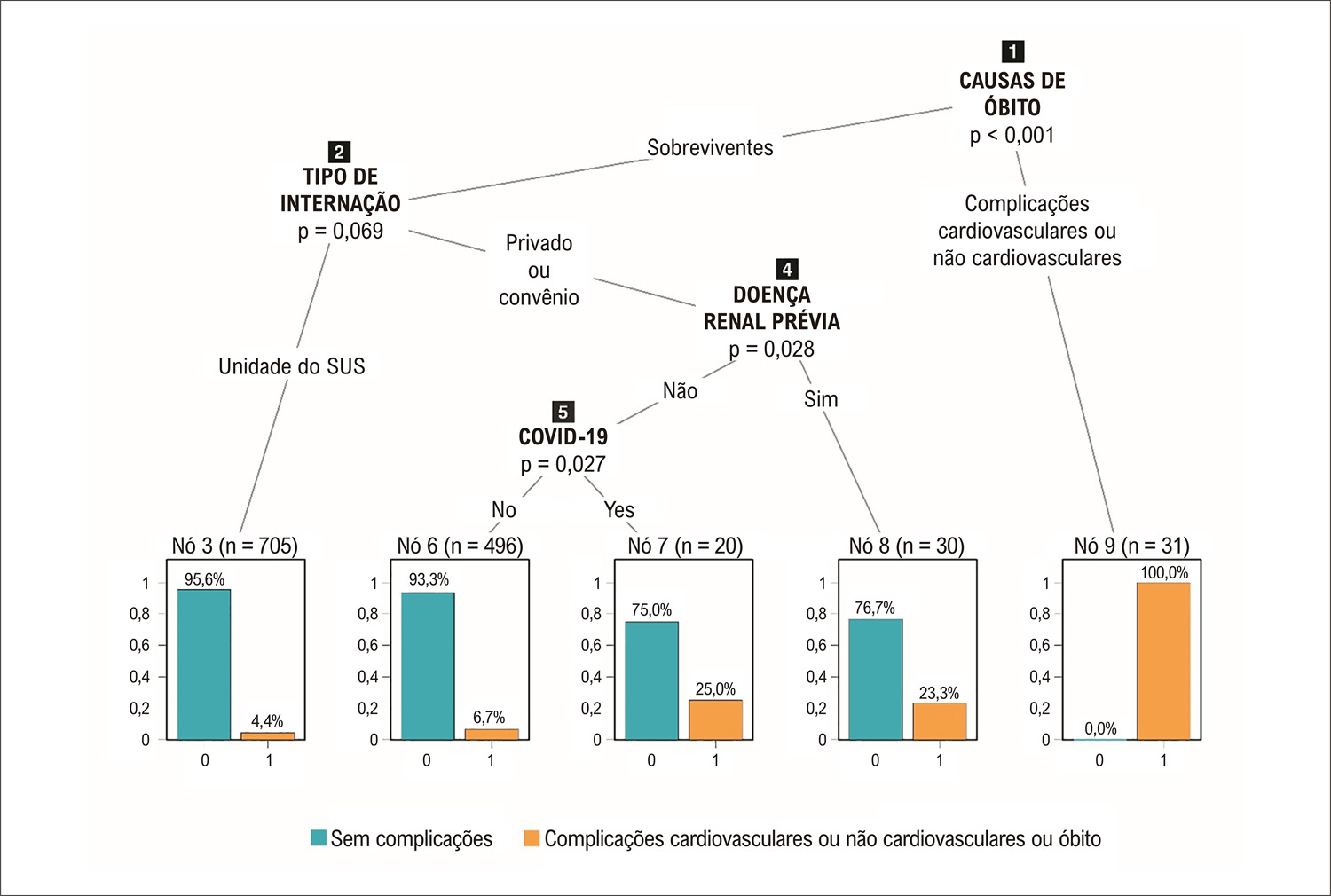
Registro prospectivo de 24 centros de hemodinâmica no Brasil, com pacientes adultos submetidos a procedimentos de cardiologia intervencionista entre 26 de maio e 30 de novembro de 2020. Os desfechos foram complicações cardiovasculares (CV) e não CV, morte e IM. A concomitância de COVID-19 foi confirmada com RT-PCR. Técnicas de machine learning foram usadas com modelos não paramétricos de árvores de classificação. Usou-se análise de correspondência simples com o software R. Adotou-se nível de significância de 5%.

Resultados

Este estudo incluiu 1.282 pacientes, 435 dos quais (33,9%) apresentaram IM: IM com supra de ST (IMCSST), 239 (54,9%); e IM sem supra de ST(IMSSST), 196 (45.1%). Dos 1.282 pacientes, 29 tiveram complicações CV, 47 tiveram complicações não CV e 31 morreram. O diagnóstico de COVID-19 foi confirmado em 77 pacientes (6%), com 15,58% de mortalidade e 6,49% de complicações não CV. A maioria dos pacientes apresentou significativa doença arterial coronariana (63%). Trombo intracoronariano foi mais frequente na presença de IMCSST (3,4%) e COVID-19 (4%). Tempo porta-mesa superior a 12 horas no IMSSST associou-se a 30,8% de complicações, 25% em pacientes com COVID-19.

Conclusões

Todos os óbitos foram precedidos por complicações CV ou não CV. A presença de COVID-19 foi associada a óbito e complicações não fatais dos pacientes submetidos a procedimentos de cardiologia intervencionista durante a pandemia.

  • Coronary Angiography
  • Coronary Artery Disease
  • COVID-19
  • Myocardial Infarction
  • Percutaneous Coronary Intervention
Ler artigo completo
Creative Commons Attribution (CC BY) Creative Commons license
01/09/2023 DOI: 10.36660/abc.20220840 Visualizações 9
IJCS
Editorial

Back to The Future: How To Define Prognosis in MINOCA?

Luiz Eduardo Fonteles Ritt et al. Mateus dos Santos Viana

Myocardial Infarction with non-Obstructive Coronary Arteries (MINOCA) is the final diagnosis in 6-10% of all acute coronary syndromes (ACS). It is mostly present in female individuals. MINOCA was defined by the European Society of Cardiology (ESC) in 2017, and the Fourth Universal Definition of Myocardial Infarction (2018) further reinforced this concept. ,

Dreyer et al., analyzing Medicare data in the United States, determined an incidence for MINOCA of 5.9%. Lower rates of one-year MACE (1.7% vs 27.6%), mortality (12.3% vs 16.7%) and re-hospitalization for ACS (1.3% vs 6.1%) were observed in MINOCA compared with ACS with coronary obstruction. Although the prognosis of MINOCA seems to be better than conventional ACS, a better understanding of which conditions are associated with better or worse prognosis within the MINOCA spectrum is needed.

[…]

  • acute coronary syndrome
  • cardiovascular diseases
  • Coronary Angiography
  • Coronary Artery Disease
  • Magnetic Resonance/diagnostic imaging
  • Myocardial Infarction
Ler artigo completo
Creative Commons Attribution (CC BY) Creative Commons license
01/11/2021 DOI: 10.36660/ijcs.20210229 Visualizações 8
IJCS
Original Article

Acute Myocardial Infarction with Non-Obstructive Coronary Arteries – Stratifying the Risk of a “new” Clinical Entity using an “Old” Tool

Pedro Carvalho et al. Mariana Caçoilo Vera Afreixo José Mesquita Bastos … Lisa Ferraz Manuela Vieira Luís Santos Anabela Gonzaga Raquel Ferreira Tiago Adrega Ana Faustino Ana Briosa

Abstract

Background

Some of the patients admitted for acute myocardial infarction have non-obstructive coronary artery disease (MINOCA). Their prognosis is not always benign, making it necessary the development of tools for risk stratification of these patients.

Objectives

To describe the characteristics of a sample of patients admitted for suspected MINOCA and to evaluate the prognostic value of GRACE score in this population.

Methods

This was a retrospective, observational, single-center, cohort study involving 56 consecutive patients with MINOCA. During one-year follow-up, patients were assessed for mortality and major adverse cardiovascular events (MACE) – a composite of all-cause mortality and hospitalization due to acute myocardial infarction, heart failure, ischemic stroke, and acute limb ischemia. Statistical analysis was performed using a non-parametric approach, with the Mann-Whitney U test for quantitative variables and ROC curves for assessing the discriminatory power of the Grace score in predicting cardiovascular events. The level of significance was set at 5%.

Results

Of the 56 MINOCA patients included in the study (median age 67 years), 55.4% were female. During the one-year follow-up, mortality rate was 5.5% and 9.1% of patients had MACE. A higher GRACE score was associated with mortality (p = 0.019; AUC 0.907; 95%CI 0.812–1.000; cut off 138) and MACE (p =0.034; AUC 0.790; 95%CI 0.632–0.948; cutoff 114).

Conclusion

The definition of MINOCA includes various diagnoses and prognoses, and the GRACE score is useful for risk stratification of patients with this condition.

  • Coronary Angiography
  • Coronary Artery Disease
  • Magnetic Resonance Spectroscopy/diagnosis
  • Myocardial Infarction
  • Prognosis
Ler artigo completo
Creative Commons Attribution (CC BY) Creative Commons license
30/06/2021 DOI: 10.36660/ijcs.20190218 Visualizações 6
IJCS
Original Article

The Role of Cardiovascular Risk Factors and Risk Scoring Systems in Predicting Coronary Atherosclerosis

Suat Gormel et al. Uygar Cagdas Yuksel Murat Celik Salim Yasar … Erkan Yildirim Baris Bugan Yalcin Gokoglan Hasan Kutsi Kabul Salim Yasar Mustafa Köklü Cem Barçın

Abstract

Background

Comparative data on the performance of cardiovascular risk scoring systems (CRSSs) in patients with severe coronary artery disease (CAD) are lacking.

Objectives

To compare different CRSSs regarding their ability to discriminate patients with severe CAD.

Method

A total of 414 patients (297 men; 61.3±12.3 years of age) undergoing coronary angiography were enrolled and evaluated for major risk factors. Cardiovascular risk and risk category were defined for each patient using the Framingham, Systemic Coronary Risk Evaluation (SCORE), and Pooled Cohort Risk Assessment Equation (PCRAE) tools. Severe CAD was defined as ≥ 50% stenosis in at least one major coronary artery and/or previous coronary stenting or coronary artery bypass grafting. A p < 0.05 was considered statistically significant.

Results

Severe CAD was identified in 271 (65.4%) patients. The ROC curves of the 3 CRSSs for predicting severe CAD were compared and showed no significant difference: the area under the ROC curve was 0.727, 0.694, and 0.717 for the Framingham, SCORE, and PCRAE tools, respectively (p > 0.05). However, when individual patients were classified as having low, intermediate, or high cardiovascular risk, the rate of patients in the high-risk group was significantly different between the PCRAE, Framingham, and SCORE tools (73.4%, 27.5%, and 37.9%, respectively; p < 0.001).

Discussion

PCRAE had higher positive and negative predictive values for detecting severe CAD in high-risk patients than the Framingham and SCORE tools.

Conclusion

We can speculate that currently used CRSSs are not sufficient, and new scoring systems are needed. In addition, other risk factors, such as serum creatinine, should be considered in future CRSSs. Int J Cardiovasc Sci. 2020; [online].ahead print, PP.0-0

  • Atherosclerosis
  • cardiovascular diseases
  • Coronary Angiography
  • Coronary Artery Diseases
  • Diabetes mellitus
  • Epidemiology
  • Heredity
  • Hypertension
  • Renal Insufficiency
  • Risk Factors
Ler artigo completo
Creative Commons Attribution (CC BY) Creative Commons license
06/11/2020 DOI: 10.36660/ijcs.20190134 Visualizações 7
IJCS
Viewpoint

Controversies in the Indications of Percutaneous Angioplasty Or Coronary Artery Bypass Grafting In The Treatment Of Left Main Disease

Renato A. K. Kalil et al. Roberto T. Sant´Anna Felipe Borsu de Salles

Introduction

Left main coronary artery (LMCA) disease is a high-risk clinical situation, since this artery is responsible for the irrigation of more than two-thirds of the myocardial tissue, LMCA disease is associated with increased risk of adverse cardiac events. Traditionally, the gold standard of treatment for significant LMCA disase, understood as a stenosis> 50%, is coronary artery bypass grafting (CABG) surgery. –

The technological evolution of percutaneous treatment and its safe application for LMCA disease in the PRECOMBAT study made it a viable alternative, initially restricted to patients at high surgical risk and with LMCA disease confined to the proximal portion of the trunk. Subsequent studies have suggested the equivalence of percutaneous coronary intervention (PCI) and CABG in low and moderate complexity LMCA disease, which was reflected in the most recent guidelines ( ). Clinical registries, with real-patient outcomes, – and long-term results from the EXCEL study, contest this notion of equivalence between therapies in terms of mortality. The study was controversial, especially regarding the definition of clinical outcomes.

[…]

  • Coronary Angiography
  • Coronary Artery Bypass
  • Coronary Artery Disease
  • Coronary Restenosis
  • Left Main Coronary Artery
  • Myocardial revascularization
  • Percutaneous Coronary Intervention
Ler artigo completo
Creative Commons Attribution (CC BY) Creative Commons license
17/07/2020 DOI: 10.36660/ijcs.20200037 Visualizações 8
ABC
Original Article

Reliability of the interpretation of coronary angiography by the simple visual method

Jorge Augusto Nunes Guimarães et al. Edgar Guimarães Victor Maria do Rosário de Britto Leite José Maria Pereira Gomes … Edgar Victor Filho Jesus Reyes Liveras

OBJECTIVE: Evaluation of inter and intraobserver reproducibility of by the visual method interpretation of cineangiogram in a clinically based context. METHODS: Five interventional cardiologists analyzed 11 segments of 8 coronary cineangiograms at a two month apart sessions. The percent luminal reduction by the lesions were analyzed by two different classifications: in one (A) the lesions were graded in 0% = absent, 1-50% = mild, 51 – 69 = moderate, and > or = 70% = severe; the other classification (B) was a dichotomic one : or = 70%=significant lesions. The agreement were measured by the kappa (k) index. RESULTS: Interobserver agreement was moderate for classification A (1st measurement, k = 0.36 — 0.63, k m = 0.49; 2nd measurement, k = 0.39-0.68, k m = 0.52) and good for classification B (1st measurement, k = 0.55-0.73, k m = 0.63; 2nd measurement, k = 0.37-0.82, k m = 0.61). Intraobserver levels of agreement were k = 0.57-0.95 for classification A and 0.62-1.0 for classification B. CONCLUSION: The higher level of reproducibility obtained by adopting the dichotomous criteria usually considered for ischemic limits demonstrates that in the present clinical context, the reliability of the simple visual method is adequate for the identification of patients with clinically significant lesions and candidates for myocardial revascularization procedures.

  • Coronary Angiography
  • kappa statistic
  • observer variation
Ler artigo completo
Creative Commons Attribution (CC BY) Creative Commons license
08/01/2002 DOI: 10.1590/S0066-782X2000000400001 Visualizações 7

Como citar este artigo

EndNote RIS

Formato de Documento Eletrônico (Vancouver)

Gonçalves SC. From Right to Left Radial Access in Older Patients: Are We Witnessing the Next Procedural Shift?. International Journal of Cardiovascular Sciences 2026;39:e20250195.

Formato de Documento Eletrônico (ABNT)

Gonçalves, Sandro Cadaval. From Right to Left Radial Access in Older Patients: Are We Witnessing the Next Procedural Shift?. International Journal of Cardiovascular Sciences, v. 39, e20250195, abr. 2026.

Formato de Documento Eletrônico (APA)

Gonçalves, S. C. (2026). From Right to Left Radial Access in Older Patients: Are We Witnessing the Next Procedural Shift?. International Journal of Cardiovascular Sciences, 39, e20250195.

Formato de Documento Eletrônico (ISO)

Gonçalves, Sandro Cadaval. From Right to Left Radial Access in Older Patients: Are We Witnessing the Next Procedural Shift?. International Journal of Cardiovascular Sciences [online]. 2026, vol. 39, [citado 2026-11-15], e20250195. Disponível em: <https://journals.cardiol.br/article/from-right-to-left-radial-access-in-older-patients-are-we-witnessing-the-next-procedural-shift-2/>. ISSN 2359-4802

EndNote RIS

Formato de Documento Eletrônico (Vancouver)

Oliveira MD, Motta RFOS, Caixeta A. Distal Transradial Access for Coronary Procedures: Insights from 6,800 Consecutive All-Comers Patients from the DISTRACTION Registry. International Journal of Cardiovascular Sciences 2024;37:e20240084.

Formato de Documento Eletrônico (ABNT)

Oliveira, Marcos Danillo; Motta, Ricardo Fonseca Oliveira Suruagy; Caixeta, Adriano. Distal Transradial Access for Coronary Procedures: Insights from 6,800 Consecutive All-Comers Patients from the DISTRACTION Registry. International Journal of Cardiovascular Sciences, v. 37, e20240084, nov. 2024.

Formato de Documento Eletrônico (APA)

Oliveira, M. D., Motta, R. F. O. S., & Caixeta, A. (2024). Distal Transradial Access for Coronary Procedures: Insights from 6,800 Consecutive All-Comers Patients from the DISTRACTION Registry. International Journal of Cardiovascular Sciences, 37, e20240084.

Formato de Documento Eletrônico (ISO)

Oliveira, Marcos Danillo and Motta, Ricardo Fonseca Oliveira Suruagy and Caixeta, Adriano. Distal Transradial Access for Coronary Procedures: Insights from 6,800 Consecutive All-Comers Patients from the DISTRACTION Registry. International Journal of Cardiovascular Sciences [online]. 2024, vol. 37, [citado 2026-11-15], e20240084. Disponível em: <https://journals.cardiol.br/article/distal-transradial-access-for-coronary-procedures-insights-from-6800-consecutive-all-comers-patients-from-the-distraction-registry-2/>. ISSN 2359-4802

EndNote RIS

Formato de Documento Eletrônico (Vancouver)

Kiliç R, Güzel T, Aktan A, Kaya AF. Comparison of Chitosan-Containing Hemostatic Pad and Manual Compression after Coronary Angiography with Femoral Access. International Journal of Cardiovascular Sciences 2024;37:e20240020.

Formato de Documento Eletrônico (ABNT)

Kiliç, Raif; Güzel, Tuncay; Aktan, Adem; Kaya, Ahmet Ferhat. Comparison of Chitosan-Containing Hemostatic Pad and Manual Compression after Coronary Angiography with Femoral Access. International Journal of Cardiovascular Sciences, v. 37, e20240020, ago. 2024.

Formato de Documento Eletrônico (APA)

Kiliç, R., Güzel, T., Aktan, A., & Kaya, A. F. (2024). Comparison of Chitosan-Containing Hemostatic Pad and Manual Compression after Coronary Angiography with Femoral Access. International Journal of Cardiovascular Sciences, 37, e20240020.

Formato de Documento Eletrônico (ISO)

Kiliç, Raif and Güzel, Tuncay and Aktan, Adem and Kaya, Ahmet Ferhat. Comparison of Chitosan-Containing Hemostatic Pad and Manual Compression after Coronary Angiography with Femoral Access. International Journal of Cardiovascular Sciences [online]. 2024, vol. 37, [citado 2026-11-15], e20240020. Disponível em: <https://journals.cardiol.br/article/comparison-of-chitosan-containing-hemostatic-pad-and-manual-compression-after-coronary-angiography-with-femoral-access-2/>. ISSN 2359-4802

EndNote RIS

Formato de Documento Eletrônico (Vancouver)

Costa G, Ferreira E, Albuquerque DC. Clinical Profile and its Associations with Coronary Angiography Results in a Public University Hospital. International Journal of Cardiovascular Sciences 2023;36:e20220132.

Formato de Documento Eletrônico (ABNT)

Costa, Guilherme; Ferreira, Esmeralci; Albuquerque, Denilson Campos. Clinical Profile and its Associations with Coronary Angiography Results in a Public University Hospital. International Journal of Cardiovascular Sciences, v. 36, e20220132, nov. 2023.

Formato de Documento Eletrônico (APA)

Costa, G., Ferreira, E., & Albuquerque, D. C. (2023). Clinical Profile and its Associations with Coronary Angiography Results in a Public University Hospital. International Journal of Cardiovascular Sciences, 36, e20220132.

Formato de Documento Eletrônico (ISO)

Costa, Guilherme and Ferreira, Esmeralci and Albuquerque, Denilson Campos. Clinical Profile and its Associations with Coronary Angiography Results in a Public University Hospital. International Journal of Cardiovascular Sciences [online]. 2023, vol. 36, [citado 2026-11-15], e20220132. Disponível em: <https://journals.cardiol.br/article/clinical-profile-and-its-associations-with-coronary-angiography-results-in-a-public-university-hospital-2/>. ISSN 2359-4802

EndNote RIS

Formato de Documento Eletrônico (Vancouver)

Lemke VG, Paiva MSS, Mariano GZ, Alves TS, Ferreira E, Nunes LA, Oliveira FRA, et al. Registro Brasileiro de Cardiologia Intervencionista durante a Pandemia de COVID-19 (RBCI-COVID19). Arquivos Brasileiros de Cardiologia 2023;120(8):e20220840.

Formato de Documento Eletrônico (ABNT)

Lemke, Viviana Guzzo; Paiva, Maria Sanali Souza; Mariano, Giordana Zeferino; Alves, Thales Siqueira; Ferreira, Esmeralci; Nunes, Leonardo Avany; Oliveira, Flavio Roberto Azevedo; Cantarelli, Rodrigo; Nascimento, Emilia Matos do; Oliveira, Gláucia Maria Moraes de. Registro Brasileiro de Cardiologia Intervencionista durante a Pandemia de COVID-19 (RBCI-COVID19). Arquivos Brasileiros de Cardiologia, v. 120, n. 8, e20220840, ago. 2023.

Formato de Documento Eletrônico (APA)

Lemke, V. G., Paiva, M. S. S., Mariano, G. Z., Alves, T. S., Ferreira, E., Nunes, L. A., Oliveira, F. R. A., Cantarelli, R., Nascimento, E. M. , & Oliveira, G. M. M. (2023). Registro Brasileiro de Cardiologia Intervencionista durante a Pandemia de COVID-19 (RBCI-COVID19). Arquivos Brasileiros de Cardiologia, 120(8), e20220840.

Formato de Documento Eletrônico (ISO)

Lemke, Viviana Guzzo and Paiva, Maria Sanali Souza and Mariano, Giordana Zeferino and Alves, Thales Siqueira and Ferreira, Esmeralci and Nunes, Leonardo Avany and Oliveira, Flavio Roberto Azevedo and Cantarelli, Rodrigo and Nascimento, Emilia Matos do and Oliveira, Gláucia Maria Moraes de. Registro Brasileiro de Cardiologia Intervencionista durante a Pandemia de COVID-19 (RBCI-COVID19). Arquivos Brasileiros de Cardiologia [online]. 2023, vol. 120, n. 8, [citado 2026-11-15], e20220840. Disponível em: <https://journals.cardiol.br/article/registro-brasileiro-de-cardiologia-intervencionista-durante-a-pandemia-de-covid-19-rbci-covid19/>. ISSN 0066-782X

EndNote RIS

Formato de Documento Eletrônico (Vancouver)

Ritt LEF, Viana MS. Back to The Future: How To Define Prognosis in MINOCA?. International Journal of Cardiovascular Sciences 2021;34(5 Supl 1):10-1.

Formato de Documento Eletrônico (ABNT)

Ritt, Luiz Eduardo Fonteles; Viana, Mateus dos Santos. Back to The Future: How To Define Prognosis in MINOCA?. International Journal of Cardiovascular Sciences, v. 34, n. 5 Supl 1, p. 10-11, out. 2021.

Formato de Documento Eletrônico (APA)

Ritt, L. E. F., & Viana, M. S. (2021). Back to The Future: How To Define Prognosis in MINOCA?. International Journal of Cardiovascular Sciences, 34(5 Supl 1), 10-11.

Formato de Documento Eletrônico (ISO)

Ritt, Luiz Eduardo Fonteles and Viana, Mateus dos Santos. Back to The Future: How To Define Prognosis in MINOCA?. International Journal of Cardiovascular Sciences [online]. 2021, vol. 34, n. 5 Supl 1, [citado 2026-11-15], pp. 10-11. Disponível em: <https://journals.cardiol.br/article/back-to-the-future-how-to-define-prognosis-in-minoca-2/>. ISSN 2359-4802

EndNote RIS

Formato de Documento Eletrônico (Vancouver)

Carvalho P, Caçoilo M, Afreixo V, Bastos JM, Ferraz L, Vieira M, Santos L, et al. Acute Myocardial Infarction with Non-Obstructive Coronary Arteries – Stratifying the Risk of a “new” Clinical Entity using an “Old” Tool. International Journal of Cardiovascular Sciences 2021;34(5 Supl 1):1-9.

Formato de Documento Eletrônico (ABNT)

Carvalho, Pedro; Caçoilo, Mariana; Afreixo, Vera; Bastos, José Mesquita; Ferraz, Lisa; Vieira, Manuela; Santos, Luís; Gonzaga, Anabela; Ferreira, Raquel; Adrega, Tiago; Faustino, Ana; Briosa, Ana. Acute Myocardial Infarction with Non-Obstructive Coronary Arteries – Stratifying the Risk of a “new” Clinical Entity using an “Old” Tool. International Journal of Cardiovascular Sciences, v. 34, n. 5 Supl 1, p. 1-9, jun. 2021.

Formato de Documento Eletrônico (APA)

Carvalho, P., Caçoilo, M., Afreixo, V., Bastos, J. M., Ferraz, L., Vieira, M., Santos, L., Gonzaga, A., Ferreira, R., Adrega, T., Faustino, A., & Briosa, A. (2021). Acute Myocardial Infarction with Non-Obstructive Coronary Arteries – Stratifying the Risk of a “new” Clinical Entity using an “Old” Tool. International Journal of Cardiovascular Sciences, 34(5 Supl 1), 1-9.

Formato de Documento Eletrônico (ISO)

Carvalho, Pedro and Caçoilo, Mariana and Afreixo, Vera and Bastos, José Mesquita and Ferraz, Lisa and Vieira, Manuela and Santos, Luís and Gonzaga, Anabela and Ferreira, Raquel and Adrega, Tiago and Faustino, Ana and Briosa, Ana. Acute Myocardial Infarction with Non-Obstructive Coronary Arteries – Stratifying the Risk of a “new” Clinical Entity using an “Old” Tool. International Journal of Cardiovascular Sciences [online]. 2021, vol. 34, n. 5 Supl 1, [citado 2026-11-15], pp. 1-9. Disponível em: <https://journals.cardiol.br/article/acute-myocardial-infarction-with-non-obstructive-coronary-arteries-stratifying-the-risk-of-a-new-clinical-entity-using-an-old-tool-2/>. ISSN 2359-4802

EndNote RIS

Formato de Documento Eletrônico (Vancouver)

Gormel S, Yuksel UC, Celik M, Yasar S, Yildirim E, Bugan B, Gokoglan Y, et al. The Role of Cardiovascular Risk Factors and Risk Scoring Systems in Predicting Coronary Atherosclerosis. International Journal of Cardiovascular Sciences 2020;34(1):32-8.

Formato de Documento Eletrônico (ABNT)

Gormel, Suat; Yuksel, Uygar Cagdas; Celik, Murat; Yasar, Salim; Yildirim, Erkan; Bugan, Baris; Gokoglan, Yalcin; Kabul, Hasan Kutsi; Yasar, Salim; Köklü, Mustafa; Barçın, Cem. The Role of Cardiovascular Risk Factors and Risk Scoring Systems in Predicting Coronary Atherosclerosis. International Journal of Cardiovascular Sciences, v. 34, n. 1, p. 32-38, nov. 2020.

Formato de Documento Eletrônico (APA)

Gormel, S., Yuksel, U. C., Celik, M., Yasar, S., Yildirim, E., Bugan, B., Gokoglan, Y., Kabul, H. K., Yasar, S., Köklü, M., & Barçın, C. (2020). The Role of Cardiovascular Risk Factors and Risk Scoring Systems in Predicting Coronary Atherosclerosis. International Journal of Cardiovascular Sciences, 34(1), 32-38.

Formato de Documento Eletrônico (ISO)

Gormel, Suat and Yuksel, Uygar Cagdas and Celik, Murat and Yasar, Salim and Yildirim, Erkan and Bugan, Baris and Gokoglan, Yalcin and Kabul, Hasan Kutsi and Yasar, Salim and Köklü, Mustafa and Barçın, Cem. The Role of Cardiovascular Risk Factors and Risk Scoring Systems in Predicting Coronary Atherosclerosis. International Journal of Cardiovascular Sciences [online]. 2020, vol. 34, n. 1, [citado 2026-11-15], pp. 32-38. Disponível em: <https://journals.cardiol.br/article/the-role-of-cardiovascular-risk-factors-and-risk-scoring-systems-in-predicting-coronary-atherosclerosis-2/>. ISSN 2359-4802

EndNote RIS

Formato de Documento Eletrônico (Vancouver)

Kalil RAK, Sant´Anna RT, Salles FB. Controversies in the Indications of Percutaneous Angioplasty Or Coronary Artery Bypass Grafting In The Treatment Of Left Main Disease. International Journal of Cardiovascular Sciences 2020;33(5):565-71.

Formato de Documento Eletrônico (ABNT)

Kalil, Renato A. K.; Sant´Anna, Roberto T.; Salles, Felipe Borsu de. Controversies in the Indications of Percutaneous Angioplasty Or Coronary Artery Bypass Grafting In The Treatment Of Left Main Disease. International Journal of Cardiovascular Sciences, v. 33, n. 5, p. 565-571, jul. 2020.

Formato de Documento Eletrônico (APA)

Kalil, R. A. K., Sant´Anna, R. T., & Salles, F. B. (2020). Controversies in the Indications of Percutaneous Angioplasty Or Coronary Artery Bypass Grafting In The Treatment Of Left Main Disease. International Journal of Cardiovascular Sciences, 33(5), 565-571.

Formato de Documento Eletrônico (ISO)

Kalil, Renato A. K. and Sant´Anna, Roberto T. and Salles, Felipe Borsu de. Controversies in the Indications of Percutaneous Angioplasty Or Coronary Artery Bypass Grafting In The Treatment Of Left Main Disease. International Journal of Cardiovascular Sciences [online]. 2020, vol. 33, n. 5, [citado 2026-11-15], pp. 565-571. Disponível em: <https://journals.cardiol.br/article/controversies-in-the-indications-of-percutaneous-angioplasty-or-coronary-artery-bypass-grafting-in-the-treatment-of-left-main-disease-2/>. ISSN 2359-4802

EndNote RIS

Formato de Documento Eletrônico (Vancouver)

Guimarães JAN, Victor EG, Leite MRB, Gomes JMP, Victor Filho E, Liveras JR. Reliability of the interpretation of coronary angiography by the simple visual method. Arquivos Brasileiros de Cardiologia 2002;74(4):300-8.

Formato de Documento Eletrônico (ABNT)

Guimarães, Jorge Augusto Nunes; Victor, Edgar Guimarães; Leite, Maria do Rosário de Britto; Gomes, José Maria Pereira; Victor Filho, Edgar; Liveras, Jesus Reyes. Reliability of the interpretation of coronary angiography by the simple visual method. Arquivos Brasileiros de Cardiologia, v. 74, n. 4, p. 300-308, jan. 2002.

Formato de Documento Eletrônico (APA)

Guimarães, J. A. N., Victor, E. G., Leite, M. R. B., Gomes, J. M. P., Victor Filho, E., & Liveras, J. R. (2002). Reliability of the interpretation of coronary angiography by the simple visual method. Arquivos Brasileiros de Cardiologia, 74(4), 300-308.

Formato de Documento Eletrônico (ISO)

Guimarães, Jorge Augusto Nunes and Victor, Edgar Guimarães and Leite, Maria do Rosário de Britto and Gomes, José Maria Pereira and Victor Filho, Edgar and Liveras, Jesus Reyes. Reliability of the interpretation of coronary angiography by the simple visual method. Arquivos Brasileiros de Cardiologia [online]. 2002, vol. 74, n. 4, [citado 2026-11-15], pp. 300-308. Disponível em: <https://journals.cardiol.br/article/reliability-of-the-interpretation-of-coronary-angiography-by-the-simple-visual-method-2/>. ISSN 0066-782X

  • Sobre a Família ABC
  • Regimento Interno
  • Conselho Editorial
  • Sociedade Brasileira de Cardiologia (SBC)

Edições

Diretrizes da SBC

  • Vídeos
  • Podcasts
  • Notícias
Accessibility Adjustments

Powered by OneTap

How long do you want to hide the toolbar?
Hide Toolbar Duration
Select your accessibility profile
Vision Impaired Mode
Enhances website's visuals
Seizure Safe Profile
Clear flashes & reduces color
ADHD Friendly Mode
Focused browsing, distraction-free
Blindness Mode
Reduces distractions, improves focus
Epilepsy Safe Mode
Dims colors and stops blinking
Content Modules
Font Size

Default

Line Height

Default

Color Modules
Orientation Modules