Família ABC Arquivos Brasileiros de Cardiologia International Journal of Cardiovascular Sciences ABC Heart Failure & Cardiomyopathy ABC Imagem Cardiovascular
Português English
Família ABC
Português English
  • Sobre
    • Sobre a Família ABC
    • Regimento Interno
    • Conselho Editorial
    • Sociedade Brasileira de Cardiologia (SBC)
  • Edições
  • Diretrizes da SBC
  • Conteúdos
    • Vídeos
    • Podcasts
    • Notícias
  • Sobre
    • Sobre a Família ABC
    • Regimento Interno
    • Conselho Editorial
    • Sociedade Brasileira de Cardiologia (SBC)
  • Edições
  • Diretrizes da SBC
  • Conteúdos
    • Vídeos
    • Podcasts
    • Notícias

Família ABC

  • Família ABC
  • Arquivos Brasileiros de Cardiologia
  • International Journal of Cardiovascular Sciences
  • ABC Heart Failure & Cardiomyopathy
  • ABC Imagem Cardiovascular
Buscar em

Nenhum conteúdo encontrado.

Revistas
Ordenação
Tipos de artigo
Outros

  1. Início
  2. Palavra-chave: Myocardial Reperfusion
IJCS
Original Article

ST-Segment Elevation Myocardial Infarction Metrics Before and During the COVID-19 Pandemic: Experience from a Brazilian Center

Caio de Assis Moura Tavares et al. Tarso A. D. Accorsi Milena Ribeiro Paixão Tarsila Mota … Fabio Pitta Pedro Alves Lemos Marcelo Franken Karine De Amicis Lima Karen Francine Kohler José Leão de Souza Jr.

Abstract

Background:

The impact of the COVID-19 pandemic on the healthcare of patients with ST-segment elevation acute myocardial infarction (STEMI) in Brazil remains unclear.

Objective:

Provide a descriptive analysis of clinical profiles, time intervals, performance metrics, and outcomes in patients with STEMI before and during the COVID-19 pandemic.

Methods:

Among a cohort of 193 patients with STEMI diagnosed in five emergency departments within a single Brazilian healthcare network, 187 patients were included between January 2017 and April 2021 and stratified into two cohorts: Cohort I (pre-pandemic, 146 patients) and Cohort II (pandemic, 41 patients). Statistical significance was defined as a two-sided p value < 0.05.

Results:

The mean age of the participants was 62.7 years (standard deviation: 13.2); 83.4% were male, and 86.1% underwent primary percutaneous coronary intervention (PCI). Duration from symptom onset to emergency department presentation was 60 minutes in both cohorts (interquartile range, IQR: 30 to 150 in Cohort I versus 30 to 152 in Cohort II, p = 0.273). Total ischemic time was 132 minutes in Cohort I (IQR: 94 to 222), and 117 minutes in Cohort II (IQR: 76.3 to 185.6) (p = 0.159). The observed STEMI time delays and performance metrics were comparable between groups, with reperfusion rates within the recommended time frame above 90% in both cohorts. Hospital mortality was 3.4% in Cohort I and 7.3% in Cohort II (p = 0.376).

Conclusion:

In the context of the COVID-19 pandemic, within a private healthcare network system in Brazil, this study did not uncover statistically significant disparities in clinical profiles, time intervals, performance metrics, or in-hospital mortality when compared to the pre-pandemic period.
  • Angioplasty
  • COVID-19
  • Fibrinolysis
  • Myocardial Reperfusion
  • ST Elevation Myocardial Infarction
Ler artigo completo
Creative Commons Attribution (CC BY) Creative Commons license
02/06/2025 DOI: 10.36660/ijcs.20240158 Visualizações 1
IJCS
Review Article

Reperfusion Strategies in Acute Myocardial Infarction: State of the Art

Fernando Oswaldo Dias Rangel

Abstract

ST elevation myocardial infarction (STEMI) is a highly prevalent condition worldwide. Reperfusion therapy is strongly associated with the prognosis of STEMI and must be performed with a high standard of quality and without delay. A systematic review of different reperfusion strategies for STEMI was conducted, including randomized controlled trials that included major cardiovascular events (MACE), and systematic reviews in the last 5 years through the PRISMA ( Preferred Reporting Items for Systematic Reviews and Meta-Analysis) methodology. The research was done in the PubMed and Cochrane Central Register of Controlled Trials databases, in addition to a few manual searches. After the exclusion criteria were applied, 90 articles were selected for this review. Despite the reestablishment of IRA patency in PCI for STEMI, microvascular lesions occur in a significant proportion of these patients, which can compromise ventricular function and clinical course. Several therapeutic strategies – intracoronary administration of nicorandil, nitrates, melatonin, antioxidant drugs (quercetin, glutathione), anti-inflammatory substances (tocilizumab [an inhibitor of interleukin 6], inclacumab, P-selectin inhibitor), immunosuppressants (cyclosporine), erythropoietin and ischemic pre- and post-conditioning and stem cell therapy – have been tested to reduce reperfusion injury, ventricular remodeling and serious cardiovascular events, with heterogeneous results: These therapies need confirmation in larger studies to be implemented in clinical practice

  • Acute Myocardial Infarction/therapy
  • Morbidity and Mortality
  • Myocardial Reperfusion
  • Myocardial Stunning
  • ventricular remodeling
Ler artigo completo
Creative Commons Attribution (CC BY) Creative Commons license
09/06/2021 DOI: 10.36660/ijcs.20200226 Visualizações 2
IJCS
Editorial

After a STEMI, is Less Sugar more Protective to Myocardium?

Rafael Willain Lopes et al. Alexandre Hohl

The infarct size reduction in acute myocardial infarction (AMI) has been studied for more than 50 years. Animal experiments were conducted in the 1970s, followed by the first clinical studies to reduce infarct size (IS), with fibrinolytic agents or with mechanical coronary angioplasty (PTCA). The clinical experience of coronary reperfusion indicated that left ventricle function was not normalized in 30% of the patients, and despite unblocking the epicardial vessel, demonstrated hemodynamically, there was no equivalent in myocardial perfusion. New concepts emerged such as reperfusion injury, microvascular dysfunction, “no-reflow” phenomenon, and stunned and hibernating myocardium, which became the focus of basic research and clinical investigation. To improve characterization, different technologies were used, such as contrast echocardiography, isotopic studies, including positron emission tomography, and magnetic resonance.

Cardioprotection (CP) aims to reduce IS and improve clinical outcomes. The translation of CP from preclinical and promising proof-of-concept studies to clinical benefit (CB) for patients has been quite unsatisfactory. Almost all these studies that did not translate into CB had infarct size reduction as the primary endpoint and used protocols selected to achieve IS reduction.

[…]

  • Angioplasty
  • Diagnostic Imaging
  • Fibrinolytic Agents
  • Myocardial Reperfusion
  • Myocardial Stunning
  • Percutaneous Coronary Intervention
  • ST Elevation Myocardial Infarction
  • Ventricular Dysfunction Left
Ler artigo completo
Creative Commons Attribution (CC BY) Creative Commons license
09/10/2020 DOI: 10.36660/ijcs.20200173 Visualizações 1
IJCS
Original Article

Implementation of an Acute Coronary Syndrome Simulation Training Strategy for Emergency Healthcare Professionals

Maíra Viana Rego Souza-Silva et al. Priscilla Fortes de Oliveira Passos Thais Ribeiro Lemos Bárbara Campos Abreu Marino … Thatiane Dantas Dias Geisiane Sousa Braga Machado Edson Alexandre Silva Carvalho Gabriel Almeida Silqueira Rocha Antonio Luiz Ribeiro Milena Soriano Marcolino

Abstract

Background:

The knowledge on the management of patients with acute coronary syndrome (ACS) is essential to reduce the gap between evidence and practice.

Objective:

To describe a simulation training strategy for emergency healthcare professionals and provide preliminary data on knowledge acquisition, learners’ confidence and prescription of medications after training.

Methods:

The training was part of the implementation of two myocardial infarction systems of care. It comprehended lectures and simulation-based learning using high and low-fidelity mannequins and actors. It was tested in two phases: the first one in Belo Horizonte and the second one in Montes Claros, both in the state of Minas Gerais. A test was applied before and after training to assess knowledge acquisition. Confidence to perform thrombolysis in ST-elevation myocardial infarction (STEMI) patients was assessed using a questionnaire, and the impact on medication prescription analyzed STEMI patients admitted to hospitals in Montes Claros.

Results:

In the first phase, 156 professionals answered both tests: 70% of them improved their results and the median number of right answers increased (6, interquartile range [IQR] 5-7; vs 7 ([IQR] 6-9; p < 0.05). In the second phase, 242 professionals answered both tests: 58% of the physicians and 83% of the nurses obtained better test scores. Participants referred a positive impact on their clinical practice, 95% reported feeling very secure when perform fibrinolysis after the training, and there was also an impact on medication prescription.

Conclusions:

There was an impact on the learners’ knowledge acquisition and confidence using our two-phase training model, with evidence of impact on performance.

  • acute coronary syndrome
  • Emergency Service Hospital
  • Myocardial Infarction
  • Myocardial Reperfusion
  • Quality Indicators,Health Care
Ler artigo completo
Creative Commons Attribution (CC BY) Creative Commons license
21/01/2019 DOI: 10.5935/2359-4802.20180098 Visualizações 1
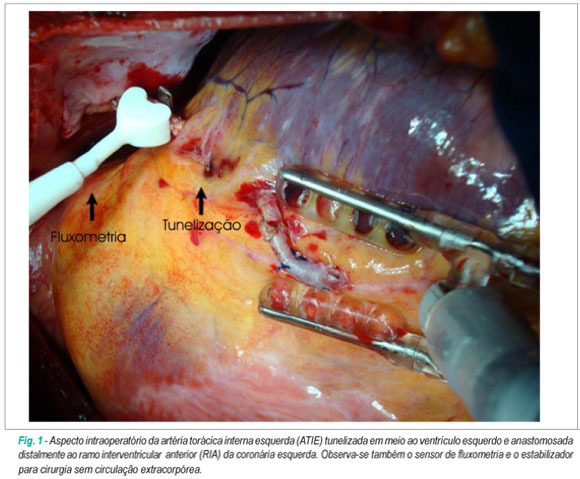
Modificação de antigo método (Vineberg) na era das células tronco: nova tática?
ABC
Comunicação Breve

Modificação de antigo método (Vineberg) na era das células tronco: nova tática?

Luís Alberto Oliveira Dallan et al. Luis Henrique Wolff Gowdak Luís Augusto Ferreira Lisboa Adriano Márcio de Melo Milanez … Fernando Platania Luís Felipe Moreira Noedir Antônio Groppo Stolf

COMUNICAÇÃO BREVE

Modificação de antigo método (Vineberg) na era das células tronco: nova tática?

[…]

  • Coronary Artery Disease
  • Doença da Artéria Coronariana
  • Enfermedad de la Arteria Coronaria
  • Myocardial Reperfusion
  • Myocardial revascularization
  • Reperfusão Miocárdica
  • Reperfusión Miocárdica
  • Revascularização Miocárdica
  • Revascularización Miocárdica
Ler artigo completo
Creative Commons Attribution (CC BY) Creative Commons license
11/01/2010 DOI: 10.1590/S0066-782X2009001100023 Visualizações 1

Como citar este artigo

EndNote RIS

Formato de Documento Eletrônico (Vancouver)

Tavares CAM, Accorsi TAD, Paixão MR, Mota T, Pitta F, Lemos PA, Franken M, et al. ST-Segment Elevation Myocardial Infarction Metrics Before and During the COVID-19 Pandemic: Experience from a Brazilian Center. International Journal of Cardiovascular Sciences 2025;38:e20240158.

Formato de Documento Eletrônico (ABNT)

Tavares, Caio de Assis Moura; Accorsi, Tarso A. D.; Paixão, Milena Ribeiro; Mota, Tarsila; Pitta, Fabio; Lemos, Pedro Alves; Franken, Marcelo; Lima, Karine De Amicis; Kohler, Karen Francine; Souza Jr., José Leão de. ST-Segment Elevation Myocardial Infarction Metrics Before and During the COVID-19 Pandemic: Experience from a Brazilian Center. International Journal of Cardiovascular Sciences, v. 38, e20240158, jun. 2025.

Formato de Documento Eletrônico (APA)

Tavares, C. A. M., Accorsi, T. A. D., Paixão, M. R., Mota, T., Pitta, F., Lemos, P. A., Franken, M., Lima, K. D. A., Kohler, K. F., & Souza Jr., J. L. (2025). ST-Segment Elevation Myocardial Infarction Metrics Before and During the COVID-19 Pandemic: Experience from a Brazilian Center. International Journal of Cardiovascular Sciences, 38, e20240158.

Formato de Documento Eletrônico (ISO)

Tavares, Caio de Assis Moura and Accorsi, Tarso A. D. and Paixão, Milena Ribeiro and Mota, Tarsila and Pitta, Fabio and Lemos, Pedro Alves and Franken, Marcelo and Lima, Karine De Amicis and Kohler, Karen Francine and Souza Jr., José Leão de. ST-Segment Elevation Myocardial Infarction Metrics Before and During the COVID-19 Pandemic: Experience from a Brazilian Center. International Journal of Cardiovascular Sciences [online]. 2025, vol. 38, [citado 2026-10-14], e20240158. Disponível em: <https://journals.cardiol.br/article/st-segment-elevation-myocardial-infarction-metrics-before-and-during-the-covid-19-pandemic-experience-from-a-brazilian-center-2/>. ISSN 2359-4802

EndNote RIS

Formato de Documento Eletrônico (Vancouver)

Rangel FOD. Reperfusion Strategies in Acute Myocardial Infarction: State of the Art. International Journal of Cardiovascular Sciences 2021;35(1):113-22.

Formato de Documento Eletrônico (ABNT)

Rangel, Fernando Oswaldo Dias. Reperfusion Strategies in Acute Myocardial Infarction: State of the Art. International Journal of Cardiovascular Sciences, v. 35, n. 1, p. 113-122, jun. 2021.

Formato de Documento Eletrônico (APA)

Rangel, F. O. D. (2021). Reperfusion Strategies in Acute Myocardial Infarction: State of the Art. International Journal of Cardiovascular Sciences, 35(1), 113-122.

Formato de Documento Eletrônico (ISO)

Rangel, Fernando Oswaldo Dias. Reperfusion Strategies in Acute Myocardial Infarction: State of the Art. International Journal of Cardiovascular Sciences [online]. 2021, vol. 35, n. 1, [citado 2026-10-14], pp. 113-122. Disponível em: <https://journals.cardiol.br/article/reperfusion-strategies-in-acute-myocardial-infarction-state-of-the-art-2/>. ISSN 2359-4802

EndNote RIS

Formato de Documento Eletrônico (Vancouver)

Lopes RW, Hohl A. After a STEMI, is Less Sugar more Protective to Myocardium?. International Journal of Cardiovascular Sciences 2020;33(5):506-8.

Formato de Documento Eletrônico (ABNT)

Lopes, Rafael Willain; Hohl, Alexandre. After a STEMI, is Less Sugar more Protective to Myocardium?. International Journal of Cardiovascular Sciences, v. 33, n. 5, p. 506-508, out. 2020.

Formato de Documento Eletrônico (APA)

Lopes, R. W., & Hohl, A. (2020). After a STEMI, is Less Sugar more Protective to Myocardium?. International Journal of Cardiovascular Sciences, 33(5), 506-508.

Formato de Documento Eletrônico (ISO)

Lopes, Rafael Willain and Hohl, Alexandre. After a STEMI, is Less Sugar more Protective to Myocardium?. International Journal of Cardiovascular Sciences [online]. 2020, vol. 33, n. 5, [citado 2026-10-14], pp. 506-508. Disponível em: <https://journals.cardiol.br/article/after-a-stemi-is-less-sugar-more-protective-to-myocardium-2/>. ISSN 2359-4802

EndNote RIS

Formato de Documento Eletrônico (Vancouver)

Souza-Silva MVR, Passos PFO, Lemos TR, Marino BCA, Dias TD, Machado GSB, Carvalho EAS, et al. Implementation of an Acute Coronary Syndrome Simulation Training Strategy for Emergency Healthcare Professionals. International Journal of Cardiovascular Sciences 2019;32(3):227-3.

Formato de Documento Eletrônico (ABNT)

Souza-Silva, Maíra Viana Rego; Passos, Priscilla Fortes de Oliveira; Lemos, Thais Ribeiro; Marino, Bárbara Campos Abreu; Dias, Thatiane Dantas; Machado, Geisiane Sousa Braga; Carvalho, Edson Alexandre Silva; Rocha, Gabriel Almeida Silqueira; Ribeiro, Antonio Luiz; Marcolino, Milena Soriano. Implementation of an Acute Coronary Syndrome Simulation Training Strategy for Emergency Healthcare Professionals. International Journal of Cardiovascular Sciences, v. 32, n. 3, p. 227-237, jan. 2019.

Formato de Documento Eletrônico (APA)

Souza-Silva, M. V. R., Passos, P. F. O., Lemos, T. R., Marino, B. C. A., Dias, T. D., Machado, G. S. B., Carvalho, E. A. S., Rocha, G. A. S., Ribeiro, A. L., & Marcolino, M. S. (2019). Implementation of an Acute Coronary Syndrome Simulation Training Strategy for Emergency Healthcare Professionals. International Journal of Cardiovascular Sciences, 32(3), 227-237.

Formato de Documento Eletrônico (ISO)

Souza-Silva, Maíra Viana Rego and Passos, Priscilla Fortes de Oliveira and Lemos, Thais Ribeiro and Marino, Bárbara Campos Abreu and Dias, Thatiane Dantas and Machado, Geisiane Sousa Braga and Carvalho, Edson Alexandre Silva and Rocha, Gabriel Almeida Silqueira and Ribeiro, Antonio Luiz and Marcolino, Milena Soriano. Implementation of an Acute Coronary Syndrome Simulation Training Strategy for Emergency Healthcare Professionals. International Journal of Cardiovascular Sciences [online]. 2019, vol. 32, n. 3, [citado 2026-10-14], pp. 227-237. Disponível em: <https://journals.cardiol.br/article/implementation-of-an-acute-coronary-syndrome-simulation-training-strategy-for-emergency-healthcare-professionals-2/>. ISSN 2359-4802

EndNote RIS

Formato de Documento Eletrônico (Vancouver)

Dallan LAO, Gowdak LHW, Lisboa LAF, Milanez AMM, Platania F, Moreira LF, Stolf NAG, et al. Modificação de antigo método (Vineberg) na era das células tronco: nova tática?. Arquivos Brasileiros de Cardiologia 2010;93(5):e79-81.

Formato de Documento Eletrônico (ABNT)

Dallan, Luís Alberto Oliveira; Gowdak, Luis Henrique Wolff; Lisboa, Luís Augusto Ferreira; Milanez, Adriano Márcio de Melo; Platania, Fernando; Moreira, Luís Felipe; Stolf, Noedir Antônio Groppo. Modificação de antigo método (Vineberg) na era das células tronco: nova tática?. Arquivos Brasileiros de Cardiologia, v. 93, n. 5, p. e79-e81, jan. 2010.

Formato de Documento Eletrônico (APA)

Dallan, L. A. O., Gowdak, L. H. W., Lisboa, L. A. F., Milanez, A. M. M., Platania, F., Moreira, L. F., & Stolf, N. A. G. (2010). Modificação de antigo método (Vineberg) na era das células tronco: nova tática?. Arquivos Brasileiros de Cardiologia, 93(5), e79-e81.

Formato de Documento Eletrônico (ISO)

Dallan, Luís Alberto Oliveira and Gowdak, Luis Henrique Wolff and Lisboa, Luís Augusto Ferreira and Milanez, Adriano Márcio de Melo and Platania, Fernando and Moreira, Luís Felipe and Stolf, Noedir Antônio Groppo. Modificação de antigo método (Vineberg) na era das células tronco: nova tática?. Arquivos Brasileiros de Cardiologia [online]. 2010, vol. 93, n. 5, [citado 2026-10-14], pp. e79-e81. Disponível em: <https://journals.cardiol.br/article/modificacao-de-antigo-metodo-vineberg-na-era-das-celulas-tronco-nova-tatica/>. ISSN 0066-782X

  • Sobre a Família ABC
  • Regimento Interno
  • Conselho Editorial
  • Sociedade Brasileira de Cardiologia (SBC)

Edições

Diretrizes da SBC

  • Vídeos
  • Podcasts
  • Notícias